Page 208 of 360
1 206 207 208 209 210 360

Nueva Zelanda: Palmerston North schools to learn using a community approach

Oceanía/Nueva Zelanda/11 de Septiembre de 2016/Autora: Karoline Tuckey/Fuente: Stuff

RESUMEN: Tras el lanzamiento de la primera Comunidad de Aprendizaje de Palmerston North, un reportero de Karoline Tuckey habla a educadores en Manawatu sobre el nuevo esquema. Se espera que los niños serán los ganadores si en las escuelas aprenden a jugar juntos muy bien a través de las nuevas comunidades cooperativas de  de aprendizaje, el cual establece los grupos de las escuelas para hacer frente a los retos juntos. Los críticos dicen que las escuelas de Nueva Zelanda han sido arruinadas por una tendencia hacia el aislamiento, como resultado de las estructuras de autogestión introducidas por las escuelas del mañana. Por lo tanto, los maestros de la puesta en marcha de la primera Comunidad de Aprendizaje de Palmerston North, el 29 de agosto fueron entusiasmados con las oportunidades que el programa podría contener para el desarrollo y aplicación de la enseñanza a través de la colaboración.

Following the launch of Palmerston North’s first Community of Learning, reporter Karoline Tuckey speaks to Manawatu educators about the new scheme.

Children are expected be the winners if schools learn to play together nicely through the new cooperative Communities of Learning scheme, which establishes groups of schools to tackle challenges together.

Critics say New Zealand’s schools have been blighted by a tendency toward isolation, resulting from the self-management structures introduced by Tomorrow’s Schools.

Meanwhile those who excell in teaching positions find promotions funnel them toward administration roles. Many educators say that both factors have resulted in a system that has not fostered the sharing of teaching expertise and skills.

So, teachers at the launch of Palmerston North’s first Community of Learning on August 29 were understandably excited about the opportunities the scheme could hold for development and application of teaching through collaboration.

About 320 teachers, principals, and board of trustee members from 10 schools in the Palmerston North East Communities of Learning (CoL) joined speakers for the launch at the Palmerston North Convention Centre. The group has a total student population within their boundaries of about 4500.

CoL were initiated by the Ministry of Education. They are formal clusters of schools that define the common challenges they face, share expertise, skills and successful ideas, and develop new ideas to address their challenges.

CoL are formed around geographic boundaries, and schools from early childhood education to secondary schools can opt in. Once formed, each group works with the Ministry to define its goals, and how to pursue them.

he PNECoL lead principal Peter Brooks (principal of Freyberg High School) says the group submitted the first expression of interest nationally, and has now been granted $750,000 a year, over three years.

This covers release time for school staff to work on the project, including ‘within school’ teachers, ‘across-school’ teachers and the lead principal.

The balance of teachers would be funded for about half to one day per year of release time.

«It’s hugely exciting, because [schools] have been silo-ed before, we’ve been little islands, and it’s crazy.

«It’s not like [peer development] hasn’t happened before, people do go into each others’ classrooms, but we’ve had to struggle with resources, and you don’t get the release time.

«They might be a master teacher, but how do you get the time for people to come and watch them.»

So far a working party has analysed the strengths and weaknesses of the ten schools in the Palmerston North East group to set three «Achievement Challenges» they plan to tackle as a group.

These are: for 85 per cent of their students to achieve NCEA level 2 in maths, to raise the reading levels of boys (who are lagging behind girls), and to raise students’ science, technology and critical thinking skills.

The group would also look at ideas to improve students’ transitions between schools and schooling levels, including introducing a program to give consistency in national standards assessments.

Brooks says students arriving at high school, even with the same national standards scores, could have widely varying levels of competencies.

«It hasn’t been moderated and given the same rigour [across all age groups] as it has at NCEA level, there’s no real consistency between the schools.»

Early childhood educators, tertiary representatives, political bodies and Rangitane were also involved as partners to the group, he says.

«It’s going to have a big impact on the community, we’ve got a learning pathway from 3 [years] to 23, and that’s 4500 students – if you can improve their learning and job prospects and futures across the community…»

Russell Street School board of trustees member Leanne Fa’aea says the local, yet big picture approach had a lot of pluses.

«I think communities can become overly concerned only about what’s happening in my school, but those kids will have to go off to school somewhere else, and then to work in the community.

«I like the idea that teachers are going to be teaching teachers, because they know their craft and they know their kids, and it’s community based – it’s our community.»

There was some confusion among parents about what CoL were, but this could change as more tangible plans were formed, she said.

Freyberg High School Head of English Rachel Shepherd, said teachers were excited to find ways to enrich their teaching practice, and children’s learning, but wanted to know more about how the program would be run.

«The biggest question mark is just how well this works in practice. We’re getting a lot of information about the potential … but not how it will work in practice.»

Ross Intermediate School teacher Nick Wilson was hopeful collaboration would give schools more information and tools.

«Better communication can only be a good thin for kids – in the past there’s nothing that has had to go on in terms of communication between schools.

«I’m quite excited that science and technology is going to play quite a big part in it, and that greater engagement in those curriculum areas is something they’ll be putting a lot of attention into.»

Palmerston North-based New Zealand Education Institute representative Liam Rutherford said the union was supportive of the CoL, but cautious of how it would affect teachers’ workloads.

«We’d like to see some of the [self-determination] around the flexibilities that CoL get to shape how the actual funding is used around resourcing and leadership structures.

«We appreciate any time that we can come together to allow us to collaborate – at the end of the day, if teachers see value in it, they will make it work.»

Schools in the Palmerston North East CoL: Freyberg High School, Russell Street School, Ross Intermediate School, Milson School, Roslyn School, Terrace End School, Whakarongo School, Ashhurst School, Hokowhitu School and Parkland School.

Other nearby CoL are a Palmerston North and Rangitikei one covering Catholic schools, and a Horowhenua CoL.

Communities of Learning, by the numbers:

148 CoL approved nationally.
About 1260 schools involved so far – more than half of the national total.
This covers 410,000 children.
Funding is from the $359 million national Investing in Educational Success initiative.
CoL will be rolled out over three years.

Fuente: http://www.stuff.co.nz/national/education/84044228/Palmerston-North-schools-to-learn-using-a-community-approach
Comparte este contenido:

UNESCO-OREALC: Sobre la evaluación de desempeño

Por: Roberto Rodríguez

El pasado lunes comenzó a circular el documento “Evaluación de desempeño de docentes, directivos y supervisores en educación básica y media superior de México. Análisis y evaluación de su implementación 2015-2016”; elaborado por un grupo de expertos convocados por la Oficina Regional de Educación de la Unesco para América Latina y el Caribe (OREALC).

Hace un año se difundió también un estudio internacional sobre la nueva evaluación docente en México: “Evaluación internacional de los procesos de evaluación de ingreso y promoción al Servicio Profesional Docente en Educación Básica y Educación Media Superior en México, 2014-2015”, elaborado por especialistas del Instituto Internacional de Planeamiento de la Educación (IIPE-Unesco ), elaborado en el marco del convenio de colaboración entre ese organismo y el Instituto Nacional para la Evaluación de la Educación, el INEE.

Puede decirse que los dos estudios internacionales son complementarios entre sí, ya que el primero se concentra en la evaluación de desempeño y el primero en la evaluación de ingreso y promoción al Servicio Profesional Docente. La metodología seguida en ambos casos es similar, se basa en el análisis de la documentación relevante, en entrevistas con distintos tipos de actores involucrados en el proceso, y en observación de campo con atención a los procesos de implementación respectivos. También en ambos casos se toma en cuenta el diseño de las evaluaciones, los instrumentos y la organización de las evaluaciones.

No obstante, dado que la evaluación de desempeño, a diferencia de las de ingreso y promoción, generó fuertes resistencias, críticas e inconformidades de una parte significativa del magisterio evaluado, el documento de OREALC-Unesco  aborda con mayor amplitud las dimensiones propiamente políticas de la aplicación.

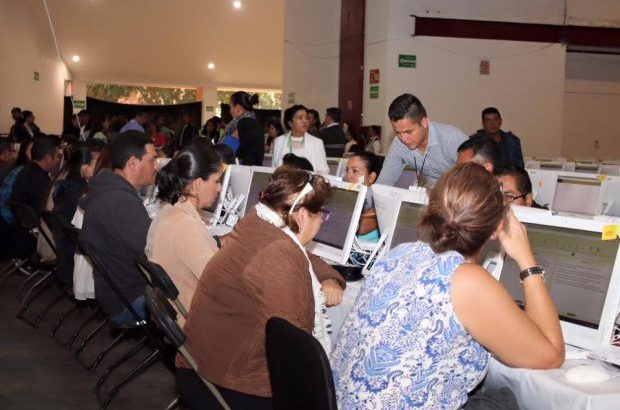
Entre los problemas detectados por los expertos internacionales destaca, en primer lugar, el apresurado ritmo en que, debido a los calendarios previstos en la normativa que rige las nuevas prácticas de evaluación docente, y también por la decisión (del INEE) de optar por una evaluación multidimensional, el diseño de los instrumentos, principalmente a cargo del Ceneval, bajo supervisión del INEE, la planeación y logística de la aplicación, así como la confección de una plataforma tecnológica adecuada, diseñada por el ILCE.
En opinión del organismo, “entre las dificultades más importantes observadas en el primer ciclo de la evaluación de desempeño, estuvo su ajustada agenda. Varios problemas aparecen estrechamente vinculados a éste, como el débil diseño estratégico de procesos relevantes (como la entrega de resultados); la insuficiente planificación de detalles de procesos operativos y técnico críticos y sensibles para los evaluados; falta de tiempo para poder implementar adecuadamente los procesos de revisión, recarga de recursos humanos y equipo a su límite de operación (tanto en Ceneval, como en el INEE y en la SEP), falta de tiempo para poder comunicar efectiva y oportunamente los procesos a los actores involucrados” (p. 38).

La crítica sobre el proceso de implementación lleva a los expertos a concluir que “en este primer ciclo de aplicación se observó que los equipos en los distintos niveles estaban completamente consumidos respondiendo a los obstáculos que iban emergiendo día a día, a un ritmo que se puede calificar de frenético” (p. 39).

La explicación de esta problemática tiene para los expertos un cariz político. La evaluación docente estuvo atrapada entre dos agendas: la recuperación de la rectoría del Estado en materia educativa, y el propósito de evaluar a los maestros para emprender procesos de formación docente que permitieran mejorar su desempeño y perfil profesional. Forzar el proceso de evaluación sin contar con un diseño completo, probado y validado, obedece a la primera agenda y marca límites claros a la segunda.

En otro orden de ideas, el documento hace notar los problemas de coordinación del sistema de evaluación. La “gobernanza distribuida” (es el término que usan), en que SEP, INEE, la Coordinación del Servicio Profesional Docente, las autoridades educativas de los estados, Ceneval e ILCE participaban de manera conjunta en el proceso, implicó un reto mayúsculo de coordinación que no en todos los casos fue resuelto con suficiencia.

Otro aspecto que trata el documento se refiere a la crítica de académicos y a la resistencia organizada de la disidencia magisterial, en particular la CNTE. Sobre este punto los especialistas subrayan un déficit comunicacional, de la SEP y el INEE, para justificar con argumentos suficientes y razonables el “para qué” de la evaluación. En el futuro, consideran, es muy importante “densificar” el discurso de justificación del proceso. Dado que, concluyen, “una evaluación con consecuencias siempre generan resistencias, es importante que un plan de comunicación estratégico permita sostener la evaluación reforzando los aspectos positivos y mostrando evidencia y argumentos claros respecto del alcance de las consecuencias, de manera que quienes teman a los resultados (…) no sean los actores del sistema en general, sino los que incumplen sostenidamente los propósitos de aprendizaje que la sociedad le ha encomendado (p. 56).

Es difícil coincidir con la apreciación de OREALC-Unesco  de que las resistencias a la evaluación son resultado de una política de comunicación limitada o ineficaz, o que las diferencias de los maestros con la autoridad educativa se pueden solventar con una mejor política de medios. No obstante, es llamativo que los especialistas adviertan este ángulo de la problemática, que sin duda está presente en el balance de legitimidad de la reforma en su conjunto.

Fuente: http://www.educacionfutura.org/unesco-orealc-sobre-la-evaluacion-de-desempeno-destacado/


Comparte este contenido:

Educación en Cuba: avanza, pese al bloqueo

Centroamérica/Cuba/09 de Septiembre de 2016/Autora: Angélica Paredes López/Fuente: Radio Rebelde

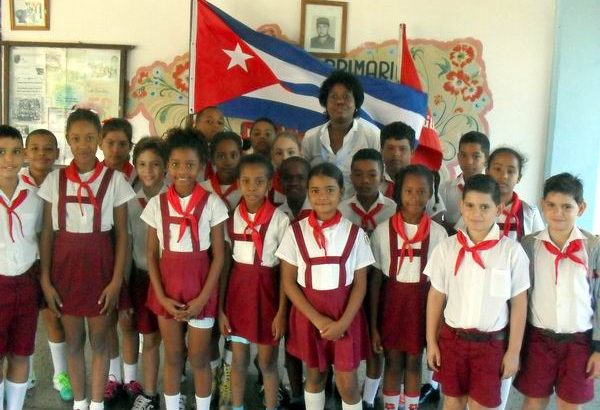
La educación cubana es un ejemplo para la región, aún con sus limitaciones y carencias. Cuba tiene un Índice de Desarrollo de la Educación para Todos muy elevado, incluso si se compara con algunos países desarrollados.

Según este índice, la pequeña Isla, bloqueada por Estados Unidos hace más de cinco décadas, ocupa el primer lugar entre todos los estados latinoamericanos.

En los últimos años, los informes presentados por la UNESCO, Organización de las Naciones Unidas para la Educación, la Ciencia y la Cultura, anulan el mal intencionado discurso mediático contra Cuba.

El “Índice en el Desarrollo de la Educación”, (IDE), es un indicador que permite una evaluación global del sistema de enseñanza en cuanto a la calidad, la primera infancia, la primaria, los jóvenes, la alfabetización de los adultos y la paridad entre los sexos.

También estudios de la Organización de Naciones Unidas para la Educación, la Ciencia y la Cultura afirman que Cuba es el país que mayor parte de su Producto Interno Bruto (PIB) dedica a la enseñanza, con un 13 por ciento.

En Cuba la educación es un derecho para todos al cual se accede sin costo alguno: es gratuita desde la enseñanza preescolar hasta la superior, mientras la instrucción elemental es obligatoria.

En 1959, para la Revolución naciente fue una prioridad eliminar el analfabetismo que llegaba al 23, 6 % de la población, y al 90 % en las zonas rurales.

En Cuba, este 5 de septiembre ingresarán a las aulas cubanas más de 1 millón 700 000 alumnos; y más de 10 mil 600 instituciones educativas abrirán sus puertas en todo el país.

Sin embargo, el bloqueo económico, comercial y financiero impuesto al país durante más de medio por Estados Unidos genera carencias diarias que afectan el desarrollo de este priorizado sector.

En ese contexto de bloqueo y campañas desinformativas, Cuba garantiza acceso pleno y gratuito al estudio, con oportunidades para todos los niños, adolescentes y jóvenes.

Fuente: http://www.radiorebelde.cu/noticia/educacion-cuba-avanza-pese-bloqueo-audio-20160905/

Comparte este contenido:

Education Ministry wants English to be Vietnam’s second language

Asia/Vietnan/09 de Septiembre de 2016/Fuente: Vietnan.net

RESUMEN: Un profesor del Instituto en Hanoi, dijo: «Será un camino largo y espinoso hacer que el Inglés sea comúnmente usado en Vietnam. Nuestro punto de partida está demasiado lejos de la meta «,  Citó un informe OMTE diciendo que el 90 por ciento de los estudiantes tenía menos de una veintena de cincos en Inglés en la final nacional 2016 de la escuela secundaria y sólo el 8,8 por ciento de los estudiantes obtuvo notas más altas que la nota media. Informó que las habilidades reales en inglés de los estudiantes podrían ser incluso peor. Tengo que recordarles que las estadísticas sólo muestran la lectura y escritura de los estudiantes. Si se ha pedido a los estudiantes a hacer, escuchar y hablar, los resultados hubieran sido más bajos «, dijo. Ngo Minh Oanh, Director del Instituto de Investigación en Educación, un brazo de la Universidad de Educación de la ciudad de HCM, citó razones detrás de los resultados de los exámenes no satisfactorios, pero hizo hincapié en que el programa de capacitación y método de enseñanza no son razonables.

“It will be a long and thorny path to make English used commonly in Vietnam. Our starting point is too far from the finish,” a high-school teacher in Hanoi said.

He cited an MOET report as saying that 90 percent of students had less than a five score in English from the 2016 national high-school finals and only 8.8 percent students got higher than the average mark.

He said that the students’ real English skills could be even worse than reported.

I have to remind you that the statistics only show the students’ reading and writing. If students had been asked to do listening and speaking, the scores would have been lower,” he said.

Ngo Minh Oanh, head of the Education Research Institute, an arm of the HCMC University of Education, cited reasons behind the unsatisfactory exam results, but emphasized that the training curriculum and teaching method are unreasonable.

“The number of English lessons is insufficient and the teaching is ineffective because we focus on teaching grammar and new words,” he said. “While listening and communication skills are very important, we mostly spend time on teaching grammar.»

Bui Minh Tuan, a teacher of English in district 7, HCMC, said bad exam results would still be seen in the next few years as a result of the policy.

“The current English teaching method just encourages students to learn words and grammar rules by heart, because this will allow them to pass the exams,” he commented.

Tuan went on to say that 3-4 periods a week are not enough for students to understand, memorize and practice. With just 45 minutes, teachers only have enough time to read new words, show grammar rules and read some paragraphs of texts.

Commenting about the curriculum, a parent, in an email to Phap Luat Viet Nam editorial board, wrote that students learn English like ‘climbing a greasy pole’.

“Students begin learning English at primary school. But when they enter secondary school, they have to repeat lessons from the very beginning. And the same thing happens when they enter high school,” he said.

Oanh said that since the teaching of English at school is ineffective, schools should not undertake the job.

“It would be better to set up independent English centers put under the control of local education departments,” he said.

Fuente: http://english.vietnamnet.vn/fms/education/163199/education-ministry-wants-english-to-be-vietnam-s-second-language.html

Comparte este contenido:

Sudáfrica: Basic Education Wins Unesco International Literacy Award

África/Sudáfrica/09 de Septiembre de 2016/Fuente: All Africa

RESUMEN: El Departamento de Educación Básica gana el premio de Alfabetización Internacional de la UNESCO para la campaña de Kha Ri Gude Alfabetización. El Departamento de Educación Básica (DBE) se enorgullece en anunciar que ha sido galardonado por  las Naciones Unidas para la Educación, la Ciencia y la Cultura, Premio de Alfabetización (UNESCO) Internacional. El Premio Confucio de Alfabetización 2016 UNESCO es para la Campaña de Alfabetización Kha Ri Gude del departamento y será entregado en una ceremonia que tendrá lugar en París el jueves 8 de septiembre de 2016. La campaña de alfabetización masiva Kha Ri Gude se lanzó en 2008 para cumplir con las aspiraciones de la Carta de la Libertad. A través de la campaña recluta voluntarios que conforman los miles de coordinadores, supervisores y educadores basados en la comunidad que se dedican a ejecutar los cursos de alfabetización cada año desde el inicio de la campaña.

Department of Basic Education wins UNESCO International Literacy award for Kha Ri Gude Mass Literacy campaign

The Department of Basic Education (DBE) is proud to announce that it has been awarded a United Nations Educational, Scientific and Cultural Organisation (UNESCO) International Literacy Award. The 2016 UNESCO Confucius Prize for Literacy is for the department’s Kha Ri Gude Mass Literacy Campaign and will be handed over at a ceremony to be held in Paris on Thursday, 8 September 2016.

The Kha Ri Gude mass literacy campaign was launched in 2008 to fulfil the ambitions of the Freedom Charter. Through the campaign recruits volunteers who make up the thousands of community-based coordinators, supervisors and educators that are engaged to run the literacy courses every year since the inception of the campaign.

The volunteers teach at community-based learning centres across the country as well as in informal venues such as backyards, local churches and even bus-shelters.

To date the campaign has touched 4.7 million people across the country and focuses on basic literacy and numeracy skills for people who were never afforded the opportunity to learn to read and write.

The UNESCO Jury appreciated the Kha Ri Gude programme for its well-developed mass literacy campaign that applied scientific research on how illiterate adults read. The panel found it impressive that since its inception in 2008, the programme had taught urban and rural based adults in 11 official languages including Braille and to date it has reached 4.7 million South Africans, mostly women.

Since 1967, UNESCO has awarded International Literacy Prizes to outstanding and innovative programmes that promote literacy, and this year UNESCO awards laureates from around the world under the theme: Innovation in Literacy.

The Minister of Basic Education Mrs Angie Motshekga will be represented by the South African Ambassador to France and Permanent Representative to UNESCO, HE Mr. Rapulane Molekane, who will receive the award on behalf of the department and country.

The Department of Basic Education is proud of all those who have been involved in Kha Ri Gude over the past eight years, and this award is testament to the hard work and dedication of the officials as well as the volunteers and participants of the Kha Ri Gude mass literacy campaign.

Fuente: http://allafrica.com/stories/201609080703.html

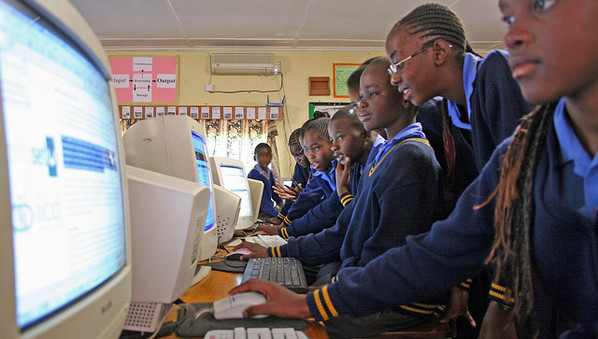
Fuente de la imagen: http://www.scidev.net/sub-saharan-africa/icts/news/internet-access-crucial-to-education-in-africa.html

Comparte este contenido:

Panamá: Alfabetización debe ser integral y de forma permanente

Centroamérica/Panamá/09 de Septiembre de 2016/Autora: Mellibeth González/Fuente: Panamá América

Para la escritora panameña, Rosa María Britton, la alfabetización no solo se trata de aprender a leer o a escribir, sino de hacerlo bien.

A su parecer, hay que enfocarse también en los estudiantes que hoy asisten a las aulas, pero, leen atropelladamente o escriben con fallas ortográficas o no lo hacen corrido.

Para Britton, este tipo de estudiantes no sabe leer ni escribir, pues no son efectivos.

«Hay muchachos que a duras penas pueden escribir su nombre, ¡por Dios!», expresó con la honestidad que la caracteriza.

A su juicio, el país presenta diferencias entre la educación oficial y particular, que cada vez es más evidente, y también consideró que el desarrollo de estas habilidades dependen, también, de los propios educadores.

Autoridades universitarias y gremios magisteriales han denunciado en reiteradas ocasiones, la necesidad de reestructurar el contenido que se dicta dentro de los salones de clases para que sean consecuentes con el mundo actual.

La docente y dirigente gremial, Yadira Pino, dijo que este panorama es más que un problema de vocación, pues en su profesión no son ellos quienes deciden los programas ni el enfoque que se impartirá, sino las administraciones gubernamentales.

«A nosotros nos vienen con recetas, con libros, con programas de afuera y ni siquiera hemos analizado lo que tenemos acá, haciéndonos pruebas nosotros mismos», expresó.

Para Pino, la práctica de la lectura también debe darse fuera de la escuela y la sociedad tiene una obligación, sin embargo, esta no forma parte de la cultura propia, a su parecer.

Mientras, el docente universitario Juan Jované dijo que es importante que los estudiantes conozcan el idioma, sobre todo la escritura, pero se pregunta ¿qué cosa es leer?, pues aseguró que se encuentran a jóvenes que pueden leer, pero no entienden correctamente qué están leyendo.

«No manejan suficientemente el lenguaje para entender qué se le está preguntando por escrito», añadió.

Sistema

Niveles: Los niveles educativos en Panamá abarcan el preescolar, que está dirigido a los niños entre 4 y 5 años; nivel básico, educación media y educación superior.

Educación universitaria: De las 28 universidades que funcionan en el país, 5 corresponden al sector oficial y 23 al particular, según estadísticas educativas del año escolar 2013.

Participación: Las mujeres tienen una mayor participación en el sistema educativo con un valor absoluto de 515 mil 715 y los hombres registraron 508 mil 592, según las estadísticas educativas del año escolar 2013.

Datos

62,270 docentes en todo el país fue el número que arrojaron las estadísticas educativas correspondientes al año lectivo 2013.

47,340 correspondieron al sector oficial.

14,930 educadores fueron contratados para laborar en centros educativos particulares.

Fuente: http://www.panamaamerica.com.pa/tema-del-dia/alfabetizacion-debe-ser-integral-y-de-forma-permanente-1042119

Comparte este contenido:

Fiji: Tablets for students

Oceanía/Fiji/09 de Septiembre de 2016/Autora: Litia Cava/Fuente: The Fiji Times

RESUMEN: Los libros de texto de impresión del año pasado estan plagados de desafíos. El Ministerio de Educación tiene una alternativa para los alumnos del año 12 y 13  a partir del próximo año: Tabletas. El Ministro de Educación Dr. Mahendra Reddy dijo que su ministerio introducira el uso de Tabletas para reemplazar los libros de texto «grandes»  llevadas por los estudiantes a la escuela. Esta nueva herramienta de educación es al parecer parte del programa de alfabetización digital del ministerio, lo que permitiría a los estudiantes el acceso a las noticias en todo el mundo y materiales educativos en Internet, el Dr. Reddy añadió. El ministerio cargara todo el material didáctico en las tabletas y el costo total del proyecto sería de alrededor de $ 250.000. Dijo que mientras que las tabletas se otorga a estudiantes acceso a la Internet, algunos sitios web que tendrían impactos negativos serían bloqueadas.

PLAGUED with challenges of printing textbooks last year, the Ministry of Education has an alternative for Year 12 and 13 students from next year — tablets.

Education Minister Dr Mahendra Reddy said his ministry would introduce the use of tablets to replace the «big textbooks» students carried to school.

This new education tool is apparently part of the ministry’s digital literacy program, which would allow students access to news around the world and educational materials on the internet, Dr Reddy added.

The ministry will load all learning materials in the tablets and the total project cost would be about $250,000.

He said while the tablets would give students access to the internet, certain websites that would have negative impacts would be blocked off.

Dr Reddy said the ministry was still in talks with information technology (IT) experts on how to block websites that would have a negative impact on the children.

He said they were also in talks with IT experts to ensure that the blocked websites were not in any way unlocked.

«We cannot ignore the various developments in the IT sector otherwise we will become irrelevant and we do not want our children to be irrelevant and therefore, we will look at how we can develop from the IT,» Dr Reddy said.

He said the ministry was also looking at ways of providing data for the tablets, however, once implemented, parents would also be able to top-up the data on their children’s tablets.

Dr Reddy said the accessibility and use of the tablet should not be a problem as about 90 per cent had access to electricity.

He said students who were out of network coverage areas would not have problems as their devices would be preinstalled and programmed with textbooks, exam papers and solutions.

But Dr Reddy said students would have to replace the tablets if they were damaged.

National Federation Party leader Professor Biman Prasad said after the one laptop per child policy to the one learning device per child, the ministry now wanted to introduce tablets.

«A few days ago, the minister announced that school texts will now be available on mobile technology in the near future, replacing textbooks.

«And the minister chose the launch of National Library Week to make this announcement.

«This means that the minister doesn’t believe in books and libraries.»

Opposition spokesman for education, Mikaele Leawere, aired serious concern over the announcement as well.

He said the Government should focus on reconstructing cyclone-affected schools instead of introducing tablets.

Fuente: http://www.fijitimes.com/story.aspx?id=369864

Comparte este contenido:
Page 208 of 360
1 206 207 208 209 210 360