Page 232 of 235
1 230 231 232 233 234 235

No podemos fallar

crisis educativa

Descriptores:  Academia, Docencia, Docentes, Educación Superior, Empleabilidad, Equidad, Estudiantes, Financiamiento, Globalización, Gobierno, IES, Instituciones, Investigación, Latinoamérica, Políticas, Profesores, Público, Universidades estatales, Universidades privadas

No podemos fallar

Inicialmente publicado en http://www.brunner.cl

Resumen: Latinoamérica reúne más de 10 mil instituciones de educación superior. El desenvolvimiento de los sistemas nacionales sigue patrones distintivos en cada país. Con todo, una rápida revisión de las políticas aplicadas permite observar algunas tendencias comunes.

JOSÉ JOAQUÍN BRUNNER

Prácticamente en todos los países de América Latina, los sistemas de educación superior se hallan sujetos a un conjunto de poderosas fuerzas que interactúan entre sí: masificación de la matrícula, insuficiente financiamiento público, fuerte desarrollo de instituciones privadas, diferenciación y proliferación de programas de estudio, dudas respecto del valor de los grados y títulos, comercialización del conocimiento, desconfianza gubernamental en la autonomía de las universidades, demanda por mayores regulaciones y el desafío de mejorar la calidad de la enseñanza, el impacto socioeconómico de la investigación y la distribución de oportunidades entre los jóvenes.


En su conjunto, Latinoamérica reúne más de 10 mil instituciones de educación superior -de las cuales alrededor de 3.500 se denominan universidades-, y aproximadamente unos 25 millones de estudiantes. Cada año se gradúan 2 millones de profesionales y técnicos superiores.

La diversidad organizacional de estos sistemas parece infinita. Aun entre las instituciones llamadas universidades hay una enorme variedad: universidades estatales, privadas subsidiadas por el Estado y privadas que viven de su propio presupuesto; cada una posee su propia misión, proyecto estratégico, trayectoria histórica, identidad y grado distintivo de prestigio. Unas poseen un carácter académico sofisticado y se focalizan en la investigación y la enseñanza de posgrado; la mayoría, en cambio, son exclusivamente docentes de pregrado con distintos niveles de densidad cultural. También la educación terciaria técnico-profesional varía en importancia y complejidad organizacional. Es fuerte en Chile y Colombia, por ejemplo, pero casi inexistente en Brasil y posee un débil desarrollo en Argentina.

En suma, el desenvolvimiento de los sistemas nacionales sigue patrones distintivos en cada país. Con todo, una rápida revisión de las políticas aplicadas permite observar algunas tendencias comunes.

Primero, la delegación por parte de los gobiernos -por acción u omisión- de la responsabilidad sobre la masificación de la matrícula en el sector de provisión privada y el mercado. Es notablemente el caso de Chile, Brasil, Perú, República Dominicana y Colombia. En el extremo opuesto, con un bajo grado de delegación privada, se encuentran Cuba, Argentina y Uruguay. Como resultado, la mitad de la matrícula latinoamericana corresponde a oferta privada. De esta, un 50 por ciento pertenece a organizaciones con fines de lucro.

Segundo, y en parte como reacción frente a la anterior tendencia y la consiguiente heterogénea diversificación de la provisión, los gobiernos instituyen mayores regulaciones y adoptan procedimientos para evaluar y acreditar la oferta. Los casos más comentados -por su vigor y riesgos para la autonomía institucional- son Ecuador y Perú. Debates en esa dirección existen también en Chile, Colombia, Costa Rica y otros países de la región.

Tercero, una demanda en aumento de financiamiento para cubrir los costos de la expansión y la necesaria inversión en infraestructura, equipamiento e investigación. Como resultado, financiamiento público y privado se complementan. A su vez, los gobiernos exigen mayor rendición de cuentas respecto del uso de los recursos y condicionan su entrega al desempeño y resultados de las organizaciones beneficiadas. Por su lado, los contribuyentes -y las familias y estudiantes que pagan- reclaman mejores servicios y tienen la expectativa (no siempre materializada) de un retorno positivo para su inversión.

Cuarto, la tendencia de las políticas públicas a seleccionar y concentrar la asignación de recursos públicos de manera de crear instituciones, consorcios, centros y áreas de excelencia (internacional), política adoptada en Ecuador por ejemplo y, en el campo de la investigación científico-tecnológica, por varios países de la región -Chile incluido-igual que Alemania, Finlandia y Corea del Sur, entre los países industrializados.

Quinto, a la luz de los cambios que experimenta la educación terciaria, diversos países latinoamericanos han emprendido la tarea de redefinir el marco base de la legislación aplicada a este sector. Entre los países andinos, Perú y Ecuador han dictado una nueva ley, Colombia lo intentó pero no pudo debido a la amplia resistencia y el gobierno chileno declara su intención de hacerlo. En todos estos casos, los temas claves más polémicos son cómo conformar la gobernanza del sistema nacional y el gobierno de las universidades, la autonomía y el rol de las instituciones universitarias, la función e importancia del nivel técnico-profesional, la regulación del mercado y de los títulos y grados, el control de calidad y el financiamiento de las instituciones y los estudiantes.

El gobierno de la Presidenta Bachelet anuncia incluso un cambio de paradigma, pero ha sido parco en sus especificaciones. El prometido proyecto de ley -uno o varios, no se sabe- se ha postergado varias veces para facilitar consultas que sin embargo no se materializan seriamente. En tanto, el Gobierno aprobó mediante una glosa presupuestaria y una forzada “ley corta” la gratuidad como un nuevo principio de financiación de las universidades. Como resultado de ese errático cuadro reinan la confusión y la incertidumbre.

Es de esperar que a partir de marzo se inicie una auténtica deliberación pública sobre el futuro de nuestra educación superior. Esta ha alcanzado un alto grado de complejidad e, igual como ocurre en el resto de América Latina, enfrenta poderosas fuerzas y desafíos. Políticas equivocadas podrían causar un severo daño y retrasar por una década o más la transformación y mejoramiento de nuestra educación terciaria.


Comparte este contenido:
Cooperación genuina, área rural, educación universitaria, internado

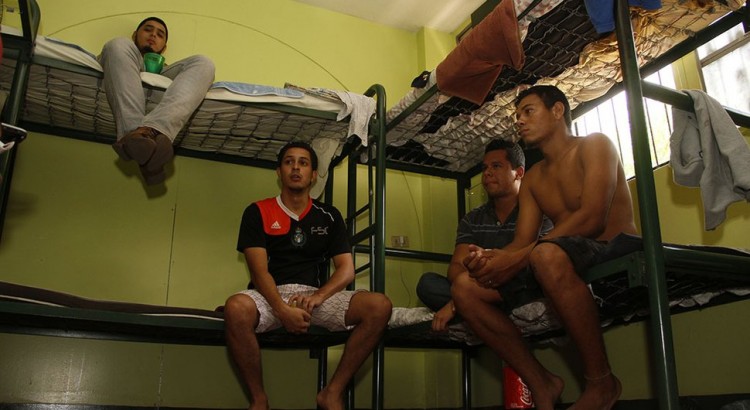
Nicaragua: Estudiantes del área rural, concretando sus sueños en la UNA

NICARAGUA: Estudiantes del área rural, concretando sus sueños en la UNA

Historias. Casi no van a sus casas, se despiertan de madrugada para ser los primeros en bañarse y sobreviven con la ayuda que le brinda la Universidad Nacional Agraria de Nicaragua (Universidad pública), así es el día a día de los estudiantes internos. (…)

La cooperación genuina entre estudiantes becadas/os y no becadas/os hace posible que todas/os se preparen.

Fuente: http://www.elnuevodiario.com.ni/nacionales/386305-vida-internos/

Comparte este contenido:

Lula abriu a porta das universidades para milhões de brasileiros


Fuente Instituto Lula

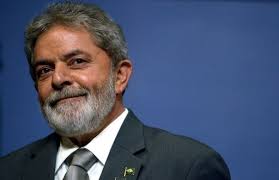
O então presidente Lula posa para foto com os primeiros formandos em Medicina do Programa Universidade para todos (ProUni) (Brasília, DF, 30/06/2010). Foto: Ricardo Stuckert/PR

Nessa semana, comemoramos 11 anos da sanção do Prouni (Programa Universidade Para Todos), que oferece bolsas de estudo parciais e integrais em instituições privadas do ensino superior. O programa faz parte de uma série de ações dos governos Lula e Dilma que revolucionaram e ampliaram as oportunidades para os brasileiros fazerem uma faculdade.

Antes um privilégio restrito a poucos, o tão sonhado diploma universitário passou a ser realidade para milhões de brasileiros que estudam em escolas públicas. Foi preciso que um torneiro mecânico se tornasse presidente do Brasil para que milhões de pessoas que antes não tinham acesso a essas instituições de ensino fossem incluídas. O sucesso é claro. O número de matrículas no ensino superior dobrou com Lula e Dilma: passou de 3,5 milhões em 2002 para mais de 7,1 milhões em 2014.

Portas abertas a todos

Além do Prouni, outras ferramentas foram usadas para colocar cada vez mais brasileiros nos bancos das universidades. Lula transformou o Enem (Exame Nacional do Ensino Médio), que passou a ser o passaporte de entrada dos jovens no ensino superior por meio do Sistema de Seleção Unificada (Sisu).

Alternativa ao vestibular, o exame democratizou o acesso ao ensino superior: 95% das universidades federais utilizam suas notas como mecanismo de seleção. O Enem é critério também para ingresso no ProUni, acesso ao Fundo de Financiamento Estudantil (Fies) e ao Ciência sem Fronteiras (programa de bolsas para intercâmbio em universidades estrangeiras de ponta).

Criado pelo governo Lula em 2009, o Sistema de Seleção Unificada é hoje uma das principais formas de acesso à universidade. A cada edição, as instituições públicas de ensino superior que aderem ao Sisu reservam um número de vagas para os participantes do Enem. O candidato faz suas opções de inscrição dentre as vagas ofertadas em qualquer ponto do país. Ao final da etapa de inscrição, o sistema seleciona automaticamente os candidatos mais bem classificados em cada curso, de acordo com suas notas no Enem. A primeira edição do Sisu teve 51 instituições cadastradas. Em 2014, o número chegou a 155. Antes do Sisu, cada universidade tinha seu próprio vestibular. Era caro e impossível prestar para várias universidades públicas ao mesmo tempo, o que aumentava os custos e restringia o acesso dos mais pobres ao ensino superior gratuito.

Novas universidades e mais investimentos

O ex-presidente foi quem mais fez novas universidades na história de nosso país. Somente durante seus dois mandatos, foram construídas 14 novas universidades federais e 126 novos campi. Dilma ainda fez mais quatro universidades e 47 campi.

Entre 2003 e 2013, o número de municípios com instituições federais de ensino superior dobrou, de 114 para 237. A expansão ampliou e democratizou o acesso à universidade e está ajudando a combater as desigualdades regionais com uma arma poderosa: o conhecimento.

Além disso, o Programa de Apoio a Planos de Reestruturação e Expansão das Universidades Federais (Reuni) ofereceu às universidades um volume inédito de recursos para investir na produção de conhecimento. Em troca, ampliaram o número de vagas e criaram cursos noturnos (para quem trabalha o dia inteiro e só pode estudar à noite), entre outras ações que estão ajudando a reduzir desigualdades sociais históricas.

Inclusão de verdade

Outra medida importante para tornar as vagas no ensino superior acessíveis foram as cotas. Os críticos diziam que o nível do ensino ia cair. E que os cotistas, incapazes de acompanhar o ritmo dos colegas, acabariam por desistir de tudo. Dez anos depois do início de implantação do sistema de cotas sociais e raciais em universidades públicas, no entanto, provou-se que aconteceu exatamente o contrário – a evasão caiu e a qualidade do ensino cresceu.

Deu tão certo que virou lei, sancionada em 2012 pela presidenta Dilma. A Lei de Cotas Sociais destina 50% das vagas nas universidades federais para quem cursou integralmente o ensino médio em escolas públicas. Essas vagas serão distribuídas entre negros, pardos e indígenas, de acordo com a composição étnica da população em cada estado.

Antes, ter um diploma universitário era um privilégio concedido a poucos. No Novo Brasil, iniciado com a eleição de Lula, o acesso ao ensino superior se tornou mais amplo e democrático.


Fuente: Instituto Lula

Comparte este contenido:

Inauguran Universidad en Camboya

Camboya/Febrero 2016/ Autor: Nom Pen/Fuente: Presa Latina, Agencia Informativa Latinoamericana

Camboya sumó el 11 de febrero de 2016, la Universidad Hem Sanring a su sistema de educación estatal, inaugurada por el primer ministro Hun Sen, en la provincia de Tbong Khmum.

Construida a un costo de 2,2 millones de dólares, la nueva institución acogerá las facultades de Agricultura, Ingeniería, Literatura y Ciencias Sociales, según se informó.

También será sede de igual números de institutos- de Lenguas Extranjeras, Tecnologías de la Información y Formación Vocacional.

Al hablar en la ceremonia, el jefe de Gobierno señaló que esta universidad contribuirá al desarrollo de los recursos humanos y de la investigación científico-técnica, en correspondencia con la estrategia del Ministerio de Educación.

Este centro de estudios cubre 23,67 hectáreas y su sede principal es un edificio, de tres plantas.

Fuente de la Noticia:

http://prensa-latina.cu/index.php?option=com_content&task=view&idioma=1&id=4598251&Itemid=1

Fuente de la Foto:

https://en.wikipedia.org/wiki/Tboung_Khmum_Province

Socializado por:

María Magdalena Sarraute Requesens. Doctorado en Ciencias de la Educación, Magister en Desarrollo Curricular, Licenciada en Relaciones Industriales. Docente – Investigadora Educativa del CIM y reconocida por el PEII en la Categoría B, Coordinadora General del Centro Nacional de Investigaciones Educativas, Integrante de la SVEC e Integrante Fundadora de la Red Global/Glocal por la Calidad Educativa.

Comparte este contenido:
Telémaco Talavera, Presidente CNU - Nicaragua

Nicaragua: Universitarios apoyarán a productores ante escasez de lluvia

Universitarios apoyarán a productores ante escasez de lluvia en Nicaragua

Unos 5,000 estudiantes universitarios serán enviados al campo para apoyar a los productores de Nicaragua a enfrentar las lluvias irregulares actuales, informó hoy el Consejo Nacional de Universidades (CNU), a través de Telémaco Talavera, su Presidente.

Fuente: http://www.elnuevodiario.com.ni/nacionales/385872-universitarios-apoyaran-productores-escacez-lluvia/

Pregunta: En un eventual ranking de universidades en Nicaragua (ver noticia anterior sobre universidades en Nicaragua), ¿Será considerado como criterio de calidad el apoyo de estudiantes al campesinado?

Comparte este contenido:

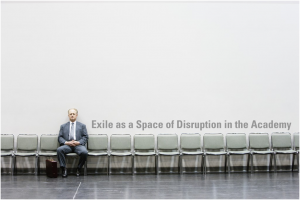
Exile as a Space of Disruption in the Academy

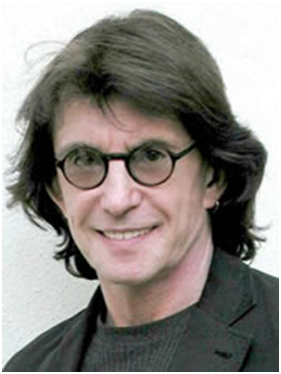
Henry Giroux (*)

Giroux 1

Descripciòn en español: ¿Cómo no estar exiliado en el trabajo académico, especialmente si uno se niega a formar parte de las camarillas, la mediocridad, las formas histéricas de resentimiento, la murmuración, y la producción irrelevante, e incluso a veces no ética, como expresión de la investigación que cada vez que ha llegado a caracterizar mejor a la universidad corporativa?. En este artículo, Henry Giroux, uno de los más importantes teóricos de la pedagogía crítica reflexiona al respecto (Nota del Editor de OVE).

How can one not be in exile working in academia, especially if one refuses the cliques, mediocrity, hysterical forms of resentment, backbiting, and endless production of irrelevant, if not sometimes unethical, research that increasingly has come to characterize the corporate university? The spaces of retreat from public life now occupy too many institutions of higher education and have transformed them into dead zones of the imagination mixed with a kind of brutalizing defense of their own decaying postures and search for status and profits. Leadership in too many academic departments is empty, disempowering, and insular, lacking any outward vision or sense of social responsibility. Mimicking the instrumental logic of a business culture, too many administrators lack the vision, totality of knowledge, or will to address what role the university should play in a democracy. Too many individuals are tied to endless committees, overwhelmed by the mediocrity they or others endorse, and fearful of anyone who steps outside of the boundaries of bureaucratic conformity and civility. Excellence has become part of an empty recruiting slogan that has little do with the actual work or scholarship of faculty who are often punished or resented for such work.

One thing is clear: The retreat from the ethical and political imagination in higher education in too many countries has become legion. Little is being done to address the army of subaltern labor that has become the new poor in higher education and elsewhere. Moreover, faculty are increasingly told that the most important register of scholarship is grant writing over and against activities of teaching, community engagement, or other forms of public scholarship. In addition, students are constantly being told that they should feel good instead of working hard and focusing while being burdened, at the same time, with an insufferable amount of financial debt. Too many academics no longer ask students what they think but how they feel. Everyone wants to be a happy consumer. When students are told that all that matters is feeling good, and that feeling uncomfortable is alien to learning itself, the critical nature of teaching and learning is compromised.


This is an academic version of the Dr. Phil show where infantilized pedagogies prove to be as demeaning to students as they are to professors. Professors are now increasingly expected to take on the role of therapists speaking in terms of comfort zones but are rarely offered support for the purpose of empowering students to confront difficult problems, examine hard truths, or their own prejudices. This is not to suggest that students should feel lousy while learning or that educators shouldn’t care about their students. To the contrary, caring in the most productive sense means providing students with the knowledge, skills, and theoretical rigor that offers them the kinds of intellectual challenges to engage and take risks in order to make critical connections and develop a sense of agency where they learn to think for themselves and become critical and responsible citizens. Students should feel good through their capacity to grow intellectually, emotionally, and ethically with others rather than being encouraged to retreat from difficult educational engagements. Caring also means that faculty share an important responsibility to protect students from conditions that sanction hate speech, racism, humiliation, sexism, and an individual and institutional attack on their dignity.

For a range of theorists extending from Theodor Adorno to the post colonialist theorist Edward Said, exile was a central metaphor for defining the role of academics. As oppositional public intellectuals, academics played an indispensible role in Adorno’s notion of critical theory and Said’s work in defending the university as a crucial public sphere. They also played a crucial role in engaging culture as a site informed by mechanisms of power, and taking seriously the idea of human interdependence while living on the border — one foot in and one foot out, an exile and an insider, for whom home was always a form of homelessness. In Representations of the Intellectual, Said argued that exile referenced a space of engagement and critique, serving as both a theoretical and political reminder that educators often occupy a similar role and space where they work to “publicly raise embarrassing questions, confront orthodoxy and dogma (rather than to produce them), and refuse to be easily co-opted by governments or corporations” while offering models of social engagement that redefined the role of academics as civically engaged public intellectuals. This politically charged notion of the oppositional intellectual as homeless—in exile and living on the border, occupying a shifting and fractured pedagogical space in which critique, difference, and a utopian potentiality can endure—has provided the conceptual framework for generations of educators fighting against the deadly instrumentalism and reactionary ideologies that have shaped contemporary educational models in public schools and universities.
Giroux 2

Under the regime of neoliberalism, too many institutions of higher education have transformed the culture of education into the culture of business and are now characterized by a withdrawal into the private and the irrelevant. In this view, education is driven largely by market forces that undermine any viable vision of education as a public good connected to wider social problems. Solidarity, rigor, public scholarship, and integrity are in short supply in many departments and are largely ignored by the new and expanding managerial class of administrators. In this context, exile is less a choice than a condition that is forced through policies of containment and procedure where contingent faculty are given short term contracts, struggle with course over loads, and bear the burden of time as a deprivation rather than a space of reflection and ownership over the conditions of their labor. Under such circumstances, exile is a state that can just as easily be manipulated to produce a key element of the neoliberal university which, as Noam Chomsky points out, is “designed to reduce labor costs and to increase labor servility.”[1]

Exile in this context speaks to new forms of faculty servitude that restrict and shut down spaces for dialogue, scholarship, dissent, and quality teaching. This is a form of forced exile, one wedded to expanding faculty powerlessness and undermining any sense of autonomy. It is against this notion of oppressive exile wedded to the market driven prescription of undermining faculty power while intensifying their labor that the concept of exile has to be rethought. Instead, exile must be seen and theorized as part of a larger political and empowering discourse connected to an affective and ideological space of struggle and resistance. Less an oppressive space of containment and deskilling, exile can become the grounds for a revitalized kind of public space and activism where a new language, a new understanding of politics, and new forms of solidarity can be nurtured among the displaced — that is, among those who refuse the neoliberal machinery of social and political violence that defines education solely as a source of profit, mode of commerce, and “feel good” pedagogy. The renowned sociologist Zygmunt Bauman’s comments on his notion of welcoming exile under certain circumstances should not therefore surprise us, especially in light of his own experience of marginality as a Jewish public intellectual and as a courageous exemplar of civic courage. What must be understood and emphasized here is that Bauman’s position, along with that of Adorno and Said’s, does not constitute a celebration of marginality. Rather, for all of these scholars, exile is an affirmation to keep going in the midst of what sometimes appears to be a deadening form of academic madness and insularity driven by forces which constantly seek to undermine the university as a democratic public sphere. Bauman writes:

I need to admit, however, that my view of the sociologists’ vocation does not necessarily overlap with the consensus of the profession. Dennis Smith has described me as an “outsider through and through.” It would be dishonest of me to deny that denomination. Indeed, throughout my academic life I did not truly “belong” to any school, monastic order, intellectual camaraderie, political caucus, or interest clique. I did not apply for admission to any of them, let alone did much to deserve an invitation; nor would I be listed by any of them—at least unqualifiedly—as “one of us.” I guess my claustrophobia—feeling as I do ill at ease in closed rooms, tempted to find out what is on the other side of the door—is incurable; I am doomed to remain an outsider to the end, lacking as I [do] the indispensable qualities of an academic insider: school loyalty, conformity to the procedure, and readiness to abide by the school-endorsed criteria of cohesion and consistency. And, frankly, I don’t mind.[2]

While I don’t want to romanticize positions of marginality and exile, they may represent some of the few spaces left in the university where one can develop a comprehensive vision of politics and social change, challenge the often deadening silos of disciplinarity, while making connections with wider social movements outside of the university. The fight for the university as a public good is essential to the development of a vibrant formative culture and democracy itself. Exile may be one of the few spaces left in neoliberal societies as democracy is pushed ever farther to the margins where individuals must learn to work together to cultivate a sense of meaningful connection, solidarity, and engaged citizenship that moves beyond an allegiance to narrow interest groups and fragmented, single issue politics. Exile might be the space where a kind of double consciousness can be cultivated that points beyond the structures of domination and repression to what the poet Claudia Rankine calls a new understanding of community, politics, and citizenship in which the social contract is revived as a kind of truce in which we allow ourselves to be flawed together. She writes:

You want to belong, you want to be here. In interactions with others you’re constantly waiting to see that they recognize that you’re a human being. That they can feel your heartbeat and you can feel theirs. And that together you will live—you will live together.The truce is that. You forgive all of these moments because you’re constantly waiting for the moment when you will be seen. As an equal. As just another person. As another first person. There’s a letting go that comes with it. I don’t know about forgiving, but it’s an “I’m still here.” And it’s not just because I have nowhere else to go. It’s because I believe in the possibility. I believe in the possibility of another way of being. Let’s make other kinds of mistakes; let’s be flawed differently.[3]

To be “flawed differently” works against a selfish desire for power and a sense of belonging to the often suffocating circles of certainty that define fundamentalisms of all ideological stripes. Being “flawed differently” also suggests the need to provide room for the emergence of new democratic public spheres, noisy conversations, and a kind of alternative third space informed by compassion and respect for the other. Under such circumstances, critical exchange and education matters not as a self-indulgent performance in which individuals simply interview themselves but as public acts of reaching out, a willingness to experience the other within the space of exile that heralds and precipitates a democracy to come. This would be a democracy where intellectual thought informs critique, embodies a sense of integrity, and reclaims education in the service of justice and equality.


What might it mean, then, to imagine the university as containing spaces in which the metaphor of exile provides a theoretical resource to engage in political and pedagogical work that is disruptive, transformative, and emancipatory? Such work would both challenge the mainstream notion of higher education as a kind of neoliberal factory, as well as the ideological fundamentalism that has emerged among many conservatives and some alleged progressive voices. What might it mean to address the work that we do in the university, especially with regards to teaching as a form of classroom grace– a place to think critically, ask troubling questions, and take risks, even though that may mean transgressing established norms and bureaucratic procedures?[4] 

Exile is not a prescription or rationale for cynicism, nor is it a retreat from one’s role as an informed and engaged faculty member. On the contrary, it is a space of possibility where the reality of the university as defined by the culture of business and a reductive instrumental rationality can be challenged by a view of the university as a public good, one that expands and deepens relations of power among faculty, administrators, and students while redefining the mission of the university. In an age of overwhelming violence, war, and oppression, universities must create formative cultures that allow students to assume the role of critically engaged citizens, informed about the ideologies, values, social relations, and institutions that bear down on their lives so that they can be challenged, changed, and held accountable. Exile in this sense is a space of critical dialogue, a posture of engaged dissent, a place filled with visions that refuse to normalize the present while imagining a more just future. It is a deeply political and moral space, one that makes education central to any viable notion of agency and politics, and works hard to create the public spaces and formative cultures that make democracy possible.

_ _

[1] Noam Chomsky, “The Death of American Universities,” Reader Supported News, (March 30, 2015). Online at: http://readersupportednews.org/opinion2/277-75/29348-the-death-of-american-universities

[2] Efrain Kristal and Arne De Boever, “Disconnecting Acts: An Interview with Zygmunt Bauman Part II,” Los Angeles Review of Books (November 12, 2014). Online: http://lareviewofbooks.org/essay/disconnecting-acts-interview-zygmunt-bauman-part-ii

[3] Meara Sharma interviews Claudia Rankine, “Blackness as the Second Person,” Guernica (November 17, 2014). Online: https://www.guernicamag.com/interviews/blackness-as-the-second-person/

[4] Kristen Case, “The Other Public Humanities,” The Chronicle of Higher Education (January 13, 2014). Online:http://m.chronicle.com/article/Ahas-Ahead/143867/


(*)  Henry Giroux (Providence, 18 de septiembre de 1943) es un crítico cultural estadounidense y uno de los teóricos fundadores de la pedagogía crítica en dicho país. Es bien conocido por sus trabajos pioneros en pedagogía pública, estudios culturales, estudios juveniles, enseñanza superior, estudios acerca de los medios de comunicación, y la teoría crítica.


 

Comparte este contenido:

Culmina en la Habana, Cuba el Décimo Congreso Internacional Universidad 2016


cuba

El Ministerio de Educación Superior y las universidades cubanas convocaron al 10mo. Congreso Internacional de Educación Superior “Universidad 2016”. Este cónclave, llamado a celebrarse en La Habana, entre el 15 y el 19 de febrero de 2016 se desarrolló bajo el lema “Universidad innovadora por un desarrollo humano sostenible”; fue una prolongación de los debates contemporáneos sobre la educación superior y una garantía de encuentro permanente entre actores educativos de más de sesenta países como marco para la reflexión y el debate. Esta décima edición ratifica al Congreso Universidad como ámbito académico para el diálogo reflexivo y franco, como espacio de encuentro y concertación de proyectos, redes y nuevos compromisos donde se analizan y estudian soluciones a los problemas más apremiantes de la educación superior y se tributa al futuro de nuestros países. Es un placer invitarlo a encontrarnos nuevamente en el 2016.

El X Congreso Internacional Universidad 2016 concluyó este viernes 19 de febrero en La Habana, con un panel dedicado al líder histórico de la Revolución cubana, Fidel Castro.

En la jornada matutina, José Ramón Ramos Horta, Premio Nobel de la Paz y ex presidente de Timor Leste, impartió una conferencia magistral sobre el papel de la educación superior en el desarrollo sostenible de los pueblos.

De los 19 eventos colaterales, entre ellos simposios, mesas redondas, foros y encuentros que sesionaron, previamente a la clausura se realizó la relatoría en el XIII Taller Internacional La Educación Superior y sus perspectivas.

Durante cuatro días, más de tres mil profesionales del magisterio participaron en el X Congreso Universidad 2016, en el que universidades cubanas y foráneas reforzaron sus vínculos de colaboración científica. Información detallada del evento está disponible en  http://www.congresouniversidad.cu/


Comparte este contenido:
Page 232 of 235
1 230 231 232 233 234 235