Page 100 of 144
1 98 99 100 101 102 144

Yemen’s children have been forgotten by the world for too long

Por: George Graham

Just 12 percent of the funds required to support education activities in the war-torn country this year have been raised

As we approach the entrance to the school, enthusiastic children flock towards us, excited by a visit from outsiders and a distraction from their usual routine. We could be visiting a school in any country – except we’re here in Yemen, a country torn apart by three years of conflict.

I’m visiting schools in Aden, in southern Yemen, which is relatively peaceful now, but saw heavy fighting three years ago when the Houthis captured the city and were then driven out by the Saudi-led coalition. By contrast, Sanaa, the capital city in the north, was being hit by air strikes just a week ago. My colleagues described parts of the northern governorate of Saada as «flattened».

Children robbed of their futures

Even so, in Aden, there’s devastation everywhere. Building after building is a bombed-out carcass, including two of our offices. But the damage isn’t only physical: the economy is in tatters, and many families are struggling to make ends meet. Some supplies and commodities are getting in, but the Yemeni rial has plummeted so much that most people can afford very little. The influx of displaced people from the frontlines has added to the pressure.

The impact of the conflict on the lives of children has been devastating. It has killed them, maimed them, taken the lives of their family and friends, and left many starving and without medical care. It’s also robbing them of their futures.

The girls’ school had been hit by explosive weapons earlier this month, when a nearby fight strayed into the schoolyard

Across the country, schools have been attacked, destroying the structures and the lives of those trapped inside. More than 1,800 schools have been directly impacted by the conflict, including more than 1,500 that have been damaged or destroyed and 21 that are occupied by armed groups. But that’s just the start of it.

The entire education system has been decimated. There’s a severe shortage of teachers; no one has been hired since before the war, leaving many schools reliant on volunteers. The shortage of female teachers is of particular concern, causing many parents to pull their girls out of school. A dire lack of materials, such as textbooks, has left the bookshelves in school libraries almost bare.

Schools decimated

Sometimes there aren’t even buildings in which to teach, so lessons are held outdoors, often in intolerable weather conditions. One «school» we visited was a cluster of sweltering white tents erected next to the obliterated remains of what was once a school building. The Saudi-led coalition bombed the original school, which had been occupied by Houthi armed forces.

Yemen was already a severely impoverished country, and the conflict has not only stopped further development, but rolled back valuable gains. Many children must spend part of their day working to help support their families, leaving them too tired to learn. Classrooms are immensely overcrowded, so children study in shifts.

Displaced Yemeni children sit on tyres at a camp in the Yemeni coastal city of Hodeidah on 17 February 2018 (AFP)

In one of the schools I visited, more than 100 students packed each classroom, with four girls sharing a desk. These children are the lucky ones – close to two million others are out of school.

The girls’ school had been hit by explosive weapons earlier this month, when a nearby fight strayed into the schoolyard. When we met them, the girls were animated and full of hope, but the headteacher told us that they had been terrified that day, fleeing out of doors and windows in panic, and that the whole school was now tense with worry.

The students with whom I spoke were energetic and joyful, giggling as they told me about their dreams of growing up to become doctors, teachers and social workers.

But according to the UN Panel of Experts on Yemen, alarmingly, many boys are being recruited to fight for armed groups instead – stopping their education in its tracks and reducing their future ability to rebuild their country when peace eventually comes. Learning conditions for those still in school are abject, and I found it hard to feel confident that these children’s hopes would ever be realised.

The funding gap

Organisations like Save the Children run programmes, such as catch-up classes to try to stop students from falling too far behind, but the funding is completely insufficient to support the number of children in need.

At the end of my visit, it was abundantly clear that these children have been forgotten by the world for too long. The international community must do much more to protect Yemen’s children.

Pressure must be put on all parties to the conflict to allow life-saving supplies to reach those who need it, to respect their obligations under international law, and most importantly to find a peaceful solution to the war. Ultimately, the crisis will only end through a peaceful and permanent political solution.

READ MORE ►

The war in Yemen: A modern-day Vietnam for the Saudi-led coalition

Meanwhile, governments and other donors must also step up. Twenty-two million people – three-quarters of the population – require some form of humanitarian assistance. Half of those are children. Worryingly, just 12 percent of the funds required to support education activities this year have been raised; it’s time for donors to recognise the critical nature of this part of the response.

One day, this war will end. And we owe it to the children of Yemen – these future doctors, teachers and engineers  –  to ensure they have the basic skills to take control of their future by helping to rebuild their country.

George Graham is Save the Children’s director of conflict and humanitarian policy.

The views expressed in this article belong to the author and do not necessarily reflect the editorial policy of Middle East Eye.

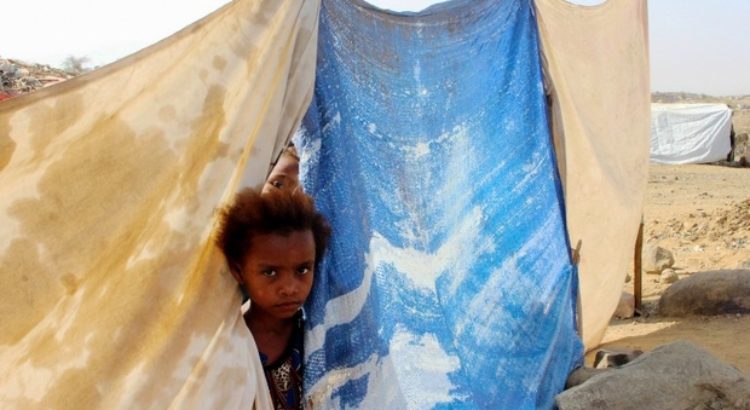
Photo: Yemeni children look out from hung sheets at a makeshift camp for displaced people in the northern Abys district of Yemen’s Hajjah province on 16 April 2018 (AFP)

*Fuente: http://www.middleeasteye.net/columns/children-yemen-deserve-better-1988641947
Comparte este contenido:

‘We have received nothing’: Sinjar’s only school pleads for help in post-IS Iraq

Por: Tom Westcott/middleeasteye.net/02-05-2018

Teachers in north Iraq struggle with class sizes of 100, few texts and no electricity – and no one has helped them get back on their feet

SINJAR, Iraq – Children pour out of overcrowded classrooms with shattered windows, running out onto Sinjar’s decimated streets in a cacophony of happy shouts and screams. Behind them, weary volunteer teachers head towards the sparsely furnished staff room for their daily meeting with headmaster Alias Nimr Azdo.

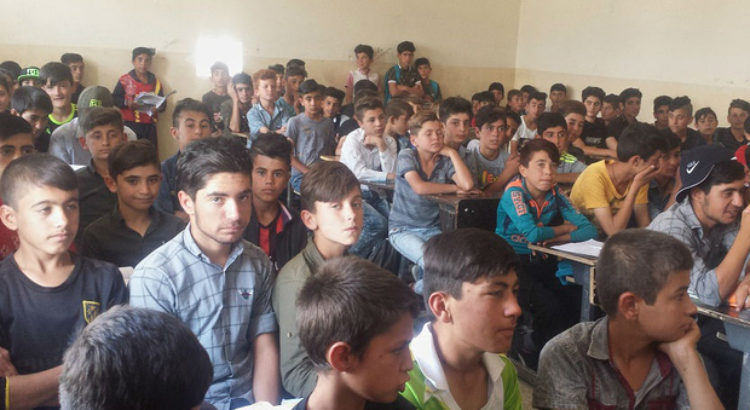
Most classes have over 100 pupils, who cram into classrooms sitting four to a desk

«This is the only functioning school in the whole of Sinjar and we run two shifts – morning and afternoon – to try and provide access to education for everyone here,» he told Middle East Eye. «But we are running this school with almost nothing.»

Even with all the classrooms in use during both shifts, Sinjar Mixed School is much too small for the number of pupils, who currently number more than 1,300, including 75 Muslim Shia children.

Most classes have over 100 pupils, who cram into classrooms sitting four to a desk. With insufficient teachers or space to cater for different age groups, they often have an unusual mix of ages and abilities.

But while Sinjar’s other former schools lie in ruins, either destroyed by the Islamic State (IS), which occupied much of Sinjar for a year and a half, or damaged by fighting and air strikes during the battle for liberation, there is no imminent solution to ease overcrowding.

And as word spreads that the school has reopened, it continues to attract more children, both new returnees and from Sinjar’s many outlying villages.

After four years of living as internally displaced people (IDPs), often without access to proper schooling, most families are keen for their children to try and catch up, although teachers say more than 1,000 children in nearby villages are still unable to reach the school because of transport difficulties.

Few books or pens

«We are trying to follow the official Iraqi curriculum, which is the same one as is taught in Baghdad schools, and we only teach in Arabic, even though most of the teachers don’t even speak perfect Arabic themselves, but we only have a few textbooks, so there are huge gaps in the curriculum we are able to teach,» said Azdo.

No funding or practical support, not even the textbooks which are compulsory across Iraq, have been sent to Sinjar by either the Iraqi government or the Nineweh Local Council, under whose jurisdiction Sinjar falls, he said.

We have received nothing, not even one single pen from the department of education

– Khairo K Wahb, teacher 

Since the area was liberated from IS in late 2015, no representative from the Ministry of Education has even visited the town, although Azdo insisted that the terrible situation faced by the school has been made clear through multiple and regular phone calls to the ministry.

IS militants stripped the premises of all its furnishings and Azdo first opened the school using empty cardboard boxes as furniture before members of the local Hashd al-Shaabi (Popular Mobilisation) forces managed to procure desks from elsewhere.

«We have received nothing, not even one single pen from the department of education,» said qualified teacher Khairo K Wahb, shaking his head.

Two children walk home after school, past the ruins of Sinjar Old Town (MEE/Tom Westcott)

When the school first opened last October, it tried to operate a system where parents paid 5,000 dinars ($4) per month towards schooling costs. But with most of Sinjar’s residents living below the poverty line and unable even to spare one dinar, this was abandoned.

As pupils across Iraq prepare for their end of term exams, already overwhelmed volunteer teachers have clubbed together and bought a computer and printer with their own money, to enable Sinjar’s pupils to take the national exams.

With no electricity and no running water, the premises lack even the most basic facilities, and the handful of toilets used daily by over 1,000 children are unsanitary.

The Iraqi government continues to work on repairing infrastructure damaged by fighting, and electricity supplies have been restored to some parts of Sinjar town but these have not yet reached the school.

A privately owned minibus ferries some children between their homes and the school but many others, whose families cannot afford to pay for the bus, and several of the volunteer teachers, have to walk up to 5km to attend the school.

Children leave afternoon classes at the school (MEE/Abbas al-Karady)

Volunteer teachers

Azdo is one of only three qualified teachers at the school, only two of whom receive a government salary. The remaining 14 teachers are all young people who have finished secondary school and, despite having no teaching experience, are doing their best to help provide basic education.

«We had to ask people to volunteer to teach in order to save the future of more than 1,000 students, and give them their right to an education,» explained 26 year-old Shevan Khero, the school’s only English teacher and himself a volunteer.

I have just one textbook, so I am gradually writing out the whole textbook on the blackboard, and the children are supposed to copy that down

– Hana Hassan, Arabic teacher

A month ago, there was almost double the number of volunteer teachers but, worn down by the difficult job and with no prospect of financial support, many have left.

Qualified teacher Wahb admits that classes are often so loud and unruly that lessons are feats of crowd-control, with teachers struggling to quiet down overexcited pupils enough to be able to try and teach.

«I volunteered here because I knew the children needed teachers so I was happy to do something to help,» said Arabic teacher Jian Nawaf, 19, who started working at the school in November. «But it’s very difficult because I have 120 pupils in my class and the noise they all make means teaching is almost impossible and, to be honest, I often long for the classes to end.»

Blankets and pieces of carpet keep out the elements (MEE/Tom Westcott)

Hana Hassan, 21, who also teaches Arabic, admits the job is tougher than she had expected. «I have just one textbook, so I am gradually writing out the whole textbook on the blackboard, and the children are supposed to copy that down, but they don’t all have paper and pens and there are so many children, I can’t even show them pictures and diagrams from the textbook.»

Scant follow-through on NGO promises

Despite the overcrowding, dilapidation and insufficient materials and resources, there is a charming atmosphere in the school and Sinjar’s children say classes are a highlight of their lives, living amidst the tragic ruins of Sinjar.

While his brothers play in the street on a sunny afternoon, seven-year-old Hassan proudly reads aloud from a battered geography textbook pulled from the ruins of a collapsed house. Heavily-scrawled by former students, it has now become a valuable and cherished item. «There are 70 pupils in my class but I love going to school,» he said happily.

«Ninety percent of the pupils here don’t have books or materials for study,» said Khero. «The only way I can teach them English is by speaking and writing on the board because there are no textbooks and most of the pupils don’t have pens or exercise books. It’s very difficult for me but it’s much more difficult for them.»

Sinjar’s overwhelmed and overworked teaching staff were also critical of international NGOs who, they said, despite making numerous visits, have done little more than make empty promises.

«More than ten international organisations have visited the school and seen the situation we face here and they have promised all sorts of things, but nothing ever comes of these promises,» said teacher Bashar Omar Ali.

He said so many NGOs had visited the school, staff struggled to keep up with the names of all the organisations, adding that, since the promises had proved to be only empty words, this was largely irrelevant.

Children wait outside Sinjar school for their parents to collect them (MEE/Abbas al-Karady)
UNICEF spokesperson Laila Ali told MEE that during 2017 and 2018, it had supported 10 Arabic schools (3,477 children) and 17 Kurdish schools (5,298 children) across the Sinjar region, providing 106 boxes of educational supplies, and had supported the transportation of over 15,000 school textbooks.

Supplies from any organisation or government, however, have not reached Sinjar town’s only school since the beginning of the school year until now.

Teacher Omar Ali said representatives claiming to be from a UN organisation had made three visits and given extensive promises, including replacing shattered window glass, currently patched up with cardboard or draped with blankets to keep out the elements, and providing much-needed new water tanks. But nothing had yet been done.

Ali, the UNICEF spokesperson, said the organisation had not visited the school nor had not made any such promises.

And even when help does occasionally materialise, said Wahb, this is not always well thought out.

«The last international organisation to visit us made a one-off payment to half the teachers while leaving the other half unpaid, which made a very big problem among the teachers because it was so unfair,» he said.

International aid agencies, mostly working out of Baghdad or Erbil, struggle to provide detailed and accurate accounts of work they have apparently undertaken in the remote Sinjar region, usually carried out by local partner organisations.

Local medics told MEE that work was of a very low standard and often left incomplete, including faulty electrics and broken water systems in one healthcare clinic «renovated» by a major NGO.

*Fuente: http://www.middleeasteye.net/news/worst-school-sinjar-139676923

Comparte este contenido:

EEUU-Massachusetts: Native Language Schools Are Taking Back Education

Por:  intercontinentalcry.org/ Abaki Beck/ 02-05-2018
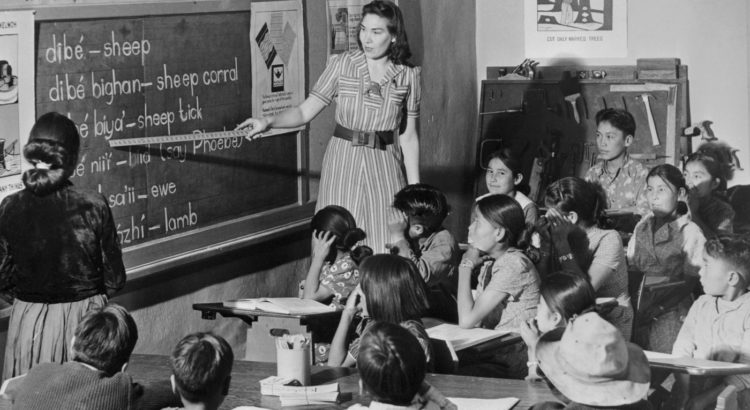
MORE THAN A CENTURY AGO, THE LAST FLUENT SPEAKERS OF WÔPANÂAK PASSED AWAY. NOW THIS SCHOOL IS WORKING TO REVIVE THE LANGUAGE.
For more than 150 years, the Wôpanâak language was silent. With no fluent speakers alive, the language of the Mashpee Wampanoag people existed only in historical documents. It was by all measures extinct. But a recently established language school on the Mashpee Wampanoag Tribe’s reservation in Massachusetts is working to bring back the language.

The threat of extinction that faces the Wôpanâak language is not uncommon for indigenous languages in the United States. Calculated federal policy, not happenstance, led to the destruction of Native American languages such as Wôpanâak.

But today, Native language schools are working to change that by revitalizing languages that have been threatened with extinction.

In the 19th century, federal policy shifted from a policy of extermination and displacement to assimilation. The passage of the Civilization Fund Act in 1819 allocated federal funds directly to education for the purpose of assimilation, and that led to the formation of many government-run boarding schools. Boarding schools were not meant to educate, but to assimilate.

Tribal communities continue to be haunted by this history. As of April, UNESCO’s Atlas of the World’s Endangered Languages listed 191 Native American languages as “in danger” in the United States. Of these, some languages are vulnerable—meaning that children speak the language, but only in certain contexts—to critically endangered—meaning the youngest generation of speakers are elderly.

Today, the education system in the United States fails Native American students. Native students have the lowest high school graduation rate of any racial group nationally, according to the 2017 Condition of Education Report. And a 2010 report shows that in the 12 states with the highest Native American population, less than 50 percent of Native students graduate from high school per year.

By founding schools that teach in Native languages and center tribal history and beliefs, tribal language schools are taking education back into their own hands.

Mukayuhsak Weekuw: Reviving a silent language

On the Massachusetts coast just two hours south of Boston is Mukayuhsak Weekuw, a Wôpanâak language preschool and kindergarten founded in 2015. The school is working to revitalize the Wôpanâak language. As one of the first tribes to encounter colonists, the Mashpee Wampanoag faced nearly four centuries of violence and assimilation attempts; by the mid 19th century, the last fluent speakers of Wôpanâak had died.

In the 1990s, Wampanoag social worker Jessie Little Doe Baird began to work to bring the language back to her people. It began like this: More than 20 years ago, Baird had a series of dreams in which her ancestors spoke to her in Wôpanâak. She says they instructed her to ask her community whether they were ready to welcome the language home.

She listened, and in 1993 she sought the help of linguists and community elders to begin to revitalize the language—elders like Helen Manning from the Aquinnah Wampanoag Tribe, with whom she would later co-found the Wôpanâak Language Reclamation Project.

Baird found a lot of resources. To translate the Bible, colonists had transcribed Wôpanâak to the Roman alphabet in the 1600s, which the Wampanoag used to write letters, wills, deeds, and petitions to the colonial government. With these texts, Baird and MIT linguist Kenneth Hale established rules for Wôpanâak orthography and grammar, and created a dictionary of 11,000 words.

In 2015, the Wôpanâak Language Reclamation Project was ready to open the Mukayuhsak Weekuw preschool. According to the school’s Project Director Jennifer Weston, 10 students attended in the first year it opened, growing to 20 in the current school year. As part of the language program, parents or grandparents of students at the school are required to attend a weekly language class to ensure that the youth can continue speaking the language at home.

The curriculum is taught entirely in the Wôpanâak language, and it is also grounded in tribal history and connection to the land. “Our languages embody our ancestors’ relationships to our homelands and to one another across millennia,” Weston says. “They explain to us to the significance of all the places for our most important ceremonies and medicines. They tell us who we are and how to be good relatives.”

In addition to language learning, the children also learn about gardening, hunting, and fishing. They practice tribal ceremonies, traditional food preservation, and traditional hunting and fishing practices. At Native American language schools like Mukayuhsak Weekuw, students experience their culture in the curriculum in a deeply personal and empowering way.

‘Aha Pūnana Leo: Overcoming policy barriers

Considering the violent history of America’s education system towards Native Americans, it is perhaps unsurprising that policy barriers continue to hinder contemporary language revitalization schools.

Federal policies are often misaligned with the reality of tribal communities and language revitalization schools. Leslie Harper, president of the advocacy group National Coalition of Native American Language Schools and Programs, says schools often risk losing funding because they lack qualified teachers who meet federal standards. But these standards are paternalistic, notes Harper, who says that fluent language teachers at Native schools are often trained outside of accredited teaching colleges, which don’t offer relevant Native language teaching programs. These teaching colleges don’t “respond to our needs for teachers in Indian communities,” she says.

In Hawai’i, ‘Aha Pūnana Leo schools have had some success in overcoming policy barriers like these. The schools have led the way for statewide and national policy change in Native language education.

When the first preschool was founded in 1984, activists estimated that fewer than 50 children spoke Hawaiian statewide. Today, ‘Aha Pūnana Leo runs 21 language medium schools serving thousands of students throughout the state, from preschool through high school. Because of this success, emerging revitalization schools and researchers alike look to ‘Aha Pūnana Leo as a model.

Nāmaka Rawlins is the director of strategic collaborations at ‘Aha Pūnana Leo. Like Harper, she says that required academic credentialing burdened the language preschools, which relied on fluent elders. This became an issue in 2012 when kindergarten was made compulsory in Hawai’i, and teachers and directors of preschools were required to be accredited. But she, along with other Hawaiian language advocates, advocated for changes to these state regulations to exclude Hawaiian preschools from the requirement and instead accredit their own teachers as local, indigenous experts. And they succeeded. “We got a lot of flack from the preschool community,” she says. “Today, we provide our own training and professional development.”

One of the early successes of ‘Aha Pūnana Leo was removing the ban on the use of Hawaiian language in schools, which had been illegal for nearly a century. Four years later, in 1990, the passage of the Native American Language Act affirmed that Native American children across the nation have the right to be educated, express themselves, and be assessed in their tribal language.

But according to Harper, progress still needs to be made before NALA is fully implemented by the Education Department. Since 2016, Native American language medium schools have been able to assess students in their language. This took years of advocacy by people like Harper, who served on the U.S. Department of Education’s Every Student Succeeds Act Implementation Committee and pushed for the change.

While this is an important first step, Harper is concerned that because language medium school assessments must be peer reviewed, low capacity schools—or those that lack the technical expertise of developing assessments that align with federal standards—will be burdened. And the exemption doesn’t apply to high schools.

Studies from multiple language revitalization schools have found that students who attend these schools have greater academic achievement than those who attend English-speaking schools, including scoring significantly higher on standardized tests. “We are beginning to see the long-term benefits of language revitalization and language-medium education in our kids,” Harper says. “But the public education system and laws are still reticent about us developing programs of instruction for our students.”

Looking back, looking forward

A movement to revitalize tribal languages is underway. The success of ‘Aha Pūnana Leo and promise of Mukayuhsak Weekuw are examples of communities taking education into their own hands. When Native American students are taught in their own language and culture, they succeed.

Weston says parents are eager for Mukayuhsak Weekuw to expand into an elementary school, and in fall 2018, the school will include first grade in addition to pre-school and kindergarten. It is a testament to the work and vision of the Wampanoag that just two decades ago, their language was silent, and today, they have a school that expands in size each year. “All of our tribal communities have the capacity to maintain and revitalize our mother tongues,” Weston says—no matter how daunting it may seem.

This article was originally published by Yes! Magazine. It has been re-published at IC under a Creative Commons License.

*Fuente: https://intercontinentalcry.org/native-language-schools-are-taking-back-education/

Comparte este contenido:

Kenya Public Universities Crack Whip on Striking Lecturers

Kenya/May 01, 2018/By Ouma Wanzala/ Source: http://allafrica.com

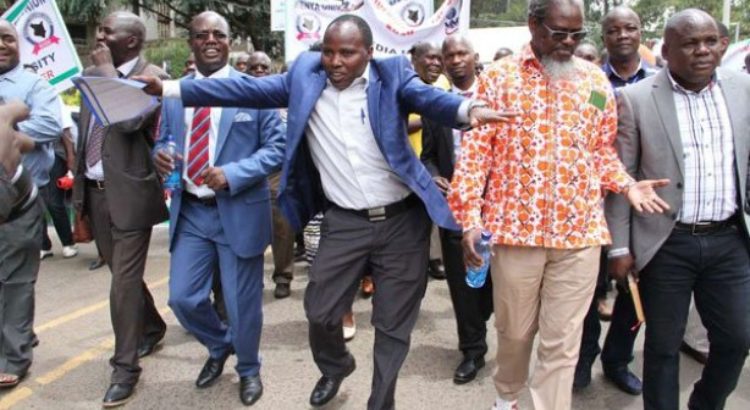
The University of Nairobi has taken the lead by suspending 35 lecturers after they declined to return to work following the Labour Court’s ruling that declared the pay strike illegal and unprotected in March. The industrial action enters its third month on May 1.

Public universities have started cracking the whip on striking lecturers and other staff as the industrial action enters its third month on Tuesday.

The University of Nairobi (UoN) has suspended 35 lecturers after they declined to return to work following Labour Court’s ruling that declared the strike illegal and unprotected last month.

Technical University of Kenya (TUK) on Friday started a head count of lecturers who are teaching, and has threatened to sack those who will not report to work.

At UoN, acting Deputy Vice Chancellor Finance and Administration Isaac Mbeche said the suspension is a warning to those who are still on strike.

«We are now dealing with individuals since they have different contracts with the university. If you do not come to work without permission, there are consequences,» Prof Mbeche warned.

SALARIES

He said the institution wrote to staff asking them to resume work, and that those who abided have not been punished.

«Some wrote back agreeing to resume work while others insisted they were still on strike,» Prof Mbeche said, adding that learning had resumed at the institution.

Last month, the university denied more than 1,200 staff their salaries for boycotting work.

At TUK, all staff are now required to sign commitment forms as the institution moves to ensure that operations are normalised.

«The directors of schools and heads of administrative units are hereby requested to ensure compliance with this directive by submitting completed commitment forms to the management,» a circular by Deputy Vice-Chancellor in charge of Administration and Planning, Joseph Kiplangat, reads.

Staff at the university who are still on strike are set to start receiving their suspension letters today.

ACADEMIC CALENDAR

At Moi University, Vice-Chancellor Isaac Kosgey has warned that the striking staff will not get their salaries.

«Other disciplinary measures will be taken as the university council advises.

«Staff who are ready to resume work can do so by registering with the respective heads of departments on a daily basis with immediate effect,» Prof Kosgey said.

At Kenyatta University, lecturers are now required to sign forms indicating their willingness to teach, and which must be submitted to deputy VC in charge of administration and planning.

Jaramogi Oginga Odinga University has since adjusted its academic calendar for all students due to the strike.

STUDENTS

Students in most universities have gone home as they wait for a solution to the crisis that has affected learning for the last one year.

The strike, which started on March 1, has paralysed learning in all 31 public universities. Lecturers are demanding Sh38 billion for the 2017-2021 CBA.

Education Cabinet Secretary Amina Mohamed last week set up a team to table a counter-offer.

«The impact of these perennial strikes has, to say the least, been disastrous.

«The image of our university education worldwide is taking a severe beating.

«Our students are taking more than double the period required to complete academic programmes and employers are losing faith in the capacity of our graduates,» Ms Mohamed said.

SRC

Ms Mohamed said with the enactment of the Constitution and the subsequent creation of the Salaries and Remuneration Commission, all salaries in the public sector must now be based on advice from the commission.

However, Universities Academic Staff Union Secretary General Constantine Wasonga said lecturers will only call off their strike after receiving an offer.

«We are used to threats, and we will now be forced back to work,» Dr Wasonga said.

 
 Source:
http://allafrica.com/stories/201804300034.html
Comparte este contenido:

Interview: 3 vital ways to measure how much a university education is worth

By The Associated Press

(The Conversation is an independent and nonprofit source of news, analysis and commentary from academic experts.)

Mark S. Schlissel, University of Michigan; Michael H. Schill, University of Oregon, and Michael V. Drake, The Ohio State University

(THE CONVERSATION) Editor’s note: Today we begin a new series in which we ask the leaders of our country’s colleges and universities to address some of the most pressing issues in higher education.

The past several years have seen increased calls for colleges and universities to demonstrate their value to students, families and taxpayers. And the pressure has come from both sides of the political spectrum. Barack Obama, for example, didn’t mince his words when he spoke a few years ago on the University of Michigan campus: “We are putting colleges on notice…you can’t assume that you’ll just jack up tuition every single year. If you can’t stop tuition from going up, then the funding you get from taxpayers each year will go down. We should push colleges to do better.”

So how is a would-be student or a tax-paying citizen to decide the value of a given university or degree? There is certainly no shortage of tools that have been developed to help in this regard.

The federal College Scorecard, for example, is meant to “help students choose a school that is well-suited to meet their needs, priced affordably, and is consistent with their educational and career goals.”

Various magazines put together college rankings. There have been efforts at the state level to show what graduates of a given institution or program can expect to earn. And some colleges and universities are working to provide those data themselves.

So we asked our panel of presidents – from the University of Michigan, University of Oregon and The Ohio State University: If you had to devise just one tool or metric to help the general public assess the value of a particular college or degree, what would it be and why?

Michael Drake, president of The Ohio State University

When I ask individuals if they want their own children to attend college, the answer is, overwhelmingly, yes. The evidence is clear. College graduates are more likely to be employed and more likely to earn more than those without degrees. Studies also indicate that people with college degrees have higher levels of happiness and engagement, better health and longer lives.

Wow.

If living a longer, healthier and happier life is a good thing, then, yes, college is worth it.

A four-year degree is not necessarily the best path for everyone, of course. Many people find their lives are enhanced by earning a two-year or technical degree. For others, none of these options is the perfect choice. But if there is one data point I want to highlight, it is the correlation between a college education and greater life expectancy. In fact, one study suggests that those who attend college live, on average, seven years longer.

Last year was the second year in a row that average life expectancy in the U.S. went down. But greater mortality didn’t affect all Americans equally. Studies point to a growing gap in life expectancy between rich and poor. Higher education may, in other words, be part of the solution to this problem.

This is just one of the reasons that so many of our country’s institutions of higher learning are focused on the question of how to make sure more Americans have access to a quality – and affordable – college education.

Since December 2016, the American Talent Initiative, a coalition of 100 (and counting) colleges and universities, has been working to educate 50,000 additional lower-income students by 2025. In another initiative, the 11 public universities in the University Innovation Alliance are committed to producing more U.S. graduates and have, over the past three years, increased their number of low-income graduates by 24.7 percent.

As educators, we must continue to increase pathways to the American Dream — a journey that includes health, happiness, long life and, very often, a college degree.

Michael Schill, president of the University of Oregon

While it is impossible to devise only one indicator to describe the value of a university, I would suggest that a good place to begin would be the number of first-generation students it admits and the rate at which they graduate.

As a first-generation college student myself, I may be somewhat biased, but I believe that our generation will be judged by how well we enhance the opportunities for social mobility among our citizens. And despite some skepticism about the value of higher education on the part of pundits and politicians, it is well-documented that there is no better way for young people to achieve the “American Dream” than by getting a college degree.

Note that my metric is really two – first-generation enrollment numbers and graduation rates. The simple fact is that students who go to college and don’t receive a degree may well be in worse shape economically than those who don’t go at all. They will have invested time and money, yet without a diploma will not achieve the economic returns from that investment. Moreover, many are hobbled by student loans without the economic wherewithal to repay them.

It is easy for universities, colleges and community colleges to admit large numbers of students from modest backgrounds. That happened in the for-profit sector. However, the graduation rate at for-profit institutions is only 23 percent, compared to the 59 percent rate overall. The hard part is to support students so that they can succeed.

First-generation students make up a third of college undergraduates in the United States. They are more likely to be minorities and to come from low-income households, and are far less likely to graduate than their peers who had one or more parent attend college. We can do better.

Part of the solution is for more universities to provide more adequate need-based financial assistance, but even that isn’t enough. College can be a confusing experience for first-generation kids, both in terms of learning how to succeed academically and “fitting in” socially. Real value will accrue to students and American society only if we can provide them with appropriate advising and counseling so that they not only get in, but persist and flourish.

Mark Schlissel, president of the University of Michigan

To devise one metric to help the public assess our value, we need to challenge ourselves the same way we challenge students in our classrooms and labs. Let’s first determine the right question to ask. What are our students looking for in life and how can a college degree change the quality and trajectory of their lives?

Higher education gives graduates the best opportunity to pursue their ambitions, change careers, define and solve complex problems, and persuade and lead others. College graduates enjoy higher salaries, qualify for further levels of education and are at a lower risk of ending up in jobs that become obsolete. Moreover, they lead richer and fuller lives – happier, healthier, wealthier and longer.

Each of these outcomes is a component of the value of a college education, yet none of them alone fairly captures its full value. In considering these metrics together, in the context of our question, I believe that one very important concept emerges.

That concept is freedom.

Freedom’s link to education has long been a quintessential American value. As the educator and philosopher John Dewey wrote at the beginning of the 20th century, “We naturally associate democracy, to be sure, with freedom of action, but freedom of action without freed capacity of thought behind it is only chaos.”

At its best, higher education gives us the freedom to make decisions based on our values, desires, human talents and willingness to work hard. We are free to choose our own path.

Education takes freedom beyond its status as a legal right and elevates it into a lifetime of choices. It’s the trajectory of those lives, changed by the opportunities available through a college education, that I am most interested in measuring.

The American public rightfully expects higher education to serve as an enabler of prosperity and equality. I would devise a metric that captures higher education’s greatest potential: to enhance the freedom of an individual graduate in a nation founded on constitutionally guaranteed rights of life, liberty and the pursuit of happiness.

Editor’s note: The Ohio State University is a member of the University Innovation Alliance. The University of Michigan and The Ohio State University are members of the American Talent Initiative.

This article was originally published on The Conversation. Read the original article here: http://theconversation.com/3-vital-ways-to-measure-how-much-a-university-education-is-worth-94208.

Source:

https://wtop.com/education/2018/04/3-vital-ways-to-measure-how-much-a-university-education-is-worth/


Comparte este contenido:

Unfashionable Fascism: Mainstream Politicians Switching Sides Under Trump’s Regime of Barbarism


Madeleine Albright, without irony, has written a book on resisting Fascism. She has also published an op-ed in the New York Times pushing the same argument. Albright is alarmed and wants to warn the public to stop the fascism emerging under the Trump regime before it is too late.[1]  Unfortunately, moralism on the part of the infamous and notorious is often the enemy of both historical memory and the truth, in spite of their newly discovered opposition to tyranny.   It is hard to believe that a woman who defended the killing of 500,00 children as a result of the imposed US sanctions on Iraq can take up the cause of fighting Fascism while positioning herself (or being positioned by the mainstream media) as being on the forefront of resistance to US authoritarianism. Here is what David Rieff writing in the New York Times says about the sanctions Albright justified: “For many people, the sanctions on Iraq were one of the decade’s great crimes, as appalling as Bosnia or Rwanda. Anger at the United States and Britain, the two principal architects of the policy, often ran white hot. Denis J. Halliday, the United Nations humanitarian coordinator in Iraq for part of the sanctions era, expressed a widely held belief when he said in 1998: ‘We are in the process of destroying an entire society.’ It is as simple and terrifying as that.”[2]Is any policy worth the death of 500,000 children?  She is not alone.

Hilary Clinton, known more politically as a former war monger and an unabashed ally of the financial elite, has also resurrected herself as a crusader in fighting the creeping fascism that now marks the Trump regime. Speaking with Ngozi Adichie at the PEN World Voices Festival, Clinton appears to have completely removed herself from her notorious past as a supporter of the Iraqi war and the military-industrial-financial complex in order to sound the alarm “that freedom of speech and expression is under attack here in our own country” while further calling for numerous voices to make visible the creeping authoritarianism in America.[3] This is an odd flight from memory into the sphere of moral outrage given her own role in supporting domestic and foreign policies both as a former first lady and as Secretary of State that refused to punish CIA torturers, lavished funds on the military war machine, shredded the federal safety net for poor people, and endorsed neoliberal policies that offered no hope and prosperity “for neighborhoods devastated by deindustrialization, globalization, and the disappearance of work.”[4] No irony here. Just the opposite. Her critique of Trump’s fascism does more than alert the public to the obvious about the current government, it also legitimizes a  form of historical amnesia and a long and suppressed legacy of cruelty and human misery. She is not alone.

The U.S. and its Vichy Republican Party has drifted so far to the fascist right that people such as Albright and Clinton come across as the heroic vanguard of a political and ethical resistance to fascism. Under such circumstances, even some outspoken Republicans, again without irony, such as Flake, Corker and McCain are viewed in the mainstream press as principled heroes in spite of the fact that they have supported Trump’s domestic and foreign policies, including his tax reform bill and his cruel and obscene budget, which not only offers $700 billion to the military but condemns millions of people to a life of misery and suffering. While the call to resist fascism is to be welcomed, it has to be interrogated and not aligned with individuals and ideological forces that helped put in place the racist, economic, religious, and educational forces that helped produce it.

I am not simply condemning the hypocrisy of mainstream politicians who are now criticizing the emerging fascism in the United States. Nor am I proposing that only selective condemnations should be welcomed. What I am suggesting is that the seductions of power in high places often work to impose a silence upon people that allows them to not only benefit from and become complicit with authoritarian tendencies and anti-democratic policies and modes of governance, but also once such people are out of power their own histories of complicity are too often easily erased, especially in the mainstream media. Regardless of such a newly found stance against fascism, such actions do nothing to help explain where we are and what we might do next to resist the fascism that has now engulfed American society and its economic, cultural, and political institutions.

What is often unrecognized in the celebrated denunciations of fascism by celebrity politicians is that neoliberalism is the new fascism. And what becomes invisible in the fog of such celebration is neoliberalism’s legacy and deadly mix of market fundamentalism, anti-intellectualism, rabid individualism, white supremacy, toxic masculinity, and all embracing quest for profits. The new and more racist, violent and brutalizing form of neoliberalism under Trump, has produced both a savage politics in the US and a corrupt financial elite that now controls all the commanding institutions of American society including the state. In other words, what disappears are the very conditions that have made possible a new and more feral American-style fascism.   Systemic corruption, crassness, overt racism, a view of misfortune as a weakness, unapologetic bigotry, and a disdain of the public and common good has been normalized under Trump after gaining strength over the last 50 years in American politics. Trump is merely the blunt instrument at the heart of a fascistic neoliberal ideology. We need to be wary, to say the least, about those mainstream politicians now denouncing Trump’s fascism who while in power submitted, as Stanley Aronowitz puts it, “to neoliberal degradations of health care, jobs, public housing, and income guarantees for the long-term unemployed (let alone the rest of us).”[5]

What is often ignored in the emerging critiques of fascism is the history of neoliberalism’s legacy coupled with the mainstream media’s attempts to foreground many if its architects and supporters as celebrated opponents of Trump’s fascist government. Trump is the extreme point of a long series of attacks on democracy and former politicians such as Albright and Clinton cannot be removed from that history. None of these politicians have denounced state violence, nationalism, the myth of American exceptionalism, and the forces that produce obscene inequality in wealth and power in the US, or the oppressive regime of law and order that has ruled America ruthlessly and without apology since the 1980s.

Unchecked and systemic power, a take no prisoners politics, and an unapologetic cruelty are the currency of fascism because they are the wedge that makes fear visceral and violence more than an abstraction. This lethal combination is also a pathological condition endemic to brutal demagogues such as Trump. They demand loyalty not to an ideal that expands the meaning of justice and democracy but loyalty to themselves, one that stands above the truth and rule of law. As The Economist points out, “Trump demands loyalty to himself and to the prejudice and rage which consume the voter base that, on occasion, even he struggles to control. In America that is unprecedented and it is dangerous.”[6] This combination of a demand to an insular notion of loyalty and their penchant for cruelty offers such demagogues not only a terrifying symbol of their unchecked power but also the emotional rush that may provide one of the few options for them to feel any emotion at all.  Cruelty also feeds on irony and cleanses the past of the conditions that allow the mobilizing passions of fascism to bloom. The call to resist fascism is welcome but also complicated and cannot be separated from acts of bad faith that cleanse the historical record of the forces that helped produce it. The public imagination withers under the assault on historical consciousness and the institutions that nurture it.

The fight against fascism is part of a struggle over memory and those critical narratives that refuse to be couched in a form of historical and social amnesia. It is also a fight over the public spheres and institutions that make civic literacy, the public imagination, and critical consciousness possible.  This suggests both a struggle to reclaim historical consciousness and to expose the forces that are and have been complicit with the long standing attack on democratic institutions, values, and social relations, especially those that now hide their past and ideological convictions in the purifying discourse of outrage, disingenuousness, and resistance.

Any resistance to fascism has to be rooted in the call to make education central to politics with a strong emphasis on the teaching of historical consciousness and civic literacy as crucial weapons in the fight against fascism. At the same time, such a fight must take an unwavering standpoint in its refusal to equate capitalism and democracy. Such a battle has to be waged in diverse struggles that can be aligned through a common thread willing to recognize that we are at war over not just the right of economic equality and social justice but also against the powerful and privileged positions of whiteness, a toxic masculinity, and the elimination of the very notion of the social, solidarity, and compassion.

This is a war waged over the possibility of a radical democracy while acknowledging that the rich and powerful will not give up their power without a fight. Instead of listening to politicians and others deeply embedded in a system of exploitation, disposability, austerity, and a criminogenic culture, we need to listen to the voices of the striking teachers, the Parkland students, the women driving the me too movement, the Black Lives Matter movement, and others willing to make resistance visible, collective, and widespread. But we also need to connect these voices as part of a more comprehensive struggle against fascism and the diverse forms of repression that it produces.

A radical and progressive struggle against fascism needs a comprehensive vision, a struggle against economic inequality, and strategies that privilege direct action such as the wildcat strikes we have seen among public school teachers in West Virginia.  There is also a need for wide-ranging educational struggle willing to use both established and alternative institutions of schooling, digital spaces, and diverse forms of social media in order to challenge the propaganda produced by the powerful cultural apparatuses of the right such as Sinclair broadcasting, Fox News, and other establishment sources. There is also a crucial necessity to take up the challenge to educate the young and old in the new technologies and how to use them in the service of economic and social justice. At the same time, there is challenge of the left to produce its own public intellectuals who can write and speak in ways that are rigorous, accessible, and attractive to a broader public. A new politics of education is a precondition for creating a new political formation that refuses to be coopted by the liberal center and is rooted in a vision that endorses fundamental social changes in the fight against American style fascism. Such a challenge will not come from establishment politicians and pundits parading as the new heroes of the resistance to Trump’s fascism.

Notes.

[1] Madeleine Albright, “Will We Stop Trump Before It’s Too Late?” New York Times (April 6, 2018). Online: https://www.nytimes.com/2018/04/06/opinion/sunday/trump-fascism-madeleine-albright.html

[2]David Rieff, “Were Sanctions Right?” New York Times (July 27, 2003). Online: https://www.nytimes.com/2003/07/27/magazine/were-sanctions-right.html

[3] Nina Pearlman, “Creeping Authoritarianism in America: The former secretary of state spoke with author Chimamanda Ngozi Adichie at the PEN World Voices Festival,” The Village Voice (April 24, 2018). Online: https://www.thenation.com/article/hillary-clinton-does-not-deserve-black-peoples-votes

[4] Michelle Alexander, Why Hillary Clinton Doesn’t Deserve the Black Vote

From the crime bill to welfare reform, policies Bill Clinton enacted—and Hillary Clinton supported—decimated black America,” The Nation(February 29, 2016). Online: https://www.thenation.com/article/hillary-clinton-does-not-deserve-black-peoples-votes/

[5] Stanley Aronowitz, “What Kind of Left Does America Need?,” Tikkun, April 14, 2014

[6]Editorial, “What Has become of the Republican Party?,”The Economist (April 21, 2018), p. 9.

Source:

Unfashionable Fascism: Mainstream Politicians Switching Sides Under Trump’s Regime of Barbarism

Comparte este contenido:

India: Pranab urges govt to invest more on education, R&D

India/May 01, 2018/Source: https://timesofindia.indiatimes.com/

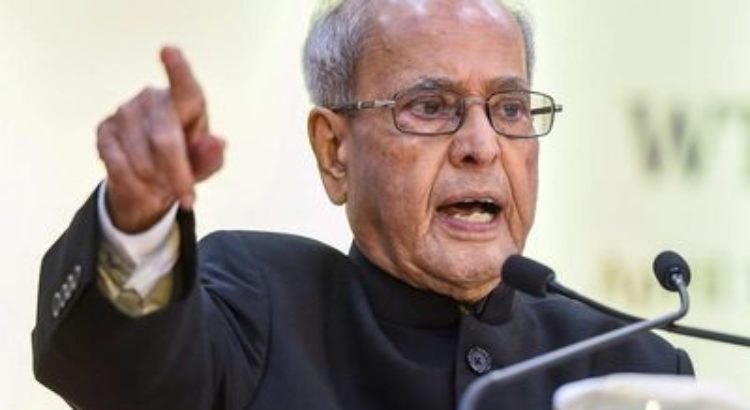
Former President of India Pranab Mukherjee on Monday emphasised on more research and development and urged the government to invest more in this area.

«Today, not as a former President but as a citizen of India, I want greater investment in education and research and the country will benefit from this,» Mukherjee said here today while delivering an endowment lecture at the Ramkrishna Mission Institute of Culture, Golpark.

He however, regretted the dwindling budget towards education and R&D of the country.

Citing example of Germany that stood strong even during the Eurozone crisis, he said it was possible because of its continuous focus on R&D.

«In 1991, the budget on education was six per cent of the GDP but in 2018-19 Union budget allocation is just 3.6 per cent of the national GDP, though the allocation of Rs 80,500 crore may seem to be a huge sum.»

According to a UNESCO report, secondary level dropout is 45 lakh, he said.

Mukherjee said by 2025, India will have the largest young population, becoming the biggest workforce in the world.

«If we are unable to convert this population into suitable workforce and not able to create jobs by adopting new technologies, then instead of ‘demographic dividend’ it will be a ‘demographic disaster’,» Mukherjee said.

Mukherjee said, we are not able to get the finest talent in education and research. They move to corporate sector due to their lack of sense of societal giving back and not thinking what society has invested on them so that they can bloom.

Student-teacher relation is also vital for shaping of a student. Taking his example, he recalled the role of his teachers including those in Siuri Vidyasagar College in Siuri, for being what he is today.

Source:

https://timesofindia.indiatimes.com/home/education/news/pranab-urges-govt-to-invest-more-on-education-rd/articleshow/63978303.cms
Comparte este contenido:
Page 100 of 144
1 98 99 100 101 102 144