Page 99 of 144
1 97 98 99 100 101 144

Syrian children’s enrollment in secondary education still low: Expert

Syria/ May 08, 2018/ By: Sevil Erkuş – ANKARA/Source: http://www.hurriyetdailynews.com

Turkey continues to host the largest number of school-aged refugee children and youth, which increased to 976,200 in 2017 from 833,039 in 2016, with efforts provided increasing enrollment in primary schools, yet access to secondary education is still low, an expert said.

With the National Education Ministry’s progressive inclusion of Syrian children and youth in the national system, there are more school-age Syrian children enrolled in Turkish public schools (373,381) for the first time than in temporary education centers (237,234) in 2017, Research Centre on Asylum and Migration (İGAM) president Metin Çorabatır told Hürriyet Daily News.

Due to great efforts of host countries and the international community, the enrollment rates for refugee children in primary schools are increasing.

However, when it comes to access to education, a vulnerable group is youth and more than 76 percent of Syrian youth outside of Syria live in Lebanon and Turkey, he said.

“Overall, regional enrollment rates in secondary education are low: 24 percent in Jordan, 6 percent in Lebanon and 2 percent in Turkey. The regional average of refugee enrollment in secondary education is 17 percent, lower than the global average of 23 percent,” Çorabatır said.

The Turkish Education Ministry has recruited 5,600 Turkish language teachers to help Syrian students to improve their Turkish language proficiency. In addition, new and age-appropriate language teaching modules are under development.

A comprehensive psychological support program in schools is being developed and 500 school counselors were recruited to provide psychosocial support to Syrian children and youth.

Despite these great efforts by the government, various factors contribute to the low rates of access to secondary education, according to the İGAM president.

“Refugee youth often work, take care of their younger siblings or perform other household duties. This is both a complicating factor in reaching them to participate in education programs and a reason many are currently unable to, as most education programs are scheduled during working hours and require intense participation,” he said.

Çorabatır has been announced last week as a Gulmakai Champion of the Malala Fund. The Malala Fund is the official organization led by Pakistani Malala Yousafzai and is focused on helping girls go to school and raise their voices for the right to education

With this new title, İGAM will focus on Syrian refugee women’s education in Turkey and to assist in efforts for their education.

“The Malala Fund believes—and we as İGAM share that same belief—that every person can make an impact on our world. We are seeking accountability from politicians and finding ways to improve refugee girls’ access to education in Turkey,” he said.

Source:

http://www.hurriyetdailynews.com/syrian-childrens-enrollment-in-secondary-education-still-low-expert-131437

Comparte este contenido:

Charlottesville, Neo-Nazis and the Challenge to Higher Education

By: Henry Giroux

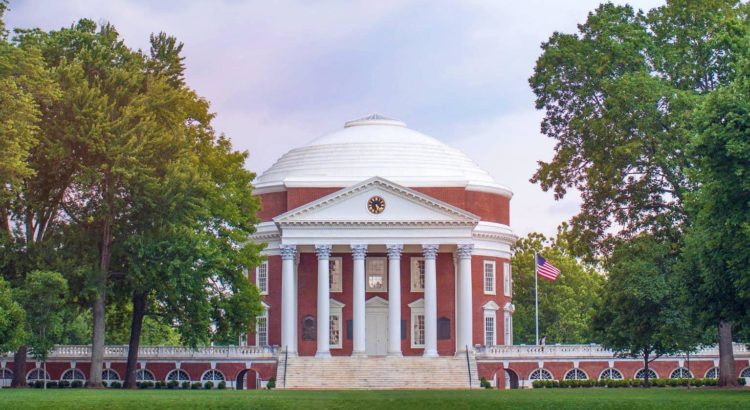
The march across the University of Virginia campus in the summer of 2017 by a thousand or more white supremacists, neo-Nazis, and other right-wing extremists offered a glimpse of the growing danger of authoritarian movements both in the United States and across the globe, signalling a danger that mimics the increasingly forgotten horrors of the 1930s. The image of hundreds of fascist thugs chanting anti-Semitic, racist, and white nationalist slogans such as “Heil Trump” and later attacking peaceful anti-racist counter-demonstrators makes clear that radical right-wing groups which historically have been on the margins of American society are now more comfortable in public with their nihilistic and dangerous politics. They appear especially emboldened to come out of the shadows because elements of their neo-fascist ideology have found a comfortable if not supportive place at the highest levels of the Trump administration, especially in the initial and telling presence of Steve Bannon, Jeff Sessions, and Stephen Miller, all of whom embrace elements of the nefarious racist ideology that was on full display in Charlottesville.

As is well-known, Trump has not only supported the presence and backing of white nationalists and white supremacists, but he has refused to denounce their Nazi slogans and violence in strong political and ethical terms, suggesting his own complicity with such movements. It should surprise no one that David Duke, a former imperial wizard of the Ku Klux Klan, told reporters in the midst of the events that the Unite the Right followers were “going to fulfill the promises of Donald Trump…to take our country back.” Nor should it surprise anyone that Trump initially refused to condemn the fascist groups behind the horrifying, shocking images and violence that took place in Charlottesville. His silence made elements of the far-right quite happy. For instance, The Daily Stormer, a white supremacist website, issued the following statement: “Refused to answer a question about White Nationalists supporting him. No condemnation at all. When asked to condemn, he just walked out of the room. Really, really good. God bless him.”

It appears that the presence of Nazi and Confederate flags along with the horrendous history of millions lost to the Holocaust and slavery, lynchings, church bombings, and the assassination of Black leaders such as Medgar Evers and Martin Luther King, Jr. did little to move Trump to a serious understanding or repudiation of the poisonous historical forces that surfaced in Charlottesville. The demonstration held in Charlottesville by militarized torch-bearing groups of Nazi sympathizers, Ku Klux Klan members, and white nationalist represents a historical moment that capture some of the elements of a past that led to some of the worse crimes in human history. At the risk of falling prey to historical amnesia, the crucial lesson to be learned is that the ideology, values, and institutions of a liberal democracy are once again under assault by those who no longer believe in equality, justice, and democracy. As the historian Timothy Snyder has observed, it is crucial to remember that the success of authoritarian regimes in Germany and other places succeeded, in part, because they were not stopped in the early stages of their development.

The events in Charlottesville provide a glimpse of authoritarianism on the rise and speak to the dark clouds that appear to be ushering in a new and dangerous historical moment both in the United States and across the globe. While it is problematic to assume that an American-style totalitarianism will soon become the norm in the United States, it is not unrealistic to recognize that the possibility for a return to authoritarianism is no longer the stuff of fantasy or hysterical paranoia, especially since its core elements of hatred, exclusion, racism, and white supremacy have been incorporated into both the highest levels of state power and throughout the mainstream right-wing media. The horrors of the past are real and the fears they produce about the present are the necessary work of both historical memory and the power of civic courage and moral responsibility.

The authoritarian drama unfolding across the United States has many registers and includes the use of state violence against immigrants, right-wing populist violence against mosques and synagogues, and attacks on Muslims, young blacks, and others who do not fit into the vile script of white nationalism. The violence in Charlottesville is but one register of a larger mirror of domestic terrorism and home-grown fascism that is growing in the United States. Trump’s irresponsible response to the violence in Charlottesville should surprise no one given the long history of racism in the Republican Party that extends from Nixon’s Southern strategy and George W. Bush’s treatment of the Black victims of Hurricane Katrina to the current party’s efforts at voter suppression. Like many of his fellow Republican extremist, Trump embraces this long legacy of white supremacy, though he elevates it to a new level of visibility in his refusal to expunge its most naked expressions and his open support for its values and policies.

How else to explain his administration’s announcement that it would no longer “investigate white nationalists, who have been responsible for a large share of violent hate crimes in the Unites States.” How else to explain Trump’s willingness to lift restrictions imposed by the Obama administration to provide local police departments with military surplus equipment such as armed vehicles, bulletproof vests, and grenade launchers. Clearly, such actions accelerate Trump’s law and order agenda, escalate racial tensions in cities that are often treated like combat zones, and reinforce a warrior mentality among polices officers. More telling is Trump’s presidential pardon of Joe Arpaio, the notorious White supremacist and disgraced former sheriff of Maricopa County, Ariz. Not only did Arpaio engage in racial profiling, despite being ordered by the court to decease, he also had a notorious reputation for abusing prisoners in his Tent City, which he once called “a concentration camp.” These inmates were, among other practices, subjected to blistering heat, forced to work on chain gangs, wear pink underwear, and dress in demeaning striped uniforms.

There is more at work here than Trump’s endorsement of white nationalism; there is also the sending of a clear message of support for a culture of violence that gives meaning to acts of domestic terrorism. Moreover, there is a clear contempt for the rule of law, and an endorsement not just for racist ideology but also for institutional racism and the primacy of the racially-based incarceration state. There is also the chilling implication that Trump would be willing to pardon those who might be found guilty in any upcoming investigations involving Trump and his administration. Trump’s law-and-order regime represents a form of domestic terrorism because it is a policy of state violence designed to intimidate, threaten, harm, and instil fear in a particular community. Pardoning Arpaio, Trump signals to his right-wing extremist base and fellow politicians that he justifies state enacted violence against immigrants, especially Latinos. In addition, Trump’s language of fear and violence emboldens right-wing extremists and gives them the green light to support legislation and ideologies that are profoundly reactionary. For instance, this is evident in attempts on the part of 20 states to criminalize dissent, overtly decry the benefits of higher education, and state without apology that Republicans would support postponing the 2020 election if Trump proposed it.

The events in Charlottesville raise serious questions about the role of higher education in a democracy. What role if not responsibility do universities have in the face of wide spread legitimized violence? What role does education have at a time when rigorous knowledge is replaced by opinions, the truth is equated with fake news, self-interest replaces the social good, and language operates in the service of violence? Surely, institutions of higher education cannot limit their role to training in at a time when democracy is under assault all over the globe. What does it mean for institutions of higher education to define themselves as a public good, a protective space for the promotion of democratic ideals, the social imagination, values, and the imperatives of critically engaged citizenship? As Jon Dixon observes, what does mean to view and take responsibility for developing education as “a protected space within which to think against the grain of received opinion: a space to question and challenge, to imagine the world from different standpoints and perspectives, to reflect upon ourselves in relation to others and, in so doing, to understand what it means to assume responsibility”?

Surely, with the ongoing attack on civic literacy, truth, historical memory, and justice it becomes all the more imperative for colleges and universities to educate students to do more than learn work based skills. What might it mean to educate them to become intelligent, compassionate, critically engaged citizens fully aware of the fact that without informed citizens there is no democracy? There is much more at stake here than protecting and opening the boundaries of free speech; there is the more crucial imperative of deepening and expanding the formative cultures and public spheres that make a democracy possible.

We live in an age in which there is emerging a relentless attack on the truth, honesty, and the ethical imagination. Under such circumstances, there is a need for educators to reclaim the discourse of democracy and to expand the parameters of civic literacy and courage by once teaching students to think critically, embrace civic courage, develop a historical consciousness, hold on to shared responsibilities rather than shared fares, think historically and comprehensively, translate private issues into larger social problems, and learn how to think differently in order to act responsibly. Education is central to politics and such pedagogical practices raise the bar regarding what counts as education in a democracy, especially in societies that appear increasingly amnesiac—that is, countries where forms of historical, political, and moral forgetting are not only wilfully practiced but celebrated. All of which becomes all the more threatening at a time when a country such as the United States has tipped over into a social order that is awash in public stupidity and views critical thought as both a liability and a threat. How else to explain the present historical moment with its collapse of civic culture and the future it cancels out? Democracy is always the outcomes of ongoing struggles to preserve its ideals, values, and practices. When democracy is taken for granted, justice dies, social responsibility becomes a burden, and the seeds of authoritarianism flourish.

We may be in the midst of dark times, but history is open and resistance is no longer an option but a necessity. Educators have a particular responsibility to address this growing assault on democracy. Any other option is an act of complicity and a negation of what it means for education to matter in an alleged democratic society.

Source:

Charlottesville, Neo-Nazis and the Challenge to Higher Education


Comparte este contenido:

India: Centre shifts focus to liberalization of higher education

India/May 08, 2018/By: Prashant K. Nanda/Source: https://www.livemint.com

Over the past few months, the Indian higher education sector has been witnessing a gradual transformation.

The long promised new education policy is still in the pipeline, but the Union government seems to have taken up a new task — liberalization of higher education.

Over the past few months, the Indian higher education sector has been witnessing a gradual transformation from a restrictive regime to a liberalized one in all three key aspects: finance, academic and administrative.

“Higher education liberalization is a requirement and the government is taking steps to achieve it. You will see key regulatory bodies like the University Grants Commission and All India Council for Technical Education (AICTE) getting reformed for better management of higher education,” said a top official of the human resource development ministry.

“From legislative measures to executive orders, the ministry is now busy reducing the restrictive regime in the sector. In the next six months, you will see some more initiatives,” he said.

What he was referring to is a series of initiatives the ministry has already initiated over the past few months. It enacted the IIM Act, allowing Indian Institutes of Management (IIMs) to become virtually free of government control. It has brought in a set of guidelines for autonomous colleges allowing them freedom to prescribe courses, become more industry linked and start self-financing courses to become financially sustainable. Besides, it has put in place a non-banking financial corporation to aid infra growth of educational institutions on a borrow and pay concept — a move that will reduce the financial burden on the government and make institutions accountable for their own infra and research growth.

In March, the Union government for the first time provided graded autonomy to 62 universities and colleges both in private and public space to operate with relatively less interference from the education regulators.

HRD minister Prakash Javadekar called this a “liberalized regulatory regime” and said on the sidelines of an event recently that the Indian higher education sector often complains about restrictive rules but now the government is making a conscious effort to liberalize it.

“Of late, there seems to an intention of liberalizing the sector. Autonomy and liberalization are a necessity for the higher education section to thrive. The moment you allow freedom and competition, the best will survive and others will strive to improve quality as it will be a requirement for survival,” said Harivansh Chaturvedi, director of the Birla Institute of Management and Technology in Greater Noida.

Chaturvedi, who is also the alternate president of the Education Promotion Society for India, a confederation of private education providers, said technical education colleges under AICTE should also be granted autonomy based on their rankings and accreditation scores.

While some of the recent moves are important, a new education policy is almost paramount and the government should bring that in to give direction to the education sector, Chaturvedi said. A new education policy is being deliberated for last four years.

Of all the steps the government has taken, the establishment of a higher education financing agency and its expansion in the past couple of months is perhaps the most under-rated but far reaching, said the official cited above. The government has already sanctioned loans worth over Rs2,500 crore to nearly a dozen top schools.

“While individual sub-sectoral moves like autonomy for IIMs, graded autonomy for a group of colleges and universities have their merits, the financing agency will perhaps reduce government spending by Rs10,000 crore per year, and push top higher educational institutions to become more accountable and finically prudent. That’s a bigger change from the way public funded institutions function — you get autonomy, you decide your growth path and you raise money and pay back from your own resources. That’s a bigger liberalization move,” said the official.

Source:

https://www.livemint.com/Politics/mx1YXvM5lCt26WaaHz91HO/Centre-shifts-focus-to-liberalization-of-higher-education.html

Comparte este contenido:

EEUU: Texas Special Education Reform Comes With Mountain Of Mistrust

EEUU/May 08, 2018/

In 2004, the Texas Education Agency arbitrarily decided the state should shrink special education to 8.5 percent of the student population.

After conducting an investigation, the U.S. Department of Education said the effective cap illegally barred tens of thousands of children with disabilities from a free and appropriate education.

The state agency is trying to enact reforms to make up for breaking the law, but parents and advocates say it will take a lot to regain their trust.

“It’s really too little, too late. Especially (for) those children who needed early childhood intervention. You can’t get those years back,” said Jill Goolsby of San Antonio.

Five years ago, school officials told Goolsby her 3-year-old son Walker didn’t qualify for the free public preschool program for children with disabilities.

“I was told he definitely was not autistic because he was able to pretend that blocks were ice cubes. And I was told that a child with autism is not creative and cannot have any imaginative play, which is — that’s not true. But I did not know that at the time,” Goolsby said.

According to the Education Department, school districts across Texas delayed testing tens of thousands of kids like Walker, or shunted them to less intensive forms of support to meet TEA’s 8.5 percent benchmark.

By the time the benchmark was eliminated last year, advocates said a whole generation had aged out of the system.

“As a society, we will pay for them the rest of their lives, if we don’t get them back in the system and educate them,” said Karen Seal, a disability rights attorney in San Antonio. “The ones that are already out, how do we get them back, when there’s no mandate to do that?”

Seal thinks the Education Department should have punished Texas for breaking the law.

“But the problem with punitive is it’s usually monetary, and the last thing the schools need right now when it comes to special education is to lose money,” Seal said.

What the Education Department did, however, is tell TEA to do a better job monitoring school districts, and to make sure the children who were denied services are given the help they’re owed.

The department is currently reviewing TEA’s plan to meet those demands. It has three major parts: compensating families, training teachers and amping up the state’s monitoring team.

Deputy commissioner of academics Penny Schwinn said the first thing TEA will do is use federal dollars to hire 50 people.

“Unlike what Texas has done in the past, we want this monitoring team to be about review and support. So it’s going into districts, working with them as partners, families as partners, students as partners to really look at the compliance components,” Schwinn said.

Next school year, the plan calls for districts to begin finding the kids they missed and provide therapy and other compensatory services if they need it.

Goolsby welcomes the news, but said it won’t make up for her son Walker not getting help when he needed it. While she was able to get him into a private preschool, and had insurance to help cover therapy, she knows other families weren’t, and aren’t, so lucky.

“These kids have had bad years. It’s very hard to send them to an environment where you know they’re struggling and to try to turn around their mental attitude around school and their relationships with their peers,” Goolsby said.

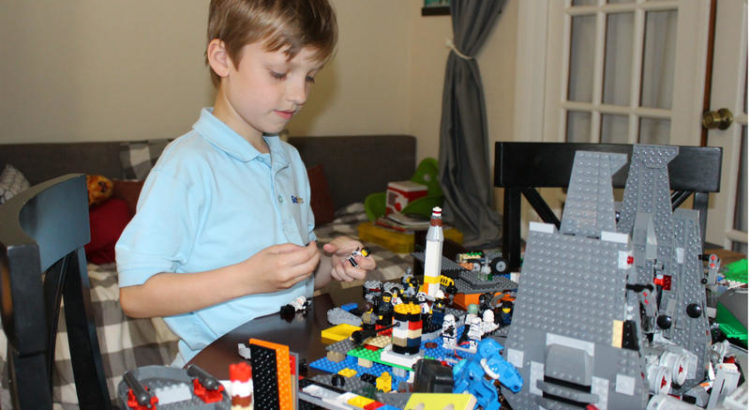
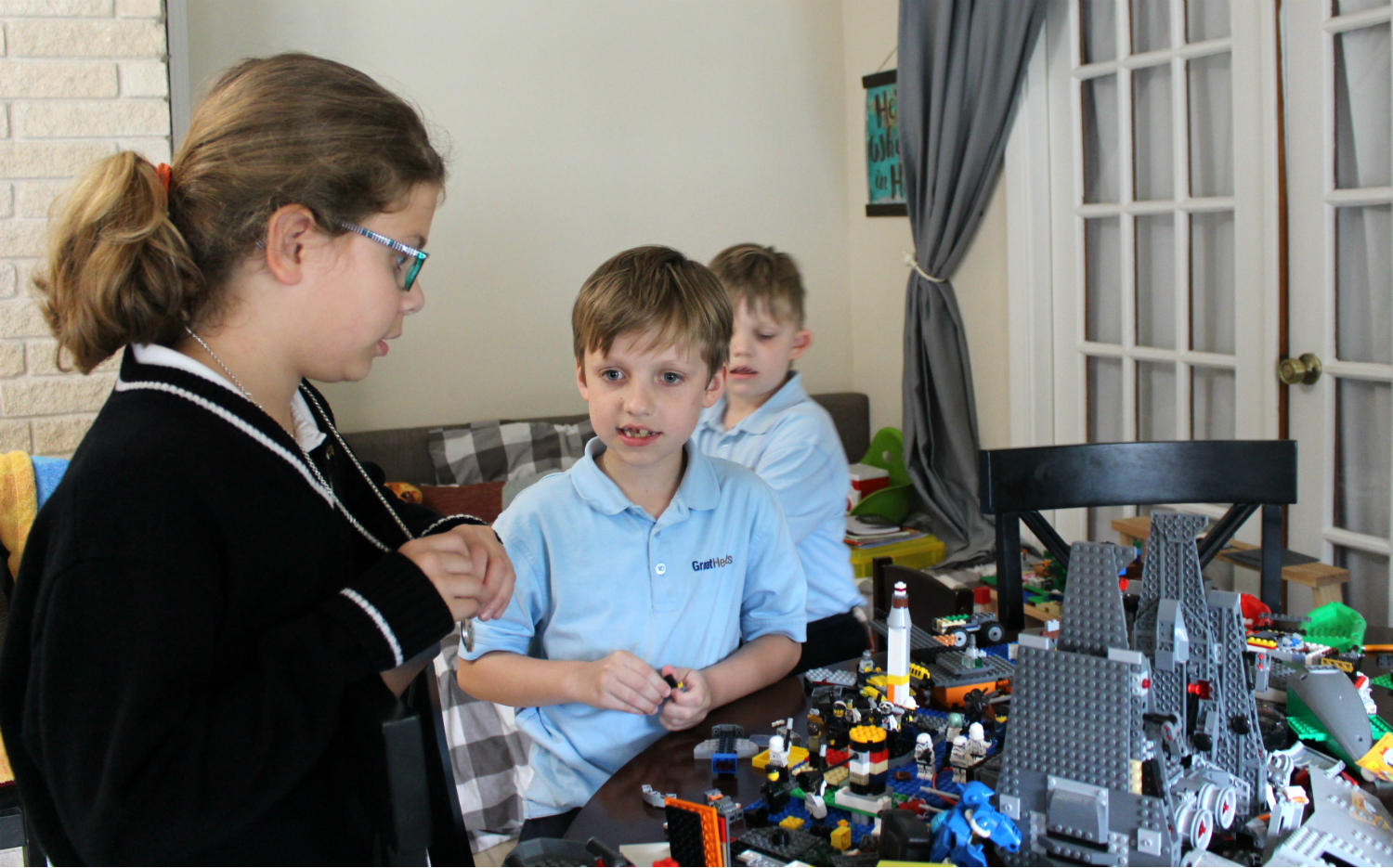
Walker Goolsby, center, plays with Legos after school with his sister Caroline and brother Hayes.
CREDIT CAMILLE PHILLIPS | TEXAS PUBLIC RADIO

Today, Walker is 8 years old and doing well. One of his favorite things to do is build Legos and make up stories about Lego guys.

His mother is grateful, but feels for all the kids who’ve missed out on years on intervention.

I mean you can’t undo that. Those are consequences that are just going to be there,” Goolsby said.

She and her husband moved their four children across town to be close to a charter school that gives Walker and his younger brother Hayes special education services.

With so much to make up for, parents and advocates have mixed reactions to TEA’s special education plan. Their top concern: There won’t be enough money.

Kyle Piccola from the disability rights organization The Arc of Texas said the plan’s a big step in the right direction, but he’s worried TEA doesn’t mention anything about how expensive it will be.

“In my opinion they’d be able to provide an estimated guess, at the least,” Piccola said.

TEA has promised to ask for more money for special education in next year’s state budget, but Piccola said he it will be hard to get lawmakers to agree unless the agency provides an accurate picture of the cost.

“I don’t want you to hear that The Arc of Texas is giving a resounding gold star to TEA. Like I said, we are very cautious about moving forward, and we’re going to be keeping a watchful eye,” Piccola said.

Disability rights attorney Karen Seal is more skeptical, though. She wants a federal monitor.

“TEA, the one that broke the law, they’re saying okay, we know you robbed these kids of this education, now we want you to go in and take care of the problem,” Seal said.

TEA’s Penny Schwinn said the state agency is working to regain the trust of parents and advocates.

“We understand that there are some serious trust issues in the state related tospecial education, and that one of our responsibilities is to begin to right the ship on our end,” Schwinn said.

It’s hard to say how much oversight the Education Department will give TEA as it rolls out special education reform. The department declined multiple requests for an interview.

Camille Phillips can be reached at Camille@tpr.org or on Twitter @cmpcamille

Source:

http://tpr.org/post/texas-special-education-reform-comes-mountain-mistrust


Source:

http://tpr.org/post/texas-special-education-reform-comes-mountain-mistrust

Comparte este contenido:

Uganda: IUIU Students Protest Suspension Over Sex

Uganda/

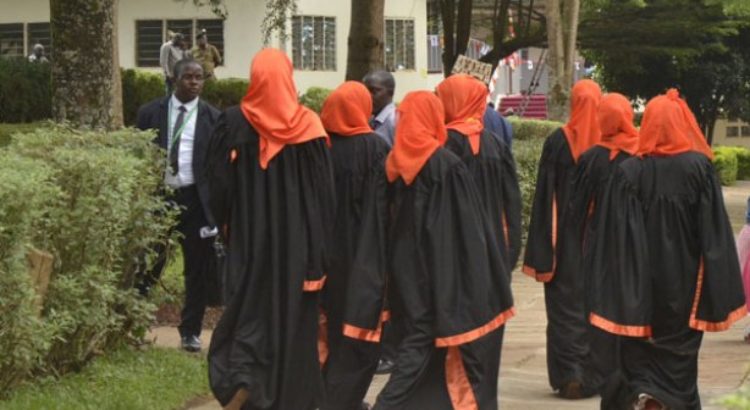
Kampala — Twenty-three students of Islamic University in Uganda (IUIU) have challenged the university decision to suspend them for one year for allegedly indulging in sexual activities on campus.

The affected students have written to the university management for a review of the decision by the disciplinary committee alleging that they were caught coupling in dark corners at the campus, contrary to university regulations.

The affected students were given one week within which to appeal the decision should they feel the punishment was not just and fair.

The 30-year-old institution, which operates on strict Islamic doctrines, bans physical touch involving hugging, pecking, and kissing between students of opposite sex.

IUIU is one of the rare universities that runs an all-female campus at Kabojja on the outskirts of Kampala city.

In one of the latest cases, one of the suspended students said he was unaware of the rules and consumed alcohol two years ago and was made to write hundred apologies to which he affixed his passport size photograph and was asked to pin on all notice boards at the campus.

The university disciplinary committee also found the suspended students on different course guilty of consuming narcotics, and alcohol, among other offences.

University speaks out

Dr Sulait Kabali, the university coordinator, who also doubles as secretary of the disciplinary committee, told Daily Monitor yesterday that the students were found guilty over breach of university rules and regulations.

«The students were found guilty of coupling and having sex on campus, which is contrary to the University rules and regulations,» he added.

Mr Kabali said other students were also found guilty of theft of property, consuming alcohol and other narcotic drugs, pregnancy and staging acts of violence at the campus.

The suspension letter dated April 14, states that the students were found in dark corners on different occasions engaging in a love affairs.

«During the cross-examining to which you were subjected at the above Disciplinary Sub-Committee and basing on your oral and written submission in which you stated that you were found in darkness engaging in love affairs, you were found guilty of having committed the above stated offence hence having violated the above cited rule,» reads part of the letter.

Mr Kabali said the suspension should act as a strong warning to other students, adding that university administration will not hesitate to expel any anyone who breaches the rules and regulation governing IUIU.

The suspended students, some in the final years of their courses, were about to sit for their examinations, which commenced yesterday.

Ms Rehema Katono, the public relations officer, said the university Disciplinary Committee will soon sit again to reach a final decision on the students, who have appealed against their suspension.

«At the moment, we cannot declare that we have suspended or discontinued them because the final conclusion has not been made as yet regarding their appeals,» she said.

One of the affected students, who preferred anonymity for fear that his appeal may be revoked, said disciplinary committee was too harsh in its judgment.

«I find it so astonishing that committee retrieved an offence I committed two years ago when I had just joined the campus but apart from that, they were too harsh,» he said.

Ms Katono advised that students interested in one another for sexual relationships should apply to the dawwah committee for consent and be allowed to marry officially.

About IUIU

Islamic university: IUIU is an Islamic-rule governed multi-disciplinary university offering courses at certificate, diploma, undergraduate and postgraduate levels. IUIU runs a main campus in Mbale in eastern Uganda, another in Kampala and in Arua plus Kabojja outside Kampala.

At 30 years, IUIU has seen increased enrolment of students from only 80 to more than 8,612, with campuses increasing from one to four. It has also trained more than 1,000 master graduates and over 50 PhD students. It has also produced more than 25,000 undergraduates.

From: http://allafrica.com/view/group/main/main/id/00060501.html.

Comparte este contenido:

Kroton nabs Somos for up to $1.8 bln in Brazil education deal

Brazil/By: Gabriela Mello and Jake Spring. Reuters/Source http://www.dailymail.co.uk/

Brazil’s largest for-profit education firm, Kroton Educacional SA, resumed its buying spree with an acquisition of Somos Educação SA for up to 6.3 billion reais ($1.8 billion), making a bold move into educating children after antitrust regulators knocked down a major university merger.

The deal gives Kroton control of the only listed company focused on elementary and high school education and shows its merger appetite has not vanished since competition watchdog Cade blocked a deal with Estacio Participações SA in June.

Kroton said it had agreed to acquire a 73 percent stake in Somos from controlling shareholder Tarpon Investimentos SA for 4.6 billion reais and would offer to buy out minority shareholders and delist the company.

Kroton shares rose 5 percent, Tarpon jumped 29 percent and Somos soared 49 percent on the deal, which offered a rich premium to lock up an attractive asset in the education sector’s hottest new segment for dealmaking.

For-profit education groups, which have filled the gap left by Brazil’s poorly run public schools, have shifted their focus to early education this year after government-funded college loans went on the chopping block to curb public deficits.

The problem in the segment is the small size of targets, sometimes owning only one or two units, in a very fragmented sector. Kroton’s first acquisition in the pre-college segment was the purchase of Centro Educacional Leonardo Da Vinci earlier this month for an undisclosed value.

Chief Executive Rodrigo Galindo told analysts a third deal would soon be announced, plus Kroton was in advanced talks to strike a fourth deal in the segment.

The Somos deal will lift Kroton’s revenue by 30 percent, boosting elementary and high school education to 27 percent of its revenue, from 3 percent currently, Galindo said.

Kroton agreed to pay 23.75 reais per share, a 66 percent premium on Somos’ Friday closing price.

Galindo said Kroton will use debt to fund the Somos deal, and said the company’s net debt may reach two times its earnings before interest, taxes depreciation and amortization (EBITDA).

«Somos Educacao is a gem and we are confident we’ve taken the right step,» Galindo said.

In December, Galindo laid out an aggressive expansion plan including opening 180 undergraduate programs in 2018 as well as acquisitions in Brazil and abroad.

Galindo said there was little market overlap between its current education programs and the schools run by Somos, but he noted that the deal would give Kroton roughly a fifth of the market for learning systems, which antitrust authorities would need to evaluate.

Cade declined to comment.

For Brazilian buyout firm Tarpon, the sale of its education company is a welcome windfall, as a major investment in food processor BRF SA has suffered heavy losses and fraud allegations, stoking tensions among shareholders.

BRF shares are down 38 percent over the last 12 months. Tarpon shares had lost 37 percent in the same period, before Monday’s news.

($1 = 3.44 reais) (Additional reporting by Carolina Mandl, Leonardo Goy, Bruno Federowski and Tatiana Bautzer; Editing by Brad Haynes, Paul Simao, Scott Malone and Richard Chang)

Source:

http://www.dailymail.co.uk/wires/reuters/article-5647363/Brazils-Kroton-buys-controlling-stake-rival-Somos-1-3-bln.html#ixzz5DZ1OM2r8


Comparte este contenido:

Tear gas and terror: A Palestinian education under occupation

Por: Yumna Patel/middleeasteye.net/02-05-2018

Officials say 95 West Bank schools were attacked in 2017 as intimidation, demolitions and occupation take high toll on Palestinian children

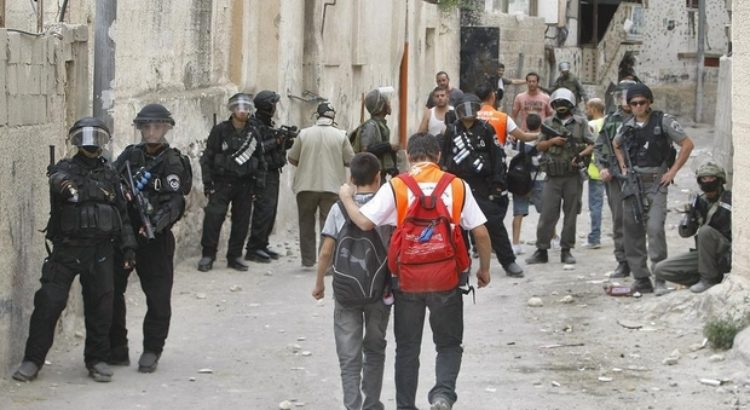
NABLUS, Occupied West Bank – The Israeli soldiers came as children were playing outside their village school south of Nablus. Within minutes tear gas had engulfed the playground, stones were thrown, and a 10-year-old boy was shot in the head with a rubber-coated steel bullet.

The violence on that morning of Sunday, 25 March was but the latest in a series of confrontations outside Burin village’s high school and Ahmad Faris, the 10-year-old taken to hospital for stitches, was the latest casualty.

The settlers try to break the school windows and attack teachers and students with rocks. Sometimes they shoot live bullets

– Ghassan Najjar, Burin activist

According to locals, the school is attacked up to three times a week by residents of the nearby illegal Yitzhar settlement, and Israeli soldiers from the nearby watchtower.

«More than 10 students refused to go to school after Ahmad’s injury, and another one wet himself at school,» Ghassan Najjar, a local activist told Middle East Eye.

«When you are studying and your school is surrounded by Israeli soldiers, how can you possibly focus in class?»

And the attacks fit a national pattern of increasing intimidation and violence against schools, children and teachers.

The Palestinian education ministry’s annual report found 80,279 Palestinian children and 4,929 teachers and staff were «attacked» by Israeli settlers or soldiers.

Over the course of the year, nine students were killed under various circumstances, 600 were injured, and more than 300 were arrested, in 352 attacks by Israelis on 95 schools.

An Israeli soldier points his weapons at a youth during clashes in Burqin in February 2018 (AFP)

Schools on the frontline

Nestled in the rolling hills of the northern West Bank, Burin is home to about 3,000 Palestinians, and is surrounded on all sides by two illegal settlements, an illegal outpost, and a military base.

The school sits at the entrance of the village, and is attended by about 300 local boys and girls.

Perched on the mountaintop overhead is Yitzhar, the source of multiple settler attacks. About 50 metres behind the school is an Israeli watchtower.

With its close proximity to both, the school is often on the frontline of settler and soldier raids on the village, according to Najjar.

«Every week there are at least two or three attacks, from both settlers and soldiers,» he told Middle East Eye.

«The settlers will come down from the mountain and try to break the school windows and attack teachers and students with rocks. Sometimes they even shoot live bullets.»

He recounts how one day armed settlers managed to break into the school as children were taking exams.

Soldiers, he says, often leave the watchtower to shout insults at the children, and blast music from the vehicles to provoke them

Children often throw stones in retaliation. «Then the soldiers use this as an excuse to tear gas the school and shoot at the kids,» Najjar said.

Najjar, who has volunteered at the school, said children are on edge all the time, always on the lookout for soldiers or settlers. «They have this mentality that ‘we need to protect ourselves and we need to protect our school’.»

And 2018 is shaping up to be another dangerous year for children and teachers – Palestinian media has reported several attacks on schools since the beginning of the year.

On 21 March, days before Faris’ injury, Israeli forces carried out a «show of force» in the Ramallah-area village of al-Mughayyir as children walked to school. Eight children were injured by rubber bullets in the ensuing clashes.

Two days before that, a school in the Bethlehem-area town of Tuqu was attacked by Israeli soldiers. Stones were thrown and tear gas was fired into the school grounds, and staff were forced to barricade the doors to prevent the soldiers getting inside.

Bedouin children attend school outside in Abu Anwar near the Jewish settlement of Maale Adumim (background), after their classrooms were demolished (AFP)

Confiscation and demolition

While such attacks threaten the safety of children and teachers, Najjar told MEE that his biggest concern was Israel’s ongoing confiscation of school land. In February, soldiers delivered a notice that Israel would be confiscating almost 15 acres of Burin school’s land for the construction of a separation wall.

«This is the most dangerous threat facing the school now,» Najjar said. «The planned construction of this wall will put more pressure on students, and make it impossible for them to get a proper education.

«They will be focused on protecting their land, and not on studying.»

Confiscations are under way across the occupied territories. According to a Februarystatement from the UN Office for the Coordination of Humanitarian Affairs (OCHA), 37 schools have pending demolition orders in Area C of the West Bank, which is under the full civilian and security control of Israeli authorities.

When an organisation comes to build new classrooms, the children know it is only a matter of time before the bulldozers come again

– Dawoud al-Jahalin, Abu Nuwar council

One of those schools, which was partially demolished in February for the sixth time since 2016, is located in the Bedouin village Abu Nuwar, where 670 Palestinians live in tents and sheet-metal shacks.

Under the pretext of being built without Israeli permits – which are nearly impossible for Palestinians to obtain in Area C – Israeli authorities demolished two EU-funded classrooms serving 26 Palestinian children in Abu Nuwar, sparking widespread criticism from Palestinian officials and the international community.

«These classrooms have been demolished so many times now,» said Dawoud al-Jahalin, the head of Abu Nuwar’s village council.

«When an organisation comes to build new classrooms, the children can’t even be excited – they know it is only a matter of time before the Israeli bulldozers come again.»

According to Jahalin, the 26 children now study in a local community centre and barbershop.

«Of course we hope to rebuild proper classrooms, but we need the help of the international community to put more pressure on the Israeli government to stop its demolitions,» he said, adding that the confiscations went further than ‘illegal’ buildings – Israeli forces last summer confiscated solar panels that powered the classroom and a local guesthouse.

Israelis march from the illegal settlement of Maale Adumim to the E1 zone in February 2014 (AFP)

Israeli incursions

Located in the strategic so-called «E1 area» of the West Bank, Abu Nuwar is the largest of several local Bedouin communities threatened with demolition.

The E1 plan would see the construction of hundreds of settlement units linking Maale Adumim and Kfar Adumim with occupied East Jerusalem.

If implemented, it would create an urban settlement bloc in the middle of occupied Palestinian territory which would effectively cut the southern and northern parts of the West Bank in two, and further isolate occupied East Jerusalem from the West Bank.

The plan would spell the end for Khan al-Ahmar, whose entire community, including its school, is already threatened with demolition and forced displacement, andJabal al-Baba – where the village’s only kindergarten was destroyed in August 2017, one month before the start of the school year.

Rights groups have argued that Israel’s policies in E1 amount to forcible transfer – strictly prohibited under international humanitarian law and a violation of the Fourth Geneva Convention.

«The Bedouin communities in the Jerusalem area have been here since the 1950s, after we were made refugees from our original lands in the Negev desert, and we are not even allowed electricity, water, or road networks,» Jahalin told MEE.

«Meanwhile Maale Adumim, which was built illegally in the 1980s, has over 70 gardens and play areas, 12 schools, and buses to take their kids to and from school.

«We are living in the 21st century, and Palestinian children still do not have access to one of the most basic human rights: the right to education.»

Israeli soldiers arrest a young Palestinian boy following clashes in Hebron in June 2014 (AFP)

Running the gauntlet

The education ministry also highlighted the effect Israel’s extensive network of checkpoints and closed military zones on the right and safe access to education.

The ministry’s 2017 report said Palestinian children and teachers at 51 schools were delayed at military checkpoints and gates while on their way to and from school.

26,808 students and 1,029 teachers were either prevented from getting to school or faced long delays at checkpoints, resulting in «35,895 classes wasted»

– Palestinian Ministry of Education report

As a result, 26,808 students and 1,029 teachers were either prevented from getting to school or faced long delays, resulting in «35,895 classes wasted».

In the southern West Bank, in the Masafer Yatta area of the south Hebron hills, 210 Palestinian children living in a cluster of 12 small villages face the daily challenge getting to class in an active military training zone.

Learning in a firing zone

Declared by the Israeli government as Firing Zone 918 in the late 1970s, the Palestinians living in the area spanning 8,648 acres are subjected to the whims of the Israeli army, which routinely exercises with live ammunition.

Nidal Younis, the head of Masafer Yatta village council, told MEE that the children in the community were often the most exposed to the military exercises.

Can anyone else in the world imagine themselves as a child, or imagine their children, trying to get a proper education under these conditions?

– Nidal Younis, Masafer Yatta village council

«There are only three schools in the entire area, and most of the communities do not have access to school buses, forcing kids to walk several kilometres to and from school,» Younis said.

He added that any buses secured for children were often stopped and turned around by Israeli forces on the way to school.

«As the kids walk to school, military helicopters fly overhead at low altitudes, whipping up clouds of dirt and sand around the children, hurting their eyes and delaying their journey to school,» he said.

He added that during active training periods, soldiers will close certain areas leading to the schools for up to 10 days, leaving teachers and children sitting at home until the army reopens the area.

Younis said Israel has prevented locals from paving proper roads, or installing electricity or water infrastructure inside the zone.

«In the summer, kids walking on dirt paths have to fend off snakes and scorpions, and by the time they arrive to school they have overheated and are thirsty – and they don’t even have access to running water.

«Can anyone else in the world imagine themselves as a child, or imagine their children, trying to get a proper education under these conditions?

«It is unbearable, almost impossible. But in Palestine, this is what our children must go through just to learn.»

*Fuente: http://www.middleeasteye.net/news/israeli-attacks-palestinian-schools-1123654765
Comparte este contenido:
Page 99 of 144
1 97 98 99 100 101 144