Page 101 of 144
1 99 100 101 102 103 144

Book: The Future of Education and Skills 2030 (PDF)

OECD / April 29, 2018 / Author: OECD

OECD Education 2030

The Future of Education and Skills 2030 project aims to help countries find answers to what knowledge, skills, attitudes and values are needed for today’s students to thrive and shape their world, as well as how instructional systems can effectively develop them.

Link for download:

http://www.oecd.org/education/2030/E2030%20Position%20Paper%20%2805.04.2018%29.pdf

Source of the Review:

http://www.oecd.org/education/2030/

Comparte este contenido:

Tanzania: Govt to Organize Nation-Wide Debate On Education, Minister Reveals

Tanzania/April 28, 2018/Allafrica

Resumen: El gobierno de Tanzania planea organizar un debate a nivel nacional con las partes interesadas en la educación para discutir posibles formas de mejorar el sector.

The Tanzania government is planning to organize a nation-wide debate with stakeholders in education to discuss possible ways to improve the sector.

This was said in Parliament on Wednesday, April 25, by the deputy minister of State in the President’s Office who is responsible for Regional Administration and Local Government (PO-RALG), Joseph Kakunda.

Mr Kakunda was responding to a supplementary question that was raised by the Vunjo constituency member of Parliament on the NCCR- Mageuzi ticket, Mr James Mbatia, who sought to know the government’s plan to engage stakeholders in efforts to earnestly improve education in Tanzania.

«Mr Mbatia has raised a valid observation, and we are working on it. His views on this are in line with those of former President Benjamin Mkapa,» the deputy State minister said.

Fuente: http://allafrica.com/stories/201804260155.html

Comparte este contenido:

South Africa: Bow tie wearing teacher tackles education inequalities

South Africa/ April 25, 2018/Source: https://www.brandsouthafrica.com

Play Your Part programme is Brand South Africa’s nationwide programme that encourages active citizenship and looks to impact the country positively in order to fulfil the bigger picture of building a positive Nation Brand.

Active citizenship means people get involved in their local communities and democracy at all levels, from towns and cities to nationwide projects and dedicating their own time/resources / talents to contribute to their local communities.

There are numerous opportunities, big and small, for each and every individual to make a positive difference in the communities in which they live and operate.

Founder of “Bow Tie Challenge”, Chris Megaffin, is a teacher who is originally from Toronto, Canada.  He is a fashion activist who is on a mission to fight for social justice and he is using bow ties to achieve this.

Earlier this year the Bow Tie Challenge was launched.  The Bowtie Challenge is a fund-raising initiative that was born as a result of his passion for teaching, interest in fashion and desire to make a difference in his local community.  Chris pledged to wear a different bow tie every day for 365 days a year starting January 1st, 2018.

“As an international teacher, I have come across educational inequalities in every country where I have taught and I have always wondered what I could do to make difference in the lives of these children”.

South Africa has some of the highest levels of socio-economic inequality in the world, and this is nowhere more apparent than in the educational system across South Africa.  Statistics South Africa also show that children from disadvantaged backgrounds spend an average of 3 years less time in school than their privileged counterparts.

Also, fewer of these children are put into early childhood development programmes – which we know to be fundamental to a child’s education and development.  The situation feeds youth unemployment, and contributes to general instability in the country, as millions of South Africans cannot afford to buy food or access healthcare, decent sanitation and other essentials of a dignified life.

Chris is using the campaign to raise awareness about the importance of education and to raise funds for Afrika Tikkun. Afrika Tikkun is a non-profit organization with a mission to provide children from underprivileged communities in South Africa with high-quality education and development from cradle to career.

Ensuring quality education is a national priority. The National Development Plan describes education as a key lever to improving the quality of life in a society. Education improves the overall skills and abilities of the workforce, leading to greater productivity which contributes to economic growth.

Chris is collaborating with some of South Africa’s up and coming designers who will help design the bow ties.  He says this is to help support local businesses and give the designers exposure.


Meet local designer Shwezu

Shwezu have designed a bow tie especially for the campaign in the colours of the South African flag.

“When approached with the opportunity to design and produce a range of bow ties for this initiative, we didn’t hesitate for a second. Not only is it fun, colourful, creative and inspiring but it also resonates with Shwezu.co.za‘s ultimate aim – to contribute to the growth and prosperity of our nation. For this reason, we only use local materials and producers to create our unique Shwezu Shweshwe bow ties and other products. We strongly believe that by acquiring new skills (e.g. fashion design and sewing) through a good education, the youth of South Africa have the ability to unlock countless opportunities to grow and thrive.”

Shwezu is an online store for South African inspired fashion, shoes, bags, accessories and gifts all tied together by one common denominator, Shweshwe – the iconically South African fabric.

How to get involved

  • Donate to The Bow Tie Challenge via http://thetravelingeducator.com/2017/09/the-bowtie-challenge
  • Share the Challenge on social media to raise awareness about the inequalities of education in South Africa
  • Join the challenge, upload a photo of yourself wearing a bow tie to any social media platform #bowtiechallenge

Facebook – https://www.facebook.com/thebowtiechallenge/?ref=bookmarks

Twitter – https://twitter.com/bowtiechallenge

Instagram – https://www.instagram.com/the.bow.tie.challenge/

Source:

https://www.brandsouthafrica.com/active-citizenship/bow-tie-wearing-teacher-tackles-education-inequalities

Comparte este contenido:

Interview: States are favoring school choice at a steep cost to public education

By The Associated Press

(The Conversation is an independent and nonprofit source of news, analysis and commentary from academic experts.)

Derek W. Black, University of South Carolina

(THE CONVERSATION) Teacher strikes are generating a healthy focus on how far public education funding has fallen over the past decade. The full explanation, however, goes beyond basic funding cuts. It involves systematic advantages in terms of funding, students and teachers for charter schools and voucher programs as compared to traditional public schools. Increasing public teacher salaries may end the current protests, but speaking as an expert in education law and policy, I believe it won’t touch the new normal in which public education is no longer many states’ first priority.

My forthcoming research shows that, from funding and management practices to teacher and student policies, states are giving charter schools and private schools a better deal than public schools. These better deals have fueled enormous growth in charter schools and voucher programs that is now nearly impossible to unwind.

The most basic shift occurred between 2008 and 2012. Florida and North Carolina illustrate the nationwide trend. Each cut public education funding by 20 percent or more in three years. During the same period, North Carolina lifted its cap on new charter schools and quickly doubled its charter school spending. Florida similarly changed the rules for its voucher program and quadrupled its size.

States also passed laws to offer charters and private schools more money for each student they took. Florida increased the value of each voucher by roughly US$2,000. Nevada went even further, passing legislation that would convert every single public education dollar into a voucher dollar. While the state Supreme Court later declared the program unconstitutional, it has not stopped other states like Arizona from pursuing similar programs.

Several states also began lifting income eligibility limits. Previously, states had provided vouchers only for low-income students. But new voucher programs made them available to wealthy students as well, even those who already had access to excellent public schools.

Charter schools benefited from similar advantages in some states. Ohio and New Jersey funneled charter school funding through school districts, but the states’ antiquated funding formulas and charter reimbursement rates force districts to send charter schools more per pupil than they receive from the state.

Pennsylvania has a similar scheme, but it has proven so lopsided that it expanded deficits in Philadelphia and nearly bankrupted the Chester School District. Chester was paying the local charter school roughly $40,000 per special education student, including for those students with relatively low-cost needs. Arizona took a simpler route. It shielded charter schools from the budget cuts it was imposing on traditional public schools.

Once they receive the money, charter schools and private schools receiving vouchers can spend it almost any way they want. Private schools operate just as they had before. And charter schools – though technically public schools – are exempt from typical financial oversight.

Laws require public schools to award contracts through a transparent process and prohibit public schools from entering contracts that pose conflicts of interest. Charters can award contracts to almost anyone they like – and on any terms they like. This includes awarding contracts to companies that have close financial ties with the charter. A person can start a purportedly nonprofit charter school and then have that charter purchase all of its services and supplies from a company owned by that same person. As a result, the person can turn a profit on staffing, facilities, technology and supplies. National Heritage Academies runs this exact type of business model in North Carolina and continues to grow its campuses.

The same activity could constitute fraud or criminality in a public school. Yet, state law permits it for charters. As Thomas Kelley’s analysis reveals, many of the charter schools that state law calls nonprofits would not qualify for that same label under federal law.

Even well-meaning charter schools have been unable to stop this profit-taking. The Ohio Supreme Court, for instance, found that state law dictates that everything a private charter school company purchases with public dollars – from desks to computers – belongs to the private company, not the public. The same is true of buildings that charter schools lease. Charter school operators reap their largest profits through unreasonably high lease payments on buildings that the public will never own.

States also allow private schools and charters to treat students differently. While public schools must provide disadvantaged students with a host of special services, private schools take vouchers with almost no strings attached. And they are increasingly taking high-achieving middle-income and nondisabled students who cost less to educate and typically do not demand specialized services.

Charter schools’ advantages come in their ability to recruit students and cap enrollment. Public schools must serve everyone in their community. The clearest proof that charters don’t is in the data. For instance, Newark charter schools enroll less than half the percentage of special education students and English language learners as the Newark public schools. Newark charters also enroll significantly fewer low-income students. In North Carolina, charter schools are increasingly enrolling white students, while public schools increasingly enroll students of color. In Minneapolis, 80 percent of charters are racially isolated by race, socioeconomic status or both.

The most obvious advantage, however, is with teachers. Most states exempt charter schools from teacher certification requirements. Half exempt charters from complying with high-stakes teacher evaluation systems. More than three-quarters exempt charters from the teacher salary and collective bargaining rules. In short, states permit charters to hire teachers that would be deemed unqualified in a public school and pay them less.

The current debate over school funding must move beyond teacher salaries and whether the books in public schools are tattered. Those conversations ignore the systematic policies that disadvantage public schools. Increasing public school teachers’ salaries alone won’t fix the problem. The public school teaching force has already shrunk. Class sizes have already risen. And the rules that advantage charter and private schools remain firmly in place.

Long-term solutions require a reexamination of these preferences. As a state constitutional matter, the law requires that states make public education their first priority. It is not enough to make education one of several competing priorities. And as a practical matter, states cannot continue to ask public schools to work with whatever is left over and then criticize them for doing a poor job. This cycle creates a circular justification for dismantling public education when states should be repairing it.

This article was originally published on The Conversation. Read the original article here: http://theconversation.com/states-are-favoring-school-choice-at-a-steep-cost-to-public-education-95395.

Source:

https://wtop.com/education/2018/04/states-are-favoring-school-choice-at-a-steep-cost-to-public-education/

Comparte este contenido:

Kenya: Pan-African conference on education kicks off in Nairobi

Kenya/April 24, 2018/By OUMA WANZALA and By FAITH NYAMAI/ Source: https://www.nation.co.ke/

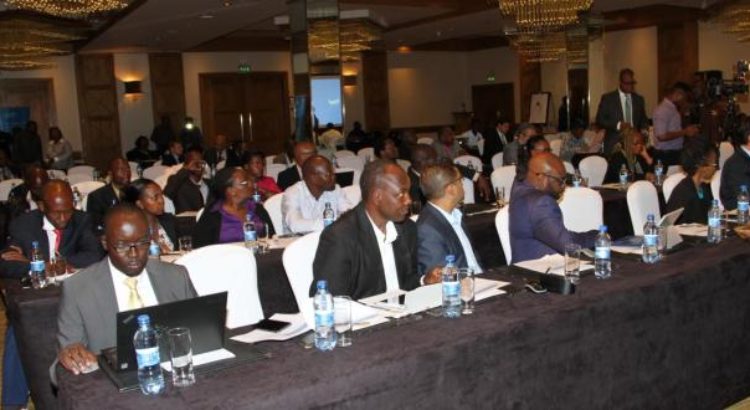
Kenya’s education sector reforms will top discussions by close to 600 scholars and education policy makers in Africa attending a major conference in Nairobi which will officially open on Wednesday.

About 50 Education ministers from African are attending the Pan-African Conference on Education 2018 that ends on Friday.

Education Cabinet Secretary Amina Mohamed is expected to present the progress made in the country’s education reforms, including its attempts to meet the SDGs targets.

Speaking at Safari Park Hotel on Monday ahead of the conference, Ms Mohammed said the meeting will focus on improving the quality of education in African continents.

“The discussions will revolve on challenges, and coming up with monitoring mechanisms that will help all African countries improve their education system,” she said.

The CS said, Kenya has so far made huge strides of progress in the education sector among them the introduction of the National Education Management Information System (NEMIS) in primary and secondary schools.

Other steps that Kenya has made is the introduction of the Competency based curriculum that is being piloted nationally since January.

Ms Mohamed said, the main goal is to champion for equitable inclusive quality education and lifelong learning opportunities for all.

She said it will further provide a forum to assess the strides Africa has made in ensuring inclusive quality education and lifelong learning as enunciated in Sustainable Development Goals, 2030, and Continental Strategy for Education in Africa 2016-2025 (CESA 16-25).

The ministers will also discuss on how they can begin to implement the agenda 2030 and assess the progress so far

Kenya is hosting the conference in collaboration with UNESCO and African Union.

The Nation has learnt that the ministry has prepared a special paper detailing the exact position of the country regarding gender disparities, the enrolment between science and arts courses, and provision of free education.

The Conference, to be held under the auspices of UNESCO and African Union, will also draw participants from the public and private sector.

Under Development Goal 4, Governments are obliged to “ensure equitable inclusive quality education and lifelong learning opportunities for all”.

In an effort to support the Continent’s development vision, African Countries, under the auspices of the African Union, endorsed CESA 16-25.

It aims at “Reorienting Africa’s education and training systems to meet the knowledge, competencies, skills, innovation and creativity required to nurture African core values and promote sustainable development at the national, sub-regional and continental levels.”

Ms Mohamed is expected to outline the challenges facing the country’s education sector, which have affected the government’s push to have 100 per cent transition from primary to secondary schools.

Ms Mohamed will also likely report on how the Directorate of Quality Assurance and Standards will address the perennial problems, including checking teacher absenteeism and inadequate syllabus coverage, among other unprofessional practices.

She will also address the ongoing curriculum reforms, whose Competence-Based Curriculum, format is undergoing a national pilot phase.

“The Ministry is administering a national pilot exercise, which will provide credible data to enable us make critical decisions going forward,” Ms Mohamed said.

Another sector of education reforms is spearheaded by the Kenya National Examinations Council, which has been charged with the responsibility of ensuring that our national examinations are highly credible.

This year, the Government introduced the free day secondary school programme seeking to assure 100 per cent transition from primary to secondary education.

The Government has so far spent Sh29 billion on the free day secondary school programme.

Last week, the government said it had started intensive reforms in Vocational and Technical Training.

Every Kenyan, Ms Mohamed said, must be trained and empowered with the skills to drive a 24-hour economy.

“It is our duty to train for the attainment of this vision. So I ask you all to support us as we roll out programs in these two sectors,” said the CS.

Source:

https://www.nation.co.ke/news/education/Pan-African-Conference-on-Education-Nairobi/2643604-4520970-m6k0pw/index.html

 

Comparte este contenido:

Re-engineering Education in the Eastern Caribbean

Eastern Caribbean/April 24, 2018/By: Press Release/ Source: https://stluciatimes.com

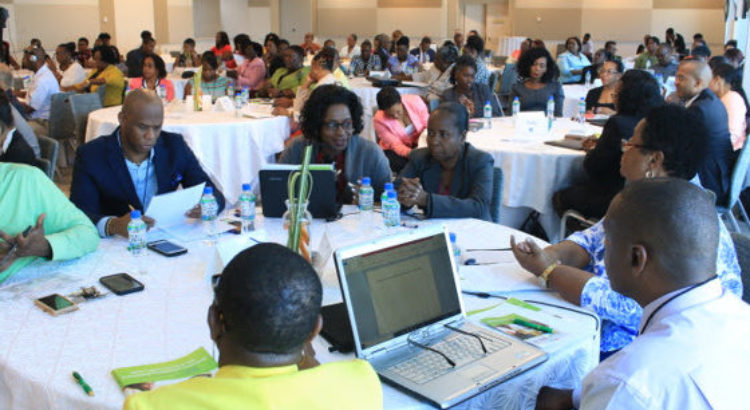
Approximately 100 Education professionals of the 10 OECS Member States participated in the OECS Teacher Education and Professional Development Conference under the theme, “One Voice in Re-Engineering OECS Teacher Education”. The two-day event aimed at building a collective response to challenges in the education system in the OECS.

Chief Education Officers, Directors of Education, Principals and Deans of the National Colleges, Teacher Educators, Curriculum Officers and teachers all collaborated to identify actions which should be taken to enhance teacher education and professional development and essentially teacher quality.The conference was also geared towards establishing  mechanisms for developing evidence-based approaches to teacher education and professional development in the OECS.

Sisera Simon, Head of the Education Development Management Unit (EDMU) at the OECS Commission stated:

The conference made tremendous strides towards establishing the environment that will boost teacher quality. The discussions and decisions surrounded arrangements with the Eastern Caribbean Joint Board of Teacher Education and the need for it to be responsive to the needs of the Member States. A call was also made to improve on the partnership and networking between Ministries of Education, Teachers’ Colleges and Schools.” Mrs Simon further elaborated that the EDMU will continue to serve as facilitator and enabler to the networking required to achieve one voice in re-engineering OECS Teacher Education and Professional Development.

Participants had the opportunity to critically analyze reports on the current situation to determine possible actions towards developing a sustainable in-service professional development programme led by the Teachers’ Colleges of the OECS.

I appreciated the collaborative approach to the conference from two different levels. Each Member States was represented as well as the diversity of education professionals who took part of the discussions. We hope to build a plan of actions owned by all of us and that we are all committed to implement. Chief Education Officer for Anguilla Mrs Rhonda Connor said.

The quality of teaching is not just about the initial preparation of the teachers but also about the continuing development of the teachers and we were exposed to a number of models which we can try when we get back to our various territories. Vice Principal of Antigua State College Dr. Patricia Benn stated.

This conference enabled us to have a deeper mutual understanding of the challenges that we are facing despite the differences between the education system in Martinique and the other OECS Member States. We have to share more experiences to be able to create synergies and use our limited resources wiselyGhislaine Shuller, Educative Cooperation Officer at the Academy of Martinique said.

Several actions were agreed as the first step in achieving a re-engineered teacher education and professional development environment. These actions will be accomplished through specific activities that will be designed to meet specific and overall objectives related to teacher education and professional development. Some of the major actions include:

  • Restructuring the Eastern Caribbean Joint Board of Teacher’s Education to be more responsive to the needs of the member states
  • Enhancing continuing professional development of teachers
  • Increasing actions research implemented by teachers educators in national colleges.
  • Creating a structure to facilitate discussions between demand and supply related to education (e.g: increase cooperation between Ministries of Education and teachers’ colleges).

The conference which was deemed a success by the organizers and participants was supported by UNICEF, USAID and the Global Partnership for Education.

Source: 

https://stluciatimes.com/2018/04/23/re-engineering-education-in-the-eastern-caribbean/

Comparte este contenido:

Latvia and Norway have potential for expanding cooperation on start-ups, education and tourism

Latvia – Norway/April 24, 2018/Source: http://www.baltic-course.com

Latvia and Norway have the potential for expanding cooperation on start-ups, innovation, education and tourism, Latvian Economics Minister Arvils Aseradens (Unity) said while meeting with Roy Angelvik, the Norwegian State Secretary of the Ministry of Trade, Industry and Fisheries, on April 23rd, reports LETA.

LETA was told at the Economics Ministry that the meeting between Aseradens and Angelvik dealt with bilateral cooperation as well as possibilities of expanding this cooperation.

«Latvia appreciates the successful regional and economic cooperation with Norway. Moreover, our countries share the same values and goals – to develop the Baltic and Nordic countries as an affluent and secure region of Europe in the long term,» Aseradens said during the meeting.

Both Angelvik and Aseradens noted that it is important to both countries to develop cooperation on start-up businesses and innovation. At the same time, officials also voiced interest in developing educational cooperation, including professional education, particularly by developing joint study and student exchange programs.

Aseradens praised existing Latvian-Norwegian cooperation on the regional level, stressing the need to move towards closer Baltic-Nordic regional integration, especially in areas like energy, innovation, construction and green technology. The minister also thanked Norway for its contribution to the Baltic region’s security.

Aseradens also noted the significance of Norway Grants program, which has helped deepen bilateral toes and find new cooperation opportunities, including for Latvia’s SMEs to develop innovative, environmentally-friendly products, technologies and services. Norway Grants have supported 102 projects, as well as helped create 126 new jobs and develop 40 environmentally-friendly products and technologies.

Aseradens indicated that many Latvian construction companies are operating in the Norwegian market and that it is therefore important to align the two countries’ construction standards and requirements.

Angelvik, on his part, said that Norway wants to develop more expensive cooperation with Latvia on tourism, which is essential for the region’s further development.

After the meeting with Angelvik, Aseradens opened the Norwegian-Latvian business forum which had brought together more than 300 entrepreneurs from Norway, Norwegian entrepreneurs already doing business in Latvia, as well as Latvian entrepreneurs interested in building business contacts with Norwegians or starting a business in Norway.

As reported, the Norwegian-Latvian business forum has been organized as part of the visit of Crown Prince Haakon and Crown Princess Mette-Marit of Norway to Latvia.

Source: 

http://www.baltic-course.com/eng/Technology/?doc=139521

Comparte este contenido:
Page 101 of 144
1 99 100 101 102 103 144