Page 120 of 144
1 118 119 120 121 122 144

Kenia: TSC chair Lydia Nzomo warns school heads over class repetition

Kenia / 06 de diciembre de 2017 / Por: WINNIE ATIENO / Fuente: http://www.nation.co.ke/

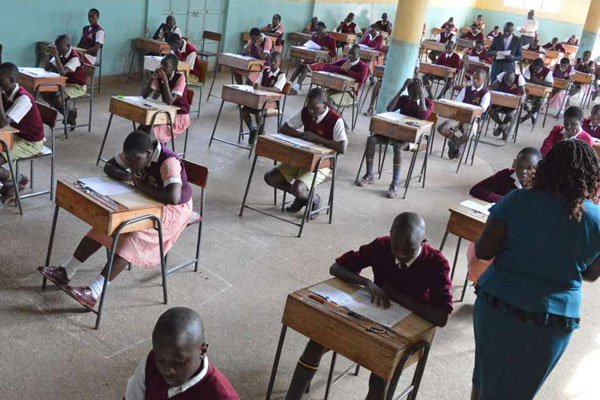
Headteachers have been ordered to ensure pupils do not repeat classes.

Teachers Service Commission chairperson Lydia Nzomo said although teachers have been put on notice over class repetition some children are still made to repeat classes.

“A child should complete one class and go to the next. We must offer quality education for all our children,” Dr Nzomo said.

While speaking during the ongoing primary school headteachers annual conference in Mombasa, Dr Nzomo assured the teachers that they will not be demoted following the government directive that management of primary and secondary schools sharing a compound will be merged.

NO DEMOTION

“You won’t be demoted from a head teacher to a classroom teacher, we have protected you from all that, just do your work, ” Dr Nzomo said.

She said the government will continue exploring other ways of ensuring teachers are well remunerated.

The Collective Bargaining Agreements have brought relative peace in the education sector, she added.

“Which is critical for achieving quality education. Did you notice the helicopter promotion from job group G, H to N? We should embrace quality education reforms. If the learners are not healthy and nourished, they won’t concentrate,” she said.

SAFE SPACES

At the same time, Dr Nzomo urged the school heads to provide a safe environment for learners.

She urged the school heads to protect pupils from physical, social, sexually and psychologically abuse.

“I know we do not have enough teachers in all the schools but during recruitment ensure they are well trained to offer the best for our children,” she added.

Fuente noticia: http://www.nation.co.ke/news/education/School-heads-warned-over-class-repetition/2643604-4215424-14ae4goz/index.html

Comparte este contenido:

Australia: Australian education poll: 60% say funding cuts limit university access

Australia / 06 de diciembre de 2017 / Fuente: https://www.theguardian.com

Education minister is reportedly preparing to end program that helps students from low-income families

Six out of 10 Australians think cuts to university funding would limit access to tertiary education and the same proportion would oppose attempts to reduce the education budget by circumventing the parliament, polling conducted for the university’s lobbying arm has found.

On Monday it was reported the education minister, Simon Birmingham, was considering non-legislative changes to funding, including axing the higher education participation and partnerships program (Heppp), which helps students from low-income families access university.

Universities Australia responded on Tuesday by releasing polling conducted on its behalf which found 60% of respondents opposed cutting equity programs that support poorer students to go to university, without approval from parliament.

Almost as many (59%) opposed cutting research funding for universities without approval from parliament, another measure reportedly being considered by the government, and 63% agreed cuts to funding would limit access.

The numbers were higher among people from regional areas and over 55s, with 69% of those demographics saying they opposed cuts to funding that were not put through parliament.

The poll of 1,575 people was conducted by JWS Research between 24 and 28 November.

The chief executive of Universities Australia, Belinda Robinson, said the results showed the government would be making the wrong decision if it pursued non-legislative cuts.

“The government keeps coming up with creative new ways to cut funding to public universities, but the message from voters remains the same: it’s the wrong decision for Australia’s future,” she said.

“The Senate has been crystal clear on this too, and would quite rightly take a dim view of any bid to go around the legislative protections for higher education funding.
“They can see what the government seems unable to: cuts to universities are not what this country needs as we head into an era of stronger global competition and a greater need for higher skills.”

The government has sought to put pressure on opponents of the government’s higher education bill by hinting it would find another way to reduce education spending if necessary.

On Monday Birmingham said the government was “considering all options” to trim spending.

The bill, which is opposed by Labor, the Greens and the Nick Xenophon team, would impose a two-year 2.5% efficiency dividend on universities, lower the Help debt repayment threshold to $42,000 and increase fees by a cumulative total of 7.5% by 2021, and would introduce performance contingent funding aimed at increasing graduate outcomes.

Fuente noticia: https://www.theguardian.com/australia-news/2017/dec/05/education-poll-60-per-cent-say-funding-cuts-limit-access-to-university

Comparte este contenido:

Africa: A moral case for Free Senior High School education

Africa/ December 05, 2017/By: Mustapha Hameed/Source: http://citifmonline.com

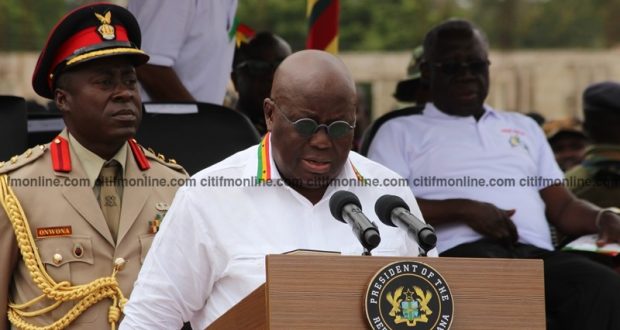
On Tuesday 12th September, 2017 at the West Africa Senior High School, the President, H.E. Nana Addo Dankwa Akufo-Addo launched the free senior high school education policy ushering the nation into an era where the age old creed of “education as a right not a privilege” assumes its true meaning.

Indeed, this has been the dream of the forebears of our republic; a Ghana where our children will not be denied the opportunity of senior high school education because of the inability of their parents to support them financially.

It is indeed a fact, that many young people since independence have been denied the opportunity of secondary education mainly due to financial constraints; hence it came as no surprise when Ghanaians all over the country received the news of the launch of this flagship policy with excitement. It was a dawn of a new era, an era that is not only bringing to our young people hope of a brighter future, a future with limitless and greater opportunities, but it also brings enormous financial relief to the overwhelming majority of parents who find it extremely hard to finance the education of their children.

If free education means one thing, then it is the fact that the era where pupils dropped out from school for financial reasons, or had their education cut short has become a thing of the past. It therefore came as no surprise that across the length and breadth of the country, the news of the launch was received in most instances amidst the display of joy and celebrations in our streets.
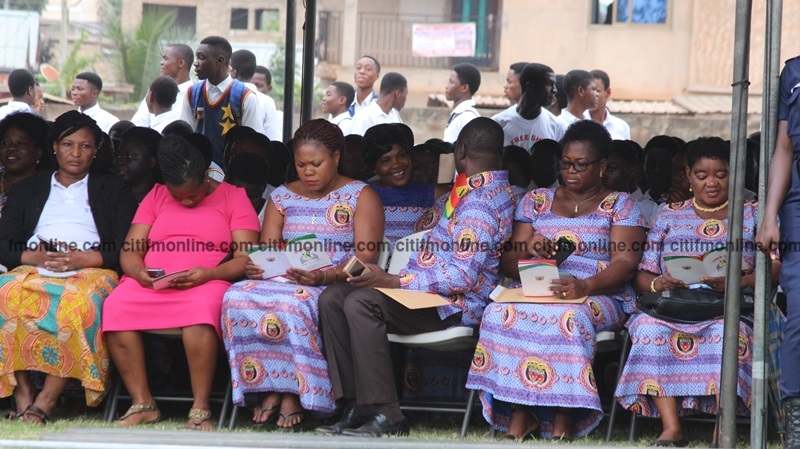
Free SHS like any pro-poor policy or any policy intervention for that matter has its own challenges. It is however unfortunate that today even problems with SHS three students, their classrooms and any other problems in our high schools are attributed to the Free SHS and pupils benefiting from the intervention.

So I want to ask, until the start of the Free SHS, were there no challenges in our schools already? Was it all rosy and glossy? Why is the NDC victimising students? Students whose only crime is that, they have chosen to go to school and their country has chosen to pay for it fully.

It is worth noting, that even before the implementation of the policy, the propaganda then, was that, government intended fidgeting and interfering with WAEC marking schemes so as many students would be affected and failed. This they claimed would affect enrolment causing a sharp reduction in enrolment figures so that government could fund the scheme for the few brilliant ones. It turned out cut-off points were lowered so every child could start SHS education. The effect – enrolment figures have been astounding, unlike anything we’ve ever seen before.
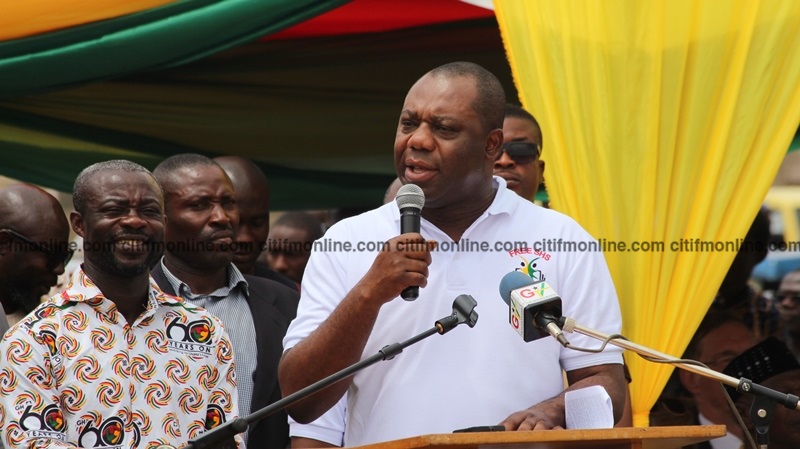
Minister of Education, Dr. Matthew Opoku Prempeh

This deliberate propaganda still do exist, but they now appear in different forms and seem to be aided for whatever reason by some media houses. For whatever its worth, the forces against this policy seem unrelenting and even more belligerent in their endeavours. How has it become a crime to dedicate part of our resources towards ensuring every child receives free secondary education? Do we bastardise a policy because of some few problems. In lecture halls and auditoria in some of our universities, students stand to listen to lectures because of inadequate seats, others go to lab and only observe because of inadequate equipment and other essentials, you attend lectures and you don’t hear anything because the PA System is faulty. In our halls of residence, we have people we refer to as ‘perchers’, a room for 4 people end up accommodating 10. In my room back in Katanga at KNUST, there were about 12 of us, in a cubicle meant for 4 people originally designed for one or two persons. Back then, one would hear stories about rooms that have never been locked, obviously because of the enormously high number of occupants. Did we condemn our universities over this? Were these problems also because of Free SHS?

You remember what they call ‘the shit on shit’ phenomenon? We went through these conditions and today our lives have seen tremendous improvements. Some of us have risen to greater heights, achieved greater feats and doing greater things. One man here who used to be my ‘percher’ rose through the ranks of one of the biggest banks in the world headquartered in New York, managing assets of multinational oil companies worth several billions of dollars.
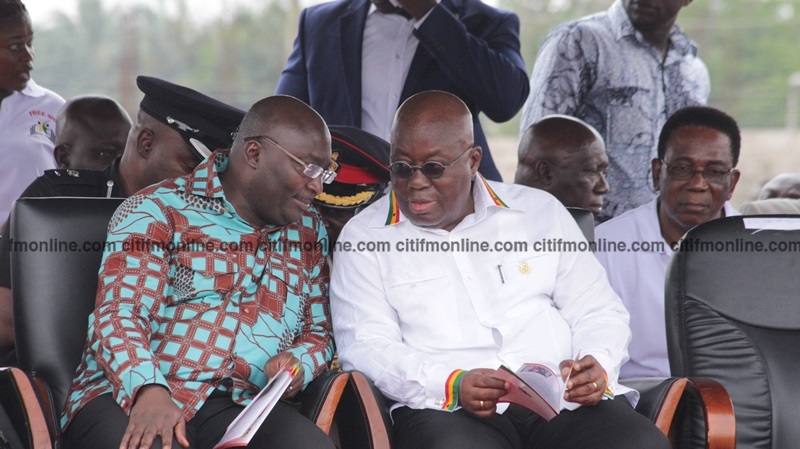
I remember back then at Anglican secondary school in Kumasi several years ago, students from other schools used to come in to use our labs and other facilities, this was years before the idea of Free SHS was conceived. I remember a senior high school that had a spill over of SSSCE candidates to other schools because they did not have enough facilities, some SHSs could not be approved WAEC centers because of inadequate infrastructure and facilities, this was aeons before Mr. President became a candidate for the first time.

Clearly, these were no challenges arising as a result of Free SHS; they are challenges that come with our educational system as a developing country which governments over time have tried to address. Should we have condemned high school education then because of these challenges? Where would we be today?

Today, our lecture halls, auditoria and theatres have received tremendous boosts, fully furnished, some with functioning central air conditioning systems. The conditions under which we study have improved. Most schools have moved beyond the blackboard-white chalk system to a healthier whiteboard-marker system. More dormitories have been built over time, more halls of residence and many other facilities to give our campuses a facelift and make them modern centres of learning. I remember the NPP’s model school system and the infrastructure it came with.

Why do I even have a feeling that hypocrisy is ingrained in our body-polity and there is a deliberate attempt by some people to destroy the opportunities created by the Free SHS? Even as I write this, pupils in basic schools still study under trees and other dilapidated structures. Did these start today? Were these the doing of the Free SHS policy? Must we deny those pupils the ability to read and write because they have no classrooms?

The problems of our education system did not start with the opportunity created for every child to receive free secondary education and it certainly won’t end here. And head teachers crying about problems in their schools as though those challenges haven’t persisted for years. Must we have shut down schools and stopped educating our children entirely because of challenges in our educational institutions?
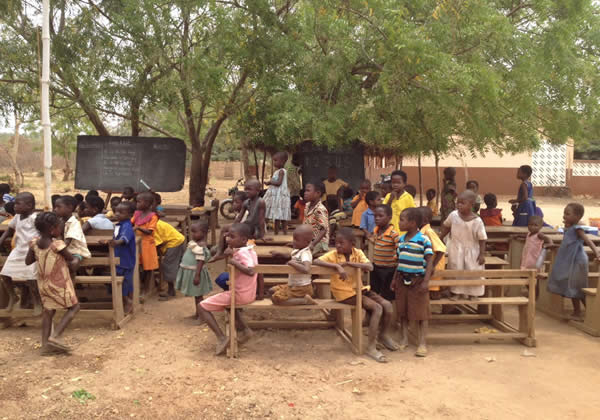
Pupils studying under a tree, an existing problem before Free SHS.

Must we have denied our children university education because of the challenges with facilities and infrastructure? Where would we be today? Ask yourself, those days you used to stand in the lecture hall, should government have revoked your admission or denied you admission on the basis of that alone, where would you be today? Or are the problems and challenges with infrastructure and facilities at our universities and basic schools also as a result of Free SHS?

With all the conditions and challenges that confronted us on all fronts in the education sector then, on no occasion did we see this level of bastardization and antagonism against university education or SHS. Because? It makes no sense, and we couldn’t refuse to educate ourselves on the basis of infrastructure and some challenges alone. These problems are solved over time and no country can claim anywhere that its education sector has no challenges. Today, democrats and republicans in congress are fighting each other because of budget cuts. Betsy Devos is always hot because these cuts are going to affect less endowed schools in deprived communities. But, education doesn’t stop because of challenges. Because things get better over time.

Today, even problems with the grass on the pitch of a high school are attributed to Free SHS. Yes, government including all of us do admit that, Free SHS, just as any other policy intervention has challenges, but these policies also have their success stories. We have heard about those challenges and we are doing everything possible to address them.

I want to ask those media houses that constantly feel the need to highlight on the infrastructural challenges of our high school system ever since this novel policy was rolled out, who seem to have a strong penchant for reporting only on the negatives of the policy, and who have carved an unpopular enviable niche for themselves in this business, that, did all challenges with high school education start with Free SHS? In their daily rounds, do they not see any positives of the Free SHS policy? Can they not see that, it has given opportunities to several thousands of young people who hitherto would be loitering our streets?
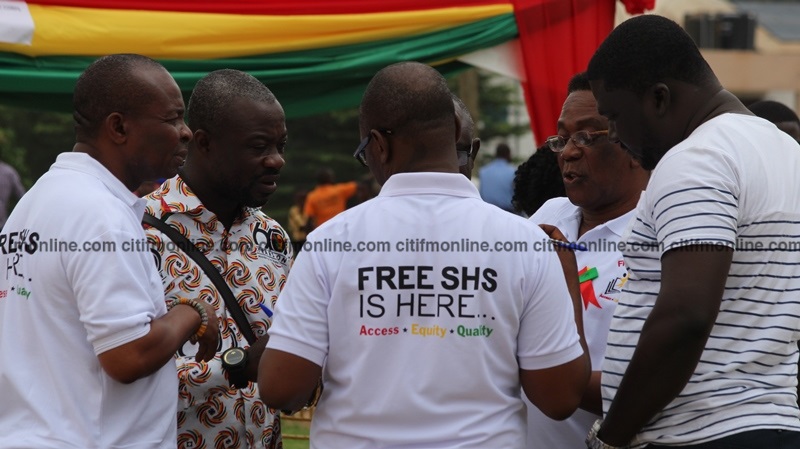
Have they not met people whose lives have been changed by the policy? Why do they find it extremely difficult to report on the glaring life changing testimonies of those affected by the policy? Must we destroy the policy because of some challenges in its first year of implementation? Even in their media houses, do they not have challenges? Do they detonate bombs to destroy their stations because of some challenges? Why do I sense that feeling that they have connived with the NDC and some misguided school heads, using propaganda, subterfuge, sabotage to paint a rather dark picture of an unprecedented policy initiative?

I have earlier on highlighted the challenges and circumstances under which most of us received our education, yet here we are today. We stand here today as doctors, as lawyers, as engineers, as economists, as policy makers as nurses, as teachers all products of a not-so-rosy education system. All products of an education system fraught from its basic level to its highest with deeper problems.

At some point under Prof. Mills, lecturers went on strike for seven weeks, disrupting the semester and throwing the academic calendar off balance, yet here we stand today. Here we stand today as professionals beaming with pride and doing what we can to contribute to the socio-economic development of this dear country. We sat through those challenges yet, we are able to compete with our colleagues anywhere on earth in fields of study or profession. What if we had been condemned because we sat under trees to study in primary school? What if we had been refused admission or our schools demonized because of inadequate facilities? What if someone had denied us university education citing inadequate facilities?

But today here we stand. As headmasters, yes, the policy certainly severs an illegitimate source of income for us. So what? When the university placed a ban on the sale of handouts, yes I was affected, but it was the larger picture that mattered. Today I buy PDFs and I gladly share with my students on WhatsApp to support their research. Many of whom have gone to work with big oil companies contributing their quota to developing this country. What if I had decided to sabotage my own school and students? Then running around to the media to bemoan the falling standards in our education. Who’d be the beneficiary? To what end?

The Free SHS has challenges, but if we had set our priorities right from the onset, these problems would probably not be this common as we make it seem or be here with us in the first place. Free SHS has challenges but most of these challenges existed before the policy, and it stopped no one from receiving education. Our senior high schools have problems and most have existed with us before the implementation of this policy. Free SHS came with its own challenges but it doesn’t in any way warrant the campaign of negativity and bad publicity as championed by some media houses. Free SHS has its own challenges and these are problems government is working assiduously to ameliorate. If we can speak of the challenges of these few schools, creating the unfortunate impression as though those challenges only arose from the implementation of the policy and they are so rampant when they’re but just some isolated cases, why can’t we also write about those overwhelming majority of schools where the policy is running without a scintilla of challenges?
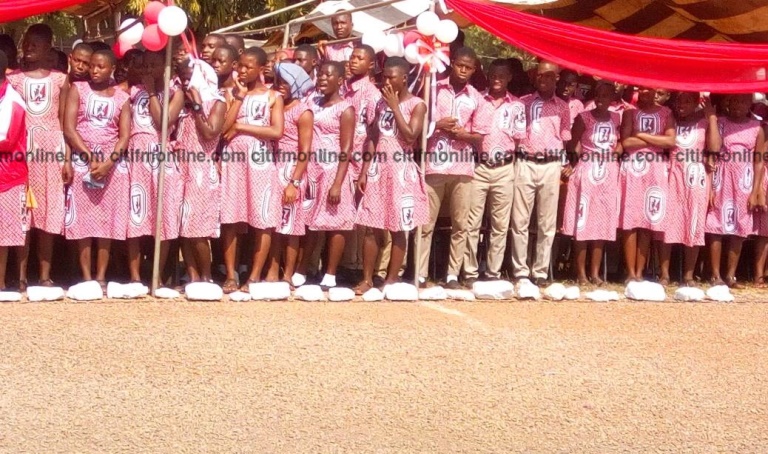
Free SHS may have its challenges but it is better it stays. If we cannot write a line to thank the president for this enormous intervention that will go down in history as the greatest thing we have gifted to ourselves by ourselves, then we have no business joining the bandwagon of doom mongers, purveyors of shenanigans, despicable chicanes and ill-wishers of the republic. If someone would even condemn this policy, must it even be the NDC? Those who have presided over us for half the period since independence yet cannot boast of a single policy beyond the stealing, naked thievery, CLS, and rape of our republic from all sides.
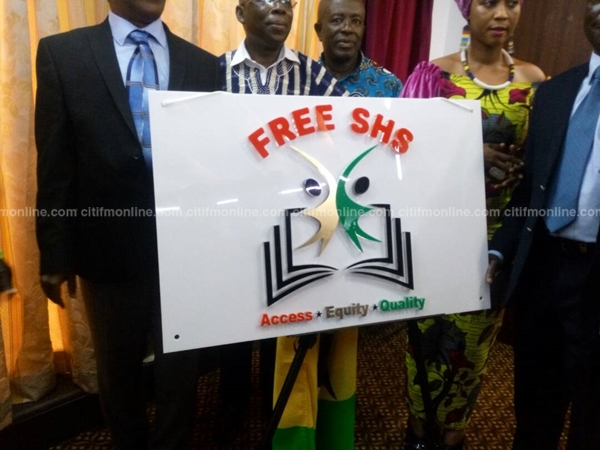
Today, the NDC is talking about policy document? What policy document did they need to pay Woyome and all the fraudulent judgement debts? What policy document did they use to implement the bus branding and the fraudulent schemes?

Thank you Mr. President, posterity never forgets and it certainly won’t forget this honourable gesture. Thank you Mr. Vice President, the education minister and everyone supporting to make this policy a success. Ghana is grateful, her future is even more grateful. And if there is anything that threatens the success of the Free SHS, then it is the NDC and its continuous existence.


By: Mustapha Hameed
The author is a Lecturer in Petroleum Engineering (KNUST) and a 2016 Mandela Washington Fellow.

Goldman School of Public Policy – University of California, Berkeley

Source:

http://citifmonline.com/2017/12/02/moral-case-free-senior-high-school-education-article/

Comparte este contenido:

Kenia: KCPE candidates get wrong results as Knec vows to tackle issue

Kenia / 29 de noviembre de 2017 / Fuente: http://www.nation.co.ke/

When this year’s Kenya Certificate of Primary Education (KCPE) examination results were released on Tuesday, Maina Lewis Mwangi of index number 20409008066 was optimistic of getting good results.

Master Mwangi, who sat his examination at Wangu Primary School, Dandora, in Nairobi, sent a text to 22252 in order to get the results as had been advised by Education Cabinet Secretary Fred Matiang’i during the morning session.

With assurance by the ministry that the examinations were accurate, Master Mwangi got a text message that indicated that he had scored ENG 68B, KIS 56C+, KSL==, MAT 43C-, SCI 29D-, SSR 70B+ Total 266 marks out of 500.

EXAM RESULTS
He was not satisfied. He sent another text, which indicated that he had scored ENG 68B, KIS 56C+, KSL==, MAT 43C- , SCI 61B-, SSR 70B+ Total 298.

The scores were different in terms of the Science subject as in the first text he scored 29D while in the second it was 61B.

The candidate is now among 345 candidates whose erroneous results the Kenya National Examinations Council (Knec) says it is handling.

On Thursday, a total of 535 candidates at Olympic Primary School in Nairobi finally received their correct exam results after two days of anxiety.

REMARKING

In the previous results, the best candidate had 384 marks but, after the correction, the top candidate had 427 marks with 13 candidates getting more than 400 marks.

The mother of Master Maina, Ms Elimina Mwikali, told the Sunday Nation that she had raised the issue with the school and was told that many parents had complained about the same issue.

According to her, manual remarking of the examination will rectify these errors, which she said were introduced by the computer during the marking process.

“They should not be in a hurry to release exam results,” she said.

COMPLAINTS
In Siaya, errors in KCPE results for many schools in Gem sub-county are yet to be corrected.

Siaya County Director of Education Kituyi Masibo has asked all aggrieved candidates, parents and teachers to remain calm as they wait for the official printout of the results.

Mr Masibo, who spoke to the Sunday Nation, said he received numerous complaints from head teachers from various primary schools in Wagai division, Gem Sub-County, claiming their results were erroneous.

“Let us wait for the official printout of the results expected in the county today,” Mr Masibo said.

FORM ONE SELECTION
The teachers, who spoke on condition of anonymity, said the results have killed the spirit of the candidates and the final mean grades of their schools.

They said that the results coincidentally awarded a majority of candidates with a standard mark of 51 per cent in Mathematics and 60 per cent in English.

Some of the affected schools in Wagai division include Malunga, Ober, Uriri, Ujimbe, Oseno, Wagai, Ulamba, Apuoyo, Asai, Aluor Girls, Kaudha, Nyasidhi and Wagwer primary schools.
The teachers called on Knec to rectify the problem before the beginning of Form One selection set to begin next month.

MERIT
They also read mischief in the manner in which Knec resorted to coincidentally awarding candidates the same marks.

“We call upon Knec to immediately look at that matter and ensure that the mistakes are corrected and guarantee the best pupils an opportunity to join their preferred schools,” a teacher said.

However, one teacher has since admitted that the error has been corrected and hopes that the matter will be resolved fully.

Speaking on Tuesday during the release of the examination results at the Kenya Institute of Curriculum of Development, Knec chairman George Magoha said the acquisition of 20 new scanning machines that cost Sh100 million enabled the marking of the examination to be completed in two weeks.

“The new machines are faster, more efficient and accurate when it comes to processing the examinations. The council was able to realise accuracy of up to 99.99 per cent in processing the papers,” he said.

ACCURATE RESULTS
He said that for composition, sign language and braille, the council engaged 5,316 teachers who completed the work within five days.

On Saturday, Prof Magoha could not be reached for comment on the issue.

However on Friday, acting chief executive Mercy Karogo acknowledged that there were concerns but said the council was addressing them.

“We have received complaints and addressed a number of them and will continue to do so,” she said.

In Naivasha, 20 candidates at Mt Longonot School received their correct exam results on Friday, ending the anxiety that characterised the results announcement.

Fuente noticia: 

Comparte este contenido:

Education authorities school matric pupils for last time

Sudáfrica / 29 de noviembre de 2017 / Por: NASHIRA DAVIDS / Fuente: https://www.timeslive.co.za/

There will be a collective sigh of relief from the majority of matric pupils in Western Cape this week‚ when they write their final examination.

According to the education department‚ 54‚777 will write English on Tuesday‚ and a few will still have to write Design and Agricultural Management Practices on Wednesday.

Then the celebrations will start – but authorities in the province have warned those going to matric rage parties to be careful. According to a joint statement by Education MEC Debbie Schaffer and Transport MEC Donald Grant‚ youngsters are likely to be letting their hair down in Hermanus and Plettenberg Bay. “Matric candidates have worked very hard to get to this point in their lives‚ and while they deserve to celebrate‚ we appeal to them to do so responsibly‚” the statement read.

“We encourage all candidates who will be participating in ‘matric rage parties’ to exercise moderation‚ and to use additional registered car services and public transport services that are available when travelling between venues‚ if they drink alcohol.”

According to Plett Tourism‚ “thousands” are expected to attend the seven-day celebration. Last year‚ pupils were conned into paying for accommodation that did not exist. This year on its website‚ the tourism authority warned that they should verify the accommodation they paid for “actually exists”.

“Plett Tourism cannot be held responsible for any fraudulent bookings‚” the website said.

Fuente noticia: https://www.timeslive.co.za/news/south-africa/2017-11-27-education-authorities-school-matric-pupils-for-last-time/

Comparte este contenido:

Education: The Great Socio-Economic Equalizer

By: Marc Morial


[Commentary]

New pencils, new books, an apple for the teacher, and unlimited hope for a boundless future – it’s back to school time across the country. And whether their children are boarding a school bus on a country road or a subway heading across the city, parents are united in their hopes and aspirations for their children. And the Urban League Movement shares those dreams.

As Horace Mann put it: «Education then, beyond all other devices of human origin, is the great equalizer of the conditions of men, the balance-wheel of the social machinery.”

A high-quality education is a civil and human right. One of the National Urban League’s empowerment goals is that every American child is prepared for college, work and life. In 2015 when Every Student Succeeds Act (ESSA) was signed into law, we worked to ensure that there were strong regulations that would provide necessary safeguards for students and families. With a different administration, we have redoubled our efforts — supporting national and state advocacy, engagement and education reform actions throughout the Urban League Affiliate Movement and with other civil rights organizations.

ESSA is an opportunity for states to close opportunity and achievement gaps by increasing access to effective teachers and advanced coursework, closing funding gaps, supporting English learners and addressing students social and emotional needs.

Equitable implementation is key to ensuring the promise of ESSA for all children.

Our goal within the Urban League Movement is to advance equity in education. We make it plain: equity does not end at access to education, but rather it is evidenced by successful completion. For we know that students who receive a high-quality K-12 education are likely attend college, achieve professional success and become engaged members of their communities.

It’s no coincidence that the cornerstone of President Lyndon B. Johnson’s War on Poverty was the Elementary and Secondary Education Act. He called education “the only valid passport from poverty” when he signed the Act in 1965, a year that also saw the creation of other Great Society initiatives like Head Start and Upward Bound.

In the 10 years after the creation of those programs, the poverty rate in America declined significantly. We know that a commitment to educational equity and excellence yields dramatic results. We won’t forget it, and we won’t let the decision-makers in Washington or state capitols or city halls forget it, either.

We are all familiar with the United Negro College Fund’s slogan, “A mind is a terrible thing to waste.” But it’s not only a waste for the individual whose potential is untapped, it’s a waste for the entire nation. As former Oklahoma governor Brad Henry said, “No other investment yields as great a return as the investment in education. An educated workforce is the foundation of every community and the future of every economy.”

Marc H. Morial
President and CEO
National Urban League

Photo by: photoo.uk via freeforcommercialuse.org

Source:

http://www.blackstarnews.com/education/education/education-the-great-socio-economic-equalizer.html

Comparte este contenido:

Ghana: Education experts call for partnership between industry and academia

Ghana/November 28, 2017/ Source: http://citifmonline.com

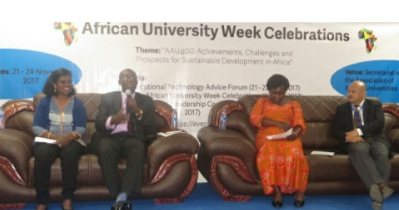
Experts in education at a high level panel discussion organised by the Association of African Universities (AAU), have called for strong partnership between industry and academia, to accelerate Ghana’s socioeconomic development.

The panelists said such a collaboration will enable universities get funding from industry, whereas industry gets the needed research from universities.

They expressed the hope that a strong collaboration between industry and universities, will also help prepare graduates adequately with the requisite skills for employment by industry.

The panelists included Professor Nicholas N. N. Nsowah-Nuamah, President, Regent University College of Science and Technology; Dr Eva Esther Shalin, the Associate Dean, Students Affairs and Collaboration, BlueCrest University College (GH) Limited; Mr Rizwan Ahmad, the Director, IPMC; and Mrs Eva Hazel, the Director of Tertiary Education, Ministry of Education.

The panel discussion forms part of the AAU week celebration on the theme “AAU@50: Achievements and Prospects for Sustainable Development in Africa”.

It was attended by participants from the Regent University College of Science and Technology, Bluecrest University College, University of Energy and Natural Resources and Koforidua Technical University.

Others are University of Professional Studies, Accra, Knutsford University College, IMPC, Accra Institute of Technology, Ghana Institute of Journalism, Anglican University College of Technology and Wisconsin International University College.

Prof Nsowah-Nuamah said in designing the syllabus for various schools, there is the need for universities to find out from industries whether the programmes they intend to run are in line with their needs.

He said in addition, the inputs of other stakeholders should be sought before the new programmes take off.

He urged the Government to come out with a new policy that would make industrial attachment compulsory for all tertiary education students; stating that at the moment, it was only the Technical Universities and the Polytechnics which were implementing such a policy.

Dr. Shalin urged industries to open their doors to the universities; adding that universities must be innovative and proactive.

She advised students to have mentors and be mindful that research was about global networking.

Mr. Ahmad called for a holistic approach in addressing the needs of education and industry.

Mrs. Hazel said the Ministry of Education was developing a new policy that would ensure that the syllabi of educational institutions, right from the kindergarten to the tertiary level, are related to industry.

She said the syllabi of educational institutions would be structured in such way that it would give people employable skills.

She said the Ministry would be coming out with a new policy to ensure that students actually benefit from industrial attachments.

Professor Etienne Ehouan Ehile, the Secretary-General of the AAU, reiterated the AAU’s commitment to partner with the right institutions in improving the quality of higher education in Africa, as demanded by its mandate.

“The AUU is further playing a key role in promoting and sustaining best practices across higher education institutions on the continent,” he said.

Source:

http://citifmonline.com/2017/11/26/education-experts-call-for-partnership-between-industry-and-academia/

Comparte este contenido:
Page 120 of 144
1 118 119 120 121 122 144