Page 121 of 144
1 119 120 121 122 123 144

India can learn from China, Turkey how to infuse technology in education: Intel

India- China – Turkey/November 28, 2017/By:  IANS/Source: http://www.financialexpress.com

Technology can do wonders in providing a great educational experience and create a pool of talent for these disrupting technologies.

With emerging technologies like Artificial Intelligence (AI), Internet of Things (IoT) and Big Data Analytics knocking at India’s doors, the country needs to sow the learning seeds early — in the classroom — and China and Turkey can show the way, top global Intel executives have said. The world has realised what is coming its way in the next 10-20 years and has already begun modernising classrooms at schools to prepare a technology-ready workforce. “The Chinese and Turkish authorities have given kids IoT-enabled devices in millions of schools. Every student has a device connected to an intelligent whiteboard at the front of the classroom. There are teacher-controlled devices too. The curriculum is designed for that kind of environment. This is the future of education,” Joe D. Jensen, Vice President, Internet of Things (IoT) Group, and General Manager, Retail Solutions Division at Intel, told IANS. “Intel has installed 400,000 IoT-enabled connected devices for schools in Turkey, a million-and-a half in Chinese schools and another million to go in China in the next two years,” Jensen informed.

Technology can do wonders in providing a great educational experience and create a pool of talent for these disrupting technologies. “In China, the newest innovation is that there are eight video cameras and a series of microphones in a classroom at certain private schools and colleges. The videos of the classroom activities are recorded daily. Parents can later log on and see the student-teacher interaction,” Jensen told IANS. For Lisa Davis, Vice President and General Manager, IT Transformation for Enterprise and Government at Intel, while India is at the cusp of dramatic changes in delivering next-generation education, it is also set to learn new ways to infuse technology in many other sectors. “Not just education, we are looking at the financial services, transportation, retail and health-care sectors too in India. The next big wave is coming in video surveillance and the security sector, and our teams are engaged with the stakeholders in the country,” Davis told IANS.

Intel has also pushed the envelope towards creating a modern workforce in India. In April this year, Intel made a commitment to democratise AI in the country by training 15,000 developers and engage with not just businesses but also the government and academia to enable the adoption of AI. Intel India has trained 9,500 developers, students and professors in the past six months. The chip giant has collaborated with 40 academic institutions that are using the technology for scientific research and 50 public and private organisations across e-commerce, health-care, technology, defence, and banking and financial services.

Intel India has also launched an initiative to strengthen the use of technology in the country’s education ecosystem. It is collaborating with leading device manufacturers, education digital content publishers and education solution providers to build end-to-end solutions that promote the use of technology. The company will then help deploy management solutions for schools, classrooms, content and learning, and also manage student information systems. There is an Intel India Maker Lab in Bengaluru to drive the innovation ecosystem in the country. The lab offers access to start-ups of hardware and software development kits, reference boards, design collaterals, test and debugging equipment. It provides technical support for design, development and testing products. “India is at the cusp of a technology boom, but needs training and teaching right from the beginning to prepare a future digital workforce,” Davis stressed.

Source:

http://www.financialexpress.com/industry/technology/india-can-learn-from-china-turkey-how-to-infuse-technology-in-education-intel/948478/

Comparte este contenido:

Rethinking Higher Education in a Time of Tyranny
By: Henry Giroux

What kind of democracy is possible when the institutions that are crucial to a vibrant civil society are vanishing?

Many of the great peace activists of the 20th century, extending from Mahatma Gandhi and Paulo Freire to Jane Addams and Martin Luther King Jr., shared a passion for education as an important part of the democratic project. Refusing to view education as neutral or reducing it to the instrumental practice of training, they sought to reclaim education as a practice of freedom, part of a wider struggle to deepen and extend the values, social relations and institutions of a substantive democracy.

They understood that tyranny and authoritarianism are not just the product of state violence and repression; they also thrive on popular docility, mass apathy and a flight from moral responsibility. They argued passionately that education could not be removed from the demand for justice and progressive social change. In doing so, they recognized the value of education and its ability to transform how people understand themselves, their relations to others and the larger world. In the face of massive injustice and indignity, these prophetic voices refused to look away from human suffering, and embraced the possibility for resistance fueled by courage, compassion and the ability to think otherwise in order to act otherwise.

Let us hope that in the midst of our witness to the current revolt against democracy, higher education will neither remain silent nor be too late.

One of Martin Luther King’s great insights was his recognition that education provided a bulwark against both ignorance and indifference in the face of injustice. Like Gandhi, he warned people over and over again not to remain silent in the face of racism, militarism and extreme materialism, and argued that “he who accepts evil without protesting against it is really cooperating with it.” Of the civil rights era, King warned that “history will have to record that the greatest tragedy of this period of social transition was not the strident clamor of the bad people, but the appalling silence of the good people.… In the end, we will remember not the words of our enemies, but the silence of our friends.”1

Advocates of civic courage and compassion reflected in their words and actions what King called the “fierce urgency of now,” reminding us that “tomorrow is today” and that “there is such a thing as being too late.”2 Let us hope that in the midst of our witness to the current revolt against democracy, higher education will neither remain silent nor be too late.

Echoing King’s belief that American innocence was neither tenable nor forgivable, the great novelist James Baldwin filled in the missing language of fear and terrorism at the heart of a racist society. His famed “Talk to Teachers” began with an impassioned warning about the times in which he lived, a warning more relevant now than it was when he delivered the speech in 1963. He said:

Let’s begin by saying that we are living through a very dangerous time. Everyone in this room is in one way or another aware of that. We are in a revolutionary situation, no matter how unpopular that word has become in this country. The society in which we live is desperately menaced… from within. To any citizen of this country who figures himself as responsible — and particularly those of you who deal with the minds and hearts of young people — must be prepared to “go for broke.”3

In the context of a worldwide rebellion currently taking place against democracy, dissent, human rights and justice, I think we need to “go for broke.” Authoritarianism is on the rise once again, emerging in countries in which such a politics, in light of the past, has appeared unthinkable. In Hungary, Russia, India, Turkey and Poland, democracy is being voted down and aggressively dismantled. In addition, a new and dangerous moment has emerged in the United States as it becomes clear that an American-style authoritarianism is no longer the stuff of fantasy, fiction or hysterical paranoia.

In the context of a worldwide rebellion currently taking place against democracy, dissent, human rights and justice, I think we need to ‘go for broke.’

This summer in Charlottesville, hundreds of neo-Nazis marched brandishing torches reminiscent of Hitler’s Germany while shouting white nationalist slogans such as “Heil Trump,” and later unleashing an orgy of violence that led to the deaths of three people. Donald Trump, the president of the United States, stated there were good people on both sides of that rally as if good people march with white supremacists and neo-Nazis who revel in hate and offer no apologies for mimicking the actions that resulted in the slaughter of millions during the fascist nightmare of the 1930s and 1940s.

Donald Trump’s ascendancy to the presidency speaks not only to a profound political crisis but also to a tragedy for democracy.4 His rise to power echoes not only a moral blind spot in the collective American psyche, but also a refusal to recognize how past totalitarian ideas can and have reappeared in different forms in the present. The return of a demagogue who couples the language of fear, decline and hate with illusions of national grandiosity have found their apotheosis in the figure of Donald Trump. He is the living symbol and embodiment of a growing culture of unbridled and naked selfishness, the collapse of civic institutions, and a ruinous anti-intellectualism that supports a corrupt political system and a toxic form of white supremacy that has been decades in the making. There is nothing natural or inevitable about these changes. They are learned behaviors. As shared fears replace any sense of shared responsibility, the American public is witnessing how a politics of racism and hate creates a society plagued by fear and divisiveness.

As shared fears replace any sense of shared responsibility, the American public is witnessing how a politics of racism and hate creates a society plagued by fear and divisiveness.

While numerous forces have led to the election of Donald Trump, it is crucial to ask how a poisonous form of education developed in the larger society, one that has contributed to the toxic culture that both legitimated Trump and encouraged so many millions of people to follow him. Part of the answer lies in the right-wing media with its vast propaganda machines, the rise of conservative foundations such as the Koch brothers’ various institutes, the ongoing production of anti-public intellectuals and a visual culture increasingly dominated by the spectacle of violence and reality TV. On a more political note, it is crucial to ask how the educative force of this toxic culture goes unchallenged in creating a public that embraced Trump’s bigotry, narcissism, lies, public history of sexual groping and racism, all the while transforming the citizen as a critical political agent into a consumer of hate and anti-intellectualism.

News morphs into entertainment as thoughtlessness increases ratings, violence feeds the spectacle and serious journalism is replaced by empty cosmetic stenographers. Language is pillaged as meaningful ideas are replaced “by information broken into bits and bytes [along with] the growing emphasis on immediacy and real time responses.”5 In the face of this dumbing down, critical thinking and the institutions that promote a thoughtful and informed polity disappear into the vast abyss of what might be called a disimagination machine. Nuance is transformed into state-sanctioned vulgarity. How else to explain the popularity and credibility of terms such post-truth, fake news and alternative facts? Masha Gessen is right in arguing that in the Trump era, language that is used to lie and “validate incomprehensible drivel” not only destroys any vestige of civic literacy, it also “threatens the basic survival of the public sphere.”6

We live in a moment of digital time, a time of relentless immediacy, when experience no longer has the chance to crystalize into mature and informed thought. Communication is now reduced to a form of public relations and a political rhetoric that is overheated and overexaggerated and always over the top. Opinion and sanctioned illiteracy now undermine reason and evidence-based arguments. News becomes spectacle and echoes demagoguery rather than questioning it. Thinking is disdained and is viewed as dangerous. The mainstream media, with few exceptions, has become an adjunct to power rather than a force for holding it accountable. The obsession with the bottom line and ratings has brought much of the media into line with Trump’s disimagination machine wedded to producing endless spectacles and the mind-numbing investment in the cult of celebrity and reality TV.7 What kind of democracy is possible when the institutions that are crucial to a vibrant civil society and the notion of the social are vanishing?

What kind of democracy is possible when the institutions that are crucial to a vibrant civil society and the notion of the social are vanishing?

Institutions that work to free and strengthen the imagination and the capacity to think critically have been under assault in the United States long before the rise of Donald Trump. Over the last 50 years, critical public institutions from public radio to public schools have been defunded, commercialized and privatized transforming them from spheres of critical analysis to dumbed-down workstations for a deregulated and commodified culture.

Lacking public funds, many institutions of higher education have been left to mimic the private sector, transforming knowledge into a commodity, eliminating those courses and departments that do not align themselves with a robust bottom line. In addition, faculty are increasingly treated like Walmart workers with labor relations increasingly designed “to reduce labor costs and to increase labor servility.”8 Under this market-driven governance, students are often relegated to the status of customers, saddled with high tuition rates and a future predicated on ongoing political uncertainty, economic instability and ecological peril.

This dystopian view feeds an obsession with a narrow notion of job readiness and a cost-accounting rationality. This bespeaks to the rise of what theorists such as the late Stuart Hall called an audit or corporate culture, which serves to demoralize and depoliticize both faculty and students, often relieving them of any larger values other than those that reinforce their own self-interest and retreat from any sense of moral and social responsibility.

As higher education increasingly subordinates itself to market-driven values, there is a greater emphasis on research that benefits the corporate world, the military and rich conservative ideologues such as the Koch brothers, who have pumped over $200 million into higher education activities since the 1980s to shape faculty hires, promote academic research centers, and shape courses that reinforce a conservative market-driven ideological and value system.9 One consequence is what David V. Johnson calls the return of universities to “the patron-client model of the Renaissance” which undermines “the very foundation of higher education in the United States.”10

Under such circumstances, commercial values replace public values, unbridled self-interest becomes more important than the common good and sensation seeking and a culture of immediacy becomes more important than compassion and long term investments in others, especially youth. As Paul Gilroy has pointed out, one foundation for a fascist society is that “the motif of withdrawal — civic and interpersonal —” becomes the template for all of social life.11

Democracy and politics itself are impoverished in the absence of those conditions under which students and others use the knowledge they gain both to critique the world in which they live and, when necessary, to intervene in socially responsible ways in order to change it. What might it mean for educators to take seriously the notion that democracy should be a way of thinking about education — one that thrives on connecting equity to excellence, learning to ethics, and agency to the imperatives of social responsibility and the public good?

Higher education needs to reassert its mission as a public good. Educators need to initiate a national conversation in which the classroom is defended as a place of deliberative inquiry and critical thinking, a place that makes a claim on the radical imagination and a sense of civic courage.

Second, educators need to place ethics, civic literacy, social responsibility and compassion at the forefront of learning. Students need to learn how power works across cultural and political institutions so that they can learn how to govern rather than merely be governed. Education should be a process where students emerge as critically engaged and informed citizens contributing not simply to their own self-interest but to the well-being of society as a whole.

Third, higher education needs to be viewed as a right, as it is in many countries such as Germany, France, Norway, Finland and Brazil, rather than a privilege for a limited few, as it is in the United States and the United Kingdom. Rather than burden young people with almost insurmountable debt, it should call people to think, question, doubt and be willing to engage in dialogue that is both unsettling to common sense and supportive of a culture of questioning.

In addition, it should shift not only the way people think but also encourage them to help shape for the better the world in which they find themselves. Teaching should not be confused with therapy or reduced to zones of emotional safety. The classroom should be a space that disturbs, a space of difficulty — a space that challenges complacent thinking. Such pedagogical practices should enable students to interrogate commonsense understandings of the world, take risks in their thinking, however troubling, and be willing to take a stand for free inquiry in the pursuit of truth, multiple ways of knowing, mutual respect and civic values in the pursuit of social justice.

Students need to learn how to think dangerously, or as Baldwin argued, go for broke, in order to push at the frontiers of knowledge while recognizing that the search for justice is never finished and that no society is ever just enough. These are not merely methodical considerations but also moral and political practices because they presuppose the creation of students who can imagine a future in which justice, equality, freedom, and democracy matter and are attainable.

Fourth, in a world driven by data, metrics and an overabundance of information, educators need to enable students to express themselves in multiple literacies extending from print and visual culture to digital culture. They need to become border crossers who can think dialectically, and learn not only how to consume culture but also produce it. At stake here is the ability to perform a crucial act of thinking, that is, the ability to translate private issues into larger systemic concerns.

Fifth, there is a plague haunting higher education, especially in the United States, which has become the model for its unjust treatment of faculty. Seventy percent of all part- and full-time instructional positions are filled with contingent or nontenure-track faculty. Many of these faculty barely make enough money to afford basic necessities, have no or little health insurance and are reluctant to speak out for fear of losing their jobs. Many adjuncts are part of what are called the working poor. This is an abomination and one consequence of the increasing corporatization of higher education. These faculty positions must be transferred into full-time positions with a path toward tenure and full benefits and security.

Sixth, while critical analysis is necessary to reveal the workings and effects of oppressive and unequal relations of power, critique without hope is a prescription for cynicism, despair and civic fatigue. Students also need to stretch their imagination to be able to think beyond the limits of their own experience, and the disparaging notion that the future is nothing more than a mirror image of the present. In this instance, I am not referring to a romanticized and empty notion of hope. Hope means living without illusions and being fully aware of the practical difficulties and risks involved in meaningful struggles for real change, while at the same time being radically optimistic. The political challenge of hope is to recognize that history is open and that the ethical job of education, as the poet Robert Hass has argued, is “to refresh the idea of justice going dead in us all the time.”12

The late world-renowned sociologist Zygmunt Bauman insisted that the bleakness and dystopian politics of our times necessitates the ability to dream otherwise, to imagine a society “which thinks it is not just enough, which questions the sufficiency of any achieved level of justice and considers justice always to be a step or more ahead. Above all, it is a society which reacts angrily to any case of injustice and promptly sets about correcting it.”13 It is precisely such a collective spirit informing a resurgent politics that is being rewritten by many young people today in the discourses of critique and hope, emancipation and transformation. The inimitable James Baldwin captures the depth which both burdens hope and inspires it. In The Fire Next Time, he writes: “The impossible is the least that one can demand. …Generations do not cease to be born, and we are responsible to them…. the moment we break faith with one another, the sea engulfs us and the light goes out.”14 It is one of tasks of educators and higher education to keep the lights burning with a feverish intensity.


1. Cited in Marybeth Gasman, “Martin Luther King Jr. and Silence,” The Chronicle of Higher Education [Jan. 16, 2011]. 

2. Rev. Martin Luther King, “Beyond Vietnam: A Time to Break Silence,” (April 4, 1967) American Rhetoric 

3. James Baldwin, “A Talk to Teachers,” in The Price of the Ticket, Collected Non-Fiction 1948-85, (New York: Saint Martins, 1985), 325. 

4. I take this up in great detail in Henry A. Giroux, The Public in Peril: Trump and the Menace of American Authoritarianism (New York: Routledge, 2018). 

5. Michiko Kakutani, “Texts Without Context” The New York Times, (March 21, 2010), p. AR1 

6. Masha Gessen, “The Autocrat’s Language,” The New York Review of Books, [May 13, 2017]. 

7. Brad Evans and Henry A. Giroux, Disposable Futures: The Seduction of Violence in the Age of the Spectacle (San Francisco: City Lights, 2016). 

8. Noam Chomsky, “The Death of American Universities,” Reader Supported News (March 30, 2015). 

9. The definitive source on this issue is Jane Mayer, Dark Money: The Hidden History of the Billionaires Behind the Rise of the Radical Right (New York: Anchor, 2017). 

10. David V. Johnson, “Academe on the Auction Block,” The Baffler [Issue No. 36 2017] 

11. Paul Gilroy, Against Race: Imagining Political Culture beyond the Color Line, (Cambridge: The Belknap Press of Harvard University Press, 2000), p. 216. 

12. Cited in Sarah Pollock, “Robert Hass,” Mother Jones (March/April 1997). 

13. Zygmunt Bauman and Keith Tester, Conversations with Zygmunt Bauman (London: Polity Press, 2001), p. 19. 

14. James Baldwin, The Fire Next Time (New York: Vintage, 1992) p. 104. 

Source:

Rethinking Higher Education in a Time of Tyranny
Comparte este contenido:

Vietnam: Irish and VN higher education institutions promote co-operation

Vietnam/November 28, 2017/Source: http://english.vietnamnet.vn

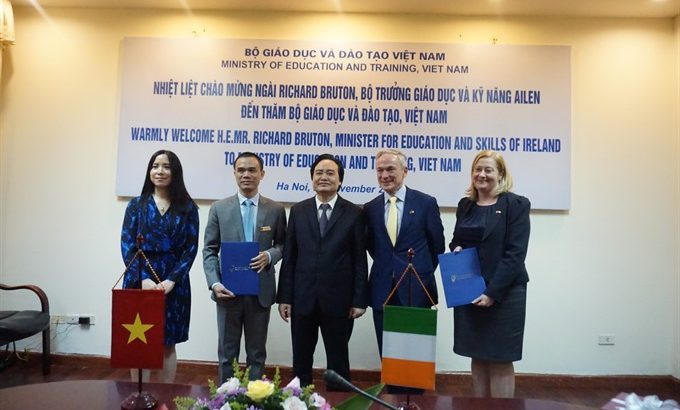
Irish Aid will grant 578,000 euros (US$685,000 ) to support ten partnerships between Irish and Vietnamese higher education institutions on teaching and research co-operation during 2017-2018.

The partnerships were launched on Thursday under the Việt Nam-Ireland Bilateral Education Exchange (VIBE) Programme which aims to encourage co-operation and research links between higher education and research institutions of the two contries.

Under the programme, during 2016-2017, five such partnerships were granted about 250,000 euros.

Minister of Education and Training Phùng Xuân Nhạ and Minister of Education and Skills of Ireland Richard Bruton who is on a working visit to Việt Nam from November 23-25, attended the launch ceremony.

They also discussed potential co-operation opportunities in education between the two countries, especially those relating to higher education.

Nhạ said that Việt Nam wanted to change the structure of its economy from labour-intensive to a service-based one, so it was in need of high quality human resources.

However, Nhạ admitted that Việt Nam’s higher education quality was not good enough and its students faced difficulties after graduating from universities because of a lack of skills desired by employers.

Assistance from other countries with high-quality higher education like Ireland would be very useful to Việt Nam, he said.

Minister Richard Bruton said that Irish higher education institutions are strong in fields such as technology and applied research, implying that Ireland and Việt Nam had huge potential co-operation.

Over the last ten years, as many as 219 Vietnamese students have been offered scholarships from the Government of Ireland Scholarship Programme. In Ireland, Vietnamese students usually study Finance and Economics, Pharmaceuticals, Management, Engineering, Marketing and Computer and Data Science.

Before his visit to Việt Nam, he said: “Increasing international cooperation is a key objective under my Action Plan for Education, which aims to make Ireland’s education and training service the best in Europe within a decade, and our International Education Strategy. I am looking forward to increasing opportunities for Irish students to travel to Vietnamese and South Korean higher level institutions, by strengthening and building partnerships with institutions in these countries. By building these bilateral relationships, we can ensure mutual benefit for both the institutions and students alike.” — VNS

Source:

http://english.vietnamnet.vn/fms/education/190916/irish-and-vn-higher-education-institutions-promote-co-operation.html

Comparte este contenido:

Japan: Education: Best investment for our future

Japan/November 28, 2017/By:  IKUKO TSUBOYA-NEWELL/ Source: https://www.japantimes.co.jp

Among the 34 nations in the Organisation for Economic Co-operation and Development, Japan has always been among the bottom three when it comes to public spending on education as a percentage of GDP. In 2011, Japan was the worst at 3.8 percent, followed by Slovakia and Italy — against the OECD average of 5.6 percent. Countries that come on top in this category are Denmark, Norway and New Zealand.

Of course, to be fair, the ratio of student numbers to the total population needs to be considered with respect to this data. Japan, in fact, has the second-lowest ratio at 15.5 percent, sitting between Chile, the lowest, and Italy. The OECD average is 22.2 percent.

Looking at the ratio of spending on education to total general government spending, the OECD average is 12.9 percent. Again Japan ranks low, coming in second to last at 9.1 percent, just above Italy at 8.6 percent. At the top is New Zealand with 21.6 percent.

In summary, Japan does not invest heavily in education. This creates financial pressure on households as they try to provide fundamental education to their children, particularly in the underfunded areas of preschool and higher education. Data show that when it comes to household expenditures for pre-elementary school education, the top five spenders are Japan, Australia, South Korea, the United States and Spain. For higher education they are Chile, South Korea, the United Kingdom, Japan and the U.S.

In all of these countries, a large number of households bear heavy financial burden for these two important stages of education.

In the case of Japan, we see that annual government spending per head is quite unevenly distributed — people in their 70s and 80s receive far more, for example, than newborns to 16-year-olds because of the heavy cost of welfare programs such as pensions, medical services and nursing care.

While this lopsided distribution has long been the case, the government is now seeking to shift resources more toward the younger generation. It plans to provide more public funding for preschool education, and Prime Minister Shinzo Abe’s Liberal Democratic Party is considering the introduction of a scheme to ease household costs for higher education similar to the HECS-HELP system in Australia, in which the government issues an interest-free loan on behalf of students to pay tuition fees directly to higher education providers. This loan is subject to indexation but charges no real interest. Students begin to repay the debt once their income is above a minimum threshold.

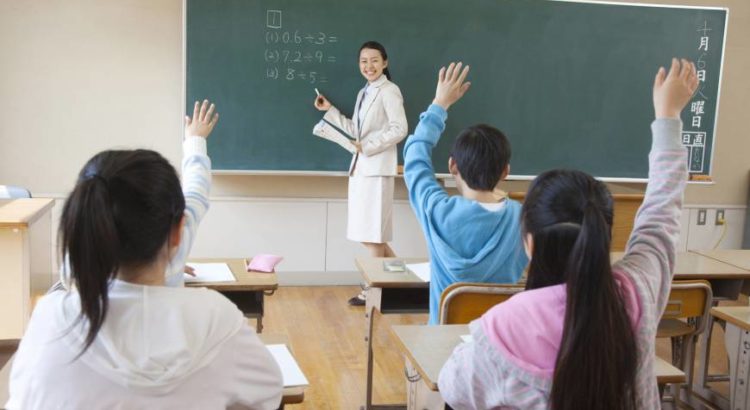
These are good initiatives, but are they enough? There are other factors that should be considered as well, and one very important issue is class size and diversity of students per class. As far as elementary schools are concerned, countries with the largest class sizes are Chile, with an average of 30.4 students, followed by Japan with 27.9 and Israel with 27.3. The OECD average is 21.2. For junior high schools, the average in South Korea is 34.0, while in Japan it is 32.7 and for Israel it is 28.7. The OECD average is 23.3 students per class.

It must be noted that the numbers for Japan include schools in severely depopulated areas. There can actually be up to 40 students per class in any public school (except for the first grade, where the maximum is set at 35). This means populated areas generally have classes with far more students than the average. This is particularly problematic because these are the areas in Japan where students are more likely to be socio-economically and academically at risk.

In Japan, there are 631,000 students identified as having developmental disabilities in the public elementary and junior high schools. This translates to 2.5 students out of the maximum class size of 40. One out of seven students comes from a household of relative poverty, or 5.7 out of every 40. Among public elementary school students, 13.4 percent, or 5.3 out of every 40, say classes are too easy and boring. Another 15 percent, or six out of every 40, say classes are too difficult and that they have difficulty understanding the content. There are 80,119 non-Japanese students in public or state schools, from elementary to high school, who need intensive Japanese lessons. This is a distribution of 0.3 students per class.

Overall, there is likely to be a considerable range of students in any one large class. Surely this must impact the likelihood of effective teaching.

Reducing class size to increase student achievement has been debated and analyzed for several decades. Smaller class sizes are generally welcomed for allowing teachers more time to spend with each student and less time on classroom management. This means the teacher can provide better teaching, tailored to each student’s individual needs, to ensure maximum success. In this respect, smaller class sizes may be viewed as an indicator of the quality of a school system.

An influential and credible study of the effects of reduced class size is the Student Teacher Achievement Ratio (STAR) study carried out in the U.S. state of Tennessee in the late 1980s. In this study, students and teachers were randomly assigned either to a small class, with an average of 15 students, or a regular class, with an average of 22 students. It was found that a smaller class size increased student achievement by an amount equivalent to about three additional months of schooling over four years. A long-term follow-up survey of participants into adulthood showed that they were about 2 percent more likely to be enrolled in college at the age of 20.

International studies also provide evidence of the positive effect of class-size reduction. Israel, just like Japan, has a limit of 40 students. Researchers there found positive effects from smaller fourth- and fifth-grade classes.

Why then, do we in Japan, continue to maintain a class size limit of 40 when in the U.S., U.K., France and Germany the limit is around 30? Of course, to some extent the answer is related to decisions about the careful use of taxpayer money and considerations that it be used most productively without undue waste. Perhaps, because of historical and cultural factors, it has been easier to have larger classes in Japan. For instance, a Confucian heritage means that teachers are highly respected and easily obeyed, and thus less affected by larger class sizes.

The OECD points out that data from the Program for International Student Assessment (PISA) suggests that high-performing education systems, such as those in Japan and South Korea, prioritize the quality of teachers rather than class size. Catherine Rampell, writing in the The New York Times, also points out that South Korea and Japan, which have some of the highest-achieving students in the world, also have the biggest class sizes. Both of these reports are right and we should be proud of our achievement and the high quality of our teachers. However, even with our Confucian roots, it is growing ever more difficult for a single teacher to meet students’ individual needs in today’s educational contexts.

As far as I am concerned, I would support having my tax contributions spent on providing better educational environments suited to student needs. Why not start by aiming to achieve the OECD’s average number of students per class by limiting class size to 30 students? I do not think I am alone in thinking that one of the best investments for the future is to invest in our children’s education.

Ikuko Tsuboya-Newell is the founder and chair of Tokyo International School. She serves as the International Baccalaureate Japan ambassador and as adviser on revitalization of education commissioned by the Ministry of Education, Culture, Sports, Science and Technology.

Source:

https://www.japantimes.co.jp/opinion/2017/11/26/commentary/japan-commentary/education-best-investment-future/#.Whuxz0qWY2w

Comparte este contenido:

Canadá: Racial bullying at Calgary school nabs attention of education minister’s office

Calgary / 22 de noviembre de 2017 / Fuente: http://www.cbc.ca/

Group pushing for more black history education to help combat racial bullying in schools

A group of parents and community members concerned about racial bullying in schools is encouraged to have garnered the attention of the education minister’s office.

The president of the African Caribbean Canadian Association says he’s going to urge David Eggen to consider further changes to the curriculum at an upcoming meeting.

«Black studies could be taught as part of the curriculum in the schools. It would create a mutual respect for black students and also [teach] where some of these racial slurs originated from, the history behind it, and how damaging it can be,» Stephen Allen told CBC News.

A spokesperson from the education department told CBC News it plans to meet with the organization in the near future and that the issue of racial bullying falls within the province’s anti-racism initiatives.

«Our government aims to ensure that every single school in our province is safe, welcoming and caring for all students,» Lindsay Harvey said in the statement.

«If parents or community groups have concerns, we encourage them to reach out to Minister Eggen’s office and we will deal with each request appropriately.»

Western Canada High School incident

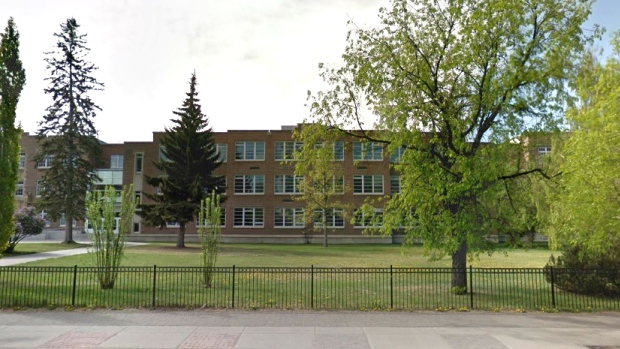
The source of the concern stems from a violent incident outside Western Canada High School last month.

According to witnesses and one of the students involved, the incident began when some white teenagers used racial slurs against some black teenagers, which led to a fight, charges and school suspensions for the black kids.

The school declined to release information as to whether or not the white students involved were disciplined.

Before reaching out to the education minister’s office, Allen and others met with the Calgary Board of Education and staff at Western Canada High school to address the issue of racial bullying.

Meeting mixed reactions

After a meeting last Friday, Allen said he felt school officials didn’t come prepared to provide any solutions.

A member of Black Lives Matter Calgary, who was also in attendance, said she shared Allen’s sense of disappointment.

«What was the point of this? I didn’t feel like they took it very seriously … quite frankly, they didn’t come prepared to really address anything. I don’t think they really understood that people want change,» Meagan Bristowe said.

Calvin Davies, CBE Area 7 director, had a different view of the meeting and called it a good first step.

He says he didn’t realize the impact these comments had on the kids.

«It’s the kids themselves that are going to lead to the solutions and that is setting up the conditions in the school where the students say ‘Hey, we’re are going to stand together here and these kinds of comments are not appropriate at our school,'» Davies said

Plans at Western

Allen then met with the principal and other staff members from Western Canada High School on Monday, and says it seemed they came more prepared to talk about solutions.

For example, Allen says staff suggested forming a committee of teachers whom students would feel comfortable coming to if they have been a victim of, or are aware of, any racial bullying incidents among their peers.

«We’re hoping that these suggestions are implemented and carried through,» he said.

The principal for Western Canada High school was not available for comment about Monday’s meeting.

Fuente noticia: http://www.cbc.ca/news/canada/calgary/racial-bullying-calgary-school-1.4411570

Comparte este contenido:

Kenia: Public universities staff set for contract employment

Kenia / 22 de noviembre de 2017 / Por: OUMA WANZALA / Fuente: http://www.nation.co.ke/

Tough times await public universities as the government moves to reform the sector it says has been riddled with financial mismanagement and poor governance.

The second phase of the reforms of the sector, which started in February, will see thousands of teaching and non-teaching staff put on contract, a number of them retrenched, a freeze in setting up satellite campuses, and development of a single payroll system, among other changes.

The radical reforms were unveiled on Wednesday by Education Cabinet Secretary Fred Matiang’i at a meeting attended by vice-chancellors and council chairpersons of the 31 public universities at the Kenya School of Monetary Studies in Nairobi.

STRIKE

However, the universities management questioned the motive of the reforms, saying some of them cannot be hurriedly rolled out without appropriate consultation.

Kisii University VC John Akama said the proposals need to be interrogated further, noting that the government should not be preoccupied with financial mismanagement yet the universities are struggling to remain afloat.

Prof Akama said a critical issue such as the lecturers’ strike that started on November 1 had been ignored by the ministry yet it is important as learning is not going on at the institutions.

“No one is talking about the lecturers’ strike. We cannot talk about quality education when we have no resources. The issue of funding of public universities should be properly interrogated,” said Prof Akama.

The chairman of the Vice-Chancellors Committee, Prof Francis Aduol, said there is need to revisit some of the policies that are being developed by the government regarding universities.

“We should not rush these reforms. As vice-chancellors, we will look at the proposals and make our recommendations,” said Prof Aduol, who is also the VC of the Technical University of Kenya.

SATELLITE CAMPUSES

The government has frozen the establishment of satellite campuses across the country, a move it believes will allow universities to expand existing campuses.

The establishment of satellite campuses was aimed at tapping into Kenya’s growing population that is thirsty for education.

The government is proposing the employment of staff at two levels — contract as well as permanent and pensionable. The proposal is set to be effected next year.

The move is aimed at weeding out staff who do not work yet earn salaries and are assured of pension.

The decision will prompt the institutions to allocate funds for retrenchment.

“We must get rid of staff who only teach one lesson and use the rest of the time to do their own business.

TERMS

“We cannot have a cleaner on permanent terms. We must get out of this obsession with permanent and pensionable terms,” said Dr Matiang’i.

Putting staff on a single payroll will also affect the institutions since those with parallel programmes need lecturers to teach the students.

“Lecturers are supposed to teach for eight hours. After that, it is extra work. If we do not want to pay them, then we must collapse self-sponsored programmes into regular,” said a senior lecturer.

The decision to demand self- sponsored students’ funds from universities could complicate the matter as the cash is normally used to finance development projects.

“You cannot collect money, give it to the government and expect it to wire back the same cash for development.
“The government should keep off and allow these institutions, which are independent, to run their affairs,” said Universities Academic Staff Union secretary-general Constantine Wasonga.

Fuente noticia: http://www.nation.co.ke/news/Universities-staff-contract-employment/1056-4193974-137jdbx/index.html

Comparte este contenido:

Trans and Open: Education Is Key to Making This a Sign of the Times

By Sarah Bartolome, Truthout

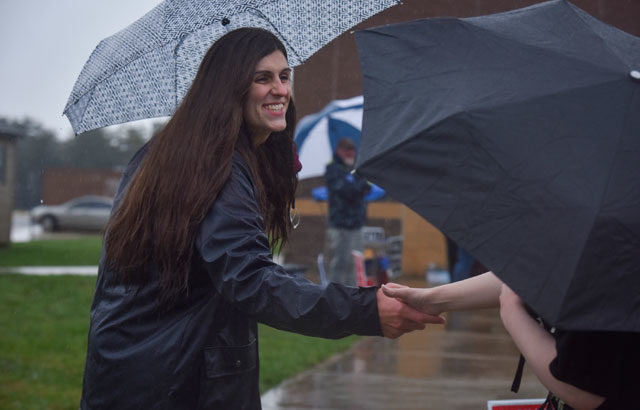
The recent elections were historic for the transgender community as Virginia’s Danica Roem is the first openly transgender person elected to a US state legislature. Andrea Jenkins, who won a seat on the Minneapolis City County, is the first openly trans person of color to ever hold public office in the United States.

Last year, Utah’s Misty Snow made history as one of the first openly transgender individuals to win a major-party nomination as the Democratic Senate candidate. Although her bid was unsuccessful, she is running for Congress, aiming for the 2018 primary.

The election of transgender citizens to public office is a huge win for the transgender community and marks another rise in visibility for trans-identified individuals in this country.

In addition to having trans voices represented in the political arena, openly trans individuals are also competing in the athletic arena. Nike spokesperson and duathlete in running and cycling, Chris Mosier, was the first openly transgender athlete to compete on a US national team in 2016. Harvard University swim team’s Schuyler Bailar, was the first openly transgender athlete to compete on a National Collegiate Athletic Association Division 1 men’s team.

In popular culture, television shows such as «Transparent» (renewed at the end of the summer for a fifth season), «Orange is the New Black,» «Nashville» and «Modern Family» have brought transgender actors and characters onto the small screens.

At a recent meeting of the American Society for Reproductive Medicine in San Antonio, Richard Paulson, Society president explained that advances in science would allow a trans woman to receive a donated, transplanted uterus and carry a child to term.

While transgender visibility is increasing, research by the National Center for Transgender Equality showcases the pervasive anti-transgender bias, verbal and physical assault and economic hardship experienced by many trans people in this country.

As a university educator, I understand that those of us in education stand at the front line, meeting our young people who may be navigating issues of gender identity. We are in a position to demonstrate to our trans-identified students that they are valued, accepted and protected members of our school communities. The challenges facing trans youth are significant and life threatening.

Trans-identified individuals have significantly higher rates of suicide attempts. While an estimated 4.6 percent of the general US population has reported a lifetime suicide attempt, a staggering 41 percent of trans or gender nonconforming individuals report attempting suicide, according to a recent report.

Anti-transgender violence is another significant threat and the Human Rights Campaign reported that in 2017 alone, at least 25 transgender people were murdered in the United States, the majority of whom were trans women of color.

Recently, two trans women of color were found dead, both victims of gunshot wounds. Stephanie Montez, murdered in Texas, and Candace Towns, murdered in Georgia, are the 24th and 25th known victims of fatal anti-trans violence this year. Both suffered the additional indignity of being misidentified by gender by police personnel and the media.

The estimated 150,000 transgender youth in the United States are also facing considerable challenges in US schools. Perhaps most troubling is the Gay, Lesbian and Straight Education Network’s report that schools are some of the most hostile environments for LGBT students. The report states that transgender and gender nonconforming students experience the highest rates of bullying, verbal and physical assault, as well as discriminatory practices.

Ash Whitaker, a male-identified transgender student in Kenosha, Wisconsin, suffered daily indignities as he was denied access to male restrooms at his high school and reportedly even presented with a green wristband to help staff ensure that he exclusively used a gender-neutral restroom in the school’s office.

Whitaker took the district to court, arguing that his rights were being violated under both the Fourteenth Amendment of the Constitution and under Title IX. Whitaker won his lawsuit and the subsequent appeal, a historic win, as it was the first time that an appeals court interpreted these laws to protect transgender individuals. This ruling was despite the current administration’s roll-back of President Barack Obama-era guidance advising all schools that Title IX regulations protect transgender students.

The Williams Institute also noted that suicide attempts were reported by more than 50 percent of trans-identified students who were harassed or bullied in school contexts and by 78 percent of those sexually assaulted in school. For the estimated 150,000 trans-identified youth in this country, the hostile environment is a significant challenge contributing to the elevated suicide risk among trans people.

Education and training can contribute to the creation of a more inclusive society that does not condone such injustice based on gender identities. Unfortunately, that is not always the case.

The transgender college students with whom I have interacted have described negative interactions with some professors, ranging from persistent misgendering and misnaming to denying them the ability to present their gender identity in course-related off-campus activities like student teaching.

In one especially disturbing case, a professor suggested a student «fade into the background, because some people are going to find this disgusting.»

These kinds of interactions may represent ignorance or lack of experience in working with trans youth, but also contribute to the hostile school climate plaguing the trans community.

School administrators and teachers must work to combat these disturbing trends. The moral imperative of supporting trans students is clear. This is a matter of life or death for the youth who deserve to be educated in a safe environment.

To be sure, some may not fully understand the issue of gender diversity and may struggle to find ways to support trans youth. The US public is split on the issue of public bathroom usage for transgender people. A 2016 Reuter’s poll found that 43 percent of respondents believed that transgender individuals should use the bathroom associated with their biological sex at birth.

Although transgender students make up a small percentage of school age children in this country, public schools are mandated by law to protect and serve all students. Some teachers may adopt the attitude that until they have a trans student, this issue does not concern them.

Yet, as trans youth find openly trans role models across a range of professional identities, the number of openly trans students enrolled in US public schools is likely to increase.

Rather than passively watch this public health crisis grow, teachers and administrators can be proactive in educating themselves about the issues facing trans youth and adopting inclusive school and classroom policies that provide opportunities for gender-diverse students to learn and thrive.

Recently organizations and coalitions for LGBT rights have issued guidance for school districts and teachers wishing to learn how to better support trans and gender nonconforming youth. «Schools in Transition: A Guide for Supporting Transgender Students in K-12 Schools» and the Gay, Lesbian and Straight Education Network’s «Model District Policy on Transgender and Gender Nonconforming Students» are two examples of best practices documents that provide educators and administrators with concrete guidance on how to best serve trans and gender nonconforming youth.

The Consortium of Higher Education LGBT Resource Professionals has issued a similar best practices document to help colleges and universities better support trans students on their campuses.

Gender Spectrum offers trainings on the topic of gender identity to schools and other organizations and Campus Pride offers its Safe Space Program trainings both in-person and online to help educators cultivate more inclusive classroom environments for all LGBT youth. The Trans Youth Equality Foundation also offers workshops on the needs of trans and gender nonconforming youth for student groups, educational institutions and other professional organizations.

Trans rights are human rights. As educators, we can model and inform all students the importance of understanding and valuing gender diversity. Even as we protect and honor trans students enrolled in education, we must also protect all trans people through education.


SARAH BARTOLOME

Sarah Bartolome is an assistant professor of Music Education at Northwestern University. She researches best practices in music education and the experiences of transgender musicians and is a Public Voices fellow through The OpEd Project.

Source:

http://www.truth-out.org/opinion/item/42631-trans-and-open-education-is-key-to-making-this-a-sign-of-the-times


Comparte este contenido:
Page 121 of 144
1 119 120 121 122 123 144