Page 89 of 144
1 87 88 89 90 91 144

Zimbabwe: Teachers Must Show Respect, Stop Illegal Strike – Mumbengegwi

África/ Zimbabwe/ 28 Junio 2018/ Fuente: allafrica.com.

Minister of State for Provincial Affairs and Monitoring Implementation of Government Programmes Simbarashe Mumbengegwi has warned teachers against participating in the job action mooted by their leaders describing it as unlawful and premature.

He said government was committed to negotiations currently taking place between the employer and the civil service body, Apex council, which seek to solve their grievances.

According to the minister, the law demands that there be a record of three futile meetings before union leaders call for job action. His statement this Wednesday claims only two have been convened with the third scheduled for this Friday.

«Therefore any strike action would not only be unlawful but also highly premature. We must give negotiations a chance. The five education unions should show respect for the negotiation process rather than undermining it by being confrontational,» Mumbengegwi said.

«If these five leaders who are threatening to on strike are truly representing the workers then they must abandon the confrontational approach and instead follow dialogue as prescribed by law.»

He said teachers should ignore the call to down tools questioning the intentions of the union leaders.

«Government is therefore calling upon all teachers not to participate in this unlawful and highly premature strike action called for by some of the union leaders who may not have the same agenda of improving conditions of service for teachers.»

The teachers’ representatives are pushing for improved conditions of service including a pay rise and provision of adequate as well as quality tools of trade.

Mumbengegwi called on all Zimbabweans to support government’s efforts to avert the strike.

From: http://allafrica.com/stories/201805030003.html#comment
Comparte este contenido:

Africa: Mahama wants re-engineering of university education curriculum

Africa/ June 27, 2018/Source: https://www.myjoyonline.com

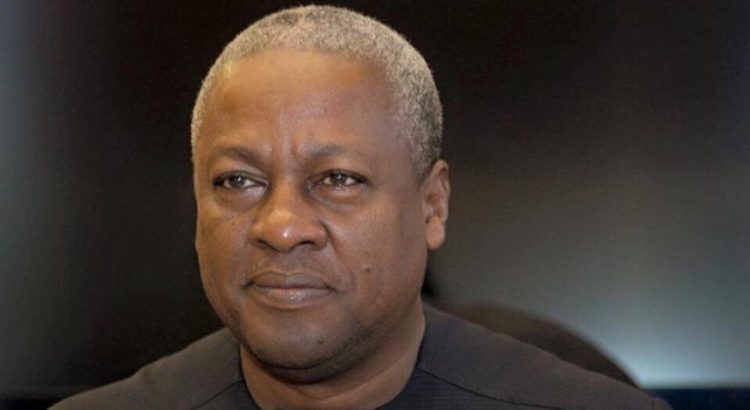
Former President John Mahama has called for re-engineering of the curriculum of University education in Africa to stimulate accelerated development if the continent is to remain competitive and relevant in the global space of skills acquisition and training.

He identified the mismatch nature curriculum bequeathed the continent from colonial mastership, which currently under-rights the content of syllabi at the Universities.

Speaking on the “Future of Work and Industrialisation” on the sidelines of the 53rd Annual Meetings of the African Development Bank in Busan, South Korea, Mr Mahama said churning out graduates of humanities for example in large droves would not unlock the quest for accelerated industrialisation in Africa.

It was on the theme, “Accelerating Africa’s Industrialisation,” which is underpinned by the Bank’s High 5 strategy including light up and power Africa, feed Africa and improve the quality of life of Africans.

He said stringent measures should be instituted to achieve a 70 by 30 parity in the sciences against the humanities to place the continent in pole-position to advance economically, socially and in the fields of science and technology, which is the catalyst to reaching accelerated development of the continent.

Mr Mahama said Africa was ready to break into the legion of industrialised continent, when the right pillars of development was activated and matched-up to the global competition even in the face of deployment of hitech artificial intelligence and robotics saying “we can start at our own pace and leverage to succeed.

“Rethinking Africa’s development paradigm will lead us to the desired destination.”

Mr Ken Ofori-Attah, Minister of Finance, also a panellists said stakeholders in Africa should pursue radically reforms in education pedagogy especially teaching programmes in entrepreneurship to jump-start changing the psyche of students to leapfrog Africa’s industrial.

He said political stability, investment in infrastructure as well as in technology, energy, macro-economic stability were essential.

Mrs Kanny Diallo, Minister of Planning and International Cooperation said frequent changes of governments and non-adherence to time-bound blueprints or development plans even makes Africa’s quest to notch accelerated development looking remote.

She insists huge investments in the agricultural sector and harnessing of the gains in the mining industry could be ploughed into the social services sector would enhance development in the agri-business value-chain to generate the necessary jobs for the youth.

She said long-term planning and solutions would assist the private sector to partner state institutions to absorb the defenceless and teeming youths with skills of engagements.

Source:

https://www.myjoyonline.com/news/2018/May-26th/mahama-wants-re-engineering-of-university-curriculum.php

Comparte este contenido:

EEUU: Could protest curb school violence? Lessons from the opt-out movement

Por: theconversation.com/27-06-2018

In the wake of the Santa Fe, Texas, school shooting, former Secretary of Education Arne Duncan voiced support for a school boycott. The boycott – which Duncan has said could take place in September – would involve keeping kids out of school until changes are made to the nation’s gun laws to make America’s schools safer. It is unclear how long the boycott would last.

If parents, students and others decide to stage a national school boycott, it would pay for them to take a few pages out of the playbook from a different protest: the opt-out movement that seeks to reduce burdensome testing. I make this observation as the author of books on political dissent in schools and the state of public education.

A more compelling argument

The opt-out movement draws attention to the suffering of children, reveals political and economic concerns with individuals and corporations who benefit from testing, and exposes the learning time lost to testing. Since school safety carries more significance than testing, a school boycott to change gun laws may employ similar justifications in an even more compelling way.

The opt-out movement has effectively raised awareness about problems introduced by testing, including the stress inflicted on teachers and students. It has done so through public demonstrations at sites such as the Department of Education, but also by generating smaller local conversations with other stakeholders.

Importantly, opt-out leaders have invited a wide and diverse collection of parents into their movement. They have proposed alternative forms of assessment. They have effectively pressured legislators to reduce testingin states like New York and to remove “zero score” penalties for children who do not take the test.

Overcoming complacency

The consciousness-raising actions of opt-out organizations have forced some people who see testing as an unavoidable part of life in schools to rethink their assumptions. A school boycott could lead to rethinking among those who feel powerless to stop school shootings.

The school boycott cannot just focus on troubling, but rare mass shootings. Based on what I know about effective political dissent, boycotters would need to expose widespread smaller forms of violence in our schools in order to paint a more complete picture of the problem and spur change. Like the Opt Out movement, boycotters would also need to highlight related practices, such as lock down drills and the arming of teachers, to expose ways in which those practices deprive classrooms of educational time, concern teachers, and cause fear in children. Boycotters should reveal how insecurity due to violence create a climate that lacks the stability and focus children need to learn well.

More than just skipping school

Finally, boycotting doesn’t mean simply staying home. It requires public demonstrations to raise awareness and to pressure legislators by letting them see the dissatisfaction and demands of the public. It entails a call to deliberate with other citizens, gun advocates, teachers, legislators and others to reach moments of compromise and consensus as well as to craft alternatives.

These alternatives might take the form of particular gun laws, but may also relate to other aspects of school culture that impact school violence, such as bullying, stress and exclusion.

How do we preserve educational opportunity if classrooms are empty? At a minimum, boycotters must model quality political dissent for students so that they learn how to be effective citizens, one of the most longstanding and widely accepted educational aims.

Moreover, parents should join up with students who’ve already led the charge through staging national school walkouts in the wake of Parkland and other shootings. And they should collaborate with organizations like Black Lives Matter, who have already been championing the need for safety in schools, in order to craft better informed plans for change.

A sufficiently robust boycott could prompt new forms of gun legislation and bring new practices to curb violence to America’s schools. All the while, parents may become more active citizens in the democratic process of public education and students may witness – and participate in – political dissent in action.

*Fuente: https://theconversation.com/could-protest-curb-school-violence-lessons-from-the-opt-out-movement-96975

Comparte este contenido:

Japan: Schools in Japan are starting to introduce gender neutral uniforms

Asia/Japan/26.06.18/Source: www.gaystarnews.com.

A number of schools across Japan have started to introduce more gender neutral uniform options for LGBTI students.

The move comes after LGBTI groups lobbied for student’s to be allowed to wear the uniform suited to the gender they identify with. It also comes after a 2015 notice from Japan’s Education Ministry to schools to improve their inclusion of LGBTI students.

A 2017 survey found that 50% of LGBTI students were bullied at school. That survey also found that of those bullied children,  70% said their teachers did nothing to help them.

‘Some students are embarrassed and cannot concentrate on their studies because of uniforms. In some cases, they stop going to school,’ Anri Ishizaki, head of FRENS, an organization supporting LGBT people told Japan Times.

‘Although uniforms are not the only factors tormenting them, it is a significant element as they are required to wear them all the time.’

Working on getting it right

One of the schools leading the charge was Kashiwanoha Junior High School. It’s in the Chiba prefecture about 60kms east of Tokyo.

‘We thought it would be better to let students wear something they feel comfortable in if they have to struggle to come to school because of uniforms,’ said Koshin Taki, the school’s vice principal of Kashiwanoha Junior High.

‘We chose a subdued color and check patterns so the uniform would be suitable for any student.’

Students will be able to wear skirts or pants and ties or ribbons to go with blazers regardless of their gender identity.

Tombow Co – a clothing manufacturing company – started making gender neutral uniforms after the Education Ministry’s notice.

It said it had been experimenting with the most neutral approaches since then. It found students did not want to wear uniforms that clearly emphasize male and female shapes.

Source of the notice: https://www.gaystarnews.com/article/schools-in-japan-are-starting-to-introduce-gender-neutral-uniforms/#gs.aXy9WKQ

Comparte este contenido:

The Two Biggest Problems With College

By Davi Leonhardt 

American higher-education policy has two overarching problems. We don’t spend enough money on college education for middle-class and poor students. And we don’t demand enough accountability from colleges.

The two problems feed off each other, leading to miserably low graduation rates — often below 50 percent — at many colleges. The colleges that have figured out how to do better aren’t rewarded with more resources. The colleges with weak results face few consequences. All the while, lower-income students suffer.

Fortunately, the problem of college performance is starting to get more attention — from colleges themselves, state officials and others. But there is still a huge missing piece: the federal government. Washington has the potential to influence higher education, via both money and oversight, more powerfully than any state or college consortium.

I don’t see much reason to hope that the Trump administration will play this role. Betsy DeVos, the education secretary, seems more focused on using federal dollars to lift the profits of private education companies, regardless of how well or ill they serve students.

Outside the administration, though, some policy experts are starting to have intriguing conversations about the future of federal higher-education policy. The latest example comes from the Center for American Progress, the liberal research and advocacy group, which on Wednesday is set to release a new higher-education proposal. It focuses on those two big problems: lack of resources and lack of accountability.

The proposal calls for roughly doubling federal financial aid, an increase of $60 billion a year. (That’s less than one-fourth of the annual cost of the Trump tax cut, as Ben Miller, a former Education Department official who helped write the proposal, told me.) The bulk of that money would increase financial aid by up to $10,000 a year for a low- or middle-income student.

This money would effectively help cover student living costs, which often run close to $15,000 a year. Those costs — mostly room and board — are a major burden even for students who receive enough financial aid to cover much of their tuition bill. In fact some higher-education experts believe the recent attention on “free college” has been problematic, because it has obscured the fact that tuition isn’t the main issue for many lower-income families.

The second part of the new proposal would require colleges to meet performance benchmarks in exchange for the infusion of new federal spending. These benchmarks would include graduation rates and post-college employment and would vary based on “degree of difficulty.” A college that enrolled mostly low-income students wouldn’t be expected to have the same results as an elite college. Over the long term, colleges that failed to meet the benchmarks could lose funding, as is already the case in some states, including Florida and Indiana.

I don’t agree with every part of the proposal. I think it focuses too much on equity among demographic groups within colleges, for example — whether white and non-white students, or high- and low-income students at a given college fare similarly. These gaps exist, but they are usually modest. The much bigger problem is that students from different groups tend to attend different colleges. But I also think the plan is an excellent way to start the discussion.

A college degree remains the most reliable path to a good job and a healthy, satisfying life. That path should be open to a much larger segment of Americans than it is now.

On the news. President Trump’s use of the word “infest” yesterday continues his ugly pattern of describing illegal immigrants as subhuman. And “infest” is particularly stark, because it suggests that immigrants are akin to insects or rats — an analogy that Nazis frequently used to describe Jews, as Aviya Kushner notes in The Forward.

On the same subject, Slate’s Jamelle Bouie predicts that Trump’s

dehumanizing language “will only get worse as November approaches.” Bouie adds: “To energize its voters, the White House plans a campaign of vicious demagoguery.”

I’m not suggesting that Donald Trump is a Nazi. He is not. Yet it would be wishfully naïve to explain away his racism and his hate at this point. In both word and deed, he has shown himself to be quite comfortable with many of the ideas of white supremacy.

Source of the article: https://www.nytimes.com/2018/06/20/opinion/college-middle-class-poor-students.html?rref=collection%2Ftimestopic%2FEducation

Comparte este contenido:

Japan: Hiroshima Prefecture to open International Baccalaureate school as it looks to move away from Japan’s passive education style

Asia/Japan/26.06.18/Source: www.japantimes.co.jp.

Hiroshima Prefecture is set to open an International Baccalaureate boarding school next spring — a rare move by a local government that officials hope will help schools shift away from Japan’s typically passive style of education.

The prefectural government, with a goal of nurturing future global leaders, is launching Hiroshima Global Academy (HiGA), where it will offer IB programs for junior and senior high school students with a particular focus on English-language education. And unlike many IB programs, tuition will be free for most pupils.

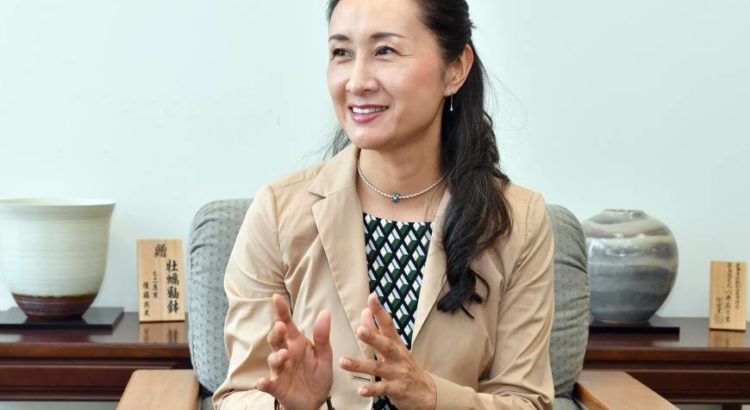
Rie Hirakawa, superintendent of the Hiroshima Prefectural Board of Education, said opening the school is part of the prefecture’s efforts to break away from the country’s conventional teaching methods.

“Teachers across the prefecture are now trying to change the education style in elementary and junior and senior high schools, but it’s difficult to do something drastic all of a sudden (at existing institutions) so opening a baccalaureate school would be a step in that direction,” Hirakawa said in a recent interview with The Japan Times in Tokyo.

International Baccalaureate, an internationally recognized program adopted in over 140 countries and territories, promotes active learning, insightful thinking and initiative on the part of students.

As of April 1, Japan had 58 schools that offer a total of 81 IB programs across three age levels. The program is mostly available at international or private schools.

“(Students) can experience something close to studying abroad without leaving Japan and acquire English skills that would enable them to study at an overseas university,” said Hirakawa, a former top salesperson at Recruit Co. who assumed her current post in April.

“We hope to get children who are interested in this type of education to come to this school,” she added.

“The tuition fee is basically free, so students from Japan and abroad can receive International Baccalaureate-standard education regardless of their economic situation,” she said.

IB programs at private institutions cost as much as several million yen annually, making it difficult for most households to enroll their kids in the program. At HiGA, only high school students coming from families with a household income of more than ¥9.5 million will be required to pay tuition of ¥9,900 per month. Room and board will cost ¥40,000 per month for every student. For Japanese students, English is not a prerequisite to enter the prefecture-run school, which will debut with 40 first-year junior high school students next April.

Eventually, each grade in junior high will have 40 Japanese students, while each high school class will comprise 40 Japanese and 20 foreign students, Hirakawa said.

Applications for HiGA’s inaugural class will be accepted from Nov. 8-14. Students from across the country are eligible for admission.

In the school’s first three years — before it admits its first group of foreign students — major subjects, including mathematics, social studies and science, will be taught in Japanese.

But others, including art and physical education, as well as after-school and extracurricular activities, will be conducted in English to prepare Japanese students for rigorous English-language high school education in line with the IB program.

The Hiroshima academy is set to offer the Middle Years Program and the Diploma Program for junior and senior high school age students, respectively. Toshikazu Hasegawa, vice president of the National Institution for Academic Degrees and Quality Enhancement of Higher Education, said he sees the academy’s undertaking as “ambitious.”

“Japan’s secondary education follows a traditional system that is very different from International Baccalaureate education, so the introduction of such programs is a welcome move that will bring diversity and international viewpoints to secondary school teaching,” Hasegawa said.

The location of the new school promises to be another attractive aspect of the institution for prospective students. The ¥7 billion campus is being constructed on Osakikamijima, a remote islet in the Seto Inland Sea.

“It’s a scenic island. Blueberries and lemons are grown here, there’s a farm that cultivates oysters and lobsters, and there’s a hot spring in the mountains,” Hirakawa said. “The population is on the decline, but we’re working on revitalization under the concept of turning it into an island for education.”

Osakikamijima’s population, at 7,646 as of the end of May, has been shrinking — down from about 14,000 in 1985 — and aging — the proportion of residents age 65 and over sits at around 47 percent, more than double the figure from three decades ago, according to Osakikamijima town officials. The island is only accessible by ferry, mainly from Takehara.

Kensaku Yoshida, director of Sophia University’s Center for Language Education and Research, noted that while the number of IB programs is likely to grow in Japan, one of the challenges involves training enough teachers to be able to meet the demand for this unique style of education.

“In that sense, we could see more programs that have elements of IB rather than official IB programs down the line. A realistic and quick approach may be to promote IB education by using it as reference and not be too particular about the brand,” Yoshida said.

Hirakawa said the academy has been sending Japanese teachers overseas to undergo training for the IB system. As for foreign teachers, the school plans to hire people who have yet to be trained with the program and prepare them over the coming three years.

“We’d like to hire people who are interested in living in the countryside and teaching children as part of a learning community,” Hirakawa said, adding that targets include those working in Japan as assistant language teachers.

“Hiroshima Gov. (Hidehiko) Yuzaki is thinking big and soliciting students from outside the prefecture. He considers children who spend six years in Hiroshima to be local kids and thinks it’s a good idea for the prefecture to raise internationally minded leaders,” she said.


Source of the notice: https://www.japantimes.co.jp/news/2018/06/22/national/hiroshima-prefecture-open-international-baccalaureate-school-looks-move-away-japans-passive-education-style/#.WzFbBlVKjIW
Comparte este contenido:

Pakistan: Education and sanity

Asia/Pakistan/26.06.18/Source: nation.com.pk.

Education is prioritized on such a huge level that important tools needed to survive in the society are often ignored

We have been raised in an environment where we are made to believe that education is essential and the path to a successful life. We have heard Urdu sentences like “Parhoge likhoge banoge nawab, kheloge kudo ge banoge kharab”, “Parho takay baray aadmi ban sako” with regards to study all our lives and children often think of it as boring as it may seem education is indeed important. Children and adults alike believe that education is so important to the point that nothing else is supposed to come in between and in some cases not even your own life.

While many people might be of the view that education does indeed come first above everything else and every other aspect even if it is important or a favorite pastime is something secondary which can only come after education or be successfully achieved after it, but I tend to disagree, education has often been confused with gaining knowledge or perhaps even gaining some degree. For me education is not important as people think it is, gaining knowledge on the other hand is.

The importance of education has been pressurised upon people through different institutions of society like educational institutions and even parents. This mindset can be traced to even the smallest of things for example most people might remember that back in school, it was a common practice among teachers to take games, P.E. or a free period in order to complete their syllabus. While teachers might have been of the view that it was for the benefit of the students, the truth is it was done in order to just wrap up things quickly. If schools were really concerned about the benefit of the students, they would have made it against the rules to do such a thing because it doesn’t give students the time to relax but instead most schools are now just a money-making business that puts up information in brains of students for which they don’t even get enough time to process.

Another issue is that of tuition centers. It’s one thing if a child doesn’t go to school and is attending a tuition centre but what is the point of wasting your money on a school if you’re going to send your child to a tuition centre anyway? Even the excuse that your child is weak in a certain subject is not a valid one because isn’t it the incompetence of the school and teachers or their parents in the first place if the child is weak in a certain subject?

Not only that but while most parents, teachers and schools emphasise on studies, they either very rarely or never take into consideration things like sports or arts. Their misconception is that those are things that are simply useless and can be done at a later time or is something extra that does not need any time at all. The person’s time is fully prioritised on studying that they do not have the time to do anything else.

Education is prioritized on such a huge level that important tools needed to survive in the society are often ignored such as how to pay your bills, how to cook, how to buy a house or how to drive. A disagreement to this might be that without education you might not able to even know this but the thing is a formula in physics is not going to help you solve these problems; someone has to educate you on this stuff. Not everyone is going to learn from YouTube tutorials.

Then there comes another problem; the question what are you studying? If you’re not doing medical or engineering, your education is invalid. It is true that people have become more acceptable towards other disciplines today but the mindset which disregards other disciplines still exists today and is unfortunately pretty common. People need to realise that every person is different and they all have their qualities and flaws, but the society unfortunately tends to focus on the latter as if their flaws are the only things they see in a person.

Formal education and gaining knowledge is necessary. It is not something that should be done to impress the society but to have a successful path for one’s self. Pressurising people on studying in order to become a better person in a society on the other hand is wrong and should be discouraged. There should be a certain time for studying with breaks in between. This is something that should be realised by parents, teachers and schools. Having four periods with one break followed by another four periods is unhealthy and helping none. There needs to be a more open and liberal approach to education with a focus on other important things as well. Only then will the person and the society in general be on the path to successful road.

Source of the notice: https://nation.com.pk/24-Jun-2018/education-and-sanity

Comparte este contenido:
Page 89 of 144
1 87 88 89 90 91 144