Page 91 of 144
1 89 90 91 92 93 144

Education nationale: les évêques de Côte d’Ivoire veulent positionner l’enseignement catholique comme pilier de l’enseignement


Africa/Côte d’ivoire/19.06.18/Source: news.abidjan.net.

Les évêques de Côte d’ivoire veulent positionner l’enseignement catholique comme le pilier de l’éducation nationale. Il s’agit pour eux d’accompagner l’état dans la poursuite de ses objectifs éducatifs.

Pour se faire, une réforme de l’enseignement catholique à été lancée pour mieux l’adapter aux nouvelles réalités. La première phase de cette réforme à été confiée à un comité de pilotage.

Ce comité de quatre groupes a travaillé à faire des propositions sur ce projet de réforme. Les résultats de leur travaux ont été restitués ce samedi 17 juin au cours d’une cérémonie qui s est tenue à l’auditorium du centre culturel de la cathédrale du plateau.

Ces propositions portaient entre autres sur l’organisation ‘’des journées nationale de l’éducation catholique’’, une lucarne pour réfléchir sur la pérennité de l’éducation catholique à travers des panels et donner des récompenses aux meilleurs acteurs de l’enseignement catholique.

Quand l’étique morale de nos sociétés menace de s’écrouler, quel système éducatif pour quel citoyen ? S’interogait Hassan Sarr, représentant du ministre de l’éducation nationale, de l’enseignement technique et de la formation professionnelle.

Pour lui l’enseignement catholique peut et doit apporter une réponse plus éfficace car plongeant ses racines dans les valeurs spirituelles, elle serre le fruit de la responsabilité et l’intégralité. Il a au nom du Ministre Kandia Camara, salué cette initiative de réforme pour une convergence d’effort.

Cette rencontre organisée par le sécrétariat exécutif de l’éducation catholique, à réuni plusieurs autorités de la grande chancellerie, de plusieurs ministères et des autorités catholique chapeauté par Monseigneur Gaspard Beby Gneba, président de la commission épiscopale pour l’enseignement catholique.

Il a garanti au ministre de l’éducation nationale que l’enseignement catholique va jouer pleinement jouer le rôle qui lui est dévoué. C’est-à-dire garantir une éducation à tous et dans toutes ses dimensions : tête, cœur et membre. Cela s’inscrit dans la vision du saint père François et des évêques de Côte d’ivoire.

Il a aussi remercié la ministre pour son implication à l’épurement de la dette à l’égard du fonctionnement de l’enseignement catholique. Des diplômes de participations ont été remis aux membres du comité et aux personnalités présentes. Il s’en Est suivi une messe de clôture.

Source des nouvelles: https://news.abidjan.net/h/639744.html

Comparte este contenido:

Le système d’éducation québécois est « attaqué », dit un collectif citoyen

Amérique du Nord/Canada/19.06.18/Source: ici.radio-canada.ca.

Le système d’éducation québécois est « attaqué » et doit être « défendu » pour retrouver sa mission d’instruire et d’éduquer, selon un regroupement qui appelle à la mobilisation. Debout pour l’école! estime que ce rôle est pour le moment dévié vers « une approche très marchande ».

Le collectif de 200 citoyens, essentiellement des enseignants, croit également que les conditions de travail de ceux qui oeuvrent dans le secteur de l’éducation doivent être substantiellement améliorées.

La porte-parole et coordonnatrice du collectif, Suzanne G. Chartrand, n’y va pas par quatre chemins. « Tout le monde est à bout de souffle, a-t-elle lancé en entrevue. Tout le monde est épuisé. »

Il y a eu des compressions énormes de 1,5 milliard de 2010 à 2016 juste pour l’école primaire et secondaire au Québec. Ces compressions, ça veut dire moins de locaux, moins de personnel, moins de services.

Suzanne G. Chartrand, coordonnatrice de Debout pour l’école!

Mme Chartrand, une didacticienne qui se consacre à l’éducation depuis plus de 50 ans, plaide pour un réinvestissement massif, « pas que réinjecter quelques millions par-ci par-là ».

Et pas question de comprimer d’autres dépenses. Elle soutient que Québec devrait augmenter ses revenus « en allant chercher l’argent là où il est » pour l’investir dans « le bien commun ».

Le gouvernement devrait « couper en haut », dit-elle, en empêchant l’évitement fiscal et en cessant de dépenser des milliards de dollars « en pure perte ou essentiellement pour aider de grandes corporations ».

Mobilisation citoyenne

Debout pour l’école! souhaite que les gens s’expriment par tous les moyens possibles, notamment en signant une pétition sur son site web, en se rendant dans les comités de parents, en parlant à leurs élus et en se réunissant avec d’autres personnes pour discuter d’enjeux relatifs à l’éducation.

On veut que les gens sentent qu’il y a un groupe qui va recueillir leur parole, qui va discuter avec eux pour qu’on comprenne mieux quels sont les problèmes, les enjeux et les solutions.

Suzanne G. Chartrand, coordonnatrice de Debout pour l’école!

Le regroupement formé il y a un an a rassemblé plusieurs revendications et se donne pour mandat d’impulser une discussion sur l’éducation au cours des prochains mois.

Il estime qu’il y a un manque de volonté du gouvernement du Québec de faire en sorte que l’éducation occupe une place importante.

Mme Chartrand accuse le gouvernement libéral d’être responsable de la situation actuelle « déplorable ».

Elle constate que « tous les rapports du Conseil supérieur de l’éducation depuis au moins 20 ans tirent la sonnette d’alarme sur tous les aspects qui vont mal dans l’éducation », mais qu’ils sont ignorés par les ministres qui se succèdent.

Le livre du présent ministre de l’Éducation, Sébastien Proulx, est selon Mme Chartrand un « ramassis de lieux communs que n’importe qui peut dire ».

« Quand il y a des solutions concrètes, c’est les pires solutions, a-t-elle lancé. C’est comme s’il n’avait lu aucun rapport du Conseil supérieur de l’éducation, aucune étude sérieuse, y compris de ses propres fonctionnaires. Alors, il parle à travers son chapeau, puis il sourit. »

Mme Chartrand croit qu’il ne faut plus attendre que les gouvernements « redressent la barre ». Rien ne changera si chacun ne se sent pas concerné et ne décide pas de faire une petite action, seul ou avec d’autres, a-t-elle résumé.

Pour se faire entendre, « des milliers et des milliers » de Québécois devront, selon elle, dire que « ce n’est pas le genre d’éducation qu’on veut, ce n’est pas le genre de politique éducative qu’on veut ».

Source des nouvelles: https://ici.radio-canada.ca/nouvelle/1107603/mobilisation-citoyenne-defendre-education

Comparte este contenido:

Sierra Leone military establishes technical and education college

Africa/Sierra Leone/19.06.18/Source: www.thesierraleonetelegraph.com.

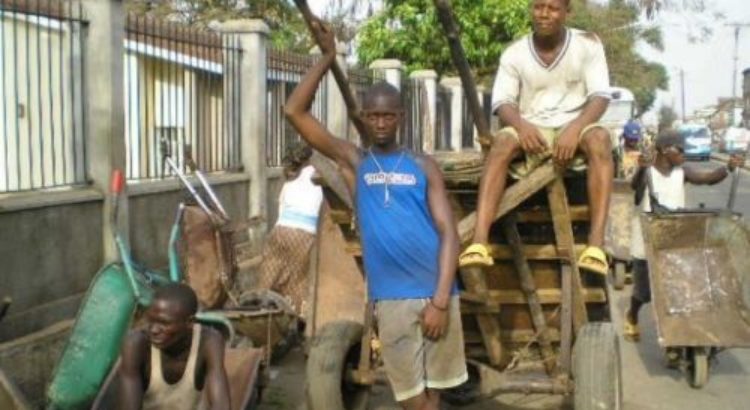
Sierra Leone’s economic recovery is far too reliant on the mining industry, especially iron ore export, which in the last six years has experienced serious turbulence, as a result of the 2014 Ebola outbreak and global economic downturn.

If the economy is to recover and start growing again, there must be a concerted strategy aimed at diversifying the economy. Key sectors such as tourism, forestry, building construction, fishing, agro-processing, and manufacturing, must be prioritised by the government.

But the growth potential of these sectors cannot be realised without investment in skills development through vocational training, using a sectoral approach.

For far too long vocational training in Sierra Leone has been regarded as the dumping ground for young school dropouts and those less capable of making the grades to university, with the disastrous consequences of producing an unskilled labour force that is unfit for the labour market.

This has to change, if Sierra Leone is to compete with other countries such as Rwanda and Ghana as a destination for foreign direct investments in knowledge-based industries.

Hence, it is encouraging news to see that the Sierra Leone Armed Forces (RSLAF) has established a technical and education college of its own, with the hope of helping to raise the quality standards of vocational skills training in the country. More needs to be done, but it’s a good start.

According to report from the military, the new institution was approved last week by the Tertiary Education

Source of the notice: http://www.thesierraleonetelegraph.com/sierra-leone-military-establishes-technical-and-education-college/

Comparte este contenido:

Colleges and State Laws Are Clamping Down on Fraternities

By Kyle Spencer

Fraternity members at Louisiana State University adhere to age-old rituals, shrouded in secrecy, that dictate how they gather, greet each other and initiate their young pledges.

But when they return to campus in the fall, one ritual will be drastically different: They will face much more severe consequences for dangerous hazing incidents.

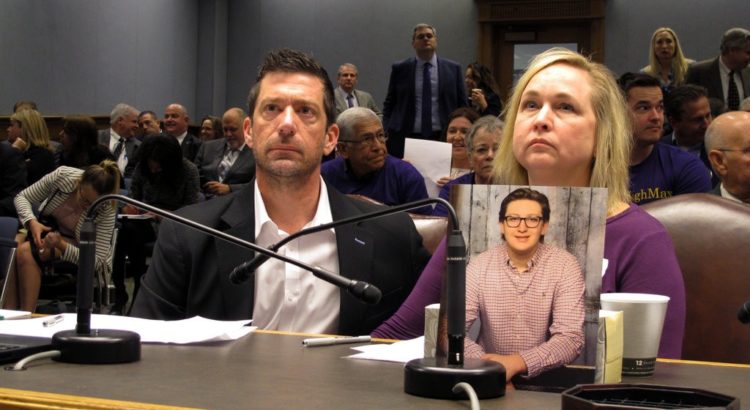
In May, eight months after the death of Maxwell Gruver, a freshman pledge at the university’s now banished Phi Delta Theta fraternity chapter, Gov. John Bel Edwards of Louisiana signed into law an anti-hazing bill that would make it a felony for those involved in hazing that resulted in death, serious bodily harm, or life-threatening levels of alcohol. And students found guilty could land in a Louisiana jail for up to five years.

The new law represents an important departure for Louisiana, which once had some of the most lenient anti-hazing laws in the nation. But it also reflects renewed efforts around the country — in state legislatures, inside courthouses and on campuses — to prevent the hazing injuries and deaths that have plagued college campuses for decades.

“Realistically, the answer is regulation and reform,” John Hechinger, the author of “True Gentlemen: The Broken Pledge of America’s Fraternities,” said during a panel on Greek life last week at The New York Times Higher Ed Leaders Forum. “That is really the only possibility.”

There has been at least one school-related hazing death each year in the United States since 1961, according to Hank Nuwer, a Franklin College journalism professor and the author of multiple books on hazing. Most, but not all, have occurred during fraternity initiation events.

But in 2017, four students, including Mr. Gruver at L.S.U., Tim Piazza, a 19-year-old at Pennsylvania State University and Andrew Coffey, a 20-year-old at Florida State University, lost their lives in hazing-relating incidents. Mr. Coffey died on a fraternity house couch after drinking an entire bottle of bourbon during Big Brother Night. In each case, multiple students were charged.

This fall, Penn State President Eric J. Barron, who appeared on the panel with Mr. Hechinger, said that the incident on his campus had been a “horrible tragedy,” but one that had spurred new interest in reform.

This past year, Dr. Barron banned 13 organizations from his campus and instituted 15 reforms, including switching disciplinary oversight of the institutions from a Greek governing council to university administrators, requiring newcomers to take a pledge about their actions inside their organizations and deferring the initiation process for freshmen until later on in the school year, so they can develop new friends and interests before being faced with hazing.

This winter, officials at Florida State University started a hazing education initiative and increased staff members charged with monitoring Greek life. And at Louisiana State, President F. King Alexander proposed 28 reforms, including a requirement that chapters hire house managers.

College administrators are also beginning to look at the problem collectively. At a meeting in Chicago this spring, representatives from 31 colleges and universities explored ways to garner more cooperation from national Greek organizations, which can resist university oversight.

Dr. Barron is pushing an online safety database that will record incidents at chapters around the country, indicate which institutions are doing exemplary work in their communities and which are experiencing alarming trends.

Penn State and many other universities already have, or are instituting, their own report cards.

The high profile nature of the cases is also impacting state capitals. Pennsylvania, like Louisiana, is expected to soon pass an anti-hazing law that would make death by hazing a felony.

New Mexico has also been exploring the idea.

In Tennessee, state representative John DeBerry Jr. floated a bill that would ban fraternities altogether in the state.

Mr. Hechinger says fighting to make fraternities safer is probably a better use of critics’ energy, as it is unlikely that fraternities will be banned on public campuses where they are powerful.

“If we were going to create a higher education system from scratch, would we have organizations that year after year kill a student? Probably not,” he said at the conference. “But they are very ensconced in higher education, and if you try to do some kind of ban, which is often what people are asking, you run the risk of underground behavior.”

Source of the article: https://www.nytimes.com/2018/06/05/education/learning/colleges-fraternities-laws.html

Comparte este contenido:

World Bank approves $700 mn to improve primary education in Bangladesh

Asia/Bangladesh/19.06.18/Source: www.siasat.com.

The World Bank has approved $700 million to help Bangladesh achieve its education for all vision by improving the primary education sector.

The Quality Learning for All Program (QLEAP) will cover more than 18 million children studying in pre-primary level to grade 5.

It will also finance implementation of the government’s Fourth Primary Education Development Program (PEDP4), Dhaka Tribune reported.

The World Bank praised Bangladesh’s progress in improving access to education.

“Today almost every child steps into a classroom and eight out of 10 children completes primary education,” Dhaka Tribune quoted Qimiao Fan, the World Bank country director for Bangladesh, Bhutan, and Nepal as saying.

World Bank Team Leader for the project Syed Rashed Al Zayed said the project will build about 95,000 classrooms, teachers’ rooms, and multipurpose rooms.

The projects will provide recruitment to about 100,000 teachers. (ANI)

Source of the notice: https://www.siasat.com/news/world-bank-approves-700-mn-improve-primary-education-bangladesh-1370297/

Comparte este contenido:

South Korea clears way for student exchanges with North Korea

Asia/South Korea/By John Morgan/19.06.18/Source: www.timeshighereducation.com.

Seoul National University students to contact counterparts at Kim Il Sung University 

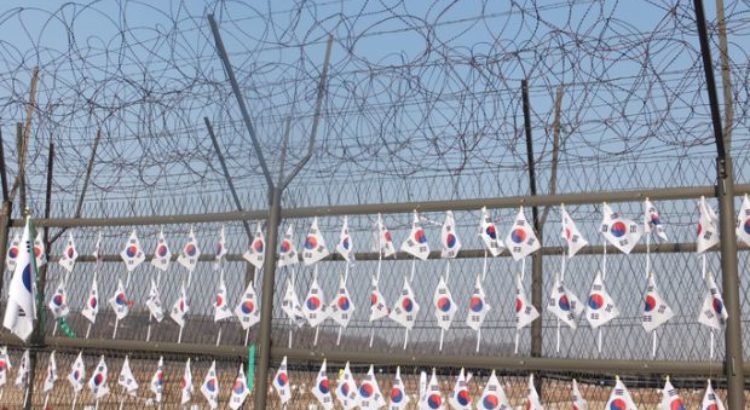
The South Korean government has approved plans for the nation’s most prestigious institution to open talks on student exchanges with North Korea’s Kim Il Sung University, according to reports.

South Korea’s Ministry of Unification gave the green light for students at Seoul National University to contact North Korean counterparts, according to students at the institution, the Yonhap news agency said.

“The approval, coming amid increasingly warming ties between the two Koreas, could pave the way for the school’s first student exchanges with a North Korean university since its foundation in 1946,” it added.

The SNU students have started a “promotion committee for inter-Korean exchanges” with the university’s council and filed a request with the ministry in May.

“After the ministry, which handles inter-Korean affairs, approved its plan, the SNU committee said it will send a fax message to the Pyongyang-based Kim Il Sung University as early as next week to begin discussions on student exchanges,” Yonhap reported.

Exchange programmes could include “joint exploration of historical sites in Pyongyang by students from both universities”, the students are expected to suggest. About 100 SNU students are reported to want to take part in exchanges with the North.

The move comes after a warming of relations between the two countries and the historic meeting between North Korean leader Kim Jong-un and US president Donald Trump.


Source of the notice: https://www.timeshighereducation.com/cn/news/south-korea-clears-way-student-exchanges-north-korea

Comparte este contenido:

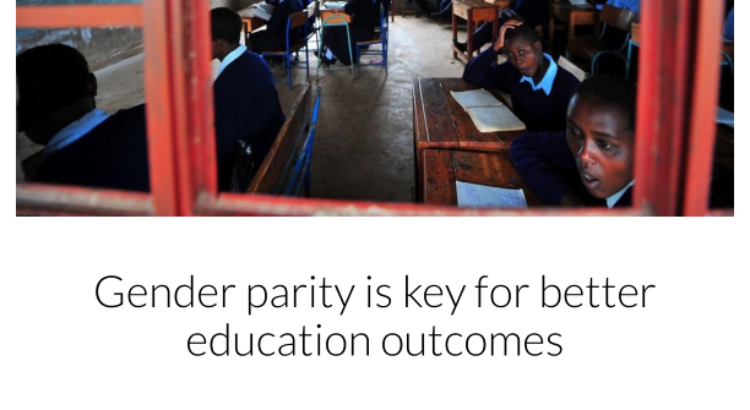
África: Gender Parity is Key for Better Education Outcomes

África/ 18.06.2018/ By: Zachary Donnenfeld / From: allafrica.com.

Seventy years ago, the world agreed on the importance, and right of all people, to education. Article 26 of the Universal Declaration of Human Rights, adopted in 1948, states that ‘[e]veryone has the right to education’, and that elementary education shall be compulsory and free.

Yet according to the most recent data, we are far from achieving universal access to free, compulsory education – even at primary (or elementary) level. In 2015, the average person in high-income countries had nearly 12 years of education, against fewer than five years in low-income countries.

The number of average years of education is an important measure of the overall level of education in a population and is strongly correlated with more productive economic activity.

Globally, the discrepancy in levels of educational attainment remains large. Figure 1 demonstrates this inequality by showing the average years of education in the adult population for select regions over a 40-year period.

People in Europe and Central Asia have historically had much higher levels of education than those in other regions, though the gap has begun to shrink over time. That said, some regions are catching up faster than others. Sub-Saharan Africa has been particularly slow to progress in terms of educational attainment. At fewer than six years of education per adult in 2015, the region has yet to attain the minimum standard envisioned by the United Nations 70 years ago.

A common way to measure equality of access to education by sex is ‘gender parity’. This method measures the number of female students participating in a given level of education (for example primary or secondary school) relative to the number of male students at that same level.

Figure 2 shows gender parity in primary enrolment for the same regions as Figure 1 (excluding Europe and Central Asia). It highlights the relative exclusion of females from educational opportunities in sub-Saharan Africa, compared to other regions.

Gender parity in sub-Saharan Africa has improved – from about 80 female pupils enrolled for every 100 male students in 1980 to about 95 females per 100 male students in 2015. By comparison however, the Middle East and North Africa (MENA), and East Asia and Pacific, have moved much quicker towards gender equality. One way of interpreting Figure 2 is that in 2015, five out of every 100 girls in sub-Saharan Africa were not expected to set foot in a primary school classroom.

Between 1980 and 1995, sub-Saharan Africa experienced a modest increase (about 8%) in gender equality in primary enrolment. By contrast, women in MENA countries became about 20% more likely to enrol in primary school over that same period. Sub-Saharan Africa remains stuck, with higher levels of gender inequality in primary enrolment than any other region. This is reflected in a population that remains less educated than those in other developing regions.

The ability of MENA countries to make their education systems more gender-inclusive supported the expansion of educational attainment in that region. While MENA is not typically thought of as a particularly progressive region regarding gender, in 2015, women in MENA countries were about 5% more likely to enrol in primary school than women in sub-Saharan Africa.

The exclusion of women and girls from educational opportunities in sub-Saharan Africa is one of the factors contributing to the region’s struggle to improve overall educational attainment levels. Conversely, improvements in MENA between 1980 and 2000 in both primary and secondary enrolment (not shown here) supported the region’s significantly faster increase in average education years relative to sub-Saharan Africa, demonstrated in Figure 1.

Education is inherently valuable for a number of reasons. A better educated population offers wider social benefits, like improved health outcomes (for example a lower propensity to smoke), increased levels of civic participation and reduced fertility rates. Better educated parents tend to have fewer children, which can help reduce the pressure on governments in Africa to deliver basic services by shrinking the absolute size of the population.

In other words, there are strong knock-on effects from educating women and girls. Other research suggests that educating women and girls can play a role in poverty reduction, and even in post-conflict reconstruction by including conflict-resilience education within existing curricula.

If Africa hopes to close the gap in economic and human development outcomes between itself and the rest of the world, then improving the average levels of education of women and girls is fundamental.

Historically, it has taken decades for countries to improve the average levels of education and to achieve gender parity between women and men. Technology may be accelerating those timelines, according to a recent United Nations Children’s Fund report. But that report also points out that access to technology may exacerbate (or maintain) existing levels of discrimination against women.

Whether or not the digital revolution changes the nature of education for women and girls, improving the overall level of education in Africa is paramount to promoting more rapid economic growth and improving livelihoods. Ensuring that 100% of Africa’s citizens can enrol in primary school, regardless of their sex, should be the first step towards achieving that brighter future.

From: http://allafrica.com/stories/201806150191.html

Comparte este contenido:
Page 91 of 144
1 89 90 91 92 93 144