Page 93 of 144
1 91 92 93 94 95 144

Taking SDG 4.2 from Policy to Action: Nepal hosts 3rd Asia-Pacific Regional Policy Forum on Early Childhood Care and Education (ECCE)

BANGKOK, 30 de mayo de 2018 –

Resumen: Tomando el ODS 4.2 de la Política a la Acción: Nepal acoge el 3er Foro de Política Regional de Asia y el Pacífico sobre Atención y Educación de la Primera Infancia (AEPI).  Desde el primer día de clases, un niño ya podría enfrentar desafíos serios e incluso insuperables para acceder a una educación de calidad. A medida que se abre el 3er Foro de Política Regional de Asia y el Pacífico sobre Atención y Educación de la Primera Infancia (AEPI) y la Conferencia Regional de Desarrollo de la Primera Infancia de Asia y el Pacífico (2018) se abre en Katmandú el 5 de junio de 2018, hay una comprensión creciente de un enfoque multisectorial es esencial para nivelar el campo de juego para los niños, incluso antes de su inscripción en la escuela primaria. El concepto de ‘preparación para la escuela’ es un elemento fundamental de los Objetivos de Desarrollo Sostenible (ODS). Meta 4.2 – ‘Para 2030, garantizar que todas las niñas y niños tengan acceso a un desarrollo, atención y educación preescolar de calidad para que estén listos para la educación primaria. ‘ Cuando los niños no están listos para la escuela para la edad de ingreso primaria, los impactos negativos a largo plazo en los resultados del desarrollo, particularmente para los niños más vulnerables, están bien documentados. Hay teorías bien establecidas y evidencia de investigación que destaca la importancia crítica del desarrollo de la primera infancia, pero 250 millones de niños menores de 5 años en países de ingresos bajos y medios corren el riesgo de no alcanzar su potencial debido al retraso en el crecimiento, la pobreza y la desventaja . Ese potencial abarca el bienestar cognitivo, emocional, social y físico. Esto exige medidas urgentes para aumentar la cobertura de los programas de AEPI de calidad multisectorial que incorporan salud, nutrición, seguridad y protección, atención receptiva y aprendizaje temprano. En el marco del ODS 4.2, se requiere que el Ministerio de Educación (MOE) de cada país desempeñe un papel central en un enfoque multisectorial implementando y monitoreando programas de AEPI de calidad, llegando a otros ministerios y agencias responsables del DIT y coordinando sus esfuerzos. Este enfoque holístico y multisectorial de la AEPI es en realidad un interés fundamental de cada Ministerio de Educación responsable de los resultados educativos de los niños inscritos en el sistema escolar, porque la participación de AEPI está significativamente relacionada con el desarrollo cognitivo y la preparación escolar desde el nacimiento hasta los 8 . Como anfitrión del foro de políticas de ECCE y de la conferencia ECD, Nepal está bien preparado para adoptar este enfoque holístico del desarrollo temprano y la educación. El Primer Ministro de Nepal, Sr. KP Sharma Oli, ha destacado que el desarrollo de la primera infancia está consagrado en la Constitución del país y es esencial para lograr los ambiciosos planes de desarrollo sostenible del país. En ausencia de estos programas ECCE multisectoriales dirigidos por el MOE, los resultados de aprendizaje de los niños sufren, pero también los propios sistemas escolares, ya que pagan el precio si los niños no están bien cuidados con esfuerzos enfocados en su desarrollo antes de llegar a la escuela primaria.


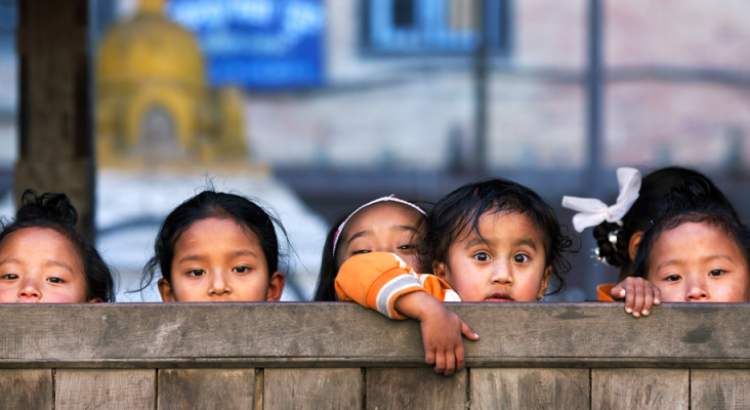
On the very first day of school, a child could already face serious, even insurmountable, challenges to access quality education. As the 3rd Asia-Pacific Regional Policy Forum on Early Childhood Care and Education (ECCE) and 2018 Asia-Pacific Regional Early Childhood Development (ECD) Conference opens in Kathmandu on 5 June 2018, there is a growing understanding that a multi-sectoral approach is essential to level the playing field for children, even prior to their enrolment in primary school.

The concept of ‘school readiness’ is a critical element of Sustainable Development Goal (SDG) Target 4.2 – ‘By 2030, ensure that all girls and boys have access to quality early childhood development, care and pre-primary education so that they are ready for primary education.’ When children are not ready for school by the primary entry age, the long-term negative impacts on developmental outcomes, particularly for the most vulnerable children, are well-documented.

There are well-established theories and research evidence highlighting the critical importance of early childhood development, yet 250 million children younger than 5 years of age in low and middle-income countries are at risk of not reaching their potential due to stunting, poverty and disadvantage. That potential encompasses cognitive, emotional, social and physical welfare. This calls for urgent action to increase coverage of multi-sectoral quality ECCE programmes that incorporate health, nutrition, security and safety, responsive caregiving and early learning.

Under the framework of SDG 4.2, each country’s Ministry of Education (MOE) is required to play a pivotal role in a multi-sectoral approach implementing and monitoring quality ECCE programmes by reaching out to other ministries and agencies responsible for ECD and coordinating their efforts. This holistic, multi-sectoral approach to ECCE is actually a fundamental interest of each Ministry of Education responsible for educational outcomes of children enrolled in the school system, because ECCE participation is significantly linked to cognitive development and school readiness from birth to the age of 8.

As the host of the ECCE policy forum and ECD conference, Nepal is well-prepared to adopt this holistic approach to early development and education. Prime Minister of Nepal Mr K.P. Sharma Oli has emphasized that early childhood development is enshrined in the country’s constitution and essential to achieve the country’s ambitious sustainable development plans.

In the absence of these MOE-led, multi-sectoral ECCE programmes, children’s learning outcomes suffer, but so too do school systems themselves as they pay the price if children are not well cared for with focused efforts on their development before they reach primary school.

In addition, there is also an increasing recognition of the importance of systematic monitoring of ECCE efforts, not only to track progress relative to the SDG4.2 indicators – but also because the entire ECCE programme must be seen as a continuum of development.

Since 2013, the UNESCO Asia and Pacific Regional Bureau for Education, UNICEF and ARNEC, with other key partners, have been organizing the Asia-Pacific Regional Policy Forum on ECCE to provide a platform for high-level policy-makers of Asia-Pacific countries to share knowledge and discuss strategies to expand access to, and improve the quality of, comprehensive, integrated and holistic ECCE. The forum will result the Regional Strategy to improve the equity and quality of ECCE.

The 3rd Asia-Pacific Regional Policy Forum on Early Childhood Care and Education (ECCE) is led by UNESCO. The Regional ECD Conference is organized by the Asia-Pacific Regional Network for Early Childhood (ARNEC) www.arnec.net including its core partners United Nations Children’s Fund (UNICEF) Regional Office for East Asia and the Pacific http://www.unicef.org/eapro/ and Regional Office for South Asia andhttp://www.unicef.org/rosa/; United Nations Educational, Scientific and Cultural Organization (UNESCO) http://bangkok.unesco.org/; Plan International www.plan-international.org/; Open Society Foundations https://www.opensocietyfoundations.org/; Save the Children www.savethechildren.org and ChildFund Internationalhttps://www.childfund.org/.

The three-day event, being hosted by Nepal Government’s Ministry of Education, Science and Technology, includes the participation of about 700 high-level government officials, development professionals, researchers as well as representatives from organizations working in early childhood development, care and education from 40 countries in the Asia-Pacific region.

For more information, please contact:

Mr Baikuntha Prasad Aryal, Joint Secretary/Spokesperson, Ministry of Education, Science and Technology Email: baikunthaparyal@gmail.com

Ms Kyungah Bang, Programme Officer, UNESCO Bangkok Email: k.bang@unesco.org

Ms Silke Friesendorf, Communication Manager, ARNEC. Email: silke.f@arnec.net www.arnec.net

Fuente: https://bangkok.unesco.org/content/taking-sdg-42-policy-action-nepal-hosts-3rd-asia-pacific-regional-policy-forum-early

Comparte este contenido:

We must not let education become the forgotten casualty of climate change

By Silas Lwakabamba/newtimes.co.rw/ 06-06-2018

On World Environment Day, there will be plenty of words spoken about the obvious damage being wreaked by climate change – the chaos of hurricanes, wild fires and melting polar ice caps is there for all to see.

But there’s another more hidden casualty of this new world of rising temperatures, drought, and increased natural disasters:  the education of our young people.

At the simplest level, the wilder weather that we’re already seeing means children are prevented from getting to school. Hurricanes Irma and Harvey meant 1.7 million US students were temporarily unable to go to school last year – and officials in Puerto Rico have also recently announced plans to close over 280 schools following the devastation wrought by Hurricane Maria.

In wealthier nations, the damage caused by the increasing occurrence of extreme weather events more often than not tends to cause temporary disruption to children’s education.

But in poorer countries, the consequences can be far more long lasting.

Buildings and infrastructure can take months or years to rebuild, with devastating implications for learning. Girls are most likely to be taken out of school in the wake of climate-related shocks, as was found in studies in Pakistan and Uganda after natural disasters there.

So, indirectly, climate change is compounding educational inequalities that already exist.

But the hardest hit parts of the world are those where universal education is still denied millions and Sub-Saharan Africa is on the front lines. Adult literacy rates are around 65%, compared to a global average of 86%. Here, over a fifth of children aged 6-11 are out of school, and a third of those aged 12-14.

In Rwanda, we know the devastating impact of being forced from one’s home can have on a child’s education.

But the big refugee crises of the future will not just be driven by war, but by the environment, with experts warning tens of millions are likely to be displaced in the next decade by droughts and crop failures brought about by climate change.

What’s more, rising temperatures are predicted to result in the spread of lethal diseases. It is thought that a 2°C rise in temperatures could lead to an additional 40-60 million people in Africa being exposed to malaria.

The disease is already one of the most significant factors in student absenteeism on the continent, with estimates ranging from 13 – 50%depending on the region.

Environmental changes are diminishing children’s education in other ways too. Malnourishment directly affects children’s ability to learn. The World Food Programme has identified hunger and malnutrition as one of the most significant impacts of climate change.

Poor maternal diet means the odds are stacked against a growing number of children even before they are born.

Food shortages and crop failures can also cause conflict and political extremism – which can also blight educational chances. In Mali, for example, where rainfall has dropped 30% since 1998, the instability has created an environment where poisonous anti-education ideologies can flourish.

Recent years have seen many tragic attacks on African schools, from Boko Haram in Nigeria to rebels in DR Congo. States weakened by the economic and social damage of climate change will be less able to counter these destructive forces.

If states start to fail, then precarious state funding for education – which is already being squeezed even before the impact of climate change is taken into consideration – will be at risk.

The percentage of trained primary school teachers in sub-Saharan Africa has already fallen by 27.5% in just 15 years, from 84.4% in 2000 to 61.23% in 2015, according to UNESCO data.

Meanwhile, teachers from Nigeria to Kenya frequently find themselves unpaid at the end of the month. This despite the chronically low levels of remuneration; UNESCO has found there has been a decline in teacher pay across Africa since 1975.

As states grapple with increasingly perilous priorities in the face of so many threats borne by climate change, education funding may be one of the first things to get cut.

It is vital that we understand the threat posed by climate change to education and act against it. That is why I support the Dubai Declaration on Education and Climate Change made at the Varkey Foundation’s Global Education and Skills Forum in March. The declaration calls on the international community to take action in educating the next generation about the perils of climate change along six key principles: education is the responsibility of all; global interdependence and the imperative of planetary stewardship provide the critical context for education in the 21st Century; averting catastrophic climate change calls for improved climate literacy for all; education needs to foster a sense of global citizenship and ecological responsibility in all; and education reform and climate action should be pursued as mutually reinforcing objectives in public policy.

The Dubai Declaration is an important start in ensuring education does not become the forgotten casualty of climate change. But in the face of the multitudinous and multifaceted threats climate change poses to education right now, from children kept out of school due to extreme weather events to those forced to flee their communities by longer term climactic conditions, to conflicts, hunger and disease, governments must act urgently to ensure that every single child is given access to a good school and a well-trained and qualified teacher.

On this World Environment Day, ahead of the G7 Leaders meeting in Canada, it’s a timely reminder that climate change is doing immediate damage to the life chances of children all over the world who are being denied their birthright of a decent education.

The writer is the former Minister of Education of Rwanda and a member of the Atlantis Group of former Education Ministers around the world, an initiative of the Varkey Foundation since March 2017s.

*Fuente: http://www.newtimes.co.rw/opinions/we-must-not-let-education-become-forgotten-casualty-climate-change

Comparte este contenido:

‘Shithole countries’: Trump uses the rhetoric of dictators

By: Henry Giroux

George Orwell warns us in his dystopian novel 1984 that authoritarianism begins with language. In the novel, “newspeak” is language twisted to deceive, seduce and undermine the ability of people to think critically and freely.

Donald Trump’s unapologetic bigoted language made headlines again Thursday when it was reported he told lawmakers working on a new immigration policy that the United States shouldn’t accept people from “shithole countries” like Haiti. Given his support for white nationalism and his coded call to “Make America Great (White) Again,” Trump’s overt racist remarks reinforce echoes of white supremacy reminiscent of fascist dictators in the 1930s.

His remarks about accepting people from Norway smack of an appeal to the sordid discourse of racial purity. There is much more at work here than a politics of incivility. Behind Trump’s use of vulgarity and his disparagement of countries that are poor and non-white lies the terrifying discourse of white supremacy, ethnic cleansing and the politics of disposability. This is a vocabulary that considers some individuals and groups not only faceless and voiceless, but excess, redundant and subject to expulsion. The endpoint of the language of disposability is a form of social death, or even worse.

As authoritarianism gains strength, the formative cultures that give rise to dissent become more embattled, along with the public spaces and institutions that make conscious critical thought possible.

Words that speak to the truth to reveal injustices and provide informed critical analysis begin to disappear, making it all the more difficult, if not dangerous, to judge, think critically and hold dominant power accountable. Notions of virtue, honour, respect and compassion are policed, and those who advocate them are punished.

I think it’s fair to argue that Orwell’s nightmare vision of the future is no longer fiction in the United States. Under Trump, language is undergoing a shift: It now treats dissent, critical media coverage and scientific evidence as a species of “fake news.”

The Trump administration, in fact, views the critical media as the “enemy of the American people.” Trump has repeated this view of the media so often that almost a third of Americans now believe it and support government-imposed restrictions on the media, according to a Poynter survey.

Thought crimes and fake news

Trump’s cries of “fake news” work incessantly to set limits on what is thinkable. Reason, standards of evidence, consistency and logic no longer serve the truth, according to Trump, because the latter are crooked ideological devices used by enemies of the state. Orwell’s “thought crimes” are Trump’s “fake news.” Orwell’s “Ministry of Truth” is Trump’s “Ministry of Fake News.”

The notion of truth is viewed by this president as a corrupt tool used by the critical media to question his dismissal of legal checks on his power, particularly his attacks on judges, courts and any other governing institutions that will not promise him complete and unchecked loyalty.

For Trump, intimidation takes the place of unquestioned loyalty when he does not get his way, revealing a view of the presidency that is more about winning than about governing.

One consequence is the myriad practices by which Trump gleefully humiliates and punishes his critics, wilfully engages in shameful acts of self-promotion and unapologetically enriches his financial coffers.

Under Trump, the language of civic literacy and democracy has become unmoored from critical reason, informed debate and the weight of scientific evidence, and is now being reconfigured and tied to pageantry, political theatre and a deep-seated anti-intellectualism.

One consequence, as language begins to function as a tool of state repression, is that matters of moral and political responsibility disappear and injustices proliferate.

Fascism starts with words

What is crucial to remember here, as authoritarianism expert Ruth Ben-Ghiat notes, is that fascism starts with words. Trump’s use of language and his manipulative use of the media as political spectacle are disturbingly similar to earlier periods of propaganda, censorship and repression.

Under fascist regimes, the language of brutality and culture of cruelty was normalized through the proliferation of strident metaphors of war, battle, expulsion, racial purity and demonization.

As German historians such as Richard J. Evans and Victor Klemperer have made clear, dictators like Adolf Hitler did more than simply corrupt the language of a civilized society, they also banned words.

Soon afterwards, the Nazis banned books and the critical intellectuals who wrote them. They then imprisoned those individuals who challenged Nazi ideology and the state’s systemic violations of civil rights.

The end point was an all-embracing discourse of disposability — the emergence of concentration camps and genocide fuelled by a politics of racial purity and social cleansing.

Echoes of the formative stages of such actions are upon us now. An American-style neo-fascism appears to be engulfing the United States after simmering in the dark for years.

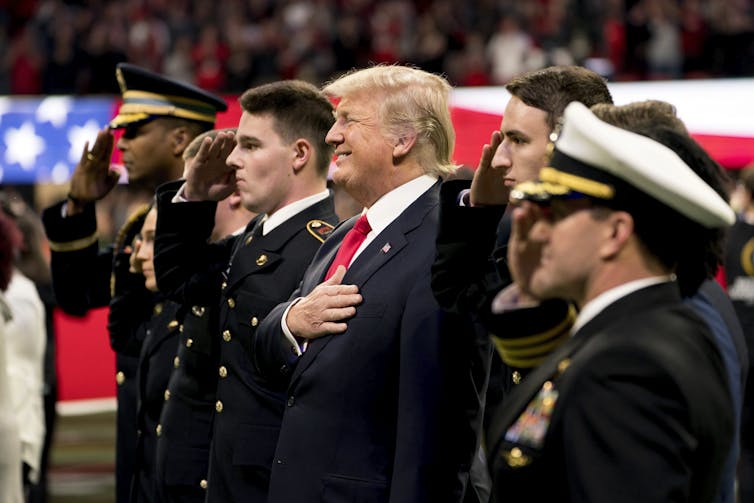
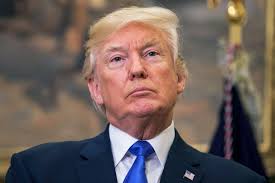
President Donald Trump stands on the field for the U.S. national anthem before the start of the NCAA National Championship game at Mercedes-Benz Stadium between Georgia and Alabama on Jan. 8 in Atlanta. (AP Photo/Andrew Harnik)

More than any other president, Trump has normalized the notion that the meaning of words no longer matters, nor do traditional sources of facts and evidence. In doing so, he has undermined the relationship between engaged citizenship and the truth, and has relegated matters of debate and critical assessment to a spectacle of bombast, threats, intimidation and sheer fakery.

This language of fascism does more than normalize falsehoods and ignorance. It also promotes a larger culture of short-term attention spans, immediacy and sensationalism. At the same time, it makes fear and anxiety the normalized currency of exchange and communication.

In a throwback to the language of fascism, Trump has repeatedly positioned himself as the only one who can save the masses — reproducing the tired script of the model of the saviour endemic to authoritarianism.

There is more at work here than an oversized ego. Trump’s authoritarianism is also fuelled by braggadocio and misdirected rage as he undermines the bonds of solidarity, abolishes institutions meant to protect the vulnerable and launches a full-fledged assault on the environment.

Trump is also the master of manufactured illiteracy, and his obsessive tweeting and public relations machine aggressively engages in the theatre of self-promotion and distractions. Both of these are designed to whitewash any version of a history that might expose the close alignment between his own language and policies and the dark elements of a fascist past.

Trump also revels in an unchecked mode of self-congratulation bolstered by a limited vocabulary filled with words like “historic,” “best,” “the greatest,” “tremendous” and “beautiful.”

Those exaggerations suggest more than hyperbole or the self-indulgent use of language. When he claims he “knows more about ISIS than the generals,” “knows more about renewables than any human being on Earth” or that nobody knows the U.S. system of government better than he does, he’s using the rhetoric of fascism.

As the aforementioned historian Richard J. Evans writes in The Third Reich in Power:

“The German language became a language of superlatives, so that everything the regime did became the best and the greatest, its achievements unprecedented, unique, historic and incomparable …. The language used about Hitler … was shot through and through with religious metaphors; people ‘believed in him,’ he was the redeemer, the savior, the instrument of Providence, his spirit lived in and through the German nation…. Nazi institutions domesticated themselves [through the use of a language] that became an unthinking part of everyday life.”

Sound familiar?

Under the Trump regime, memories inconvenient to his authoritarianism are now demolished in the domesticated language of superlatives so the future can be shaped to become indifferent to the crimes of the past.

Trump’s endless daily tweets, his recklessness, his adolescent disdain for a measured response, his unfaltering anti-intellectualism and his utter ignorance of history work in the United States. Why? Because they not only cater to what historian Brian Klaas refers to as “the tens of millions of Americans who have authoritarian or fascist leanings,” they also enable what he calls Trump’s attempt at “mainstreaming fascism.”

The language of fascism revels in forms of theatre that mobilize fear, hatred and violence. Author Sasha Abramsky is on target in claiming that Trump’s words amount to more than empty slogans.

Instead, his language comes “with consequences, and they legitimize bigotries and hatreds long harbored by many but, for the most part, kept under wraps by the broader society.”

Surely, the increase in hate crimes during Trump’s first year of his presidency testifies to the truth of Abramsky’s argument.

Fighting Trump’s fascist language

The history of fascism teaches us that language operates in the service of violence, desperation and troubling landscapes of hatred, and carries the potential for inhabiting the darkest moments of history.

It erodes our humanity, and makes too many people numb and silent in the face of ideologies and practices that are hideous acts of ethical atrocity.

Trump’s language, like that of older fascist regimes, mutilates contemporary politics, empathy and serious moral and political criticism, and makes it more difficult to criticize dominant relations of power.

His fascistic language also fuels the rhetoric of war, toxic masculinity, white supremacy, anti-intellectualism and racism. But it’s not his alone.

It is the language of a nascent fascism that has been brewing in the United States for some time. It is a language that is comfortable viewing the world as a combat zone, a world that exists to be plundered and a view of those deemed different as a threat to be feared, if not eliminated.

A new language aimed at fighting Trump’s romance with fascism must make power visible, uncover the truth, contest falsehoods and create a formative and critical culture that can nurture and sustain collective resistance to the oppression that has overtaken the United States, and increasingly many other countries.

No form of oppression can be overlooked. And with that critical gaze must emerge a critical language, a new narrative and a different story about what a socialist democracy will look like in the United States.

Reclaiming language as a force for good

There is also a need to strengthen and expand the reach and power of established public spheres, such as higher education and the critical media, as sites of critical learning.

We must encourage artists, intellectuals, academics and other cultural workers to talk, educate, make oppression visible and challenge the common-sense vocabulary of casino capitalism, white supremacy and fascism.

Language is not simply an instrument of fear, violence and intimidation; it is also a vehicle for critique, civic courage and resistance.

A critical language can guide us in our thinking about the relationship between older elements of fascism and how such practices are emerging in new forms.

Without a faith in intelligence, critical education and the power to resist, humanity will be powerless to challenge the threat that fascism and right-wing populism pose to the world.

Those of us willing to fight for a just political and economic society need to formulate a new language and fresh narratives about freedom, the power of collective struggle, empathy, solidarity and the promise of a real socialist democracy.

We would do well to heed the words of the great Nobel Prize-winning novelist, J.M. Coetzee, who states in a work of fiction that “there will come a day when you and I will need to be told the truth, the real truth ….no matter how hard it may be.”

Democracy, indeed, can only survive with a critically informed and engaged public attentive to a language in which truth, rather than lies, become the currency of citizenship.

Source:

https://theconversation.com/shithole-countries-trump-uses-the-rhetoric-of-dictators-89850

Comparte este contenido:

7 Crucial education technology trends for the last 5 years.

By Richard D. Eddington/irishtechnews.ie/06-05-2018

The world is changing, and education must change with it. Many schools are aware of this fact and are trying to rebuild their activities in accordance with the opportunities offered by new technologies. Some universities borrow ideas from the business world, referring to the experience of successful start-ups in order to launch some new processes for themselves. Gradually, a paper routine leaves the schools, giving way to electronic means of working with data.

  1. School as a Service

School as a service begins with the commitment of the state to each student as a digital student. When states reduce historical barriers, the transition to personal digital learning will mean a school service: access to quality courses and teachers from several providers.

Education SaaS changes the basic assumptions – it does not need to associate time and place. This does not mean that everything will become virtual – in the foreseeable future, at least 90 percent of families will benefit from local schools, but this requires new thinking, new staffing models, new budgeting strategies and new ways of communicating with students and families.

  1. Mobile Learning

Mobile learning, also known as m-learning, is an educational system. Using portable computing devices (such as iPads, laptops, tablets, PDAs, and smartphones), wireless networks provide mobility and mobile training, which allows to teach and learn to expand beyond the traditional audience. Within the class, mobile training provides instructors and students with increased flexibility and new possibilities for interaction.

  1. Gamification in Education

Gemification in education is sometimes described using other terms: game thinking, the principles of the game for learning, the design of motivation, the design of interaction, etc. This differs from game-based learning in that it doesn`t imply that students themselves play commercial video games. It works on the assumption that the kind of interaction that players encounter with games can be transformed into an educational context in order to facilitate learning and influence on students’ behavior. Because gamers voluntarily spend a lot of time for gaming, researchers and teachers are exploring ways to use the power of video games to motivate and apply it in the classroom.

  1. Big Data

“Big Data” is a term that we are used to hearing in business, but it is also an important tool for education. Learning World explores this technological fashion word and talks with an expert on this topic: Kenneth Cuciere, co-author of “Learning with Big Data.”

Cukier sees “Big Data” as an opportunity to adapt learning to the individual needs of students and the learning process. Instead of avoiding this, teachers must accept changes that bring in large data, and use them to their advantage.

One example of the large data that occurs in education is the “Course Signals”, which allow professors to give feedback if there are early signs that students do not exercise or do not use class time.

  1. Blended and Flipped Learning

Blended learning is a pedagogical method in which the learner learns, at least in part, by providing content and training through digital and online media using the student controls in time or place. This allows the student to create an individual and integrated approach to learning. Blended training is combined with a flipped class approach to learning.

The Flipped class is a pedagogical model in which the typical elements of the lecture and the homework of the course change to the opposite. Students watch short video lectures or other multimedia materials asynchronously before a class session. Then, class time is devoted to active learning, such as discussions, design or problem assignments, or laboratory exercises. This learning model allows teachers to guide the teaching of students by answering students’ questions and helping them apply the concepts of the course during classes.

  1. Massive Online Open Courses

Nowadays MOOCs may not be so widespread as when they first attracted attention, and people no longer think that this is the answer to the problems of educational inequality. Nevertheless, MOOCs still deserve close attention, as it develops as an important part of education, and it offers its students many advantages if used well. Moreover, The New York Times called 2013 the “Year of the MOOC” because it attracted a lot of attention and money.

  1. Personalized Learning

Personalized learning is a sort of adaptive learning that considers working with computers to make decisions, based on previous levels of learner understanding when interacting with a computer program. Learning analytics and artificial intelligence are the essence of individual learning because without them it would be impossible to easily adapt the instruction on the basis of immediate answers.

Personalized learning can seem like a dream in many schools, but it’s already happening more than we can imagine – and often behind the back of the teacher.

The universities realized that technology can be a catalyst for improving the learning process. If many people enjoy using gadgets, why not to make them an education tool?

*Fuente: https://irishtechnews.ie/7-crucial-education-technology-trends-for-the-last-5-years/

Comparte este contenido:

The Difference Between Roads And Education: The Human Mind

By: forbes.com/Neal McCluskey / 06-06-2018

Should people be able to take government funding for their own private parks, roads or police? It’s a rhetorical question frequently used against policies such as vouchers that enable people to choose private schools rather than have their tax dollars go only to public institutions. The answer opponents are typically looking for is, “No, they should not. Like all those things, public education is a public good.”

It is a weak analogy, but much worse, it dangerously downplays what education is: nothing less than the shaping of human minds.

On a technical note, as my colleague Corey DeAngelis recently explained, education does not meet the economic definition of a public good; something “nonexcludable” and “nonrivalrous in consumption.” Basically, a good that non-payers cannot be prevented from using, and that one person using does not prevent others from enjoying it equally. An example is a radio broadcast; anyone with a receiver can listen, and one person listening doesn’t prevent others from doing the same.

That said, what wielders of this rhetorical club are probably trying to hammer home is not that education is a public good as economists see it, but that to work it needs to be provided and controlled by government.

If the intent of establishing parks is to ensure that natural space is preserved for all to use, regardless of ability to pay, it seems reasonable that government must control park lands. To build an interstate, there will be lots of privately-held property on the best potential routes. Lest road creators be gouged, or highways forced to slalom along inefficiently circuitous paths, the power of eminent domain seems important. And the job of government is to keep people from forcibly imposing on each other—e.g., assault, theft—so giving government the power to stop the use of force and punish transgressors appears logical.

But education is fundamentally different from these things. For starters, there is no logical or demonstrated need for government to provide schools. Schools do not require great geographic space, education has been provided privately at significant scale, and there arenumerous private schools operating today despite users having to pay once for public schools, and a second time for private. And as Nobel laureate Milton Friedman observed, government can ensure people can access education without providing the schools.

Far more important, education is inherently about the shaping of minds, and that puts people’s intimately held values and identities—things that make them who they are—in the balance. Requiring all, diverse people to fund a single system of government schools thus forces conflict and, even worse, threatens to implant standardized thoughts in all people. Parks and roads aren’t close to comparable threats to basic freedom and diversity.

The reality of treating education like interstates has often been painful. In the beginning of the “common schooling” era, many Protestants objected to public schooling “father” Horace Mann’s essentially Unitarian vision of what religion the schools should inculcate. The arrival of millions of Roman Catholics led to decades of conflict—including the 1844 Philadelphia Bible Riots that killed and injured scores of people—over the Protestant character of many public schools. Numerous Catholics ultimately felt they had no choice but to forsake their tax dollars and start their own schools, which by their peak in 1965 enrolled roughly 5.5 million children. Many African-Americans, after finally being allowed into the public schools, have had to fight to have meaningful power in the schools to which their children are assigned. And they are not alone.

Today, battles over people’s cultures, ethnic identities, and values are widespread and perpetual. The Cato Institute’s Public Schooling Battle Map, which I maintain, includes nearly 2,000 such conflicts, and with its content drawn mainly from major media reports, there are likely many conflicts missing.

Parks, roads, even policing, don’t come close to the intensely and fundamentally personal—fundamentallyhuman—purpose of education. To assert that letting taxpaying families choose their schools is akin to letting them build private thoroughfares or parks with public dollars at best trivializes education, at worst threatens basic freedom. Indeed, far from calling for government control, the nature of education cries out for letting all people choose.

*Fuente: https://www.forbes.com/sites/nealmccluskey/2018/06/05/the-difference-between-roads-and-education-the-human-mind/2/#3a478ef55fab

Comparte este contenido:

India: Indian govt may soon turn to private sector to boost higher education system

Asia/India/5.06.2018/By: Elton Gomes/ Fuente: qrius.com.

Higher education in India might receive a significant monetary boost as the government is planning to rope in private companies and high-net individuals (HNIs) to finance and promote higher education across the country. The ministry of human resource development has prepared a draft of the plan and will present it before the Union cabinet for consideration.

Two government officials have stated the plan will be implemented through the higher education funding agency (HEFA), a non-banking financial company, under the human resource ministry, as reported by Live Mint. According to Swarajya Mag, the plan is to raise Rs 1 lakh crore from the market, and spend it on funds for ‘infrastructure requirements of educational institutions.’

Roping in HNIs and private companies might lead to improvements in higher education in India, and government officials seemed optimistic. “Bringing in industries or industrialists or high net-worth individuals for HEFA equity will have three benefits. One, structured and clean private funding. Two, outside experience of managing higher education funding. And three, curb chances of manipulation at the institutional level,” a government official told Live Mint.

In February 2018, Union Finance Minister Arun Jaitley said that the education sector was a priority for the Indian government.

Why does this matter

In 2014, the Times of India reported that a mere 10% of students have access to higher education in the country. The article cited a report by a development economist Abusaleh Shariff, and mentioned that residents of Bihar, Uttar Pradesh, and West Bengal have the worst access to higher education.

A report in Live Mint details that lax quality and a lack of accountability and widespread innovation is what ails higher education in India. Indian higher education seems to be suffering from a two-fold problem of quality and quantity. The Indian government seems to think that privatising education is the only solution. However, along with private investment, the government also should look to invest more in education.

In 2016, China spent roughly $565 billion on education – more than 60% of which came from the government. In the same year, India spent approximately $4.5 billion on higher education, as per the Quint. India’s spending on education is much lower than that of other countries.

Mumbai’s apex varsity – the University of Mumbai – has been in shambles despite having a highly conducive environment for studies. Further weakening the reputation of the university is the incessant delays in results.

Perhaps some degree of privatisation is the only way out for better higher education in India. However, along with adequate funds, the government must ensure the funds are being allocated to improve the quality of teaching offered to Indian students, thereby, improving accountability of the system.

Fuente de la noticia: https://qrius.com/higher-education-in-india-to-get-boost-as-government-mulls-huge-investment-private-funding/

Comparte este contenido:

Jamaica: Education the missing ball in the competition for growth

Central America/Jamaica/05.06.2018/Source: www.jamaicaobserver.com

Jamaica’s education system has followed a rocky road from as far back as we can check our history. This is not to say that the road does not have its smooth spots, but it is only in minor sections that we can feel the satisfaction of a system at work which is successfully producing good results on a sustainable basis.

It may seem that this is an exaggeration. It is not. How else is it possible to describe an education system that produces some 75 per cent failures in its graduating class year after year? Worse than that, 38 per cent of the age cohort are not even allowed to sit the exams for graduation, being considered too weak academically to achieve even the most minimal results.

From another point of view, the education system is an enigma. Many of those who qualify from the secondary school system and go on to tertiary education have turned out to be outstanding scholars who have consistently contributed much to national development. Some have even achieved international acclaim, and the best of our education system can stand up to international ratings.

But judgement of society is not concerned about safe landings. It’s about crashes. The education system speaks volumes to the frustrations and failures which make it dysfunctional. Yet, despite these obstacles, the system is too crucial to be allowed to exist in a state of bewilderment.

Generally, I approach problems logically and there is much to be gained by viewing education in this way. Reading through the insightful analysis of the brain in the Pulitzer Prize-winning work Inside the Brain, by Ron Kotulak, nearly 15 years ago, gave me a whole new perception of the earliest years of life and the impact of early childhood education.

The brain is examined as an organ which begins as a blank slate, gathering and processing an awesome collection of information by stages of complexity which allow children to grow in knowledge progressively. Scientific findings indicate that the growth period of the brain ceases at around seven years of age, leaving the child to work essentially with the size and capacity achieved at that time for the rest of his/her life.

This sounds frightening, but it does not mean that learning stops at that time; it only means that the ability of the brain will be limited in the future to the capacity it has acquired in the first seven years of life and the process of learning will only be more difficult, but certainly not impossible.

This puts the spotlight on those first seven early years as being of prime concern. Early Childhood Education (ECE) must then be the priority. In fact, it sets the stage for success thereafter as the support base for further education — just as the first layer of a three-layer cake is fully dependent on the ability of the bottom layer to support the top two. A weak first layer will expose the top two to weaknesses, failures and possibly some collapse, as is the case in the education system.

To reposition the early stage of education would logically require much more funding. Over the years, Jamaica has spent far less on education than is the case for many other English-speaking countries (Caricom) of the region. This led me to focus my own parliamentary efforts on a call for the reform of early childhood education, to strengthen it as the base — to the extent that, in 1997, I devoted my presentation in the budget session entirely to that subject.

Unfortunately, the budget was presented by the Opposition at the Jamaica Pegasus hotel that year because of a dispute with the then Government. As a result, in the budget session of the next year I presented the same speech again, giving the subject matter double exposure but also to get it in the official parliamentary record for future reference.

I continued what I considered a mission to promote early childhood education for the remainder of my parliamentary years until I retired in 2005. But to realistically do so, I also had to call for increased financing for the system. With Government under-financing the education system by providing only some 10 to 12 per cent of the national budget (this was the figure up to a few years ago), compared to 15 per cent and more in many other Caricom countries, I called for an increase of one per cent per annum for five years, starting November 2004.

My resolution to Parliament to this effect, together with a number of other educational reforms, was accepted by both sides of the House. I am not aware if its financial target has been met. To me, the most important objective in creating a rational, functional education system is to create a well-funded early childhood layer capable of giving a good start.

But another consideration has now been added by me which is even more important, particularly since it requires no additional funds, nor does it require any considerable period of time to accomplish.

Sometimes, the greatest benefits can come from the simplest changes in seeking solutions to problems. The most critical problem facing education is illiteracy. It holds the key. For decades the education system has recognised that illiteracy is a deep-rooted fundamental problem. Without literacy, learning is impossible. Yet, faced with this undeniable truth the system has been crawling for generations to adjust to meet this awesome challenge.

The readiness test administered to grade 1 entrants to primary schools has repeatedly shown that only 25-30 per cent of entrants are ready to receive formal education at the entrance levels. This was precisely the case half-a-century ago when the secondary school system was opened to secondary schools on a broad basis. Five years after that, Edwin Allen, minister of education, had to devise a unique way to give primary school graduates a secondary education by changing the admission policy.

It was decided that 70 per cent of all entrance places to secondary schools should be reserved for primary school students. This could have the most far-reaching effect on the future capacity of the country to grow and prosper. However, it was discovered that at 12 years old these new students, as in the case of entry to primary schools at six years, could not cope with the educational requirements. Indeed, many were barely literate.

That was decades ago yet the problem remains until today, with the majority of primary school graduates being low achievers. This should not be surprising as 60 per cent in the grade 4 National Literacy Test for 10-year-old students have repeatedly demonstrated various weaknesses in coping with reading and writing at this advanced stage, although this low figure is showing slight improvement now, thus leaving them unable to deal with secondary education. This would not have been the case had this percentage of students been literate.

This is a new road for education, one that challenges us to think outside of the box. For centuries we have travelled the same failed course; time now to travel a different path, to try something new.

The day has come at last. I was thinking that it may never happen after so many years of speaking and writing about the critical need for Government to take over the basic school system so that it could handle the transformation of these schools which have been neglected for so long. Recently, the Minister of Education Ruel Reid announced that Prime Minister Andrew Holness has agreed to that proposal. This is an excellent move.

Generally, many persons think of these schools for little children from three to five years old as “play-play” schools, where their little ones can be parked in the day under the care and protection of teachers.

But parents are not aware that this is a vital stage in the education system. Children who are not educated at this stage can fail miserably, in later years of schooling, to be sufficiently educated to get passing grades when they leave secondary school without graduating.

The reason for lack of appreciation is as a result of little understanding of the role of early childhood education and what it can achieve when it is taken seriously. The seriousness of this phase of ECE is that it is the foundation of all education, because it is the beginning of the education of the child. If you are building a house you have to start with the floor, not the rooms, nor the roof. ECE provides that foundation.

Failure to put this opportunity to use by enrolment and regular attendance is a trap many people fall into, out of ignorance or the lack of care. The result is, children who go to primary school eventually at six years old have to keep up with other children who received ECE for their first step in education and have become acquainted with the early stages of reading, writing, numeracy, social and cultural activities, among other areas of learning.

In the first grade of primary school, who do you think the teacher is going to focus on? The children who have participated in the ECE progamme who can follow what is being taught in grade 1 to prepare for grade 2, or the ones who lack the education which should have been received as the first step of the ECE? The teacher is naturally going to focus on the children who are better able to enter grade 2.

The children knowing too little about what is going on because of knowledge deficiency are naturally left behind. And so it continues in each grade thereafter as the gap widens, focusing on those who can learn while leaving those who cannot further behind. Each grade will suffer in the same way, producing students who have learned and those who have not.

This stream flows right through the system until at graduation the ratio is still, more or less, the same: 30 per cent who have benefited from early schooling and can graduate and the seventy per cent who have not and cannot [graduate]. That is what we have to build a nation — a minority who are skilled and find employment or become gainfully self-employed, and a sizeable majority who have no skills and who, even if they find some hustling or unskilled work, will not be able to even keep themselves. This will continue to be our future if significant improvements are not made.

There is still one more step in this critical pathway to failure when those who fail cannot, as adults, pay water rates, electricity rates, taxes and other such basics of life. The costs of these have to be carried by the minority who are skilled by training. Prosperity for the nation won’t come until far more students go through comprehensive schooling and training. The ratio then could be reversed to 30 per cent failure and 70 per cent passes. This would produce more of each category of skills. Then we can build a nation.

To this major undertaking must be added properly trained teachers of which the minister says there is now one per school. Completing this programme will provide the necessary opportunities for the development of real prosperity.

What are the steps to accomplish this?

• Special financing would be needed. I have already proposed that the National Housing Trust (NHT) needs more educated adults in the society to be able to deal with more mortgage financing, as it has admitted, to increase the housing stock and provide more homes. The NHT has a surplus of some $20 billion a year. It can spare $2-$3 billion per year and still increase its surplus annually.

• Increased teaching staff. This could be programmed by arranging facilities by training in teachers’ colleges and in the HEART Trust/NTA over a number of years.

• Increase the sources for equipment for ECE schools. I started a programme which I called Programme for the Advancement of Early Childhood Education (PACE), which I proposed to use to get the Jamaican Diaspora involved by asking groups with enough involvement in the community affairs of Jamaica to undertake to obtain equipment — new or used — overseas for the ECE schools. This is a project which would be able to fit in with their own interests since on a number of occasions the Diaspora has shipped to schools in Jamaica, furniture and equipment obtained from replacement in schools in their areas abroad.

In my visit to Toronto in 1988 to start the programme, I found a number of Jamaicans who were interested and were willing to serve in such an organisation I called PACE of Canada. This group has worked out very well for the past 30 years, with shipments arriving regularly. I had hoped to establish many more PACE units in the USA, Canada, and Britain but the Government was changed in 1989 and nothing further happened.

We are thankfully on the way now with one of the most important projects for building a prosperous nation in which all could learn to earn, and earn to learn.

With the changes in the early childhood education system, we are on the way to helping those who are caught in the deficiencies they now face to find a way out. As I have often said in a quote which I coined: “There is no country that is uneducated that is rich and no country that is educated that is poor.”

The time has come to take a giant step into the future. Time to move now.

Source of the news: http://www.jamaicaobserver.com/news/education-the-missing-ball-in-the-competition-for-growth_134780?profile=1096

Comparte este contenido:
Page 93 of 144
1 91 92 93 94 95 144