Page 87 of 144
1 85 86 87 88 89 144

Ireland: Government accused of misleading parents over schools’ success

Europe/Ireland/03.07.18/Source: www.theguardian.com.

Former DfE statistician says often-cited boast of progress relies on ‘flawed’ figures

A former statistician at the Department for Education (DfE) has accused the government of misleading parents over school improvement by using a “flawed” figure to claim progress.

Jon Andrews, who worked in the department for 13 years, said the government’s favourite claim that “1.9 million more children are in good or outstanding schools than there were in 2010” misrepresents the level of improvement in school standards.

The statistic is used habitually by the government as a way of illustrating the success of the Conservatives’ education policies since they came to power in 2010. It is documented at least 40 times in Hansard – used by two prime ministers, four secretaries of state and numerous ministers – and is cited repeatedly by the DfE press office.

“It is easy to see why it is used,” said Andrews. “It’s snappy, it’s easy for non-specialists to understand, it’s factually accurate and, the ultimate for lines to take, it’s an impressively big number.

“The problem is that it fails an important test of any statistic – it does not show the user what the producer believes it shows.

“In this case, it does not adequately demonstrate that standards in schools have improved since 2010, at least not to the extent that a quarter of all pupils are in significantly better schools because of any policy intervention.”

Andrews, writing in an EPI research paper, said one of the problems with the statistic is it does not reflect the significant growth in pupil numbers of 560,000 between 2010 and 2017.

It also fails to take into account the large numbers of schools not inspected by Ofsted for many years – 124,000 pupils are in schools that have not been inspected for 10 years – and the possible impact of a new Ofsted grading system, he said.

When asked for a response, the DfE said: “The facts are clear – the vast majority of pupils are in good or outstanding schools across the country, 1.9 million more than in 2010, and an increase from 66% to 86% over that time.

“Academic standards continue to rise, with more pupils reaching the expected standard in maths at the end of primary school and 154,000 more six-year-olds on track to become fluent readers since the phonics check was introduced in 2012.”

Source of the notice: https://www.theguardian.com/education/2018/jul/02/government-accused-of-misleading-parents-over-schools-success

Comparte este contenido:

Kuwait: Interior, Education ministries coordinate to fight drugs

Asia/Kuwait/03.07.18/Source: news.kuwaittimes.net.

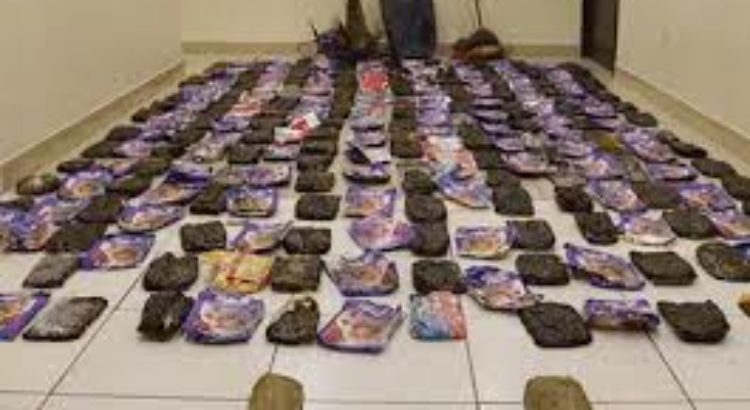
Officials from the Drug Control General Department (DCGD) of the Interior Ministry and the Education Ministry’s Educational Development and Activities Department held a meeting yesterday to discuss creating new mechanisms of cooperation in the field of drugs fighting and prevention. The two sides agreed to launch a plan to activate the role of schools’ principals in this regard, as well as the roles of the social and psychiatric services department at the education ministry.

The meeting was attended by the Education Ministry’s Assistant Undersecretary for Educational Development Faisal Maqseed, DCGD Director General Brig Bader Al-Ghadouri, Acting Director of the Interior Ministry’s Relations and Security Information Brig Tawheed Al-Kandary and other officials.

Source of the notice: http://news.kuwaittimes.net/website/interior-education-ministries-coordinate-to-fight-drugs/

Comparte este contenido:

Schools don’t need chaplains, they need qualified counsellors

By David Zyngier

Students need support, but religious commitment does not equate to professional counselling

ince Trump’s election in the US new legislative measures aim to impose hardline Christian values across US society as part of Project Blitz. The Congressional Prayer Caucus Foundation (CPCF), which claims more than 600 politicians as members across state legislatures, is using the banner of “religious freedom” to impose Christianity on American public, political and cultural life.

Sound familiar? The In Australia, the Human Rights Commission had been asked to investigate the National School Chaplaincy Programme (NSCP) earlier this year, but declined on the grounds Philip Ruddock was already reviewing the country’s religious freedoms for the government.

While the NSCP is formally not religion-specific, 99% of chaplains are Christian while only 52% of Australians identified as Christian in the 2016 census.

Who runs the chaplaincy programs? How are they selected?

In 2014, the Abbott government removed the provision to fund secular student wellbeing officers introduced by the previous Labor government, meaning all chaplains had to be affiliated with a religion. Following the invalidation of NSCP by the high court in June 2014, the government redesigned NSCP, with funding now being delivered via states and territories rather than directly to schools

In 2018, there were 3,288 chaplains employed under NSCP in public and private schools so far costing the taxpayer almost $1b. Chaplains are sourced by and from various Christian church groups. These all have a Christian mission. Scripture Union Queensland, for instance, the largest provider of school chaplains in Australia, proclaims that “Our MISSION is to bring God’s love, hope and good news to children and young people”.

Critics of the NSCP argue that chaplains are seriously under-qualified to deal with vulnerable young people, that it is not appropriate to have a religious worker in a public school, and that the money spent on the programme is better needed elsewhere, such as to help children with disabilities.

The Australian Psychological Society has repeatedly criticised the NSCP. The director of the Black Dog Institute has expressed concern at the funding of chaplaincy over programmes backed by scientific evidence. Associate professor Andrea Reupert, director of Monash University’s mental health in schools’ project, described a chaplain’s comments to a student suffering from an eating disorder that she was “hungering for the word of the Lord” as inappropriate and appalling. Even the vice chancellor of the School of Divinity questions its propriety.

What are chaplains not meant to do?

They may not conduct religious services or ceremonies or lead students or staff in religious observances or deliver special religious instruction. There is considerable evidence that at least some chaplains are in breach of this directive.

Parents must give their prior consent to the provision of chaplaincy services to their child. There is much anecdotal evidence to suggest that this is often not the case.

What are the outcomes of the NSCP?

School chaplains or professional counsellors: If schools only had a choice

89% of school chaplains are employed in lower SES state schools. These under-resourced schools are glad to have any extra assistance. The websitesof the various state education departments are quite clear about their duties. Schools engage chaplains to support the educational, social and emotional wellbeing of students. According to a review by the National School Chaplaincy Association the issues that chaplains were confronted with more frequently included “behaviour management issues”, “peer relationships and loneliness”, “student-family relationship issues” and “grief and loss”. These are undoubtedly serious issues that students require help with. The question is: Should it be chaplains providing that help?

Your child has appendicitis. If given a choice between an unqualified but very empathetic and dedicated first-aider, and a fully qualified doctor, who would you choose to operate on your child?

As Professor Dennis Altman wrote, “our secular society is being eroded – one school child at a time”. We should either remake school chaplaincy as a proper welfare program or scrap it.

Source of the article: https://www.theguardian.com/commentisfree/2018/jun/21/chaplains-or-counsellors-schools-should-have-a-choice

Comparte este contenido:

United States: ‘Vilified too long’: Teachers’ unions fight back after supreme court ruling

North America/United States/03.07.18/Source: www.theguardian.com.

In Pennsylvania, organizers go door-to-door to make a personal case for educators as a court decision threatens union funding

Gunshots ring out from the nearby hunting range across the railroad tracks in Westmoreland City, Pennsylvania, but Jason Davis is not easily deterred.

“You never know what’s going to happen when you knock on someone’s door,” says Davis as we get out of his car to start walking the hills of this blue-collar, Trump-supporting community in the foothills of the mountains of south-western Pennsylvania.

Davis is going door-to-door to rally support for a teacher’s union after a historic supreme court decision – Janus vs AFSCME – that threatens its funding and that of all other US public sector unions.

Following last Wednesday’s ruling, non-union members will no longer have to pay “fair share” fees to be represented by unions in collective bargaining negotiations. The move could cost unions millions and lead some union members to make the decision to stop paying their dues.

For Davis, this is vital work. Over the past 15 years, the Republican-leaning school district where Davis teaches has seen the number of teachers reduced through attrition and layoffs from 320 to 270 today. He sees unions as the best way to fight back against those cuts.

While anti-union organizations have launched a broad effort to get public sector union members to stop paying dues, unions like Davis’s are going into high gear to not only retain their members, but to build on public support for teachers felt in the wake of this year’s teachers’ strikes.

McKinney had played in the band, which is nationally ranked. But after he graduated in 2012, the then governor, Republican Tom Corbett, cut more than $1bn from the state’s education funds, and the school started instituting fees for kids who wanted to play. Now, Norwin high school parents like Davis pay $620 a year for each of their kids to play in the band.

“The band was so important to me. It taught me discipline,” says McKinney as we stand on the front porch of his parent’s house.

Davis and McKinney begin to discuss how statewide funding cuts have devastated education and how the current Democratic governor, Tom Wolf, is fighting the narrowly Republican-controlled Pennsylvania state legislature to increase funding. Davis quickly wins over McKinney as a convert to the teachers’ union cause.

“Funding education is important. We gotta support our teachers,” says McKinney as we leave his doorstep.

Davis, who canvasses the area regularly, says that conversations force people who never think about education funding to consider why unionized teachers like himself are seeking more funding.

“I just reminded him of the greatest moments of his life,” says Davis. “Now, he is going to have a conversation with his parents about what we talked about and they are probably going to talk to two or three people, which means that I helped facilitate not one conversation, but multiple conversations about education.”

A few doors down, we encounter a woman wearing a shirt depicting Joe Paterno, the controversial hero and legendary Penn State football coach. She appears a little nervous to talk to Davis. She starts to complain about how local property taxes are too high and at the same time, the school seems to be letting staff go and the quality of teaching is going down.

Davis explains to her that local property taxes have gone up as state funding of education has gone down. Davis talks for a few brief minutes, but as the reception seems less warm than at the previous home, he doesn’t stick around.

Even though the conversation isn’t quite what Davis expected, he still sees it as a victory in the fight to humanize teachers’ unions.

“For too long, we have been vilified and the only way to stop that is to put a human face on it,” says Davis. “If we want to exist, we have to sell ourselves as unions about why are we valuable. This is intensive, but it does make a difference and it will help.”

Davis and his colleagues have their work cut out for them. The Janus case was backed by some of the richest rightwing activists in the US, including the Koch brothers. As the Guardian revealed earlier this year, those groups have been planning an all-out assault on public sector unions following the Janus decision. They too will be going door-to-door and buying ads to encourage union members to rip up their membership cards and drop out now that they no longer have to pay “fair share” fees.

“In the wake of Janus, that one-on-one direct form of communication is extremely important,” says Annie Briscoe, a union organizer with the Pennsylvania State Education Association. “The ability to connect with one another is something that unions have unfortunately struggled with in recent decades. So, from an organizing standpoint, it’s very much back to basics with the canvassing effort to talk to members of the community about the nuts and bolts of public schools and why education funding works.”

Source of the notice: https://www.theguardian.com/us-news/2018/jul/01/teachers-unions-supreme-court-janus-ruling

Comparte este contenido:

Putin Calls for a ‘Revival’ of Islamic Education in Russia

Europa/Rusia/03.07.18/Source: themoscowtimes.com.

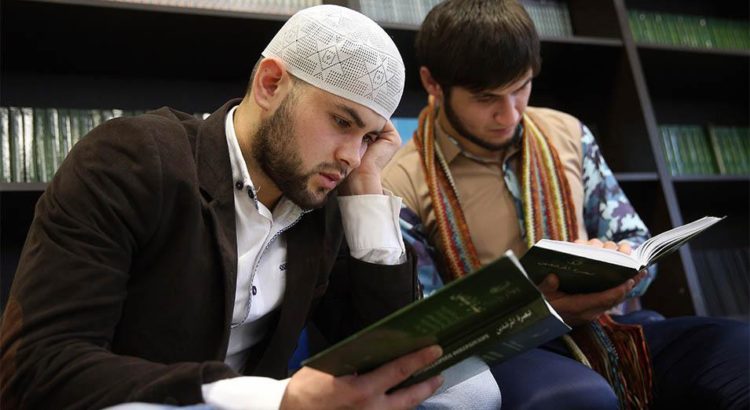
President Vladimir Putin has promised government backing for Islamic religious education in Russia, in a bid to stave extremism and cater to Russia’s large Muslim community.

Up to 20 million Muslims make up Russia’s second-largest religious minority. Thousands of young radicalized Russians have travelled to Iraq and Syria to join jihadist fighters in recent years, making the country the largest source of foreign fighters in the war-torn region.

At a meeting with Islamic religious figures on Wednesday, Russia’s president pledged “undoubted support” for a «revival of Islamic education in Russia,» the state-run TASS news agency reported.

“Traditional Islam is an integral part of the Russian cultural code, and the Muslim Ummah [community], without any doubt, is a very important component of the multinational Russian people,” he said.

During his meeting at the newly inaugurated Islamic academy in Kazan, Putin emphasized the important role of Russia’s Muslim clergy in countering religious extremism.

“These ideas, even destructive ideas, can only be fought with the help of other ideas,” TASS cited Putin as saying.

The president vowed to support Islamic religious education through partnerships with major state-backed universities and research centers.

Source of the notice: https://themoscowtimes.com/news/putin-calls-for-revival-of-islamic-education-in-russia-60276

Comparte este contenido:

‘The importance of great teaching on children’s success’

By Peter Tait

We seem to be no closer to establishing what the most important factors are that make children succeed, apart from brilliant teachers, writes Peter Tai

As a society, we spend an inordinate amount of time, resources and money looking at how to improve the quality of education in our schools.

The questions we ask ourselves are always the same. How do we improve the quality of teaching and learning? (and its corollary, our examination results?) How do we make our children more motivated and competitive? And how do we get children to value and ‘own’ their education?

And yet, after all the talk of new methodologies and curricula; after new and different methods of teaching and models of assessment; after all the time and money spent on technology; after the personalisation of education and differentiated teaching; after learning styles and habits of mind; after mindfulness and Every Child Matters; after the debates about continuous and formative assessment; and after all the constant tinkering, bureaucratic and legislative, with their greater focus on data and compliance, we seem to be no closer to establishing what are the most important factors that make children succeed.

The only consistent factor we can identify is the role of the teacher, whose abilities and skillset, knowledge and enthusiasm are crucial in determining the success or otherwise, of the children they teach.

Teaching, after all, is about engagement, about getting children to listen and switch on. The best investment any government can make is to get the most effective, the most talented, the best teachers they can in front of the children.

By best, I don’t mean those who are the best qualified, but those teachers who know how to enthuse and connect with children regardless of their own levels of education. I mean those teachers who can properly engage with children and teach them by inspiring and challenging them.

Sometimes the pathway dictates that the process comes down to hard work rather than inspiration, but teaching is all about the relationship between teacher and pupil more than anything else.

Children will work harder for a teacher they respect, even if they demand more and insist on discipline and high standards. One can only speculate what would have been the impact if all the money spent on technology had gone instead into lowering the teacher-pupil ratio and improving the identification, selection and training of the most effective and passionate teachers. Where would we be now? In a somewhat better place, I would suggest.

I look back at outstanding teachers from my own teaching career and remember, in particular, one woman, whose ability with children was legendary. She was strict, uncompromising, but children wanted her approbation.

One particular year she took on a particularly difficult class of Year 4 children, two of whom had considerable physical and intellectual difficulties and could not even print their names and yet finished the year with impressive cursive writing – achieved through repetition, practice, discipline and unwavering high expectations.

She made such a difference to their young lives and all who were fortunate enough to have her as a teacher.

Good teachers don’t need the security of extra resources and technology that, evidence suggests, can detract rather than add to the learning process.

The best teachers entered the profession to make a difference

The best teachers entered the profession to make a difference  Photo: Getty Images

While they may use resources to embellish their lessons, they will not allow the resources to become the lesson. The best teachers are always wanting to do and find out more about their own craft, pushing out the boundaries of their learning and teaching, which is why many exceptional teaches re-work or even discard their teaching notes on a regular basis and look for new topics, and ways, to teach.

This lesson came home to me when I was asked to introduce art history into the sixth form in a New Zealand school and finding – after the subject had been offered, and places filled – that my knowledge of the period (Italian Art, 1300 – 1650) was almost as deficient as were my resources.

That year, with a few old text books and slides, I learnt alongside the students and at the year’s end, we were the top performing department in the school with one student in the top 10 in national scholarships.

The next year, I went to Italy and soon had the best resourced art history department anywhere with videos and CD Roms, slides, a library of outstanding books of reproductions, computer programmes on every aspect of the course, but my students never did quite so well ever again.

I think they learned better, as I did, by having to think more, by having to eke out what they could from the meagre resources, by having to think and having a teacher learning alongside them. There was no hiding place for any of us.

Teachers need to keep learning and growing – it is not a profession for the cynical or indifferent. The best can be identified by their enthusiasm and interest in pedagogy. They are not characterised by their own high academic performance, but by a thirst for passing on the benefits of education.

They may be unorthodox, idiosyncratic, employing a variety of approaches to get children to want to learn and to question what they are being taught. They are typified by their passion, their non-negotiable standards, breadth of interests, high expectations, understanding of how children learn, empathy, an insistence on greater self-discipline and by their relationship with their pupils.

Interestingly, children know who the best teachers are, even if they try and avoid them in favour of the more popular variety who may make their lives easy. They often criticise them to their parents for being too demanding and only realise later the opportunity they have squandered.

These are the teachers who entered the profession in order to make a difference. And they do.


Source of the article: https://www.telegraph.co.uk/education/educationopinion/12201014/The-importance-of-great-teaching-on-childrens-success.html

Comparte este contenido:

What Asian schools can teach the rest of us

By Andreas Schleicher

The latest Program for International Student Assessment (PISA) focused on science, a discipline that plays an increasing role in our economic and social lives.

From taking a painkiller to determining what is a «balanced» meal, from drinking pasteurized milk to deciding whether or not to buy a hybrid car, science is pervasive.

And science is not just test tubes and the periodic table; it is the basis of nearly every tool we use — from a simple can opener to the most advanced space explorer.
In 2012, Shanghai came out as the top performer among all 65 education systems that were compared in mathematics, reading and science.
Some wondered to what extent Shanghai’s success was exceptional in China. In 2015, PISA provides data from Beijing, Jiangsu, Guangdong and Shanghai.
These regions combined again show strong science performance, outperformed only by Singapore, Japan, Estonia, Taiwan (which appears in the report as Chinese Taipei), Finland and Macau.
In fact, 13% of the top-performing students in the 68 countries and economies with comparable data in PISA 2015 come from these four provinces in mainland China alone.
So the world will continue to look to China as a global player in education.
education.

Social mobility key

Similarly, while the American dream of social mobility seems nothing more than that — a dream — for this generation of American students, it is emerging as a new reality in much of East Asia.
Between 40% and 80% of the quarter of the most disadvantaged students in the four provinces of mainland China, Hong Kong, Japan, Korea, Macau, Singapore, Taiwan and Vietnam perform as well as the 25% top-performing students around the world.
In the Western world, only Estonia and Finland match that level of student resilience against social disadvantage.
But there are also areas where China can look to other countries for inspiration.
Content knowledge in science, where China excels, is important. But it is equally important to be able to «think like a scientist,» and here Chinese students perform less well on the PISA test than when tested on content.
Source of the article: https://edition.cnn.com/2016/12/06/opinions/education-pisa-rankings-china/index.html
Comparte este contenido:
Page 87 of 144
1 85 86 87 88 89 144