Page 86 of 144
1 84 85 86 87 88 144

Malasya: New international schools opens

Asia/Malaysia/09.07.18/Source: www.thestar.com.my.

WITH over 127 years of experience in the education field, Wesley Methodist School has opened a new campus in Penang.

“We congratulate the Council of Education of the Methodist Church in Malaysia on their choice of venue,” said Chief Minister Chow Kon Yeow at the opening ceremony of Wesley Methodist School Penang (International) at 1, Lebuh Sungai Pinang 1.

“From the old days, the Methodists have shared their rich tradition of holistic and quality education to Malaysian of all ethnicities.

“We hope this school will bring forth a vibrant and quality student body, life and culture”, he said on Friday.

Wesley Methodist School Penang (International) chairman Datuk Chin Lean Keat said the school aimed to offer affordable education to working families who are seeking private education for better teaching and learning.

There was also a signing ceremony between the school and Telekom Malaysia Berhad for Digital School Management System and Solutions.

Also present were Council of Education of the Methodist Church in Malaysia chairman Bishop Rev Dr Ong Hwai Teik and Wesley Methodist School Penang (International) Building Committee Task Force co-chairman Datuk Jerry Chan Fook Sing.

Source of the notice: https://www.thestar.com.my/metro/metro-news/2018/07/09/new-international-school-opens-campus-aims-to-provide-affordable-private-education/

Comparte este contenido:

China: Pku prof suggests reviving Mao-era rural education camps

Asia/China/09.07.18/Source: www.atimes.com.

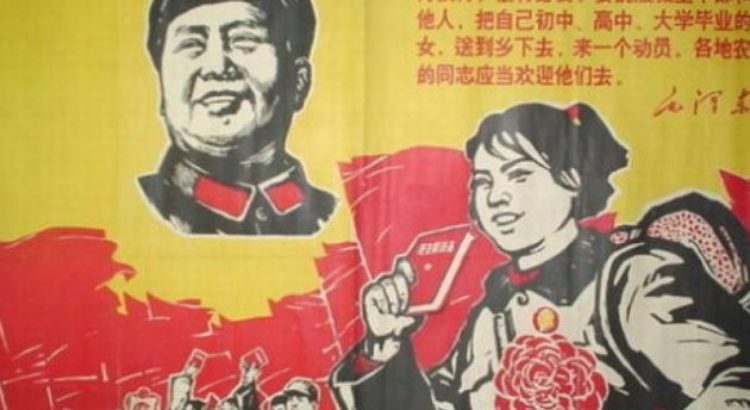
Peking University professor has stirred a commotion with his call to re-establish education centers in China’s vast rural areas, like the camps that existed from the 1960s until the Cultural Revolution intended for ideological remolding of educated urban youth, after Mao Zedong decreed that re-education by members of the proletariat, in particular peasants, was a must for college and high-school graduates.

Yu Hongjun, a professor of finance and microeconomics at PKU’s Guanghua School of Management, said in an opinion piece that “to solve college students’ employment issue, educated urban youth should be sent to the countryside or rural areas” for re-education.

Yu is also a deputy secretary of PKU’s party committee, the university’s top governing body.

He first broached the matter back in 2009, when he said that “starting the campaign in the new period” could not only alleviate employment pressure but also enable youngsters from cities, who were usually spoiled, to know about their country better.

0249_PHOTO

Yu Hongjun

Yu Hongjun, a professor of finance and microeconomics at PKU’s Guanghua School of Management, said in an opinion piece that “to solve college students’ employment issue, educated urban youth should be sent to the countryside or rural areas” for re-education.

Yu is also a deputy secretary of PKU’s party committee, the university’s top governing body.

He first broached the matter back in 2009, when he said that “starting the campaign in the new period” could not only alleviate employment pressure but also enable youngsters from cities, who were usually spoiled, to know about their country better.

Deng Xiaomang, a professor at the Wuhan-based Central China University of Science and Technology, is one of the few who have openly echoed Yu’s idea. “Young people experiencing rural life can enrich [their own lives]. I even consider it a ‘compulsory course,’ not to be carried out on a voluntary basis,” Deng said.

Under Mao, the tens of millions of postsecondary and high-school graduates mandated to spend their prime years plowing cornfields or pasturing cattle in China’s countryside were collectively known as zhiqing, or rusticated youth.

Current Communist Party General Secretary Xi Jinping was one of them, having spent seven years working the land in Liangjiahe, an impoverished village in the central province of Shaanxi, before he enrolled in Tsinghua University’s department of chemistry in 1975.

Many people cut their teeth in the harsh living environment and became experts in agriculture or rural studies, when the majority of rural China was still in penury. Yet the consensus even among today’s party cadres is that Mao’s whimsical edict led to a tremendous waste of the nation’s young talent. Graduates were deprived of tertiary education or employment opportunities in his “Up to the Mountains and Down to the Countryside” movement, an integral part of his ideals of the Cultural Revolution that wreaked havoc on China.

p14070263-1

The ordeal of their zhiqing years is still so vivid that it’s unsurprising to see the hefty backlash to Yu’s remarks, in particular from those who were told to go to the countryside in their teenage years or early 20s.

Even the Beijing-based nationalist tabloid Global Times noted in its report that reviving such camps would simply be “incompatible with the times.”

Not a few of these zhiqing stayed behind and spend the majority of their lives in villages and counties where they had been randomly assigned to go, even after Deng Xiaoping’s economic reforms ultimately rescinded Mao’s policy at the end of the 1970s.

Source of the notice: http://www.atimes.com/article/pku-prof-suggests-reviving-mao-era-rural-education-camps/

Comparte este contenido:

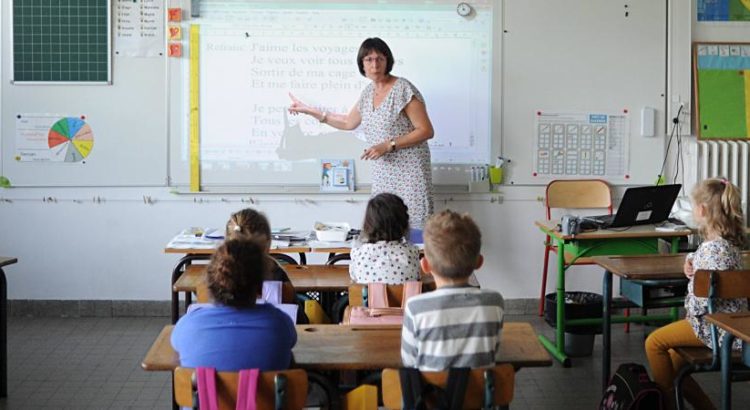
Éducation : la prime de 3 000 euros promise aux enseignants de REP+ sera finalement progressive

 Europa/Francia/09.07.18/Par Solenne Le Hen/Fuente: www.francetvinfo.fr.

Le candidat Macron avait promis une prime de 3 000 euros pour les enseignants des quartiers très défavorisés. À la rentrée, elle sera de 1 000 euros, avant une montée en charge progressive, mais le bonus ne sera pas forcément versé à tous.

Pendant la campagne de la présidentielle, Emmanuel Macron avait promis une prime de 3 000 euros pour les enseignants des quartiers très défavorisés. En septembre, elle sera de 1 000 euros, avant une montée en charge progressive. En 2019-2020, 2 000 euros pourront être versés, avant que la totalité de la somme promise ne soit distribuée en 2020-2021, mais selon des modalités encore imprécises.

Un bonus encore en réflexion

Cette prime concernera les 41 000 enseignants de maternelle, élémentaire et collège en REP+, mais aussi les chefs d’établissements et les agents administratifs. Dans ces établissements situés dans des quartiers défavorisés et où les classes de CP ont été dédoublées à la rentrée 2017, les enseignants touchaient déjà une indemnité de 2 300 euros par an. Avec 3 000 euros de plus, cela fait 450 euros par mois. Toutefois, il y a un mais…, explique Édouard Geffrey, directeur des ressources humaines du ministère de l’Éducation nationale. «Avec simplement cette petite question qui est ouverte, de savoir si un fragment de la prime doit, ou pas, être associé à une dimension collective.» Sous-entendu, une part de cette prime pourrait être variable. Elle serait accordée dans sa totalité à l’ensemble des enseignants d’une école ou d’un collège, seulement s’ils ont été performants par rapport au projet collectif de début d’année.

«C’est le grand flou»

Plusieurs syndicats s’interrogent. Comment seraient évalués les enseignants ? Á la réussite des élèves, aux compétences des enseignants ou encore à leur ancienneté dans l’école ? Pour Stéphane Crochet, du SE-Unsa, «la promesse du candidat Macron était très claire, c’était 3 000 euros pour les enseignants en éducation prioritaire. Là, on est dans le plus grand flou». La rémunération au mérite, le débat est tout juste ouvert par le ministère de l’Éducation. Les négociations avec les syndicats d’enseignants sur les modalités de cette prime devraient aboutir à l’automne.

Source des nouvelles: https://www.francetvinfo.fr/societe/education/refondation-de-l-ecole/education-la-prime-de-3000-euros-promise-aux-enseignants-de-rep-sera-finalement-progressive_2831283.html

Comparte este contenido:

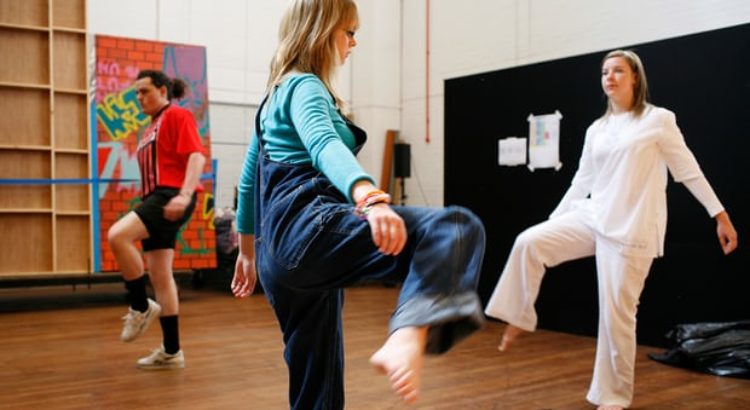
Dramatic changes in the place of creative arts in the curriculum

By The Guardian

A plea from members of the National Association for the Teaching of Drama, and a reminder that artists can often be persuaded to visit schools for nothin

Andria Zafirakou and her Artists in Schools project are inspiring and so very welcome (Teacher to use $1m prize to bring back the arts, 27 June). But we mustn’t lose sight of re-establishing the arts as an integral part of the curriculum. We, the undersigned, have been trying to draw attention to a creative arts discipline that is in danger of being lost.

In the second half of the 20th century a new educational practice developed. It used the art forms of drama and theatre to explore any area of the school curriculum and of life that a teacher and her class wished to address.

One of its leading exponents, Prof Gavin Bolton, wrote of its purpose: “to help young people to know the world, to refine and challenge the ways in which they see the world, to examine how they relate to the world and to test their own society’s values”.

At this year’s AGM it was agreed that NATD would go into a “hibernation” period, ensuring the financial and pedagogical future of its work until a more enlightened government is in power. In its country of origin, this child-centred, creative discipline is an endangered species. It must be protected.
John Airs Honorary life member, NATD, Prof David Davis Honorary life member, Liam Harris Chair, NATD, Maggie Hulson, Guy Williams Editors, NATD Journal, Theo Byer, Edward Bond BigBrum Theatre, Wasim Kurdi (Palestine), Luke Abbot, Cao Xi, Li Yinging (China), Yi-Man Au (Hong Kong), Brian Woolland, Chris Ball, Liz Ball, Tim Taylor, Mike Davies, Roger Wooster, Matthew Milburn, Carmel O’Sullivan, Elaine Ashbee, Margaret Higgins, Steve Nolan, Ian Yeoman, Danie Croft, Bernie Evans, Jane Airs, Jamie and Ali AirsKathleen Young, Douglas Young, Sam Yates, Liz Yates, Andrew Yates, Ann Bates, Jo Hanlon, Poppy King, Stephen King, Elspeth Williams, Andreas Williams, Helen Williams, Angharad Williams, Nick Timmins, Elaine Brown, Cate Murphy, Peter Cresswell, Roy Molyneux, Neil Hutchings, Helen Marks, Mark Dunne, Maureen Rahilly, Clare Hynes, Barry Lewin, Theresa Lewin, Eileen Kelly, Abhijith Subramanian, Dr Sujitha Subramanian, Sam Pryce, Martin McCauley, Martin Wood, Tim Hayden, Elizabeth Hayden, Angela Hayden, Michael Hayden, Len Naughalty, David Hookes, Hannah Hookes, Patricia Campbell, Mary M Reid, Heather Nunnen, Rebecca Smyth, Sue Ryrie, Nita Cresswell, Jenny Robb.

 Although I’m not in favour of the global teaching prize, because it demeans the dedication of the majority of teachers, I am impressed by Andria Zafirakou’s decision to set up a campaigning charity with the money to get more artists and arts organisations into British schools. But you don’t always need the support of a charity to get artists into schools. As a teacher I personally contacted classical musicians and cultural organisations, and found many of them willing – often for nothing or a modest fee – to play Liszt and Chopin to my sixth formers, or to celebrate the Charles Dickens bicentenary with year 9 – one even agreed to give a musical masterclass to our budding musicians.

And if you live in a place like London, teachers can organise visits to some of the best arts venues on earth, most of which offer affordable school rates, not to mention the outreach that many of them already offer.

Fuente del artículo: https://www.theguardian.com/education/2018/jul/01/dramatic-changes-in-the-place-of-creative-arts-in-the-curriculum

Comparte este contenido:

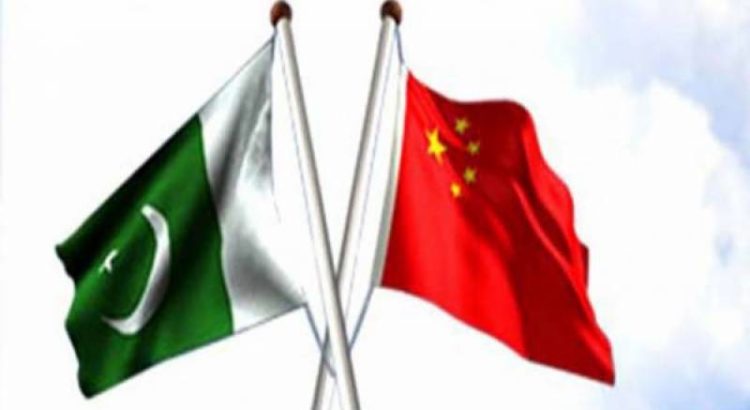
Pakistani students to be offered vocational training, education in China

Asia/Paakistan/09.07.18/Source: nation.com.pk.

The CPEC Cultural Communication Centre (CCC) under its ‘Talent Corridor’ scheme will offer scholarships to 1,000 Pakistani students for a one-year vocational training starting from November this year in China.

“The students to be selected from across the country will be provided free tuition and dormitory during the training at different universities and institutes in China,” Echo Lee, Director General, CPEC CCC and CEO of St Xianglin Management and Consulting Company while talking to APP here on Sunday.

The CPEC CCC is located in China’s Suzhou Vocational University, which has the world-class facilities and able faculty and its functions include Sino-Pak students exchange, academic research and seminars, vocational education, organising Chinese culture experience camp and teachers exchange, she added.

Giving further details about scholarship scheme, she said it is a three level programme and the students will be taught outer space and high-speed train technology during the first level while in the middle level, they will be imparted education of hydro-power and solar energy engineering.

The students selected for the lowest level will get training for the driving of different machines and types of equipment including excavation machines and caterpillar etc.

Ms Echo Lee said this year, 1,000 students will be offered 20 majors from a high level to the lower level classes as compared to 100 scholarships in six majors last year.

While hoping for a positive response and cooperation from the Pakistani side, she said at present, the details are being discussed with the concerned officials in the Pakistan ministry of planning, development and reforms as well as the embassy of Pakistan in Beijing.

She informed the CPEC CCC is jointly working along with the Chinese education ministry which is affiliated with a number of vocational universities and institutes.

To a question, she claimed that vocational education in China is the highest level in the world even in some areas it is better than Germany and Japan.

The CEO said this cross-border education exchange programme is step one of the overall project and added in the next phases, equipment and teachers will be sent for vocational training of Pakistani students in Pakistan.

The Chinese vocational education centres, as well as educational parks, would be set up in Pakistan in future, she added.

She said her organization intends to donate some training equipment and looking forward to a positive response from Pakistani institutions which are interested to receive it.

About the cooperation in the past, she said her organization has signed a MoU with Khyber Pakhtoonkhaw (KP) and Gilgit-Baltistan (GB) governments to set up cultural communication centres under the CPEC framework.

These centres will serve as the main forum in the field of Sino-Pak education and cultural communication, she added.


Source of the notice: https://nation.com.pk/01-Jul-2018/pakistani-students-to-be-offered-vocational-training-education-in-china

Comparte este contenido:

Our younger pupils also use ICT

By:Ana María Losada Antón/observatory.itesm.mx/04-07-2018

There is a wide variety of educational resources that we can explore in the classroom. The most important thing is to have a learning objective according to the cognitive development and maturity of the children, with a constructive use of new technologies.

Despite the growing effort by many teachers to incorporate didactic information technologies into the preschool classroom, their use has been limited to educational computer games and the projection of videos on smart boards.

However, there are other educational resources that we can also explore in the classroom, which do not require an exorbitant budget. For this, a clear learning objective according to the children’s cognitive development and maturity is absolutely necessary. Also, as teachers, we must be aware that we are educating our little digital natives in the appropriate and constructive use of new technologies.

Nowadays, there are multiple educational platforms and teacher blogs, such as Mi aula de infantil and La clase de Miren, as well as social network groups where we can find the good practices of teachers who are experienced in the use of educational technologies, such as tablets, mobile devices, smart boards and robots, and which serve as a model and an inspiration for our own performance. Moreover, these resources confirm that any content can be addressed using a technological tool with an educational objective.

“There are other educational resources that we can also explore in the classroom, which do not require an exorbitant budget.”

In my classroom I try to use a variety of technological tools as an additional resource, never as the only one, to accomplish the learning objectives in different areas. Augmented reality applications such as Quiver or Chromville, for example, help us to work on diverse subject-related aspects and interaction with the environment. Students are amazed to see how their own creations (a human body, a winter landscape or a world map they have just colored) come to life on paper. Apart from being motivating, they facilitate learning by offering a more real approach and providing students with a 3-D view of a globe or the human body.

QR codes are also very useful at this stage to disseminate all types of information related to daily life in the classroom. Some application examples are: indications on our ongoing project, new clues, secrets about our classroom pet, among others. A simple initiative is to include a code on a piece of cardboard for children to take home and, using a phone or tablet, they can reveal to their family the hidden recording of a poem recitation, a dance, a song or a photo album, thus disseminating their own creations and classwork. QR codes can also be allies for working on diverse curricular content. We can use them as word decoders in a reading and writing game, inserting next to the word or phrase a code that will show children an image of what they have read, so they can check for themselves whether or not they got it right.

Preschoolers can also have fun with basic programming and robotics tools in the classroom. As a starting point, using only their own body instead of technological resources, we can introduce students to the concept of programming through a motor skills game that allows them to discover how an action or an order generates a specific movement. In this way, we transform the children into little robots that move over a grid drawn on the floor, by following the instructions their classmates give them through cards with directional arrows. Then we can move on to more complex board games such as Robot Turtles (ages 4 and up) and finally use small robots such as Bee-Boot or Robot Mouse that can easily be found in stores and online.

“I try to use a variety of technological tools as an additional resource, never as the only one, to accomplish the learning objectives in different areas. ”

These tools encourage problem solving, spatial organization and logical thinking, while we work on content such as vocabulary, numbers, counting, or reading cartoons and images.

The experience of integrating this type of tools into the preschool classroom has allowed me to observe, on the one hand, their enormous didactic potential and, on the other, that children feel incredibly comfortable and confident in this area, but with the supervision of the teacher.

Mobile devices form part of our little pupils’ daily lives and are, in many cases, readily available to them. Even though they appear to have mastered them technically, good technical management is not indicative of proper, constructive and responsible use. Our duty is precisely to teach and impress upon them their proper use from an early age, bearing in mind that these devices will be around throughout their lives. Consequently, incorporating technological tools with appropriate teaching methodologies is essential, making them a natural part of daily life at school.

To develop students’ digital literacy, we first need to be aware of our own shortcomings and become, fearlessly and confidently, the first learners.

I would like to invite all teachers to reflect together on how we are using ICT. To do so, we need to be trained and have the capacity to step outside our comfort zone, in order to discover the magic that is generated in the educational experience once the panic zone has been overcome.


About the author

Ana María Losada Antón (ana_loan@hotmail.com) holds a B.A. in Elementary Education and a diploma in preschool education. She teaches at Colegio Público de Toledo, Castilla – La Mancha (Spain) and is also a member of the collaborative group Bricolaje Digital, created to integrate digital tools in schools and reflect on new educational trends.

*Fuente: http://observatory.itesm.mx/edu-bits-2/our-smallest-pupils-also-use-ict

Comparte este contenido:

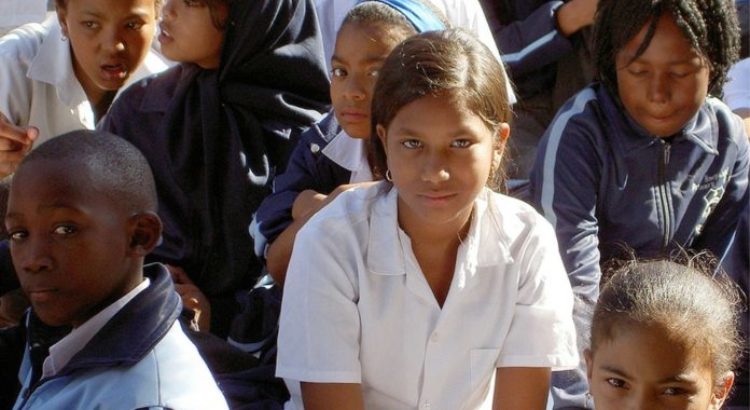
How important is education to girls across the globe?

By: thesouthafrican.com/ Mduduzi Mbiza /04-07-2018

Throughout the world, there are many young women in unsafe relationships, some in unhappy marriages, who don’t see a way out.

Women feel trapped

For many of these young girls, leaving is not an option. Why? Because they don’t have the skills and the education to gain them access to work and to be independent.

UNESCO estimates that 130 million girls between the age of 6 and 17 are out of school, adding that 15 million girls of primary school age will never witness a classroom – half of them coming from sub-Saharan Africa.

If we want to understand what educated women can do, we need to go back in time, back to ancient times – a time where we see that men are not the only ones who mattered.

Strong female role models

Going back to the history around the ancient times, you would probably read about the likes of Cleopatra VII Philopator, the last ruler of the Ptolemaic Kingdom of Egypt. If you fast-forward in time, you would come across the Suffragettes – these were members of women’s organisations which advocated the right for women to vote in public elections.

Who could forget Ellen Johnson Sirleaf, who was Africa’s first elected female head of state? You would agree that setting aside her political challenges, she crushed the myth that women cannot be leaders and this inspired a lot of women.

The link between education and sexual abuse

We should be very concerned when a young girl in Sierra Leone is more likely to be sexually abused than to attend high school – some of these young girls may never discover their dreams.

In an article titled Girls’ Education, the World Bank stated:

“Child marriage is also a critical challenge. Child brides are much more likely to drop out of school and complete fewer years of education than their peers who marry later. This affects the education and health of their children, as well as their ability to earn a living.

According to a recent report, more than 41,000 girls under the age of 18 marry every day and putting an end to the practice would increase women’s expected educational attainment, and with it, their potential earnings. According to estimates, ending child marriage could generate more than $500 billion in benefits annually each year.”

When young girls are educated, they have control over their future; no older man will try to take advantage of them. Have you ever asked yourself why most child marriages or forced marriages happen in the rural areas? Because many of the families there are in poverty – educating young girls would save these families.

Ensuring that young girls are in school will be working towards gender equality and reducing inequality. Young girls in South Africa are victims of violence and teenage pregnancy, just to name a few – the very same things that keep them away from school, from education. It is thus imperative that when young girls can’t come to school due to these reasons, education can go to them.

Joseph Stalin once said:

“Education is a weapon, whose effect depends on who holds it in his hands and whom it is aimed.”

I certainly believe that South Africa and the rest of the world can use this weapon to save young girls. Education empowers females to take control of their lives and their families, especially in Africa where young girls are already disadvantaged from birth and are faced with daunting situations that are beyond their ability.

*Fuente: https://www.thesouthafrican.com/how-important-is-education-to-girls-across-the-globe/

Comparte este contenido:
Page 86 of 144
1 84 85 86 87 88 144