Page 84 of 144
1 82 83 84 85 86 144

What the Finnish education systems could learn from Asia (Vídeo)

Asia/23.07.18/By Hannamiina Tanninen

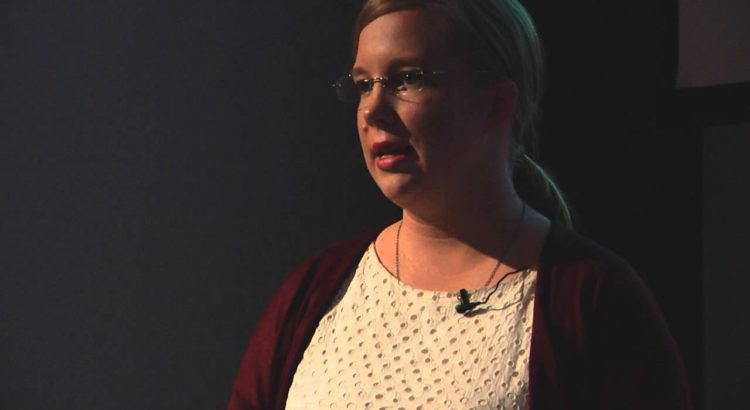
Being an enthusiast about differences in Western and Asian cultures and learning in general, Hannamiina shared her insights to the TEDxOtaniemiED audience on what the Finnish education system could learn from Asia. The talk is illustrated with Sketchnotes by Linda Saukko-Rauta at www.redanredan.fi.

The first time Hannamiina ever visited China was on the Aalto on Tracks student project, which took 80 students by train across Siberia to Shanghai World Expo. In 2010 Hannamiina moved to Hong Kong to pursue a degree in economics and China business.

After graduation Hannamiina went to Taipei where she is currently living, working as an assistant Asia correspondent and studying Chinese. Before moving to Hong Kong, Hannamiina worked as a parliamentary assistant for the Minister of Education and Science and represented students in multiple Ministry of Education and Culture working groups.

This talk was given at a TEDx event using the TED conference format but independently organized by a local community.


Source of the video: https://www.youtube.com/watch?v=tXihBgHJelY

Comparte este contenido:

Africa’s first online database on education research

Africa/23.07.18/By Eldon Opiyo/Source: www.scidev.net.

A database on education research conducted by Africa-based researchers has been launched to raise the visibility and impact of such research.

The database, which has about 2,000 education research including theses and working papers on 49 African countries, resulted from the collaboration between the Research for Equitable Access and Learning (REAL) Centre at the UK-based University of Cambridge and the Education Sub-Saharan Africa , a charity with a mission to transform educational outcomes on the continent.

The database is searchable by country, research methods and keywords such as access to education, early childhood education, higher education, school feeding and literacy.

“There are some existing inventories and databases for specific contexts but no central location to access [education] publications by African-based researchers, which has contributed to a lack of visibility and use of this research,” says Rafael Mitchell, a researcher at the REAL Centre. “We hope that the database will facilitate greater use of research written by those in African universities and research institutions to ensure it is drawn upon and cited, and to be used to influence policy and practice.

“We hope that the database will facilitate greater use of research written by those in African universities and research institutions.”

Rafael Mitchell, Research for Equitable Access and Learning (REAL) Centre

“This should also help to ensure that research by African-based researchers is taken into account in global debates. There is a lot of important work done by researchers in the region that is currently overlooked and undervalued.”

Wisdom Harrison K. Hordzi, the Ghana coordinator of the Educational Research Network for West and Central Africa, agrees and tells SciDev.Net, “The database will help researchers and others to know what education research has already been conducted on Sub-Saharan Africa and identify gaps for more research.”

Hordzi adds that the database could make people appreciate the contribution of African education researchers.

“People think that education researchers in Africa are not doing anything. The database will help others know that at least we are doing something,” explains Hordzi, a senior lecturer at the Ghana-based University of Education, Winneba.

According to Mitchell, it will help researchers and others to identify where future research is likely to be most urgent.

“Our preliminary analysis indicates that a large amount of research is on higher education, around 30 per cent of the publications. Yet, in Sub-Saharan Africa, less than one per cent of the poorest reach higher education,” she says.

Only around three per cent is on early childhood education, which suggests that limited evidence is available that can inform policymakers on how to address disadvantage in education from the early years, Mitchell explains.

Types of research methods and their proportions used by African education researchers as of July 2018
Types of research methods
Source: African Education Research Database 

The database was launched last month (15 June) at an event hosted by the French Development Agency in France.

The creation of the database started in May 2017. The first phase was completed by May 2018, with the launch of the database the following month but the process is ongoing as more research can and will be integrated, according to Mitchell.

It is being funded by ESSA – Education Sub Saharan Africa. To finance the two research positions at the REAL Centre, University of Cambridge, ESSA has raised funds from individual donors. The Jacobs Foundation, Zurich also joined this endeavour as a partner, providing funding for the second year of mapping project.

Mitchell tells SciDev.Net that the database — the first of its kind in Africa — could provide greater opportunities for research funding in areas of priority to Africa researchers and research funders.

Beatrice Muganda, director, higher education programme at the Kenya-based Partnership for African Social and Governance Research, says there is a dearth of literature on Africa written by Africans on issues affecting them.

“Scholars, researchers and students are persistently searching for relevant case studies and empirical evidence that speaks adequately to the local context,” Muganda tells SciDev.Net. “Any effort made to address this gap is laudable.”

Muganda says that although the database could help researchers, repositories are hardly the right platforms for helping policymakers to access research.

She calls on researchers to make education research findings accessible to policymakers through active outreach initiatives.

Source of the notice: https://www.scidev.net/sub-saharan-africa/education/news/africa-online-database-education-research.html
Comparte este contenido:

Japan: Brazil makes media studies compulsory in schools

Asia/Japan/23.07.18/Source: the-japan-news.com.

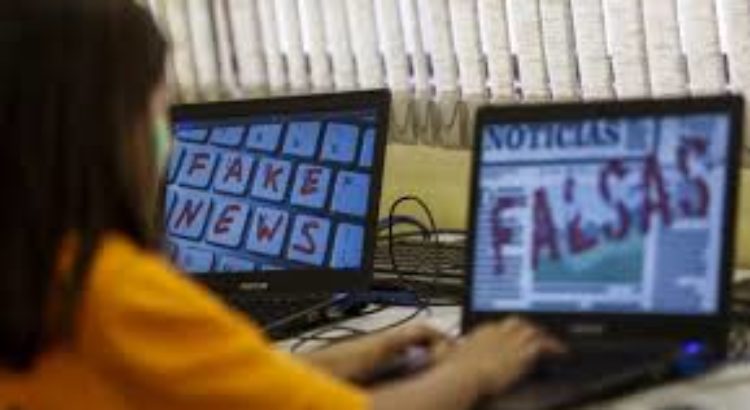
Brazil has taken a stand against the explosion of “fake news” stories swamping the internet by making media analysis studies compulsory for schoolchildren.

“The aim is to teach students to identify fake news, and now it’s part of the national curriculum because the country has decided it’s necessary,” said Leandro Beguoci, editorial director at Brazilian education specialists Nova Escola.

“The proliferation of social media networks have created an urgent situation in this respect,” Beguoci said.

Media analysis studies became compulsory in December 2017, but have been offered alongside traditional subjects like mathematics and history for years in some Brazilian schools.

Kayo Rodrigues, 14, said the Brazilian press is not perfect, but plays a vital role in combating fake news “because not everyone has the internet or the tools to check facts.”

She enrolled in the “Young Press” program launched six years ago in the Casa Blanca public school in Sao Paulo.

At Casa Blanca, teachers Lucilene Varandas and Hildenor Gomes do Santos ensure their students, aged eight to 14, know not to take everything they watch or read at face value.

“When I receive a piece of information, I look for it on the internet and ask myself if it’s true,” said Helena Vital, 11, whose parents are teachers. She said the program has taught her to view the media from a different perspective.

The children do not have the tools to systematically check everything, but “they look at the articles, who wrote them, who could be interested in them and where they’re published, which are all ways of questioning the information,” said Varandas, who is looking to create partnerships with fact-checking agencies to expand the children’s education.

The measures seem to be working despite the children’s young age.

“All it takes is one click to share false news; this project teaches me to think about my clicks,” said Rodrigues, daughter of a shopkeeper and a manicurist.

The students enrolled in “Young Press” have also been analyzing local media stories about the project, and even found inaccuracies.

Social media presence huge

With a population of almost 208 million people, Brazil has a massive social media presence: 120 million WhatsApp users, more than 100 million people on Facebook and another 50 million signed up to Instagram.

“In the past, kids were taught by their parents, but now that happens through a variety of means, something which alters the role of the school,” said Beguoci, a trained journalist.

“What’s so interesting in Brazil is that media and technological literacy are considered as important as classical literacy.”

Beguoci denies that information analysis is an additional burden on the education system, saying it rather offers “a context that can improve education.”

“We’re talking about things that are part of the student’s world,” he said.

For Veronica Martins Cannata, who coordinates technology and communication studies at the private Dante Alighieri school, children have their own responsibility when it comes to fake news.

“Technology has facilitated communication, but the time has come to question its content,” she said.

“As natives of the digital age, children and teenagers must take the responsibility to analyze that content before reproducing it.”

Dante Alighieri has been analyzing media content for 11 years and has also brought the fight against fake news into the classroom.

Children are born “with ingenuity,” but at school they acquire “a critical eye and no longer consume information in the same way,” said Martins Cannata.


Source of the article: http://the-japan-news.com/news/article/0004582311

Comparte este contenido:

England: IAEA nurtures nuclear education in Asia Pacific

Europe/England/23.07.18/Source: www.world-nuclear-news.org.

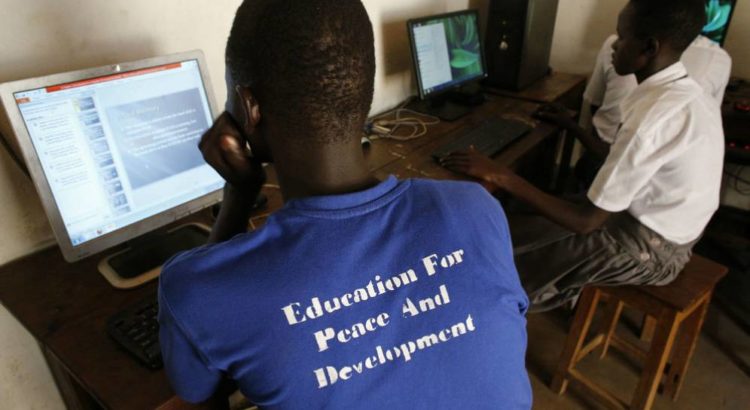
The International Atomic Energy Agency (IAEA) held the first in a series of six regional training courses for secondary school science teachers last month in Indonesia. The courses aim to equip teachers in Asia Pacific to inspire a new generation of nuclear scientists and engineers by engaging students and enhancing their understanding of nuclear science and technology.

The first two-week course was attended by 26 teachers from 17 countries. The course comprised presentations, laboratory work and technical visits to Indonesia’s National Atomic Energy Agency (Batan). It also served a good opportunity for teachers from different countries to network and exchange experiences in teaching. The IAEA said the course marks the first time that it had formally engaged with the secondary education teaching community.

The participants were introduced to diverse methods of teaching nuclear science and technology to children aged 12-18 in an effective and engaging manner. The IAEA said it hoped the attendees will become mentors to other teachers in their countries. «This way, the project aims to reach one million students by 2021,» it said.

Sunil Sabharwal, a radiation processing specialist at the IAEA, said: «The idea is to introduce teachers to the link between the key role being played by nuclear science in enhancing the quality of our everyday life and the simple nuclear concepts being taught in schools as well as to provide them with innovative methods to deliver this knowledge to students through academic as well as extra-curricular approaches.»

Following the course, Jordanian teacher Amal Al-Khassawneh said, «The training course provided me with the necessary confidence, courage and knowledge to talk about the real facts of nuclear science with students.»

The course followed a Regional Workshop on Curriculum Development and Launching of Nuclear Science and Technology for Secondary Schools that took place in the Philippines in February. During an earlier workshop, in Japan, a regional nuclear science and technology competency framework was established that serves as reference for national educational curriculums. The IAEA said the competency framework was crucial in the preparation of the training course in Indonesia.

The next regional training course for secondary school teachers will take place at the Argonne National Laboratory in the USA in August. The following four will take place in Japan, the Philippines, Malaysia and Australia this year and next.

Between 2012 and 2016, the IAEA and experts from Australia, India, Israel, Japan, South Korea and the USA developed a compendium that collects unique teaching strategies and materials to introduce science and technology in education systems across Asian countries. This compendium was piloted in Indonesia, Malaysia, the Philippines and the UAE and reached 24,000 students. The IAEA said the pilot demonstrated that students «were more receptive to learning about nuclear science and technology when teachers used a diverse set of methods, which also increased their problem-solving skills».

The IAEA said an updated version of the compendium will be prepared over the coming years.

Source of the notice: http://www.world-nuclear-news.org/NN-IAEA-nurtures-nuclear-education-in-Asia-Pacific-2007185.html

Comparte este contenido:

Rise in women travelling from Northern Ireland to England for abortions

By James Tapper

Campaigners say having different abortion laws on either side of Irish border breaches Good Friday agreement

The number of women travelling from Northern Ireland to have an abortion in England has jumped dramatically since the government set up a special hotline in March.

A total of 342 women and girls – including at least one 12-year-old – went to England for a termination through the British Pregnancy Advisory Service (BPAS) in the three months since March: a significant increase on the 190 women who travelled to use the same service in the previous nine months.

The figures have been released as pressure mounts on the government to repeal 19th-century legislation that prevents women from having an abortion in Northern Ireland. It is now the only part of Europe apart from Malta where abortion is illegal, after the Irish referendum in May.

On Wednesday, Theresa May will meet Leo Varadkar, the taoiseach, for the first intergovernmental conference between Britain and Ireland since 2007.

A letter to the leaders, signed by 173 parliamentarians from every major political party in Ireland and the UK, calls for the repeal of sections 58 and 59 of the Offences Against the Person Act 1861. In England, Wales and Scotland, the legislation has been superseded by the Abortion Act 1967 and other legislation, but it does not apply in Ulster.

Campaigners including Stella Creasy, the Walthamstow MP, who is one of the letter’s signatories, say that having different abortion laws in Ireland and Northern Ireland is a breach of the Good Friday agreement, which commits both governments to having equivalent legislation on both sides of the border.

Creasy called the letter an unprecedented intervention. She said: “We cannot let the human rights of women of Northern Ireland be forgotten. Our duty under the Good Friday agreement is to protect them, not let Theresa May sacrifice them to the political expediency of having the DUP prop up her government.

“Without action it’s clear hundreds of women and girls as young as 12 who are UK citizens are being forced to travel overseas for healthcare – and many more may be forced to continue an unwanted pregnancy as a result. The government must name the date when parliament can repeal this cruel legislation or else risk making a rape victim having to take them to court to vindicate the basic human rights of Northern Irish women.”

On 6 March the Department of Health and Social Care set up a central booking system so that women in Northern Ireland could call a phone number to make an appointment through BPAS. The figures show that an average of 28 women a day crossed the Irish Sea for an abortion through BPAS between March and May, with more than half drawing income support or having an income of less than £15,276 a year.

In 2017, 919 Northern Irish women travelled to England for an abortion, most using clinics run by BPAS or Marie Stopes.

In June, the supreme court said the abortion law in Northern Ireland was not compatible with the European convention on human rights.


Source of the article: https://www.theguardian.com/world/2018/jul/21/women-travelling-from-northern-ireland-to-england-for-abortions

Comparte este contenido:

How new Orleans is helping its students succed

By David Leonhardt

The New Orleans turnaround shows the power of giving more freedom to teachers and principals — and then holding them accountable for their performance

Twelve years later, Nigel Palmer still remembers the embarrassment of his first days as a fourth grader in Monroe, La. He was a Hurricane Katrina evacuee from New Orleans, living with his family in a La Quinta Inn, 250 miles from home. As soon as the school year began, he could tell that the kids in his new school seemed different from him.

They could divide numbers. He really couldn’t. They knew the 50 states. He didn’t. “I wasn’t up to par,” he quietly told me. It’s a miserable feeling.

Until the storm, Palmer had been attending New Orleans public schools, which were among the country’s worst. The high-school graduation rate was 54 percent, and some students who did graduate had shockingly weak academic skills.

After Katrina’s devastation, New Orleans embarked on the most ambitious education overhaul in modern America. The state of Louisiana took over the system in 2005, abolished the old bureaucracy and closed nearly every school. Rather than running schools itself, the state became an overseer, hiring independent operators of public schools — that is, charter schools — and tracking their performance.

Dominique Newton was the 2016 valedictorian of G.W. Carver High School. But she initially struggled in college, at Xavier, while also helping care for her father, who is on dialysis. She now is doing better, and majoring in political science.CreditWilliam Widmer for The New York Times

This month, the New Orleans overhaul entered a new stage. On July 1, the state returned control of all schools to the city. The charter schools remain. But a locally elected school board, accountable to the city’s residents, is now in charge. It’s a time when people in New Orleans are reflecting on what the overhaul has, and has not, accomplished.

So I decided to visit and talk with students, teachers, principals, community leaders and researchers. And I was struck by how clear of a picture emerged. It’s still a nuanced picture, with both positives and negatives. But there are big lessons.

New Orleans is a great case study partly because it avoids many of the ambiguities of other education reform efforts. The charters here educate almost all public-school students, so they can’t cherry pick. And the students are overwhelmingly black and low-income — even lower-income than before Katrina — so gentrification isn’t a factor.

Yet the academic progress has been remarkable.

Performance on every kind of standardized test has surged. Before the storm, New Orleans students scored far below the Louisiana average on reading, math, science and social studies. Today, they hover near the state average, despite living amid much more poverty. Nationally, the average New Orleans student has moved to the 37th percentile of math and reading scores, from the 22nd percentile pre-Katrina.

This week, Douglas Harris — a Tulane economist who leads a rigorous research project on the schools — is releasing a new study, with Matthew Larsen, another economist. It shows that the test-score gains are translating into real changes in students’ lives. High-school graduation, college attendance and college graduation have all risen.

Jewel Dauphin, a 2017 Carver graduate, now attends Opportunities Academy, a program that teaches life skills. He also does work as an advocate pushing the city to improve transportation options for people with disabilities. CreditWilliam Widmer for The New York Times 

One example: In most of Louisiana, the share of 12th graders going directly to college has fallen in recent years, probably because of budget cuts to higher education. In New Orleans, Harris and Larsen report, the share has jumped to 32.8 percent, from 22.5 percent before Katrina.

People here point to two main forces driving the progress: Autonomy and accountability.

In other school districts, teachers and principals are subject to a thicket of rules, imposed by a central bureaucracy. In New Orleans, schools have far more control. They decide which extracurriculars to offer and what food to serve. Principals choose their teachers — and can let go of weak ones. Teachers, working together, often choose thei

r curriculum.

“It puts decisions really close to the school site and the students,” Towana Pierre-Floyd, the principal of KIPP Renaissance High School, told me. Victor Jones, an English teacher at G.W. Carver High School, says, “We don’t have to wait to make changes when we know changes need to be made.”

Jones and his colleagues recently decided that their ninth graders needed more writing practice than they were getting from their literature-heavy curriculum. But the teachers still wanted to expose the students to great books. So they combined two curriculum plans to get the right mix, cutting down on novels without eliminating them. The students now read “Lord of the Flies,” “Romeo and Juliet,” “Parable of the Sower,” Ray Bradbury short stories and journalism about terrorism, among other things, and also do more writing than they used to.

Crucially, all of this autonomy comes with accountability: Schools must show their approach is working. They are evaluated based on test scores, including ACT and Advanced Placement, and graduation rate — with an emphasis on the trend lines. Schools that fail to make progress can lose their contract.

Over the past decade, the district has replaced the operators of more than 40 schools in response to poor performance. “You have to meet these minimum standards to continue to have the privilege of educating kids,” Patrick Dobard, the superintendent until last year, told me. Harris’s research has found that much of the city’s progress has stemmed from closing the worst charter schools and letting successful charters expand.

Think about how different this is from the norm in American education. In most districts, a single entity — a board of education — is responsible for both running schools and evaluating them. That combination is not a recipe for rigorous evaluation and consequences. It’s akin to letting students grade themselves.

Obviously, very few districts elsewhere are going to replicate the New Orleans model and start from scratch. But most would benefit from introducing both more freedom and more accountability. Together, the two spark human ingenuity.

For all of the improvement here, the schools still have their troubles. The academic results still trail those in less impoverished districts, and progress has slowed lately. “We’re not where we want to be,” Rhonda Dale, the principal of Abramson Sci Academy, said. Some residents told me they hoped that the new local control could accelerate academic progress – while also making the school system feel like more a local institution and less like one imposed on the city. My column next week will focus on these challenges.

Yet even with the caveats, it would be a terrible mistake to let the imperfections obscure the progress here. The city’s residents certainly recognize that progress. In a recent poll by Tulane’s Cowen Institute, 70 percent of public-school parents said the charter schools had improved education.

And what ended up happening to Nigel Palmer? In seventh grade, he moved back to New Orleans, a stronger student than when he left. Fortunately, the city’s schools had improved too. His high school, KIPP Renaissance, was “a fun, competitive environment — people wanted a high G.P.A.,” he said. “School was cool.”

This spring, he graduated from Xavier University, a historically black Catholic college here, and he recently started his first job — as a middle-school social studies teacher in New Orleans.

Source of the article: https://www.nytimes.com/2018/07/15/opinion/columnists/new-orleans-charter-schools-education-reform.html
 
Comparte este contenido:

News Didac India – Exploring A World of Unlimited Opportunities

Author: Redation Digital Learning

Resumen: Didac India es hoy uno de los eventos más reconocidos en la región de Asia y el Pacífico para material educativo, capacitación y soluciones basadas en la tecnología para el sector de la educación preescolar, escolar, de educación superior y de habilidades y capacitación.

Didac India is today one of the most renowned events in the Asia Pacific Region for Educational Material, Training & Technology-based solutions for Preschool, School, Higher Education, and Skill & Training segment of education sector.

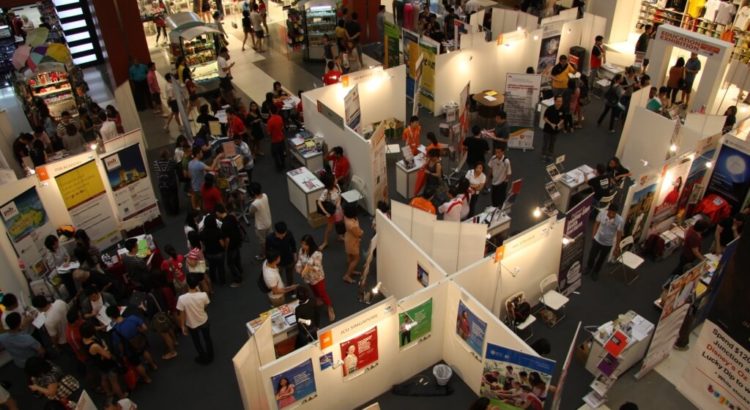
In a bid to showcase the best global practices of education sector, Didac India, the educational event is being organised for nine years. To address the growing demand for innovative educational products and solutions in the Indian subcontinent, the event is held annually with international exhibition and conference.

The event has British Education Suppliers Association (BESA), DIDACTA (Germany), Worlddidac Association & India Didactics Association among esteemed partners. It is also supported by many ministries of the Government of India and various public and private educational bodies.

The World Education Summit (WES) is one such event organised on the similar lines. Held annually in various parts of the world, it is organised by Elets Technomedia Pvt Ltd, the Asia and Middle East’s premier technology and media research company.

The WES is meant to showcase innovations, initiatives and best practices followed across the globe in the education space. So far, 10 editions of WES have been organised across the world in various countries.

Congregating top-notch decision makers, influencers, experts and practitioners from around the world under one roof, the WES facilitates learning about groundbreaking innovations in the education sector and propagate them in different parts of the world, making meaningful improvements in global education.

The summit serves as a premier international platform dedicated to encouraging innovation and creative action in education landscape. In this, top decision-makers share insights with on-the-ground practitioners and collaborate to rethink education.

The latest edition of the World Education Summit is set to be organised on 9-10 August this year in New Delhi’s The Leela Ambience Convention Hotel.

Meanwhile, the 10th edition of the Didac India Exhibition and Conference is scheduled to be organised from 4-6 October 2018 in New Delhi.

The stage is, however, also set for Didac India 2018. With a focus on adding more varied products and solutions and a determination to expand improve, the annual exhibition is set to create new benchmarks in the Indian Education & Training Industry.

WES is the congregation of some of the leading thinkers in the education world from across Asia and beyond. The latest edition of WES will inspire one and all, making them understand the challenges and solutions of the developing education world through a new prism.

The event is a must visit for all those wanting to network with the most promising and fastest growing economies of the world – India and also an ideal platform to reach out to the education industry of Asia.

Fuente: http://digitallearning.eletsonline.com/2018/06/didac-india/

Comparte este contenido:
Page 84 of 144
1 82 83 84 85 86 144