Page 82 of 144
1 80 81 82 83 84 144

New GCSEs put pupils under more pressure, say school leaders

Europe/United Kingdow/21.08.18/Source: www.theguardian.com.

Students to receive results with grades 9-1 after changes initiated by Michael Gove

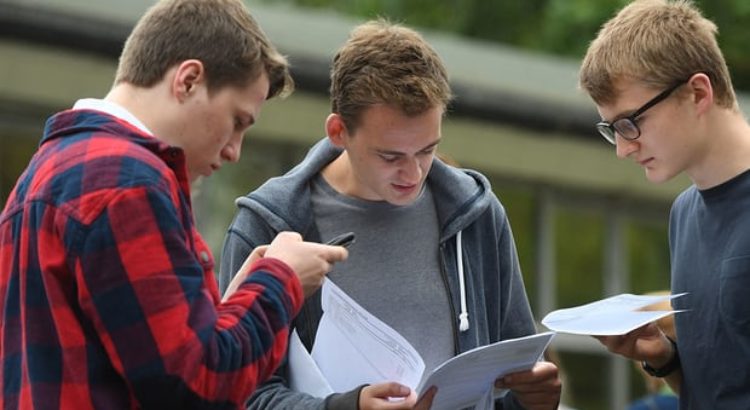
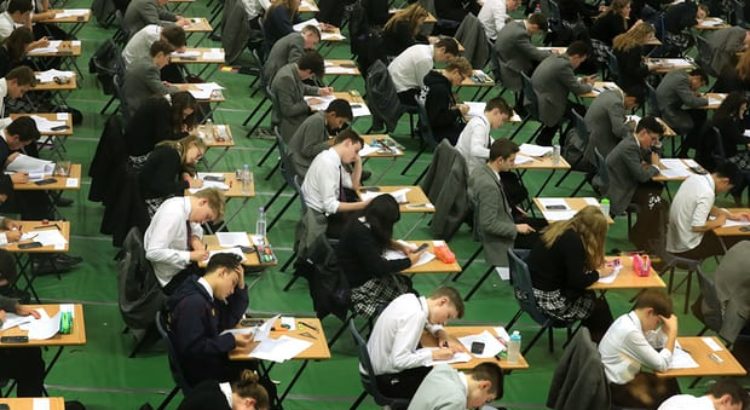
The tougher standards demanded by the new style of GCSEs being awarded for the first time this year have put pupils under a great deal of additional pressure, according to school leaders.

Hundreds of thousands of pupils in England will receive their results this week, with grades from 9 to 1 replacing the familiar A* to G.

Geoff Barton, the general secretary of the Association of School and College Leaders, said the “bar has deliberately been set at a higher level” as a result of changes initiated by the former education secretary Michael Gove.

“The new exams are harder, contain more content, and involve sitting more papers,” Barton said. “We are worried about the impact on the mental health and wellbeing of young people caused by these reforms and it is our view that such a substantial set of changes as this should have been introduced in a more managed and considered manner.

“It is to the credit of schools that they have responded to this situation by providing their students with extensive pastoral support in order to alleviate stress and anxiety despite severe funding pressures.”

Hailed as the most significant change in the examination system since O-levels were replaced 30 years ago, the “more demanding, more fulfilling and more stretching” exams were introduced to help the UK better compete internationally, Gove said in 2013.

The fruits of that effort will be seen on Thursday when the results of 20 of the new GCSEs are published, including those in biology, history and Spanish.

Gove’s changes stripped out assessed work that had accounted for a substantial proportion of marks towards the final grades. In chemistry and biology, for example, non-exam assessments accounted for a quarter of a candidate’s marks, but in the new GCSEs everything depends on the final exams.

Assessment remains in some subjects, such as dance and foreign languages, but even then the proportion of non-exam marks awarded has been cut substantially, from 60% to 25% in the case of German and French.

Ofqual, which regulates public examinations in England, has pledged to maintain continuity in the proportion of grades awarded. Cath Jadhav, the director of standards at Ofqual, said exam boards would use statistics to counteract any dip in results caused by teachers being less familiar with the content and pupils having less support material.

“Across all subjects, grade boundaries will be set this summer to ensure that students this summer are treated fairly and are not disadvantaged by being the first to sit new GCSEs,” Jadhav wrote in a blogpost explaining the way grades would be set.

According to Ofqual, the new grade 7 will start at the same standard as the former A grade, meaning 9, 8 and 7 grades replace the old A* and A. The 9 is equivalent to the top half of A* awards, while an 8 encompasses the bottom portion of A* and the top part of an A, making comparisons with the old grades difficult.

“Grade 9 is not the same as the old A* grade. It’s a new grade designed to recognise the very best performance. So in every subject there will be fewer grade 9s awarded than A*s in the old GCSEs,” Jadhav said.

Last year maths, English language and English literature were the firstsubjects to be examined under the new system. About 2,000 pupils gained 9s in all three subjects. As few as 200 pupils have been forecast to achieve a full set of 9s in eight or more subjects this year.

“It was already very hard to achieve the top grade of A* under the old system, and it is even harder to achieve the top grade of a 9 under the new system,” Barton said. “Young people striving for those top grades may therefore feel disappointed if they do not achieve them, even though they have done exceptionally well in the grades they do achieve.”

Because a number of courses, including economics and design and technology, will not offer the reformed exams until next summer, parents will be confronted with children holding a mixture of numbered and lettered grades.

The previous C grade will be fixed to the same boundaries as the new grade 4, but both a 4 and a 5 will be regarded as a pass grade in the same way as a C, with the Department for Education describing a 5 as a “strong pass”.

The new combined science GCSE will be awarded as a double grade, to reflect the greater amount of content being taught. As a result, candidates will be awarded double grades ranging from 9-9, 9-8 and so on, down to the lowest 1-1 grade.

The changes do not affect Wales and Northern Ireland, which are retaining the old GCSE grades. Scottish students sit exams under a separate system.

Source of the notice: https://www.theguardian.com/education/2018/aug/20/new-gcses-put-pupils-under-more-pressure-say-school-leaders

Comparte este contenido:

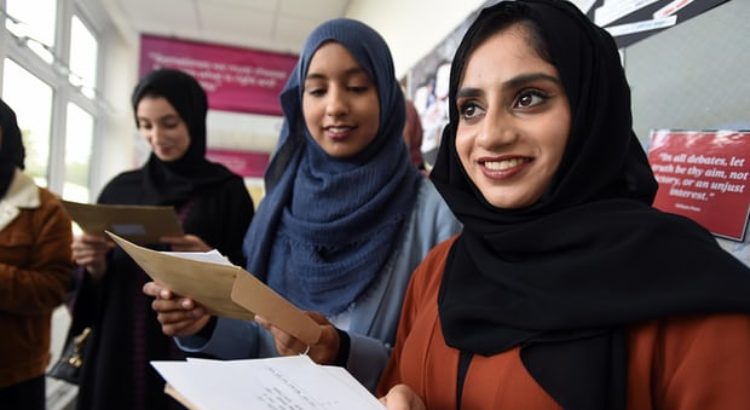
A-level results are out, but what about those not going to university?

By Fiona Millar

A significant number of young people are turned off by traditional higher education. They should have a decent alternative

This year’s A-level results day saw grades down slightly, universities awash with places, and signs that young people might be starting to vote with their feet, and not in the direction successive governments have predicted. What is going on? For the past 20 years, encouraging more young people into higher education has been a central aim of education policy. Until now there was no real reason to think this plan wasn’t working.

Around a third of all school-leavers go on to higher education at 18, and that figure rises to almost 50% by the age of 30. But a survey tracking aspirations for a university education among pre-GCSE pupils released on Thursday by a social mobility charity, the Sutton Trust, suggests that the wind might now be blowing in a different direction. The trust has been monitoring aspirations for the past 15 years and reports a falling proportion of young people who think university matters. The survey also shows there is still a marked difference in attitudes towards higher education between students from different social backgrounds.

A blip or a worrying straw in the wind? We should fear the latter as it would point to a growing and glaring omission at the heart of our education system – the failure to cater adequately for those for whom university may not be the right choice. One obvious reason for disenchantment (reflected in the survey) is the high cost of tuition fees and living expenses. A degree generally leads to higher wages, and employers increasingly seek this level of education when recruiting – even for non-graduate jobs. Up to a third of graduates may now be working in low-skilled jobs.

But the survey also reveals that of those not planning to attend university, 58% cite not enjoying “that type of learning”. We need to understand why this is, what we might do about it. The assumption that everyone can and should enjoy an academic education is almost certainly flawed. Like many other graduates from a Russell Group university – in my case at a time when only 10% of the population went to university and were fully funded to boot – I believe every young person should have the chance I had. Not just of an academic education and a route into professional work, but also the opportunity to learn and develop socially and emotionally, preferably away from home, without the pressure of having to earn a living.

However, as a parent and a school governor I also know this path isn’t right for everyone. The over-academisation of the school curriculum and the devaluation of any sort of assessment that doesn’t involve a high-stakes exam may now be demoralising many young people, in particular those who most need to see the point of education.

There have been signs throughout this academic year that the latest incarnation of the GCSE – increased content, no coursework and lengthy exam papers – might be a massive switch-off to key groups of pupils. And the failure over decades to develop alternatives to academic study, in the form of high-status technical education and apprenticeships, is starting to look like a criminal act, especially in the run-up to Brexit when skilled workers from elsewhere may not be readily available. Over the past 50 years, a series of vocational qualifications have come and gone and never garnered the kudos of O-levels, GCSEs or A-levels. So we should not be surprised that traditional qualifications still reign supreme, that university still sits at the pinnacle of the education system and that growing numbers of students see no realistic alternative routes into fulfilling work.

Most people probably haven’t even heard of the new T-levels – the current government’s answer to this endemic English problem. These apparently “world-class” qualifications won’t even come on stream until 2020; and they will have to be delivered in woefully underfunded further education colleges. Even worse – there are barely 100 degree apprenticeships on offer, a drop in the ocean compared with thousands of more conventional courses. So for the growing number of young people who feel university is not for them there really isn’t anything concrete to aspire to.

The Sutton Trust is right: more maintenance grants and apprenticeships would probably help. But what is really needed is a huge culture shift, away from the assumption that academic is best and towards a broader vision of what makes a real education. A vision that should include what might be seen as “that other type of education”: practical, creative, technical, engaging – and, above all, of equal status to a university degree.

Source of the article: https://www.theguardian.com/commentisfree/2018/aug/16/a-levels-results-higher-education-alternatives

Comparte este contenido:

School Choice Is the Enemy of Justice

By  Erin Aubry Kaplan

In 1947, my father was one of a small group of black students at the largely white Fremont High School in South Central Los Angeles. The group was met with naked hostility, including a white mob hanging blacks in effigy. But such painful confrontations were the nature of progress, of fulfilling the promise of equality that had driven my father’s family from Louisiana to Los Angeles in the first place.

In 1972, I was one of a slightly bigger group of black students bused to a predominantly white elementary school in Westchester, a community close to the beach in Los Angeles. While I didn’t encounter the overt hostility my father had, I did experience resistance, including being barred once from entering a white classmate’s home because, she said matter-of-factly as she stood in the doorway, she didn’t let black people (she used a different word) in her house.

Still, I believed, even as a fifth grader, that education is a social contract and that Los Angeles was uniquely suited to carry it out. Los Angeles would surely accomplish what Louisiana could not.

I was wrong. Today Los Angeles and California as a whole have abandoned integration as the chief mechanism of school reform and embraced charter schools instead.

This has happened all over the country, of course, but California has led the way — it has 630,000 students in charter schools, more than any other state, and the Los Angeles Unified School District has more than 154,000 of themCharters are associated with choice and innovation, important elements of the good life that California is famous for. In a deep-blue state, that good life theoretically includes diversity, and many white liberals believe charters can achieve that, too. After all, a do-it-yourself school can do anything it wants.

But that’s what makes me uneasy, the notion that public schools, which charters technically are, have a choice about how or to what degree to enforce the social contract. There are many charter success stories, I know, and many make a diverse student body part of their mission. But charters as a group are ill suited to the task of justice because they are a legacy of failed justice.

Integration did not happen. The effect of my father’s and my foray into those white schools was not more equality but white flight. Largely white schools became largely black, and Latino schools were stigmatized as “bad” and never had a place in the California good life.

It’s partly because diversity can be managed — or minimized — that charters have become the public schools that liberal whites here can get behind. This is in direct contrast to the risky, almost revolutionary energy that fueled past integration efforts, which by their nature created tension and confrontation. But as a society — certainly as a state — we have lost our appetite for that engagement, and the rise of charters is an expression of that loss.

Choice and innovation sound nice, but they also echo what happened after the 1954 Brown v. Board of Education Supreme Court decision, when entire white communities in the South closed down schools to avoid the dread integration.

This kind of racial avoidance has become normal, embedded in the public school experience. It seems particularly so in Los Angeles, a suburb-driven city designed for geographical separation. What looks like segregation to the rest of the world is, to many white residents, entirely neutral — simply another choice.

Perhaps it should come as no surprise that in 2010, researchers at the Civil Rights Project at U.C.L.A. found, in a study of 40 states and several dozen municipalities, that black students in charters are much more likely than their counterparts in traditional public schools to be educated in an intensely segregated setting. The report says that while charters had more potential to integrate because they are not bound by school district lines, “charter schools make up a separate, segregated sector of our already deeply stratified public school system.”

In a 2017 analysis, data journalists at The Associated Press found that charter schools were significantly overrepresented among the country’s most racially isolated schools. In other words, black and brown students have more or less resegregated within charters, the very institutions that promised to equalize education.

This has not stemmed the popular appeal of charters. School board races in California that were once sleepy are now face-offs between well-funded charter advocates and less well-funded teachers’ unions. Progressive politicians are expected to support charters, and they do. Gov. Jerry Brown, who opened a couple of charters during his stint as mayor of Oakland, vetoed legislation two years ago that would have made charter schools more accountable. Antonio Villaraigosa built a reputation as a community organizer who supported unions, but as mayor of Los Angeles, he started a charter-like endeavor called Partnership for Los Angeles Schools.

This year, charter advocates got their pick for school superintendent, Austin Beutner. And billionaires like Eli Broad have made charters a primary cause: In 2015, an initiative backed in part by Mr. Broad’s foundation outlined a $490 million plan to place half of the students in the Los Angeles district into charters by 2023.

I live in Inglewood, a chiefly black and brown city in Los Angeles County that’s facing gentrification and the usual displacement of people of color. Traditional public schools are struggling to stay open as they lose students to charters. But those who support the gentrifying, which includes a new billion-dollar N.F.L. stadium in the heart of town, see charters as part of the improvements. They see them as progress.

Despite all this, I continue to believe in the social contract that in my mind is synonymous with public schools and public good. I continue to believe that California will at some point fulfill that contract. I believe this most consciously when I go back to Westchester and reflect on my formative two years in school there. In the good life there is such a thing as a good fight, and it is not over.

Source of the article: https://www.nytimes.com/2018/08/14/opinion/charter-schools-desegregation-los-angeles.html?rref=collection%2Ftimestopic%2FEducation&action=click&contentCollection=opinion&region=stream&module=stream_unit&version=latest&contentPlacement=3&pgtype=collection

Comparte este contenido:

The Guardian view on higher education: more egalitarianism please

By The Guardian

The UK government’s review into post-18 education must recognise that it is clearly a good that would benefit society if more widely available

Has the engine of education concentrated ability of a certain kind under the latest changes? It would certainly seem so. Students in England receiving their A-level results on Thursday were the latest to do so under a revamp wrought by Michael Gove when he was education secretary. They are part of a move away from grades awarded on the basis of coursework to marks based on a final exam in such subjects as geography and drama. The result seems to be the persistence of trends in educational achievement – with girls continuing to outperform boys in most subjects and sciences attracting more entries. This will encourage the backers of this approach to laud it.

Adopting this outlook means considering the downsides. We must beware of sieving people according to education’s narrow band of values. After all, 1.5 million children took A-levels and 3.8 million people took vocational qualifications. To the government’s credit, it has belatedly realised that there needs to be a serious look at post-school technical and academic options. When Theresa May launched her wide-ranging review in February of post-18 education, it was expected to take a year. However, with the chaos in government engendered by Brexit, no one is sure where Mrs May’s review is going.

Higher education is clearly a good, and one that benefits society if more widely available. Tuition fees were trebled to a maximum £9,000 a year in 2012 – so that universities could use the income to cover large cuts to the direct public funding of teaching. Students take out state loans to finance these costs. Graduates pay the loan back with a 9% tax on their salary above £25,000. The loans are not cheap: from this autumn the interest charged will be 6.3%. If students earn less than £25,000 they do not pay back the loans and the taxpayer picks up the bill. As almost half of those in England are expected to have entered advanced studies, the system has expanded access.

Students are desperate to get the seal of approval that a degree confers. But the problem with trying to turn universities into institutions that compete for students is that they cannot all be right in their aspirations. Today each university is encouraged to borrow and spend capital on expectations that uncapped student numbers and research revenue will rise. Universities that get their sums wrong run the risk of failing, perhaps even going bust. The marketised system also does not allocate resources effectively. Since 2012 the arts and humanities have seen a 40% increase in funding; the smallest – 6% – has been for sciences.

Michael Young’s brilliant satire The Rise of the Meritocracy was published 60 years ago this year. It painted a picture of a society obsessed with talent. In Young’s book, by the year 2034 psychologists had perfected IQ testing. However, rather than promoting a harmonious society by focusing on smart folk, this had produced social breakdown. The losers from the brain games were unhappy twice over: they were told not only that they were failures – but that they deserved to be so. Eventually they revolted. With Brexit one is struck by how prescient the book seems. A lack of educational qualifications, say studies, was the “predominant factor” in voting leave. Higher education can advance the economy by increasing labour force skills and lift the store of knowledge. Perhaps most important, higher education has the ability to transmit a common culture and common standards of citizenship. If there was a time when the state should back such a vision, it is now.

Source of the article: https://www.theguardian.com/commentisfree/2018/aug/16/the-guardian-view-on-higher-education-more-egalitarianism-please
Comparte este contenido:

Russian education is enjoying an investment boom


Editorial

On the British Teachers Coming Work in Moscow

Russian education is going through an investment boom. Every year, new private schools are opened, many offering an education in English leading to an international diploma. And following the investment are the teachers from the English speaking world to provide that education.

Russians have traditionally been proud of their education system, yet recent declines in many worldwide competitions and ratings have spurred responses both by the Ministry of Education, but also senior business leaders. Billionaires and senior executives with investments abroad have founded or helped fund projects to develop elite schools. Similarly, the traditional alternative to a Russian state education, Moscow and St Petersburg’s international schools, are also booming with new campuses opening. All these factors lead to the situation where there is increasing demand for English native speaking teachers to come to work in Russia.

To learn more the experiences of international teachers arriving in Moscow we sat down with Alla Ponomareva, the HR Director at one of the leading international schools, Cambridge International School, who is currently recruiting new staff for the next academic year.

What motivates teachers to move abroad to teach?

There are quite a few reasons why teaching abroad can be fulfilling, exciting and rewarding. Teachers think, well, I am young and enthusiastic, full of energy and willing to explore the world or they might say, I am a professional teacher with over 15 years of experience, my children have grown-up, and now I finally have the chance to share my knowledge and culture with others.

Overall, some of the most frequent motivations for teaching abroad that I have seen include the experiences of a different culture, learning a foreign language, gaining international work experience, and making a difference in the lives of others by helping them learn in a whole new way.  And, last but not least, the salaries that many international schools provide.

Who are the kinds of teachers who are most interested in working in Russia?

Usually, these teachers are open-minded professionals who value cultural differences and traditions of Russia. They are very tolerant and open to new challenges. Usually, these are the teachers who are interested in history, art, and travel. They come to Russia not only to share their experience but learn a lot for themselves.

What is teaching abroad like?

Teaching in a foreign country may be different from teaching at home, so it is important to be flexible and adaptable. Such factors as the types of jobs, hours, and ages of students, skills to be taught, and, more generally, attitudes to schooling and education can be very different to what a teacher has experienced at home. But the differences aren’t necessarily challenging, many teachers are delighted by, for example, all the flowers and attention that they receive on 1st September (first day of school).

Do you find yourself in competition with schools in other countries when recruiting?

Yes, we are definitely competing with other countries when recruiting. British teachers and those from other English speaking countries are in high demand, but as surprising as it may sound to some, Moscow and St Petersburg offer some of the most enjoyable environments and lifestyles. It is a European capital with a long historical and cultural heritage. Social attitudes can be much more familiar than in other places and we find some teachers leaving perhaps warmer climates, but radically different cultures, to move to Moscow.

What are the challenges that teachers might face when adapting to life in Russia?

I think that the biggest challenge to adaptation is changing the perception about Russia and Russians.  In most cases, you will meet nice, helpful, and easy going people. The language, for sure, can be difficult, but at least in our school teachers always have a support from teachers’ assistants and other school staff who speak English. CIS Russia provides Russian lessons to International teachers as long as international teachers teach English lessons to local staff. And that’s a great tradition that gives everyone a chance to understand each other and value each other’s language and culture. Of course, winters may not be to everyone’s taste, but the beautiful snow covered cityscapes and the opportunity to learn skiing and other winter sports more than makes up for it!

How do you expect the market for international teachers to change over the next few years?

The opportunities for international teachers in Russia is only set to increase, even if the exact nationalities of new arrivals may change slightly year to year (British, Australian, Canadian, South African, etc.), as the international schools look to raise the quality standards to teachers’ qualification and professional competencies.

The politics may not always be encouraging to those considering Russia, yet it does little to abate Russians appetite for offering their children great educations and their desire to welcome international teachers to Russia. One would also hope that the cultural exchanges taking place inside school communities has long lasting positive impact.

Source of the article: https://themoscowtimes.com/articles/russian-education-is-enjoying-an-investment-boom-60940
Comparte este contenido:

Uganda: Education Ministry donates scholastics to the African public service day

Africa/Uganda/By Jovita Mirembe/15.08.18/Source: www.newvision.co.ug.

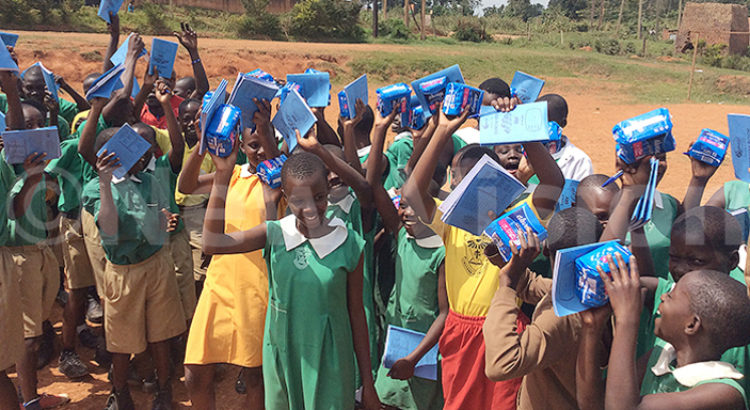
Over 200 pupils received scholastic materials from the Education Ministry such as exercise books, pencils, pens and pads for the girls in upper primary.

 As part of the celebrations of the African Public Service day on Friday, the Ministry of Education and sports has donated scholastic materials  to Kiwanga COU  Primary School pupils in Mukono district.
Over  200 pupils  received scholastic materials from the Education Ministry such as exercise books, pencils, pens and pads for the girls in upper primary.
The Human resource officer at the Ministry, Joy Tamwesaliza said that this day is celebrated every 23 of June every year world wide but because 23 of this year was falling on a Saturday, it was decided that it be celebrated Friday.
The main celebrations were at Kololo Airstrip.
 Tamwesaliza said the products  will help boost the pupils’ studying moral because these are the main items needed in school.
‘‘The Education Ministry does not want to see pupils dropping out of school due to lack of  scholastic materials because some parents cannot afford them.
«The products we have distributed will be shared amongst all the pupils from baby class to primary seven where every child will get a pencil, a pen and at least two books except the pads which will be given to only  girls in upper primary,’’ Tamwesaliza said.
The  Deputy head teacher at Kiwanga C.O.U  Primary School, Annet Nandutu said that many pupils  miss lessons because they don’t have pencils, pens or books which affects their performance.
She says that more so for the girls who have started their menstruation periods, hinders them when it comes to attending classes because they don’t pads to use.
Tamwesaliza added that 100 dozens of books, 50 dozens of pencils, 3 boxes of sanitary towels and four boxes of pencils were distributed to the pupils.

Source of the notice: https://www.newvision.co.ug/new_vision/news/1480251/education-ministry-donates-scholastics-african-public-service-day.

Comparte este contenido:

61 years of education in Ghana

By Peter Partey Anti

Last Sunday was the maiden show of a news program on GhOne TV hosted by Nana Aba Anamoah. Normally our media houses do not have very rich current affairs programs for their viewers on Sundays, so this program caught my attention right from the start.

The truth, however, is that, during the headlines, I heard the term “belly schooling”, a term I was hearing for the first time in education literature, so I decided to listen to what the story was about. That story broke my heart. Pupils in a school in Yikurugu in the Northen part of Ghana lie on their stomach to study. This is happening in an educational institution in Ghana in the year 2018.

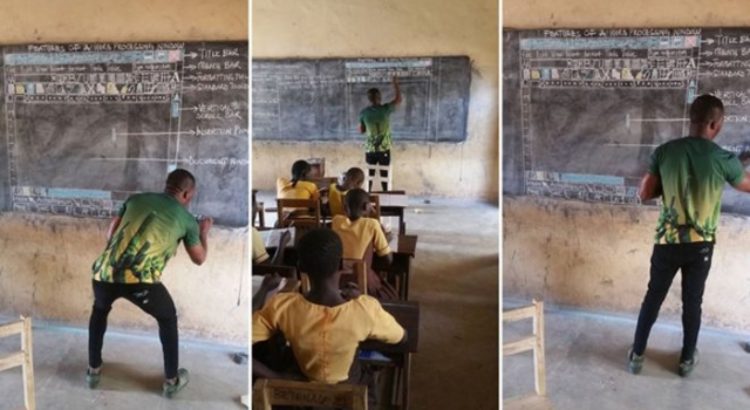
Again, recently a picture of a teacher trying to teach ICT, specifically, the interface of Microsoft word went viral on social media. That picture has been featured in international media reports like the CNN, BBC among others. While some were happy for the school and the teacher, others like myself felt bad for what our educational system has turned out to be. And yes, this is Ghana in 2018.

A country that prides itself as the first country sub of the Sahara to gain independence. A country that has spent between 22% – 27% of its annual budget on education over the last decade; a country that is 61 years today. Growth theorists are vocal about the role of human capital and technology in a country’s long-term growth potential and not just any human capital, but an educated one. It is therefore not surprising that, 61 years ago today, there was a huge focus on education by the leaders at that time.

The address of the President, Osagyefo Kwame Nkrumah to the legislative assembly a day before independence had education as its pivot; the driving force of the country’s development agenda. He envisioned an educational system that is designed to address the challenges we faced as a country. A critical read of McWilliam and Kwamena-Poh reveal that the focus of the then President was to use education to answer the questions of technology, productivity and the economic potential of the country.

This explains the level of investment made by him in the education sector. It is therefore not surprising that between 1951 and 1966, primary schools increased by 647.8%, secondary schools increased by 707.7% whiles one university was added to the already existing two universities. This coupled with other levels of education such as teacher training colleges, technical and middle levels all saw a tremendous improvement. To most experts, education was geared towards solving the Ghanaian problem. Since then there have been changes in our educational agenda, prominent among them are the 1987 and 2007 educational reforms.

These two reforms in particular even though properly conceived were implemented in a way that made it impossible for us to realize its full benefits. The introduction of the JSS and SSS to replace the old system of O’Level and A’Level have been one of the defects of the 1987 Educational Reform according to some educationists. In fact, some have attributed the challenges in our educational system presently in terms of its structure and content to this reform. To others, the two systems should have been allowed to run concurrently.

As someone who is a product of the 1987 educational reform, I will not be quick to pass a judgement on it but to say that, a critical study of the reform brings to fore the good intentions of the policymakers but the problem of resources and lack of commitment to the implementation process led to the non-realization of objectives of that reform.

About five years ago, I had the opportunity to do a comprehensive review of the 2007 educational reform for an international organization. My observation was simple, we ignored the important elements in that reform and focused on the change of name and duration.

That reform was rich in its plans for Technical, Vocational and Agricultural Education agenda and the attempt to incorporate apprenticeship into our educational system. Sadly, we focused on the duration of either 3 or 4 years and the change of name from JSS and SSS to JHS and SHS respectively. The usual problem of fidelity in the implementation of the reform made sure that the objectives of the reform were not met entirely.

From the last 25 years, we have been able to increase access to education for a number of children in the basic level courtesy the introduction Free Compulsory Universal Basic Education (FCUBE) in 1996 and the Capitation Grant in the 2004/2005 academic year. We are seeking to increase access to students at the secondary school level with the introduction of the free SHS.

Sixty-one years after the take off in the educational sector, supported with the fact that, other countries with a robust educational sector have been able to transform their economy, it would have been ideal to see a transformed Ghana championed by an education system designed to address the challenges of our time.

Sadly, we are currently faced with graduate unemployment. What it means is that we are investing in education and yet the products of our educational system cannot be absorbed by the economy. The reasons for these are enormous but if in 1957, the focus was to use education to solve the problems of technology, productivity and how to harness the economic potential of the country, why have we not made progress?

The answer lies in the nature of our curriculum. As indicated earlier on, increasing access to education, investing in education and undertaking various reforms in the education sector should be geared towards addressing the challenges of the time and not be seen as a normal routine.

I am not oblivious to the fact that, currently there is a process ongoing to reform the curriculum for the pre-tertiary level and also teacher education in Ghana. How many of you are aware of this? I can only hope and believe that all the relevant stakeholders are involved in this process.

Aside from this, there is an increasing level of inequality between the urban student and his/her counterpart in the rural area. We continue to roll-out wholesale educational policies without paying attention to the disparities that exist in our society. A visit to most of the schools in rural Ghana will give you an indication of what we need to do as a country in terms of policy formulation in the education sector. How can we introduce ICT into the school curriculum and yet a majority of our schools in the rural areas lack just a computer?

How can we roll-out a policy called “One laptop per child” and yet most of those laptops were given to party members and sympathizers. What is the state of that policy now? Where are the laptops? Why should a child lie on his stomach to enjoy an instructional session when our leaders ride in expensive cars and jump from one radio station to another to lamenting about the problems that they have been elected and are being paid to solve.

This should not be misconstrued to mean we have not done anything as country in terms of education. We have improved access, we have expanded infrastructure and have increased our spending in the education sector. But the end product has been an increase in the level of youth unemployment, sanitation problems, increase in corruption, and an upsurge in crime, a total decline in the moral fabric of our society and reduction in patriotism.

According to Prof Agyemang, a renowned sociologist, education is a process by which each society influences its individuals by passing onto them the culture which is the totality of the society’s accumulated knowledge, art, laws, morals and ways of behaviour, the acquisition of which brings the individuals to the perfection of their nature. A good educational system should yield more positive fruits than negative but can we say this about our educational system, 61 years on?

So yes, this is Ghana’s education after 61 years, when you log on to social media and you come across videos and comments seeking to question the importance of learning osmosis, diffusion, quadratic equations among others, do not be dismayed, that is the system we have created. We have failed to establish relevance or what in Quality Teaching Model, we call, Significance. We love students who can reproduce verbatim what we presented to them during the instructional session.

We have paid lots of attention to examination than to learning. Our educational policies have sought to put students in school but not help students to learn. I once came across this distorted quote on social media “Education is key, but they have changed the lock”. This seems funny but it tells us the perception of people about our educational system after 61 years of independence.

We have to get it right, we will get it right, left us not be populace in our educational policies, let us avoid the wholesale educational policies and let us make sure that, each child in the country receives quality education irrespective of where he/she is. Education remains the key to lifting us from poverty to prosperity, let us get it right.

Source of the article: https://www.myjoyonline.com/opinion/2018/March-9th/61-years-of-education-in-ghana.php

Comparte este contenido:
Page 82 of 144
1 80 81 82 83 84 144