Page 5 of 5
1 3 4 5

Chile: Ministra de Educación aseguró que administrador de U.Arcis le pidió un «tiempito»

Santiago / 07 de diciembre de 2016 / Fuente: http://www.adnradio.cl/

Adriana Delpiano señaló que esperarán hasta enero para monitorear la situación.

Durante la mañana de este miércoles, la ministra de Educación, Adriana Delpiano, intentó aclarar sus dichos sobre el posible cierre de la Universidad Arcis.

Al respecto, la secretaria de Estado recalcó que fue «una opinión fundada en los antecedentes que se disponían, y el día de ayer el administrador me dice ‘denos un tiempito porque queremos hacer la apuesta’, entonces dijimos ‘hagamos la apuesta, pero en un mes más volvemos a conversar'».

«me mostraron el esfuerzo que están haciendo, comunicacional, etc. para (aumentar) la matrícula, y la decisión que hemos tomado es de monitorear la situación y esperar hasta enero», consigna Emol.

En esa misma línea, la titular de Educación puntualizó que «si se matricula la gente que ellos esperan y hace viable la universidad, seguimos para adelante. Si eso no sucede, con ellos mismos llegamos a la conclusión que se inicie el proceso de cierre».

Fuente noticia: http://www.adnradio.cl/noticias/nacional/ministra-de-educacion-aseguro-que-administrador-de-uarcis-le-pidio-un-tiempito/20161207/nota/3324962.aspx

Comparte este contenido:

Kenia: Five teachers arrested conducting illegal tuition in church

Kenia / 30 de noviembre de 2016 / Por: OUMA WANZALA / Fuente: http://www.nation.co.ke/

Five teachers in Lang’ata were on Tuesday arrested for conducting holiday tuition as the government stepped up efforts to curb the practice that is outlawed in the Basic Education Act.

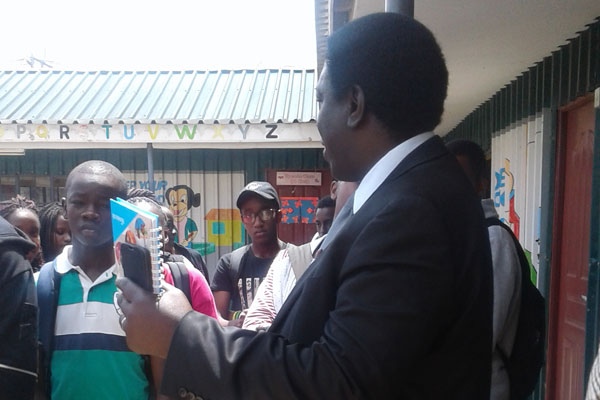
The teachers were found coaching over 50 students from various schools across the country at House of Grace Church in Lang’ata, Nairobi.

The arrest follows a tip off to the effect that the teachers had been conducting holiday tuition for three weeks now for students from various schools at the Church premises.

Education Principal Secretary Belio Kipsang dispatched a team of Education officers to the church.

“Holiday tuition is banned and we will not relent in our crackdown,” said Dr Kipsang.

The Officials were accompanied by the police from the Nyayo Stadium Police Post, led by Inspector Agnes Makau.

The Principal Quality Assurance and Standards officer, John Okiya addressed the students and released them to go home until January 4, next year, when schools open.

Some of the students attending the illegal tuition are from Kabarak, Sunshine and Loreto Musongari High schools among others.

Last week, the ministry officials, led by Dr Kipsang, raided Happyland Preparatory School, also in Nairobi, and had its head teacher arrested for allowing holiday tuition.

The government has since cancelled the registration certificate of the school.

Under the Section 37(I) of the Basic Education Act, 2013, subjecting pupils to holiday tuition is a crime that attracts a fine of Sh100,000 and/or a jail term not exceeding a year.

Fuente noticia: http://www.nation.co.ke/news/education/Five-teachers-arrested-conducting-illegal-tuition-in-church/2643604-3469378-bhhj70/index.html

Comparte este contenido:

Venezuela: Más de 1.500 estudiantes ingresarán en septiembre a Unearte

Caracas / 20 de julio de 2016 / Por: AVN / Fuente: http://www.abrebrecha.com/

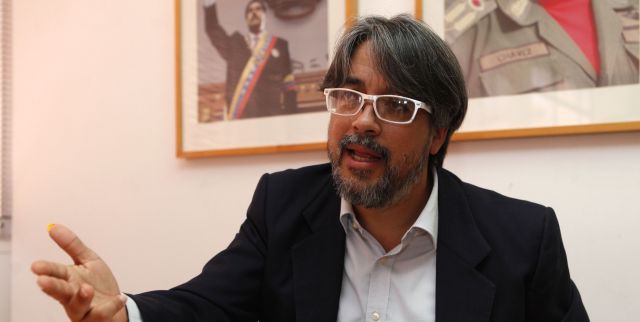
A partir de septiembre, más de 1.500 estudiantes comenzarán a formarse en la Universidad Nacional Experimental de las Artes (Unearte) luego de ser asignados a través del Sistema Nacional de Ingreso Universitario, informó este lunes el rector de la casa de estudio, Néstor Viloria.

Estos nuevos ingresos se sumarán a la matrícula de 3.380 estudiantes que hay en los ocho núcleos de este centro universitario del país.

También, en entrevista con la Agencia Venezolana de Noticias, destacó que la universidad funciona con normalidad y que han recibido el presupuesto correspondiente por parte del Ejecutivo, política que se mantiene a pesar de la baja de los precios del barril de petróleo, principal ingreso nacional.

Ante esta situación, en la se requiere de un esfuerzo país, sostuvo que las artes «son un espacio de producción permanente» mediante obras de teatro, presentaciones de danza, muestras de pintura, de fotografía y conciertos, entre otros.

La Unearte fue creada en 2008 por iniciativa del presidente Hugo Chávez. Se encarga de la formación exclusiva de las artes en áreas como Artes Plásticas, Música, Teatro, Danza, Artes Audiovisuales, Historia y Educación para las Artes.

Fuente noticia: http://www.abrebrecha.com/474897_M%C3%A1s-de-1.500-estudiantes-ingresar%C3%A1n-en-septiembre-a-Unearte.html

Comparte este contenido:

EEUU: Clinton Embraces Sanders’ Plan for Tuition Free College

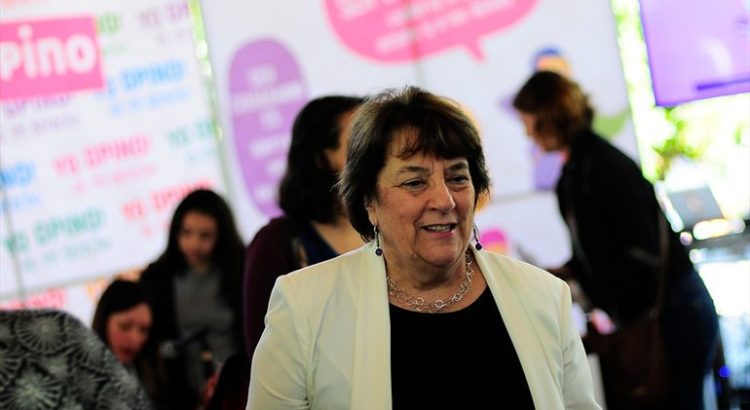
América del Norte/EEUU/Julio 2016/Autor: Harper Neidig / Fuente: The Hill

Resumen:  Hillary Clinton propuso el miércoles un plan para eliminar la matrícula universitaria para la mayoría de las familias, un tema empujado por Democrática presidencial principal rival Bernie Sanders.

Hillary Clinton on Wednesday proposed a plan to eliminate college tuition for most families, a topic pushed by Democratic presidential primary rival Bernie Sanders.

Under the plan, families making $125,000 or less will pay no tuition at public, in-state universities and colleges.

“The plan will be phased in over five years, but families earning $85,000 or less will immediately be able to attend an in-state college or university without paying any tuition,” reads an announcement on Clinton’s website.

The presumptive Democratic presidential nominee also unveiled a plan to use executive actions to offer a three-month moratorium on payments for those with federal student loans.

«American families are drowning in debt caused by ever-rising college costs, and it is imperative that the next president put forward a bold plan to make debt-free college available to all,» Clinton said in a statement. «My New College Compact will do just that — by making sure that working families can send a child or loved one to college tuition-free and by giving student debt-holders immediate relief.

“While [presumptive GOP presidential nominee] Donald Trump offers little more than broken promises to get rich quick, I remain committed to ensuring that a college degree is attainable for anyone in this country with the desire and determination to earn one.»

The new Clinton plan does not go as far as one proposed by Sanders, who has not yet endorsed her and is continuing to pressure the party to adopt some of his proposals.

The Vermont senator has made universal, tuition-free public college and university a major platform of his campaign. Clinton’s plan, according to the announcement, would relieve about 80 percent of students from the burden of tuition.

Shortly after the announcement, Sanders lauded Clinton for the proposal, saying the compromise «will have a profound impact on the future of our country.”

“I want to take this opportunity to applaud Secretary Clinton for the very bold initiative she has just brought forth today for the financing of higher education. This proposal combines some of the strongest ideas she fought for during the campaign with some of the principles that I fought for. The final product is a result of the work of both campaigns,» he said in a statement.

“Let me be very clear. This proposal, when implemented, will revolutionize the funding of higher education in America, improve the economic future of our country and make life immediately better for tens of millions of people stuck with high levels of student debt.»

Sanders refused to offer a timeline for endorsing Clinton during a meeting with House Democrats on Wednesday.

Even so, lawmakers viewed the coordination between the two campaigns Wednesday as a positive step toward party unity ahead of the convention later this month.

“Today is evidence that Sen. Sanders and Secretary Clinton are working together,” said Rep. Ben Ray Luján (D-N.M.), the chairman of the House Democrats’ campaign arm.

«He’s very committed to making sure that our message of doing something for the middle class is going to resonate,» said Rep. Jackie Speier (D-Calif.).

Fuente de la noticia: http://readersupportednews.org/news-section2/318-66/37864-clinton-embraces-sanders-plan-for-tuition-free-college

Fuente de la imagen: http://readersupportednews.org/images/stories/article_imgs21/021735-hillary-070616.jpg
Comparte este contenido:

Reino Unido: Students vote to sabotage plans to rate teaching in universities

Resumen: Los estudiantes han encontrado un arma en su batalla para evitar que el gobierno eleve aún mas las tasas de matrícula en una conferencia en Brighton han votado para sabotear dos encuestas claves, a menos que el gobierno retire las reformas pautadas. Los estudiantes afirman que van a boicotear la Encuesta Nacional de Estudiantes a menos que el gobierno retira su plan para un Marco de Excelencia en la Enseñanza, dicen los delegados de la conferencia NUS


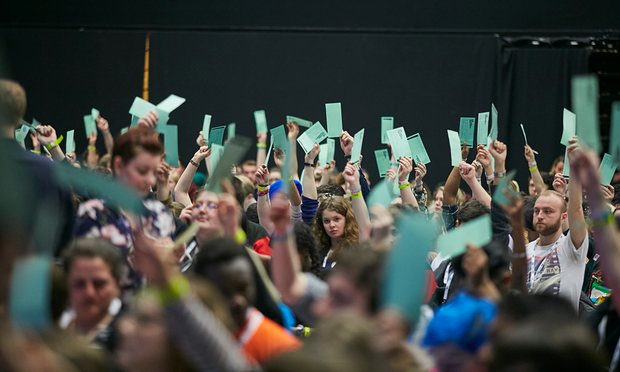
Students have found a weapon in their battle to stop the government raising tuition fees still further: at a conference in Brighton they have voted to sabotage two key surveys unless the government withdraws its planned reforms.

The National Union of Students will boycott both the National Student Survey (NSS) and the Destination of Leavers from higher education survey (DLHE), which provide statistics the government needs to carry out its plans.

The government intends to introduce a Teaching Excellence Framework (Tef) which will rank universities on a range of factors, including how well students rate them in the NSS. The DLHE reveals what students are doing six months after graduation, and is used to determine a university’s “employability” rating.

Universities that do well in the Tef are likely to be allowed to charge higher fees. If the government refuses to abandon this plan, the NUS says it will mobilise students to campaign for a boycott.

Anastazja Oppenheim, from the National Campaign Against Fees and Cuts, said: “We know that if students, en masse, either refuse to fill in the surveys at all or sabotage it by giving artificially maximum or minimum scores, the results would become of little use and would wreck plans for the Tef. We hope it will act as a major disincentive for the government to go through with their agenda.”

Hope Worsdale, from the University of Warwick, added: “The NSS is used as a weapon to beat academic staff with, and as an excuse to cut to courses and close departments. The current reforms would further destroy public education as we know it, so it is fantastic news that the NUS has chosen to boycott these surveys in order to defeat them.”

However, students who voted against the motion are concerned that the boycott could alienate students from future consultations with the government.

Rosie McKenna, vice-president of academic representation at Edge Hill University, said the boycott “wasn’t very productive”.

“Voting for an amendment to the Tef motion, rather than completely disengaging with it, would have supported student unions better. It would have meant constructively engaging the government about the metrics we use,” she said.

Millie Thomas, a student at the University of Sunderland, doesn’t support the boycott because the NSS gives student unions valuable insights into what students think. “As a student officer, it’s the best way I can get information about students,” she says.

The campaign is due to start in September 2016, when the NUS plans to collect pledges from students that they will carry out the boycott if the government refuses their demands.

Fuente de la noticia: http://www.theguardian.com/education/2016/apr/20/students-vote-to-sabotage-plans-to-rate-teaching-in-universities
Fuente de la imagen: https://i.guim.co.uk/img/media/82be3b223d3ba74342a534b0e416f9417ece4f13/0_144_2160_1296/master/2160.jpg?w=620&q=55&auto=format&usm=12&fit=max&s=6ebbb83ee417a26f2c64126191928403
Comparte este contenido:

Uganda: Govt reverses Makerere University 60 percent fees policy


África/Uganda/Abril 2016/Fuente:Daily Monitor /Autor: Emmanuel Ainebyoona

Resumen: Protestas en la Universidad de Makerere por la política impuesta en la cual los estudianes deben realizar el pago del 60 por ciento de la matricula para la sexta semana del semestre antes de que puedan ser autorizados para registrarse, presentar trabajo del curso y sentarse para los exámenes, el Gobierno ha intervenido en la situación a fines de coorperar en el cese de la huelga de una semana que ha paralizado la institución.

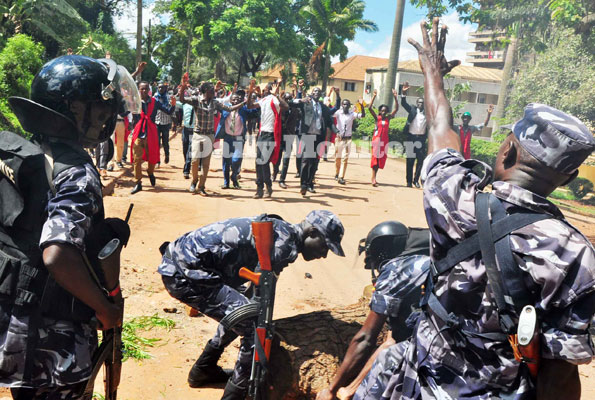
Kampala — Government has directed Makerere University to revoke the 60 per cent fees policy so as to end a week-long strike that paralysed the institution last week.

The controversial fees policy requires students to have cleared 60 per cent of tuition paid by the sixth week of the semester before they can be allowed to register, submit course- work and sit for tests.

In a letter dated April 10, to the Chairman of the University Council, the institution’s highest decision making organ, Prime Minister Dr Ruhakana Rugunda said all attempts to enforce the policy have failed.

«Government has learnt with concern of the unrest at Makerere University over the payment policy of 60 per cent of fees within the first six weeks of the semester. Government has further learnt that the University Council has agreed to suspend the policy pending review,» Dr Rugunda wrote.

«To our understanding, this policy has been suspended on several occasions after unrest among the student community. This is an indication that the Policy is not workable. This, therefore, is to ask you to revoke the policy with immediate effect,» Dr Rugunda directed.

The directive followed a meeting convened on Sunday by Prime Minister Rugunda at his office in Kampala. It was attended by Makerere University Council represented by the Chairperson of its Finance Committee, Mr Thomas Tayebwa, the Vice Chancellor Prof Ddumba Ssentamu and the Inspector General of Police Gen Kale Kayihura.

Both the University Council and the administration agreed to implement the directive with immediate effect, according to a statement issued after the meeting.

The Prime Minister asked the University Council to start consultations with various stakeholders to put in place mutually acceptable measures for tuition collection that should be in place by the start of next semester.

Dr Rugunda said government supports the University Council’s decision, based on the students’ request, that all the fees due to the university be paid by the end of the 12th week of the current semester to enable the smooth administration of examinations.

Fuente de la noticia:http://www.monitor.co.ug/News/Education/Govt-reverses-Makerere-University-60–fees-policy/-/688336/3153810/-/7w7jn9/-/index.html

Fuente de la imagen:http://www.monitor.co.ug/image/view/-/3149840/highRes/1298454/-/maxw/600/-/aootwc/-/latest01+pix.jpg

Comparte este contenido:

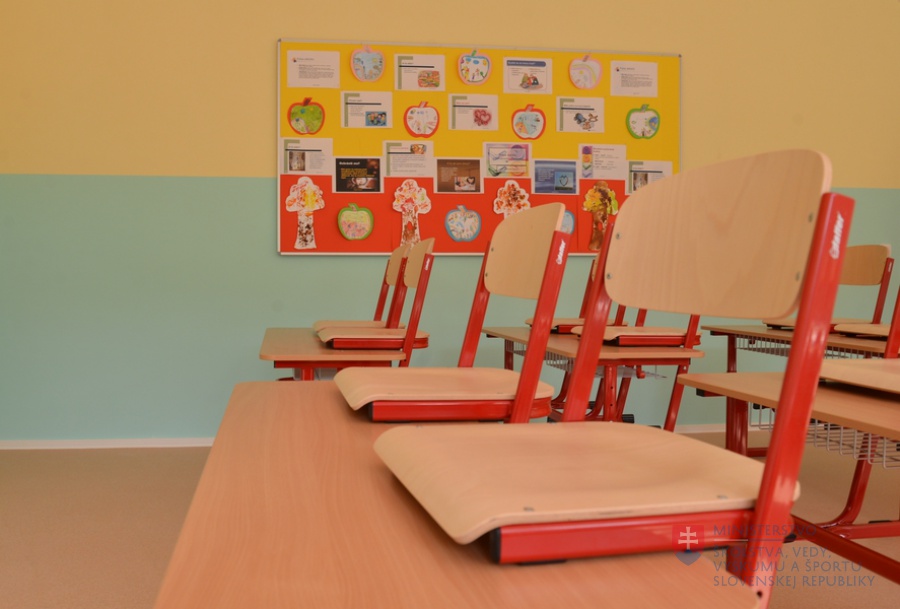
Tendencias del Desarrollo de la Educación Regional Eslovaca

Escuela de Eslovaquia

Eslovaquia /Febrero de 2016/ Autor: Instituto de Información y Pronóstico de Educación. Fuente: ÚIPŠ.

 Desde principio del Milenio, la educación eslovaca tiene una tendencia claramente descendente,  el desarrollo real desde 2003 sugiere que estas tendencias deben ser corregidas. Este cambio da respuesta a la investigación de las proyecciones demográficas de la población de la República Eslovaca realizada por el Centro de Actualización de la Información Científica y Técnica de la República Eslovaca que presentó un análisis de tendencias de desarrollo de la educación regional.

Como lo indica el desarrollo demográfico de la población escolar, podemos esperar en los próximos años, más cambios cuantitativos en la estructura del sistema de las escuelas y las instalaciones escolares para la educación regional. Se espera continuar el descenso de estudiantes de la escuela secundaria. Por el contrario, las escuelas primarias están empezando a crecer y los jardines de infancia son las escuelas que registran una presión creciente de la población.

El análisis de la evolución de los indicadores de los  jardines de infantes, escuelas primarias y secundarias en relación con las nuevas proyecciones demográficas de las tendencias se refiere a un conjunto de indicadores básicos y derivados de la educación regional desde el año 2000 después de que el año escolar 2015/2016. Categoriza la fase de desarrollo, cuantificarlos, mientras que en términos generales se anticipa a su progreso en un futuro próximo. El análisis de tendencias es parte de una actividad de pronóstico global de los subsistemas regionales del Departamento de Educación CVTI SR destinadas a jardines de infantes, escuelas primarias y secundarias: 1. Evolución de los indicadores de educación infantil, primaria y secundaria con ofertas de segunda salida con el desarrollo y la representación del segmento privado en el sistema de escuelas e instalaciones escolares: SR.  2. El desarrollo de las escuelas no estatales y las instalaciones escolares.

Fuente de la Noticia: http://www.uips.sk/regionalne-skolstvo/kvantitativna-prognoza-vyvoja-ms-zs-a-ss-do-roku-2025

Fuente de la Imagen: http://www.minedu.sk/data/images/35866.jpg

Procesado por: Prof. (Dr.) Elvis Ramírez T. Docente Jubilado (UPEL-IPC) Post-Doctorado en Educación Ambiente y Sociedad, Doctor en Cs, de la Actividad Física y el Deporte, Magíster en Educación, Estudios Avanzados en Investigación (DEA), coordinador de la Línea de Investigación Ciencias de la Actividad Física y el Deporte (IPC), Investigador A2 (PEII).


Comparte este contenido:
Page 5 of 5
1 3 4 5