Page 640 of 750
1 638 639 640 641 642 750

El Consejo Superior de FLACSO incorporó las siguientes disposiciones al Reglamento de personal de la institución (Resolución CSXXXIX/10.2016):

Fuente Flacso / 8 de Junio de 2016

SUBCAPITULO III
IGUALDAD DE GÉNERO
ARTÍCULO 41
De la igualdad de género

Para promover la igualdad de oportunidades en el acceso, la promoción y el empleo en las unidades académicas de FLACSO; la prevención y atención al acoso y hostigamiento sexual y la no discriminación entre hombres y mujeres; a través de acciones afirmativas y a favor del personal, con el propósito de mantener un ambiente de trabajo armonioso y favorecer la igualdad de género se adoptarán las acciones contempladas en los siguientes incisos:

a) Cada unidad académica elaborará un conjunto de normas escritas para impulsar la igualdad de oportunidades de género en los puestos y procesos de toma de decisiones de alto nivel.

1. Dirección, Coordinación Académica o subdirección
2. Representaciones de titulares y suplentes de y de personal de servicio técnico y administrativo
3. Representaciones de titulares y suplentes de profesores/as

b) En las unidades académicas se aplicará un procedimiento formal escrito que asegure un trato igualitario en los procesos de reclutamiento y selección del personal, que garantice la igualdad de oportunidades y la no discriminación por género en los procedimientos, descripción de perfiles de puesto y contratos laborales y en todas las categorías y niveles del personal de la FLACSO.

c) Las Unidades Académicas implementarán un plan de capacitación y sensibilización para el personal basado en un diagnóstico que se realizará cada dos años de la situación de equidad e igualdad en el ámbito institucional, el mismo será conocido por el Consejo Superior y la Asamblea.

d) Elaborar y aplicar en cada unidad académica normas que garanticen la igualdad de oportunidades para la evaluación y promoción del personal académico, técnico y administrativo, en situaciones tales como maternidad, lactancia, cuidado y similares.

e) Cada unidad académica establecerá por escrito y aplicará normas de igualdad de género en las condiciones de trabajo, pago y prestaciones para el personal académico de servicio técnico y administrativo.

f) Cada Unidad Académica establecerá por escrito un conjunto de disposiciones que concilien el desarrollo profesional del personal con el ejercicio de las responsabilidades familiares del cuidado.

g) Cada Unidad académica establecerá una instancia formal encargada del establecimiento y ejecución de políticas y protocolos de prevención de acoso sexual así como del procesamiento de dichos casos ante el Comité de Ética.

h) El Comité Directivo nombrará una comisión permanente de igualdad de género que monitoree, evalúe y proponga política de mejora sobre estos temas.
Comparte este contenido:

«O educación o exámenes» . Un artículo de Francisco Giner de los Ríos

Fuente Orcasur / 7 de junio de 2016

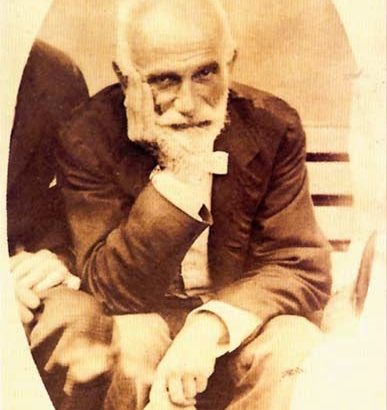
Reproducimos aquí unos párrafos del artículo «O educación o exámenes» que escribió en 1894 D. Francisco Giner de los Ríos.

O Educación o exámenes. 1894
por Francisco Giner de los Ríos

El maestro, esclavizado a una tarea servil, no puede consagrar lo mejor de sus fuerzas a aquello que más responde a su vocación y que él realizaría con superior desempeño, sino a ese ideal de satisfacer a los examinadores: todo lo demás es perjudicial, o cuando menos artículo de lujo, a que no hay tiempo ni posibilidad de atender. Mientras tanto, por su parte, el discípulo tiende a encogerse de hombros ante la idea nueva, la investigación original, el punto de vista personal y fresco, que es lo único que puede despertar su interés, abrir su espíritu, dilatar su horizonte, fortalecer su inteligencia y su amor al saber y al trabajo. ¿De qué sirve todo esto en un examen?
[…]

Si por examen se entendiese la constante atención del maestro a sus discípulos para darse cuenta de su estado y proceder en consonancia, ¿quién rechazaría semejante método sin el cual no hay obra educativa posible? Pero justamente las pruebas académicas a que se da aquel nombre constituyen un sistema en diametral oposición con ese trato y comunión constante. Pues, donde esta existe, aquel huelga, y, por el contrario, jamás los exámenes florecen, como allí donde el monólogo diario del profesor pone un abismo entre él y sus alumnos.[..]

La enseñanza es función viva, personal y flexible.

Fuente: Artículo recogido en
Obras selectas de Francisco Giner de los Ríos. Edición de Isabel Pérez-Villanueva Tovar.
Austral-Summa. 2004

El enlace original: http://educacion-orcasur.blogspot.com.es/2014/08/o-educacion-o-examenes-un-articulo-de.html?spref=bl

Comparte este contenido:

México: Brutal represión a maestros en Chiapas (VÍDEO).

Fuente: Insurgencia Magisterial / 7 de Junio de 2016

Así reprime el sargento Nuño a maestros hoy en Chiapas.

Cualquiera que ve estas imágenes podría pensar que es Libia, Palestina, Siria o Israel en conflicto religioso o de territorio.

Es México, es Chiapas, es el estado más pobre de la patria mexicana defendiendo con heroísmo el carácter público de la educación.

Puede verse también como la sociedad civil es víctima del uso indiscriminado de bombas de gases lacrimógenos.

Fuente: https://www.facebook.com/pavelguevarae/posts/1119480408095815

https://youtu.be/H7I_Pw1DMCc


Comparte este contenido:

Ban Ki-moon pide poner la ciencia y la tecnología al servicio de la lucha contra la pobreza

Fuente Naciones Unidas / 7 de junio de 2016

Durante los próximos 15 años el progreso en las ciencias, las tecnologías y la innovación será clave para cumplir con los Objetivos de Desarrollo Sostenible (ODS), desde la erradicación de la pobreza hasta la agricultura y la lucha contra el hambre, así como el combate al cambio climático.

Así lo consideró el Secretario General de la ONU, Ban Ki-moon, durante un Foro sobre el tema celebrado en la sede de la ONU en Nueva York, con el objetivo de reunir anualmente a los interesados en esta área para recabar ideas, hallar incentivos y aumentar y adoptar soluciones progresistas en la materia.

Ban instó a los participantes a extender los beneficios de la ciencia, la tecnología y la innovación a los más vulnerables, ya que puede constituirse en un vehículo de inclusión.

“Hará falta apropiación, participación e involucramiento activo de todos los sectores de la sociedad para que el desarrollo sostenible se haga realidad en los próximos 15 años (…). Los gobiernos nacionales son los principales responsables de su implementación y deben tomar la delantera estableciendo planes nacionales. Pero esos planes deben involucrar a las autoridades locales, a la sociedad civil, a los negocios y el sector privado, a las organizaciones no gubernamentales y a la academia”, propuso el Secretario General.

También se refirió a la importancia de establecer nuevas asociaciones y mayor cooperación de los parlamentos, las instituciones regionales e internacionales para conseguir soluciones innovadoras de alcance global.

Ban Ki-moon instó, por otra parte, a no confinar el tema únicamente al desarrollo de nuevos equipos o programas informáticos. Señaló que la innovación es una actitud y una mentalidad que invitan a cuestionar presunciones, a repensar sistemas y procedimientos establecidos, y a introducir nuevas estrategias.


Link original: http://www.un.org/spanish/News/story.asp?NewsID=35216&utm_content=buffer074dd&utm_medium=social&utm_source=twitter.com&utm_campaign=buffer#.V1d1DjXhDIV

Comparte este contenido:

Ofsted issues warning about education in the East Midlands

Fuente: www.gov.uk / 7 de junio de 2016

Educational provision for thousands of children in the East Midlands is distinctly second division, Ofsted warns.

Low standards in schools across the East Midlands region of England are exposing the educational fault line dividing the nation, Ofsted’s Chief Inspector said today.

Sir Michael Wilshaw highlighted figures showing the East Midlands as the worst performing region in the country on a range of key indicators.

He blamed a culture of complacency and a lack of clear accountability for the poor educational performance of towns and cities across the region and across all phases.

Sir Michael made his comments on the same day that Ofsted’s Regional Director for the East Midlands, Chris Russell, published an open letter to all those responsible for education in Northamptonshire. In the letter, he sets out his deep concerns about the low standards of achievement across the county.

Chris Russell said that far too many children and young people in Northamptonshire are being deprived of the opportunity to gain a good education, with weaknesses in the quality of provision persisting across every age group.

Sir Michael pointed out that these problems are not confined to this one local authority area, but are mirrored in a number of neighbouring towns and cities, and across the East Midlands region as a whole. For example:

  • the East Midlands is currently the joint lowest performing Ofsted region in terms of inspection outcomes, with almost one in three secondary schools judged less than good at their last inspection
  • the region had the worst GCSE results in England in 2015; nearly 46% of pupils did not achieve the benchmark five or more A* to C grades including English and maths
  • nearly 73% of East Midlands’ pupils eligible for free school meals (FSM) failed to achieve this benchmark
  • in the East Midlands children in care did worse than in any other region; just 10.2% of them achieved 5 or more A* to C grades in GCSE examinations, including English and maths.

Across the different phases of education, children in some of the region’s major urban areas and shire counties fare particularly badly:

  • Leicester is the poorest performing local authority in the country for pupil outcomes at the end of the Early Years Foundation Stage – with only 51% of the city’s children achieving a good level of development, compared with 66% nationally
  • Nottingham is England’s poorest performer in the phonics screening check at key stage 1 – just 69% of the city’s six and seven-year-olds met the required standard in 2015. In Derby, the figure was just 70%, compared with 77% of pupils nationally
  • Northamptonshire is one of the worst-performing local authority areas in the country for the achievement of disadvantaged children at key stage 2. Only 59% of FSM pupils in the county achieved the expected standards in reading, writing and mathematics at the end of primary school compared with 66% nationally. Their peers in Lincolnshire, Leicestershire and Derby fared nearly as badly, with just 60% achieving the expected standards
  • Derby and Nottingham were among the 10 lowest ranking local authority areas nationally for GSCE examinations – only 47.6% and 42.4% of pupils respectively achieved the benchmark five or more A* to C grades including English and maths in 2015

Sir Michael Wilshaw said:

These statistics should serve as a wake-up call. The poor quality of education in many parts of the East Midlands often passes under the radar as attention is focused on underperformance in the bigger cities of the North and West Midlands, like Manchester, Liverpool and Birmingham.

However, in many ways, the problems in this region symbolise more than anywhere else the growing educational divide between the South and the rest of England that I highlighted in my last Annual Report.

The Chief Inspector pointed out that there are very few high performing multi-academy trusts (MATs) in the region, while the support and challenge to schools from local authorities has not led to rapid enough improvement.

Sir Michael argued that there has been a collective failure by education and political leaders in the region to tackle mediocre provision and a culture of low expectations. While this is a particular problem among low income White British communities, the low level of GCSE attainment in places like Leicester – an area with a minority white British population – demonstrates that this extends beyond one ethnic group.

There are some bright spots across the region that are bucking these trends. Babington Community College, Leicester; Dronfield Henry Fanshawe and Chapel-en-le-Frith, both in Derbyshire are all outstanding secondary schools doing their best for their students. Meanwhile, outstanding primaries include Christ the King Primary School in Leicester City, Norbridge Primary in Worksop, Nottinghamshire and Carlton Road Academy in Boston, Lincolnshire. However, examples such as these are too scarce in the East Midlands.

Sir Michael said:

National politicians and policymakers must start to worry more about what is happening north of the Wash. They should be asking why schools in large parts of the East Midlands aren’t doing better.

Derby, the home of Rolls Royce, has a proud history of engineering excellence, but local secondary schools are failing to deliver top rate GCSE results.

Nottingham has three widely respected initial teacher education providers on its doorstep, but at primary level its phonics results are the worst in the country. At secondary level, its schools are amongst the poorest performers for GCSE examinations.

Leicester, meanwhile, has enjoyed great sporting success and is home to the new champions of English football. Yet when it comes to education, its ambitions and achievements are decidedly second division.

Our future prosperity as a nation depends on us delivering a better quality of education to all our children, wherever they live. As things stand, too many schools in the East Midlands are failing to equip young people with the knowledge and skills the country needs to keep pace with its international competitors.

As Chief Inspector, I am calling on local politicians across the region to do significantly more to challenge and support their local schools, regardless of whether they are academies or under local authority control.

Sir Michael’s view is echoed by Ofsted East Midlands Regional Director Chris Russell in his letter to the main education players in Northamptonshire.

Mr Russell says:

Across Northamptonshire there are too many early years providers and schools of all types and phases that are not good enough.

As a result, children do not achieve as well as they should. Disadvantaged children in the county are performing particularly poorly. There needs to be greater oversight and co-ordinated action from those accountable for educational provision in the county.

Note to editors

Read the letter from Chris Russell.

Yesterday, Chris Russell addressed the East Midlands Challenge conference in Nottingham, where he spoke about Ofsted’s views on what inspectors look for. Mr Russell also discussed priority learner groups and what good practice inspectors have seen around the region. This conference was aimed at Teaching School Alliances.

 

link original https://www.gov.uk/government/news/ofsted-issues-warning-about-education-in-the-east-midlands

Comparte este contenido:

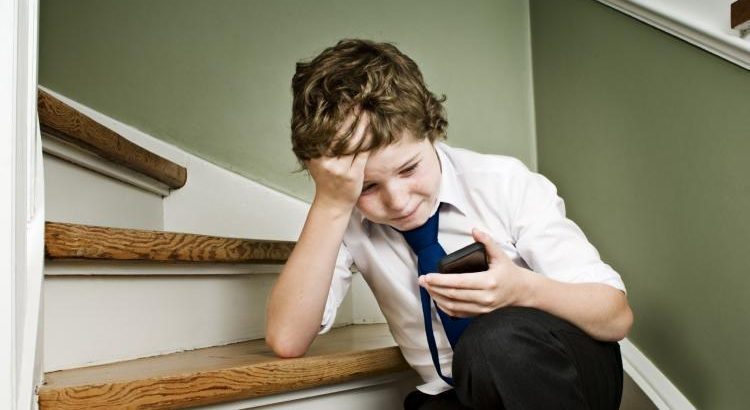
Children with mental health issues wait 10 years for support, report finds

Fuente TES Reporter/ 7 de junio de 2016

Schools have an ‘important role’ in protecting children’s mental health and raising awareness, charity director says

Children with mental health problems are facing a delay of a decade between displaying their first symptoms and actually getting help, a new report has revealed.

Opportunities to offer timely and effective support to children are «often» being missed and schools can help, according to the Centre for Mental Health report.

While mental health problems among pupils are common, awareness is poor and many attempts by parents to get help for their children are unsuccessful, the report states.

In the 10 years that many UK children wait to get help, problems become «entrenched» and escalate until they reach «crisis», the document warns.

Lorraine Khan, associate director for children and young people at the Centre for Mental Health, has said schools have a particularly «important role» in protecting children’s mental health.

«This can be done most effectively through a ‘whole-school approach’ including classroom-based skills development and awareness raising, anti-bullying programmes, raised staff mental health literacy, and speedy access to help for children who need it,» she said.

“We need to take every opportunity to support families and schools to build firm foundations for children’s mental health. We need to raise awareness of the first signs of poor mental health and reinforce the importance of getting early help.

“Waiting for a child’s mental health to deteriorate until it hits crisis point causes untold distress and damage to their lives and carries a heavy social and economic cost. We have to take action now to offer high-quality help quickly to children and young people everywhere.”

‘Letting down a whole generation’

Brian Dow, director of external affairs at the charity Rethink Mental Illness, believes an «inadequate education, limited support and stigma» around mental health is «letting down a whole generation».

He added: «We need to see better support for parents and increased mental health awareness in schools; as well as improved access to services to put an end to this waiting game for treatment.»

A government spokesman said: «No one should have to wait too long for mental health care, or be sent away when in need.

«That is why we have introduced the first mental health access and waiting time standards in NHS history and are putting a record £1.4 billion into transforming support for young people in every area of the country.

«This funding will improve care in the community and schools to reduce waiting times and make sure young people get support before they reach a crisis point.»

Enlace original: https://www.tes.com/news/school-news/breaking-news/children-mental-health-issues-wait-10-years-support-report-finds


Comparte este contenido:
Page 640 of 750
1 638 639 640 641 642 750