Page 2775 of 6196
1 2.773 2.774 2.775 2.776 2.777 6.196

O’zbekiston: Institutda 2018-2019 o’quv yili uchun qabul kvotalarini shakllantirish bo’yicha yig’ilish o’tkazildi

O’zbekiston / 2018 yil 25 fevral / Muallif: Yangiliklar / Manba: Andmiedu

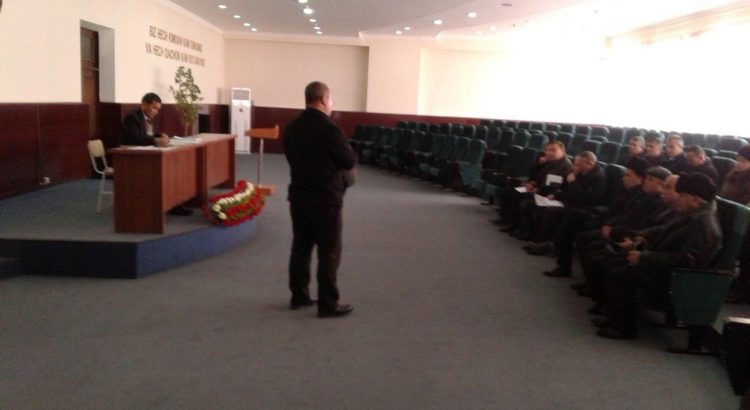
2018 yil 17 fevral kuni institutning katta anjumanlar zalida yig’ilish o’tkazildi.

Ushbu yig’ilishni O’quv ishlari bo’yicha prorektor Q.Ermatov olib bordi.

Yig’ilishda institutning 2018/2019 o’quv yili uchun qabul kvotasi bo’yicha

ta’limning kunduzgi, sirtqi va kechki shakliga korxona va tashkilotlarning

kadrlarga bo’lgan talab va extiyojlaridan kelib chiqib shakllantirilgan

ma’lumotlar Viloyatning iqtisodiyot va hududlarni kompleks rivojlantirish

bosh boshqarmasiga taqdim etilganligi bildirildi.

Marketing bo’limi boshlig’i, fakultet dekanlari va yo’nalish kafedra

mudirlariga o’z yo’nalishlari va mutaxassisliklari bo’yicha bakalavriat

ta’lim yo’nalishlarining kunduzgi, sirtqi va kechki ta’lim shakllari  va

magistratura mutaxassisliklari bo’yicha korxona va tashkilotlardan

tushgan talab va ehtiyojlar sonini yana bir bor muvofiqlashtirish, va

yetishmayotganlarini shakllantirish bo’yicha yo’l qo’yilgan kamchiliklarni

bartaraf etish bo’yicha topshiriqlar berildi.

Vazirlar Mahkamasining 2006 yil 10 fevraldagi 20-son qarori bilan

tasdiqlangan “Oliy ta’lim muassasalariga pedagog xodimlarni tanlov

asosida ishga qabul qilish tartibi to’g’risida nizom” talabalaridan kelib

chiqib kelgusi tanlovlarda  barcha professor-o’qituvchilar fol qatnashishi

lozimligi to’g’risida Kadrlar bo’limi boshlig’i Q.Mirzaev o’z so’zida to’xtalib o’tdi.

SHuningdek, fakultet dekanlariga va barcha kafedra mudirlariga 2017-2018

o’quv yilining kuzgi semestri yakuni bo’yicha 2-qaydnomalarni yakunlashlari

xususida aniq ko’rsatmalar berildi. Yig’ilishda fakultet dekanlari, kafedra mudirlari

va bo’lim boshliqlari qatnashdilar.

Yangiliklar manbasi:

https://atm.andmiedu.uz/2018/02/19/institutda-2018-2019-oquv-yili-uchun-qabul-kvotalarini-shakllantirish-boyicha-yigilish-otkazildi/

Comparte este contenido:

Crna Gora: RAZMJENA ISKUSTAVA O AKADEMSKOM INTEGRITETU

Crna Gora / 25. februara 2018 / Autor: Pisanje / Izvor: Zuns

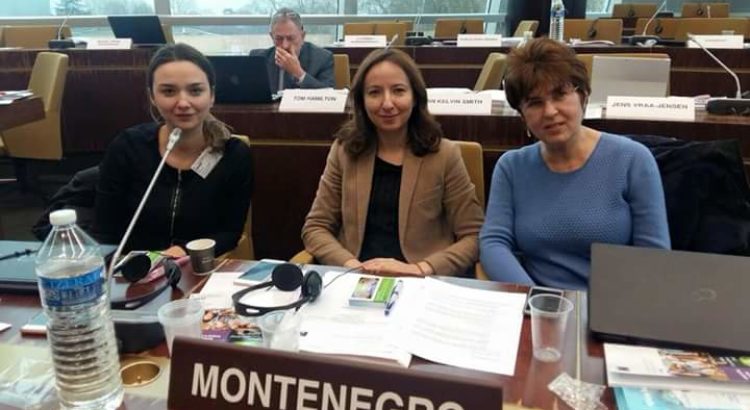
Predstavnici  Ministarstva prosvjete učestvovali su na drugom plenarnom sastanku Platforme Savjeta Evrope o etici, transparentnosti, integritetu u obrazovanju i borbi protiv korupcije u obrazovanju, koja je održana u Strazburu.

Jačanje integriteta je od naročitog značaja za Crnu Goru s obzirom na to da se radi na pripremi zakona o akademskom integritetu, te će iskustva razvijenih zemalja zasigurno biti od velike koristi Crnoj Gori.

Ovim zakonom urediće se otvorena pitanja u toj oblasti i uticati na očuvanje akademskog integriteta na način što će biti preciznije i jasnije propisane odredbe kako u vezi sa plagiranjem, tako i mnogim važnim elementima u dijelu primjene etičkog kodeksa akademske zajednice.

Kao jedan od posebno važnih aspekata akademskog integriteta, na sastanku je istaknuta uloga tijela za osiguranje kvaliteta,  što je još jedna od pozitivnih strana crnogorskog obrazovnog sistema, s obzirom na to da će ubrzo početi sa radom i Agencija za kontrolu i obezbijeđenje kvaliteta visokog obrazovnja.

Sastanku u Strazburu prisustvovale su direktorica Direktorata za visoko obrazovanje u Ministarstvu prosvjete Mubera Kurpejović i načelnica Direkcije za visoko obrazovanje Biljana Mišović.

Izvor vesti:

http://www.zuns.me/prosvjetni-rad/clanak/razmjena-iskustava-o-akademskom-integritetu

Comparte este contenido:

Espainia: Hezkuntzak 190 Chromebook ordenagailu eramangarri jarri ditu ikastetxean, “Bat -Bat” eredu pilotuan erabiltzeko

Espainiako / 2018ko otsailaren 25a / Egileak: Redaction / Iturria: Educación Navarra

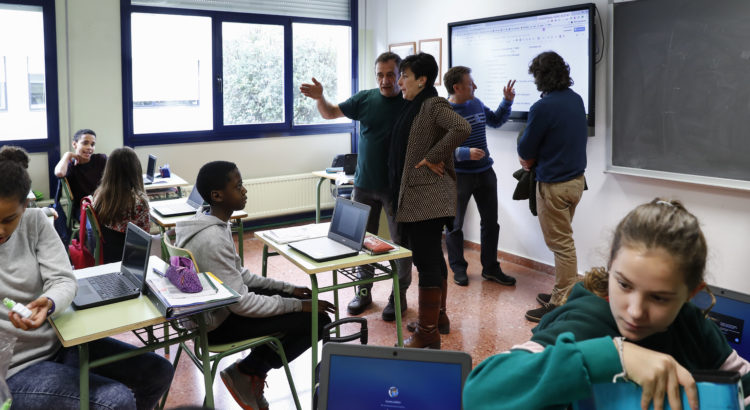
Maria Solana Hezkuntza kontseilaria Navarro Villoslada institutuan izan da gaur, “1-1 eredua” programa pilotuan parte hartzen ari den ikastetxeetako bat, Zizur, Alhama eta Caro Baroja institutuekin batera.

Bat-Bat ereduarekin ikasleen trebakuntza digitalean lan egin nahi du Hezkuntza departamentuak eta lau ikastetxetan ari dira era pilotuan lanean: Navarro Villoslada, Zizur, Alhama eta Caro Baroja. Gaur, justuki, Navarro Villosladan ikasleentzako 149 Chromebook ordenagailu eramangarri jarri dira martxan; aurretik irakasleek 41 jaso zituzten eta dagoeneko 18 orduko formazio saioak ere egin dituzte. Hezkuntza kontseilari Maria Solana ikastetxeko zuzendari Alberto Arriazu Agramontek gidatu du institutura egindako bisitan.

Hezkuntza departamentuak, gainera, dagoeneko amaitu ditu segurtasun arauetara egokitzeko ikastetxean egindako lanak. 429.610,95 euroko inbertsioa izan da, Azpiegitura Zerbitzu-zuzendari Eneko Ardaizek azaldu bezala. Izan ere, zentroak ez zuen irekiera lizentziarik eta 2015ean egindako proiektua orain gauzatu ahal izan da.

Navarro Villoslada institutuak 1.029 ikasle ditu DBH, Batxilergoa eta Nazioarteko Batxilergoa ikasketetan. Horrez gainera, helduen taldea ere badago, gau eskolan batxilergo ikasketak egiten.

Albisteen iturria:

https://www.educacion.navarra.es/it/web/dpto/-/hezkuntza-kontseilaria-navarro-villoslada-institutuan-izan-da-gaur

Comparte este contenido:

Tanzania: wizara ya elimu imewataka walimu nchini watakiwa kujiendeleza kitaaluma

Tanzania / Februari 25, 2018Mwandishi: Chanzo: zanzibar24

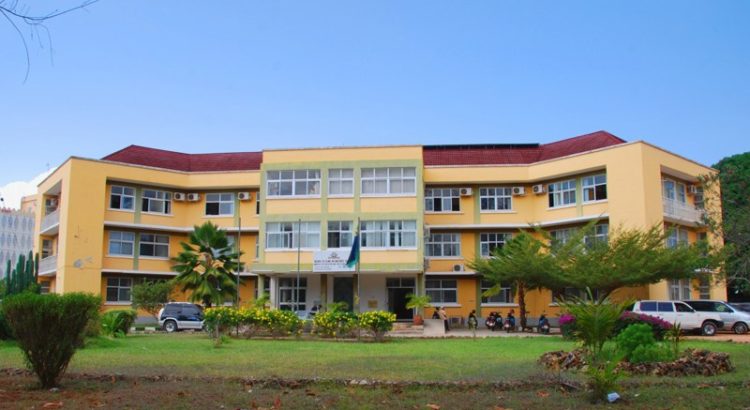
Wizara ya  elimu na Mafunzo ya amali Zanzibar imewataka walimu nchni kujiendeleza kitaaluma ili kutoa elimu inayoendana  na mahitaji ya wanafunzi  katika kuengeza ufaulu wa masomo yao.
 Akizungumza katika mkutano uliyowakutanisha wadau wa sekta ya elimu katika kujadili tathmini ya masomo kwa mwaka mzima, Kaimu waziri wa Wizara ya Elimu Zanzibar Mahmoud Thabit Kombo amesema fani ya elimu imekuwa ikishushwa hadhi kutokana na baadhi ya walimu kushindwa kujiendeleza kitaaluma.
Amesema imefika wakati kwa walimu kujua umuhimu wa kazi zao katika kutoa elimu bora kwa wanafunzi ili waweze kunufaika na elimu inayotolewa katika skuli pamoja na kuengeza kasi ya kuzalisha wataalamu wa fani mbalimbali Nchi.
Aidha Kaimu kombo ametowa wito kwa Wazazi kuengeza kushirikiana na walimu katika kufatilia maendeleo ya wanafunzi ili kuwaengezea walimu ari ya kusomesha jambo ambalo litasaidia kurejesha hadhi na heshima ya walimu Nchini.
 Kwa upande wake Mwakilishi wa mtandao wa Elimu Zanzibar khamis Saidi ametowa wito kwa serikali kuwashirikisha wadau wa sekta ya elimu katika kuandaa bajeti ya sekta hiyo ili bajeti hiyo iweze kutumika kwa mahitaji yaliyokusudiwa .
Aidha amesema sekta ya elimu inahitaji mashirikiano mazuri baina ya serikali na wadau wa maendeleo ili kujua namna ya kuengeza ufaulu kwa wanafunzi.
 Nae mwakilishi kutoka Shirika la kuhudumia watoto nchini UNICEF Masoud Muhammed amesema wataendelea kuuunga mkono juhudi za serikali katika kutatua matatizo yanayo ikabilia sekta ya elimu.
Amesema mpaka sasa kuna matatizo mbalimbali ambayo yansababisha wananfunzi kutopata elimu ipasavyo ikiwemo wingi wa wananfunzi madarasani.
Amesea tatizo hilo pia la waingi wa wananfunzi maskulini linachangi baadhi ya wananfunzi kutoandikishwa skuli na wazeee wao jambalo ambalo linachangia kupotea kwa haki za watoto hao.
Mkutano huo wa siku tatu unaendelea kufanyika mazizini imekusudia kufanya tathmini ya mwaka katika sekta ya elimu ili kujua namna ya kupunguza matatizo yanayoikabilia sekta hiyo.
Chanzo cha Habari:
http://zanzibar24.co.tz/2018/02/19/wizara-ya-elimu-imewataka-walimu-nchini-watakiwa-kujiendeleza-kitaaluma/
Comparte este contenido:

Analysis: How corrupt local officials kill decent education in Africa

Africa/February 24, 2018/Author: Maty Konte/Independent

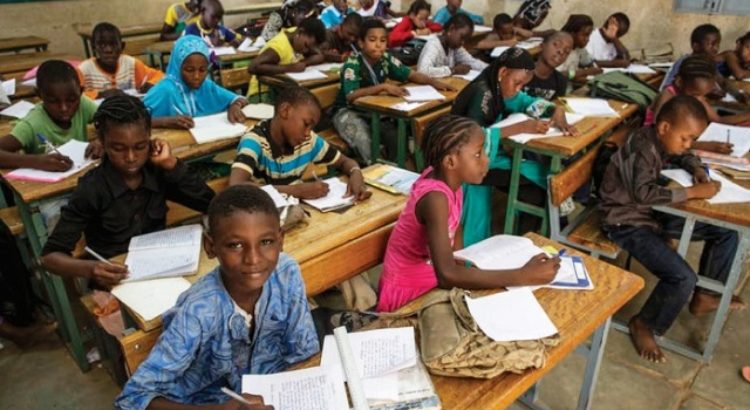
There’s no disputing that many African countries’ education systems are in trouble. Despite significant investment and some improvements linked to the push to achieve the Millennium Development Goals, children in large parts of Africa are simply not being well taught or learning what is needed as they progress through the school system.

A lot of the discussion around this problem centres on resources: people argue that teachers must be trained better. More money must be spent. This is, of course, correct.

And governance is sometimes discussed, though mostly only as it relates to central governments and their responsibilities. But the quality of local governance matters, too. Local governments – those at a regional, provincial level, district or village level – are closer to communities. They are more likely to understand particular populations’ needs. At a practical level, they are often in charge of providing or distributing goods and services. In education this would mean textbooks, furniture and repairs to classrooms.

This suggests that local governance can have a real effect – positive or negative – on the quality of learning resources in a community and, by association, on how children perform?

I set out to explore this effect by using a series of surveys conducted by Afrobarometer in 33 African countries. This is an independent and non-partisan research network which conducts nationally representative surveys in Africa measuring public attitudes on economic, political and social matters. More than 50,000 citizens have been interviewed in the selected surveys I used for this study.

My study showed a strong link between the quality of local governance and the quality of the educational resources in Africa’s public schools.

In fact, I found that corrupt behaviour by local government councilors increased the likelihood that schools would lack textbooks, have poor facilities and overcrowded classrooms, have poor quality of teaching, and would record high levels of teacher absenteeism. This finding stands no matter how much money a particular country’s central government had invested in education.

If Africa is serious about improving its schooling systems (and meeting the Sustainable Development Goal related to education), it must tackle corruption among local councilors.

What the data shows

My research was based on survey data Afrobarometer collected between 2005 and 2013. Some of the questions related to education; others to people’s perceptions of their local government councilors’ performance and ability.
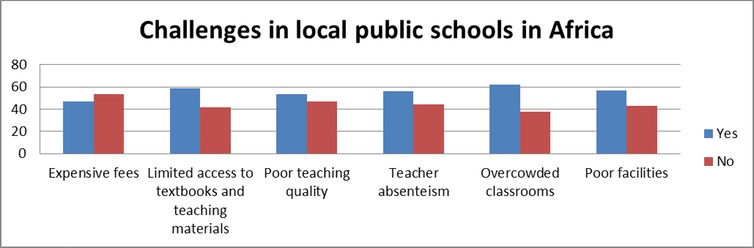
Among the questions about education, interviewees were asked whether they had encountered the following challenges in their local public schools: expensive school fees; lack of textbooks or other learning supplies; poor teaching; teacher absenteeism; overcrowded classrooms; and facilities that were in poor condition.

Afrobarometer Round 5 (2011 – 2013)

For almost each of the items listed, more than 50% of the respondents had encountered the challenge in the question.

Most interviewees complained particularly about a lack of textbooks and teaching materials; poor teaching quality and teacher absenteeism. These are all key determinants of what students can achieve by the end of an academic year.

A crisis of corruption

Corruption, like low-quality education, is a real problem across Africa. In its 2017 Ibrahim Index of African Governance, the Mo Ibrahim Foundation warned that the level of corruption on the continent had risen between 2007 and 2016.
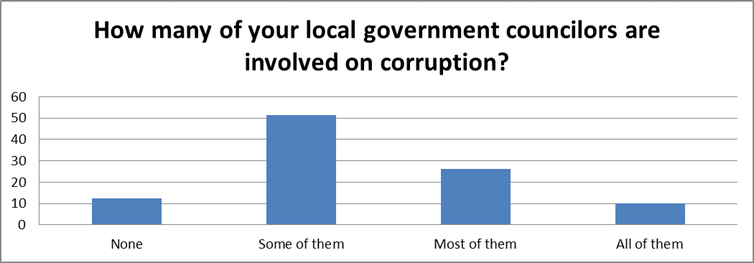
This is borne out by what interviewees told Afrobarometer in the surveys I studied. More than 80% of those surveyed on the subject said that at least some of their local government councilors were involved in corrupt activities. Less than 10% of those surveyed believed that their local councilors listened to their communities.

Afrobarometer Round 5 (2011 – 2013)

The study shows that a 1% increase in the measure of local government corruption is associated with an increase of about 0.4% to 0.9% in the percentage of people who face poor human or physical school resources in local public schools. This statistical evidence suggests tackling issues in local governance can help education systems in Africa.

And it matters because good local governance can ensure that textbooks and learning materials are available and that they reach the students at public schools. The behaviours and attitudes of local government councilor’s may affect the way public sector employees, like teachers, are hired and treated.

The performance of teachers in public schools depends on many factors, and their degree of accountability depends also on the degree of accountability and responsiveness of those in charge of the management of the schools that include local government councilors.

Taking action

Improving the quality of education systems will have huge benefits for Africa’s present and future generations. Part of this improvement must involve tackling people’s negative perceptions about their local councilors, whether those relate to corruption, effectiveness or responsiveness.

Central governance remains important. It should be coupled with careful plans and actions to fix local governance, make councilors more accountable and ensure they’re providing the services schools need to thrive.

Fuente: https://www.independent.co.ug/analysis-corrupt-local-officials-kill-decent-education-africa/
Comparte este contenido:

Estados Unidos: La educación sexual desprotege a lesbianas y bisexuales frente a las enfermedades

Estados Unidos/24 de Febrero de 2018/nmas1

La heterosexualidad dominante en el discurso afecta a la salud sexual de adolescentes homosexuales y bisexuales. Según un estudio del Centro de Investigación de Salud Pública Innovadora (California, EE.UU.), la mayoría de las jóvenes lesbianas y bisexuales no saben que pueden contraer infecciones de transmisión sexual (ETS) manteniendo sexo con otras mujeres, porque los programas de los centros educativos las ignoran, colocándolas en un mayor riesgo de infección.

Los investigadores, de las universidades de Nueva York y la British Columbia, UBC (EE.UU.), realizaron grupos online con 160 adolescentes lesbianas y bisexuales residentes en Estados Unidos y descubrieron un impactante desconocimiento en cuestiones de salud sexual y de métodos de protección como barreras bucales para el sexo oral: o bien nunca habían oído hablar de estos métodos, o pensaban que los riesgos de contagio ente mujeres eran inexistentes.

Según los autores del estudio, publicado en Journal of adolescent health, de entre aquellas que conocían las barreras protectoras, muchas reportaron que usar protección volvía el sexo incómodo o menos placentero, lo que les llevaba a abandonarlos. Aunque muchos de los adolescentes consideraban importante hacerse pruebas de ETS, muchas admitieron confiar más en la salud y la higiene de una pareja femenina.

Para Elizabeth Saewyc, profesora de enfermería de la UBC, autora principal del artículo que dirige el Centro de Estigma y Resiliencia para Jóvenes Vulnerables de la UBC, el estudio destaca la necesidad de una educación sexual más inclusiva: «Los jóvenes necesitan información precisa sobre la salud sexual, pero la educación sexual se ha centrado tradicionalmente en el sexo heterosexual».

La educación sexual empezó a ser introducida en países de Occidente especialmente después de la década de 1960, en respuesta al incremento de embarazos adolescentes. Un trabajo publicado en 2016 en la revista BMJ Open concluye que, medio siglo después, esta información es a menudo negativa, discriminatoria, desfasada y deficiente, según los puntos de vista y experiencias de jóvenes a quienes se les enseñó educación sexual en programas escolares en el Reino Unido, Irlanda, Estados Unidos, Nueva Zelanda, Canadá, Japón, Irán, Brasil, y Suecia entre 1990 y 2015.

Fuente: https://nmas1.org/news/2018/02/23/lesbianas-enfermedades

Comparte este contenido:

México: Ratifican compromiso por educación pública

México/24 de Febrero de 2018/Autora: Adriana Estrada/El Mundo de Orizaba

Tras tres días de actividades, en el Seminario Internacional de Educación Intercultural Alternativa, dónde se contó con la presencia de Guatemala, Canadá y México se ratificó el compromiso de crear una educación pública y gratuita, pues la pedagogía debe basarse en enseñar a pensar y no a obedecer.

Los docentes se comprometieron a crear espacios de conciencia docente y social, pues luego de exhaustivos talleres, análisis y discusión, los trabajadores de la educación acordaron enseñar a aprender, con una realidad precisa de la situación política, económica y social.

Así como implementar la duda razonable, con la intención de reforzar lo aprendido y crear conciencia sobre las diferentes situaciones.

Los docentes acordaron la participación limitada de los padres de familia. Toda vez que si rebasan el límite de ayuda a los estudiantes los perjudican.

Otro de los acuerdos fue la búsqueda de conocimientos alternativos, al igual que a la limitación de dispositivos electrónicos que les absorben la mayor parte del tiempo perjudicando el razonamiento de los estudiantes.

Los docentes acordaron dejar de utilizar los exámenes estandarizados, así como acercar a los estudiantes a las diferentes corrientes políticas y filosóficas que existen. Echar abajo los consejos técnicos sistematizados y en su lugar impulsar la discusión y el debate.

Fuente: https://www.elmundodeorizaba.com/index.php/local/local-conten-otras/67142-Ratifican-compromiso-por-educaci%C3%B3n-p%C3%BAblica

Comparte este contenido:
Page 2775 of 6196
1 2.773 2.774 2.775 2.776 2.777 6.196