Page 3852 of 6179
1 3.850 3.851 3.852 3.853 3.854 6.179

Nueva Zelanda: Small gains for schools, little for early childhood education

Nueva Zelanda/Mayo de 2017/Fuente: RNZ

Resumen: Alrededor de la mitad de la financiación aumentada durante los próximos cuatro años – $ 767 millones – simplemente está cubriendo el costo del aumento de la matrícula en la educación temprana y en las escuelas, y el aumento de los salarios de los maestros. Alrededor de $ 400 millones proveerán nuevas escuelas y más aulas – nuevamente un aumento impulsado en gran medida por el aumento de matrículas. Las escuelas estarán aliviadas de ver un aumento de 1,3 por ciento en sus subvenciones de operación, pero por tercer año consecutivo los centros de la primera infancia no han recibido un aumento general de sus subsidios gubernamentales.

The Budget’s $1.5 billion boost for education addresses pressure points for schools but leaves early childhood centres facing another year of belt-tightening.

About half the increased funding over the next four years – $767 million – is simply meeting the cost of increased enrolments in early education and schools, and rises in teachers pay.

About $400m will provide new schools and more classrooms – again an increase driven largely by rising enrolments.

Schools will be relieved to see a 1.3 percent increase in their operations grants, but for the third consecutive year early childhood centres have received no across-the-board increase to their government subsidies.

Schools

Operations grants increase 1.3 percent and the targeted funding introduced in last year’s budget to help children from disadvantaged backgrounds rises 2.7 percent for a total increase of $17m per year.

Special education spending rises by about $15m per year. The increase includes about $10m per year to allow the Education Ministry’s behaviour service to help about 1000 more children aged up to eight years over the next four years. There is also funding to provide teacher aide support to an extra 625 children per year.

About $456m over the next four years, most of it capital funding, will go towards school property. The spending will provide six new schools, expand two schools and 11 special education satellite units, and provide 305 new classrooms. More than half of the money, $278m, will be used in Auckland.

The government will spend $7.6m on Māori language curriculum resources over the next four years and $9.4m on support for students with English as a second language.

Early Childhood Education

The budget provides no across-the-board increases to early childhood subsidies for the third consecutive year.

However, the government is spending $10m per year to extend its new method of targeting funding to children from disadvantaged backgrounds to the early childhood sector.

The system was introduced to schools this year and is widely expected to replace decile funding in that sector.

The government expects about 2000 out of 4500 licensed early childhood services will receive the funding at an average rate of $5000 per year.

Tertiary education

The budget includes a 1 percent increase in the subsidies tertiary institutions receive for each student they enrol, worth nearly $20m per year. The increase to enrolment subsidies for courses at Level 3 and above is the first across-the-board increase in about seven years as previous increases were targeted to particular subject areas.

The Performance Based Research Fund for tertiary institutions’ research increases by $15m per year.

About $6.8m will be provided over four years to grow enrolments by foreign students.

‘Timid sprinkling of initiatives’

Teacher unions said the government’s budget was «timid» and delivered the bare minimum for schools and early childhood centres.

Both the Post Primary Teachers’ Association (PPTA) and the Educational Institute (NZEI) said their members would be disappointed by the budget, which delivered what the government said was a record $1.1bn in operational spending plus a further $400m in capital funding.

PPTA president Jack Boyle said the budget provided a «timid sprinkling of initiatives» that did not keep up with inflation.

The president of the NZEI, Lynda Stuart, said teachers had been hoping for a major boost, but education was the loser in the budget.

She said the 1.3 percent increase to schools’ operations grants would not cover inflation and the $10m per year allocated to disadvantaged children in early childhood centres amounted to very little.

«This is a devastating blow to a sector that has been struggling to make ends meet and give our children a quality public education,» she said.

The government said the funding would be worth an average of $5000 per year to the 2000 early childhood services expected to receive it.

New Zealand Kindergartens was also disappointed by the lack of an across-the-board increase to early childhood subsidies.

Its chief executive Clare Wells said the hourly rate paid to early childhood services was lower than it was in July 2008, while costs had escalated by about 12 percent.

Ms Wells welcomed the new targeted funding for disadvantage and said kindergartens would use the money for things transport, food and warm clothing for children.

Fuente: http://www.radionz.co.nz/news/political/331573/budget-offers-timid-sprinkling-for-education-teachers

Comparte este contenido:

Sudáfrica: DA to ask Public Protector about education ‘Jobs for Cash’

Sudáfrica/Mayo de 2017/Fuente: News 24

Resumen: La Alianza Democrática va a pedir al Protector Público que investigue el escándalo llamado «Empleos por Efectivo». El parlamentario de la AP, Gavin Davis, dijo el jueves que la ministra de Educación Básica, Angie Motshekga, dejó en claro que no tiene la voluntad política para lidiar con la participación de la Unión Sudafricana de Docentes Democráticos Sadtu en el escándalo » El miércoles, antes de presentar su presupuesto al Parlamento, Motshekga dijo: «Ninguna evidencia apunta a Sadtu, que ha sido fundamental en las mejoras que hemos visto en las escuelas rurales y pobres». Motshekga dijo que la venta de puestos continuó y que estaba siendo realizada por funcionarios del distrito.

The Democratic Alliance is going to ask the Public Protector to investigate the so-called «Jobs for Cash» scandal.

DA MP Gavin Davis said on Thursday Basic Education Minister Angie Motshekga has made it clear that she does not have the political will to deal with the involvement of the South African Democratic Teachers Union Sadtu in the «Jobs for Cash» scandal.

On Wednesday, before presenting her budget to Parliament, Motshekga said: «No evidence points to Sadtu‚ which has been instrumental in the improvements we have seen in rural and poor schools.»

Motshekga said the selling of posts continued and it was being done by district officials.

«We allowed them to hide because there is this big gogga [insect] called Sadtu.»

«This flies in the face of the findings contained in her Ministerial Task Team report that sets out, in no uncertain terms, Sadtu’s central role in the racket,» Davis responded on Thursday.

Inappropriate influence

According to Davis, the task team found that Sadtu bosses have captured six out nine provincial education departments, and is using its power to inappropriately influence the appointment of teachers.

Motshekga has also admitted in a letter to the South African Human Rights Council that Sadtu is involved in the «Jobs for Cash» scandal.

«The Ministerial Task Team (MTT) Report on the alleged selling of posts does point to some gaps in the management in the appointment of personnel and has made material findings and recommendations about the role of union members, particularly from Sadtu, in influencing the selection process, unduly,» she wrote in the letter.

Davis claims Motshekga’s «exoneration of Sadtu» is purely political.

«It indicates that she is more interested in securing Sadtu’s support for Cyril Ramaphosa in the run-up to the ANC conference than rooting out systemic bribery and corruption in the education system,» he said.

He said it is now up to independent institutions to hold Sadtu to account for its central role in the buying and selling of teachers’ posts.

«The DA will, therefore, be writing to the Public Protector to request that she investigates systemic bribery and corruption in the education sector at the hands of Sadtu,» he said.

«This doesn’t mean we will stop holding Minister Motshekga’s feet to the fire. We will keep using every parliamentary mechanism at our disposal to force her to act on the ‘Jobs for Cash’ report’s findings.»

Motshekga established a ministerial task team in 2015 to investigate allegations that teaching posts were sold for cash. The task team’s report was released a year ago.

Fuente: http://www.news24.com/SouthAfrica/News/da-to-ask-public-protector-about-education-jobs-for-cash-20170525

Comparte este contenido:

México: Promueven la ciencia y la tecnología

México/Mayo de 2017/Autora: Rosalía Nieves/Fuente: El Sol de San Juan del Río

El Colegio de Estudios Científicos y Tecnológicos del Estado de Querétaro (CECYTEQ) Número 12, plantel Paso de Mata, llevó a cabo la Exposición de Proyectos de Ciencia y Tecnología, con la finalidad de despertar el interés entre los estudiantes de este nivel académico, por tal motivo 30 proyectos fueron presentados.

El evento contó con la presencia del director general del CECTE de Querétaro, Luis Fernando Pantoja Amaro, así como representantes del sector empresarial, por lo que durante el acto inaugural, la directora del plantel Paso de Mata número 12, Maribel Manzano Uribe, resaltó la labor que continuamente realiza esta casa de estudios para difundir el conocimiento científico y tecnológico, por ello, cinco escuelas del nivel superior presentaron el mismo número de proyectos en el marco de este evento.

Manzano Uribe mencionó que la escuela apoyada del sector empresarial y más instituciones, se encarga de fomentar una cultura que contribuya a la divulgación, percepción, apropiación y reconocimiento social de la ciencia, la tecnología y la innovación, por lo que en este caso se contó con la participación del Instituto Tecnológico de Huichapan, Universidad Tecnológica de San Juan del Río (UTSJR), Instituto Tecnológico de San Juan del Río (ITSJR), Universidad Tecnológica de Querétaro (UTEQ), y la Universidad Autónoma de Querétaro (UAQ).

El evento que realizó el CECTE número 12 fortalece el aprendizaje entre los estudiantes así como la labor de los docentes, por ello afirmó que frecuentemente se tienen como parte de la formación escolar la intervención del sector empresarial, así como académico y gubernamental, para despertar el interés en los estudiantes y buscar su amplia participación en proyectos académicos de este tipo.

La exposición de los proyectos se llevó a cabo en la plaza principal de la Institución, que mediante un recorrido por parte de las autoridades presentes, fueron constatados para conocer su funcionamiento.

El encargado de efectuar la inauguración del evento fue el director de la empresa Mitsubishi Electric de México S.A de C.V. planta San Juan del Río, Martín Guerrero Camacho, quien aseguró que este tipo de eventos son de suma importancia para la difusión, divulgación y promoción de las actividades de investigación científica y el desarrollo tecnológico, que son vinculados entre los sectores estudiantil, científico y tecnológico.

Fuente: https://www.elsoldesanjuandelrio.com.mx/local/promueven-la-ciencia-y-la-tecnologia

Comparte este contenido:

Realizan concentración en rechazo al maltrato animal en Panamá

Panamá/Mayo de 2017/Fuente: CB 24

Un grupo de personas se concentró este miércoles en la estación del Metro de Panamá en San Miguelito para manifestarse en rechazo al maltrato animal, informó Telemetro.

Esta concentración se da luego que hace algunos día se observó como estudiantes de un centro educativo lanzaron al vacío a un gato desde una de las estaciones del Metro de Panamá.

El incidente donde el gato falleció causó mucha molestia por parte de la población quien desde que se conoció la noticia reprochó lo sucedido.

De acuerdo con las autoridades durante el primer trimestre del 2017 se recibieron unas 34 denuncias por maltrato animal a nivel nacional.

Fuente: http://cb24.tv/realizan-concentracion-rechazo-al-maltrato-animal-panama/


Comparte este contenido:

Ecuador: Nuevo ministro de Educación revisará deuda con profesores jubilados

Ecuador/Mayo de 2017/Fuente: Ecuavisa

Varios cambios se anuncian en la administración de la educación del país. El nuevo ministro del ramo, Fander Falconí, informó lo que, según dijo, será una prioridad en el gobierno de Lenín Moreno en esta materia.
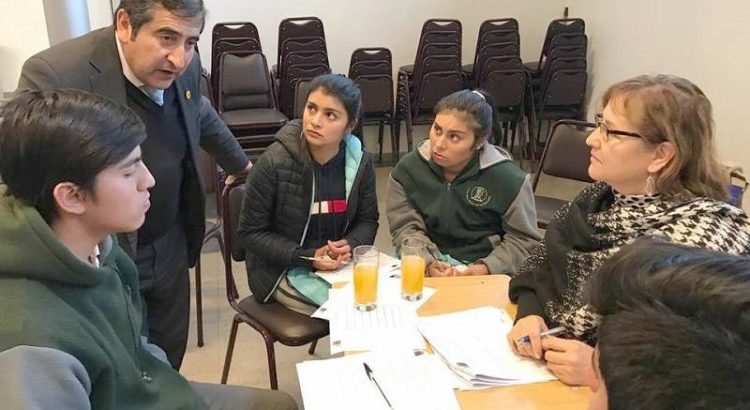
Falconí desarrolló su primer acto público como funcionario en el tradicional colegio Simón Bolívar, en el centro de Quito. Luego de un acercamiento con estudiantes y profesores del plantel, señaló como una de sus prioridades el atender a los maestros que exigen el pago de sus jubilaciones, muchos de ellos que padecen de enfermedades catastróficas.
En este sentido, indicó que la próxima semana mantendrá una reunión con los ministros del sector económico para analizar el tema.
Durante uno de los plantones realizados en abril de 2017, Alonso Yánez, presidente de la Coordinadora de Maestros Jubilados del Ecuador, señaló que el ministerio de Finanzas estableció con ellos un cronograma de pagos: en marzo se pagó a los profesores jubilados de 70 años en adelante con enfermedades catastróficas; en abril se comprometieron a pagar al grupo de 65 a 69 años, y en mayo, de 60 a 64 años.
Además dijo que de 2014 a 2016, no se ha cancelado las jubilaciones a 9.000 maestros, pero que la deuda total es con 25.400 maestros.
Finanzas indicó que hasta abril de 2017, canceló los haberes a 1.400 maestros.
Otros anuncios
Con respecto a la disolución de la Unión Nacional de Educadores (UNE), manifestó que es un tema en proceso que él no detendrá, aunque no tendría problema en dialogar con los maestros de ese gremio.
También se refirió a la infraestructura, las unidades educativas del milenio y las escuela en las comunidades. Explicó que hay aspectos que no se requiere modificar, pero que su prioridad será trabajar por la excelencia educativa.
Ofreció que generará una política de diálogo con todos los sectores vinculados con  la educación para hacer frente a temas polémicos, como la aplicación del escalafón entre los maestros.
De esta forma, Falconí asumió el ministerio después de renunciar a su cargo de miembro del Consejo de Educación Superior.
Fuente: http://www.ecuavisa.com/articulo/noticias/nacional/277631-nuevo-ministro-educacion-revisara-deuda-profesores-jubilados
Comparte este contenido:

Estados Unidos: Worcester Prep student appointed to the United States Merchant Marine Academy

Estados Unidos/Mayo de 2017/Fuente: Delmarvanow

Resumen:  Reid Carey, residente de Worcester Prep School y residente de Dagsboro, recibió su nombramiento en la Academia de Marina Mercante de los Estados Unidos durante la convocatoria de la escuela el 24 de mayo. Carey es uno de aproximadamente 250 estudiantes en la nación para recibir una cita a la academia. Su comisión vino del Teniente Coronel jubilado Steve Rakow de las Reservas de Cuerpo de Marines de los Estados Unidos. «Estoy feliz de estar aquí esta noche para honrar a Reid Carey por una cita muy distinguida que ha escuchado a la Academia de Marina Mercante de los Estados Unidos». La academia, localizada en Kings Point, Nueva York, entrena a los miembros más nuevos de los marinos de la marina de guerra de los E. para servir en sus buques. Para recibir una cita, Rakow explicó que Carey necesitaba mostrar un alto éxito académico, pasar un examen de salud y pasar un examen de aptitud física.

Reid Carey, a Worcester Prep School senior and Dagsboro resident, received his appointment to the United States Merchant Marine Academy during the school’s convocation May 24.

Carey is one of roughly 250 students in the nation to receive an appointment to the academy. His commission came from retired Lt. Col. Steve Rakow of the United States Marine Corps Reserves.

«I am happy to be here tonight to honor Reid Carey for a very distinguished appointment that he has heard to the U.S. Merchant Marine Academy.»

The academy, located in Kings Point, New York, trains the newest members of the U.S. Merchant Marine midshipmen to serve on its vessels.

In order to receive an appointment, Rakow explained Carey needed to show high academic success, pass a health test and pass a physical fitness test.

Carey also needed to receive a congressional appointment, of which he received three: Sen. Tom Carper, D-Del., Sen. Chris Coons, D-Del., and then-Rep. John Carney, D-Del., who is now Delaware’s governor now.

«Quite an accomplishment,» Rakow said.

Rakow, though, did remind Carey that his education is being paid for by the United States government, his education won’t come free.

Carey, as a new midshipan — called a pleb — will have to go through a rigorous summer program and  follow strict rules during his first year.

Carey will also have to spend an entire year at sea on a United States Merchant Marine vessel and will have the option of either entering the Navy Reserve upon graduation or enter any of the five service branches — Marine Corps, Army, Navy, Air Force or Coast Guard — and serve for at least five years.

But Rakow said Carey is ready.

«Today I take great pleasure, and consider it a high honor, on behalf of Rear Admiral James Helis, the academy’s superintendent, to recognize the appointment of Reid. S. Carey to the United States Merchant Marine Academy for the class of 2021,» Rakow said. «This remarkable achievement reflects great credit upon Reid and demonstrates that he is already living up to the academy’s motto: Acta Non Verba, which is deeds, not words.»

Fuente: http://www.delmarvanow.com/story/news/local/maryland/2017/05/25/worcester-prep-student-appointed-united-states-merchant-marine-academy/342338001/

Comparte este contenido:

Myanmar: Counsellors reach out to Kachin communities to end gender violence

Myanmar/Mayo de 2017/Fuente: UNPFA

Resumen: «No deberíamos tener que vivir con miedo a la violencia sólo porque somos mujeres», declaró Khaung Nan en Waing Maw, una ciudad del estado de Kachin, en batalla de Myanmar. La Sra. Khaung Nan trabaja en el Centro de Mujeres y Niñas de Waing Maw, uno de ocho centros de este tipo en la zona. Estas instalaciones respaldadas por el FNUAP ofrecen asesoramiento, asistencia jurídica, transporte a hospitales y otros servicios de atención a los supervivientes de abusos. Los servicios son críticos: la violencia basada en género es una emergencia silenciosa en Myanmar. Las mujeres y las niñas sufren acoso en las calles, violencia doméstica e incluso tráfico de personas. Y los que están en el estado de Kachin enfrentan la agitación adicional de los conflictos armados, condiciones que exacerban su vulnerabilidad a la violencia de género.

“We should not have to live in fear of violence just because we are women,” Khaung Nan declared in Waing Maw, a town in Myanmar’s battle-worn Kachin State.

Ms. Khaung Nan works at the Waing Maw Women’s and Girls’ Centre, one of eight such centres in the area. These UNFPA-supported facilities provide counselling, legal assistance, transport to hospitals, and other care for survivors of abuse.

The services are critical: Gender-based violence is a silent emergency in Myanmar. Women and girls experience harassment on the streets, domestic violence and even human trafficking. And those in Kachin State face the additional turmoil of armed conflict, conditions that exacerbate their vulnerability to gender-based violence.

“We have the right to live in peace in our homes and in our country,” Ms. Khaung Nan said.

But this right is too often denied.

Khaung Nan and Lu Bu at the Women’s and Girls’ Centre in Waing Maw. © UNFPA/Yenny Gamming

Violence common, accepted

Gender-based violence is greatly underreported, but experts believe it to be commonplace.

Younger women are particularly vulnerable, a recent survey showed.

“One evening a corner shop on my street was tended by a high school girl,” said Daw Lu Bu, a counsellor at centre. “A young man buying cigarettes demanded more cigarettes than he had paid for, and when she said no, he shouted at her and grabbed and pulled at her breasts.”

Ms. Lu Bu helped the girl report the crime. “He is now being prosecuted,” she said.

Still, there is a high degree of acceptance of violence against women.

Marital rape, for instance, is still not considered a crime. And about half of people surveyed in Myanmar say there are circumstances that justify wife-beating.

Ms. Lu Bu finds herself bringing her work home with her – she addresses threats to women in her own town of Myitkyina.

“In my neighbourhood, too, there is domestic violence. I always try to help. Only last month, a woman approached me for help. Her husband was blaming her for giving birth only to daughters, and he was being very aggressive.

“I sat down with both of them and discussed different aspects of fertility, and also explained that the sex of a baby is determined by the sperm from the man. I managed to find a way to say this without blaming or further upsetting the man.”

Her efforts worked – at least for now. “So far, the man is calmer. I hope it lasts.”

Just the start

Reaching out to communities is essential, not only for helping survivors but for preventing violence in the first place.

Staff and volunteers at the Women’s and Girls’ Centres go into displacement camps and surrounding communities to raise awareness about the issues surrounding gender-based violence and where survivors can seek help.

“The word is spreading not only in the camps, but in the host communities too,” said Ms. Khaung Nan.

“We’re now invited to give gender-based violence presentations in the villages, and when I arrive, I realize that most people already know that domestic violence is a crime.”

She is confident that, slowly, their message is getting through.

“But this is just the start,” she said.

The eight Women’s and Girls’ Centres cover 38 displacement camps and host communities in both government-controlled and non-government controlled areas.

The centres’ programmes are managed by Metta Development Foundation and supported by UNFPA’s Women and Girls First initiative, which receives funding from Australia, Canada, Finland, Italy, Sweden and the United Kingdom.

Staff members at the centres are optimistic that their efforts are making a difference.

“First, we focused our efforts on women and girls in the camps. Now we are expanding our work to the villages and to boys and men,” Ms. Khaung Nan said.

She added, “The Women’s and Girls’ Centre gives us the power to stop the violence.”

Fuente: http://www.unfpa.org/news/counsellors-reach-out-kachin-communities-end-gender-violence

Comparte este contenido:
Page 3852 of 6179
1 3.850 3.851 3.852 3.853 3.854 6.179