Page 3946 of 6179
1 3.944 3.945 3.946 3.947 3.948 6.179

Australia: Can art put us in touch with our feelings about climate change?

Oceanía/Australia/Mayo del 2017/Noticias/https://theconversation.com/

What does climate change look like in Australia? Are we already seeing our landscapes shift before our eyes without even realising it?

Perhaps thought-provoking art can help us come to terms with our changing world, by finding new ways to engage, inform and hopefully inspire action. For hasn’t art always been the bridge between the head and the heart?

With that aim, the ART+CLIMATE=CHANGE 2017 festival, organised by CLIMARTE, features 30 specially curated exhibitions running from April 19 to May 14 in galleries across Melbourne and regional Victoria, following on from their previous award-winning festival in 2015.

Changing landscapes

One of the festival’s exhibitions is Land, Rain and Sun, featuring more than 100 landscapes dating from the 19th century to today, curated by gallery owner Charles Nodrum and captioned by us to offer a climate scientist’s perspective on the works. We also collaborated with CLIMARTE directors Guy Abrahams and Bronwyn Johnson to bring the idea to life.

The exhibition, featuring Australian artists including Sidney Nolan, James Gleeson, Eugene Von Guerard, Louis Buvelot, Russell Drysdale, Fred Williams, Michael Shannon and Ray Crooke, is designed to help start a conversation about what climate change might look like in Australia.

Curating an exhibition of artworks as seen through the eyes of a climate scientist poses a challenge: how can we help make the invisible visible, and the unimaginable real?

As we sifted through scores of artistic treasures, there were a few works that confronted us in unexpected ways. The first was Cross Country Skiers, painted in 1939 by renowned South Australian artist John S. Loxton. It depicts the Victorian High Country heavily blanketed in snow, as two skiers make their way through the beautiful wintery landscape.

John S. Loxton, Cross Country Skiers, Victorian High Country, c. 1935. Watercolour on paper. Charles Nodrum Gallery, Author provided

When we saw this image, we realised that in decades to come this work might be considered a historical record, serving as a terrible reminder of a landscape that vanished before our eyes.

Average snow depth and cover in Australia have declined since the 1950s as temperatures have risen rapidly. Under high greenhouse gas emissions scenarios, climate models show severe reductions, with snow becoming rare by late in the century except on the highest peaks.

The Australian ski season could shorten by up to 80 days a year by 2050 under worst-case predictions, with the biggest impacts likely to be felt at lower-elevation sites such as Mt Baw Baw and Lake Mountain in Victoria.

As temperatures continue to rise, our alpine plants and animal communities are in real danger of being pushed off mountain tops, having nowhere to migrate to and no way of moving from or between alpine “islands”.

James Gleeson’s surreal apocalyptic painting Delenda est Carthago is a provocative work that got us thinking about a future marred by unmitigated climate change. The title refers to Rome’s annihilation of Carthage in 149 BC. According to the ancient historian Polybius, the conquering Roman general, Scipio Aemilianus, famously wept as he likened the event to the mythical destruction of Troy and to the eventual end he could foresee for Rome.

James Gleeson, Delenda est Carthago, 1983. Oil on linen. Charles Nodrum Gallery, Author provided

As climate scientists, we are disturbingly aware of the threats to society not only here in Australia, but all over the world. Unmitigated human-induced climate change could potentially see the planet warm by more than 4℃ by the end of the century.

In Australia, inland regions of the country could warm by more than 5℃ on average by 2090. In Melbourne, the number of days over 40℃ could quadruple by the end of the century, causing extreme heat stress to humans, wildlife, plants and infrastructure, especially in urban areas.

Warming of this rate and magnitude is a genuine threat to our civilisation. Gleeson’s artwork made us consider that the unimaginable may happen, as it has in the past.

On a more optimistic note, Imants Tillers’ work New Litany highlights the importance of communities taking a stand for environmental protection. Over our history Australians have fought against logging of native forests, nuclear power, whaling, and for the restoration of dammed river systems like the Snowy.

Imants Tillers, New Litany, 1999. Synthetic polymer paint and gouche on canvas. Charles Nodrum Gallery, Author provided

Public concern in Australia about climate change reached a peak in 2006, largely in response to Al Gore’s film An Inconvenient Truth and Tim Flannery’s book The Weather Makers. Yet the decade since then has brought political turmoil, and national greenhouse emissions continue to rise.

The recent March for Science is a reminder that the stakes are now higher than ever before, and that many people really do care about the future.

The science is telling us that our climate is changing, often faster than we imagined. The range of CSIRO’s latest climate change projections reminds us that the future is still in our hands. We can avoid the worst aspects of climate change by reducing our greenhouse gas emissions, but we need to act now.

Art has always been a powerful portal to understanding how we feel about our world. Let’s hope it helps safeguard our climatic future.

Fuente:

https://theconversation.com/can-art-put-us-in-touch-with-our-feelings-about-climate-change-77084

Fuente Imagen:

https://lh3.googleusercontent.com/dK-JpcYyZQo41_DbzU7KUh9p6MYcwStw-rJfp2kQMtBpu_PlifU0T6zVeTiyHzX6WHzIhw=s86

Comparte este contenido:

Venezuela: Cuadernos pedagógicos Araguaney .

América del Sur/Venezuela /Mayo 2017/Noticias/

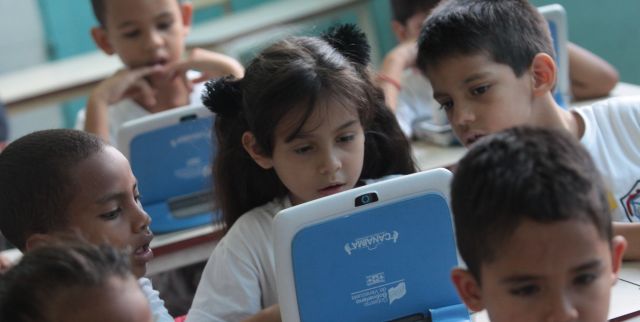
Por medio de la presente envío los cuatro primeros CUADERNOS PEDAGÓGICOS diagramados por CENAMEC. Los mismos ya se encuentran disponibles para su descarga en la página web Araguaney.

Fuente : Enviado por el autor a editores OVE.

Fuente Imagen:

https://lh3.googleusercontent.com/R5Xg5FFUlg_suyoanwiI50yJ1SMTpGLNZkYh5_ndtTj1medPioQwyAzQjx9LChaJwCoN3Q=s85

Comparte este contenido:

Reino Unido:Why parents should resist the temptation of term-time holidays

Europa/Reino Unido/Mayo 2017/Noticias/https://theconversation.com/

The Easter holidays are over – and the long wait for the more generous summer break begins. In just a couple of months, schools will break up, air fares will rise, beaches will be busy and the cost of a family holiday will multiply. So surely it makes sense for parents to be allowed to take their children out of school during term time?

That is the appealing option that prompted one irate father to take his legal case all the way to the Supreme Court to establish a ruling earlier this year. Jon Platt, a British businessman, had been fined £120 after he took his daughter to Walt Disney World during school term.

The resulting (and popular) debate centred on whether parents know what is best for their child – or at least that they know better than the state.

The argument for parental authority over school attendance is initially compelling. Travel can be an important and valuable experience for children. It gives them a break from school work, allows for time together as a family, and can no doubt be educational. Schools and education authorities argue, however, that missing school has a negative impact on academic progress.

School’s out for Mr Platt. PA

Parents and children have an important connection to each other that involves responsibilities and benefits. So an assertion of parents’ rights might seem to make sense.

Research over the last two decades has shown how parenting has become increasingly intensive, with parents spending more time, money and energy on ensuring that their children do well. There is more popular discussion about how parents should behave and evermore political interventions to make them behave in particular ways.

Parents are expected to know what is best for their child and act appropriately. If so much responsibility for children is placed on parents then surely parents should be allowed some flexibility in how they perform their role? Mothers and fathers could feel justified in joining with campaigns like the one orchestrated by “Parents want a say” to argue that if their children are not suffering then the state should reduce its interference in the private sphere and support parental authority.

Cultural education. Abi Skipp/Flikr

So was Platt right to think that he should be able to take his daughter on holiday when he likes? He had argued that his child, then seven, had a school attendance record of over 90% – high enough to fulfil the legal requirement of “regular” attendance to ensure she was getting a good education. In other words, it might be justified for the state to intervene if there was strong evidence of an adverse effect on the child because of poor parenting decisions. But where there is no evidence of this, parents should be allowed to act as they deem fit. He told a newspaper: “Quite frankly, parents need to decide for themselves.”

But there is a good argument that they shouldn’t be allowed to decide – not because of the claim that schools know the needs of children best. But that selfish individualism should be challenged.

A lesson learned

It may not matter to your child if they miss a few days of school – but it will have an impact on others. Teachers are expected to ensure that children catch up with work they have missed which means less attention on the majority. If significant numbers of children are absent (as might be the tendency if parents take a few extra days around formal holidays) then the problem multiplies.

If you are the only parent who takes their child out there may be little ill effect, but if others start to do the same then the consequences escalate. Recent research by political philosophers on the rights of parents has argued that these need to be limited so that individuals cannot significantly advantage their own children over others, and that is what these parents are doing.

It could be argued even more forcefully that the benefits of your own child are marginal compared to the negative impact on other children. So the best reason for not taking your child out of school to go on holiday isn’t about the risk of educational disadvantage they face, or that it is going against government rules. It is that parenting shouldn’t be about seeking to confer an unfair advantage for your child over others.

Fuente:

https://theconversation.com/why-parents-should-resist-the-temptation-of-term-time-holidays-76378

Fuente Imagen:

Comparte este contenido:

Argentina: Los docentes bonaerenses cobrarán abril sin suba salarial y sin descuentos

América del Sur/Argentina/Mayo del 2017/Noticias/http://www.infogremiales.com.ar

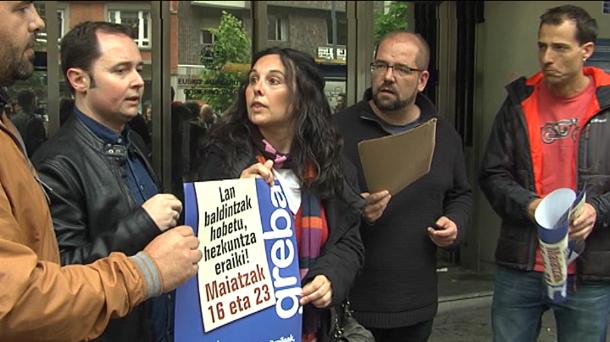
El conflicto salarial docente más largo que se recuerde en la provincia de Buenos Aires se juega en la mesa paritaria pero se define en la Justicia. Al menos por ahora. Así, los maestros cobrarán los haberes de abril sin descuentos por días de paro merced al primer fallo judicial de la magistrada María Ventura Martínez, que hizo lugar a una presentación del frente gremial.

En cuanto al segundo fallo de la jueza, que ordena al gobierno pagar con el aumento que ofreció a los docentes (20% en cuotas) a cuenta de un futuro acuerdo paritario, en Educación explicaron que ese punto no se pudo cumplir porque “cuando se conoció el dictamen ya estaba en marcha el proceso de liquidación de sueldos”.

¿Realizará la cartera educativa una liquidación adicional para cumplir con el pago del incremento?

“Se están evaluando con la Justicia los pasos a seguir. El gobierno siempre cumple los fallos judiciales, pero la cuestión hoy pasa por los tiempos y las posibilidades de darles cumplimiento”, indicaron ayer a este diario fuentes de la dirección general de Educación.

De manera que las autoridades se manejan entre dos escenarios posibles: realizar una liquidación adicional o esperar que el fallo quede firme (cabe recordar que el Ejecutivo apeló ambos dictámenes).

Fuente:

Los docentes bonaerenses cobrarán abril sin suba salarial y sin descuentos

Fuente Imagen:

https://lh3.googleusercontent.com/j_mZl0RNiVcSPNg7DVugnZCbrVuMiX6CBXE5J1Zv99VwQVkHHDISSErn76jfJULUN5qr=s85

Comparte este contenido:

African history is a discipline on the rise – and one that raises many questions

África/Sudán/Ruanda/Sudáfrica/África del Norte/África Occidental

Mayo del 2017/Noticias/https://theconversation.com/


African history has gone through many incarnations as an academic discipline.

Most recently, there’s been a global turn in African historiography. This shift has been prompted by a greater awareness of the powerful forces of globalisation and the need to provide an African historical perspective on this phenomenon. This has helped to place the continent at the centre of global – and human – history.

It’s important to explain the role of Africa in the world’s global past. This helps assert its position in the gradual making of global affairs. As an approach, it’s a radical departure from colonial views of Africa. It also complements the radical post-colonial histories that appeared from the 1950s and 1960s. And it may offer another framework for thinking through the curriculum reform and decolonisation debate that’s emerged in South Africa’s universities over the past few years.

The history of African history

Afrocentric history emerged strongly during the 1950s and 1960s, in tandem with Africa’s emergence from colonial rule. Newly emerging histories served as an antidote to the pernicious views of imperial and colonial historiography. These had dismissed Africa as a dark continent without history.

But demonstrating that Africa has a long, complex history was only one step in an intellectual journey with many successes, frustrations and failures.

The long 20th century ended. A new one beckoned. It brought new sets of challenges. South Africa euphorically defeated apartheid. The decolonisation project that started during the 1950s in west and north Africa was completed. These achievements were overshadowed by a horrific post-colonial genocide in Rwanda. Another genocide loomed in the Sudan. Coups, civil wars and human rights abuses stained the canvas on which a new Africa was gradually being painted.

Africa’s woes were deepened by the emerging HIV/AIDS pandemic. State-driven, pro-poor policies and programmes founded during the early post-colonial period atrophied. This decay was driven by hegemonic global neoliberal economic policies.

And the study of history on the continent took a knock. Student numbers declined as post-colonial governments shifted their priorities. Global funding bodies focused their attention on applied social sciences and science, technology, engineering and mathematics disciplines.

Nearly two decades into the new century there’s been another shift. The subject of history, alongside other humanities disciplines, is attracting growing attention aimed at averting their further decline. This can be explained in part by the subject’s own residual internal resilience and innovative research in newer areas of historical curiosity. There’s an emerging interest in history as a complementary discipline. Students of law, education, and political science are taking history as an additional option.

In South Africa in particular, history cannot be easily ignored, although it is contested. The country is still redefining itself and charting its new course after decades of apartheid and colonialism. However, a great deal of newer interest in history as a subject can be ascribed to university student movements. These movements have garnered greater public attention for ongoing debates about decoloniality and decolonised curricula.

Decoloniality is a radical concept. Its main aim is to degrade the coloniality of knowledge. In South Africa, the decolonisation movement has been tied to bread and butter issues: tuition fees and access to higher education. Decoloniality affords both the language and the reason for seeking to dismantle what are regarded as western and colonial systems and structures of knowledge production and dissemination.

Rethinking decolonisation

But while decolonisation is riding a wave of academic interest, the histories of precolonial Africa are receding as an area of primary research focus. The histories of resistance to colonialism continue to resonate with current struggles for transformation and decolonisation. They have long been popular among historians in and of Africa. Indeed, several social and political movements have used decolonial interpretations of African history as their currency.

However, questions continue to be asked about the kind of history curriculum that should be studied at university level at this moment. And what are the purposes of such curricula? Is an African history module a necessarily transformed one? What new conceptual and methodological tools should be deployed to describe and explain colonial encounters from a decolonial lens? What modes of ethics should inform such approaches?

The challenges go beyond the conceptual aspects of decolonisation in the domain of African history. There are historical structural formations, hierarchies and tendencies within academia that are rooted in coloniality. These make it a huge challenge to articulate newer forms of knowledge. At the same time, decoloniality should operate through other forms and frameworks. This will allow it to find application beyond its own self-defined frames.

In addition, new approaches should challenge received wisdom and develop new kinds of curiosity. Newer curriculum should, for instance, grapple with the fact that there is no single Africa. A unitary model of Africa is a colonial invention. Ordinary people’s identities form and evolve via multiple networks and knowledge forms. An Africa approached from its diverse histories and identities could help forge new, purposeful solidarities and futures.

Fuente :

Fuente imagen

Comparte este contenido:

En Cuba: Acogerá Matanzas reunión de escuelas asociadas a la UNESCO

Matanzas, Cuba.- Para socializar experiencias, las escuelas asociadas a la Organización de Naciones Unidas para la Educación, la Ciencia y la Cultura, UNESCO, en el país, se reunirán, en Matanzas, el próximo 8 de mayo.

En la información de Radio 26 Digital se precisa que se prevén conferencias magistrales, sesiones con proyectos educativos,  visitas a centros culturales y recorrido por la playa El Judíopara apreciar acciones de saneamiento.

La reunión nacional de las escuelas asociadas a la UNESCO, en Matanzas, incluye una jornada de trabajo en el Instituto Preuniversitario Vocacional de Ciencias Exactas Carlos Marx y la Dirección de Educación en la provincia.

Las CUATRO instituciones del territorio reúnen positivos resultados de rendimiento académico y calidad del proceso docente educativo, intercambio comunitario, con el turismo y la protección del medio ambiente.

Fuente: http://www.radioreloj.cu/es/noticias-radio-reloj/educacion/acogera-matanzas-reunion-escuelas-asociadas-la-unesco/

Comparte este contenido:

En Bogotá: La increíble historia del hombre que recicla libros de la basura


José Alberto Gutiérrez, conocido como el Señor de los libros vive en Bogotá, Colombia, y desde hace casi 20 años, se dedica a rescatar libros de la basura para luego prestar o regalárselos a niños sin recursos. José armó en su casa una biblioteca comunitaria que ya cuenta con 20 mil ejemplares.

El primer ladrillo de este sueño que prendió, fue Ana Karenina de León Tolstoi, luego he recogido por años miles de libros que botan, pero también muchos, que han donado los bogotanos” señala el Señor de los libros en su página de Facebook.
José es recolector de residuos y esta iniciativa comenzó cuando recorría los barrios ricos de Bogotá. Poco a poco se fue encontrando con más libros que se fueron agolpando, hasta que su vivienda se convirtió en una biblioteca comunitaria que sirve a los habitantes del empobrecido barrio La Nueva Gloria y que Gutiérrez bautizó «La Fuerza de las Palabras«.

“Mi sueño siempre ha sido ver un día en cada barrio, una biblioteca comunitaria, donde los niños y jóvenes tienen un buen espacio para consultar sus tareas. Mi sueño es ver en cada barrio a los docentes y pedagogos, hoy desempleados, acompañando y enseñando a miles de niños y jóvenes, aprendiendo siempre algo más que lo que pide la tarea”, sostuvo José.

Para José los libros no son para acapararlos sino para rotarlos. Por eso cantidad de los libros que han pasado por sus manos han terminado en lugares remotos del país donde un libro es casi un artículo de lujo. Sus ejemplares han viajado al puerto de Buenaventura, en el Pacífico colombiano como también a otras localidades de Bogotá como Ciudad de Bolívar y Sumapaz.

“Si yo, siendo un ignorante, un simple conductor de un camión recolector de basura toda mi vida, aspiro a sueños grandes, qué será quienes han tenido tantos privilegios en la vida”, reflexiona el Señor de los libros de Bogotá.

Fuente: https://www.elnueve.com/la-increible-historia-del-hombre-que-recicla-libros-de-la-basura

Comparte este contenido:
Page 3946 of 6179
1 3.944 3.945 3.946 3.947 3.948 6.179