Page 3985 of 6125
1 3.983 3.984 3.985 3.986 3.987 6.125

AI exige a Chile ley que garantice derechos humanos de inmigrantes

América del Sur/Chile/Abril del 2017/http://www.2001.com.ve


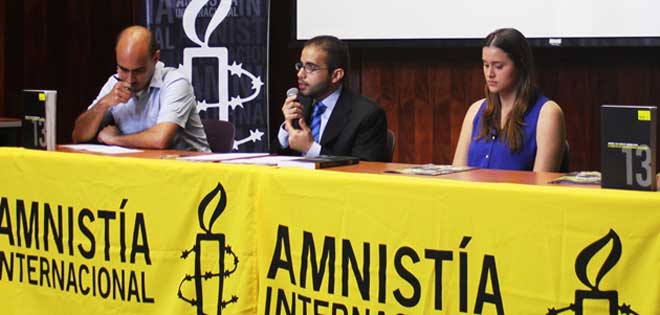
Amnistía Internacional (AI), lanzó la campaña «Chile sin barreras», cuyo objetivo es pedir al Gobierno que de prioridad a la tramitación de una ley que garantice los derechos de los inmigrantes, que en este país ya suman casi 500 mil personas.

Además, el organismo busca sensibilizar a los parlamentarios y a la ciudadanía en general sobre las continuas vulneraciones que sufren las personas extranjeras que residen en Chile y avanzar en la plena inclusión de todos ellos.

En la actualidad Chile cuenta con una ley de extranjería que data de 1975, cuyo objetivo central es preservar la seguridad nacional, regulando exclusivamente condiciones de entrada, permanencia y salida del país.

«Regular la migración con un decreto propio de la dictadura (1973-1990), y que pone foco de manera exclusiva en la seguridad y en lo económico es limitado, retrógrado y absurdo. Chile debe abordar este complejo proceso con un nuevo marco legal que cumpla en plenitud con los estándares de derechos humanos», señaló el presidente de AI en Chile, Roberto Morales.

El titular del organismo explicó que el decreto actual tiene una visión economicista de la migración y considera básicamente a los migrantes como fuentes de trabajo «estando finalmente al servicio del mercado laboral y no de las personas ni de sus derechos».

Cuatro décadas después, con 465 mil extranjeros, «el país es testigo de un flujo de inmigración nunca antes visto», dijo Morales a Efe.

Además, el director de AI aseguró que el actual articulado (ley 1094), ocasiona «graves vulneraciones al acceso a derechos» y a la vida cotidiana de las personas inmigrantes sin importar su situación legal en el país, ya que incluso los extranjeros que cuentan con visados y permanencias regulares se ven afectados.

«Contar con una ley de migración es una necesidad y una obligación, no un simple lujo. Chile ha suscrito numerosos instrumentos internacionales en esta materia que le exigen alinear sus políticas internas», aseveró Morales.

El director de AI afirmó que el compromiso de reformar la legislación migratoria formó parte del programa del gobierno de la presidenta Michelle Bachelet, pero aún la iniciativa no se traduce en proyecto de ley.

El organismo internacional espera que el proyecto de ley exprese los derechos de las personas inmigrantes y fortalezca la institucionalidad migratoria en el país.

Concluye que, si bien, los Estados tienen la facultad de determinar libremente sus programas migratorios, esto no los exime de «respetar en cada momento los derechos de las personas inmigrantes».

La inmigración latinoamericana hacia Chile se ha cuadruplicado desde el fin de la dictadura de Augusto Pinochet en 1990.

Actualmente, residen en el país 465.300 extranjeros (de una población de casi 18 millones), el 89,5 % de ellos procedentes de países de la región.

Su próspera economía, su estabilidad social y las múltiples oportunidades laborales han impulsado la creación, entre los latinoamericanos, del ‘chilean dream’ (el sueño chileno), tal y como en su día existió el ‘sueño americano’.

Los inmigrantes que llegan al país tienen entre 15 y 45 años y vienen en busca de oportunidades.

Según un informe del banco BBVA, Chile quintuplicó los residentes extranjeros en los últimos 30 años, que actualmente representan un 2,3 % de la población chilena total.

En los últimos diez años, el porcentaje de extranjeros que adquieren residencia definitiva y están clasificados como empleados en Chile aumentó desde el 30 % al 50 % del total, según las estadísticas de la entidad financiera.

Además, aseguró que la inmigración más numerosa proviene de Perú – 177 mil – aunque la que más crece procede de países caribeños, como Haití y República Dominicana.

Fuente:

http://www.2001.com.ve/en-el-mundo/157097/ai-exige-a-chile-ley-que-garantice-derechos-humanos-de-inmigrantes.html

Fuente Imagen:

https://lh3.googleusercontent.com/ASPu_WLOo-Ox8DoPxBhFo17WUhkhFJUf-CWqmMF13TWCiIPpHqkkInoFgh0fjLAeRFQf=s85
Comparte este contenido:

España: Madrid agregará clase de Derechos LGBTI para estudiantes de secundaria

Europa/España/Abril del 2017/Noticias/http://www.sdpnoticias.com

«Sería opcional e incluiría contenidos que sensibilicen y promuevan normas internacionales Derechos Humanos»

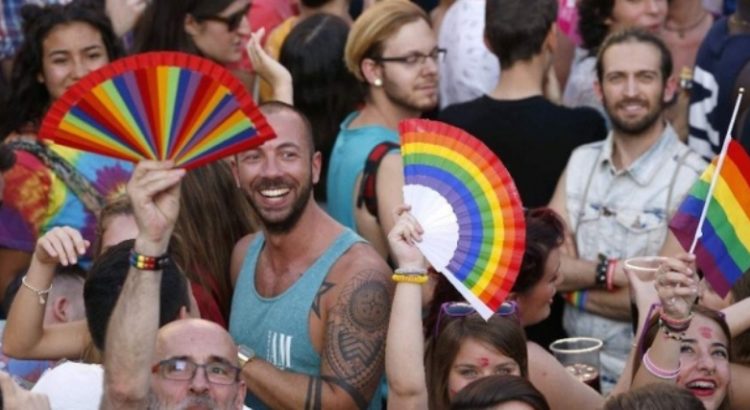
El gobierno de Madrid, España, se encuentra trabajando en una nueva asignatura optativa para educación secundaria que abordaría el respeto y la no discriminación a la población LGBTI.

Al respecto, la presidenta de la Comunidad de Madrid, Cristina Cifuentes, dijo que la materia sólo se incluirá en aquellos centros, que dentro de su autonomía, decidan implantarla.

En este sentido, la ley de Protección Integral contra la LGTBifobia y la Discriminación por Razón de Orientación e Identidad Sexual, recoge en su artículo 31.9 que:

«Dentro de los contenidos educativos de libre asignación de la Comunidad de Madrid se garantizará que todos los alumnos madrileños reciban la formación que promueva los valores constitucionales de convivencia, respeto e igualdad hacia el colectivo LGTBI».

Fuente:

http://www.sdpnoticias.com/gay/2017/04/12/madrid-agregara-clase-de-derechos-lgbti-para-estudiantes-de-secundaria

Fuente Imagen:

https://lh3.googleusercontent.com/jJmTTPBgCvlLKPsmsVQQphhBQvofx7hn09krF9rJ5lWfJ_ekPzLAkWM8aJM7jyY8TBgyXg=s85

Comparte este contenido:

Venezuela: Cuadrantes de paz ¿Qué son y para qué fueron creados?

América del Sur/Venezuela/Abril 2017/Noticias/http://www.mpprijp.gob.ve/

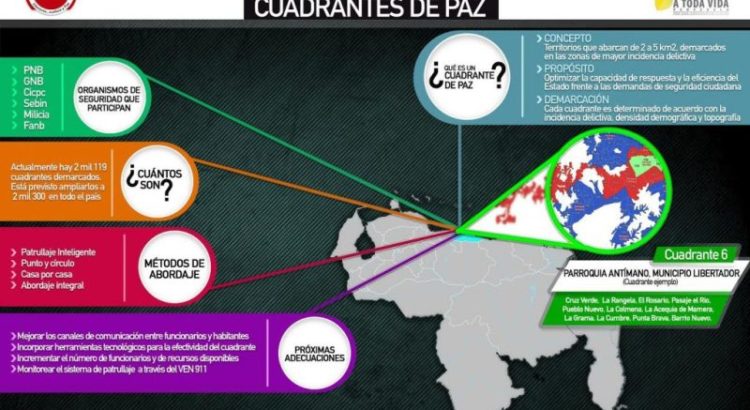
Son espacios físicos que abarcan de 2 a 5 kilómetros cuadrados, demarcados en zonas de alta ocurrencia delictiva. Actualmente hay 2.119 cuadrantes en todo el país, que a su vez concentran 79 municipios donde las estadísticas reportan particulares focos de criminalidad.

En los Cuadrantes de Paz confluyen funcionarios policiales y militares, líderes comunitarios, patrullas, motos, herramientas tecnológicas, metodologías de trabajo contra la criminalidad, todo el gabinete ministerial de interés social, consejos comunales y otras formas de organización popular. Se trata de los espacios donde se concreta el plan macro de seguridad ciudadana del Estado venezolano.

El propósito fundamental es generar una relación de proximidad entre el ciudadano y los funcionarios policiales y militares, para canalizar respuestas prácticas y efectivas frente a la delincuencia.

Aunque la iniciativa fue concebida en 2013, este año los cuadrantes de paz son objeto de ajustes que incluyen: establecer estos espacios en todo el país, más allá de la ocurrencia delictiva; incrementar la eficiencia del patrullaje inteligente; incorporar GPS a los vehículos y celulares para chequear el correcto uso de recursos dentro de cada cuadrante; monitorear las tareas de seguridad y apoyar la comunicación ciudadano-funcionario a través del servicio VEN 911.

Fuente:

http://www.mpprijp.gob.ve

Fuente Imagen:

https://lh3.googleusercontent.com/W4w6VO7gZ4_0kmz3pVvA4y5u-dFsyozK1iJODrr4xNSz92QNpTpAIQhovNEtOjT9LHf1fFw=s85

Comparte este contenido:

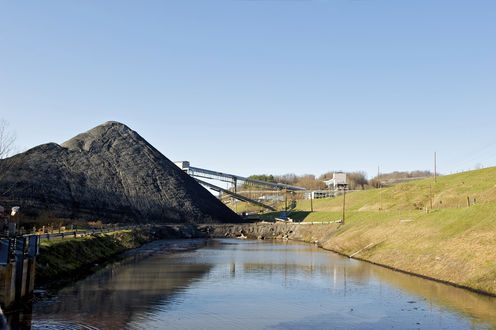
Australia: Why does the Carmichael coal mine need to use so much water?

Australia/ Abril del 2017/Noticias/https://theconversation.com/


From accidental water spills into coastal wetlands, to proposed taxpayer-funded loans, Adani’s planned Carmichael coal mine and the associated Abbot Point coal terminal can’t keep out of the news at the moment.

Last week, the granting of an unlimited 60-year water licence to the Carmichael mine, in Queensland’s Galilee Basin, rattled environmentalists, farmers and community groups alike.

In a region experiencing prolonged drought conditions, the provision of unlimited water for one of the largest mining operations in the Southern Hemisphere seems like a commitment at odds with current climate predictions. The decision has also prompted a raft of wider questions about the industry’s water use.

Why do coal mines need so much water?

Underground coal mines rely on water to reduce the hazard of fires or explosion, by using it to cool the cutting surfaces of mining equipment and prevent coal dust from catching fire.

Water also helps to manage dust produced during the processing stage, when coal is crushed and ground. Coal is then transported through pipelines as a water-based slurry for further processing.

Mines also need water for things like equipment maintenance, and for consumption by the mining communities themselves.

In total, about 250 litres of freshwater are required per tonne of coal produced. This freshwater makes up around a quarter of the total water demand during coal production, the rest being “worked” (recycled) water.

What other industries use lots of water?

The Great Artesian Basin is one of the largest underground water reservoirs in the world. It underlies 22% of Australia’s land area, beneath the arid and semi-arid parts of Queensland, New South Wales, South Australia and the Northern Territory.

Its aquifers supply water to around 200 towns or settlements, most of which are allowed to draw between 100 and 500 million litres (ML) per year.

The Great Artesian Basin covers almost a quarter of Australia. Tentotwo/Wikimedia Commons, CC BY-SA

The Great Artesian Basin underpins A$12.8 billion of economic activity annually, according to a 2016 report commissioned by the federal government. Almost all of this is from mining and coal seam gas (A$8 billion) and livestock farming (A$4.7 billion).

In Queensland, mining and industry hold just over 1% (by number) of the water licences linked to the Great Artesian Basin but account for 10% of the water extracted. Coal seam gas accounts for a further 22% of water, with no licensing required. In contrast, livestock production accounts for 88% of water licences but just 46% of the extracted water.

The Carmichael mine’s 12,000ML forecasted use (equivalent to 4% of the water extracted from the Great Artesian Basin in Queensland last year) would put it alongside the biggest annual users of Great Artesian Basin water, such as the Olympic Dam copper and uranium mine in South Australia, which currently draws 10,000ML each year.

Why does Adani need unlimited water anyway?

According to the company’s own modelling, the Carmichael mine’s annual freshwater use is projected to peak at just over 12,000ML – or roughly 13 Olympic swimming pools per day.

Despite these estimates, the water licence granted to Adani puts no limit on the water it can take from the Great Artesian Basin. However, it calls for regular monitoring of water levels, quality and flow in each aquifer that is tapped.

Unlike other controversial Queensland mining projects, such as the New Acland coal mine, Adani’s water licence application was exempted from public scrutiny, courtesy of a November 2016 amendment to the existing laws.

Water licences usually specify the total amount, and/or the daily rate, of groundwater that can be taken. Changes to a water licence to increase the amount of water must be assessed like a new application and pass public scrutiny. But with an unlimited licence, there is no need for Adani to apply for a new licence if they need more water than originally predicted.

What are the environmental effects of industrial-scale water usage on the basin?

Despite a net yearly decrease of 286,000ML in the water stored within the Great Artesian Basin, it is in no danger of running dry. The past 120 years of exploitation have used up less than 0.1% of the water stored.

The real issue is water pressure. Flows from artesian bores are now roughly half what they were in 1915. Since then, the water level in some bores has fallen by as much as 80 metres, and a third of bores have stopped flowing altogether. This directly affects the human, plant and animal communities that rely on artesian water.

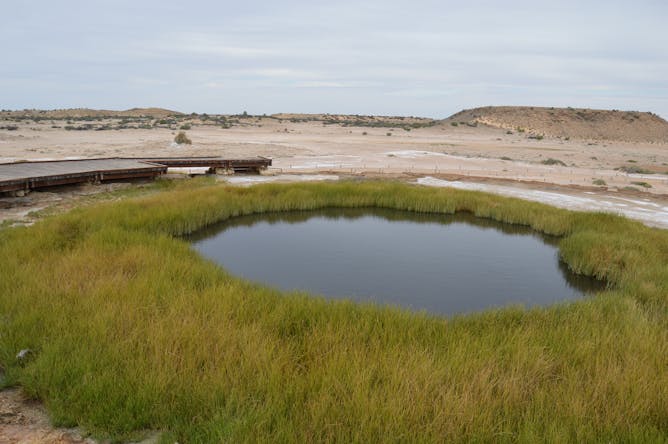
Because of their isolation, the natural springs of the Great Artesian Basin are home to many unique plant and animal species. Desert springs are particularly vulnerable to declining water pressure, and many spring habitats have been irreversibly damaged by invasive species, excavation, livestock, industrial activity and even tourists.

An oasis in South Australia’s arid interior. Tandrew/Wikimedia Commons, CC BY-SA

Can mining industries be more water-wise?

Recycled water is an integral part of coal mining, but it contains salt, added in the dust-management stage, which can leave the water unusable for certain processes. Nevertheless, a recent study suggests that Queensland coal mines could cut their freshwater use by 62% simply by using recycled water for processes that are not sensitive to salt levels. Diluting salty recycled water could also reduce freshwater use by 50%, and cut water costs by 40%.

Untreated seawater is perhaps the most sustainable water of all, although transporting it from coast to mine costs energy and therefore money. Its saltiness also creates chemical challenges during coal and uranium processing.

Another option to address climate-induced water challenges might be for mines to share water allocations.

Where do we go from here?

Understandably, there is significant concern that Adani’s unlimited licence will allow the mine to draw more water than predicted. Should the mine go ahead, it is important that the research community continues to scrutinise the regular water quality and usage reports that Adani is required to provide. Water licences can, after all, be revoked.

We should also be concerned about industries like coal seam gas that currently do not require water licensing, but nevertheless use huge amounts of artesian water.

Although water is an important issue, it is vital not to lose sight of the numerous other environmental impacts of the Carmichael mine. For example, an estimated 4.7 billion tonnes of greenhouse gas emissions will result from the mining and burning of Carmichael coal. Climate warming will impact Australia on multiple fronts, including bleaching of the Great Barrier Reef, increasing the intensity of tropical cyclones, causing more heat-related deaths, diseases and droughts.

Fuente:

https://theconversation.com/why-does-the-carmichael-coal-mine-need-to-use-so-much-water-75923

Fuente Imagen:

https://lh3.googleusercontent.com/bHJ9MzzLyQDwxqG0ah68oBR3aKBNmCJPxnlDsYlo7zKkwinoAb5unuISuo-95aPzt9DNfw=s85

Comparte este contenido:

East Africa: Kiswahili All Set to Be Official in the EAC

África/ Este de África/Abril del 2017/Noticias/http://allafrica.com/


The ministerial meeting of the regional bloc which took place here last week stressed that for Kiswahili to be made one of the working languages, Article 137 of the Treaty has to be amended.

Article 137 of the EAC Treaty recognises English as the official language of the Community but emphasizes that Kiswahili shall be developed as a status of lingua franca, a community-wide language among the populace, of the region.

EAC Treaty is a 116 page document used as a guiding principle for regional integration. The Treaty was signed on November 30th, 1999 and went into force on July 7th, 2000. It has been amended twice; on December 14th, 2006 and August 20th, 2007.

In August last year, the East African Legislative Assembly (Eala) passed a Resolution to urge the Summit of the EAC Heads of State to amend the Treaty in order to provide for Kiswahili as one of the official languages of the bloc in January this year.

The Resolution sailed through at the regional Assembly’s session held in Kampala, Uganda early this year during which the lawmakers underscored the need to elevate Kiswahili from its current status of lingua franca.

The ministers directed the EAC partner states to formulate National Kiswahili Languages Policies and enhance the use of the language in official domains ahead of the Treaty amendment.

The EAC member countries were also urged to initiate the process of institutionalization of Kiswahili as one of the official languages through the establishment of National Kiswahili Councils and National Kiswahili Associations.

Article 119 of the EAC Treaty provides for the development and promotion of indigenous languages especially Kiswahili as a lingua franca of the region while English is the official language.

«Kiswahili will be adopted as an official language within the Community as soon as the EAC Summit of Heads of State amend the Treaty to accommodate the new resolution,» EAC secretariat said in a statement yesterday.

Officials of the secretariat said after amendment, partner states are expected to facilitate adoption of the language at the national level. However, they were not explicit on when the matter will be brought before the regional leaders.

 Fuente:
Fuente imagen:
 https://lh3.googleusercontent.com/kErtmMrXOg9mrrEtNnLw5RjL_ZG8wyhQyE7hWUmhneXic9F17Io2ffoWyNKEDMkx4QFRaRA=s85
Comparte este contenido:

Reino Unido: The contradiction at the heart of Rachel Dolezal’s ‘transracialism’

Europa/Reino Unido/Abri

l del 2017/Noticias/https://theconversation.com/

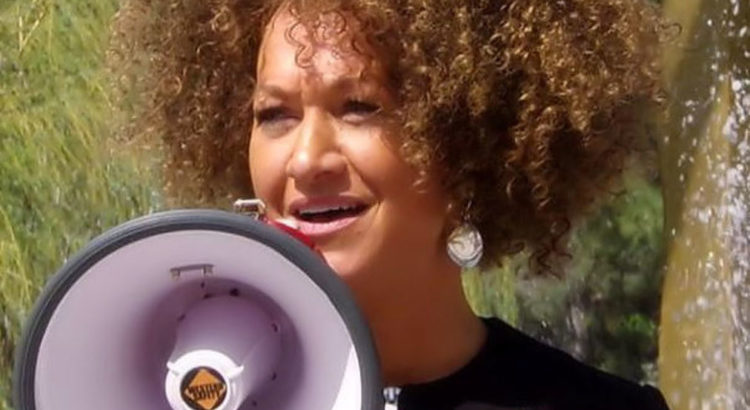
Rachel Dolezal, the former branch president of the National Association for the Advancement of Colored People (NAACP) who gained global notoriety in 2015 after being “outed” as a white woman pretending to be black, is back with a new book on race. Dolezal, who is ethnically German, now claims that she is “transracial”, a condition she compares to transgenderism. By this she means that although she was born white, she identifies with being black, arguing that race is a social construct.

Dolezal complains of further victimisation because “transracialism” is not recognised in the same way as transgenderism. And Dolezal sees herself as triply stigmatised; because of her race, because of her trans status and also because of the perceived illegitimacy of this status.

For someone like me, concerned both with race and with the role of narrative in culture, the narrative spun by Dolezal is both confounding and uniquely fascinating. In an interview with BBC Newsnight, she announced – not incorrectly, in my view – that “race is a lie”. At the same time, she laid claim to the transracialism that she demands to be accepted as a truth.

But while Dolezal has been roundly – to borrow from the old slave spiritual – rebuked and scorned by many, her claim deserves to be considered seriously. Is there really such a thing as transracialism, or is Dolezal correct in her simultaneous – if contradictory – assertion that “race is a lie”? Because in a binary universe, the two statements cannot both be true.

I’d like to tell you a story. I found it in a book of folklore collected from real folk in the American Deep South at around the turn of the last century. The story is about a black girl who is magically transformed into a white girl. While she’s the white girl she lives a charmed life, like Cinderella at the ball. But when she becomes a black girl again, she not only loses all her privileges but worse, is accused of having murdered the now-vanished white girl, and is sentenced to hang.

Now, I won’t tell you the whole story. But “passing” – when a person with mixed African and European ancestry is sufficiently light-skinned to “pass” for a white person – has a long history in the United States. This was no small matter, since during slavery, those who “passed” successfully may have been able to escape and remain undetected, living free within the white community.

Of course, this meant that, unlike the black girl in the story, any person who “passed” would need to have a substantial amount of European ancestry. Dolezal, who cosmetically modifies her skin-tone and hair-texture to assume some characteristics associated with African descent, appears to all intents and purposes as a person of mixed European and African ancestry.

‘Black’ and ‘white’

Patti Smith’s 1978 track, Rock ‘n’ Roll Nigger, plays with the construction of black identity, arguing in her song for a positive re-appropriation of blackness and that “nigger” applies to anyone excluded from mainstream society: “Jimi Hendrix was a nigger, Jesus Christ and Grandma too, Jackson Pollock was a nigger, nigger, nigger, nigger”. The idea that identities are constructed and performed has gained credence in recent decades, not least associated with the academic Judith Butler’s ideas around “performativity” (Pdf) – the idea that gender roles, in particular, are largely performed as a result of acculturation and expectation rather than representing innate characteristics.

But racial identities – and race as we understand it – were constructed in support of a political caste system in a way that gendered identities were largely not, and are wholly bound up in recent legacies of slavery and colonialism.

Alexandre Dumas, author of the Three Musketeers, had a grandmother who was an African slave. Google Cultural Institute/Wikipedia

Blanket categories of “black” and “white” are an entirely modern phenomenon. In the 17th and 18th centuries, those Europeans who were actively involved in the slave trade made a point of distinguishing between different African ethnic groups; some were considered to be better house slaves, others better field slaves. The Igbo people, for instance, were considered prone to suicidal ideation, which posed problems for the incipient slaver. In the early days of “race” as we know it, there really was no sense of the generic catch-all blackness to which Dolezal lays claim.

As generations passed, ideas of “black” and “white” were further complicated by the complex striations of racial coding that were implemented both during and after slavery, across the Americas, as a consequence of voluntary and involuntary coupling between Europeans and Africans.

This led to a dizzying taxonomy of racial mixes, including (but not confined to) so-called mulattoes, quadroons, octoroons, tercerons, quintroons and beyond, depending on how many generations back a person’s African ancestry was traced. A person might be able to pass as white if their direct African ancestry was three or four generations removed – although if their relative “blackness” was discovered, it was a source not only of shame but was a precondition of legal slavery.

The reason why any of this is important is because we must recognise that the history of race is two things. It’s both a fallacy, created in support of a master-slave caste system; and it’s a complex taxonomy based on continental and ethnic inheritance.

At no level beyond metaphor is it an identity that can be selected, because the whole point of any caste system is to create fixed separations of power that cannot be changed or chosen. If they could, then everyone would choose to belong to the privileged caste – which would render the whole caste system meaningless. At the same time, inheritance is not an accident of birth. It is not a Y chromosome rather than an X, but based on real people in one’s familial line and whose histories cannot be erased retroactively.

Dolezals’s problem is this: to choose one’s racial identity irrespective of inheritance is tantamount to an admission that race does not exist. It would be one thing to adopt a black identity as a show of political resistance and solidarity, but Dolezal is instead in danger of laying claim to what is arguably a racist fantasy of “blackness”. If we fail to take her seriously, we run the risk both of ignoring the critical issues at stake and, worse, accepting uncritically Dolezal’s repurposing of racial ideology. If we are to accept that there is any such thing as “transracial” then it should be as an opportunity for all of us to transcend the politically expedient but specious categories of race.

Instead, by claiming race as some kind of mysterious inner state divorced either from its political, historical or ethnic specificity, Dolezal could do the opposite of transcending race; rather, she runs the risk of reinforcing racial and racist models by insisting that race is an innate, inner experience rather than something imposed from without.

If Dolezal is genuine in her claim that “race is a lie”, then she must recognise that her claims to transracialism are also lies. She simply cannot have it both ways; because race either is, or it isn’t.

Fuente :

https://theconversation.com/the-contradiction-at-the-heart-of-rachel-dolezals-transracialism-75820

Comparte este contenido:

La ONU denuncia «más violencia» en Siria tras ataque de Estados Unidos

Abril del 2017/Noticias/http://www.2001.com.ve/


La ONU denunció hoy que tras el ataque de EE.UU. contra Siria de la semana pasada ha habido «más luchas y violencia» en el país, con nuevas denuncias de armas prohibidas que han castigado zonas habitadas por la población civil.

«Es hora para pensar con claridad», afirmó el enviado especial de la ONU para Siria, Staffan de Mistura, al presentar hoy un informe ante el Consejo de Seguridad de Naciones Unidas para hacer un repaso de la situación política en el conflicto de ese país.

El pasado jueves, Estados Unidos lanzó 59 misiles Tomahawk contra la base aérea siria de Shayrat para castigar al régimen de Bachar al Asad tras denuncias sobre el uso de armas químicas, dos días antes, en la localidad de Jan Shijún.

«Desde entonces hemos visto más lucha y violencia, con nuevas denuncias del uso de bombas de racimo y de barril en zonas habitadas, incluyendo las cercanías de Jan Shijún», dijo De Mistura, aludiendo a armas prohibidas por la legislación internacional.

De Mistura dijo que las acciones armadas en ese país se conocen en medio de un «frágil» proceso de diálogo político que se lleva a cabo en Ginebra, donde se han completado cinco rondas de consultas para buscar una solución política a la guerra siria.

El representante de la ONU insistió en que sólo una solución política puede poner fin a esa guerra, «y no una solución militar, a pesar de los que intentan hacer creer» que hay esa posibilidad.

La guerra en Siria, que ha causado más de 300.000 muertos y ha generado millones de desplazados y refugiados, estalló en 2011 primero como un movimiento político de oposición a Al Asad y posteriormente con un alzamiento armado.

Fuente:

http://www.2001.com.ve/en-el-mundo/157079/la-onu-denuncia–mas-violencia–en-siria-tras-ataque-de-estados-unidos.html

Fuente Imagen:

https://lh3.googleusercontent.com/Bg86IRoftw4BFYEP4PMh4p1jUvbA_SL34eoaR625Y4w18if6wnCfz1p2qTXSDy__B_VdDA=s85

Comparte este contenido:
Page 3985 of 6125
1 3.983 3.984 3.985 3.986 3.987 6.125