Page 4006 of 6193
1 4.004 4.005 4.006 4.007 4.008 6.193

Argentina: “Si el Estado no convoca a la paritaria nacional, volverán los paros”, sostuvo Dante Boeri de SUTEBA

Argentina/25 de abril de 2017/Fuente: El Diario del Sur

Los docentes volvieron a clases pero el conflicto no está resuelto ante la última propuesta salarial por parte del gobierno de María Eugenia Vidal y volvieron a reunirse para resolver cuales son las próximas acciones a seguir.

Los docentes volvieron a clases pero el conflicto no está resuelto ante la última propuesta salarial por parte del gobierno de María Eugenia Vidal y volvieron a reunirse para resolver cuales son las próximas acciones a seguir. Autoridades de SUTEBA estuvieron recorriendo distintos establecimientos educativos de Ezeiza compartiendo con los docentes las condiciones de trabajo que inciden en la realidad en la  que aprenden los estudiantes.
Sivia Almazán, secretaria adjunta de educación y cultura de SUTEBA provincia, sostuvo que «la inflexilibidad del gobierno nacional a convocar a la paritaria nacional docente tiene que ver intenta avanzar con decisiones unilaterales en reformas educativas. No solo queremos discutir salarios sino también queremos que se convoquen al resto de las comisiones porque creemos y fundamentamos nuestra lucha en la defensa de la educación pública, tiene que haber una paritaria provincial y una nacional”.
Por su parte Dante Boeri, secretario de Comunicaciones de SUTEBA Echeverría y Ezeiza, afirmó «estamos exigiendo que cumplan con la ley, no nos están convocando y como respuesta a eso instalamos la escuela itinerante frente al Congreso y las más de sesenta mil personas muestran el grado de apoyo que tenemos de la comunidad educativa hacia sus maestros y profesores”.
Con respecto a la falta de convocatoria Almazán habla de «un proceso desresponsabilización” por parte del Estado Nacional sobre la educación pública, sobre los derechos de los docentes y también de los estudiantes porque según las leyes vigentes” y añadió que «el Estado es el garante de la educación en todo el país, la no convocatoria a la paritaria nacional docente es una señal que va en violación del cumplimiento de estas leyes”.
El gremio docente llevó a cabo una consulta de la que participaron más de cien mil docentes de toda la provincia de Buenos Aires. Todos acordaron que «si no hay respuesta volveremos a las acciones y en esta regional de Echeverría y Ezeiza, los compañeros optaron por paros de 24 horas rotativos y hacer marchas, movilizaciones y acampes”, finalizó Dante Boeri.
Fuente de la Noticia:
http://www.eldiariosur.com/esteban-echeverria/sociedad/2017/4/24/estado-convoca-paritaria-nacional-volveran-paros-sostuvo-dante-boeri-suteba-8772.html
Comparte este contenido:

España: Semana de Acción Mundial por la Educación tras la marcha mundial contra políticas anticientíficas

España – EEUU/25 de abril de 2017/Fuente: http://www.ibercampus.es

Tras las protestas organizadas en ciudades de todo el globo el 22 de abril contra las políticas acientíficas de Trump, coincidiendo con el Día Mundial de la Tierra lanzado por ONU, desde este lunes 24 al sábado 29 se desarrolla la Semana de Acción Mundial por la Educación (SAME), campaña que cuenta con el apoyo de la UNESCO para presentar el Informe de Seguimiento de la Educación en el Mundo (GEM) y llamar a responder una encuesta también mundial sobre la importancia de la rendición de cuentas

Bajo el lema «Pido la palabra por la educación», como reflejo de la importancia de la participación de la ciudadanía, la Campaña Mundial por la Educación (CME), con el apoyo de la UNESCO, llama a la movilización para pedir a los representantes políticos que tomen las medidas necesarias para el cumplimiento de la Agenda de Educación 2030.

La conmemoración tiene lugar entre el 24 y 29 de abril y se realiza en más de 120 países. Esta iniciativa existe para mantener viva la concienciación sobre la importancia de la educación para la sostenibilidad y los compromisos asumidos por todas y todos para alcanzar la meta global de la Educación 2030.

El tema de 2017 es «Rendición de Cuentas para el Objetivo de Desarrollo Sostenible nº4 y Participación Ciudadana» y destaca la importancia de una gobernanza transparente, responsable y participativa para cumplir con la agenda completa del ODS 4: «garantizar una educación de calidad, inclusiva y equitativa, y promover las oportunidades de aprendizaje durante toda la vida para todos y todas». En este contexto, el equipo del Informe de Seguimiento de la Educación en el Mundo (GEM), informe anual independiente, acreditado y de base empírica que publica la UNESCO llama a responder la encuesta ¿Quién rinde cuentas? ¡Queremos saber su opinión!

Desde el 23 al 29 de abril, la Semana de Acción por la Educación Mundial promueve el papel vital de la participación ciudadana en la formulación de políticas educativas y el seguimiento de los progresos que los países realizan para alcanzar esta meta al 2030. La Campaña Mundial por la Educación no sólo se moviliza para exigir a los gobiernos que adopten las medidas, políticas y financiación necesarias para garantizar una educación de calidad, inclusiva y equitativa, sino para que lo hagan de forma transparente, rindiendo cuentas de sus compromisos ante la ciudadanía y asegurando espacios de participación de la sociedad civil.

LA FECYT española, como la Casa Blanca

Esta campaña se inicia tres días después de que, el pasado sábado, y  por primera vez, miles de personas personas de todo el mundo se han unido para defender «una ciencia sólida, basada en evidencias, que ayuden a todos, desde los políticos y ejecutivos hasta los padres, educadores y estudiantes a tomar decisiones razonadas que mejoren nuestras vidas». La cita ha sido este sábado 22 de abril en la Marcha por la Ciencia, con un acto central en Washington DC, pero con marchas satélites en medio millar de ciudades de todo el mundo, incluidas varias españolas. La agencia de prensa oficial SINC,  de la Fundación Española para la Ciencia y Tecnología (FECYT),ha informado así de las manifestaciones sin decir que se trata de movilizaciones contra las políticas acientíficas del presidente Donald Trump, al igual que la Casa Blanca declaró sin recordar el Día Mundial de Cambio Climático en un comunicado publicado el mismo sábado, que “Una ciencia rigurosa es esencial para los esfuerzos de una administración por cumplir el doble objetivo del crecimiento económico y de la protección medioambiental.

El objetivo de la March of Science y su legado es «defender una ciencia, comunicada públicamente y financiada de forma robusta, como pilar de la libertad y la prosperidad humanas», explican los organizadores en su web, donde señalan: «Nos juntamos como un grupo diverso, no partidista, para demandar una ciencia que defienda el bien común y para que los líderes políticos y legisladores promulguen políticas basadas en la evidencia y de interés público».

Un investigador español del Instituto Tecnológico de Massachusetts (MIT), que prefiere no dar su nombre, coincide en señalar: «Los científicos somos conscientes de que las decisiones políticas en cuestión de ciencia van más allá de lo meramente científico y tienen un impacto, a través de la ciencia, en la sociedad en que vivimos y en el futuro de las próximas generaciones».

«Evidentemente esta iniciativa se está focalizando en la nueva administración en EEUU –añade–, y en el impacto que su política en ciencia pueda tener para el futuro, por ejemplo de cara al cambio climático, la escasez de alimentos, la búsqueda de nuevos recursos energéticos, etc. Sin embargo, aunque eso es cierto, creo que hay que tener en cuenta que la idea de la marcha va mucho más allá de una protesta por la nueva política en EEUU: tiene un carácter general».

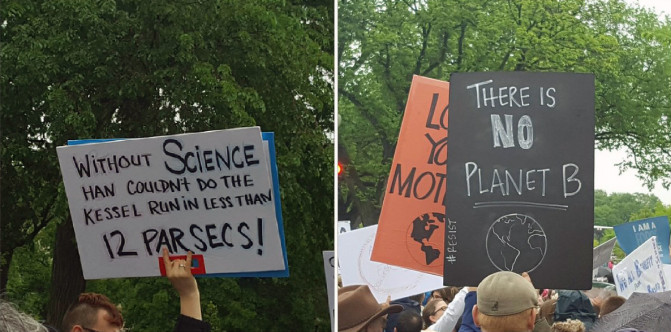
Por encima de las críticas a la administración Trump por sus propuestas y los recortes en investigación, la March of Science ha sido una celebración por la ciencia. Los miles de personas que acudieron a la manifestación en la capital de EE UU la defendieron con todo tipo de mensajes, desde los que se lo tomaron con humor hasta los que, en el Día de la Tierra, también recordaron que de momento solo tenemos un planeta donde vivir.
guerra galaxias_LaurenceHart-piewords.jpg

«Sin ciencia, Han [Solo] no podría haber hecho el corredor Kessel en menos de 12 parsecs» y «No hay un planeta B». / Fotos vía Laurence Hart‏ @piewords

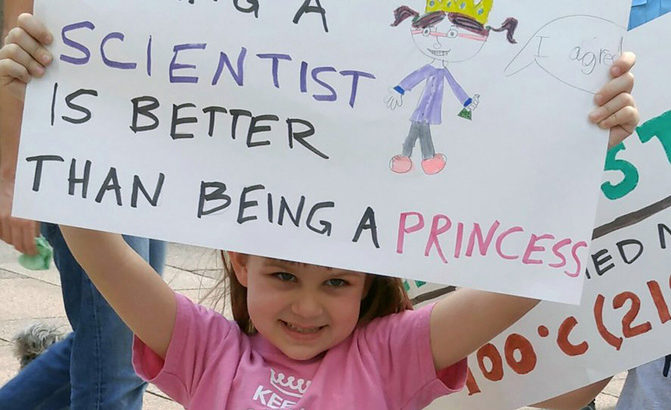
Los carteles que se mostraron durante las marchas también han dejado claro que la ciencia no entiende de género. Para acabar con el famoso techo de cristal, que limita el ascenso de las mujeres en las carreras investigadoras y docentes, hay que promover un mensaje de igualdad desde la infancia, como demostró una niña desde la March of Science en Houston.
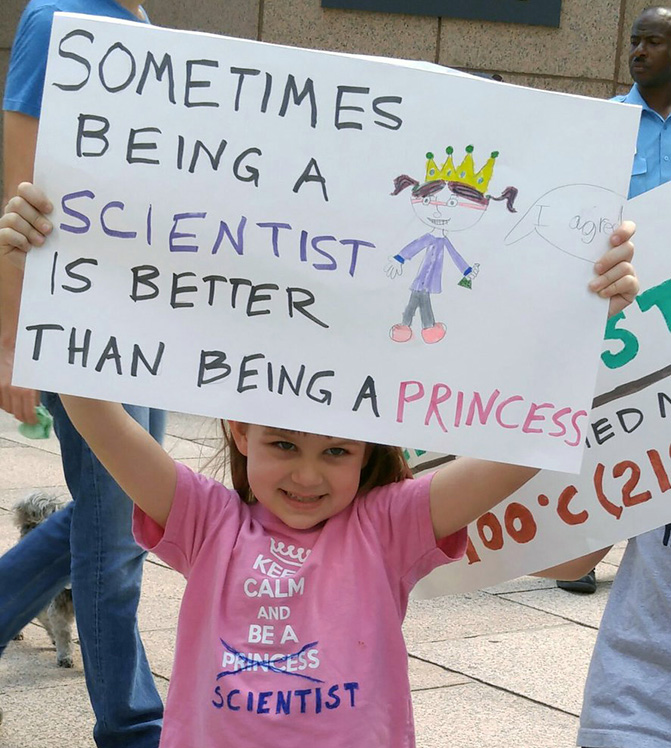
princesa_Rena-tippy3880

«A veces ser científica es mejor que ser princesa». / Foto vía Rena‏ @tippy3880

En algunas manifestaciones se incluyeron mensajes velados en contra de la política de inmigración de la administración estadounidense, una crítica que también llegó desde Europa. Por ejemplo, en la convocatoria de Ginebra (Suiza), se recordaba que el mismísimo Albert Einstein fue un refugiado.
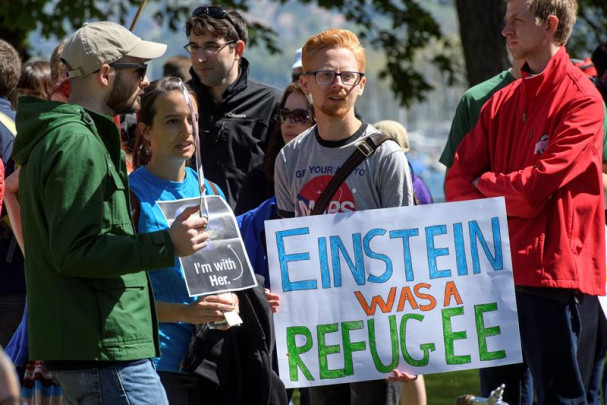
March for Science in Geneva

«Einstein fue un refugiado». / EFE

Este movimiento para defender «el papel vital que desempeña la ciencia en nuestra salud, seguridad, economías y gobiernos», como defienden los organizadores de la Marcha por la Ciencia, ha llegado a todos los continentes. «Sin ciencia, solo es ficción», mostraba la pancarta de un manifestante en Sidney (Australia).
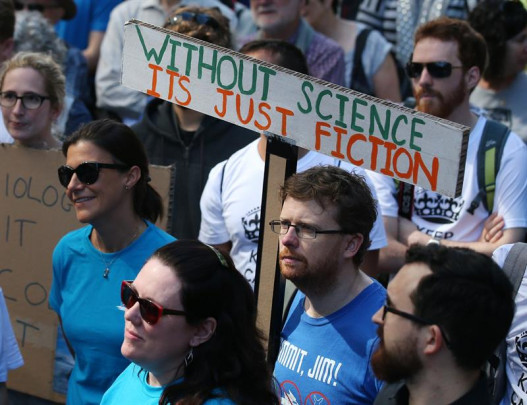
March for Science in Sydney

«Sin ciencia, es solo ficción». / EFE

Incluso en la remota Antártida, los científicos, como los de la base alemana Neumayer, han participado en la March of Science para destacar la importancia de la ciencia en nuestra sociedad. Desde las gélidas regiones polares han recordado las palabras de Marie Curie: «En la vida no hay nada que temer, solo hay que comprender. Es hora de comprender más, para que podamos temer menos”.
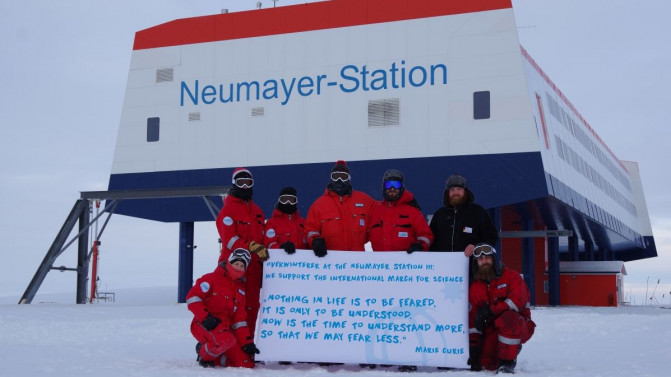
Antartida_AWIMedien_de

Mensaje de Marie Curie recordado durante la March of Science desde la Antártida. / Foto vía Awi Mediem @AWI_de

Fuente de la Noticia:

http://www.ibercampus.es/semana-de-accion-mundial-por-la-educacion-tras-la-marcha-mundial-34826.htm

Comparte este contenido:

Colombia: El derecho a la educación prevalece sobre el cumplimiento de obligaciones meramente monetarias

CLADE- Colombia/ 25 de abril de 2017/ Autora: Adelaida Entenza.

Así lo determinó la Corte Constitucional al analizar el caso de una estudiante de medicina que no pudo continuar con el desarrollo de sus actividades académicas en la Universidad de la Sabana, debido a que la institución no emitió la orden de matrícula por tener la estudiante una deuda pendiente de pago.

En la resolución del caso, la Corte recuerda que en su desarrollo jurisprudencial ha considerado que la educación es clave para la igualdad, permite el desarrollo integral de las personas y la realización de sus demás derechos, guarda íntima conexión con la dignidad humana, y resulta indispensable para la equidad y la cohesión social. Resalta que, de manera consistente, se ha defendido el carácter fundamental del derecho a la educación, y que dada la importancia que tiene este derecho para el desarrollo de las personas, la educación goza de una especial protección por parte del Estado.

Al analizar la tensión entre el derecho a la educación y la autonomía universitaria (la cual había sido alegada por la institución educativa), la Corte concluyó que dicha autonomía encuentra límites demarcados por los derechos fundamentales; advirtiendo que la Universidad tiene a su disposición medidas de cobro que no lesionan el derecho fundamental a la educación, afirmando que “la decisión de impedirle a la estudiante continuar con sus actividades académicas por motivos netamente económicos es una medida desproporcionada que vulnera esta garantía fundamental”.

Con base a ello, ordenó el reintegro de la estudiante a sus actividades académicas en un plazo no superior a 48 horas, absteniéndose la institución universitaria en cuestión “de seguir afectando el proceso educativo por razones relacionadas con el cumplimiento de obligaciones meramente pecuniarias”.

Por su parte, en virtud de que ya habían transcurrido más de ocho meses en los que la estudiante se había encontrado impedida de continuar sus estudios, la Corte ordenó a la Universidad de la Sabana realizar todas las acciones tendientes a garantizar que la estudiante se ponga al día en sus obligaciones académicas, así como concertar un nuevo acuerdo de pago que se ajuste a su situación económica real y actual.

Acceda aquí al texto completo de la Sentencia T-102/17

Fuente de la Noticia:

http://privatizacion.campanaderechoeducacion.org/colombia-el-derecho-a-la-educacion-prevalece-sobre-el-cumplimiento-de-obligaciones-meramente-monetarias/

Comparte este contenido:

Negerian: Saraki Canvasses Comprehensive Education Reform

Negerian/25 April 2017/Source: http://www.promptnewsonline.com

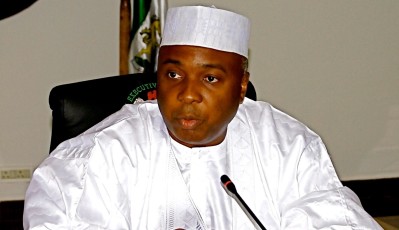
President of the Senate, Dr. Abubakar Bukola Saraki, has said that with the recent economic recession in the country, interventions in the nation’s educational system must no longer be business as usual.

In a statement signed by his Special Adviser on Media and Publicity, Yusuph Olaniyonu, the Senate President said there is a need for comprehensive education reform across all levels to ensure that Nigerian students and schools are competitive globally.

“Considering the economic situation in the country and the widening social inequality, we need to ensure that all Nigerians are well equipped for the future that lies ahead,” he said, “This means that any reform in education can no longer be business as usual — it must involve government, academia, and the private sector.

“What we all want to see is an educational system that is meeting the demands of the employers in both the public and private sectors,” the Senate President said, “ However, it goes beyond just reforming our school systems, we have to tackle this problem from the root, which is primary education, all the way to tertiary education, which is at the top.

“For example, basic education is the primary responsibility of the local governments. This needs to be reviewed. We have to look into and redesign the current education model that has domiciled the most important tier of education in the weakest tier of government.”

The Senate President also stated that all reform in education must be addressed from the simple perspective of: “What do we as Nigerians want our children to know and be able to do at each stage of their education?”

“Once we are able to answer this question, once we are able to determine what our children should know and be able to do at every age and level, from these expectations, we can begin to measure the competence of both teachers and students.”

The Senate President stated that over the next few months, the Senate will be working to restructure Nigeria’s education system by providing a legislative framework that will create more autonomy for Nigeria’s education system to make it more competitive locally and internationally.

Source:

Saraki Canvasses Comprehensive Education Reform


Comparte este contenido:

Ireland: NI budget may impose 2.5% education cut

Ireland/25 april 2017/

Northern Ireland’s secretary of state has published indicative figures for a budget he will impose if the Stormont parties do not reach a deal.

The indicative figures include a 3% increase in cash for health spending but a 2.5% cut for education.

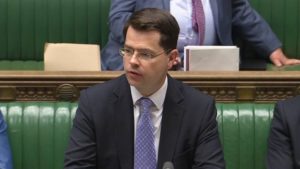
Secretary of State James Brokenshire said he took advice from senior civil servants and is attempting to reflect the priorities of the local parties.

His intention is to «give clarity» in the absence of an executive.

Stormont’s finances have been under the control of a senior civil servant since the start of the financial year because the previous executive did not produce a budget.

Mr Brokenshire said the totals he has set out «would not constrain the future ability of an incoming executive to adjust its priorities during the course of the year».

James Brokenshire said his intention was to give clarity to Stormont departments in the absence of an executive

Aside from health, the only other Stormont department to see a significant increase in day-to-day spending is the Department of Communities.

Its spending is up by 9%, which is understood to reflect welfare reform mitigation measures agreed by the previous executive.

The capital part of the budget would make available funding for projects which were announced by the executive as part of their 2016-17 Budget.

These include the A5 and A6 road projects, the Belfast Transport Hub, and the Mother and Children’s Hospital.

Northern Ireland has been without a devolved government since January, when the coalition collapsed over a botched energy scheme.

The late Martin McGuinness, of Sinn Féin, quit as deputy first minister in protest at the Democratic Unionist Party’s handling of the Renewable Heat Incentive (RHI) scandal.

It led to a snap election to the Northern Ireland Assembly on 2 March, which saw a surge in Sinn Féin’s vote.

Stormont’s two largest parties have been unable to reach agreement to share power since that date, and were warned they face either a second assembly election or direct rule from Westminster.

However, Prime Minister Theresa May’s decision to call a snap election to the House of Commons made a deal even more unlikely as parties switched to campaign mode.

In order to keep day-to-day services running in the absence of locally elected ministers, the Westminster government published emergency legislation last week – known as the Ministerial Appointments and Regional Rates Bill

The bill began its accelerated passage through Westminster on Monday.

Source:

http://www.bbc.com/news/uk-northern-ireland-39698766

Comparte este contenido:

Kenyans Unhappy As Teens Say They Want Contraception

Kenya/25 april 2017/ By: /Source: All Africa

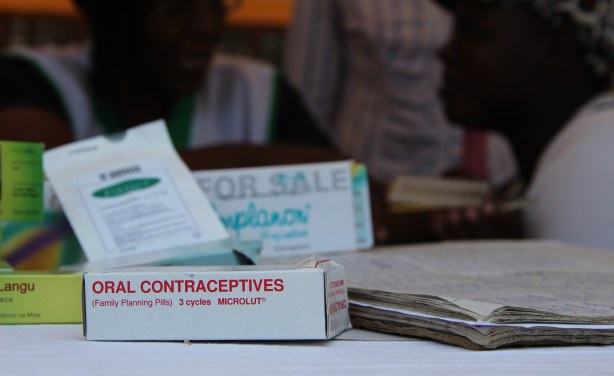
So our teenagers want to know where to get contraceptives and how to use them? A recent Daily Nation headline, «We want condoms, say teens», made that patently clear.

The clamour to give the devices to children as young as 10 is an all-too-familiar strategy of the American population control lobby.

They use opinion leaders, notably MPs, policymakers and actors, civil society groups, religious leaders and even the media to further an agenda with well-documented harmful effects on children.

The latest strategy shifts focus from the vested interests in the multibillion-dollar industry.

Did you know that the global market is projected to hit the Sh2 trillion mark by 2020 at a 3.1 per cent compound annual growth rate since 2014?

COST OF CONTRACEPTIVES

Did you also know that since fiscal year 2011-2012, the government has been covering the full cost of contraceptives, thanks to the 2010 Constitution, which treats reproductive health like any other health issue, never mind that nobody ever died from sexual starvation?

With constitutional bottlenecks removed, the remaining hurdle to channelling taxpayers’ billions to the Western contraceptive makers is that clause in the law, which regards anybody under 18 as a child incapable of consenting to sex.

SEXUAL OFFENCES ACT

Section 8 of the Sexual Offences Act stipulates penalties for having sex with under-18-year-olds:

– 8(1) A person who commits an act which causes penetration with a child is guilty of an offence termed defilement.

-8(2) A person who commits an offence of defilement with a child aged eleven years or less shall upon conviction be sentenced to life imprisonment.

-8(3) A person who commits an offence of defilement with a child between the age of twelve and fifteen years is liable upon conviction to imprisonment for a term of not less than 20 years.

A person who commits an offence of defilement with a child between the age of sixteen and eighteen years is liable upon conviction to imprisonment for a term of not less than 15 years.

SEX PESTS

Anybody having sex with an under-18 belongs in jail and should not be facilitated by dishing out contraceptives to prevent pregnancies and sexually-transmitted diseases inflicted by such sex pests.

But the old maxim that every man (and woman) has his price holds sway. The contraceptives industry is determined to expand the under-18s market in Kenya, which represents some 25 per cent of the population.

Their softest target is legislators, whose greed is comparable only to that of police, who consistently top Transparency International corruption charts.

Female lawmakers, who should be championing children’s wellbeing, have been lobbying to lower the age of consent to 16.

The lawmakers have fallen prey to contraceptive sellers’ ploys, thanks to their penchant for soliciting bribes to legislate in favour of unpopular causes.

PRO-ABORTION AGENDA

Vested interests drive the push to have contraceptives for children.

It can’t be by chance that Guttmacher Institute study claiming teens want to know where to get and how to use contraceptives coincided with the Teen Pregnancy Task Force Summit in Portland, Oregon, US, also associated with Guttmacher.

Guttmacher has an undisguised pro-abortion agenda as evidenced by its statement: «In the first quarter of 2017, there was an increased focus by abortion foes on legislation to ban abortion under various circumstances. This worrying trend could be driven by expectations that the US Supreme Court might uphold such laws in the future.»

Telling children about the dangers of contraceptives is neither moralistic nor is it meant to instil fear and guilt; it’s being factual. Isn’t it about time we exposed commercial interests that treat our children as a vast contraceptives market?

Ms Kweyu is a freelance writer and consulting editor.

Source:

http://allafrica.com/stories/201704240178.html

Comparte este contenido:

Ethiopia’s Youth Bulge – From Problem to Opportunity

Ethiopia/25 april 2017/By: /Source: All Africa

Ethiopia’s youth has come under the spotlight recently for their role in a political protest that is seen to be threatening stability. But Ethiopia’s youth bulge doesn’t need to be a political problem. It can be converted to an economic muscle.

Over the past 12 years Ethiopia has been lauded as one of the fastest growing economies in the world with average Gross Domestic Product (GDP) growth of 10.8%. It has also seen a significant decline in poverty. In 2004 it had a poverty rate of 39% which had fallen to 23% by 2015.

But there’s a cloud hanging over the country. In 2016 it was hit by a drought that affected 10 million people. And a new drought has emerged again this year.

2016 also saw an outbreak of political protest. Although things are relatively calmer now, the state of emergency that was declared in October 2016 has been extended.

But Ethiopia still has a lot going for it, including a large youth population – over 70% of the country’s population is under 30 years of age. This could be turned to a massive advantage if backed by appropriate policies.

Ethiopia’s demographic profile mirrors China’s in the 1980s and of East Asian countries in the 1950s. The spectacular economic growth in East Asia in the second half of the 20th century is partly attributed to the demographic transition that supplied the economies with a young work force. The key to reaping this demographic dividend is, of course, that there are jobs for those joining the labour force.

While a young population can be a positive economic factor, it can also be a political risk in an economy that doesn’t create enough opportunities.

Until recently Ethiopia had avoided large scale political upheaval among young people. This was partly due to the government’s tight control of youth groups and surveillance of their activities. But recent unrest with youth at the helm signals huge problems, indicating that their livelihood and unemployment issues can no longer be suppressed or ignored. Addressing the problem head on is the smarter thing to do.

The problem

Every year more than a million young Ethiopian men and women join the labour market. But the economy produces far fewer new jobs and opportunities. This is partly due to the structural make up of the largely agrarian economy.

Over 80% of Ethiopians live in rural areas. While the agricultural sector in Ethiopia has declined significantly as a contributor to the economy in the past decade and now accounts for less than 50% of the national product, it still employs more than 70% of the labour force.

Historically, most people who were born in rural areas tended to settle there. But land scarcity and population growth, coupled with limited non-farm employment opportunities has started pushing young people into the urban areas.

There aren’t enough jobs for them there either. Official statistics show that 30% of 20 to 24 year-olds in urban areas are unemployed. Some studies suggest that the actual rate is as high as 50%.

National level labour surveys and other studies suggest that young people with secondary education or more are the ones missing out the most from the flourishing economy. Many – about 70% – join the labour market with little or no practical or specialised training past the general secondary education.

High aspirations and expectations

High levels of unemployment among educated young people is a troubling phenomenon. The country’s youth have increasingly higher aspirations and expectations due to the possibilities they see, given the country’s economic growth. They also have high expectations of what they believe they deserve as relatively educated people.

But not only are there no jobs, wages are often not high enough to support high living costs.

This gap between aspirations and economic reality is clearly becoming increasingly frustrating.

In focus groups of young people in different parts of southern Ethiopia we captured a deep sense of hopelessness and a fear that they would remain trapped in poverty.

For those living with their parents the main concern was that unemployment was «waiting for them» when they finished school. Many said that they previously thought that hard work at school was the way out of the life of poverty their parents had endured. Many were clearly itching to do something about their lives.

One sign of this pent up frustration is the surge in young people choosing to take the risk of irregular international migration even when they’ve been warned about the risks.

Way forward

Ethiopia’s youth bulge can be an engine for growth as international companies look to set up operations where they can access low wage labour. On top of that, an increase in the number of young people working would boost demand and investment in the country.

But to transform young people into an engine of growth requires improving access to employment.

The government should create an enabling environment for the private sector by improving the country’s dismal business environment.

At the same time, it should design effective employment programmes. It’s recent effort to increase job opportunities for unemployed young people is a step in the right direction. But policymakers, politicians and those implementing policies should resist the temptation to use access to jobs and employment as a political tool.

Disclosure statement

Sosina Bezu does not work for, consult, own shares in or receive funding from any company or organization that would benefit from this article, and has disclosed no relevant affiliations beyond the academic appointment above.

Read the original article on The Conversation Africa
Comparte este contenido:
Page 4006 of 6193
1 4.004 4.005 4.006 4.007 4.008 6.193