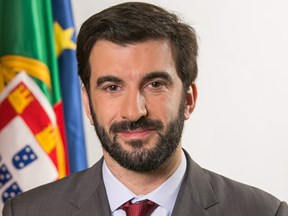
Ecuador/Marzo de 2017/Fuente: El Diario
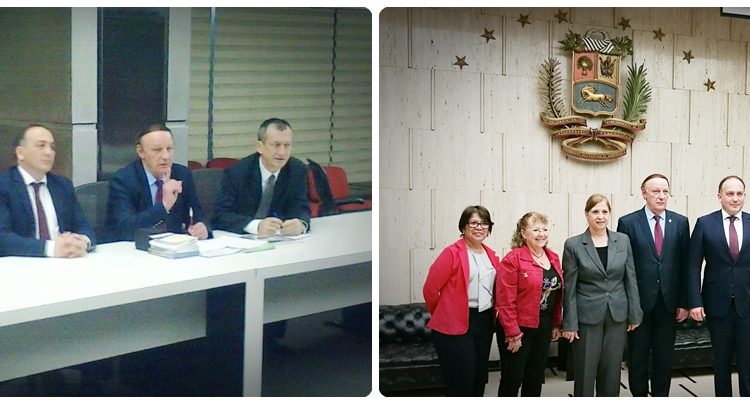
Este es un examen de 165 preguntas que a los alumnos les sirve para dos propósitos: el primero es lograr un cupo en la universidad y el segundo obtener el puntaje requerido para graduarse como bachiller.
Ecuador/Marzo de 2017/Fuente: El Diario
Este es un examen de 165 preguntas que a los alumnos les sirve para dos propósitos: el primero es lograr un cupo en la universidad y el segundo obtener el puntaje requerido para graduarse como bachiller.
El Salvador/Marzo de 2017/Fuente: La Página
Canadá/Marzo de 2017/Fuente: CBC News
RESUMEN: Los liberales prometieron miles de millones para arreglarlo antes de retroceder en algunos de sus planes, ahora cientos de líderes de las Primeras Naciones en todo el país se reúnen en Calgary para hablar entre ellos sobre la mejor manera de abordar el problema perenne de la educación en las reservas. El foro nacional de la Asamblea de las Primeras Naciones está examinando temas y nuevos modelos en la educación que ayudarán a cerrar la brecha en la educación primaria y postsecundaria para los estudiantes indígenas de Canadá. En una investigación realizada en marzo de 2016 sobre la muerte de siete estudiantes de las Primeras Naciones en Thunder Bay, Ontario, el economista Don Drummond estimó que las escuelas de las Primeras Naciones reciben un 30% menos de fondos que sus contrapartes bajo jurisdicción provincial en todo el país.
The Liberals pledged billions to fix it before backtracking on some of their plans, now hundreds of First Nations leaders across the country are gathering in Calgary to talk amongst themselves about how best to tackle the perennial problem of education on reserves.
The Assembly of First Nations national forum is examining issues and new models in education that will help close the gap in K-12 and post-secondary education for Indigenous students in Canada.
Speaking at a March, 2016 inquest into the death of seven First Nations students in Thunder Bay, Ont., economist Don Drummond estimated First Nations schools receive 30 per cent less funding than their counterparts under provincial jurisdiction across the country.
«The goal is to create and open a dialogue amongst First Nations across the country,» said director of education for the Membertou Mi’kmaq First Nation in Nova Scotia, Darren Googoo.
«We live and work in two worlds. We live and work in our own communities in Aboriginal Canada and we need to still walk in the Canada outside of reserves as well. We need to have strong, articulate and intelligent young people and we need them to be able to walk in both worlds,» Googoo said.
In his opening address at the directors of education national forum on Wednesday, Assembly of First Nations Chief Perry Bellegarde said the focus of the forum is on «restoring balance» to First Nations education.
That balance is about children being academically prepared for working life off the reserve, but armed with strong self-identity and cultural knowledge, including traditional languages.
But some attendees say social problems on reserves need to be tackled before First Nations students can really thrive.
«We’re seeing some of our graduates, some of our A students, get to that level only to succumb to some of the social challenges,» said Richard Fox, superintendent of the Kainai Board of Education with Alberta’s Blood Tribe.
Richard Fox, Superintendent of the Kainai Board of Education with Alberta’s Blood Tribe. (Dan McGarvey/CBC)
«Most of us have heard about the fentanyl crisis and it’s discouraging to see the work that’s being done to get our children to succeed and then just succumb to something like that, or any other addictions for that matter,» he said.
«It’s not just about funding. It’s going beyond that mindset to say even if we have all that funding we need, what’s really going to work?»
«We need our children to succeed,» said Fox.
Fuente: http://www.cbc.ca/news/canada/calgary/first-nations-education-calgary-afn-1.4005786
Estados Unidos/Marzo de 2017/Fuente: The Charlotte Observer
RESUMEN: La legislación educativa más importante jamás aprobada en los Estados Unidos fue la Ley de Educación Primaria y Secundaria de 1965 (ESEA), diseñada para ayudar a financiar la educación primaria y secundaria y hacerla accesible, igualitaria y justa para todos los niños. Para lograr este objetivo, ESEA asignó dinero a los estados para apoyar a sus niños más vulnerables – aquellos que viven en la pobreza, en riesgo de abuso o discapacitados. Proporcionó dinero para programas de prevención de la deserción escolar y alfabetización, libros de texto y materiales de biblioteca y desarrollo profesional de calidad para educadores. Desde entonces, la ley ha sido modificada y reautorizada cada cinco años. En 2001, George W. Bush firmó la Ley Que Ningún Niño se Quede Atrás (NCLB, por sus siglas en inglés) que aumentara las pruebas de los estudiantes y la rendición de cuentas de las escuelas. Barack Obama firmó la Ley de Sucesos Cada Estudiante de 2015 (ESSA) que dejó caer algunos de los requisitos más onerosos de NCLB y limitó el poder del Secretario de Educación.
The most important education legislation ever passed in the United States was the Elementary and Secondary Education Act of 1965 (ESEA), designed to help fund elementary and secondary education and make it accessible, equal, and fair for all children.
To achieve this goal, ESEA allocated money to states to support their most vulnerable children – those living in poverty, at risk of abuse, or handicapped. It provided money for drop-out prevention and literacy programs, textbooks and library materials, and quality professional development for educators.
Since then the law has been tweaked and reauthorized every five years. In 2001, George W. Bush signed the No Child Left Behind Act (NCLB) that increased testing of individual students and accountability of schools. Barack Obama signed the Every Student Succeeds Act of 2015 (ESSA) that dropped some of the more onerous requirements of NCLB and limited the power of the Secretary of Education.
The law’s foremost goal, making education available for every child, hasn’t changed. States and local school districts are the heavy lifters of education, but ESSA serves as a vision statement about the importance of education.
Now some Republicans want to do away with that vision. Three representatives have introduced a bill in the House that would repeal ESSA and take away from the Department of Education any role except disbursing block grants to states. Those grants would be turned into vouchers used to pay for private or religious schools or for homeschooling.
HR 610 also repeals nutrition rules that reduce the levels of saturated and trans fat and sodium and increase the availability of fruits, vegetables, whole grains, and low-fat or fat free milk in school breakfasts and lunches.
Such short-sighted legislation is a disappointment. Who thinks that children should eat more saturated fat and sodium? Or be unable to attend school if they are handicapped? Or should have fewer library books and less technology in their schools?
But the legislation isn’t a surprise, given the current administration’s dismissal of education as a common good, seeing it instead as a market to be exploited.
Likewise, the confirmation of Betsy DeVos as the Secretary of Education, a staunch critic of public education and an advocate for private school vouchers, sends a signal that the privatization of public education is the ultimate objective.
Yet study after study calls into question the efficacy of vouchers. This week the Economic Policy Institute published a comparison of voucher programs both in the U.S. and internationally. The study concludes that vouchers are a poor use of public money, are more expensive to run and maintain than expected, and are largely ineffective in improving student performance or graduation rates. People who support them do so out of ideology despite overwhelming evidence that they are a bad investment.
Evidence does show that states that invest in rigorous teacher pre-service training, quality early childhood education, after-school and summer education opportunities for students, and health and nutrition programs both in and out of schools do far more to improve student performance than privatization. The vast majority of American children – 90% – attend public schools, and legislation such as HR 610 is a dangerous diversion from proven techniques we ought to be supporting.
Cuba/Marzo de 2017/Fuente: La Demajagua
La Educación Superior en Cuba incrementa su oferta de carreras, por lo que para el curso 2017-2018 los aspirantes podrán acceder a 83 mil 840 plazas, informó hoy el director de la Comisión de Ingreso, René Sánchez.
Durante una conferencia de prensa, Sánchez subrayó que para el venidero curso lectivo se amplió la oferta de especialidades técnicas, económicas, agropecuarias y de humanidades.
De acuerdo con el funcionario, para el diurno se aumentaron mil 700 capacidades más que el año anterior.
Apuntó que este curso se mantienen las facilidades previstas desde el pasado año para la educación a los cursos por encuentros, las cuales posibilitan a los matriculados realizar los exámenes de ingreso durante el primer año de estudios.
Sobre esta modalidad apuntó que aumenta el número de jóvenes optando, lo cual demuestra el interés por la superación y la preparación profesional en ese segmento de la población cubana.
Los exámenes de ingreso a la educación superior en Cuba, en su convocatoria ordinaria, está previsto que se realicen a nivel nacional durante los días 2, 5 y 9 de mayo.
Fuente: http://lademajagua.cu/educacion-superior-en-cuba-incrementa-oferta-de-plazas/
Nueva Zelanda/Marzo de 2017/Fuente: Stuff
RESUMEN: La dislexia es para toda la vida. Los niños disléxicos crecen hasta ser adultos disléxicos. Es una buena noticia y una mala noticia. No es como el asma infantil – no desaparece. Sabemos mucho más sobre la dislexia ahora que nunca. Hay muchos desafíos que no son los habituales, como las dificultades con la lectura, la escritura y la ortografía. Hay un lado positivo también. Las características positivas de la dislexia se manifiestan más a medida que las personas maduran en la edad adulta. Sabemos que las personas disléxicas a menudo demuestran fuertes habilidades espaciales, visuales y 3D. A menudo tienen la capacidad de ver el panorama general, y regularmente vienen con soluciones innovadoras a problemas complejos.
Firstly, let me congratulate the parents – mainly mums – who have gone into battle with the education sector to get a fair deal for your children. All power to you.
Your children have the same level of rights as every other child. In many cases the education system has short-changed you and your children.
Dyslexia is for life. Dyslexic children grow up to be dyslexic adults. It is both a good news story and a bad news story. It is not like childhood asthma – it does not go away.
We know a lot more about dyslexia now than ever before.
There are lots of challenges other than the usual ones such as difficulties with reading, writing and spelling. There is a positive side as well.
The positive features of dyslexia show up more as people mature into adulthood.
We know that dyslexic people often demonstrate strong spatial, visual and 3D skills. They often have the ability to see the big picture, and regularly come up with innovative solutions to complex problems.
They are often very empathetic, co-operative and collaborative which makes them great team members.
A great number of people with dyslexia end up as entrepreneurs. (Think Sir Richard Branson, Sir Richard Taylor.)
Many of the world’s most successful people are dyslexic. Winston Churchill, Steven Spielberg and Tom Cruise are well known people with dyslexia.
None of this is to deny the great challenges that people with dyslexia face.
The greatest is the ignorance of others. Teachers, other students and employers are all part of the steely face of misinformation.
Dyslexia is not an indication of limited intellect or low ability. It is a hereditary condition that is the result of a different wiring in the brain.
Other countries do a better job than we do to ensure folk with dyslexia are supported to achieve to their potential.
Dyslexic students are supported in schools and employers are compelled by law to provide a dyslexia-friendly work environment.
To date the Government and Government agencies have been a big part of the problem.
Equal rights for people with dyslexia is the missing link in our human rights legislation, and the Government denied the existence of the condition until 2007.
The majority of New Zealand teachers have not been trained to identify dyslexia or provide support for it.
The other good news for adults with dyslexia is that there is a wide range of technological aids to balance the playing field.
Phone apps, regular phone features and other smart technology makes a real difference. Technology can assist the dyslexic to read text, write text and marshal their thoughts coherently.
Collectively, New Zealand must do a better job for our dyslexic people. They are our most creative and potentially productive people.
No country can afford to ignore or marginalise its most creative people.
Fuente: http://www.stuff.co.nz/stuff-nation/assignments/dyslexic-learners-being-let-down-by-nz-education-system/17613870/New-Zealand-must-do-a-better-job-for-our-dyslexic-people
Venezuela/Marzo de 2017/Autor: Wilmer Horta/Fuente: Vtv
El Ministro del Poder Popular para Educación, Elías Jaua, instó a los maestros del país utilizar como métodos de estudios los libros de la colección Bicentenario, en los planteles educativos, además están incluidas en las canaimas (computadoras) que son entregadas a los niños y jóvenes con el objetivo de emprender las verdaderas identidades de Venezuela.
La información la dio a conocer en el programa La Librería Mediática transmitido por Venezolana de Televisión, en un especial llamado, Chávez Lector con el propósito de profundizar los pensamientos y las ideas del Comandante.
El titular del Ministerio de Educación afirmó que se “debe reconstruir nuevas metodologías de abordar los libros, ya que se acostumbraron los maestros de trabajar con determinados libros; y estos son las lecturas (Colección Bicentenario) para nuestra liberación”.
Recordó que el Comandante Chávez en cada lectura evidenciaba las políticas y acciones, de esta forma desarrollaba una política previa a una lectura concreta.
Jaua aseveró que el líder de la Revolución Bolivariana de Venezuela organizaba círculos de estudios con determinadas lecturas tales obra ¿cómo es la Comuna Popular? de Chun Li Tien Chie-yun. “Chávez nos enseñaba metodología de lectura, como subrayar las ideas principales y diferenciar los temas en los textos”, detalló.
El ministro Jaua precisó que el Presidente Nicolás Maduro ha tenido la idea de publicar algunos de los libros del Comandante Chávez con sus resaltados y pie de notas, con el objetivo de que el pueblo observe las precisiones detalladas en las lecturas hecha por el líder de la Revolución.
Destacó que el Jefe de Estado recomendó el Libro de La Larga Marcha hacia la Sociedad Comunal, original de la profesora Iraida Vargas y Mario Sanoja Obediente; tesis en que el Comandante Chávez impulsaba como principios del Socialismo Bolivariano.
Recordó al Comandante Chávez cuando rememoraba los libros de la vida del Libertador, Simón Bolívar, (Diario de Bucaramanga, obra de Luis Perú de Lacroix), en sus constancias por la independencia al pueblo suramericano con el fin de lograr la libertad plena de la Patria.
Jaua enfatizó sobre el Diario de Bucaramanga escrita por el general de origen francés, Luis Perú de Lacroix, destacó el modelo de visión Latinoamericana, la igualdad social, la libertad de los esclavos, la educación para todos, “y la otra visión de la parcela pequeña, el feudalismo, la subordinación a un imperio, la desigualdad, el poder como privilegio de unos pocos y como ejercicio pleno de la soberanía, es una contradicción histórica”.
Fuente: http://vtv.gob.ve/ministro-jaua-insto-a-los-maestros-utilizar-los-libros-de-la-coleccion-bicentenario-que-destaca-las-identidades-de-venezuela/