Page 4451 of 6197
1 4.449 4.450 4.451 4.452 4.453 6.197

Canadá: More teachers looking north for jobs

Canadá/Enero de 2017/Fuente: TbNews Wathc

RESUMEN: A medida que los estudiantes de educación se acercan a la graduación y comienzan a mirar hacia las oportunidades de enseñanza, cada vez más miran hacia el norte, porque, según los funcionarios universitarios, ahí es donde están los trabajos. «Cuanto más se vaya de los grandes centros urbanos, ahí es donde están los empleos», dijo Teresa Socha, presidenta de estudios de pregrado en la facultad de Educación de la Universidad Lakehead. El miércoles, la Universidad Lakehead celebró su feria anual de educación, la cual incluyó a 38 empleadores de educación de todo Canadá y el mundo. Christina Buzzi, asesora de éxito estudiantil de la Universidad Lakehead, dijo que parece haber una creciente necesidad de profesores en el extranjero y en partes del oeste de Canadá.»El mercado de trabajo se estaba llenando un poco en Ontario y durante un tiempo no vimos muchas tablas del sur de Ontario subiendo, pero ahora tenemos un par aquí este año», dijo. «Parece que está empezando a ser un poco más de una necesidad.»

As education students near graduation and start to look toward teaching opportunities, more and more are looking north, because, according to university officials, that’s where the jobs are.

“The further you go from large urban centres, that’s where the jobs are,” said Teresa Socha, chair of undergraduate studies in the faculty of Education at Lakehead University.

On Wednesday, Lakehead University held its annual education career fair, which included 38 education employers from across Canada and the world.

Christina Buzzi, student success advisor with Lakehead University, said there appears to be a growing need for teachers overseas and in parts of western Canada.

“The labour market was getting a little full in Ontario and for a while we didn’t see many southern Ontario boards coming up, but now we do have a couple here this year,” she said. “It looks like there is starting to be a bit more of a need.”

While the job market for teachers is not quite as saturated as it was in the past, graduating teachers are still finding it difficult to land a full-time positions in school boards in southern Ontario and larger urban centres.

Melody Zeagman, a fifth year education student at Lakehead, who is from southern Ontario, said her number one choice for finding a job is near her home, but she recognizes that she may have to look elsewhere.

“There are a lot of people who don’t find work in southern Ontario, so they do teach in northern Ontario, especially in remote communities,” she said. “And they love it. I know some people who have stayed there for the last couple of years. It’s become their home.”

Zeagman added that Thunder Bay already feels north and remote to her, so she may direct her search to the United Kingdom.

However, new teachers who are looking for a challenge should consider teaching up north according to one teacher who has been there for the last year and a half.

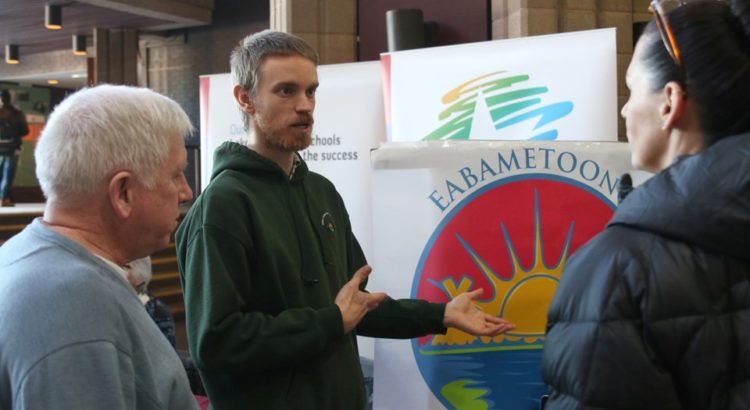
Erik Streufert, a graduate of the education program at Queen’s University who is now an outdoor education teacher at John C Yesno Education Centre in Fort Hope in the Eabametoong First Nation, said he wanted to take his teaching career north because not only were there more opportunities, but it provided him with the challenge he was looking for.

“I wanted to find a teaching position where I would be challenged to do the best pedagogy I could and also find a community that had a good relationship with me as well,” he said. “I wanted to go somewhere I could make a difference but I could also learn just as much from the community members and the school as well.”

Streufert said when he was looking for teaching positions, he found more opportunities in northern Ontario than southern Ontario.

Nick Shaver, the PASS (Pathways to Achieve Student Success) administrator with the Matawa First Nation Management education department, said more and more teachers are starting their careers in remote and First Nation communities.

“We have attracted a lot of teachers from Southern Ontario, but a large portion do come out of the north, either Nipissing or Lakehead University,” he said. “And I think the numbers are growing.”

Socha said this year, six education students from Lakehead are doing their placements in Pikangikum First Nation, and in past years, there have been more than 16 students in a given year seeking placements in remote northern communities.

“We’re trying to promote it as best we can,” Socha said. “Now in the two year program in our last placement in the second year, we have something called alternative placement, promoting opportunities for students to go up north.”

According to Shaver, teachers are moving north because that’s where the jobs are and with more and more new graduates unable to find work at other boards, new teachers are looking elsewhere.

“The Ontario College of Teachers have cut a lot of admittance into teaching faculties because there are a lot of teachers in Ontario not finding jobs in their home boards,” he said. “The First Nation communities are where the jobs are right now. They are definitely hiring a lot more than public boards would be.”

For some new graduates, moving to remote communities can be a difficult choice. Shaver said retention among new teachers varies, with some teachers staying for nine years, like he did, while others stay only one year.

“We do have other communities where they have had very good retention rates,” he said. “Obviously the further north you go and the more remote it is, the more difficult it is to get home when you want to get home or need to get home, so that affects retention as well.”

Streufert said he wasn’t too worried when he made the decision to travel to Fort Hope, a community 361 kilometres north of Thunder Bay with a population of 1,144.

“I made sure when I was going up north that I had a system of support with friends and family down south and then also making connections within the community, knowing that if I had an issue, I could find people I could talk to about it,” he said.

Streufert added new teachers looking for a challenge and who want to learn just as much as they teach, should consider a position in Northern Ontario.

“If you are willing to be part of the community and not just go there for a job, northern communities can be very rewarding and you can learn so much about yourself and the communities you are a part of,” he said. “I will always feel that Fort Hope is home to me.”

Fuente: https://www.tbnewswatch.com/local-news/more-teachers-looking-north-for-jobs-514050
 

Comparte este contenido:

Costa Rica: MEP contrata profesores con un sistema de selección que no se ajusta desde 1970

Costa Rica/Enero de 2017/Fuente: La Nación

El sistema actual de reclutamiento y contratación de profesores del Ministerio de Educación Pública (MEP) sigue siendo el mismo de hace 46 años. Por esta razón se contrata personal según sus títulos académicos y no de acuerdo a la evolución que han tenido los programas de enseñanza costarricenses, ni los métodos bajo los que se trabaja.

A esto debe sumarse, que no se evalúa de previo el conocimiento de los postulantes, pese a que cada año, en promedio, el MEP contrata a unos 2.000 profesores.

Así lo reconoció Fabio Flores, director de carrera docente de la Dirección General de Servicio Civil, quien manifiesta que se deben hacer cambios para evitar que casi un millón de estudiantes se tropiecen con educadores sin vocación, o sin los conocimientos necesarios para impartir la materia que les corresponde.

Desde 1970 han pasado 13 administraciones presidenciales, el programa de matemáticas evolucionó hacia un modelo más analítico, y en lo últimos 20 años la población que hace bachillerato casi se triplicó de 17.000 en 1996 a unos 48.000 en el 2016.

Sin embargo, en todo este tiempo el modelo de contratación no ha evolucionado al mismo ritmo que la forma en la que se imparten las lecciones. Las autoridades del Ministerio de Educación hablan de posibles cambios, incluida la certificación de las carreras que cursan los educadores, pero aún no hay planes concretos, ni fechas de ejecución.

A raíz de esto, los directores de escuelas y colegios son los primeros que deben enfrentarse a un profesor sin habilidades para enseñar o con calificaciones deficientes. Además, el sistema vigente permite que el educador cuestionado apele en reiteradas ocasiones las evaluaciones desfavorables para mantenerse en el cargo.

Luz Leiva, directora de la Unidad Pedagógica de Cuatro Reinas de Tibás, llegó a la institución aproximadamente hace 10 años y fue esa misma cantidad de tiempo que batalló constantemente para lograr la sustitución de su profesor en matemáticas.

«El problema de matemáticas aquí ha sido de toda la vida y por una razón: este es un colegio pequeño y las lecciones casi que las tiene solamente un solo profesor (…). Los estudiantes eran de una indisciplina terrible, (el profesor) no tenía control de grupo en las aulas, no se preocupaba por hacer su programación de trabajo, no pasaba lista y los estudiantes hacían lo que querían», afirmó la directora, que vigila la enseñanza de la institución.

Fuente: http://www.nacion.com/nacional/educacion/MEP-contrata-profesores-sistema_0_1609439129.html

Comparte este contenido:

Cumple 55 años la Educación Especial en Cuba

Cuba/Enero de 2017/Fuente: Radio Ciudad del Mar

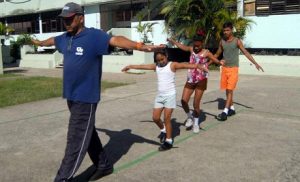
Un sello conmemorativo por el 55 aniversario de la Enseñanza Especial en Cuba será cancelado hoy en la escuela para discapacitados visuales Abel Santamaría, en la capital.

La institución, ubicada hoy en Ciudad Escolar Libertad, acoge a 68 niños y adolescentes ciegos o de baja visión, y cuenta con 48 docentes que laboran en su educación y plena Integración social.

Asociado a la Unesco, el centro ha egresado de sus aulas a cientos de alumnos que han continuado sus estudios y actualmente ejercen como profesionales o técnicos en diversas disciplinas.

La Educación Especial en Cuba se extendió a partir de 1962, impulsada por la Revolución y su líder Fidel Castro Ruz, y actualmente acoge a limitados físicos y mentales, incluidos sordos, ciegos, Síndrome de Down y otros padecimientos.

Fuente: http://www.rcm.cu/cumple-55-anos-la-educacion-especial-cuba/

Comparte este contenido:

Australia names first indigenous minister

Australia/Enero de 2017/Fuente: News

RESUMEN: Australia el miércoles nombró a su primer ministro indígena, un antiguo trabajador que ha acreditado la educación para su ascenso desde humildes comienzos en un país donde los aborígenes siguen siendo los más desfavorecidos. Ken Wyatt se convirtió en Ministro de Atención a los Ancianos y para la Salud Indígena cuando el Primer Ministro Malcolm Turnbull reorganizó a su ejecutivo tras la renuncia del ministro de Salud en un escándalo de gastos. Wyatt fue la primera persona aborigen elegida a la cámara baja de Australia en 2010 y anteriormente había sido asistente del ministro de salud. «Así como Ken fue el primer indígena elegido para la Cámara de Representantes y el primero en ser nombrado para el ejecutivo del Gobierno de la Commonwealth, ahora es el primer indígena nombrado para el ministerio de la Commonwealth», dijo Turnbull a periodistas en Sydney .

Australia on Wednesday appointed its first indigenous minister, a former labourer who has credited education for his rise from humble beginnings in a country where Aborigines remain among the most disadvantaged.

Ken Wyatt became Minister for Aged Care and for Indigenous Health when Prime Minister Malcolm Turnbull reshuffled his executive following the resignation of the health minister in an expenses scandal.

Wyatt was the first Aboriginal person elected to Australia’s lower house in 2010 and had previously been assistant health minister.

«Just as Ken was the first indigenous person to be elected to the House of Representatives and the first to be appointed to the executive of the Commonwealth Government, he is now the first indigenous person appointed to the Commonwealth ministry,» Turnbull told reporters in Sydney.

«His extensive knowledge and experience as a senior public servant in indigenous health, coupled with his work as an assistant minister in this portfolio, makes him an ideal minister for this area.»

Aborigines — who make up about three of the national population of 24 million — suffer disproportionate levels of disease, imprisonment and social problems as well as significantly lower education, employment and life expectancy.

Western Australian Wyatt, a former teacher who worked in indigenous health and education, made a moving maiden speech upon entering parliament.

Wearing a traditional kangaroo cloak, he spoke of humble beginnings — from trapping rabbits as a child to his life as a labourer — saying education was a driver for his success.

A member of Australia’s conservative Liberal Party, Wyatt said indigenous people should be empowered to determine their own solutions, calling for greater representation for Aboriginals in parliament.

In the shake-up, Turnbull moved Industry Minister Greg Hunt to the health and sport portfolios, taking over from Sussan Ley who resigned last week.

Turnbull is setting up an independent agency to monitor and administer all expenses claims by parliamentarians.

Fuente: https://au.news.yahoo.com/world/a/34164982/australia-names-first-indigenous-minister/#page1

Imagen de archivo

Comparte este contenido:

Sudáfrica: Education Committees Urge Speedy Intervention in Limpopo Protests

Sudáfrica/Enero de 2017/Fuente: All Africa

RESUMEN: El Comité de la Cartera de Educación Básica ha tomado nota con grave preocupación de la interrupción de la escolarización en Limpopo causada por las protestas de la comunidad. La presidenta de la Comisión, la Sra. Nomalungelo Gina, dijo: «Esto es extremadamente preocupante: la primera semana del año escolar se ha perdido en algunas escuelas debido a lo que parecen ser protestas de entrega de servicios. Nuevo año escolar en serio y que quieren dedicar todo su tiempo y esfuerzo para que sea un éxito «. Gina dijo que, según los informes, 30 escuelas en Tshitale en el distrito de Vhembe fueron cerradas el viernes. «El Comité no puede expresar su preocupación suficiente por nuestros estudiantes vulnerables, teniendo en cuenta que es el mismo distrito donde las protestas comunitarias tuvieron lugar el año pasado, lo que llevó a las escuelas a ser vandalizados y valioso tiempo de aprendizaje perdido».

The Portfolio Committee on Basic Education has noted with grave concern the disruption of schooling in Limpopo caused by community protests.

Committee Chairperson Ms Nomalungelo Gina said: «This is extremely concerning. The first week of the school year has been lost at some schools due to what appears to be service delivery protests. This is sad for our many learners who have looked forward to starting the new school year in earnest and who want to dedicate all their time and effort to making it a success.»

Ms Gina said that, according to reports, 30 schools in Tshitale in the Vhembe district were closed on Friday. «The Committee cannot express its concern enough for our vulnerable learners, keeping in mind that it is the same district where community protests took place last year, which led to schools being vandalised and valuable learning time lost.»

She appealed to leaders, the Limpopo Department of Education, education officials, parents and the community at large to put the interests of learners first. Ms Gina said some form of consensus needs to be reached so that service delivery protests do not affect schooling or spill over to the education sector more broadly.

According to reports, community residents and others were protesting over the construction of a road, water shortages and the non-delivery of stationery. In some areas, learners were removed from schools or did not attend schools.

«The Committee has noted the reports on the non-delivery or late delivery of stationery. As soon as Parliament is in session again, the Committee will request a meeting with the Department of Basic Education for an update on the matter.»

The Committee called for urgent intervention from all stakeholders to ensure the situation is brought speedily under control. «We do not want our learners to lose any more classroom time. It will be to their detriment, as catching up lessons is not easy.»

Fuente: http://allafrica.com/stories/201701180500.html

Imagen: http://www.laizquierdadiario.com/La-represion-del-Gobierno-no-detiene-las-protestas-de-los-estudiantes-sudafricanos

Comparte este contenido:

China encourages private investment in education

China/Enero de 2017/Fuente: China.org

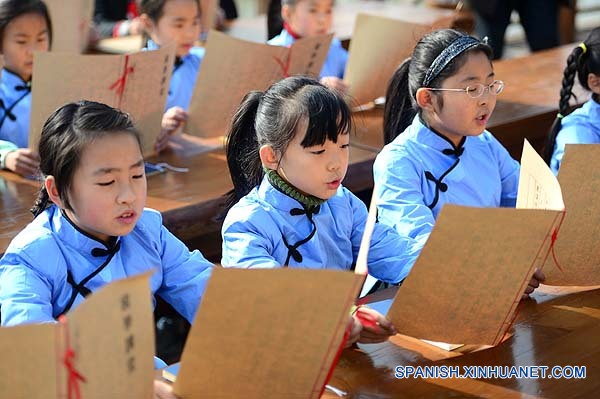
El Consejo de Estado, el gabinete chino, ha emitido una guía sobre educación privada.

Los institutos privados de educación deberían reforzar el liderazgo del Partido Comunista de China, dijo la directriz.

Deben cubrir los valores básicos socialistas a lo largo de su currículo y aumentar la confianza de los maestros y estudiantes en el camino elegido por el país, guiando las teorías, el sistema político y la cultura, dijo.

La directriz pedía un acceso más fácil para la inversión en educación y múltiples canales para reunir fondos para escuelas privadas.

Los fondos, incluidos subsidios gubernamentales, servicios de adquisiciones, préstamos estudiantiles y becas filantrópicas, se asignarán en el sector para mejorar el desarrollo.

Las escuelas privadas también deberían elevar la calidad tanto de la educación como de la gestión.

Los departamentos locales de educación deben proponer medidas concretas de acuerdo con las condiciones locales para mejorar la educación privada.

Fuente: http://www.china.org.cn/china/2017-01/18/content_40131473.htm

Imagen: http://spanish.xinhuanet.com/2015-12/27/c_134955983.htm

Comparte este contenido:

Estados Unidos: Betsy DeVos Alarms Special Education Advocates, Parents

Estados Unidos/Enero de 2017/Fuente: The American Prospect

RESUMEN: A una hora cuando la mayoría de los padres se dirigían a casa para la noche,  Betsy DeVos se sentó para testificar ante el Comité Senatorial de Salud, Educación, Trabajo y Pensiones. La audiencia inusual de la noche levantó una serie de banderas rojas antes de que incluso comenzara: Cinco republicanos en el comité habían recibido más de $ 250,000 en donaciones de la campaña del millonario donante republicano y su familia, y la Oficina de Gobierno y Ética todavía no había firmado Sobre las revelaciones financieras de DeVos. Así que tal vez no fue sorprendente que la audiencia de aproximadamente tres horas incluyó varios episodios extraños. DeVos citó a los osos pardos como una justificación para que los estados determinen si se deben permitir armas de fuego en las escuelas. El candidato también insistió en que la deuda estudiantil aumentó 980 por ciento desde 2008, cuando sólo subió un 124 por ciento. Pero el momento más impactante se produjo cuando DeVos admitió que «puede haber estado confundida» con la Ley de Educación para Personas con Discapacidades (IDEA, por sus siglas en inglés) de 42 años, una de las leyes de derechos civiles más fundamentales de la nación.

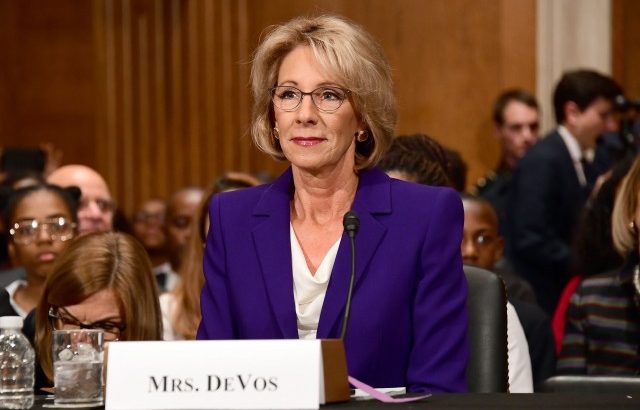
At an hour when most parents were headed home for the evening, education secretary nominee Betsy DeVos sat down to testify before the Senate Health, Education, Labor, and Pensions Committee. The unusual evening hearing raised a number of red flags before it even began: Five Republicans on the committee together had received more than $250,000 in campaign donations from the billionaire Republican donor and her family, and the Office of Government and Ethics still had not signed off on DeVos’s financial disclosures.

So perhaps it was not surprising that the roughly three-hour hearing included several bizarre episodes. DeVos cited grizzly bears as a justification for states determining whether firearms should be allowed in schools. The nominee also insisted that student debt rose 980 percent since 2008, when it only rose 124 percent. But the most shocking moment unfolded when DeVos admitted “she may have been confused” about the 42-year-old Individuals with Disabilities Education Act (IDEA), one of the nation’s most fundamental civil rights laws.

Enacted in 1975, IDEA provides nearly seven million children in the U.S. with special education services. Special education oversight is one of the most significant responsibilities of the education department that DeVos has been nominated to lead. “The fact that she doesn’t understand the basics about federal education law is just appalling,” says Denise Marshall, the executive director of the Council of Parent Attorneys and Advocates (COPAA), a national organization that defends the legal and civil rights of students with disabilities. “It was pretty clear to us that she is not, and never has been, an advocate for students with disabilities.”

“Even around vouchers, which she supposedly does have a lot of experience with, she just talked about them writ large, as if they could solve every family’s dilemma,” Marshall adds. “She gave no indication that she understands that students with disabilities very often have to give up their legal and civil rights to use vouchers.”

One of Devos’s most stunning blunders came when she challenged the very notion of federal disability mandates, suggesting that it’s best for individual states to decide how to educate students with special needs. “That would turn back the clock by 40 years,” Marshall says. “IDEA was passed out of the recognition that students with disabilities are a group that requires greater protections. If states want to receive those federal funds, then they have to accept higher responsibilities, and provide those necessary supports.

Thena Robinson Mock, director of the Opportunity to Learn Program at Advancement Project, a national civil rights group, says that an education secretary nominee who does not understand how IDEA benefits children of color is especially alarming. “If we know nothing else about the school-to-prison pipeline, we know that black and brown students with disabilities are the most vulnerable to punitive discipline policies that push them out of school and into the criminal-justice system,” she says. “These students still need the protections of IDEA because they are more likely to receive out-of-school suspensions, more likely to be referred to law enforcement and more likely to be arrested in school.”

Parents of students with disabilities also had strong reservations about DeVos’s performance, saying that her lack of rudimentary knowledge and experience should disqualify her from the position.

Dustin Park, who lives in Tennessee with his six-year-old diagnosed with Downs syndrome, told The American Prospect that DeVos’s testimony troubled him. “At best, she doesn’t know about the laws protecting students with disabilities, and at worst she doesn’t care,” he says. Park has been organizing and educating other parents about state and federal special education laws and noted that the Supreme Court heard a case just last week that will have massive implications for students with disabilities across the United States.

David Perry, a parent living in Chicago with a disabled child could not understand why a nominee did not have a good answer for such a softball question. “It’s either ignorance, or arrogance, or apathy,” he says. “Either way, I’m even more concerned about her nomination.”

Edward Fuller, a Penn State University education policy professor, told The American Prospect about his experience living in Texas, where his daughter, Jade, diagnosed with Asperger syndrome and ADHD, had been routinely denied special education services. In 2016, The Houston Chronicle reported that Texas had arbitrarily decided that only a certain percentage of students would get special education, while denying thousands of other children their lawful services. The newspaper’s investigation has since prompted federal intervention.

“The debacle in Texas is a perfect example of what could happen if states are allowed control over special education and are allowed to interpret the laws around IDEA from their own perspective,” says Fuller. “States can adopt policies that leave huge swaths of kids without access to a free and appropriate education [and] many southern states would adopt the same strategy as Texas in order to reduce education spending.”

Tom Wellborn, a south Jersey parent of two children with special needs, says he can’t imagine how miserably his kids would be doing without the techniques they’ve learned from specialists in their schools. “DeVos is obviously unqualified; painfully so,” he says. Citing the grizzly bear comment, Wellborn says he can’t even fathom “whether she’s serious or thinks we’re all idiots.”

Freshman Senator Maggie Hassan, a New Hampshire Democrat, and a parent of a son with cerebral palsy, challenged DeVos last night on the federal disability statute. In a statement provided to The American Prospect, Hassan said, “The fact that a nominee to lead the Department of Education seemed unfamiliar with the federal law to protect students with disabilities—a law that she would have a major responsibility in enforcing—is unacceptable. I will review Mrs. DeVos’s written responses but at this point she has done nothing to convince me that she’s a suitable choice to serve as secretary of education.”

Fuente: http://prospect.org/article/betsy-devos-alarms-special-education-advocates-parents

Comparte este contenido:
Page 4451 of 6197
1 4.449 4.450 4.451 4.452 4.453 6.197