Page 5977 of 6131
1 5.975 5.976 5.977 5.978 5.979 6.131

Gambia college seeks bailout from Alumni

África/Gambia/Abril 2016/Fuente: The Point /Autor:Ebrima Bah

Resumen: El Colegio Gambia y su consejo de administración recibieron donaciones a raíz de una convocatoria abierta de apoyo a la universidad por el director. La necesidad de la universidad para el apoyo se acentuó por la falta de suficientes materiales de enseñanza y de aprendizaje, aulas y mobiliario, además de contar con una infraestructura deficiente.

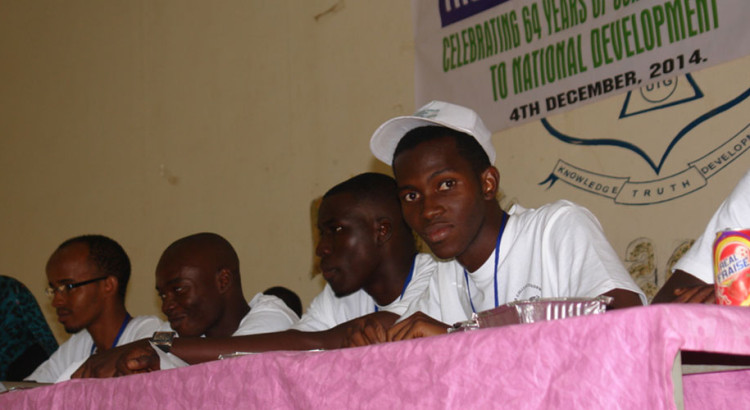
The Gambia College and its governing council received about D10, 000 on the spot at the 2014/2015 graduation ceremony, from personalities and ex-students of the college at the Brikama campus on Saturday.

The cash-gifts began to rain in the hands of the master of ceremony, following an open call for support to the college by the principal.

The college’s need for support was heightened by the lack of sufficient teaching and learning materials, classroom space and furniture in addition to poor infrastructure.

Students say the scramble for classroom space and furniture before lectures has been the order of the day, since they began to share the facilities at the Brikama campus with students of the University of The Gambia.

The conduct of a whole lecture under the shade of trees with two students sharing a single seat and some others on their toes or on roots of the tree became the norm and culture.

Rex Bojang, a senior lecturer at the Gambia College, translated his lessons of «using locally available resources» to teach by creating a classroom niche under the big tree supposedly car park for his Education technology course, for many years now.

The college administration has for the past seven years been entrusted to the management of the University of The Gambia, limiting chances of the college staff to speak on its behalf at the previous three graduation ceremonies.

In his address to over four thousand graduands and invited guests, principal of the Gambia College Aboubacarr Jallow explained that he was appointed by the President of The Gambia to move the college to academic excellence.

Dr Cherno Omar Barry, permanent secretary for the Ministry of Higher Education, Research, Science and Technology (MoHERST), who was the guest speaker at the graduation, pointed out that the Gambia College is the longest surviving tertiary institution, established since before independence to date.

«It has evolved from 1946 as the Georgetown Teacher Training Institute to Yundum College in 1952, and gradually to what it is today which started in 1982, expanding its functions from education to health and agriculture.»

In his report, after one year in service as principal of the college, Mr Jallow noted that the college relies heavily on the government subvention. He said students are aware of the struggle, especially during lectures.

Declaring that «furniture is a big problem in the college», he called on the outgoing students to form an alumni association to raise funds for the college.

He reminded them further that «every dalasi matters», while extending the appeal to all former students and friends of the college.

Consequently, the Minister of Higher Education proposed a contribution of D100 from every ex-student. His suggestion was announced by the master of the ceremony amidst thunderous applause.

The newly-appointed chairman of the Gambia College Governing Council, Ebrahim Tas Dondeh, said the college should be allowed to compete with other similar institutions and demand for compensation for the services it offers. He pointed out that the college may not do well, if they continue to advocate for business as usual without the necessary changes in the modus operandi, in the face of financial shortages that have shown no sign of abating.

«If we don’t, we will be unconsciously undermining or curtailing the potentials and ability of this great institution of its well-being and its economic and social development goal.»

Mr Dondeh believes that the beacon of hope, bastion and citadel of intelligence which captured conscience of the nation, and created by the college decades ago, should not be forgotten.

The permanent secretary of MOHERST, who pledged the sum of D3000 to the college’s coffers, urged every other former student of the institution to emulate him or do much more than what he has done. To him, the words of Nelson Mandela are enough to justify dipping hands into his pocket for supporting the college.

«Education is the great engine of personal development. It is through education that the daughter of a peasant can become a doctor, that the son of a mine worker can become the head of the mine, that a child of a farm worker can become the president of a great nation. It is what we make out of what we have, not what we are given that separates one person from another.»

According to Katim Touray, history lecturer at the Gambia College, the trend at which the new administration is striving to govern the college will earn the institution a greater reputation on the production and delivery of its services. He pointed out that the areas of concern are many, but hopes are brighter.

According to analysts, the large turnout of graduands at the ceremony was an indication of students’ long-awaited wish to see the college assert its independence. Many of them have arguably failed to show up at the grounds of the last three graduation ceremonies, based on the fear that the «marriage» with the University of The Gambia was meant to overshadow them.


Fuente de la noticia:http://thepoint.gm/africa/gambia/article/gambia-college-seeks-bailout-from-alumni

Fuente de la imagen:http://www.gambiacollege.edu.gm/public/media/img/collegeat641.jpg


Comparte este contenido:

Norway ‘best in Scandinavia’ at integration: report

Europa/Noruega/Abril 2016/Fuente: http://www.thelocal.no/Autor: Editor

Resumen: El informe, basado en datos de países de la OCDE, fue publicado por el instituto de investigación noruego «Inclusión  y Dirección de Diversidad», y muestra que Noruega gana a Dinamarca y Suecia, así como una serie de otros países de la UE en las cifras de educación, empleo e ingresos de los inmigrantes.

The report, based on data from OECD countries, was published by Norwegian research institute Inclusion and Diversity Directorate (Inkluderings- og mangfoldsdirektoratet – IMDi), and shows that Norway beats both Denmark and Sweden as well as a series of other EU countries on figures for immigrant education, employment and income.

But Norway’s relative integration success is not necessarily a direct result of country’s immigration policies.

The report said that Norway’s strong economic growth and a large number of available jobs are the main reasons it outpaces its neighbours when it comes to integration. Additionally, Sweden has received the most refugees over the last ten years, while Norway has received the most working migrants, who are easier to get into employment.

The IMDi report measured integration by examining employment, education and living conditions among immigrants generally and young people with immigrant backgrounds in particular. In Norway, 28 percent of those aged 15 and 34 who have immigrant backgrounds are either employed or in education.

“The report shows that there are still major differences within Norway, and we definitely have big challenges. But if we compare ourselves with other countries on immigrants’ employment, education level and income level, we score rather well,” Kristian Rose Tronstad, a researcher with the Norwegian Institute for City and Regional Research (Norsk institutt for by- og regionforskning), who wrote the IMDi report, told VG.

“[But] I would be cautious about saying that everything is rosy,” added Tronstad.

The report shows that 37 percent of immigrants in Norway are in higher education – the highest level in Scandinavia – and that this percentage is increasing year on year.

More immigrants are also in employment in Norway compared Denmark, Sweden and the most of the EU – the Norwegian employment level of 71 percent is beaten only by Iceland, Switzerland and Luxembourg. Some 66 percent of female immigrants are also working in Norway – a result way ahead of any other country. Immigrants in Norway also earn more than their Scandinavian counterparts, but the report said that much of that could be ascribed to the generally higher wages in Norway

However, many immigrants – both highly educated migrants and second-generation immigrants – are relatively poor at Norwegian, according to the report, which also finds that young people in the age range 15-34 are more likely to become marginalized than ethnic Norwegians.

The report also found that despite having the lowest immigrant unemployment rates, immigrants and those with immigrant backgrounds are still twice as likely to find themselves outside of the labour market than ethnic Norwegians.

Fuente de la noticia: http://www.thelocal.no/20160407/norway-best-in-scandinavia-at-integration

Fuente de la imagen: http://www.thelocal.no/userdata/images/article/w468/a2e0c33827bc3dea6db07b6c5418510125b0b7d29cc610eb54dbe26a2638b8f2.jpg

Comparte este contenido:

Amidst Terrorism, Italian Leader Calls for Investing in Education

Europa/Italia/Abril 2016/Fuente: http://www.thecrimson.com/Autor: Lena Episalla

Resumen: El primer ministro de Italia, Matteo Renzi pidió mayores inversiones en cultura y educación, además de la seguridad nacional, para estabilizar la inestabilidad política y económica actual en Europa.

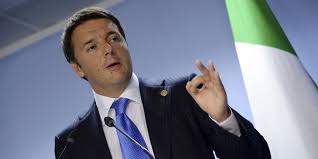
Prime Minister of Italy Matteo Renzi called for greater investments in culture and education, in addition to national security, to stabilize current political and economic unrest in Europe at the Harvard Art Museums on Thursday.

According to Renzi, this is the first time an incumbent prime minister of Italy has visited Harvard. His address, sponsored by the Center for European Studies and the Italian Consulate General in Boston, is part of a four-day tour in the U.S.

Renzi began his address emphasizing the role universities play as leaders of change. He said students, researchers, and professors are central to creating new strategies for solving society’s most pressing problems.

“We need a different idea of the world—we need a different approach by students, by researchers, by professors,” he said. “Universities around the world are the keys to the future.”

Given the recent terrorist attacks that took place in Brussels, Renzi stressed the importance of new initiatives to stem acts of violence around globe.

“The attack of Brussels is an incredible attack to the ideals of Europe and the unity of Europe,” he said.

Renzi said these incidents not only reflect the threats posed by actors outside of Europe, but, more importantly, reveal issues within Europe that contribute to the radicalization of European citizens. Renzi called for stronger political action to combat terrorism in Europe.

“The enemy is not only abroad,” he said. “The enemy is inside our cities, inside our borders.”

Renzi suggested the solution to this problem is to “invest in both directions.” He said an investment in culture and education is equally as important as investments in security and technology “because it is exactly our culture that is the target of terrorists.”

Renzi urged a governmental response to the issues affecting Europe. Arguing that problems in Europe partly derive from legislative deadlock, he called for less focus on economic austerity and an increase in the power of government leaders to implement reforms.

The Prime Minister argued that recent economic and political reforms in Italy have benefited the country. Renzi said the reduction of taxes, exposure to new markets, and implementation of structural reforms in Italian politics have contributed to the country’s recent financial recovery.

“We must finally open the minds, open the doors, and invest in a different future,” he said. “It is a priority for me and my team… to create the possibility and the opportunity for the new generation to live the dream and not the nightmare.”

Pietro Galeone ’17 said he appreciated the prime minister’s hopeful message for the future and his support for political and economic reform.

“The focus on the investment in culture and an institution of higher education was something that I think was very powerful,” he said.

Fuente de la noticia: http://www.thecrimson.com/article/2016/4/1/matteo-renzi-at-harvard/

Fuente de la imagen: https://encrypted-tbn2.gstatic.com/images?q=tbn:ANd9GcRgp3I_IRE5y4ikDYxetyyOkUkC3GwJQc8LRDcSNxGIsOJtewJCEQ

Comparte este contenido:

Nicaragua energía limpia y educación ecoamigable

 Implementación del Proyecto  “Quiero Leer Para Aprender:

Nicaragua/07 de Abril de 2016/Energía Limpia XXI/by inUncategorized.

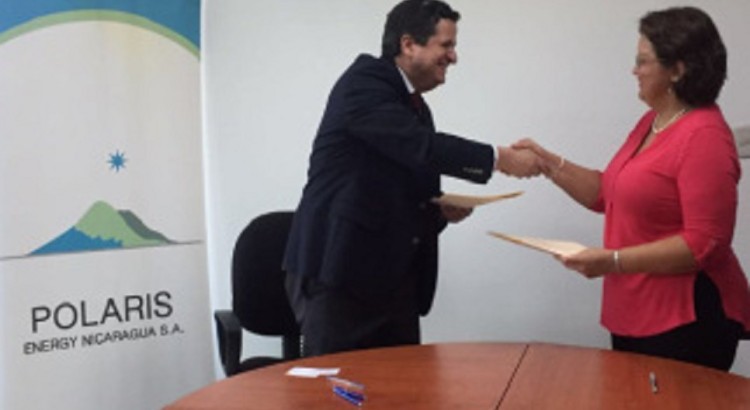
Energía Limpia XXI. Nicaragua está promoviendo energía limpia y educación. Polaris Energy Nicaragua S.A (PENSA) impulsará la implementación del Proyecto  “Quiero Leer Para Aprender: Una ventana de oportunidades para el Desarrollo Humano Sostenible de Niños y Niñas en edad escolar”, convenio que se celebró el pasado 22 de marzo entre PENSA y World Vision Nicaragua; beneficiando a más de 100 familias, 10 docentes y 306 niñas y niños en edades de 6 a 12 años,  en el Municipio de Telica del Departamento de León.

La iniciativa propuesta a partir de los lineamientos definidos en el Plan Nacional de Desarrollo Humano 2012-2016 los cuales están vinculados a responder a cinco desafíos estratégicos del país que son coincidentes con la programación de World Vision Nicaragua: 1) garantizar la permanecía de niños y niñas en el sistema escolar, 2) aumentar la niveles de rendimiento escolar de NNs, 3) fortalecer las capacidades de lecto-escritura en niños y niñas de primaria, 4) incidir en la generación de ambientes protectores para NNs a nivel familiar, escolar y comunitario, basados en la cultura de la ternura y 5) la incorporación segura de tecnología a los procesos educativos de niños y niñas a través del modelo de responsabilidad social compartida mediante la alianza con el Gobierno y el sector privado. Un reporte de Energía Limpia XXI indica que el proyecto “Quiero Leer Para Aprender” estimula el aumento en las capacidades de niñas, niños, familias y docentes para contribuir a la reducción de vulnerabilidades que limitan su desarrollo humano por medio de tres componentes 1) Desarrollo de habilidades para la lecto-escritura, II) Protección y educación con ternura, III) innovación a través de la incorporación de las TIC a los procesos enseñanza-aprendizaje. EL proyecto se implementara de abril 2016 a marzo 2017.

A través del impulso de la responsabilidad social empresarial (RSE) y  con una donación aproximada de 17 mil dólares por parte de PENSA, se desarrollará un marco institucional que facilitará esta alianza con World Vision Nicaragua y la coordinación con el Ministerio de Educación. World Vision Nicaragua es una organización especializada en educación, su propuesta de valor está dirigida al desarrollo de: Niñas y Niñas felices creciendo en un ambiente tierno y seguro que propicie su participación y desarrollo.

Fuente noticia: http://energialimpiaparatodos.com/2016/04/07/15611/

Fuente foto: https://revolucionrenovable.files.wordpress.com/2016/04/vision.jpg?w=322&h=280

Comparte este contenido:

Taiwán ofrece becas en Relaciones Internacionales y Ciencias Políticas

China/ 04 abril 2016/Autor y Fuente: http://www.elcaribe.com.do/

La embajada en la República  de China (Taiwán) en el país  convoca  a  profesores  y expertos  en el área de Relaciones Internacionales y Ciencias Políticas a aplicar al programa de becas de investigación “Taiwán Fellowship 2017”.

Estas becas son ofrecidas cada año por el Gobierno de Taiwán con la finalidad de que profesionales dominicanos se capaciten realizando estudios e investigaciones acerca  de los temas relativos a Taiwán, tales como Relación entre Taiwán y China Continental, la Región Asia-Pacifico, Sinología, TPP (Acuerdo Estratégico Trans- Pacífico de la Asociación Económica), RCEP (Asociación Económica Regional), entre otros.

Estas becas incluyen la cobertura del boleto aéreo y un aporte mensual que va desde US$1,725 a 2,065, destinado a cubrir la alimentación y demás gastos durante el tiempo que abarque el plan de investigación, que será de tres meses a un año.

El proceso de solicitud se realizará  vía online desde el 1 de mayo hasta el 30 de junio del 2016, los interesados deben llenar e imprimir el formulario completo en la página http://taiwanfellowship.ncl.edu.tw  y depositarlo conjuntamente con curriculum y biografía, proyecto de investigación del estudio académico escrito en inglés, dos carta de recomendación o carta de recomendación y permiso del jefe administrativo en la embajada de Taiwán, ubicada en la Rómulo Betancourt  #1360, Bella Vista.

Fuente de la Noticia y Foto:

http://www.elcaribe.com.do/2016/04/04/taiwan-ofrece-becas-area-relaciones-internacionales-ciencias-politicas#sthash.Jy54m1z0.dpuf

Información de la Foto:

Las becas se concederán a personas mayores de 18 años, con nivel educativo mínimo de bachillerato y de nacionalidad dominicana. (Fuente Externa)

Comparte este contenido:

Argentina: Los gremios docentes realizaron un paro nacional del 95 por ciento de educadores

Argentina / 07 de abril de 2016 / Por: Resumen Latinoamericano / Fuente: http://www.resumenlatinoamericano.org/

El secretario de prensa de la Confederación de Trabajadores de la Educación de la República Argentina (Ctera), Alejandro Demichelis, informó que “la adhesión al paro nacional docente en reclamo de mejoras salariales alcanzó el 95 por ciento”.

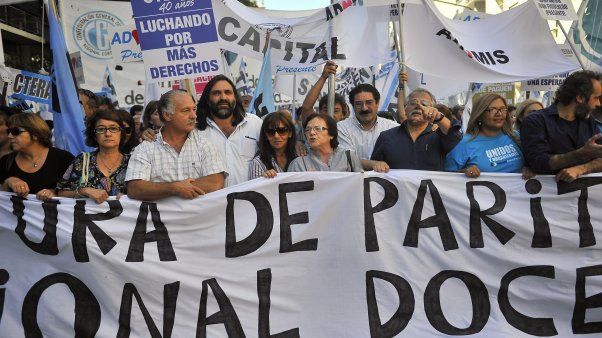
Los docentes Hugo Yasky, Roberto Baradel y Eduardo López, entre otros, hablaron desde un escenario montado sobre la avenida Callao, entre Marcelo T. de Alvear y Paraguay, tras una concentración multitudinaria que colmó la avenida Callao entre Córdoba y Corrientes.

Durante la movilización, que reunió a docentes nucleados en Ctera y Sadop y contó el respaldo de la Asociación de Trabajadores del Estado, los maestros reclamaron “el cumplimiento de los acuerdos por parte del gobierno nacional para que gire los fondos para la paritarias (docentes), esta vez en el marco de la recordación del compañero Carlos Fuentealba, asesinado hace 9 años en Neuquén”.

Esta mañana, la secretaria gremial de Suteba, María Laura Torre, anticipó que era “muy alto” el acatamiento al paro nacional docente. Torre subrayó que, a poco más de un mes del inicio del ciclo lectivo, “no se cumplieron los acuerdos paritarios a nivel nacional” y “parte de las provincias no terminaron de cerrar sus acuerdos porque Nación no ha girado los fondos”.

Además, la secretaria gremial indicó que otra razón para la huelga son los “despidos masivos en programas nacionales”, entre ellos, “el más emblemático, el de Conectar Igualdad”, que dijo fue “desmantelado”.

Por su parte, el secretario General de la Asociación de Docentes de la Educación Media y Superior (Ademys), Jorge Adaro, salió al cruce de las declaraciones del ministro de Educación de la Nación, Esteban Bullrich, al señalar que el paro que desarrollan los trabajadores de la educación “no es excesivo” ya que “hay compañeros en distintas provincias que solo llegan a 6000 pesos al mes”.

Adaro -en declaraciones formuladas esta mañana a FM Delta- reivindicó la medida de fuerza que los docentes nacionales realizan en todo el país y advirtió que “la situación se complica cada día más en varios distritos, porque los docentes no llegan a fin de mes”.

“Mientras escuchaba a Bullrich hoy pensaba en los compañeros docentes de Mendoza, que con este acuerdo deben ir enfermos a trabajar para no perder el item ‘aula’ que es una especie de presentismo; y en los de Santa Cruz que les ha ofrecido solo un 10 por ciento de aumento, en una de las provincias con mayor costo de vida del país”, apuntó.

Para Adaro, “el ministro propuso un acuerdo con el cargo testigo como el de maestro de grado, que deja fuera un montón de cargos docentes por debajo de ese acuerdo y con sueldos muy bajos. Se prioriza un aumento solo para un sector de la docencia dejando afuera al resto. Esto hace que los acuerdos no se puedan materializar”.

Fuente de la noticia:

ARGENTINA: Los gremios docentes realizaron un paro nacional y 30.000 docentes se movilizaron al Ministerio de Educación: “La adhesión al paro fue del 95 por ciento”

Fuente imagen principal:

https://infoclicknea.com/wp-content/uploads/2016/02/paro-docente.jpg

Comparte este contenido:

Noruega: Adolescentes ricos juegan a ser refugiados por un día

Noruega/ Marzo 2016/ Autor:Agence France-Presse AFP/ Fuente: Semana

En Noruega ha cobrado relevancia una jornada en la que algunos jóvenes se meten, por 24 horas, en la piel de los refugiados. Una experiencia que pretende crear conciencia sobre el drama migratorio.

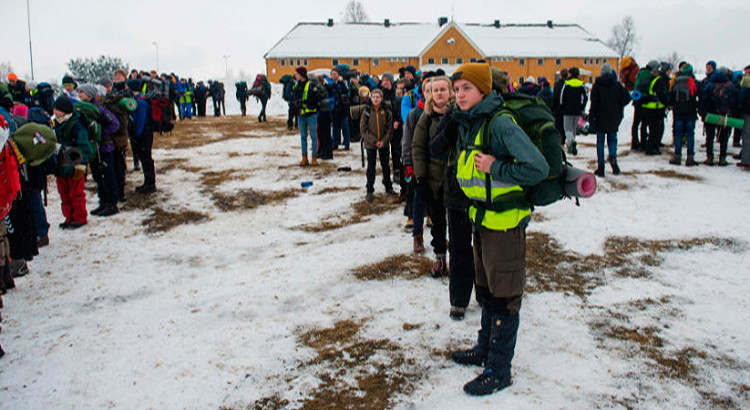
El ruido sordo de un viejo camión militar y el estridente sonido de las sirenas despiertan sin previo aviso a los que han conseguido conciliar el sueño. Pese al cansancio, tienen que levantar campamento y reanudar la marcha nocturna por los bosques nevados.

La escena no tiene lugar en un país de los Balcanes, sino en Noruega, una de las naciones más ricas del mundo, donde algunos adolescentes se meten en la piel de los migrantes durante 24 horas, la mayoría en el marco de una confirmación civil, una etapa de la vida que marca en los países nórdicos el paso de los 15 años a la edad adulta.

En este país en el que los bolsos de marca y los iPhone más recientes son bienes de consumo habituales entre los jóvenes, este juego de roles intenta abrir las mentes brindando una modesta aproximación a la vida cotidiana de millones de personas mucho menos privilegiadas.

«Odio mi vida», gruñe una joven entre la masa, de pie y somnolienta.

El «campamento de la ONU» en el cual han creído encontrar refugio durante la noche, al abrigo de un claro, acaba de ser «atacado». En la oscuridad y con el termómetro a cero grados centígrados, hay que reanudar la marcha, engañar el hambre y lanzarse sobre la nieve ante la presencia de focos de luz inquietantes.

Este viaje iniciático comenzó medio día antes en un campamento militar abandonado, cercano al aeropuerto de Oslo, a un tiro de piedra de un centro de detención en el que varios extranjeros esperan su expulsión del país.

Netflix y ‘kebab‘

Despojados de sus relojes y teléfonos móviles, los participantes, agrupados en «familias» de a 20, deben de acuerdo a un guión muy concreto huir de la violencia de un Sudán imaginario, atravesar fronteras, también ficticias, hasta llegar a Noruega y solicitar asilo.

En el camino: trabas administrativas de una burocracia kafkiana y corrupta, novatadas y órdenes dadas en un mal inglés por guardias de frontera con aspecto patibulario, y con kilómetros por devorar con el estómago vacío…

«Netflix en un baño», fantasmea una «refugiada» en voz alta. «Netflix‘Y‘ un kebab en la bañera», la corrige un compañero de infortunio.

Apenas unas bolas de arroz les fueron servidas como cena esta noche. La mayoría fueron despreciadas, otras rechazadas por su fecha de caducidad: 1998. «El poder de una etiqueta», suspira en un aparte el «jefe del campamento de la ONU», JonasStatsengen, uno de los animadores del proyecto, todos voluntarios adultos.

Al cabo de varias horas, las risas se apagan detrás de las palabrotas.

«¡Duro, duro!», testimonia EbbeMarienborgSchieldrop, un adolescente convertido en padre de familia para la ocasión. «Realmente, es mucho peor para los verdaderos refugiados, puesto que el hambre, el cansancio, todo eso (…) es agotador».

Si bien este juego de roles no nació con la crisis migratoria que sacude a Europa desde el año pasado, ésta le da una resonancia particular.Noruega ha visto la llegada de miles de sirios, iraquíes y afganos que franquearon sus fronteras arriesgando sus vidas.

Suplemento de espíritu

Desde que el concepto fuera importado desde Dinamarca en 2004, unos 80.000 jóvenes noruegos integraron para sí mismos durante horas los hábitos de los refugiados.

«Se van con un pequeño suplemento espiritual», afirma LasseMoenSørensen, número dos de la organización sin fines de lucro «RefugeeNorge» (refugio en Noruega).

La experiencia ayuda además a despertar las conciencias. «Hemos tenido suerte», reconoce una de las participantes, BirgitteSolli, con los ojos hinchados por el cansancio.

«Es el aprendizaje a través de la práctica», explica Kenneth Johansen, fundador de RefugeeNorge. «Si leen algo sobre los refugiados, retengan sólo el 20%. Si viven algo similar obtendrán el 80%» restante, afirma.

El juego de roles concluye con una jornada recapitulativa y de puesta en perspectiva, con videos a modo de apoyo.

«No olviden nunca que ustedes lo vivieron desde afuera, la travesía de las fronteras con sus mochilas, bajo gritos, es lo que viven cotidianamente 60 millones de verdaderos refugiados», lanza Johansen a los jóvenes. «Para ustedes es un juego, para ellos el infierno en la Tierra, todos los días», subraya.

Fuente de la Noticia:

http://www.semana.com/mundo/multimedia/noruega-adolescentes-juegan-a-ser-refugiados-por-un-dia/465222

Fuente Foto: http://static.latercera.com/20160311/2266644.jpg

Procesado por:Diana Milagros Rueda de Aranguren; Directora General de la Emisora Radial: Frenesí 107.9 FM – (Venezuela); Doctoranda en Ciencias de la Educación –ULAC- Magister en Educación Integral; Especialista en Gerencia Educativa; Licenciada en Educación Especial;  Psicopedagoga, Mención RM.

Comparte este contenido:
Page 5977 of 6131
1 5.975 5.976 5.977 5.978 5.979 6.131