Ghana necesita investigadores con recursos y con experiencia para enfrentar los desafíos nacionales a través de intervenciones políticas exhaustivas, ha dicho el profesor Yaa Ntiamoa-Baidu, director de la Universidad de Ghana (UG) Carnegie Projects.
La Corporación Carnegie de Nueva York y la Universidad de Ghana, en 2010, comenzaron un proyecto para construir una nueva generación de académicos en África para promover la excelencia en la investigación de posgrado.
El profesor Ntiamoa-Baidu, en una entrevista con la Agencia de Noticias de Ghana, dijo que el proyecto había introducido actualmente el tercer componente, que consiste en desarrollar la capacidad de los becarios postdoctorales a través del archivo adjunto.
Explicó que los primeros miembros de la Facultad de carrera se unieron a profesores con experiencia para servir como mentores, dando a los beneficiarios el tiempo y la oportunidad de exponerse a la forma en que funcionan las instituciones terciarias en otros países o cómo investigan los laboratorios.
El Prof. Ntiamoa-Baidu explicó que la idea era animar a los profesores para que realicen más investigaciones, sean más productivos, tengan la experiencia y realicen investigaciones de vanguardia.
El proyecto había apoyado a 125 candidatos a PhD y 86 MPhil y varios miembros de la facultad de carrera temprana a través de becas y becas de investigación.
Dijo que, en conjunto, la Universidad de Ghana había recibido fondos de casi 10 millones de dólares de parte de Carnegie y otros donantes.
La Sra. Deana Arsenian, Vicepresidenta (Programa Internacional) de la Corporación Carnegie de Nueva York, dijo que la corporación había registrado 1.500 becas y apoyó el fortalecimiento del sector de la educación superior en África.
Dijo que durante los últimos tres años, la estrategia de la Corporación se había centrado en las oportunidades postdoctorales a través del apoyo a las instituciones para ofrecer oportunidades para avanzar en las carreras académicas.
La Sra. Arsenian dijo que la filosofía de Carnegie era que las necesidades de la educación superior en Ghana y otros países de África occidental eran enormes y que aún se necesitaba mucho esfuerzo para desarrollar habilidades.
Dijo que dado que las facultades universitarias eran muy importantes, la contribución de Carnegie había ayudado a profundizar el grupo de intelectuales altamente capacitados en África, lo que, a su vez, había elevado el potencial de investigación de las universidades africanas.
El Dr. Kwabena Kan-Dapaah, un beneficiario, dijo que se unió a la Facultad UG como Facultad en 2011 con una maestría, luego de lo cual ganó una beca de UG-Carnegie para comenzar sus estudios de doctorado.
Dijo que la beca de tres años lo llevó a dos lugares diferentes; un curso de trabajo en una universidad en Abuja y un año en los Estados Unidos, y finalmente obtuvo su doctorado en 2015.
El Dr. Collins Badu Agyemang, profesor del Departamento de Psicología y académico de Carnegie, felicitó a Carnegie Corporation de Nueva York por su inmenso apoyo a la Universidad de Ghana.
Desafió a todos los beneficiarios de los proyectos UG Carnegie para tratar de conectar los puntos entre sus hallazgos de investigación académica y las necesidades de la industria.
«Como investigadores, ciertamente debemos deconstruir nuestros hallazgos para que los responsables de las políticas y el público puedan beneficiarse de nuestros resultados de investigación basados en el contexto», dijo.
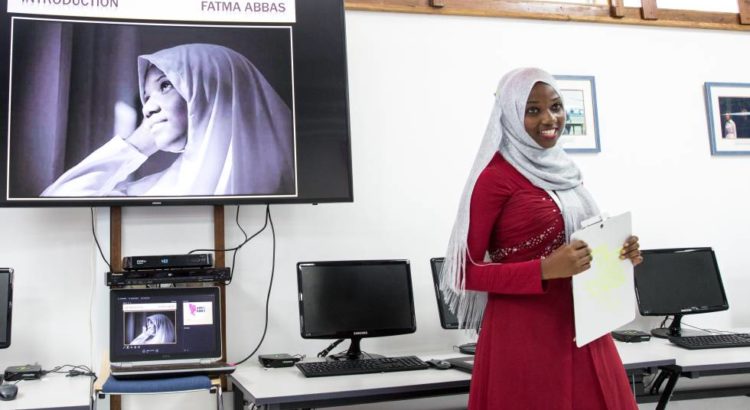
Asha y Fatma Abbas tienen 18 años y son las creadoras de Aurateen, una página web que permite a los adolescentes pedir consejos de forma anónima sobre sexo, drogas y alcohol, rompiendo algunos de los tabúes más arraigados en Tanzania
Fatma, Gloria y Grace llevan mirándose a los ojos más de una hora, esperando a encender el ordenador. Las caídas de corriente y los cortes de energía son bastante comunes en Ukonga Majumbasita, un barrio surgido de manera espontánea a los lados de la carretera que lleva desde el aeropuerto al centro de Dar es Salaam, la capital administrativa de Tanzania. Aquí los niños corren por calles sin pavimentar, en medio a casas en ruinas.
“¿Cómo puedo saber si estoy embarazada? Esta es la pregunta que hacen más a menudo”, cuenta Fatma Abbas, de 18 años y viste un hiyab maculado que destaca sus grandes ojos negros. Ella es la responsable de Aurateen, una comunidad digital donde los usuarios pueden hacer preguntas de forma anónima sobre relaciones sentimentales, sexo o el uso y abuso de alcohol y drogas. Hoy, Fatma ha quedado con otras dos voluntarias que moderarán las solicitudes que llegan a la página web. Si la electricidad no regresa rápidamente, el internauta Crespo no descubrirá qué síntomas pueden revelar un embarazo de riesgo y Empathy no sabrá qué hacer si le diagnostican el VIH.
Aurateen funciona de manera similar a los conocidos Yahoo answers o ASKfm. Cualquier usuario puede registrarse en la web y, luego, enviar una pregunta. Si uno de los trabajadores sociales que colaboran con la página está en línea, el solicitante recibirá inmediatamente su respuesta.
La idea nació de las mentes de Asha y Fatma Abbas, dos gemelas de 16 años iguales a muchas otras chicas que habitan en esta multicultural ciudad tanzana: familia musulmana, cuatro hermanos menores, amistades de todo tipo y centradas en estudiar. Su tranquila normalidad se quebró el día que una amiga confió a Asha que estaba embarazada y tenía que abandonar la escuela.
De sida y sexualidad no se habla
«¿Por qué mis compañeros tomaban ciertos riesgos?», se preguntaba Asha. “Ver qué pasa algo así a gente como yo me hizo darme cuenta de que no sabíamos cómo protegernos”. Los embarazos adolescentes no son un fenómeno aislado en el país, ya que una de cada cuatro chicas de entre 15 y 19 años ha dado a luz o está esperando un bebé. Además, las Naciones Unidas estiman que alrededor de 170,000 tanzanos de entre 15 y 24 años viven con el VIH, y la encuesta AIDS Indicator Survey revela que en 2012 más de la mitad de los adolescentes no sabía cómo prevenir el contagio.
Cuando descubrió los datos, Asha se asombró: nunca había hablado de estos temas con nadie. “Los padres deberían ser las personas más cercanas que tenemos en el mundo, pero para ellos no es apropiado abordar ciertos asuntos», dice. En una sociedad aún muy tradicional, la sexualidad, las relaciones y las drogas son tabúes absolutos. “Ni siquiera hablamos entre nosotros”.
Al mismo tiempo, Fatma convenció su hermana para que asistiera a un curso de informática dirigido específicamente a mujeres adolescentes. “Hoy en día todo es digital, y por lo tanto una mujer con estas capacidades puede ser independiente y hacer que su voz sea oída”, dice Carolyne Ekyarisiima, investigadora de tecnologías de la información y fundadora de Apps and girls, la asociación que organizó el laboratorio. La iniciativa comenzó en 2013, cuando Ekyarisiima instaló en el salón de su casa unos viejos ordenadores para sus alumnos. “Empecé a enseñar rudimentos de programación a las chicas porque me di cuenta de que a menudo me encontraba con que en clase solo había hombres.”
Hoy en día, su organización está presente en 24 escuelas de la capital para ofrecer a las estudiantes interesadas la posibilidad de desarrollar su propio proyecto de empresa emergente. Exactamente como pasó a las gemelas Abbas con Aurateen.
“Ya que los adolescentes pasamos tanto tiempo en las redes sociales, pensé en crear mi propio foro en el que pudiéramos hablar. Internet puede tener un impacto positivo para las personas», cuenta Asha.
El proyecto cambió la vida de las dos gemelas y las convenció de que la tecnología puede representar una solución efectiva a los problemas de su comunidad. Hoy Aurateen tiene 16.590 usuarios y un equipo de 15 voluntarios. Gracias a su idea, Asha ha sido incluida por la organización Internet Society (ICON) entre los 25 jóvenes menores de 25 años que están innovando en la web, y ha sido reclutada en la Academia de Liderazgo Africano en Sudáfrica. Desde entonces, Fatma se encarga de la gestión diaria de Aura Teen y de otra empresa emergente, Matokeo Live, una aplicación para el móvil que permite a los padres monitorear los resultados de sus hijos en la escuela.
La tecnología sola no es suficiente
La flecha del ratón corre rápidamente entre las preguntas que aún están pendientes de ser respondidas. Fatma ha esperado dos horas para que volviera la electricidad y ahora tiene que acabar con el trabajo pendiente. Los adolescentes tienen poca paciencia, y la página está asediada por correo basura y publicidad.
Como en cualquier red social, los usuarios pueden añadir su opinión y contestar a las consultas. “Pero yo tengo la responsabilidad de aprobar todas las respuestas,” clarifica Fatma, consciente de los peligros que el anonimato puede reservar, especialmente cuando se trata de temas de salud.
Aunque las hermanas sigan creyendo en las posibilidades de cambio ofrecidas por la tecnología, hoy se dan cuenta de que, en un país donde solo un 16% de la población accede regularmente al web, esta no puede ser la panacea para todos los males. “Tenemos que llevar Aurateen fuera de Internet”, dice Asha con firmeza. Así que volvieron en las escuelas y organizaron los primeros seminarios de formación.
El siguiente paso será recaudar fondos para hacer el proyecto económicamente sostenible y alcanzar a quienes viven fuera de las grandes ciudades. “Queremos producir y vender compresas reutilizables”, explica Asha. “Las adolescentes de áreas rurales a menudo no asisten a la escuela porque, durante la menstruación, no tienen acceso a tampones o estos son demasiado caros”. En un país donde solo poco más de la mitad de las niñas prosigue con sus estudios después de terminar la escuela primaria, la educación puede ser una tecnología aún más poderosa que Internet.
Globally, the number of primary school children with nutritional deficiencies is high. This rapid review focuses on children with such deficiencies (namely stunting and wasting), and how it affects them throughout their primary education. Although the focus is on Nigeria, other country examples and their approaches to address this issue are also included, where available.
Key points are:
As hungry children find it difficult to concentrate (Muiru et al., 2014; Foodbank, 2015;
Businge, 2016), their learning needs and outcomes are different to well-nourished children.
Countries respond to these children in different ways: the most popular being school feeding programmes, e.g. in India, which has a high prevalence of stunting and wasting, there is the free Midday Meal Scheme, which is the largest such scheme in the world (Singh et al., 2012).
However, such approaches have varying impacts: positive effects on measured learning were found in Burkina Faso and Peru (World Bank Group, 2018). However, in Kenya, providing school meals took significant time away from the classroom, and so they had an ambiguous net effect (World Bank Group, 2018). Therefore, it is worth noting that although school feeding gets children to school, it does not always improve learning (FAO et al., 2018).
Differences were found between urban and rural areas: in Nigeria, children from rural areas are almost twice as likely to be stunted as children from urban areas.
In Nigeria, as part of a public private partnership, Bridge school teachers use an innovative programme designed to scale up effective new approaches to education.
However, no evidence is available on successful approaches to teaching malnourished children, e.g. how the timetable is organised, what practices are used in the classroom, what resources are used, etc.
Read-Aloud (RA) story lessons in reading and maths learning outcomes in northern Nigeria were evaluated by Moussa et al. (2018). The Reading and Numeracy Activity (RANA) Programme provides training, monitoring, and support to help teachers properly use these materials in class. Maths RA lessons were relatively more effective than the language RAs in improving listening comprehension, missing number identification, and maths word problem scores- however these results are for low socio-economic status pupils, not necessarily malnourished ones.
Preliminary findings of the school-based component of Young Lives research found a relationship between teacher qualifications and experience, and pupil’s maths scores (Woldehanna et al., 2017).
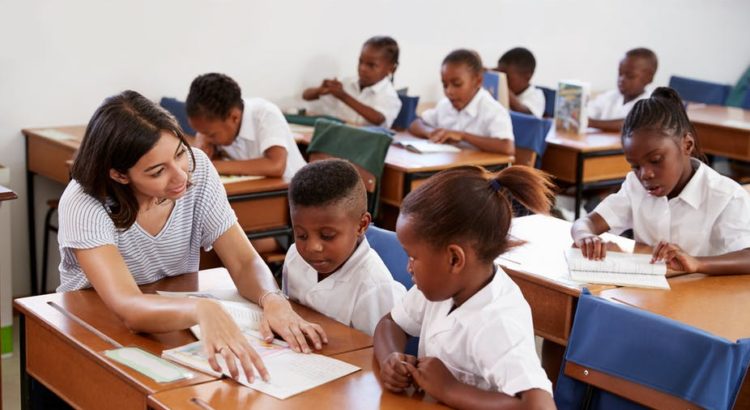
In the classroom, large numbers of over-age malnourished pupils present a challenge for teachers, who must teach a more diverse group with lower levels of maturity and school preparedness.
Teaching malnourished children does not seem to feature in the curricula of teacher training programmes (Drury, 2102; Rampal & Mander, 2013). In 2018, the Nigerian Federal Government revealed plans to revamp the country’s basic education sector – however there is no detail regarding specific approaches to teaching malnourished children
The available evidence suggests the need for teacher training to be relevant to classroom reality, to maximise the chance of teachers adopting new techniques in the classroom, and to be linked to better management of teachers at the school level to maximise time on task (Vogel and Stephenson, 2012).
Chinyoka (2014) recommends that teachers adapt their behaviour to motivate the learners to work and co-operate with peers. This teaching methodology is supported by Snowman and Biehler (2011).
In South Africa, the First National Bank Fund Primary Education Programme (PEP) aims to train teachers to identify pupils affected by malnutrition, as well as assisting them in what they can do to help these learners. The end-term evaluation recommends that the programme clearly had a positive impact in most objective areas (Khulisa Management Services & Bisgard, 2017).
The main sources of evidence used for the rapid review were taken from peer reviewed journals, as well as grey literature and investigative projects. In general, nutrition status of primary schoolchildren in Africa has received relatively little attention in comparison to that of younger children (Saltzman et al., 2016). Most of the data available focuses on the causes of malnutrition, and the effect of adapting diet to improve education. There is little empirical evidence on the effect of childhood malnutrition on children’s cognitive achievements in low-income countries (Woldehanna et al., 2017). There are limited teaching approaches specifically used in Nigeria.
The evidence found was ‘gender-blind,’ as there is very little information available exploring the experiences of girls and boys who are affected by nutritional deficiencies in the early education system. Children with physical disabilities were not a focus of this rapid review.
Link of the document: https://reliefweb.int/sites/reliefweb.int/files/resources/540_Stunting_Wasting_and_Education_in_Nigeria.pdf
Source of the notice: https://reliefweb.int/report/nigeria/helpdesk-report-k4d-stunting-wasting-and-education-nigeria
Is South Africa regularly denying children their right to access education as well as health care on the grounds either of petty bureaucracy or by a misinterpretation of the country’s laws and international obligations?
The answer is yes.
The country places limitations on children’s access to education and affordable health care. This is particularly true of migrant children. These limitations are, in my view, unconstitutional and in violation of South Africa’s international obligations. For example, South Africa is bound by the International Covenant on Economic, Social and Cultural Rights. In the interpretation of this convention, the United Nations Committee on Economic Social and Cultural Rights has emphasised that:
all children within a state, including those with an undocumented status, have a right to receive education and access to adequate food and affordable health care.
However, South Africa isn’t living up to this promise.
What’s clear is that South Africa’s current school admission policy has a serious effect on the access to basic education of both children who are South African citizens and those who are foreign nationals or stateless.
The challenges for those who are not South African citizens and don’t have the required permits are compounded by section 39 of the Immigration Act 13 of 2002. This states that a “learning institution” may not provide “training or instruction” to an “illegal foreigner”. Principals of schools that enrol a child who is an “illegal foreigner” can be charged and may face penalties.
Children who are not South African citizens often also struggle to access affordable health care through what’s been called “medical xenophobia”.
A recent Constitutional Court ruling gives some hope that the requirements of birth certificates and study permits for children to enrol in school will eventually be relaxed. However, litigation is still ongoing and as with access to affordable health care, there’s often a discrepancy between what the law provides and the actual situation on the ground.
Denial of rights
On 10 December 2018, the Grahamstown High Court gave an order dismissing an urgent application by the Centre for Child Law that 37 children should be admitted to a public school pending final determination of a case instituted by the Centre in 2017, in which the applicants, among others, requested an order that:
no learner may be excluded from a public school on the basis that he or she does not have an identity number, permit or passport.
The 37 children were among the many children whose guardians have not managed to secure the paperwork needed to be allowed to register in a school under the 1998 Admission Policy for Ordinary Public Schools.
On 15 February 2019 the Constitutional Court granted leave of appeal against the High Court order and overturned it, ordering that the children should be admitted and enrolled in school by 1 March. However, this order does not finally decide the issue of requirements for enrolling in school as the case instituted in 2017 is still pending before the High Court.
The right to health care is provided for in article 27 of the Constitution. The National Health Act 61 of 2003 provides for free health care at public facilities for children under six years old, unless a child is covered by private medical insurance.
According to the Uniform Patient Fee Schedule all non-South African citizens – except those with permanent or temporary residence and citizens of the member states of the Southern African Development Community who “enter the (the republic) illegally” – are classified as full-paying patients. Children without the required permits who are over six years old, who lack medical insurance and are not from a Southern African Development Community member state therefore lack access to subsidised health care.
International obligations
The Global Compact for Safe, Orderly and Regular Migration was adopted in December 2018 with South Africa’s support. Among other things, the global compact calls on states to adopt child sensitive migration policies. It also promotes international legal obligations in relation to the rights of the child, and upholds the principle of the best interests of the child at all times.
a child’s best interests are of paramount importance in every matter concerning the child.
A child is defined as anyone below the age of 18.
The right-holder in the bill of rights in the Constitution, is with few exceptions “everyone”. Clearly this includes not only South African citizens but everyone who is in the country. Most rights are not absolute and may be limited under section 36
in terms of law of general application to the extent that the limitation is reasonable and justifiable in an open and democratic society based on human dignity, equality and freedom.
The Immigration Act is a “law of general application”. However, the child’s best interest is “of paramount importance”.
In my view, the rights of children to basic education and affordable health care in South Africa can’t be limited and “everyone” must be read to include every child, irrespective of their immigration status. When it comes to access to health care the situation is even clearer as there are no limitations set out in the country’s laws. The Uniform Patient Fee Schedule should therefore be revised to provide for subsidised health care for all children whose guardians cannot afford medical insurance.
Source of the article: https://theconversation.com/south-africa-is-failing-the-rights-of-children-to-education-and-health-112707
What Universities Can Do to Limit the Cybersecurity Risk of Personal Devices on Campus
As the number of personal devices increases, universities will have to protect against an incoming threat to network security.
Originalmente publicado por EdTech Magazine por Elliott Levine
Elliott Levine is Director of Education for the Americas Region of HP, Inc. and the company’s first Distinguished Technologist focused solely on edtech. A former K-12 district administrator and professor, Elliott is a past columnist for Electronic School and American School Boards Journal.
On any college campus today, there are likely at least three devices for every one student or faculty member. Laptops, smartphones, tablets, printers, watches — all are synonymous with the modern college experience.
As of 2018, 73 percent of adults in the U.S. own computers and 53 percent have tablets, according to the Pew Research Center. Among Americans ages 18-29 years old, 94 percent own a smartphone, and roughly 4 out of 10 people in this age group report they are online “almost constantly.”
Devices are everywhere and people are always online, which makes security imperative. When “bring your own device” (BYOD) is the name of the game, however, cybersecurity is a profound challenge for university campuses.
Institutions of higher learning should get ahead of potential cyber problems by educating everyone. Training alone may not solve the entire problem, but it is still critical to provide people with general cybersecurity best practices.
This includes not clicking on email links from unknown sources, which can lead to phishing attacks, and not connecting to unknown Wi-Fi accounts, which can allow nearby hackers to penetrate devices.
It is also the responsibility of university IT staffs to enforce reasonable security policies. For example, they can set limits on the types of operating systems, memory, storage and processing even while encouraging online access to network resources.
Another precaution institutions can take is requiring students and faculty to register every device on campus so any unit, whether it is a laptop, smartphone or even a gaming console, can be mapped back to its owner.
Students and faculty will bring their own devices to campus; this is a fact of campus life. Savvy universities will head off cyberthreats with a balanced program of training, security policies and technology security solutions.
Common Reasons Hackers Target University Networks
Hackers target institutions of higher learning for three common reasons: identify theft, espionage and notoriety. Because of this, campus IT departments need to be especially proactive about securing mobile and connected devices against the variety of threats BYOD presents.
Identity Theft: Many students are just getting their first credit cards, checking accounts and loans. Their inexperience makes them especially vulnerable. When creating or accessing accounts using unsecure, connected devices, students often expose sensitive financial data — such as Social Security numbers, ATM codes and computer passcodes — to the digital world. Because students do not have much of a transaction history, attacks can be more difficult to spot. College-aged students are three times more likely to lose money from fraud than older adults, according to a 2018 Federal Trade Commission report.
Espionage: When imagining espionage scenarios, we do not often think of universities. The truth is, they are becoming prime hacking targets because of personal data and valuable research that are inadequately protected. While it is nearly impossible in most cases to clearly tie such incidents to devices students and faculty bring onto campus, it is highly likely they play at least some role.
Notoriety: Money and information are prime draws for hackers, but one of the longest-standing drivers continues to be the thrill of undermining networks for sport. This reason has become more prevalent with so many tempting connected devices on campuses globally. Many hackers are willing to show off their skills in sanctioned places, such as sponsored hackathons or “white hat” hacking events, such as the annual DEF CON conference in Las Vegas. Still, about 11 percent of unauthorized attacks against universities are “just for fun,” according to Verizon’s “2018 Data Breach Investigations Report.”
Digital Transformation Empowers Student Learning in Higher Education
Universities across the country use digital transformation initiatives to improve classroom accessibility and data analytics.
Artículo originalmente publicado en Ed Tech Magazine por Melissa Delaney
A common refrain in the workplace is «Don’t reinvent the wheel.” But what if the wheel is bumpy and worn? What if there’s a better means of transport?
Digital transformation sets aside the notion that it’s preposterous to reinvent the wheel. It goes back to the beginning to question what the ultimate goal is, then explores new ways of achieving that goal. It can apply to just about any process on a campus, which can make it a hard concept to grasp. But colleges and universities around the country are seeing countless digital transformation success stories.
In the past, an interpreter sat in a designated part of the classroom near the students. The support was costly, with longer classes requiring more than one interpreter to relieve each other, and it could be distracting to the rest of the class.
So, the college began equipping faculty with wireless microphones connected to Skype or Zoom. Classroom audio is sent to a remote captionist who transcribes the lecture in real time. The transcription goes to the student via Skype or Zoom, letting him or her read the text live as the lecture occurs. Students can use college-supplied iPad devices or their own devices, including laptops, tablets or smartphones.
“We do this remotely, so it’s much less intrusive in the classroom, it’s easier for the faculty member, and then the student has a transcribed record of that lesson,” says Joseph Moreau, vice chancellor of technology at Foothill-De Anza Community College District.
“Any student, for that matter, could use it,” he says. “It could be a student whose first language is not English or who is dyslexic. It could be any number of students who need that extra input channel to more comprehensively understand the material.”
Digital Transformation Can Expand Educational Opportunities
Building on digital initiatives started in 2014, Boston University leaders in 2016 created the Digital Learning and Innovation department to explore new ways to deliver education. For example, expanding on the concept of massive online open courses, the group created BU MicroMasters programs: combinations of courses delivered in a MOOC format.
“This is really good for people who are unable, because of time or money, to invest in getting a full master’s degree,” says Josie DeBaere, BU’s director of technology architecture. “Because you have a specific program of courses that are part of this track, it’s more standardized than just taking a bunch of classes on a nondegree level.”
We wanted to rationalize that data and begin to capitalize on it — to make use of it, to help make better decisions and to help ensure our students are supported as much as possible.
Brendan Aldrich Chief Data Officer, California State University, Office of the Chancellor
DeBaere, who earned her Ph.D. at BU, said she was fortunate to be able to finance her education by teaching, but she had classmates who struggled because they couldn’t afford to attend school full-time and therefore couldn’t take on teaching assistantships.
The MicroMasters programs provide remote access to BU courses at a lower cost, creating opportunities for students who wouldn’t otherwise be able to take graduate-level courses. The programs can also help students demonstrate that they’re strong candidates for a traditional graduate program.
“It’s a win for the university as well,” says DeBaere.
Colleges Use Transformation to Make Smarter Use of Data
California State University, the largest four-year university system in the country, has almost 50,000 employees and nearly a half-million students spread across 23 campuses. It also has a wealth of data about its students. But when Brendan Aldrich came to Cal State a year ago as the chief data officer, his biggest challenge was wrapping his arms around all that data.
“Since it was stored in so many different locations and repositories, one of my first jobs was to figure out how to bring all of that information together fast enough and flexibly enough from 23 different campuses every single day,” he says. “We wanted to rationalize that data and begin to capitalize on it — to make use of it, to help make better decisions and to help ensure our students are supported as much as possible.”
Aldrich spearheaded a data lake project that’s nearing the end of its first phase. “We’ve been pulling in the data for over a year, and now we’re populating our data lake with full sets of every piece of data we currently use for all of our warehousing, analytics, queries, dashboards and reports from every campus across the system so that both we in the chancellor’s office as well as the individual campuses can start to interact with this data more flexibly,” he says.
The project says Aldrich, is enormous, but the payoffs are equally big: “Every one of our campuses will be more empowered to work with data and to engage in more modern and more relevant data projects in the service of their students and their constituents.”
Resumen: El lunes 11 de marzo, en el lanzamiento oficial del Comité de Comienzo de la Graduación del Centenario de UL en el campus de Capitol Hill de la universidad, el Dr. Weeks señaló que la capacitación de los ciudadanos no debería confiarse a personas externas si Liberia debe sobrevivir en el siglo XXI. Hizo hincapié en la necesidad de que Liberia confíe en los profesores formados en el pais. «Para que Liberia sobreviva en el siglo XXI y para que Liberia sea competitiva, la capacitación de sus ciudadanos no debe confiarse a otros fuera de Liberia», dijo el Dr. Weeks, que es el 14 ° Presidente y la segunda mujer en encabezar el UL. .
Monrovia – University of Liberia President, Dr. Ophelia Inez Weeks has emphasized the need for Liberia to shoulder the responsibility of training its manpower to meet the demands of the 21th Century.
Speaking Monday, March 11, at the official launch of the UL Centennial Graduation Commence Committee on the Capitol Hill campus of the university, Dr. Weeks noted that the training of citizens should not be entrusted to outsiders if Liberia must survive in the 21th century.
She emphasized the need for Liberia to rely on homegrown professors.
“For Liberia to survive in the 21th century and for Liberia to become competitive, the training of its citizens should not be entrusted to others outside of Liberia,” Dr. Weeks, who is the 14th President and second woman to head the UL, said.
The UL Centennial Commencement Committee Members being inducted into offices
As a result, she believes, Liberians must now set for themselves objectives and goals that will put them on top.
Her Goal
One of those goals for her as President of the UL is to see the University of Liberia being ranked among the top 20 universities within Africa in the next seven years.
According to her, said goal can only be achieved when citizens collaborate and when adequate support is given to educational institutions.
Historical Perspective of First Liberia College/UL Commencement in 1866
Touching on the coming December 2019 graduation commencement, which will be the 100th commencement exercise of the institution since it held its first commencement in 1866 when there was no female in the institution, the UL President also spoke of the steady increase in female matriculation to the nation’s highest institution of learning. In her historical account, she mentioned how in 1905, the first female graduated from the UL, which was formerly Liberia College until 1951 before it transitioned to UL.
According to Dr. Weeks, throughout the years, the female enrolment has hit 34 percent and it is likely to increase.
Dr. Weeks: “In 1866 Liberia College celebrated its first commencement, 15 years after Liberia College was chartered and 19 years after Liberia had become an independent nation in 1847.”
The University of Liberia also unveiled a new logo as part of its Centennial Commencement Committee Project
According to the UL President, few years before the first commencement convocation, 10 young men sat the entrance, which was offered in Mathematics, Greek and Latin; adding: “three received scholarship while seven paid their own fees.”
Classes began in 1863 with the nation’s first President, Joseph Jenkins Roberts, Professor Rev. Edward Wilmot Blyden and Dr. Rev. Alexander Crummel as the first three professors. They taught their first 10 students Greek, Latin and Mathematics along with other courses.
“Let this centennial mark a renew commitment to UL as our Alma Mata. I have no doubts in my mind that we can achieve our goals and many others, only when we work together,” Dr. Weeks noted.
The 14th UL President further noted that the launch of the centennial celebration will be characterized by yearlong events, including implementations of several projects.
These projects, according to her, will contribute to what she called prosperous and glorious future of the university.
“Some of the activities include intellectual and cultural events, presentation on the establishment of Liberia College, student jamboree and hopefully the establishment of a printing press,” Dr. Weeks disclosed.
The UL President revealed that the printing press will hopefully be in full swing by July 2019, calling for the support of everyone towards the process.
She spoke of how the University of Liberia looks forward to improving on its internet connectivity on all of its campuses.
Dr. Weeks formally launched the UL Centennial Committee Commencement Committee, which includes two of her predecessors — Dr. Emmet Dennis and Dr. Al-Hasan Conteh, Liberia’s Ambassador to the Federal Republic of Nigeria.
Dr. William Allen, Chairman of Centennial Committee
At the same time, the Chairman of the UL Centennial Commencement Committee, Dr. William Ezra Allen, said the centennial graduation is expected to be celebrated under the theme, “Memory Preservation and the Way Forward.”
According to him, progress made by UL since its inception as a college from 1866 to 2019 cannot be over emphasized and must be recognized.
Meanwhile, Dr. Allen noted that the UL needs to strengthen several areas while going through its centennial celebration.
“While we are celebrating, we realize that there are areas we need to strengthen and we will strengthen as we go about,” the UL Vice President maintained.
However, he said some tremendous strive have been made by the institution in improving quality learning over the years.
According to him, the centennial celebration, which is now going to take place in December 2019, should have been in 1966 but because of at least 51 academic years when there was were no graduation exercises.
Student Leadership & Other Representatives
Also speaking on behalf of the student body, Mr. K. Edward Norman, Jr. spoke of how joyful it would be to a part of history making.
“It’s going to be the 100th commencement comes December 2019. But when we look back, we can count a number of achievements that the UL has had on the lives of Liberians and other nationals.”
He used the occasion to thank President George Manneh Weah for making undergraduate education at all public Institutions tuition-free.
A representative of the alumni association, told the UL Administration, “We are in this boat with you. Whatever project that you intend to achieve for the Centennial Committee, just inform us in time.”
Mr. Thomas Doe-Nah, the Commissioner-General of the Liberia Revenue Authority (LRA), who spoke on behalf of the Government of Liberia stated: “We are committed to contributing to all of our institutions. But we can do so when and if we increase our revenue base by this we can be among the best universities in Africa.”
He urged the Centennial Committee to use this year, to take the UL to another level. He also told his fellow alumnus to put their hands behind their alma mater
UL Looking for Descendent(s) of First Graduate
Meanwhile, the authority of the University of Liberia, through the Centennial Commencement Committee, is asking the public to help them locate any descendent of the first graduate — Mr. James Henry Evans — who walked out of the institution back in 1866 as the lone graduate. “Please help with any vital pieces of information that will lead us to finding a descendant of our first alumnus, Mr. James Henry Evans,” Atty Norris Tweah, Vice President for UL Relations, announced.
OtrasVocesenEducacion.org existe gracias al esfuerzo voluntario e independiente de un pequeño grupo de docentes que decidimos soñar con un espacio abierto de intercambio y debate.
¡Ayúdanos a mantener abiertas las puertas de esta aula!





 Users Today : 106
 Total Users : 35501922
 Views Today : 134
 Total views : 3627462