Saltar al contenido principal
Page 185 of 622
1 183 184 185 186 187 622

UNICEF: 5 formas de ayudar a eliminar la violencia contra las niñas

UNICEF/Por PattyAlleman, ShreyasiJha/Fuente: https://blogs.unicef.org

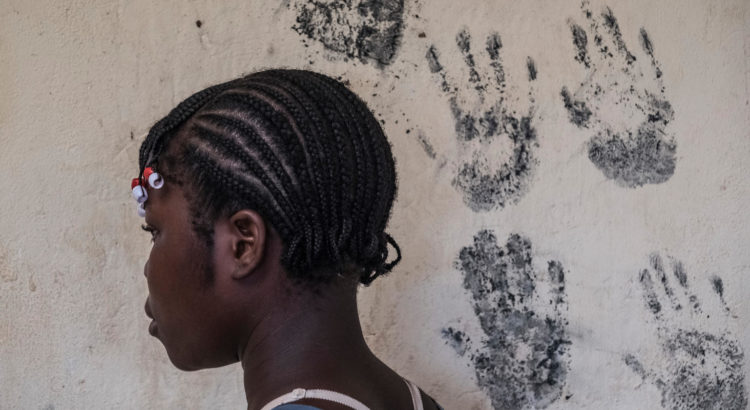
Información de la Foto de Portada:

Gertrude (nombre ficticio), de 15 años, está de pie contra una pared en la aldea de Ndenga, República Centroafricana. «Me perdí dos años de escuela porque los rebeldes atacaron nuestro pueblo y huimos al monte», dice ella. «Ahora estoy de vuelta a la escuela y feliz, pero la vida sigue siendo muy difícil porque somos ocho niños, con mi padre muerto y mi madre discapacitada. Lo que sueño en el futuro es poder hacer algún intercambio, tal vez tener una pequeña tienda para poder mantener a mi familia».

¿En qué piensas cuando escuchas “violencia contra las niñas”?

Posiblemente, en el secuestro más reciente de las niñas de una escuela de Nigeria a manos de militantes de Boko Haram y en la probabilidad de que las obliguen a casarse con sus captores, como ya les ocurrió a las víctimas anteriores.

O quizá pienses en los 120 millones de niñas de todos los rincones del mundo que han sido víctimas de violencia sexual.

O, tal vez, en el acoso y los silbidos a los que se enfrenta una niña como tú o tu hermana cuando va a la escuela.

De camino a la escuela, en clase, en casa, en campamentos de refugiados y en parques, las niñas son víctimas de acoso y violencia. En todo el mundo, más de ocho de cada 10 niñas sufren acoso en la calle antes de cumplir 17 años. En los Estados Unidos, más de una de cada 10 niñas ya ha sido objeto de provocaciones sexuales cuando cumple 11 años. Las niñas con discapacidad mental están expuestas a un riesgo mayor: en Australia, hasta un 68% han sido víctimas de agresiones sexuales.

A young girl looks out a curtained window
UNICEF/UNI195858/ImperatoMagu mira por una ventana de su casa ubicada en un pueblo de 5.000 habitantes en el norte de España, donde vive con su madre y su hermano menor. Magu sufrió abusos sexuales y físicos por parte de su padre y después de sufrir en silencio durante mucho tiempo, finalmente logró hablar sobre el abuso hace dos años cuando su maestra notó que algo andaba mal. Desde entonces, ha recibido el apoyo de su escuela y de un psicólogo.

Por otra parte, están los 750 millones de mujeres y niñas de todo el mundo que se casaron siendo niñas. Cuanto más joven se casa una niña, más posibilidades tiene de quedar aislada socialmente o en una posición de dependencia. Como resultado, se vuelven enormemente vulnerables a la violencia física y sexual en su propio hogar.

Solo presenciar la violencia en el hogar puede resultar demoledor. Uno de cada cuatro niños menores de cinco años vive con una madre víctima de la violencia perpetrada por su pareja sentimental. Esas niñas y esos niños tienen más posibilidades de continuar el ciclo de violencia cuando se hacen adultos, ya sea como víctimas o como abusadores.

Las consecuencias del acoso y la violencia son graves y dejan marcas duraderas. Las niñas se mantienen alejadas de los ámbitos de estudio en los que predominan los hombres o, directamente, abandonan la escuela porque se sienten inseguras. Aprenden a ser invisibles y a permanecer en silencio y, con ello, se perpetúan las impactantes estadísticas de desigualdad de género.

A group of girls crowd around a globe, pointing at its surface.
UNICEF/UN0141031/LeMoyneUn grupo de niñas de un centro de aprendizaje temporal en el campo de refugiados en Uchiprang, cerca de Cox’s Bazar, Bangladesh, estudian con un globo inflable que hace parte de los materiales educativos de “escuela en una caja” que distribuye UNICEF.

En el Día Internacional de la Mujer, daremos voz a las niñas, las mujeres, los niños y los hombres que han decidido decir ¡ya basta! Sus voces resuenan desde lugares próximos y remotos, en los que reina la paz o donde existen conflictos. Estas son cinco formas de participar en un movimiento para construir un mundo en el que todas las niñas y las mujeres puedan vivir libres del miedo y la violencia:

  • No cometas abusos. La violencia contra las niñas y las mujeres incluye los abusos, el acoso y las agresiones físicas y sexuales. Sucede en casa y en lugares públicos. Asegúrate de formar parte de la solución, no del problema.
  • Habla con una niña de tu familia o tu comunidad acerca del abuso sexual. Dile que nunca debe aceptar el contacto no deseado y que, si alguien la hace sentir incómoda, es bueno denunciarlo. Dale a conocer redes sociales digitales como U-Report, que le permitirá expresarse y formar parte de una comunidad mundial de casi cinco millones de personas.
  • Ayuda a activistas jóvenes que se estén movilizando para eliminar la violencia contra las niñas compartiendo sus historias con tus amigos, tu familia o en redes más amplias. Celebra sus logros y ayuda a cambiar la conversación. Hazle saber a la gente que esta generación de niñas y niños representa el fin del ciclo de violencia.
  • Participa en iniciativas como Time’s Up. Exige que los perpetradores asuman la responsabilidad por sus abusos y garantiza que las niñas puedan vivir y trabajar seguras cuando sean mayores.
  • Denuncia un caso cuando lo veas y apoya a las supervivientes de violencia y acoso sexual. Los abusos se siguen produciendo cuando la gente los mantiene en silencio. Todos debemos dejar claro el mensaje de que no se tolerará más violencia contra las mujeres y las niñas.


Patty Alleman y Shreyasi Jha son Asesoras Senior de Género de UNICEF.

Fuente del Documento:

https://blogs.unicef.org/es/blog/5-formas-de-ayudar-a-eliminar-la-violencia-contra-las-ninas/


Comparte este contenido:

Year of 2019: Education and building the Egyptian character

Asia/Egypt/By Dania Akkawi/Source: www.egypttoday.com.

The Information Center of the Council of Ministers published an infograph on the recommendations of the Sixth National Youth Congress that took place July 28-29.

The recommendations included naming the year 2019 as the «Year of Education», launching the National Project for the Development of the New Education System, the allocation of 20 percent of the scholarships within and outside Egypt to the teaching staff for 10 years and training teachers of technical education in accordance with international standards.

Alongside other developments, the Council of Ministers was mandated to link, or rather correlate, the university plans with the need of the state and to prepare a plan for the return of sports and cultural activities.

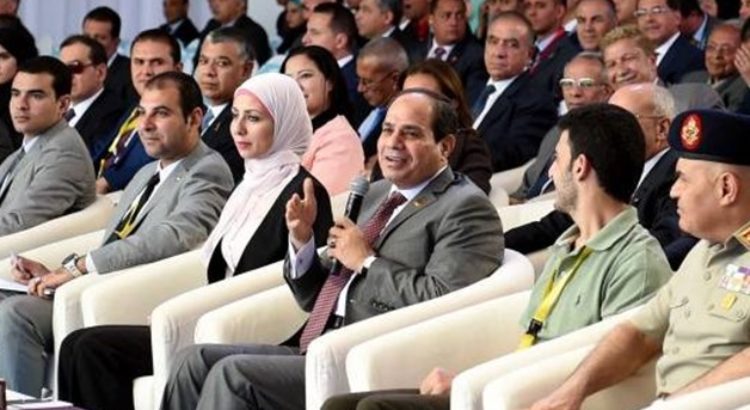
The conference consisted of top-scoring 2017/2018 thanaweya amma graduates, officials, ministers and other important figures, who came together to primarily discuss finding a way to build a generation fit for the future.

“We don’t want to reclaim the Egyptian character…but to work to develop it to keep up with our times,” said President Abdel Fatah al-Sisi.

Focusing on education is a top priority for the progression of Egypt and the development of youth.

“Do you want real education or do you want your kids to just get ‘degrees?’ A real educational reform is a harsh, long trip that requires sacrifice from students, teachers and parents,” said Sisi.

The first session, titled “The Strategy of Building the Egyptian Person,” focuses on character building that will be achieved via healthcare reform, proper education and sports.
Amongst the recommendations published by the Information Center is boosting the coordination between ministries to provide school students with opportunities to practice sports, cultural and artistic activities in youth centers and cultural palaces.

Minister of Youth, Ashraf Sobhy, explained that the ministry is aiming to enhance sports facilities and that programs regarding physical education will be made available for various age groups.

Interestingly, some of these discussions not only concern students in upper grades, but also nursery students. Parts of the recommendations mention the establishment of nurseries for creativity and innovation; these will be under the auspices of the Supreme Council of Universities to provide support for creative youth in all fields.

Although this recommendation is based on Prime Minister, Mostafa Madbouly’s point that character building is a Cabinet priority, as he stated in the first session, improving the standard of living will not be ignored.

«Egypt Take Off» program focuses on improving the standard of living via establishing housing projects and eliminating slums, stated Madbouly.
These developments will aid the economy by both creating jobs and bringing about the concept of entrepreneurship, he explained.

MP and Secretary of Human Rights Committee, Sherif al-Wardani stressed the importance of this conference, particularly in terms of science, education and development of youth.

Wardani pointed out that the process of developing education is a fundamental and important goal for the development of the Egyptian human.

He stressed the need to implement the recommendations of the youth conference as it is a link between the state and the youth.


Source of the notice: http://www.egypttoday.com/Article/2/55079/Year-of-2019-Education-and-building-the-Egyptian-character

Comparte este contenido:

Uganda: Education Ministry donates scholastics to the African public service day

Africa/Uganda/By Jovita Mirembe/15.08.18/Source: www.newvision.co.ug.

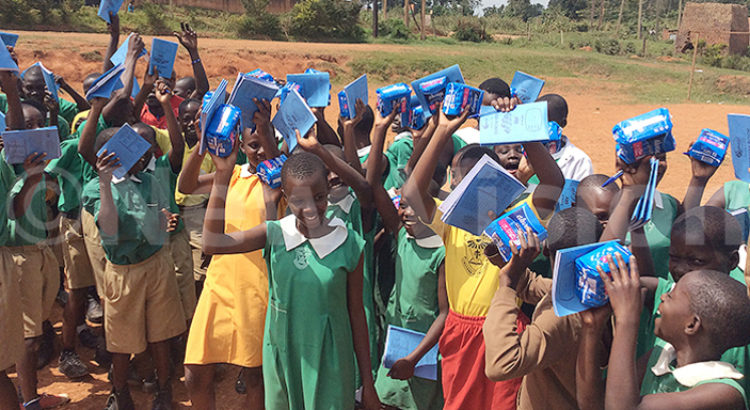
Over 200 pupils received scholastic materials from the Education Ministry such as exercise books, pencils, pens and pads for the girls in upper primary.

 As part of the celebrations of the African Public Service day on Friday, the Ministry of Education and sports has donated scholastic materials  to Kiwanga COU  Primary School pupils in Mukono district.
Over  200 pupils  received scholastic materials from the Education Ministry such as exercise books, pencils, pens and pads for the girls in upper primary.
The Human resource officer at the Ministry, Joy Tamwesaliza said that this day is celebrated every 23 of June every year world wide but because 23 of this year was falling on a Saturday, it was decided that it be celebrated Friday.
The main celebrations were at Kololo Airstrip.
 Tamwesaliza said the products  will help boost the pupils’ studying moral because these are the main items needed in school.
‘‘The Education Ministry does not want to see pupils dropping out of school due to lack of  scholastic materials because some parents cannot afford them.
«The products we have distributed will be shared amongst all the pupils from baby class to primary seven where every child will get a pencil, a pen and at least two books except the pads which will be given to only  girls in upper primary,’’ Tamwesaliza said.
The  Deputy head teacher at Kiwanga C.O.U  Primary School, Annet Nandutu said that many pupils  miss lessons because they don’t have pencils, pens or books which affects their performance.
She says that more so for the girls who have started their menstruation periods, hinders them when it comes to attending classes because they don’t pads to use.
Tamwesaliza added that 100 dozens of books, 50 dozens of pencils, 3 boxes of sanitary towels and four boxes of pencils were distributed to the pupils.

Source of the notice: https://www.newvision.co.ug/new_vision/news/1480251/education-ministry-donates-scholastics-african-public-service-day.

Comparte este contenido:

61 years of education in Ghana

By Peter Partey Anti

Last Sunday was the maiden show of a news program on GhOne TV hosted by Nana Aba Anamoah. Normally our media houses do not have very rich current affairs programs for their viewers on Sundays, so this program caught my attention right from the start.

The truth, however, is that, during the headlines, I heard the term “belly schooling”, a term I was hearing for the first time in education literature, so I decided to listen to what the story was about. That story broke my heart. Pupils in a school in Yikurugu in the Northen part of Ghana lie on their stomach to study. This is happening in an educational institution in Ghana in the year 2018.

Again, recently a picture of a teacher trying to teach ICT, specifically, the interface of Microsoft word went viral on social media. That picture has been featured in international media reports like the CNN, BBC among others. While some were happy for the school and the teacher, others like myself felt bad for what our educational system has turned out to be. And yes, this is Ghana in 2018.

A country that prides itself as the first country sub of the Sahara to gain independence. A country that has spent between 22% – 27% of its annual budget on education over the last decade; a country that is 61 years today. Growth theorists are vocal about the role of human capital and technology in a country’s long-term growth potential and not just any human capital, but an educated one. It is therefore not surprising that, 61 years ago today, there was a huge focus on education by the leaders at that time.

The address of the President, Osagyefo Kwame Nkrumah to the legislative assembly a day before independence had education as its pivot; the driving force of the country’s development agenda. He envisioned an educational system that is designed to address the challenges we faced as a country. A critical read of McWilliam and Kwamena-Poh reveal that the focus of the then President was to use education to answer the questions of technology, productivity and the economic potential of the country.

This explains the level of investment made by him in the education sector. It is therefore not surprising that between 1951 and 1966, primary schools increased by 647.8%, secondary schools increased by 707.7% whiles one university was added to the already existing two universities. This coupled with other levels of education such as teacher training colleges, technical and middle levels all saw a tremendous improvement. To most experts, education was geared towards solving the Ghanaian problem. Since then there have been changes in our educational agenda, prominent among them are the 1987 and 2007 educational reforms.

These two reforms in particular even though properly conceived were implemented in a way that made it impossible for us to realize its full benefits. The introduction of the JSS and SSS to replace the old system of O’Level and A’Level have been one of the defects of the 1987 Educational Reform according to some educationists. In fact, some have attributed the challenges in our educational system presently in terms of its structure and content to this reform. To others, the two systems should have been allowed to run concurrently.

As someone who is a product of the 1987 educational reform, I will not be quick to pass a judgement on it but to say that, a critical study of the reform brings to fore the good intentions of the policymakers but the problem of resources and lack of commitment to the implementation process led to the non-realization of objectives of that reform.

About five years ago, I had the opportunity to do a comprehensive review of the 2007 educational reform for an international organization. My observation was simple, we ignored the important elements in that reform and focused on the change of name and duration.

That reform was rich in its plans for Technical, Vocational and Agricultural Education agenda and the attempt to incorporate apprenticeship into our educational system. Sadly, we focused on the duration of either 3 or 4 years and the change of name from JSS and SSS to JHS and SHS respectively. The usual problem of fidelity in the implementation of the reform made sure that the objectives of the reform were not met entirely.

From the last 25 years, we have been able to increase access to education for a number of children in the basic level courtesy the introduction Free Compulsory Universal Basic Education (FCUBE) in 1996 and the Capitation Grant in the 2004/2005 academic year. We are seeking to increase access to students at the secondary school level with the introduction of the free SHS.

Sixty-one years after the take off in the educational sector, supported with the fact that, other countries with a robust educational sector have been able to transform their economy, it would have been ideal to see a transformed Ghana championed by an education system designed to address the challenges of our time.

Sadly, we are currently faced with graduate unemployment. What it means is that we are investing in education and yet the products of our educational system cannot be absorbed by the economy. The reasons for these are enormous but if in 1957, the focus was to use education to solve the problems of technology, productivity and how to harness the economic potential of the country, why have we not made progress?

The answer lies in the nature of our curriculum. As indicated earlier on, increasing access to education, investing in education and undertaking various reforms in the education sector should be geared towards addressing the challenges of the time and not be seen as a normal routine.

I am not oblivious to the fact that, currently there is a process ongoing to reform the curriculum for the pre-tertiary level and also teacher education in Ghana. How many of you are aware of this? I can only hope and believe that all the relevant stakeholders are involved in this process.

Aside from this, there is an increasing level of inequality between the urban student and his/her counterpart in the rural area. We continue to roll-out wholesale educational policies without paying attention to the disparities that exist in our society. A visit to most of the schools in rural Ghana will give you an indication of what we need to do as a country in terms of policy formulation in the education sector. How can we introduce ICT into the school curriculum and yet a majority of our schools in the rural areas lack just a computer?

How can we roll-out a policy called “One laptop per child” and yet most of those laptops were given to party members and sympathizers. What is the state of that policy now? Where are the laptops? Why should a child lie on his stomach to enjoy an instructional session when our leaders ride in expensive cars and jump from one radio station to another to lamenting about the problems that they have been elected and are being paid to solve.

This should not be misconstrued to mean we have not done anything as country in terms of education. We have improved access, we have expanded infrastructure and have increased our spending in the education sector. But the end product has been an increase in the level of youth unemployment, sanitation problems, increase in corruption, and an upsurge in crime, a total decline in the moral fabric of our society and reduction in patriotism.

According to Prof Agyemang, a renowned sociologist, education is a process by which each society influences its individuals by passing onto them the culture which is the totality of the society’s accumulated knowledge, art, laws, morals and ways of behaviour, the acquisition of which brings the individuals to the perfection of their nature. A good educational system should yield more positive fruits than negative but can we say this about our educational system, 61 years on?

So yes, this is Ghana’s education after 61 years, when you log on to social media and you come across videos and comments seeking to question the importance of learning osmosis, diffusion, quadratic equations among others, do not be dismayed, that is the system we have created. We have failed to establish relevance or what in Quality Teaching Model, we call, Significance. We love students who can reproduce verbatim what we presented to them during the instructional session.

We have paid lots of attention to examination than to learning. Our educational policies have sought to put students in school but not help students to learn. I once came across this distorted quote on social media “Education is key, but they have changed the lock”. This seems funny but it tells us the perception of people about our educational system after 61 years of independence.

We have to get it right, we will get it right, left us not be populace in our educational policies, let us avoid the wholesale educational policies and let us make sure that, each child in the country receives quality education irrespective of where he/she is. Education remains the key to lifting us from poverty to prosperity, let us get it right.

Source of the article: https://www.myjoyonline.com/opinion/2018/March-9th/61-years-of-education-in-ghana.php

Comparte este contenido:

African Union Shouldn’t Tolerate Banning Pregnant Girls from School

Africa/14.08.18/Source: www.hrw.org.

In June, Burundi joined a small group of African countries that ban pregnant girls from continuing with formal education in government schools. Burundi’s Education Ministry  banned the boys who get the girls pregnant as well as the girls themselves from going to public or private school.Burundi’s ban is contrary to the country’s constitution and many domestic laws, and undermines the state’s education goals. Indeed, Burundi’s law against gender discrimination protects girls’ right to go back to school and clarifies school officials’ obligation to respect this right and protect teenage mothers from stigma and social exclusion. Burundi also has an international legal obligation to provide all children with an education, without discrimination.

Human Rights Watch recently reported that thousands of pregnant girls and teenage mothers across Africa are excluded from school. Burundi was then still among 26 African countries with supportive laws or policies protecting girls’ right to education regardless of pregnancy, or their marital status or motherhood.

So, this new policy is a backward step, joining Equatorial Guinea, Sierra Leone, Tanzania, and Togo in applying a punitive and discriminatory school policy against pregnant girls and teenage mothers. These policies effectively deny these girls an education.

In these countries, officials and lawmakers have insisted on punitive measures for girls they accuse of being “moral failures.” Yet Burundi’s government also points out that these girls are “victims” of pregnancy or child marriage. The government is right in that respect so it would seem that these girls need support, not punishment. Although statistics are hard to come by, child rights activists say many girls in Burundi have unwanted and forced pregnancies, often as a result of sexual violence.

Despite this harmful move by the Burundian government, there is broad support among African countries for keeping pregnant girls and teenage mothers in school. Some governments facing high pregnancy rates among students have adopted very pragmatic policies to support the girls’ education, while tackling the root causes of teenage pregnancies.

Countries such as Gabon, Kenya, and Malawi have school “continuation” or “re-entry” policies. “Re-entry” policies require pregnant girls and young mothers to drop out of school but provide avenues to return, provided that the girls fulfill certain conditions. On the other hand, “continuation” policies allow pregnant girls to remain in school for as long they choose to, and do not prescribe a mandatory absence after giving birth.

But even in these countries, many teenage mothers are not in school because of poor implementation of laws and policies, and weak monitoring of adolescent mothers’ re-entry to education. Our research found that teen mothers may stay out of school due to lack of awareness among girls, teachers, school officials and their communities that girls can and should go back to school. Girls are most often deeply affected by financial barriers, the lack of support from their families or communities, and stigma in communities and schools alike. Punitive and harmful aspects of some re-entry policies – such as long periods of maternity leave and complex re-entry requirements like medical certification, as in Senegal, or letters to various education officials requesting school placement, as in Malawi – can deter adolescent mothers from returning to school or catching up with learning.

Across the African continent, girls face unique challenges in educational attainment due to structural and systematic gender inequalities. The African Union through its Agenda 2063 – a continent-wide economic and social development strategy – has committed to build Africa’s “human capital,” which it terms “its most precious resource,” through sustained investments in education, including “elimination of gender disparities at all levels of education.”

Isolating female students from school just because they are pregnant or married denies them the opportunity to learn and acquire gainful skills to develop their families, countries, and the continent. As one of the poorest countries in the world, Burundi should be enabling its girls, not preventing them from achieving.

The African Union, as well as countries in the region, should urge Burundi to reverse this ban. The African Union should call on Burundi and all AU member countries to end pregnancy-based discrimination in schools and adopt policies to ensure that all pregnant teens and young mothers are supported to stay in school.

Pregnancy and child bearing are significant life-changing events for young girls. Many pregnant teens are stigmatized or rejected, with little to no support from the family or school. They are condemned by government officials, face economic hardship, and sometimes abuse and violence.

Banning them from schools only adds to their unnecessary suffering and should not be tolerated.

Source of the notice: https://www.hrw.org/news/2018/07/19/african-union-shouldnt-tolerate-banning-pregnant-girls-school
Comparte este contenido:

Presidente de Sudáfrica combatirá la violencia contra la mujer

África/Sudáfrica/13.08.18/Fuente: www.wradio.com.co.

De acuerdo con el presidente de Sudáfrica, Cyril Ramaphosa, la mejor manera de empoderar a las mujeres jóvenes y promover la equidad de género es por medio de la educación

El presidente de Sudáfrica, Cyril Ramaphosa, se comprometió este jueves a emprender más acciones para combatir la violencia contra la mujer, en el país que, según se dice, tiene uno de los peores problemas por violaciones en el mundo.

En medio de un evento de conmemoración por el Día de la Mujer en la provincia de Cabo Oriental, Ramaphosa dijo que su gobierno realizará una cumbre nacional de género para tratar la violencia contra las mujeres.

De acuerdo con Bheki Cele, el ministro de policía del país, casi un cuarto de millón de mujeres son violadas en Sudáfrica anualmente.

Los activistas dicen que los números podrían incluso ser más, pero muchas víctimas se cohiben de reportar el crimen a la policía debido a la forma en que los oficiales las tratan.

Ramaphosa dijo que su gobierno priorizará el empoderamiento de las mujeres en su presupuesto.

La mejor manera de empoderar a las mujeres jóvenes y promover la equidad de género es a través de la educación”, aseguró el mandatario.

Las celebraciones del Día de la Mujer en Sudáfrica coinciden con la conmemoración de la Marcha de las Mujeres de 1956 a la sede del gobierno en la capital, Pretoria.

En esa marcha, miles de mujeres marcharon contra la ley del apartheid que exigía que los sudafricanos negros llevaran pases que les permitieran mudarse de una ciudad a otra.

Por separado, Julius Malema, líder del partido radical Luchadores por la Libertad Económica, dijo en una reunión del Día de la Mujer en la provincia de KwaZulu Natal: “Hay una guerra declarada contra las mujeres en Sudáfrica, si no te violan, te matan”.

En Sudáfrica, cada día se denuncian más incidentes de abuso contra mujeres, incluidos homicidios cometidos por sus propios compañeros.

La semana pasada, miles de mujeres marcharon por todo el país para exigir que se ponga fin al abuso de las mujeres.

Fuente de la noticia: http://www.wradio.com.co/noticias/internacional/presidente-de-sudafrica-combatira-la-violencia-contra-la-mujer/20180809/nota/3784458.aspx


Comparte este contenido:

IE University pone en marcha el IE Africa Center para impulsar la innovación en el continente africano

Redacción: El Economista

IE University ha anunciado la puesta en marcha del IE Africa Center, un centro que impulsará la innovación, el liderazgo ejecutivo, el emprendimiento y el desarrollo de proyectos de acción social en el continente africano. IE University desarrolla proyectos en África desde hace 10 años.

Este nuevo centro, en el que la institución trabaja desde hace varios meses, dará proyección a la innovación del continente y dotará de un marco estratégico a los proyectos de IE University en la región. El IE Africa Center, que depende de la Fundación IE, iniciará su actividad el próximo mes de septiembre.

Felicia Appenteng, Directora General del IE Fund en Nueva York y del International Advisory Board de IE, presidirá el Centro. Felicia Appenteng, de nacionalidad americana-ghanesa, ha liderado en los últimos años la actividad de IE Fund con el objetivo de desarrollar proyectos estratégicos de la institución en EE.UU. facilitar el acceso a programas de formación, impulsar la gestión de la diversidad y alcanzar acuerdos con instituciones internacionales.

Begoña Gómez será la Directora del Centro. Con más de 20 años de experiencia en consultoría y docencia, Begoña Gómez ha sido Directora de Consultoría del Grupo Inmark y es desde 2015 co-Directora del Master en Fundraising Público y Privado para Organizaciones sin Ánimo de Lucro en el Centro Superior de Estudios de Gestión de la Universidad Complutense de Madrid. Begoña Gómez es una profesional especializada en diseño e implementación de proyectos estratégicos con enfoque en fundraising y sostenibilidad para el tercer sector.

El IE Africa Center lanzará, en colaboración con el Centro de Innovación Social de IE, el IE Africa Social Innovation Booster, una nueva iniciativa dirigida a acelerar las ideas innovadoras y de emprendimiento de líderes africanos con impacto social. El IE Africa Social Innovation Booster fortalecerá aspectos referidos a la gestión de equipos, la captación de fondos, la innovación y la sostenibilidad.

El IE Africa Center trabajará en la región en colaboración con Sabine Yazbeck, Directora de Desarrollo de IE en Africa & Middle East.

«IE impulsa proyectos de formación y desarrollo en el continente africano desde hace 10 años. La creación de este Centro es un paso más en nuestro compromiso con África, nos permitirá vertebrar todas las acciones en el continente y dotarlas de un marco estratégico. Queremos potenciar la innovación y el talento directivo como claves de futuro del continente y promover el conocimiento de la historia y la cultura africana», señala Felicia Appenteng, Presidenta del IE Africa Center. «África es el continente con el mayor porcentaje de personas menores de 18 años del mundo, con la mayor concentración de recursos naturales y un creciente movimiento de reformas políticas. En este contexto, el IE Africa Center trabajará para convertirse en una pieza del cambio que revelará África al mundo», añade Appenteng.

«Es para nosotros una satisfacción anunciar la creación del IE Africa Center. Nuestro objetivo es apoyar a los líderes del cambio en África, impulsar la innovación, la inclusión financiera y el empoderamiento de las mujeres africanas», señala Carlos Mas, Vicepresidente de la Fundación IE.

IE University, institución académica con más de 60.000 graduados presentes en 165 países, desarrolla proyectos de formación e impacto social en África, en países como Ghana, Etiopía, Sudáfrica o Nigeria. La institución cuenta este año con más de 150 alumnos y 600 graduados africanos, y tiene delegaciones en Nigeria y Sudáfrica. IE University cuenta, asimismo, con acuerdos internacionales con instituciones como las universidades de Cape Town, Pretoria, Ashesi, Université International de Rabat o American University en el Cairo.

IE University desarrolla programas de formación para ejecutivos en Africa y colabora con empresas y organizaciones en el continente como Deloitte, WIMBIZ, Dimension Data y Femmes Africa Solidarité, entre otras. IE University imparte programas como el ‘Women on Board’, diseñado para empresarias y directivas africanas, en colaboración con la organización nigeriana WIMBIZ en 6 países africanos; o el programa ‘Women Entrepreneurship Resilient Cities’, impulsado conjuntamente con el Banco Mundial en Líbano, Egipto y Djibouti.

La Fundación IE convoca cada año su programa de becas ‘Talent Without Borders’ que facilita el acceso de candidatos africanos a los programas de grado, master y executive education de IE. La Fundación IE y los demás miembros de la iniciativa ‘Africa at IE’ trabajan con organizaciones públicas, privadas y ONGs en la región para ampliar la dotación y el alcance de este proyecto.

Los alumnos de IE University son claves en el impulso de proyectos en el continente africano. Como ejemplo, la Fundación IE apoya desde hace 7 años el programa Financieros Sin Fronteras, un proyecto en el que alumnos y profesores de los Masters in Finance impulsan la inclusión financiera y las iniciativas de microfinanzas en Ghana. Más de 300 alumnos han trabajado en este programa desde sus inicios. Los alumnos participan también en programas de impacto social en Sudáfrica y apoyan un programa sobre diseño y tecnología enfocado a mujeres de pequeñas poblaciones de Etiopía.

Fuente: http://www.eleconomista.es/ecoaula/noticias/9322337/08/18/IE-University-pone-en-marcha-el-IE-Africa-Center-para-impulsar-la-innovacion-en-el-continente-africano-.html

Comparte este contenido:
Page 185 of 622
1 183 184 185 186 187 622
OtrasVocesenEducacion.org