Page 192 of 621
1 190 191 192 193 194 621

Sierra Leona espera extender servicio gratuito de salud a escuelas

África/Sierra Leona/05 Julio 2018/Fuente: Prensa Latina

El ministro de Salud y Saneamiento de Sierra Leona, Alpha Tejan Wurie, reveló hoy que estaban en marcha planes para extender el servicio de salud gratuito del gobierno a los niños que van a la escuela.
Tejan Wurie agregó que los trabajadores de salud estaban desempeñando un papel importante en el proceso de desarrollo de Sierra Leona y que el presidente Julius Maada Bio reconoce su papel ahora, e incluso durante la lucha previa contra la epidemia de ébola.

Según el funcionario, el establecimiento de atención médica era un componente importante del paquete de educación gratuita del mandatario.

Si consideramos el nivel de pobreza en el país, será muy difícil para las personas atender sus necesidades de salud. El presidente ha dicho que la atención médica gratuita debe ampliarse, señaló Tejan Wurie.

En este sentido, el ministro adelantó que de momento las escuelas sierraleonesas se beneficiarán con un envío de medicinas por un valor de 200 mil dólares.

Maada Bio, quien asumió como jefe de Estado en abril pasado, declaró a mediados de mayo que la educación en el país africano será gratuita a partir de septiembre, en cumplimiento de una promesa de campaña.

Fuente: http://www.prensa-latina.cu/index.php?o=rn&id=191964&SEO=sierra-leona-espera-extender-servicio-gratuito-de-salud-a-escuelas
Comparte este contenido:

Kasai, un tsunami de pobreza, privaciones y conflicto

Por: Tiziana Trotta

La violencia amaina en esta región de la República Democrática del Congo, pero el hambre, la falta de acceso a sanidad, escuelas poco seguras y el reclutamiento en el conflicto amenazan a la infancia

La región de Kasai, en el centro de la República Democrática del Congo (RDC), no consigue levantar la cabeza, a pesar de que se ha producido una tregua de los combates y que algunos desplazados están empezando a regresar a sus comunidades. La zona está sumida en la violencia desde finales de 2016 y la situación humanitaria, denuncian las organizaciones internacionales, se mantiene muy grave, sobre todo para la infancia. Malnutrición, ataques a escuelas, reclutamiento de niños por parte de grupos armados y falta de acceso a cuidados médicos son algunos de los problemas a los que tienen que enfrentarse los más pequeños.

Pese al descenso de la violencia desde la segunda mitad de 2017, sigue existiendo el riesgo de que se reanuden los combates y en la zona rige la inseguridad, con lo cual los movimientos de población no se han detenido. Aunque el acceso a los servicios básicos está mejorando, las consecuencias para la infancia son devastadoras.

El hambre amenaza la vida de al menos 400.000 menores de cinco años que sufren desnutrición severa

Al menos 770.000 niños, la mitad de todos los menores de cinco años de la región, sufren desnutrición aguda, denuncia el informe Kasai: una crisis para los niños, publicado este viernes por Unicef, el Fondo de las Naciones Unidas para la Infancia. El hambre amenaza a la vida de 400.000, una cifra que podría dispararse si no se toman medidas de manera rápida, alerta el estudio. La malnutrición crónica es la causa de que la mitad de los menores de cinco años de la región sufra un retraso en el crecimiento.

Esta situación no representa una excepción en un país con uno de los índices de desnutrición más elevados del mundo, donde seis millones de niños padecen desnutrición crónica y otros dos millones, aguda, según los últimos datos de Unicef. “La desnutrición crónica siempre se ha mantenido muy elevada”, explica Inés Lezama, jefa de nutrición de la organización en RDC. “La aguda, en cambio, se había reducido entre 2007 y 2013”.

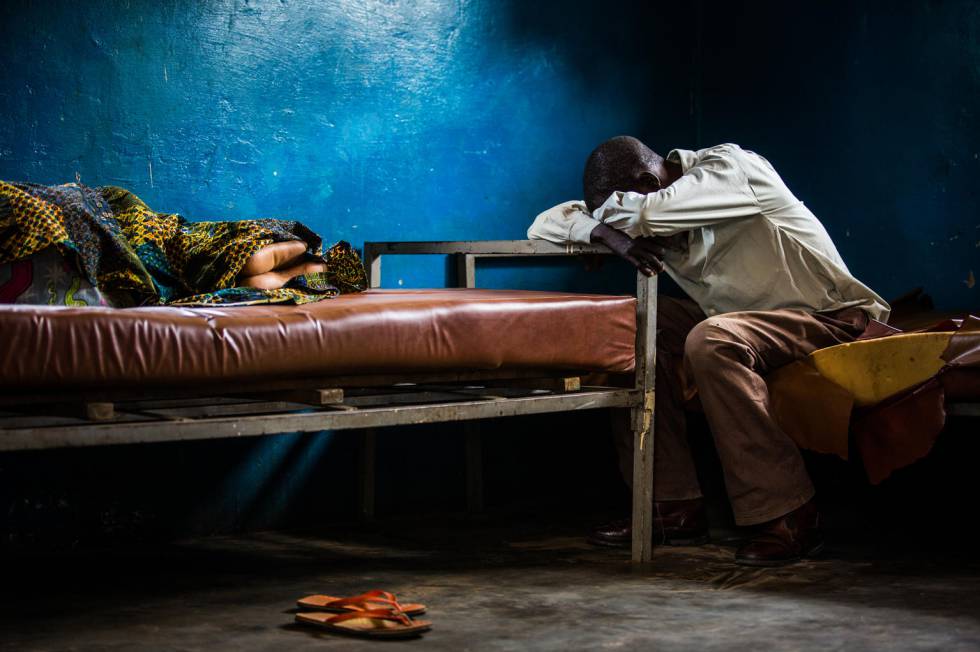
Un hombre junto a su mujer, enferma de malaria, en el centro de salud de Kananga (RDC), el pasado 20 de enero.
Un hombre junto a su mujer, enferma de malaria, en el centro de salud de Kananga (RDC), el pasado 20 de enero. VICENT TREMEAU / UNICEF

Las tierras, abandonadas tras la fuga de la población, se han dejado de cultivar y, en algunas zonas de Kasai, se han perdido ya tres cosechas agrícolas. “Si bien el conflicto está retrocediendo y empieza a haber más productos en los mercados, la inseguridad alimentaria sigue en niveles de emergencia y muchas familias no disponen de los recursos económicos para acceder a los alimentos”, asegura la experta desde una de las regiones más pobres del país. “Hay que actuar de manera rápida”.

Más de un niño de cada diez muere antes de celebrar su quinto cumpleaños. “A menudo, las necesidades de los más pequeños están desatendidas, ya que las mujeres cuentan con una sobrecarga importantes de trabajo, al tener que ocuparse del hogar y de la agricultura”, añade Lezama. “Si necesitan ir al campo, dejarán a los hijos solos en casa”.

Otro desafío para la región reside en subsanar el colapso del sistema de salud. A pesar de que mejora el acceso a los centros, alrededor de 200 de estas estructuras han sido saqueadas, quemadas o destruidas durante el conflicto. “Si las instalaciones sanitarias no disponen de suficiente material o de personal, las familias dejarán de acudir”, destaca Lezama. Por el momento, no se han registrado brotes de cólera y sarampión, pero la experta de Unicef advierte que no se puede bajar la guardia; después de la fase de emergencia más aguda, es crucial asegurar una asistencia continua.

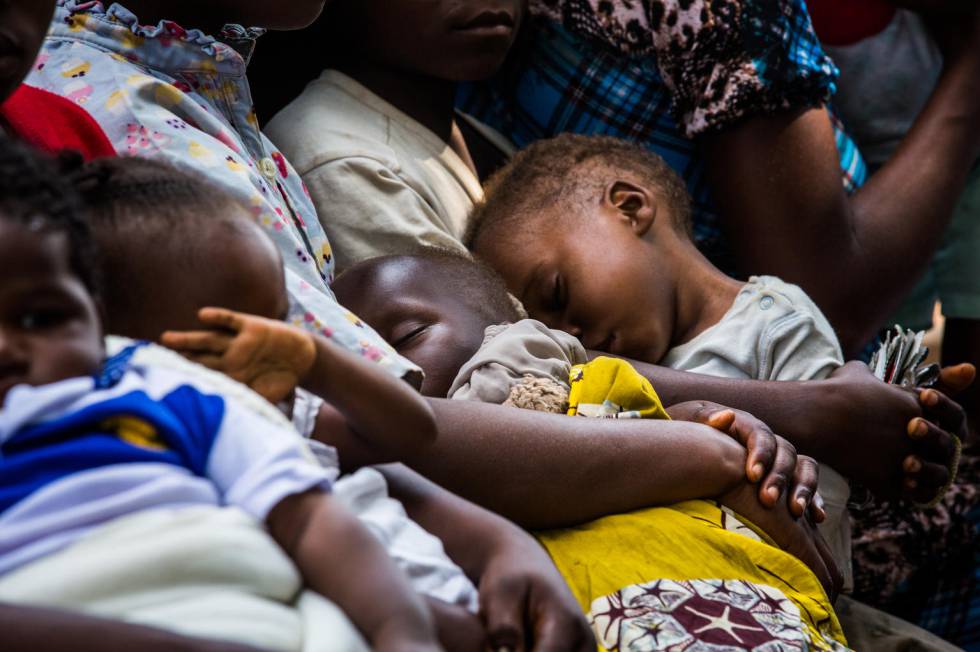
Unos niños descansan con sus padres durante una evaluación médica en el centro de salud de Kananga, en la región de Kasai (RDC), el 20 de enero de 2018.
Unos niños descansan con sus padres durante una evaluación médica en el centro de salud de Kananga, en la región de Kasai (RDC), el 20 de enero de 2018. VICENT TREMEAU / UNICEF

Más de 400 escuelas de Kasai han sido atacadas o utilizadas con fines militares desde el comienzo del conflicto y 100 han sido destruidas. El año pasado, casi medio millón de niños no pudieron acabar el curso escolar. Unicef prevé que esta situación se mantendrá inalterada a lo largo de este 2018.

Miles de niños han sido, además, reclutados por grupos armados activos en la región. Durante el auge de la crisis (entre otoño de 2016 y el verano de 2017), más de la mitad (60%) de los milicianos tenía menos de 18 años, según estimaciones del Grupo Mundial de Protección y el Grupo Mundial de Educación. La mayoría de ellos, incluso no llegaba ni a los 15 años. Kate Shaw, asesora de World Vision para la respuesta de emergencia a la crisis de Kasai, sostiene haber hablado con exniños soldados que le han informado de la presencia entre las milicias de menores de cinco años.

Mientras que los más jóvenes se emplean en las cocinas o en otras tareas domésticas, los mayores se pueden ver obligados a matar o se utilizan como escudos humanos. Sea cual sea su edad, señala el informe de Unicef, tienen que someterse a ritos de iniciación que incluyen beber brebajes que pueden contener alcohol o huesos humanos molidos, o comer carne humana para adquirir supuestos poderes que les protegerán en los combates.

UN PAÍS AL BORDE DEL ABISMO

A Kasai, se suman otros focos de violencia e inseguridad del país, como las zonas de Kivu, Tanganica e Ituri. En la última conferencia de donantes, organizada por Naciones Unidas y celebrada el pasado mes de abril, se recalcó que las necesidades de la RDC están aumentando y que para hacer frente a la crisis se necesitarían casi 1.700 millones de dólares este año (1,4 millones de euros), el doble de la suma pedida para el año anterior.

Sin embargo, las autoridades de la RDC no acudieron a Ginebra al considerar que el encuentro ofrecía una mala imagen del país y que el Estado puede hacerse cargo de las necesidades humanitarias internas.

“La mayoría de estos niños fueron obligados a unirse a los combatientes por parte de sus familiares u otros coétaneos”, explica Shaw. “Se les amenazaba, de lo contrario, con matar a sus padres o a ellos mismos”. Aunque las milicias están poniendo en libertad a los soldados más jóvenes desde el pasado verano, muchos de ellos necesitan apoyo para la reinserción y superar los traumas que han vivido. “A menudo, se sienten culpables por lo que han sido obligados a hacer o siguen con el miedo a ser perseguidos, pero tienen que lidiar solos con ello”.

Fuente: https://elpais.com/elpais/2018/05/10/planeta_futuro/1525962484_477827.html

Comparte este contenido:

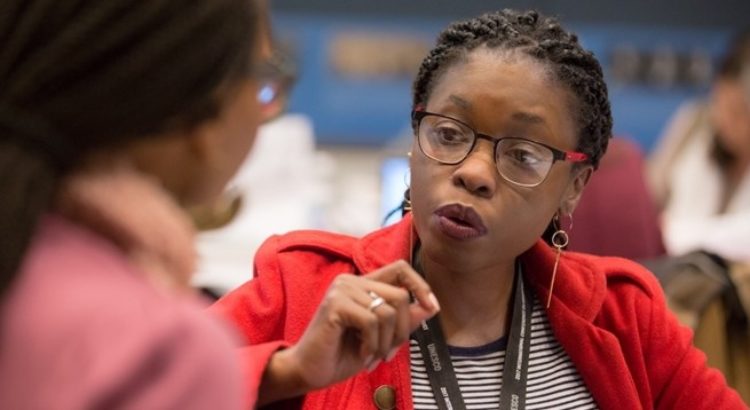
Entrevista a Ndapewoshali Ashipala sobre la enseñanza del Holocausto y otros genocidios en Namibia

Por: UNESCO/04-07-2018

“Tratamos de utilizar las enseñanzas de la historia como plataforma para enseñar la tolerancia en el seno de la comunidad namibia”

Ndapewoshali Ashipala trabaja para la Asociación de Museos de Namibia. Con su compañera Memory Biwa crearon un proyecto cuyo objetivo es promover la enseñanza del Holocausto y otros genocidios en Namibia, que incluye la primera exposición sobre el genocidio de 1904 contra los Hereros y los Namas, que se presentará en las 14 regiones del país.

¿Por qué es importante enseñar las cuestiones vinculadas con el Holocausto en Namibia?

Es importante porque Namibia vivió una historia similar al Holocausto. Hubo un genocidio en Namibia en 1904 cuando el país era una colonia alemana. Existen numerosas similitudes entre el genocidio judío, fundamentalmente en los campos de concentración, la ciencia racial y la orden de exterminar a un grupo de personas, y mucho más en cuanto a las semejanzas en la manera en que el genocidio se perpetró.

El programa escolar namibio prevé la enseñanza del Holocausto, pero no incluye el genocidio en Namibia. Es por eso que queremos que los alumnos namibios comprendan la historia, en particular hoy, en el contexto de las negociaciones que se llevan a cabo entre el gobierno namibio y el gobierno alemán para obtener compensaciones. Deseamos que los alumnos conozcan esta historia, ya que el namibio medio no sabe casi nada sobre este genocidio – y algunos ni siquiera saben que tuvo lugar. Como los educandos tienen algunos conocimientos sobre los crímenes atroces perpetrados por la Alemania Nazi, queremos vincular los cursos sobre el genocidio en Namibia y el Holocausto, con miras a que los alumnos entiendan mejor lo que sucedió en el país en 1904 y lo que sucede actualmente.

Para nosotros esto significa también una forma de sensibilizar en lo tocante a otras formas de discriminación, de racismo y de tribalismo que han existido también en Namibia, debido a nuestro pasado colonial, en particular durante el gobierno del Apartheid, un régimen que agravó las barreras étnicas. Incluso entre los negros estábamos divididos en tribus y grupos étnicos según enfoques que consideraban que ciertos grupos “se acercaban más a los blancos”. Mientras “más cerca” de los blancos eras considerado, más privilegios tenías. Esto influía en el modo de vida, el trabajo al que se podía aspirar y el tipo de educación que se podía recibir. Todo esto se encuentra, incluso 28 años después de la independencia de Namibia, enraizado en nuestra sociedad. El sistema [colonial] logró convencer a personas que eran más o menos semejantes y que vivían juntos, que debían detestarse y que algunos de ellos eran superiores a los otros.

Esto ha sido siempre un problema subyacente en Namibia. Recientemente, dos miembros del Parlamento tuvieron que dimitir de sus funciones por comentarios de tipo tribal, y ocurrieron ciertos actos violentos, violencia de carácter tribal, en el sur del país. Esto se convierte en un problema grave para la comunidad namibia también, y el conflicto comienza a despuntar otra vez.

Mediante nuestra exposición titulada “El genocidio namibio – Sacar provecho de las lecciones del pasado” tratamos entonces de enseñar el Holocausto y el genocidio [en Namibia] para mostrar lo que puede ocurrir si continuamos respaldando los discursos de tipo “nosotros contra ellos”.

¿Qué papel puede desempeñar la educación al abordar los acontecimientos difíciles y violentos en la historia de Nambia? Y, en este sentido, ¿qué puede mejorarse en el sistema educativo namibio?

Los planes de estudio nacionales namibios no abordan mucho las cuestiones vinculadas con el genocidio en Namibia, pero abarcan los crímenes perpetrados por la Alemania nazi. La historia es una asignatura obligatoria hasta el décimo grado, pero es bastante general y más bien factual, algo así como “tal acontecimiento ocurrió tal día”. Sólo en onceno y duodécimo grados, en donde la historia es una asigantura facultativa, el programa comienza a ser más profundo, obliga a que los educandos participen y exige de ellos una reflexión más crítica.

El sistema educativo namibio se centra fundamentalmente en las materias STEM tales como ciencias, tecnología y matemáticas. Es el modelo que nuestro país ha seguido para propiciarnos la independencia económica. Por ello, la historia se considera como ese tipo de asignatura que sólo escogen los niños que no pudieron seguir los estudios en materia de STEM. La historia es a menudo la última opción de la mayor parte de los educandos. Sólo un pequeñísimo número escoge la historia en onceno o duodécimo grados y, por consiguiente, descubren nuestro pasado de violencia. No obstante, estos cursos se centran principalmente en nuestra lucha por la independecia y menos en el Holocausto o el genocidio en Namibia.

[Con nuestro equipo de la ICEH] tratamos de completar el programa de historia. Es por ello que colaboramos con diferentes entidades, tales como el Instituto Nacional de Educación y Desarrollo (NIED, por sus siglas en inglés), que se encargan de elaborar el programa escolar namibio. Colaboramos con ellos para que nuestra exposición deje de ser algo que se visita “y nada más” para convertirse en algo que se integre a las aulas.

¿Qué medidas toman en colaboración con su equipo de la ICEH 2017 para contribuir a la promoción de la enseñanza del Holocausto y otros genocidios en Namibia?

El equipo de antes había preparado ya una exposición [sobre el genocidio contra los hereros y los namas en Namibia]. Lo que hacemos ahora es actualizarla, ya que hemos recibido contibuciones de parte del gobierno. Dado que se trata de una época y de un tema muy sensibles, debemos garantizar la utilización de la terminología adecuada y lograr que la exposición se ajuste a las exigencias legales del gobierno y los donantes. Acabamos de participar en un taller con las personas responsables de la elaboración del plan de estudios y los responsables de la educación en todo el país, y revisaron nuestro contenido. Asimismo, introdujeron algunas modificaciones, por lo que estamos trabajando en estos ajustes antes de que reimprimamos la documentación sobre la exposición.

Disponemos de la financiación del Ministerio de Relaciones Exteriores y de Cooperación para que nuestra exposición recorra todo el país, al mismo tiempo que la exposición “Deadly Medicine” (La Medicina Mortal) del Museo Conmemorativo del Holocausto de Estados Unidos. Habrá una presentación oficial en cada una de las 14 regiones de Namibia. Invitaremos a los docentes y a los alumnos a visitar la exposición. Cada docente que visite la exposición recibirá un manual que contiene la versión impresa de la exposición y preguntas suplementarias para debatir en las clases. El manual también estará a disposición de los departamentos regionales de educación y será de mucha utilidad para completar el programa escolar actual hasta que nuestros materiales pedagógicos queden integrados al plan de estudios oficial. Por último, es posible que la exposición regrese a la Asociación de Museos de Namibia, donde la prestaremos para eventos puntuales. No obstante, nuestro objetivo es, ante todo, presentarla en todas las regiones, y como nuestro país es muy extenso nos llevará aproximadamente dos años recorrerlo.

¿En qué medida la iniciativa conjunta de la UNESCO y el USHMM les ayudaron a realizar su proyecto?

El genocidio de 1904 es un tema muy sensible para el público, en particular actualmente en el contexto de las negociaciones entre el gobierno namibio y Alemania. Debido a los debates actuales necesitamos tiempo para crear la exposición. El apoyo y patrocinio de la UNESCO y del USHMM nos ha ayudado a darle legitimidad internacional a la exposición y ahora debemos recibir el respaldo oficial del gobierno namibio para presentarla.

¿Qué resultados esperan obtener con este proyecto?

Nuestro proyecto y nuestra exposición se titulan “Learning from the past” (Sacar provecho de las lecciones del pasado) y es esto lo que esperamos lograr. Tratamos de utilizar la enseñanza de la historia como plataforma para enseñar la sensibilidad y la tolerancia en el seno de la comunidad namibia. Y no sólo la tolerancia con respecto a la raza, sino también sobre otras cuestiones sujetas a debate en nuestras comunidades, tales como la violencia basada en cuestiones de género, el sexismo, la homofobia y toda forma de “ismo” o de fobia. Tratamos de sanar una comunidad que se encuentra muy dividida sobre las cuestiones religiosas y tradicionales. Es por ello que tratamos de construir una comunidad que se perciba como un todo, antes que dividida en “nosotros contra ellos”; una comunidad que comprenda la belleza de la diversidad en lugar de exacerbar las diferencias. Tratamos de construir una comunidad multicultural, en la que cada cual desempeñe un papel. En este contexto, hablar de enseñar “la tolerancia” es incluso poco, ya que se trata de enseñar a apreciar al otro por su diferencia y a querer sus diferencias antes que convertirlas en objeto de miedo o de odio.

*Fuente: https://es.unesco.org/news/tratamos-utilizar-ensenanzas-historia-como-plataforma-ensenar-tolerancia-seno-comunidad-namibia

Comparte este contenido:

South Africa: Equal Education looks to the future in the wake of sexual harassment scandal

By: dailymaverick.co.za/04-07-2018

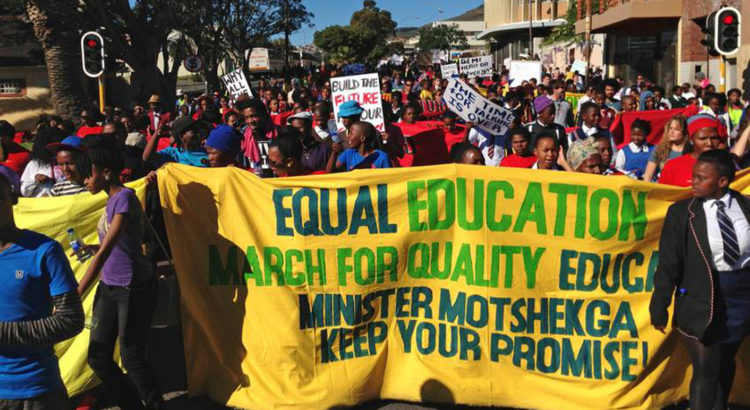
The civic movement Equal Education has begun its third National Congress on the back of recent damaging sexual harassment scandals and allegations of a cover-up. On its opening day, it hosted a panel discussion about creating a safe space for young girls and women.

Equal Education (EE), the civil society organisation which advocates for equal access to quality education and reforms of South Africa’s education system hosted a panel discussion on intersectionality at the opening day of its third National Congress to engage with pupils about creating a safe space for girls and women.

A group of delegates from five provinces (KwaZulu-Natal, Limpopo, Eastern Cape, Western Cape and Gauteng) comprised mostly of high school pupils, teachers, parents and education activists, gathered at the Linder Auditorium 0n Wits Education Campus in Parktown on Monday night.

Panellists Letlhogonolo Mokgoroane from Sonke Gender Justice, Simamkele Dlakavu, a #feesmustfall activist, Zandile Motsoeneng, a feminist activist, and Londokuhle Mnguni, a high school volunteer, had a challenging time on stage responding to questions posed by high school pupils.

Ever since the sexual harassment allegations levelled against Equal Education’s co-founder and treasurer Doron Isaacs and other members, the movement has undergone “a lot of self-introspection”, Deputy General secretary, Ntuthuzo Ndzomo told Daily Maverick at the conference.

Isaacs quit following the allegations — but said it was not an admission of guilt — and an inquiry is under way.

According to Ndzomo, since the beginning of the investigations into sexual harassment began, branches have been looking at preventative measures for the future.

Former General Secretary Tshepo Motsepe has also been accused of harassment and an internal investigation is under way. Motsepe resigned and, like Isaacs, he denied the allegations. Also under a cloud was national organiserLuyolo Mazwembe, who was found guilty of sexual harassment in an internal inquiry and was dismissed.

Subsequent accusations were also directed at prominent activist Zackie Achmat, with claims of a cover-up of numerous cases of harassment. Achmat has defended himself against the public attack, and an investigation is also under way.

At the discussion, Motsoeneng said that as a society we had lost the spirit of ubuntu, the idea that another person’s struggle is also your own. This concept was a foundational idea of intersectionality, he said.

“There is no such thing as a single issue struggle, because no one lives single issue lives,” said Motsoeneng, quoting feminist US author Audre Lorde.

A high school student, who identified herself as Dimakatso, asked the panel how society could be taught to create and promote intersectional spaces that are safe for women and people with disabilities.

For Dlakavu, intersectionality meant placing women in positions of power with programmes and policies that would make society prioritise women’s issues with regards to equal pay and ensuring the supply of sanitary pads.

Londokuhle Mnguni, an EE equaliser (post-school volunteer and activist) remarked on how pupils were not informed about what sexual harassment was. For her, the first thing that came to mind was rape, although that is not the full scope of harassment. As pupils, had they been given information and also educated about this — even cat-calling on the street is considered sexual harassment.

“The fact that we could not define sexual harassment meant that we would allow it to happen,” said Mnguni.

Another student commented on how cat-calling for him was something he learnt from his elders back at home when growing up. He was taught that it was a sign that you acknowledge and appreciate the beauty of a woman as she passes by on the street.

Mnguni then replied how uncomfortable women feel when passing a street corner as men stand and stare. Furthermore, she noted how if their advances are rejected they usually hurled insults at women.

“Your teaching (at home) is infringing on the rights of another. Put yourself in the shoes of a woman who gets whistled at, something that is often done to a dog,” said Mnguni.

The discussion became heated when Tato Masilela, a high school pupil remarked how intersectionality could be unfair, especially when an incompetent woman was put in a position of leadership. As an example, he cited Social Development Minister Bathabile Dlamini, who is accused of mismanaging the Sassa grant payment system.

Mokgoroane then replied that the standards placed on black women is not the same as those placed on black men. “Who determines who is competent,” said Mokgoroane, “There are a lot of mediocre black men allowed to do things without being called incompetent.”

Some pupils sat on the fence with regards to allegations of sexual harassment levelled at their mentors and teachers.

Nthabiseng Phuka, a facilitator and recent matriculant, recalled the impact that Tshepo Motsepe, who is currently under investigation for harassment, had had on her since she joined Equal Education.

“He taught me a lot about politics and never used his power on us when he was our facilitator,” said Phuka.

Zanele Magumasholo, a Grade 10 pupil who recently joined EE, said that public perception was such that the issue (of harassment) was with the movement as a whole. She notes that although it was senior leaders involved, these were isolated cases.

“We cannot as yet say that they are guilty, we are still waiting for feedback from the inquiry — it might not be true. There has been nothing concrete yet. If it is true then we will acknowledge it and deal with it,” said Magumasholo.

“People have been asking us questions about how to build from this aftermath,” said Ndzomo, “there are some who think we have something to hide and are distancing themselves because we took time to release a statement on Tshepo Motsepe, whereas we were still consulting all relevant parties.”

The priority, said Ndzomo, wasto make sure that the process was credible and to protect the complainants.

Equal Education has toldDaily Maverickthat they have acquired the assistance of a law firm to assist their inquiries. The law firm has been tasked with drafting terms of reference and approaching lawyers and judges to be potential panelists.

In a statement released last month, EE said that strict sexual harassment policies were in place and that EE had acted swiftly to address “every sexual harassment allegation” before it.

EE has now established three separate processes:

  • One independent panel will look into allegations of sexual harassment levelled against Motshepe. The panel may investigate any other matter that arises as part of the process or refer it to the broader assessment process mentioned below.
  • A second independent panel will investigate sexual harassment allegations against Isaacs.
  • EE’s National Council has also resolved to establish a broader assessment process, which will examine EEs record of dealing with mistreatment in the workplace, as well as EE’s policies, procedures and organisational culture in regard to harassment, and powerdynamics.

*Fuente: https://www.dailymaverick.co.za/article/2018-07-03-equal-education-looks-to-the-future-in-the-wake-of-sexual-harassment-scandal/#.WzwXIyPhC_E
Comparte este contenido:

How important is education to girls across the globe?

By: thesouthafrican.com/ Mduduzi Mbiza /04-07-2018

Throughout the world, there are many young women in unsafe relationships, some in unhappy marriages, who don’t see a way out.

Women feel trapped

For many of these young girls, leaving is not an option. Why? Because they don’t have the skills and the education to gain them access to work and to be independent.

UNESCO estimates that 130 million girls between the age of 6 and 17 are out of school, adding that 15 million girls of primary school age will never witness a classroom – half of them coming from sub-Saharan Africa.

If we want to understand what educated women can do, we need to go back in time, back to ancient times – a time where we see that men are not the only ones who mattered.

Strong female role models

Going back to the history around the ancient times, you would probably read about the likes of Cleopatra VII Philopator, the last ruler of the Ptolemaic Kingdom of Egypt. If you fast-forward in time, you would come across the Suffragettes – these were members of women’s organisations which advocated the right for women to vote in public elections.

Who could forget Ellen Johnson Sirleaf, who was Africa’s first elected female head of state? You would agree that setting aside her political challenges, she crushed the myth that women cannot be leaders and this inspired a lot of women.

The link between education and sexual abuse

We should be very concerned when a young girl in Sierra Leone is more likely to be sexually abused than to attend high school – some of these young girls may never discover their dreams.

In an article titled Girls’ Education, the World Bank stated:

“Child marriage is also a critical challenge. Child brides are much more likely to drop out of school and complete fewer years of education than their peers who marry later. This affects the education and health of their children, as well as their ability to earn a living.

According to a recent report, more than 41,000 girls under the age of 18 marry every day and putting an end to the practice would increase women’s expected educational attainment, and with it, their potential earnings. According to estimates, ending child marriage could generate more than $500 billion in benefits annually each year.”

When young girls are educated, they have control over their future; no older man will try to take advantage of them. Have you ever asked yourself why most child marriages or forced marriages happen in the rural areas? Because many of the families there are in poverty – educating young girls would save these families.

Ensuring that young girls are in school will be working towards gender equality and reducing inequality. Young girls in South Africa are victims of violence and teenage pregnancy, just to name a few – the very same things that keep them away from school, from education. It is thus imperative that when young girls can’t come to school due to these reasons, education can go to them.

Joseph Stalin once said:

“Education is a weapon, whose effect depends on who holds it in his hands and whom it is aimed.”

I certainly believe that South Africa and the rest of the world can use this weapon to save young girls. Education empowers females to take control of their lives and their families, especially in Africa where young girls are already disadvantaged from birth and are faced with daunting situations that are beyond their ability.

*Fuente: https://www.thesouthafrican.com/how-important-is-education-to-girls-across-the-globe/

Comparte este contenido:

How outlawing female genital mutilation in Kenya has driven it underground and led to its medicalization.

Por: brookings.edu/Damaris Seleina Parsitau/04-07-2018

The fight against female genital mutilation/cutting (FGM/C) has been fraught with both success and failure, resistance and acceptance. Since Kenya banned the practice in 2011, FGM/C is now increasinglyconducted underground, secretly in homes or in clinics by healthcare providers and workers.

The medicalization of FGM/C—defined by the World Health Organization (WHO) as any “situation in which FGM/C is practiced by any healthcare provider whether in public or private, clinic or home or elsewhere”—has received recent media and public attention. Earlier this year, a doctor filed a court case asking the Kenyan government to declare the Prohibition of Female Genital Mutilation Act 2011, which outlawed and criminalized FGM/C, unconstitutional. Further, she wanted the Anti-FGM Board, a body created to help eradicate FGM/C and early marriage, also declared unconstitutional.


This trend is evident in both rural and urban Kenya where
15 percent of women and girls have been cut by a medical practitioner. The practice is especially prevalent in Kisii counties in Western Kenya where FGM/C is nearly universal. Drawing on interviews with girls and women who have been cut by health providers, my research shows that parents are increasingly having their girls, some as early as 5 years old, cut by nurses or other healthcare workers either in homes or in health clinics.The doctor, Dr. Tatu Kamau, argues that the dignity of traditional practitioners of female circumcision is disregarded by the law which has failed to stop FGM/C in the country. She claims that FGM/C is still largely practiced in Kenya and is increasing due to medicalization. In Kenya, there is evidence that scrupulous medical personnel collude with parents to circumvent the law by cutting girls in their homes or in their private clinics away from public view.

Moraa (not her real name), an 18-year-old college girl from Nakuru in the Rift Valley, explained to me how her mother, a primary school teacher, brought a nurse to their home during school holidays to cut her at dawn when she was barely 8 years old. Moraa feels resentful and bitter towards her parents, especially her mother for colluding with a nurse to have her cut without her consent, and has considered suing her parents for violating her rights. Moraa’s story is just one of many cases of medicalized cutting.

THE COMMERCIALIZATION AND MEDICALIZATION OF FGM/C

Throughout my larger research on FGM/C and early marriage, I came across many stories of medicalization of FGM/C both in rural and urban areas in Kenya. A nurse I spoke with told me that she carries out the cut for money. “Look,” she said, “when parents call me to perform the cut on their girls, both in urban and rural areas or even in my clinic, I respond because they pay me handsomely. Some even pay for my bus fare and accommodation; I travel widely to cut girls and women. I see no reason why I shouldn’t do this. I have not forced anyone to undergo the cut. I simply provide my services to those who need them.”

Medical professionals who perform cutting services claim that they are fulfilling the demands of communities and that they help enhance women’s values and marriageability in communities that do not want to abandon the practice. They believe that by doing so they respect patients’ cultural rights since some are of a mature legal age.

However, the real reason driving this is its economic value. Medical professionals are cutting girls and women for payment, replacing the traditional cutters in rural villages. Additionally, the commercialization of FGM/C helps parents and guardians to avert the law and authorities. The medicalization of FGM/C not only provides legitimacy to the cut but it continues to put millions of girls at risk from the consequences of the cut. It also continues to perpetuate and give tacit approval of the harmful practice by discouraging changed behavior and attitudes, thereby leading to the normalization of the cut in medical spaces.

While the medicalization of FGM/C is not a new phenomenon, its growing popularity is worrying and points to emerging shifts and tensions in the war to end it—a cat and mouse game between resistant communities and authorities. And while the medicalization of FGM/C went under the radar as authorities and stakeholders focused on traditional cutters in rural villages as well as alternative rites of passage, it is now emerging as a new frontier in the war against the harmful practice. Global, regional, and local focus should now shift away from traditional cutters to medical practitioners.

*Fuente: https://www.brookings.edu/blog/education-plus-development/2018/06/19/how-outlawing-female-genital-mutilation-in-kenya-has-driven-it-underground-and-led-to-its-medicalization/

Comparte este contenido:

Too Little Access, Not Enough Learning: Africa’s Twin Deficit in Education

Por Kevin Watkins

Africa’s education crisis seldom makes media headlines or summit agendas and analysis by the Brookings Center for Universal Education (CUE) explains why this needs to change. With one-in-three children still out of school, progress towards universal primary education has stalled. Meanwhile, learning levels among children who are in school are abysmal. Using a newly developed Learning Barometer, CUE estimates that 61 million African children will reach adolescence lacking even the most basic literacy and numeracy skills. Failure to tackle the learning deficit will deprive a whole generation of opportunities to develop their potential and escape poverty. And it will undermine prospect for dynamic growth with shared prosperity.

If you want a glimpse into Africa’s education crisis there is no better vantage point than the town of Bodinga, located in the impoverished Savannah region of Sokoto state in northwestern Nigeria. Drop into one of the local primary schools and you’ll typically find more than 50 students crammed into a class. Just a few will have textbooks. If the teacher is there, and they are often absent, the children will be on the receiving end of a monotone recitation geared towards rote learning.

Not that there is much learning going on. One recent survey found that 80 percent of Sokoto’s Grade 3 pupils cannot read a single word. They have gone through three years of zero value-added schooling. Mind you, the kids in the classrooms are the lucky ones, especially if they are girls. Over half of the state’s primary school-age children are out of school – and Sokoto has some of the world’s biggest gender gaps in education. Just a handful of the kids have any chance of making it through to secondary education.

The ultimate aim of any education system is to equip children with the numeracy, literacy and wider skills that they need to realize their potential – and that their countries need to generate jobs, innovation and economic growth.

Bodinga’s schools are a microcosm of a wider crisis in Africa’s education. After taking some rapid strides towards universal primary education after 2000, progress has stalled. Out-of-school numbers are on the rise – and the gulf in education opportunity separating Africa from the rest of the world is widening. That gulf is not just about enrollment and years in school, it is also about learning. The ultimate aim of any education system is to equip children with the numeracy, literacy and wider skills that they need to realize their potential – and that their countries need to generate jobs, innovation and economic growth. From South Korea to Singapore and China, economic success has been built on the foundations of learning achievement. And far too many of Africa’s children are not learning, even if they are in school.

The Center for Universal Education at Brookings/This is Africa Learning Barometer survey takes a hard look at the available evidence. In what is the first region-wide assessment of the state of learning, the survey estimates that 61 million children of primary school age – one-in-every-two across the region – will reach their adolescent years unable to read, write or perform basic numeracy tasks. Perhaps the most shocking finding, however, is that over half of these children will have spent at least four years in the education system.

Africa’s education crisis does not make media headlines. Children don’t go hungry for want of textbooks, good teachers and a chance to learn. But this is a crisis that carries high costs. It is consigning a whole generation of children and youth to a future of poverty, insecurity and unemployment. It is starving firms of the skills that are the life-blood of enterprise and innovation. And it is undermining prospects for sustained economic growth in the world’s poorest region.

Tackling the crisis in education will require national and international action on two fronts: Governments need to get children into school – and they need to ensure that children get something meaningful from their time in the classroom. Put differently, they need to close the twin deficit in access and learning.

Why has progress on enrollment ground to a halt? Partly because governments are failing to extend opportunities to the region’s most marginalized children. Africa has some of the world’s starkest inequalities in access to education. Children from the richest 20 percent of households in Ghana average six more years in school than those from the poorest households. Being poor, rural and female carries a triple handicap. In northern Nigeria, Hausa girls in this category average less than one year in school, while wealthy urban males get nine years.

Conflict is another barrier to progress. Many of Africa’s out-of-school children are either living in conflict zones such as Somalia and eastern Democratic Republic of Congo, in camps for displaced people in their home country, or – like the tens of thousands of Somali children in Kenya – as refugees. Six years after the country’s peace agreement, South Sudan still has over 1 million children out of school.

The Learning Deficit

Just how much are Africa’s children learning in school? That is a surprisingly difficult question to answer. Few countries in the region participate in international learning assessments – and most governments collect learning data in a fairly haphazard fashion.

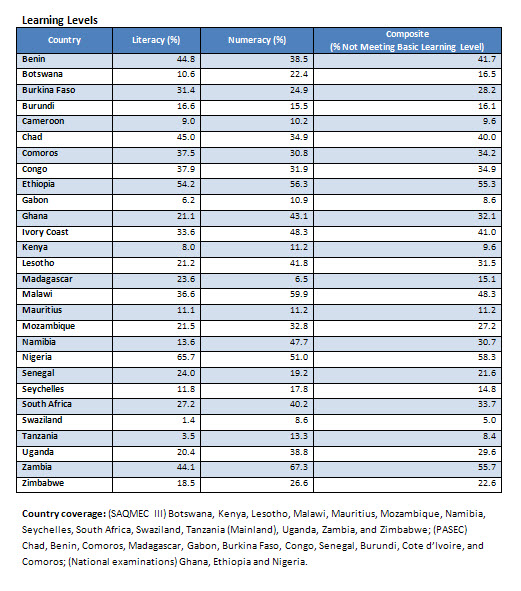
The Learning Barometer provides a window into Africa’s schools. Covering 28 countries, and 78 percent of the region’s primary school-age population, the survey draws on a range of regional and national assessments to identify the minimum learning thresholds for Grades 4 and 5 of primary school. Children below these thresholds are achieving scores that are so low as to call into question the value-added of their schooling. Most will be unable to read or write with any fluency, or to successfully complete basic numeracy tasks. Of course, success in school is about more than test scores.

It is also about building foundational skills in teamwork, supporting emotional development, and stimulating problem-solving skills. But learning achievement is a critical measure of education quality – and the Learning Barometer registers dangerously low levels of achievement.

The headline numbers tell their own story. Over one-third of pupils covered in the survey – 23 million children – fall below the minimum learning threshold. Because this figure is an average, it obscures the depth of the learning deficit in many countries. More than half of students in Grades 4 and 5 in countries such as Ethiopia, Nigeria and Zambia are below the minimum learning bar. In total, there are seven countries in which 40 percent or more of children are in this position. As a middle-income country, South Africa stands out. One-third of children fall below the learning threshold, reflecting the large number of failing schools in areas servicing predominantly low-income black and mixed race children.

Disparities in learning achievement mirror wider inequalities in education. In Mozambique and South Africa, children from the poorest households are seven times more likely than those from the richest households to rank in the lowest 10 percent of students.

Unfortunately, the bad news does not end here. Bear in mind that the Learning Barometer registers the score of children who are in school. Learning achievement levels among children who are out of school are almost certainly far lower – and an estimated 10 million children in Africa drop out each year. Consider the case of Malawi. Almost half of the children sitting in Grade 5 classrooms are unable to perform basic literacy and numeracy tasks. More alarming still is that half of the children who entered primary school have dropped out by this stage.

Adjusting the Learning Barometer to measure the learning achievement levels of children who are out of school, likely to drop out, and in school but not learning produces some distressing results. There are 127 million children of primary school age in Africa. In the absence of an urgent drive to raise standards, half of these children – 61 million in total – will reach adolescence without the basic learning skills that they, and their countries, desperately need to escape the gravitational pull of mass poverty.

learning levels

What is Going Wrong?

Rising awareness of the scale of Africa’s learning crisis has turned the spotlight on schools, classrooms and teachers – and for good reason. Education systems across the region urgently need reform. But the problems begin long before children enter school in a lethal interaction between poverty, inequality and education disadvantage.

The early childhood years set many of Africa’s children on a course for failure in education. There is compelling international evidence that preschool malnutrition has profoundly damaging – and largely irreversible – consequences for the language, memory and motor skills that make effective learning possible and last throughout youth and adulthood. This year, 40 percent of Africa’s children will reach primary school-age having had their education opportunities blighted by hunger. Some two-thirds of the region’s preschool children suffer from anemia – another source of reduced learning achievement.

Parental illiteracy is another preschool barrier to learning. The vast majority of the 48 million children entering Africa’s schools over the past decade come from illiterate home environments. Lacking the early reading, language and numeracy skills that can provide a platform for learning, they struggle to make the transition to school – and their parents struggle to provide support with homework.

Gender roles can mean that young girls are removed from school to collect water or care for their siblings. Meanwhile, countries such as Niger, Chad and Mali have some of the world’s highest levels of child marriage – many girls become brides before they have finished primary school.

School systems in Africa are inevitably affected by the social and economic environments in which they operate. Household poverty forces many children out of school and into employment. Gender roles can mean that young girls are removed from school to collect water or care for their siblings. Meanwhile, countries such as Niger, Chad and Mali have some of the world’s highest levels of child marriage – many girls become brides before they have finished primary school.

None of this is to discount the weaknesses of the school system. Teaching is at the heart of the learning crisis. If you want to know why so many kids learn so little, reflect for a moment on what their teachers know. Studies in countries such as Lesotho, Mozambique and Uganda have found that fewer than half of teachers could score in the top band on a test designed for 12-year-olds. Meanwhile, many countries have epidemic levels of teacher absenteeism.

It is all too easy to blame Africa’s teachers for the crisis in education – but this misses the point. The region’s teachers are products of the systems in which they operate. Many have not received a decent quality education. They frequently lack detailed information about what their students are expected to learn and how their pupils are performing. Trained to deliver outmoded rote learning classes, they seldom receive the support and advice they need from more experienced teachers and education administrators on how to improve teaching. And they are often working for poverty-level wages in extremely harsh conditions.

Education policies compound the problem. As children from nonliterate homes enter school systems they urgently need help to master the basic literacy and numeracy skills that they will need to progress through the system. Unfortunately, classroom overcrowding is at its worst in the early grades – and the most qualified teachers are typically deployed at higher grades.

Public spending often reinforces disadvantage, with the most prosperous regions and best performing schools cornering the lion’s share of the budget. In Kenya, the arid and semi-arid northern counties are home to 9 percent of the country’s children but 21 percent of out-of-school children. Yet these counties receive half as much public spending on a per child basis as wealthier commercial farming counties.

Looking Ahead – Daunting Challenges, New Opportunities

The combined effects of restricted access to education and low learning achievement should be sounding alarm bells across Africa. Economic growth over the past decade has been built in large measure on a boom in exports of unprocessed commodities. Sustaining that growth will require entry into higher value-added areas of production and international trade – and quality education is the entry ticket. Stated bluntly, Africa cannot build economic success on failing education systems. And it will not generate the 45 million additional jobs needed for young people joining the labor force over the next decade if those systems are not fixed.

Daunting as the scale of the crisis in education may be, many of the solutions are within reach. Africa’s governments have to take the lead. Far more has to be done to reach the region’s most marginalized children. Providing parents with cash transfers and financial incentives to keep children – especially girls – in school can help to mitigate the effects of poverty. So can early childhood programs and targeted support to marginalized regions.

Africa also needs an education paradigm shift. Education planners have to look beyond counting the number of children sitting in classrooms and start to focus on learning. Teacher recruitment, training and support systems need to be overhauled to deliver effective classroom instruction. The allocation of financial resources and teachers to schools should be geared towards the improvement of standards and equalization of learning outcomes. And no country in Africa, however poor, can neglect the critical task of building effective national learning assessment systems.

Aid donors and the wider international community also have a role to play. Having promised much, they have for the most part delivered little – especially to countries affected by conflict. Development assistance levels for education in Africa have stagnated in recent years. The $1.8 billion provided in 2010 was less than one-quarter of what is required to close the region’s aid financing gap.

Unlike the health sector, where vaccinations and the global funds for AIDS have mobilized finance and unleashed a wave of innovative public-private partnerships, the education sector continues to attract limited interest. This could change with a decision by the U.N. secretary-general to launch a five-year initiative, Education First, aimed at forging a broad coalition for change across donors, governments, the business community and civil society.

There is much to celebrate in Africa’s social and economic progress over the past decade. But if the region is to build on the foundations that have been put in place, it has to stop the hemorrhage of skills, talent and human potential caused by the crisis in education. Africa’s children have a right to an education that offers them a better future – and they have a right to expect their leaders and the international community to get behind them.

Comparte este contenido:
Page 192 of 621
1 190 191 192 193 194 621