Page 194 of 622
1 192 193 194 195 196 622

Too Little Access, Not Enough Learning: Africa’s Twin Deficit in Education

Por Kevin Watkins

Africa’s education crisis seldom makes media headlines or summit agendas and analysis by the Brookings Center for Universal Education (CUE) explains why this needs to change. With one-in-three children still out of school, progress towards universal primary education has stalled. Meanwhile, learning levels among children who are in school are abysmal. Using a newly developed Learning Barometer, CUE estimates that 61 million African children will reach adolescence lacking even the most basic literacy and numeracy skills. Failure to tackle the learning deficit will deprive a whole generation of opportunities to develop their potential and escape poverty. And it will undermine prospect for dynamic growth with shared prosperity.

If you want a glimpse into Africa’s education crisis there is no better vantage point than the town of Bodinga, located in the impoverished Savannah region of Sokoto state in northwestern Nigeria. Drop into one of the local primary schools and you’ll typically find more than 50 students crammed into a class. Just a few will have textbooks. If the teacher is there, and they are often absent, the children will be on the receiving end of a monotone recitation geared towards rote learning.

Not that there is much learning going on. One recent survey found that 80 percent of Sokoto’s Grade 3 pupils cannot read a single word. They have gone through three years of zero value-added schooling. Mind you, the kids in the classrooms are the lucky ones, especially if they are girls. Over half of the state’s primary school-age children are out of school – and Sokoto has some of the world’s biggest gender gaps in education. Just a handful of the kids have any chance of making it through to secondary education.

The ultimate aim of any education system is to equip children with the numeracy, literacy and wider skills that they need to realize their potential – and that their countries need to generate jobs, innovation and economic growth.

Bodinga’s schools are a microcosm of a wider crisis in Africa’s education. After taking some rapid strides towards universal primary education after 2000, progress has stalled. Out-of-school numbers are on the rise – and the gulf in education opportunity separating Africa from the rest of the world is widening. That gulf is not just about enrollment and years in school, it is also about learning. The ultimate aim of any education system is to equip children with the numeracy, literacy and wider skills that they need to realize their potential – and that their countries need to generate jobs, innovation and economic growth. From South Korea to Singapore and China, economic success has been built on the foundations of learning achievement. And far too many of Africa’s children are not learning, even if they are in school.

The Center for Universal Education at Brookings/This is Africa Learning Barometer survey takes a hard look at the available evidence. In what is the first region-wide assessment of the state of learning, the survey estimates that 61 million children of primary school age – one-in-every-two across the region – will reach their adolescent years unable to read, write or perform basic numeracy tasks. Perhaps the most shocking finding, however, is that over half of these children will have spent at least four years in the education system.

Africa’s education crisis does not make media headlines. Children don’t go hungry for want of textbooks, good teachers and a chance to learn. But this is a crisis that carries high costs. It is consigning a whole generation of children and youth to a future of poverty, insecurity and unemployment. It is starving firms of the skills that are the life-blood of enterprise and innovation. And it is undermining prospects for sustained economic growth in the world’s poorest region.

Tackling the crisis in education will require national and international action on two fronts: Governments need to get children into school – and they need to ensure that children get something meaningful from their time in the classroom. Put differently, they need to close the twin deficit in access and learning.

Why has progress on enrollment ground to a halt? Partly because governments are failing to extend opportunities to the region’s most marginalized children. Africa has some of the world’s starkest inequalities in access to education. Children from the richest 20 percent of households in Ghana average six more years in school than those from the poorest households. Being poor, rural and female carries a triple handicap. In northern Nigeria, Hausa girls in this category average less than one year in school, while wealthy urban males get nine years.

Conflict is another barrier to progress. Many of Africa’s out-of-school children are either living in conflict zones such as Somalia and eastern Democratic Republic of Congo, in camps for displaced people in their home country, or – like the tens of thousands of Somali children in Kenya – as refugees. Six years after the country’s peace agreement, South Sudan still has over 1 million children out of school.

The Learning Deficit

Just how much are Africa’s children learning in school? That is a surprisingly difficult question to answer. Few countries in the region participate in international learning assessments – and most governments collect learning data in a fairly haphazard fashion.

The Learning Barometer provides a window into Africa’s schools. Covering 28 countries, and 78 percent of the region’s primary school-age population, the survey draws on a range of regional and national assessments to identify the minimum learning thresholds for Grades 4 and 5 of primary school. Children below these thresholds are achieving scores that are so low as to call into question the value-added of their schooling. Most will be unable to read or write with any fluency, or to successfully complete basic numeracy tasks. Of course, success in school is about more than test scores.

It is also about building foundational skills in teamwork, supporting emotional development, and stimulating problem-solving skills. But learning achievement is a critical measure of education quality – and the Learning Barometer registers dangerously low levels of achievement.

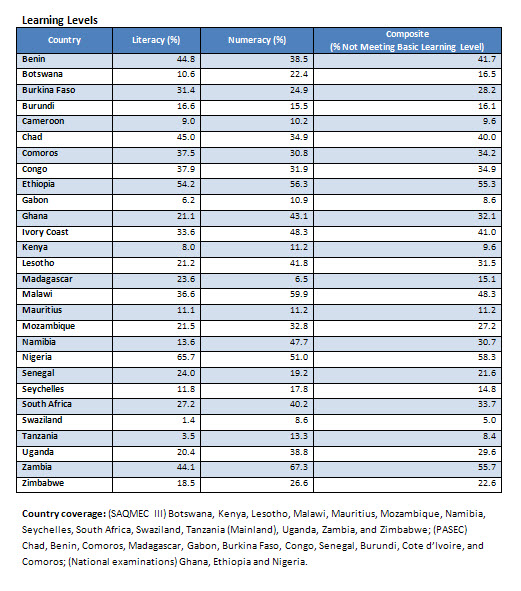
The headline numbers tell their own story. Over one-third of pupils covered in the survey – 23 million children – fall below the minimum learning threshold. Because this figure is an average, it obscures the depth of the learning deficit in many countries. More than half of students in Grades 4 and 5 in countries such as Ethiopia, Nigeria and Zambia are below the minimum learning bar. In total, there are seven countries in which 40 percent or more of children are in this position. As a middle-income country, South Africa stands out. One-third of children fall below the learning threshold, reflecting the large number of failing schools in areas servicing predominantly low-income black and mixed race children.

Disparities in learning achievement mirror wider inequalities in education. In Mozambique and South Africa, children from the poorest households are seven times more likely than those from the richest households to rank in the lowest 10 percent of students.

Unfortunately, the bad news does not end here. Bear in mind that the Learning Barometer registers the score of children who are in school. Learning achievement levels among children who are out of school are almost certainly far lower – and an estimated 10 million children in Africa drop out each year. Consider the case of Malawi. Almost half of the children sitting in Grade 5 classrooms are unable to perform basic literacy and numeracy tasks. More alarming still is that half of the children who entered primary school have dropped out by this stage.

Adjusting the Learning Barometer to measure the learning achievement levels of children who are out of school, likely to drop out, and in school but not learning produces some distressing results. There are 127 million children of primary school age in Africa. In the absence of an urgent drive to raise standards, half of these children – 61 million in total – will reach adolescence without the basic learning skills that they, and their countries, desperately need to escape the gravitational pull of mass poverty.

learning levels

What is Going Wrong?

Rising awareness of the scale of Africa’s learning crisis has turned the spotlight on schools, classrooms and teachers – and for good reason. Education systems across the region urgently need reform. But the problems begin long before children enter school in a lethal interaction between poverty, inequality and education disadvantage.

The early childhood years set many of Africa’s children on a course for failure in education. There is compelling international evidence that preschool malnutrition has profoundly damaging – and largely irreversible – consequences for the language, memory and motor skills that make effective learning possible and last throughout youth and adulthood. This year, 40 percent of Africa’s children will reach primary school-age having had their education opportunities blighted by hunger. Some two-thirds of the region’s preschool children suffer from anemia – another source of reduced learning achievement.

Parental illiteracy is another preschool barrier to learning. The vast majority of the 48 million children entering Africa’s schools over the past decade come from illiterate home environments. Lacking the early reading, language and numeracy skills that can provide a platform for learning, they struggle to make the transition to school – and their parents struggle to provide support with homework.

Gender roles can mean that young girls are removed from school to collect water or care for their siblings. Meanwhile, countries such as Niger, Chad and Mali have some of the world’s highest levels of child marriage – many girls become brides before they have finished primary school.

School systems in Africa are inevitably affected by the social and economic environments in which they operate. Household poverty forces many children out of school and into employment. Gender roles can mean that young girls are removed from school to collect water or care for their siblings. Meanwhile, countries such as Niger, Chad and Mali have some of the world’s highest levels of child marriage – many girls become brides before they have finished primary school.

None of this is to discount the weaknesses of the school system. Teaching is at the heart of the learning crisis. If you want to know why so many kids learn so little, reflect for a moment on what their teachers know. Studies in countries such as Lesotho, Mozambique and Uganda have found that fewer than half of teachers could score in the top band on a test designed for 12-year-olds. Meanwhile, many countries have epidemic levels of teacher absenteeism.

It is all too easy to blame Africa’s teachers for the crisis in education – but this misses the point. The region’s teachers are products of the systems in which they operate. Many have not received a decent quality education. They frequently lack detailed information about what their students are expected to learn and how their pupils are performing. Trained to deliver outmoded rote learning classes, they seldom receive the support and advice they need from more experienced teachers and education administrators on how to improve teaching. And they are often working for poverty-level wages in extremely harsh conditions.

Education policies compound the problem. As children from nonliterate homes enter school systems they urgently need help to master the basic literacy and numeracy skills that they will need to progress through the system. Unfortunately, classroom overcrowding is at its worst in the early grades – and the most qualified teachers are typically deployed at higher grades.

Public spending often reinforces disadvantage, with the most prosperous regions and best performing schools cornering the lion’s share of the budget. In Kenya, the arid and semi-arid northern counties are home to 9 percent of the country’s children but 21 percent of out-of-school children. Yet these counties receive half as much public spending on a per child basis as wealthier commercial farming counties.

Looking Ahead – Daunting Challenges, New Opportunities

The combined effects of restricted access to education and low learning achievement should be sounding alarm bells across Africa. Economic growth over the past decade has been built in large measure on a boom in exports of unprocessed commodities. Sustaining that growth will require entry into higher value-added areas of production and international trade – and quality education is the entry ticket. Stated bluntly, Africa cannot build economic success on failing education systems. And it will not generate the 45 million additional jobs needed for young people joining the labor force over the next decade if those systems are not fixed.

Daunting as the scale of the crisis in education may be, many of the solutions are within reach. Africa’s governments have to take the lead. Far more has to be done to reach the region’s most marginalized children. Providing parents with cash transfers and financial incentives to keep children – especially girls – in school can help to mitigate the effects of poverty. So can early childhood programs and targeted support to marginalized regions.

Africa also needs an education paradigm shift. Education planners have to look beyond counting the number of children sitting in classrooms and start to focus on learning. Teacher recruitment, training and support systems need to be overhauled to deliver effective classroom instruction. The allocation of financial resources and teachers to schools should be geared towards the improvement of standards and equalization of learning outcomes. And no country in Africa, however poor, can neglect the critical task of building effective national learning assessment systems.

Aid donors and the wider international community also have a role to play. Having promised much, they have for the most part delivered little – especially to countries affected by conflict. Development assistance levels for education in Africa have stagnated in recent years. The $1.8 billion provided in 2010 was less than one-quarter of what is required to close the region’s aid financing gap.

Unlike the health sector, where vaccinations and the global funds for AIDS have mobilized finance and unleashed a wave of innovative public-private partnerships, the education sector continues to attract limited interest. This could change with a decision by the U.N. secretary-general to launch a five-year initiative, Education First, aimed at forging a broad coalition for change across donors, governments, the business community and civil society.

There is much to celebrate in Africa’s social and economic progress over the past decade. But if the region is to build on the foundations that have been put in place, it has to stop the hemorrhage of skills, talent and human potential caused by the crisis in education. Africa’s children have a right to an education that offers them a better future – and they have a right to expect their leaders and the international community to get behind them.

Comparte este contenido:

Expired education and Africa’s learning crisis

By The Guardian

The recent dismal report of a new World Bank study, which stated that Africa faced learning crises that may hinder its economic growth and the well-being of the citizens, questions the quality of basic education African governments have been providing their people. It is also an eye-opener to the abysmal degeneration of succession management for the society. Although keen observers of events on the continent have been worried about the celebration of mediocrity pervading key areas of society, this new study has presented bleak hope for Africa’s future, if drastic measures are not taken to address basic education. This is disheartening and highly lamentable.

The World Development Report (WDR) 2018, titled “Learning to Realise Education’s Promise”, was co-launched in Abuja the other day by the World Bank Group, the Federal Ministry of Finance and the Federal Ministry of Education. Whilst the report raised concerns about poor future prospect of millions of young students in low and middle-income countries owing to the failure of their primary and secondary schools to educate them to succeed in life, it also called for greater measurement, action on evidence, and coordination of all education actors.

It claimed that despite “considerable progress in boosting primary and lower secondary school enrollment, … “some 50 million children remain out of school, and most of those who attend school are not acquiring the basic skills necessary for success later in life.”

To substantiate its claims, the report noted that among second-grade students assessed on numeracy tests in several sub-Saharan African countries, three-quarters could not count beyond 80 and 40 per cent could not solve a one-digit addition problem. It went further to add: “In reading, between 50 and 80 per cent of children in second grade could not answer a single question based on a short passage they had read, and a large proportion could not read even a single word.”

Concerning Nigeria, the study found out that, when fourth grade students were asked to complete a simple two-digit subtraction problem, more than three-quarters could not solve it. It further stated that “Among young adults in Nigeria, only about 20 per cent of those who complete primary education can read. These statistics do not account for 260 million children who for reasons of conflict, discrimination, disability, and other obstacles, are not enrolled in primary or secondary school.”

Deon Filmer and Halsey Rogers, World Bank Lead Economists, who co-directed the report team, summarized the report when they stated “too many young people are not getting the education they need.” This remark corroborated the observation of Prof. Gamaliel O. Prince, the Vice Chancellor of University of America, California, who remarked at the matriculation of its Nigerian affiliate students, that Nigerians are receiving expired education. The question now is, what kind of education do African young people need?

As if a section of Nigerian youths foresaw the World Bank report, they had, two weeks, earlier flayed the poor education of Nigerian leaders, and had set a list of criteria for the next president. According to them, “many of our past and present leaders are an embarrassment to the country due to their very low educational background and lack of exposure.” These remarks are very instructive because, if today’s leaders, reputed to have had quality basic education, are leading the country astray, the quality of future leaders leaves little to imagine about when the discouraging report of the World Bank is considered.

The vital point that should not be missed in the interpretation of the report is the emphasis on quality basic education. This aspect speaks to Nigeria, where the idea of the educated is construed on the basis of holding a university degree. What kind of education would one claim to have acquired if he earned a university degree and cannot solve the problems of basic numeracy and comprehension? What kind of outcomes would be accomplished by the kind of learning provided by today’s educational institutions? This is not to assert that Nigeria does not have well-trained and adequate manpower. This is far from the truth. The highly quality manpower and human resources which Nigeria has in abundance could be seen in the value Nigerian professionals have added to the growth and progress of other countries.

As this newspaper has always admonished, addressing the problem of education in this country demands emergency response. What this country needs is a leadership that is vision-casting enough to align its human resources for growth in production. All it takes is a vision, the political will to realize that vision, and the sincerity of purpose in mobilizing the people around that vision. If learning is to be impactful and effective as to lead to personal development and pragmatic relevance to society, then Nigeria and all of Africa must first of all, understand the problem they face. Owing to the experiences of colonization, neo-colonization and even globalization, Nigeria and other African countries find themselves in the shackles of economic slavery, and have tied their educational curricula to exploitable learning models that service foreign powers.

Because the structure of income-generation and production has a part to play in learning outcomes in African countries, education ministries and stakeholders of such countries must see learning as a tool for solving problems and generating production in the society. Education should have a promise for children and youths in Africa; incentives should be made available for structured learning.

One of the maladies of African leaders is cronyism and nepotism. This extension of selfish interests to the benefits of family, friends, clans, ethnic groups and political party loyalists has encouraged the dominance of mediocrity in leadership in a manner that suffocates excellence. African leaders should build a culture of succession management founded on excellence so that the right persons in the right places would think out the right policies to move their countries forward. They should take a cue from forward-looking countries by identifying the best in all fields, and positioning them as managers for national reconstruction.

Furthermore, African leaders should go back to the drawing-board and identify the problems facing their people, and on the basis of this, begin to design curricula that should enable African children think inwards. Learning models should consider the role of history in understanding the African predicament and how it can empower them to think about Africa’s place in a competitive world. These models should also stress the relevance of language in learning.

To effectively get this done in Nigeria, especially, and save the nation from its many crises, it is indeed apparent that restructuring into a properly run federalism would have to drive structured learning.

Source of the article: https://guardian.ng/opinion/expired-education-and-africas-learning-crisis/

Comparte este contenido:

Angola: Educación y aprendizaje considerados factores de desarrollo

Angola / 1 de julio de 2018 / Autor: Redacción / Fuente: ANGOP

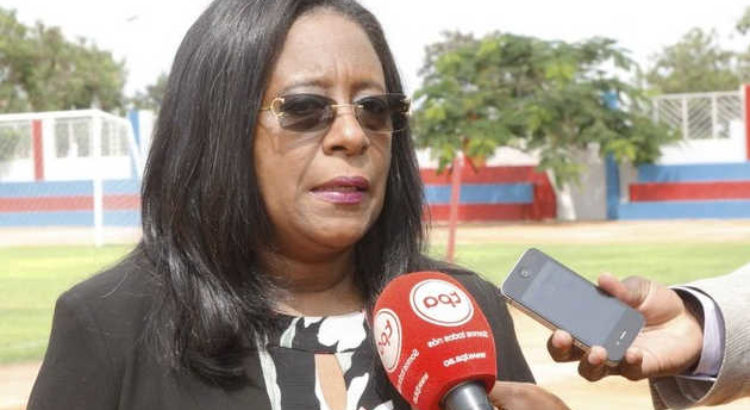
La ministra de Enseñanza Superior, Ciencia, Tecnología e Innovación, Maria do Rosário Sambo, consideró hoy, martes, en Luanda, la educación y el aprendizaje como factores fundamentales para impulsar el proceso de desarrollo del país.

La gobernante hizo ese pronunciamiento cuando discursaba en la apertura de un encuentro de auscultación de estudiantes, promovido por el Ministerio Superior, Ciencia, Tecnología e Innovación (MESCTI), realizado bajo el lema “Reforzar la formación científica, patriótica y ética y cultivar la ciudadanía estudiantil”.

Dijo que el encuentro con estudiantes de la enseñanza superior es la materialización de una de las acciones prioritarias integrada en uno de los programas de acción del Ejecutivo relativo a la promoción de la ciudadanía y a la participación de los ciudadanos en la gobernación.

La reunión, añadió, tiene también el propósito de estimular la ciudadanía activa, con vista al refuerzo de las bases de la democracia y de la sociedad civil.

“Los estudiantes son llamados a presentar sus puntos de vista que serán abordados de forma abierta, para crearse nuevas ideas, suscitando la necesidad de aprofundarlos en el espíritu del aprendizaje contínuo durante la vida”, destacó.

Recordó que el Programa de Desarrollo Nacional 2018-2022 tiene también el objetivo de reforzar la ciudadanía y construir una sociedad más inclusiva.

Fuente de la Noticia:

http://www.angop.ao/angola/es_es/noticias/educacao/2018/5/26/Educacion-aprendizaje-considerados-factores-desarrollo,4d6c4ba1-fcef-4440-88e8-21048febe905.html

ove/mahv

Comparte este contenido:

Un kilo por sexo: la ONU ocultó durante 16 años abusos infantiles a gran escala de 40 ONG en África

Autor: Redacción Religión en Libertad

Un informe filtrado por The Times ha revelado que la ONU ha tenido conocimiento durante 16 años de que trabajadores de más de 40 ONG abusaron sexualmente de niños necesitados entre 2001 y 2002 intercambiando comida por sexo.

El documento, de 84 páginas, fue realizado en 2001 por varios investigadores para el Alto Comisionado de las Naciones Unidas para los refugiados (ACNUR) que trabajaban en Guinea, Sierra Leona y Liberia.

El conocimiento de estos hechos viene a sumarse a las denuncias formuladas el pasado mes de febrero por Andrew McLeod, ex alto cargo de la ONU que relató la extensión e impunidad de numerosos casos de pederastia de los que son responsables miembros de ONG mundialistas durante su labor en países receptores de ayuda.

«Un kilo por sexo»
Según informa ahora The Times, que ha tenido acceso directo al mencionado documento, los trabajadores “utilizaban la asistencia humanitaria y los servicios destinados a beneficiar a los refugiados como herramienta para explotarlos sexualmente”. Intercambiaban alimentos básicos, como comida, aceite o incluso acceso a educación y viviendas, por sexo.

Varias mujeres en un campo de refugiados de Guinea dijeron a los investigadores que “en esta comunidad nadie puede obtener soja de maíz sin tener sexo antes, un kilo por sexo”, ha asegurado el periódico inglés The Sun

“Los trabajadores de las ONGs eran listos, utilizaban las raciones como cebo para obligarte a tener sexo con ellos”, ha añadido una chica de Liberia. Algunas familias ofrecían a sus hijas pequeñas para “negociar” por la comida.


Freetown, en Sierra Leona, es uno de los lugares donde han ocurrido estas actividades

Escándalo a gran escala
De las organizaciones implicadas, 15 son internacionales, incluyendo ACNUR, The World Food Programme (WFP), Save the Children y Merlin. En el informe aparecen también los nombres de Médicos Sin Fronteras y la Federación Internacional de Sociedades de la Cruz Roja.

Los investigadores han indicado que algunas de las acusaciones que aparecen en el informe requieren una investigación más profunda, pero indican que “el número de testimonios recogidos es un claro indicador del problema a gran escala al que nos enfrentamos”.

The Independent afirma que la ONU ocultó los nombres de estas organizaciones para proteger a los niños testigos (y víctimas) de los abusos.

Fuente: https://www.religionenlibertad.com/polemicas/64915/kilo-por-sexo-onu-oculto-durante-anos-abusos.html

Comparte este contenido:

La infancia en África entre el conflicto y la pobreza

Autor: Telesur

Los niños en África viven una infancia rodeada de adversidades que van más allá de simples trivialidades, éstos pequeños deben asumir difíciles retos desde muy temprana edad.
1. Difícil acceso a la educación y aprendizaje

Muchos de los niños en África desconocen un aula de clases. Según cifras de la Organización de las Naciones Unidas para la Educación, la Ciencia y la Cultura (Unesco) en 2017, uno de cada cinco niños entre seis y 11 años no estaba escolarizado, y la situación es mucho peor para las niñas de ese continente ya que el 23% no asiste a la escuela primaria en comparación con el 19% de los varones.

2 Escasez de agua

África enfrenta una cruda escasez de agua durante todo el año, en este continente las lluvias son casi inexistentes. El periodo de sequía es uno de los más largos del planeta y los niños no escapan de esta realidad que los azota de manera indiscriminada durante todo su crecimiento.

3 Desnutrición y mala alimentación

Según el último informe realizado en conjunto por la Organización de Naciones Unidas (ONU) y el Fondo de las Naciones Unidas para la infancia (Unicef) en 2017, la deficiencia de peso en África por edad es de 13,9 mientras que en Nigeria el porcentaje de desnutrición alcanza el 47 por ciento de la población infantil.

4 Acceso a la salud

En la mayoría de los países del continente africano el sistema de salud es privado, aunado a la corrupción hospitalaria y a la escasez de medios humanos y técnicos, por lo que los pobladores menos privilegiados son vulnerados y marginados en este sentido. Los infantes son los más propensos a enfermarse ya que poseen un sistema inmunológico débil por la mal nutrición y la falta de vitaminas.

5 Sometimiento al trabajo forzado

La Organización Internacional del Trabajo (OIT) señala a África como el mayor explotador laboral infantil, indica que 59 millones de infantes entre cinco y 17 años son forzados a ingresar al campo laboral, en situaciones extremas y peligrosas en muchos de los casos. Uganda, Sierra Leona, Somalia y Nigeria encabezan la exposición de menores al trabajo forzado.

Fuente: https://www.telesurtv.net/news/infancia-africa-conflicto-pobreza-20180615-0029.html

Comparte este contenido:

Llaman a establecer agenda para atención a niñez angoleña

África/Angola/28 Junio 2018/Fuente: Prensa Latina

El diputado por el gobernante Movimiento Popular para la Liberación de Angola (MPLA) Joao Segunda llamó hoy al establecimiento de una agenda para la atención de la niñez con énfasis en la colocación de recursos en los presupuestos.
Si hablamos de educación gratuita, ese ministerio debe tener fondos para ofrecer los manuales gratuitamente, expresó Segunda durante el cierre de un ciclo de conferencias sobre los derechos de la infancia organizado por el Centro de Prensa Aníbal de Melo en ocasión de sus 42 años de existencia.

Tiene que existir un plan nacional de acción a favor de los menores para brindarles salud, formación profesional y protección jurídica, enumeró el parlamentario por el MPLA al repasar los 11 compromisos para el desarrollo integral del niño.

Ese grupo etario, dijo, debe sentir el resultado del presupuesto general del Estado con la construcción de escuelas, hospitales, espacios de recreación y otras instituciones para su desarrollo físico e intelectual.

Fuente: http://www.prensa-latina.cu/index.php?o=rn&id=191166&SEO=llaman-a-establecer-agenda-para-atencion-a-ninez-angolena
Comparte este contenido:

Argelia: El país que apagó internet para que los estudiantes no hicieran trampas en los exámenes

África/Argelia/28 Junio 2018/Fuente: BBC Mundo

Ni conexión fija, ni celular. Para nadie y en todo un país. Apagón para que no ocurra lo que parece haberse convertido ya en un hábito entre los estudiantes de secundaria: hacer trampa.

Esta es la medida extrema que tomó el gobierno de Argelia para no poner en riesgo la validez de uno de los exámenes más importantes que se pueden realizar en el sistema educativo del país.

Entre los días 20 y 25 de junio internet se suspendió entre una y tres horasdiarias, una vez que dieron comienzo las pruebas de fin de bachillerato que se realizan en todo el país africano.

Además de internet, la ministra de Educación, Nouria Benghabrit, le dijo al diario argelino Annahar que la red social Facebook se bloqueó durante el mismo periodo.

Benghabrit aseguró que no se sentía «cómoda» con la decisión pero «no podemos actuar de forma pasiva ante una posible filtración», valoró.

Antecedentes

En 2016, 300.000 de 700.000 alumnos tuvieron que examinarse de nuevo por sospechas de irregularidades. 

Hay una razón importante para tomar una medida de este tipo. En 2016 en Argelia hubo una filtración masiva de las preguntas de los exámenes que se realizan en cada centro.

En muchas ocasiones las preguntas o fotografías de las pruebas aparecieron en grupos de Facebook destinados a cada materia y los alumnos, mientras esperaban su turno de examen, consultaban las respuestas en internet.

Hasta 300.000 de un total de 700.000 alumnos tuvieron que repetir las pruebas.

El año pasado las autoridades pidieron a los proveedores de servicios de internet que no permitiesen el acceso a las redes sociales pero eran medidas voluntarias y no funcionaron.

Exámenes importantes

Los resultados se conocerán el 22 de julio y las autoridades esperan haber dado con la fórmula para acabar con las trampas.

Estas pruebas se llevan a cabo al fin de bachillerato y son muy importantes para que los jóvenes argelinos puedan conseguir un buen trabajo después de la escuela, así que hay mucha presión para obtener un buen resultado.

«Nuestro compromiso con el principio de equidad y el principio de igualdad de oportunidades nos llevó a tomar todo tipo de medidas e incluyen cortar internet «, dijo recientemente la ministra Benghabrit en una conferencia de prensa recogida por el New York Times.

Pero no solo basta con que el servicio de internet haya sido interrumpido en todo el país. También se han asegurado de que nadie, ni alumnos ni personal docente, entrara en los centros de exámenes con dispositivos electrónicos.

Para ello instalaron detectores de metales a la entrada de los más de 2.000 locales habilitados para realizar la prueba, además de instalar cámaras de vigilancia.

Fuente: https://www.semana.com/educacion/articulo/el-pais-que-apago-internet-para-que-los-estudiantes-no-hicieran-trampas-en-los-examenes/573053

Comparte este contenido:
Page 194 of 622
1 192 193 194 195 196 622