Page 203 of 622
1 201 202 203 204 205 622

Unión Africana promueve educación de paz dentro del continente

África/24 Mayo 2018/Fuente: Prensa Latina

La Unión Africana (UA) desarrolla hoy un taller de capacitación para personal educativo del continente con miras a proporcionales herramientas para fomentar en niños y jóvenes una cultura de tolerancia y paz.

El conocimiento impartido en los centros de enseñanza es clave para formar una generación comprometida y defensora de la estabilidad, de la seguridad, de la convivencia armoniosa en África; sin esos elementos, cualquier estrategia de desarrollo será inútil, refirió la UA a través de un comunicado.

A su vez, el texto reseñó que el sistema educativo es uno de los instrumentos más poderosos para construir una paz sostenible; a través de mecanismos adecuados, los estudiantes pueden desarrollar disposiciones y mentalidades orientadas hacia el diálogo, alejadas de métodos belicistas para resolver diferencias.

Pero también es preciso poner énfasis en la formación de los profesores para lograr esos objetivos, añadió el documento.

La UA cuenta para estas iniciativas con el apoyo de Japón, desde el punto de vista monetario aunque también se incluye la asistencia para formular materiales didácticos, a través de una estrecha colaboración con los Ministerios de Educación, Universidades e Instituciones de Formación de Maestros en los estados miembros.

Fuente: http://www.prensa-latina.cu/index.php?o=rn&id=180807&SEO=union-africana-promueve-educacion-de-paz-dentro-del-continente
Comparte este contenido:

South Africa’s apartheid schools

By Inside_Education/23-05-2018

Francois Cleophas

South Africa’s history of segregation has left its footprints in many places. Take the case of semi-rural Franschoek in the country’s Western Cape province. In one part of the town, which draws tourists from around the world to enjoy award winning wine and food, is a private school that boasts excellent sports facilities.

There’s an indoor sports gymnasium where tennis, hockey, netball and soccer are played. There are two swimming pools – one for beginners who are just learning and one for water polo and senior swimming. Elsewhere on the school campus are six tennis courts and two cricket ovals with turf wickets. New sports fields, including two more cricket ovals, are being developed.

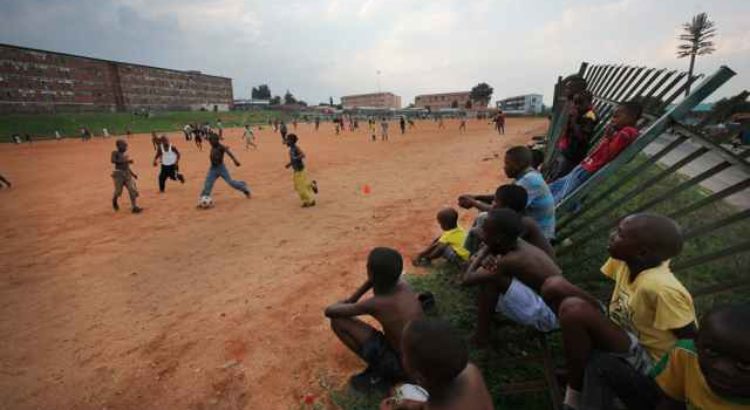
A few kilometres up the road is a public school that caters for pupils from an informal settlement. It has no sporting facilities.

This scenario is repeated across South Africa; a modern echo of the country’s history of racial segregation. Patterns of neglect, established in the 19th century when formal schooling was introduced in South Africa, persist.

An understanding of and reckoning with segregation history is important in coming to grips with the current state of poor school sport provision in black and coloured communities. South Africa will not address the great inequalities that still exist in school sport if it keeps ignoring history.

The mission years

Formal schooling was introduced in South Africa during the 19th century. Black pupils were largely educated at mission schools run by a wide range of denominations.

Most mission schools had no decent sporting facilities. They practiced and played sport separately from white organisations and schools. For instance, when the Western Province Rugby Football Union created the Junior Challenge Shield League in 1898, the competition was open only to learners of “European extraction” – that is, white.

This exclusion stretched across sporting disciplines. When the Good Hope Education Department organised the Physical Training Coronation Competition in 1902 at the Green Point Track, a separate division was organised for “coloured” or mission schools. The winner of the 1902 Coronation competition in the Mission School division was the St Cyprian’s School in Ndabeni Location.

This location, as living areas for black Africans were called, was established for families who were forcibly removed from District Six in Cape Town in 1901. The school was a zinc structure with no playing facilities.

In 1928 mission schools set up the Central School Sport Union. Its first athletic meeting was held at the Mowbray sports ground, the home ground of the City and Suburban Rugby Union. Newspapers from the time, which I’ve studied, reported that the grass was knee high. This situation existed by design: the South African Institute of Race Relations reported regularly on how much more money was spent to provide sporting facilities for white schools.

At a national level, the first inter-varsity athletic meeting was held in 1921 at the Wanderers Club in Johannesburg between the Transvaal University College (later Pretoria University), Grey University College (later Free State University) and the Johannesburg University College. These were all white colleges in the northern parts of the country. When institutions from southern regions were included the following year, black colleges were excluded.

These black colleges established the Ciskei Bantu Amateur Athletic Association in the Eastern Cape under the auspices of the South African Bantu Amateur Athletic Association.

Apartheid school sport

Then came formal apartheid, and the situation worsened.

During the 1950s and the decades that followed, the education department wouldn’t provide black and coloured schools with decent facilities like rugby fields or athletics tracks. This was because, according to the influx control laws, Africans could not obtain permanent residence in cities. Why, apartheid authorities reasoned, spend money on people who legally weren’t allowed in certain areas?

The colleges playing in the Ciskei Bantu Amateur Athletic Association, meanwhile, received no support for sporting facilities while the nearby prestigious St Andrew’s College and Rhodes University benefited from excellent fields and tracks.

Apartheid legislation closed the Mowbray sports ground, leaving the Central School Sports Union without a place to play. A whites only school was built on the facility. The sporting past of this lost facility is largely unknown; no commemoration plaque, for instance, exists to mark its history. Another example of history forgotten and heritage ignored.

Few shifts after democracy

With the arrival of democracy in 1994 some organisations dedicated to championing non-racial school sport, like the Western Province Senior Schools’ Sports Union, closed their doors. But while desegregation in school sports was introduced in theory, the reality was rather different.

Many historically white schools appear reluctant to compete with township schools in mass competitions. They continue to hold closed inter-school derbies and athletic meetings catering for other similarly resourced schools on their well maintained sport fields.

But ironically, former whites-only schools have realised the potential of black and coloured pupils to shine on the sports field. A cursory overview of the senior national rugby and cricket teams in 2018 shows that more than 90% of black and coloured players attended historically white schools. Such players were often “poached” from township schools with scholarships and bursaries.

This “poaching” has benefited individual players but it’s happened at the expense of township schools.

Addressing history

The colonial and apartheid education project still echoes in South Africa’s post-1994 school system. For real change to start happening, it’s important for administrators, school authorities, parents and pupils to look to and understand the imbalances of history – and start working to set them right.

Read original article here

Comparte este contenido:

ONU: Un fondo de 10.000 millones de dólares para alcanzar la educación universal

ONU/ 22 de mayo de 2018/Fuente: http://www.onunoticias.mx

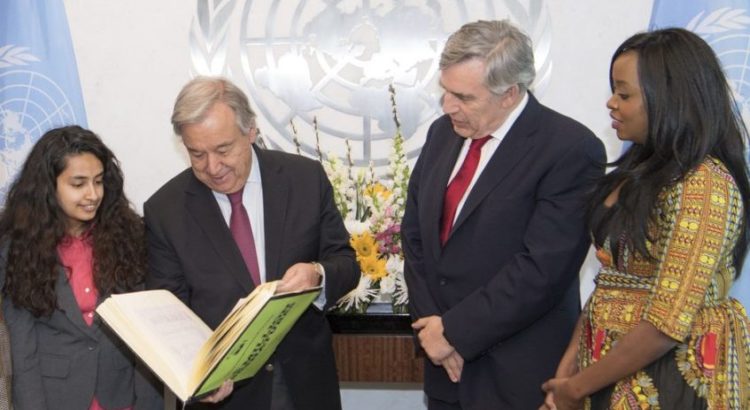
El Secretario General de las Naciones Unidas, António Guterres, ha recibido este viernes a los embajadores de la juventud de la organización TheirWorld, acompañados por enviado especial de las Naciones Unidas para la Educación Mundial, Gordon Brown, declaró que “actualmente, no se pone suficiente énfasis en la educación universal ni en la financiación para educadores, servicios ni para el futuro de los niños”.

El titular ha manifestado el apoyo de la Organización a la propuesta de creación de un Servicio Financiero Internacional para la Educación, un mecanismo de inversión para cumplir con estos objetivos, que ha sido respaldada por el Banco Mundial y los bancos de desarrollo regional.

Fuente de la Noticia:

http://www.onunoticias.mx/un-fondo-de-10-000-millones-de-dolares-para-alcanzar-la-educacion-universal/

Comparte este contenido:

Países de menos ingresos concentran esfuerzos de ONU en educación

ONU/ 22 de mayo de 2018/ Fuente: Prensa Latina

Una nueva iniciativa de la ONU, que apenas da sus primeros pasos para recaudar fondos destinados a mejorar la enseñanza en todo el mundo, se concentra hoy en los países de menos ingresos.
Por ejemplo, en el caso de América Latina y el Caribe una de las prioridades es Haití, donde si bien persisten numerosos problemas, los retos en términos de acceso a la educación van cambiando y ahora se trata también de aumentar la calidad de la enseñanza.

Así explicó a Prensa Latina el director del Banco Interamericano de Desarrollo, Luis Alberto Moreno, quien habló de cómo los avances en la educación contribuirán además a elevar el nivel en términos de fuerza laboral y mercado de trabajo.

El Fondo Internacional de Finanzas para la Educación (Ifeed, por sus siglas en inglés) busca, precisamente, cerrar las brechas que existen en ese sector entre diferentes países, indicó.

La semana pasada, en el lanzamiento de la iniciativa, Moreno destacó la necesidad de acelerar acciones para evitar que más generaciones pierdan las oportunidades de educación.

En ese sentido, enfatizó cómo millones de latinoamericanos han sido dejados atrás, por ello resulta vital centrarse en las brechas e intentar cerrarlas.

Las áreas rurales de ese continente merecen especial atención, dijo, pues allí se encuentran las mayores necesidades.

Moreno también llamó a invertir más en educación para asegurar el futuro, salir de la pobreza y aumentar las posibilidades de acceso de mujeres y niñas.

Actualmente, 260 millones de niños en todo el mundo no asisten a la escuela y si se mantienen las actuales tendencias, en 2030 unos 400 millones no tendrán acceso a la educación más allá de los 11 años, según alertó el enviado de Naciones Unidas para la Educación Global, Gordon Brown.

Un grupo que merece especial atención son los refugiados. De acuerdo con Gordon, de los fondos humanitarios de la ONU dirigidos a cubrir las demandas de esa población, solo un dos por ciento se destinan a las labores educativas.

Debemos tratar de cambiar esa situación: los refugiados no necesitan solo de techo y comida, señaló al presentar el proyecto del Ifeed la semana anterior.

Asimismo, se refirió a la situación de la Agencia de Naciones Unidas para los Refugiados Palestinos (Unrwa, por sus siglas en inglés), una de las que priorizaba la atención y la enseñanza de los menores de edad.

Pero el recorte de fondos realizado por parte de Estados Unidos a esa entidad pone en riesgo ahora su importante trabajo, advirtió.

Según datos de la ONU, el mundo enfrenta una crisis educativa que crea en estos momentos una división amplia y persistente entre los niños que poseen acceso a las oportunidades, y aquellos que no lo tienen.

arc/ifb

Fuente de la Noticia:
http://www.prensa-latina.cu/index.php?o=rn&id=180389&SEO=paises-de-menos-ingresos-concentran-esfuerzos-de-onu-en-educacion
Comparte este contenido:

South Africa: Minister Suspends Equal Education Programmes

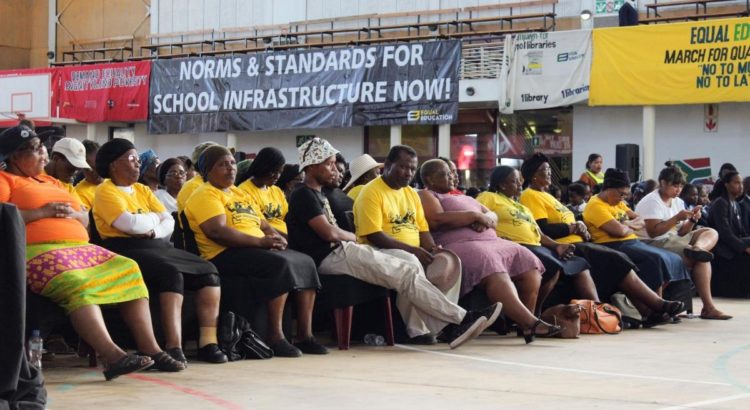
Western Cape Minister of Education Debbie Schäfer has instructed Equal Education (EE) to stop operating in the province’s schools by 22 May until her department holds a meeting with the organisation.

This follows allegations of sexual misconduct against former General Secretary Tshepo Motsepe, former Head of Organising Luyolo Mazwembe, and former Treasurer Doron Isaacs.

But in an email to GroundUp, Equal Education said the organisation has not yet received a letter from Schäfer. Although the minister has suggested that some of the allegations might be coming from school children, this is not true, said the organisation. None of the men accused of sexual harassment had any regular interaction with Western Cape school learners.

«None of the allegations relate to school children. Once we receive a letter from the MEC we will be in a position to consider her requests. We look forward to receiving it and will answer any questions posed to us in detail,» said Equal Education.

In a statement on Monday Minister Schäfer said that Equal Education works in schools across the province, and while at least some of the allegations appear to be from people within the staff of the organisation, it is not clear whether any learners are involved. «If the allegations are correct, this is hardly the type of person we need working in our schools.»

«I have therefore written to Equal Education requesting that they furnish me with the details regarding every interview or engagement conducted by Mr Motsepe, Mr Mazwembe or Mr Isaacs so far this year, with any female learner in the Western Cape. I have requested the names of learners, the school that the learners’ attend, the date of the interviews and who was present during the interviews. I require this information by this Friday, 25 May.»

«I have also demanded an undertaking by 5pm tomorrow, Tuesday 22 May, that they will cease operations in Western Cape schools until such time as we have had an opportunity to meet with them and discuss the way forward. Should we not receive such undertaking, we shall instruct our schools not to allow anybody from Equal Education, and who is not a learner at the school, onto school premises,» she said.

Schäfer also wanted to know whether Equal Education conducts background checks on their staff and if so, whether Motsepe, Mazwembe and Isaacs passed the checks.

«Sexual abuse against young female learners is prevalent in our communities, as raised by Equal Education on a number of occasions, and it is distressing that such allegations have been made against high ranking members of their own organisation.»

She has also requested that the Chief Director for Districts immediately investigate what measures are taken by NGOs working in schools to vet their members, and put necessary processes in place.

The organisation said, like the minister, Equal Education takes sexual harassment seriously. It said it had acted swiftly to address every allegation of misconduct that has been put before it. Equal Education has clear staff and volunteer policies and procedures that prohibit sexual harassment in the workplace, it said. Its policies prohibit relationships between staff or volunteers and learners. This offence leads to immediate dismissal. The organisation said it also has a clear sexual harassment policy and provides training on sexual harassment for members, volunteers and staff.

It said that this year it held a two day staff seminar titled «Gender, Power, and Consent», which it initiated and created together with the Tshisimani Centre for Activist Education. It also had follow up workshops on the drafting of staff values for a safe and welcoming workspace, and a review of its sexual harassment policy.

Equal Education said its youth facilitators are trained on sexual harassment and «informed on the severity of engaging in this misconduct».

«We remain resolute in our commitment to ensure that the actions of our members and staff reflect Equal Education’s values of respect, equity and accountability.»

Source:

http://allafrica.com/stories/201805210680.html

Comparte este contenido:

Kenya Public Universities Crack Whip on Striking Lecturers

África/Kenya/ 21.05.2018/ From: allafrica.

Public universities have started cracking the whip on striking lecturers and other staff as the industrial action enters its third month on Tuesday.

The University of Nairobi (UoN) has suspended 35 lecturers after they declined to return to work following Labour Court’s ruling that declared the strike illegal and unprotected last month.

Technical University of Kenya (TUK) on Friday started a head count of lecturers who are teaching, and has threatened to sack those who will not report to work.

The government is set to launch an inter-ministerial Task Force to discuss the stand-off that has led to a biting strike by lecturers in public universities.

Education Cabinet Secretary Amina Mohammed, whom lecturers have accused of not playing ball, will launch the task force at Jogoo House Thursday morning.

The bone of contention between lecturers and the government is a Collective Bargaining Agreement signed with the Universities Academic Staff Union.

From: http://allafrica.com/stories/201804300034.html

Comparte este contenido:

South Africa’s deficient education system

South Africa  /News 24

South Africa’s deficient education system is the single greatest obstacle to socio-economic advancement, replicating rather than reversing patterns of unemployment, poverty, and inequality, and effectively denying the majority of young people the chance of a middle-class life.

This emerges from a report, ‘Education the single greatest obstacle to socio-economic advancement in South Africa’, published by the Centre for Risk Analysis (CRA) at the Institute of Race Relations (IRR).

Set against data showing high rates of urbanisation – reflecting a common yearning for better-paying jobs, and a shot at middle-class life in a city – as well as a marked shift in the structure of the economy towards high-skills sectors, the research at once underscores the vital importance of education, and the devastating impacts of its most chronic deficiencies.

A new approach to schooling is urgently needed, according to author of the report, CRA director Frans Cronje, and should focus on achieving much higher levels of parental involvement and control, rather than bureaucratic control.

«On the strength of our experience and analysis», he says, «the quickest way to a much-improved education system would be to greatly strengthen the scope for School Governing Bodies and communities to control schools and exert their influence in the interests of their children».

The report acknowledges that much, in fact, has changed for the better in recent decades.

Positive outcomes include the fact that pre-school enrolment has soared by 270.4% since 2000, setting a much better basis for future school throughput, that the proportion of people aged 20 or older with no schooling has fallen from 13% in 1995 to 4.8% in 2016, and that the proportion of matric candidates receiving a bachelor’s pass has increased from 20.1% in 2008 to 28.7% last year.

The good news doesn’t end there.

Higher education participation rates (the proportion of 20–24 year olds enrolled in higher education) have risen from 15.4% in 2002 to 18.6% in 2015, with university enrolment numbers climbing 289.5% since 1985 and more than 100% since 1995.

The ratio of white to black university graduates was 3.7:1 in 1991, narrowing to 0.3:1 in 2015, and the proportion of people aged 20 and older with a degree has increased from 2.9% in 1995 to 4.9% in 2016.

But, in just short of a dozen bullet points, the grimmer side of South African education is laid bare:

  • Just under half of children who enrol in grade one will make it to Grade 12;
  • Roughly 20% of Grade 9, 10, and 11 pupils are repeaters, suggesting that they have been poorly prepared in the early grades of the school system;
  • Just 28% of people aged 20 or older have completed high school;
  • Just 3.1% of Black people over the age of 20 have a university degree compared to 13.9% and 18.3% for Indian and White people;
  • Just 6.9% of matric candidates will pass Maths with a grade of 70% to 100% – a smaller proportion than in 2008 (bearing in mind that, once the near 50% pre-matric drop-out rate is factored in, this means that around three out of 100 children will pass Maths in matric with such a grade);
  • The ratio of Maths Literacy (a B-grade Maths option) to Maths candidates in matric has changed from 0.9:1 in 2008 to 1.5:1 in 2016;
  • In the poorest quintile of schools, less than one out of 100 matric candidates will receive a distinction in maths;
  • In the richest quintile, that figure is just 9.7%;
  • Just one in three schools has a library and one in five a science laboratory;
  • The Black higher education participation rate is just 15.6%, while that for Indian and White people (aged 20–24) is 49.3% and 52.8%; and
  • The unemployment rate for tertiary qualified professionals has increased from 7.7% in 2008 to 13,2% today.

Author Frans Cronje notes: «The data makes it clear that education or the lack thereof is the primary indicator that determines the living standards trajectory of a young South African.

«In the second quarter of 2017, the unemployment rate for a tertiary qualified person was 13.2% – less than half the national average of 27.7%. Likewise, the labour market absorption rate for tertiary qualified professionals was 75.6% in 2017 as opposed to just 43.3% for the country as a whole.»

Three factors were particularly worrying.

«The first is the poor quality of Maths education. A good Maths pass in matric is in all probability the most important marker in determining whether a young person will enter the middle classes. While Maths education is poor across the board, the quality is worse in the poorest quintile of schools, leaving no doubt that school education is replicating trends of poverty and inequality in our society.»

The second is the low rate of tertiary education participation among black people.

Cronje warns that «it is futile to think that significant middle-class expansion, let alone demographic transformation, will take place as long as the higher education participation rate remains at around 15% for Black people».

The third is the «still very high» school drop-out rate.

«Just over half of [the] children will complete high school at all. In an economy that is evolving in favour of high-skilled tertiary industries and in which political pressure and policy are being used to drive up the cost of unskilled labour, this means that the majority of those children are unlikely to ever find gainful employment,» Cronje writes.

Putting these three concerns together, «you cannot escape the conclusion that the education system represents the single greatest obstacle to socio-economic advancement in South Africa».

«It replicates patterns of unemployment, poverty, and inequality and denies the majority of young people the chance of a middle-class life,» Cronje concludes. «The implications speak for themselves.»

– Morris is head of media at the Institute of Race Relations (IRR).

Fuente: https://www.news24.com/Analysis/south-africas-deficient-education-system-20180507

Comparte este contenido:
Page 203 of 622
1 201 202 203 204 205 622