Page 246 of 622
1 244 245 246 247 248 622

Kenia: TSC chair Lydia Nzomo warns school heads over class repetition

Kenia / 06 de diciembre de 2017 / Por: WINNIE ATIENO / Fuente: http://www.nation.co.ke/

Headteachers have been ordered to ensure pupils do not repeat classes.

Teachers Service Commission chairperson Lydia Nzomo said although teachers have been put on notice over class repetition some children are still made to repeat classes.

“A child should complete one class and go to the next. We must offer quality education for all our children,” Dr Nzomo said.

While speaking during the ongoing primary school headteachers annual conference in Mombasa, Dr Nzomo assured the teachers that they will not be demoted following the government directive that management of primary and secondary schools sharing a compound will be merged.

NO DEMOTION

“You won’t be demoted from a head teacher to a classroom teacher, we have protected you from all that, just do your work, ” Dr Nzomo said.

She said the government will continue exploring other ways of ensuring teachers are well remunerated.

The Collective Bargaining Agreements have brought relative peace in the education sector, she added.

“Which is critical for achieving quality education. Did you notice the helicopter promotion from job group G, H to N? We should embrace quality education reforms. If the learners are not healthy and nourished, they won’t concentrate,” she said.

SAFE SPACES

At the same time, Dr Nzomo urged the school heads to provide a safe environment for learners.

She urged the school heads to protect pupils from physical, social, sexually and psychologically abuse.

“I know we do not have enough teachers in all the schools but during recruitment ensure they are well trained to offer the best for our children,” she added.

Fuente noticia: http://www.nation.co.ke/news/education/School-heads-warned-over-class-repetition/2643604-4215424-14ae4goz/index.html

Comparte este contenido:

Kenia: Los sindicatos africanos da prioridad máxima a la educación de la primera infancia.

África/Kenia/05.12.2017/Autor y Fuente: https://www.ei-ie.org

Líderes de cinco za de ámbito nacional recomendaron elevar las Directrices de política de la OIT sobre la educación de la primera infancia al nivel de Recomendación de la OIT, para convertirlas en un documento en legalmente vinculante.

De esta manera la educación de la primera infancia se incorporaría a la agenda principal de los Gobiernos y de la Internacional de la Educación (IE).

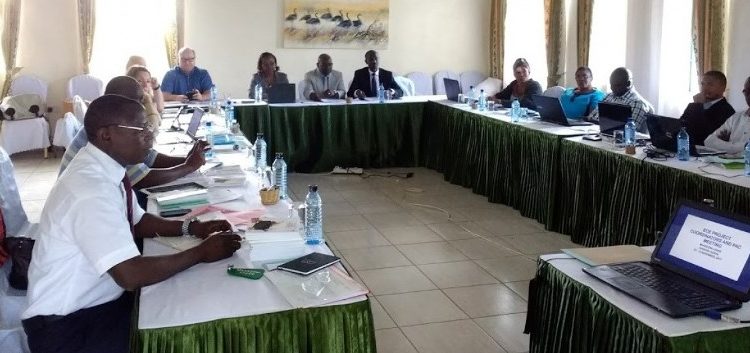
Los coordinadores nacionales de educación de la primera infancia se reunieron en Nairobi para organizar y movilizar al personal de educación de la primera infancia de centros privados y públicos y hacer un seguimiento de la implementación del Objetivo de Desarrollo Sostenible de las Naciones Unidas sobre educación: “Garantizar una educación inclusiva, equitativa y de calidad y promover oportunidades de aprendizaje durante toda la vida para todos”.

Las personas asistentes evaluaron una propuesta de proyecto de ley de educación de la primera infancia en Kenia; el desarrollo de una política nacional de educación de la primera infancia en Tanzania, y la movilización y reclutamiento de docentes para dicha etapa escolar en escuelas privadas nigerianas. Además, revisaron el desarrollo de un manual de capacitación para docentes de educación de la primera infancia basado en las Directrices de política de la OIT sobre la promoción del trabajo decente para el personal del sector de la educación de la primera infanciaen Zambia y la evolución de la educación de la primera infancia en Ruanda.

Los participantes expresaron, además, su apoyo a la campaña “Tag børnebrillerne på(#putonthechildrensglasses)” de su aliado internacional, la Federación Nacional Danesa de Educadores de la Primera Infancia y Juventud (BUPL), poniéndose gafas rosas.

Información general

A la reunión de 2017 asistieron coordinadores de educación de la primera infancia de los sindicatos africanos de la enseñanza: Kenya National Union of Teachers (KNUT), Nigeria Union of Teachers (NUT), Syndicat des Enseignants et Autres Personnels de l’Education (SYNADUC)/Ruanda, Tanzania Teachers’ Union (TTU) y Zambia National Union of Teachers (ZNUT). Asistieron también aliados internacionales, como la BUPL, la Federación sindical danesa (LO), la Confederación Danesa de Empleados y Funcionarios Danish (FTF), la IE y la Oficina Regional Africana de la IE.

Fuente: https://www.ei-ie.org/spa/detail/15552/kenia-los-sindicatos-africanos-da-prioridad-m%C3%A1xima-a-la-educaci%C3%B3n-de-la-primera-infancia

Imagen: https://www.ei-ie.org/resources/views/admin/medias/timthumb.php?src=https://www.ei-ie.org/media_gallery/original_4080d.jpg&w=1200&h=530&zc=1

Comparte este contenido:

OTI: Esclavitud moderna y trabajo infantil

Estados Unidos/05 de Diciembre de 2017/La Arena

Según un informe de la Organización Internacional del Trabajo, un organismo de la Organización de Naciones Unidas, casi 200 millones de personas son víctimas de la esclavitud moderna o del trabajo infantil en todo el mundo. En 2016, 40,3 millones de hombres y mujeres fueron víctimas de la esclavitud moderna y 151,6 millones de niños -uno de cada diez- de trabajo infantil.
El informe define la “esclavitud moderna” como “las diversas formas de coerción prohibidas en los instrumentos internacionales sobre derechos humanos y normas laborales”. Una de cada cuatro víctimas de trabajo forzoso son niños, y el 71 por ciento del total de víctimas son mujeres.
El estudio también informa que 4,8 millones de personas son víctimas de explotación sexual forzada. En promedio, las víctimas permanecen detenidas durante 23,4 meses antes de escapar o ser liberadas. La gran mayoría son mujeres y niñas.
Por región, Africa tiene la tasa más alta de esclavitud moderna, con 7,6 por cada mil personas. La tasa es de 6,1 por cada mil personas en Asia y el Pacífico; 3,9 por mil en Europa y Asia Central; 3,3 por mil en los Estados árabes; y 1,9 por mil en las Américas. Los países que están siendo o han sido recientemente devastados por la guerra experimentan niveles más altos de explotación.

Definición limitada.
La OIT no incluye en su definición de trabajo infantil a quienes trabajan en formas legales de empleo. La definición utilizada en el estudio incluye trabajos peligrosos, la demanda de horas de trabajo excesivas, que a menudo privan a los niños de tiempo para juego y educación, y labores que ponen en riesgo su bienestar. A pesar del alcance limitado de la definición, el estudio aún da una idea del asombroso nivel de trabajo infantil en todo el mundo.
Según el trabajo, poco menos de la mitad de los niños que realizan trabajo infantil (72,5 millones) están realizando trabajos peligrosos que ponen en riesgo su salud y seguridad. Más de 19 millones de niños de entre 5 y 11 años; más de 16,3 millones entre 12 y 14; y 37 millones entre 15 y 17 están involucrados en trabajos peligrosos. Las horas que los niños son obligados a trabajar también son terribles. Aproximadamente el 63,3 por ciento de los niños entre 15 y 17 años que están involucrados en trabajo infantil se ven obligados a trabajar 43 horas o más por semana.
Casi un tercio de los niños involucrados en el trabajo infantil están fuera del sistema educativo. Quienes asisten a la escuela tienden a desempeñarse peor que sus compañeros que no trabajan.
Al igual que con la esclavitud moderna, una proporción significativa del trabajo infantil se encuentra en países afectados por conflictos y desastres. Aproximadamente el 17 por ciento de los niños en países devastados por la guerra están involucrados en el trabajo infantil, casi el doble del promedio mundial. Los países incluidos en el informe como afectados por conflictos armados incluyen Afganistán, la República Centroafricana, Colombia, Iraq, Mali, Nigeria, Filipinas, Sudán del Sur, Ucrania, Yemen y la República Democrática del Congo. Otros países, como Siria y Libia, no fueron incluidos ya que no hay estimaciones disponibles.

Ganancias obcenas.
Si bien el porcentaje de niños involucrados en el trabajo infantil ha disminuido ligeramente con respecto a 2012 en todo el mundo, en realidad ha aumentado en la Africa subsahariana. La epidemia de la esclavitud y el trabajo infantil es uno de los aspectos de la explotación. La OIT estima que cada año se generan 150 mil millones de dólares en ganancias en el sector privado por trabajo forzoso. El problema se agrava en los países que son víctimas de la explotación neocolonial. Un video publicado por CNN mostró que jóvenes fueron subastados como trabajadores agrícolas en Libia, un país devastado por una guerra lanzada por el ex presidente de EE.UU. Barak Obama.
Una investigación del 2016 de Amnistía Internacional reveló que niños de tan solo siete años trabajan en condiciones peligrosas en la República Democrática del Congo para extraer cobalto que termina en teléfonos inteligentes, automóviles y computadoras vendidos a millones en todo el mundo. Dichas minas les suministran materiales a corporaciones como Apple, Microsoft y Vodafone. (Trevor Austin. World Socialist Web Site. Rebelión).

Fuente: http://www.laarena.com.ar/opinion-esclavitud-moderna-y-trabajo-infantil-1181714-111.html

Comparte este contenido:

En Kenia, El Sistema busca mejorar la vida de los jóvenes a través de la música

Kenia/05 de Diciembre de 2017/NY Time

 Aunque Faith Syovata casi no tenía voz debido a un resfriado, sus alumnos escuchaban con atención cada una de sus palabras casi susurradas. Con los violines debajo de sus barbillas, los chicos de 14 años de la Escuela Primaria Kawangware tenían el arco listo para cualquier movimiento mientras ella señalaba notas musicales en la pizarra.

Cuando los estudiantes comenzaron a tocar, la música sonaba un poco fuera de tono, pero eso no se interponía entre su pasión y entusiasmo al ejecutarla. Tres veces a la semana y durante dos horas, estos veintitantos jóvenes —así como un grupo de niños que los adolescentes ayudan a dirigir— tienen clases de violín como parte de El Sistema Kenia (ESK). Este nombre proviene del programa musical El Sistema, una iniciativa de acción social fundada en Venezuela por José Antonio Abreu, un economista y director de orquesta, en 1975.

Con los años, El Sistema de Venezuela se ha convertido en un programa social cuyo objetivo es ayudar a los jóvenes en situaciones vulnerables a través de la enseñanza de la música, y ha inspirado a personas dedicadas a la educación musical en todo el mundo.

Para los adolescentes de Kawangware, un barrio pobre al oeste de Nairobi, las clases son algo que esperan con ansias todas las semanas. Gibson Gathiru, un chico con ojos grandes, de baja estatura y delgado, dijo que se quedó sorprendido cuando le mostraron un violín por primera vez. “Era el primer instrumento que quería conocer”, dijo.

Asha Ibrahim dijo que cuando sus padres se enteraron del programa, que comenzó en septiembre de 2014, “pensaron que era algo tonto”. Sin embargo, contó que con el tiempo han cambiado de opinión. “Este es un sitio muy ordinario”, dijo sobre su vecindario. “¿Quién iba a decir que aquí podría surgir algo como este tipo de música?”.

En enero comenzará un nuevo programa en Juja, a unos 30 kilómetros de Nairobi, donde veinte niños de entre tres y 12 años de un orfanato local aprenderán a tocar la flauta y cantar en un coro. “Los niños han sido lo más divertido”, dijo Elly Owidi, una maestra de clarinete que ayuda a coordinar el programa en Juja, vía correo electrónico. “Su energía, su compromiso, su interés y crecimiento es lo que me hace continuar”.

Continue reading the main storyFoto

Lecciones de clarinete en Juja CreditElly Owidi

Cuando Karis Crawford, una violinista clásica de Michigan, llegó por primera vez a Kenia, nunca había oído hablar de El Sistema. Había llegado al país para dar clases en una escuela internacional en el valle Rift y pronto comenzó a trabajar como voluntaria los fines de semana dándole clases de música a los niños de un barrio pobre de Nairobi.

También le pidieron ser directora de la sección de cuerdas en la Orquesta Nacional Juvenil de Kenia y después de ver un documental sobre El Sistema se llenó de motivación.

“Una de las principales razones fue que vi que el sistema de educación pública de Kenia no les brindaba muchas esperanzas ni proyectos laborales a los chicos, en especial a los de barrios pobres”, dijo Crawford, quien tiene una maestría en educación de la Universidad de Boston. “Las escuelas públicas no enseñan pensamiento crítico, a resolver problemas ni creatividad, y yo sabía que un programa de música como El Sistema podría cerrar esta brecha”.

Comenzó a leer sobre otros programas globales inspirados por el trabajo en Venezuela que surgieron por toda Sudamérica durante los años ochenta y noventa. Los programas inspirados en El Sistema después tuvieron auge más allá de la región luego de que su agrupación profesional, la Orquesta Sinfónica Simón Bolívar, dirigida por Gustavo Dudamel, un egresado de El Sistema y director musical de la Filarmónica de Los Ángeles, impresionó a las audiencias de todo el mundo durante un concierto en los Proms de la BBC en 2007.

Según Eric Booth, coautor de Playing for Their Lives: The Global El Sistema Movement for Social Change Through Music, ahora hay más de 400 programas en todo el mundo en los que se intruye a un millón de niños.

Crawford pasó unos cuantos meses en un programa local en Michigan y aprendió los pormenores de dirigir un proyecto. También se puso en contacto con El Sistema en Venezuela para ver si podía usar su nombre. “No te dicen ‘sí, eres parte del programa El Sistema’ oficialmente, porque El Sistema es más bien una idea”, comentó.

Crawford comenzó una campaña en Kickstarter y pudo obtener donaciones de instrumentos para su programa gracias a varios amigos y contactos. “Empecé a traer instrumentos de Estados Unidos de gente que me decía: ‘Tengo un violín en el ático y nunca lo uso. ¿Lo quieres?’”, indicó entre risas.

“Siempre traía un violín donado en mi maleta, y de hecho mi récord es de ocho en una maleta”.

Continue reading the main storyFoto

Faith Syovata enseñando a una estudiante en Waithaka a tocar el violín. CreditMatt Kolb

Organizó clases avanzadas con músicos de orquesta jóvenes y egresados, capacitándolos para trabajar en el programa; muchos de estos voluntarios aún participan como tutores.

“Recientemente tuvimos que cerrar una sucursal en los barrios pobres de Waithaka porque el voluntario del lugar ya no podía continuar”, dijo Syovata. “Yo estoy sola en Kawangware; ha sido difícil conseguir que más personas quieran unirse y dar clases”.

Debe haber funcionado, pues los conciertos se llenan con gente de la comunidad. Espera conseguir un financiamiento más continuo para pagarle a los maestros voluntarios y expandir el programa con una orquesta de cuerdas en la escuela. “Esos chicos saben que si van a la Escuela Primaria Kawangware aprenderán a tocar el violín”, dijo Crawford.

Aunque es difícil argumentar que la vida de los chicos no se ha visto beneficiada por la educación musical, hay un debate creciente entre académicos, expertos en educación musical y directores del programa sobre qué tanto afecta temas como que los jóvenes tengan mejores calificaciones o su desarrollo psicológico y social.

“Puedes ver dos programas diferentes y serán algo totalmente distinto”, dijo Geoffrey Baker, autor de El Sistema: Orchestrating Venezuela’s Youth. “Lo que los une es básicamente una marca y toda una industria a su alrededor con todo tipo de instituciones que usan esta forma de ganar dinero, como salas de conciertos, agencias de artistas, universidades y conservatorios”.

Crawford acepta las críticas y admite que es difícil cuantificar los beneficios educativos del programa. “Esperamos algún día contar con datos que demuestren que el enfoque de El Sistema en Kenia tiene una relación directa con que los chicos mejoren su vida y su comunidad de una manera que no sería posible lograr con otros medios”, dijo.

“Nuestros alumnos en Kawangware nos cuentan lo que sucede después de la escuela cuando salen del programa y es algo atemorizante y triste: con nuestro programa no están en las calles y aprenden nuevas habilidades que les dan esperanzas”.

Fuente: https://www.nytimes.com/es/2017/12/03/el-sistema-gustavo-dudamel-kenia/

Comparte este contenido:

Africa: A moral case for Free Senior High School education

Africa/ December 05, 2017/By: Mustapha Hameed/Source: http://citifmonline.com

On Tuesday 12th September, 2017 at the West Africa Senior High School, the President, H.E. Nana Addo Dankwa Akufo-Addo launched the free senior high school education policy ushering the nation into an era where the age old creed of “education as a right not a privilege” assumes its true meaning.

Indeed, this has been the dream of the forebears of our republic; a Ghana where our children will not be denied the opportunity of senior high school education because of the inability of their parents to support them financially.

It is indeed a fact, that many young people since independence have been denied the opportunity of secondary education mainly due to financial constraints; hence it came as no surprise when Ghanaians all over the country received the news of the launch of this flagship policy with excitement. It was a dawn of a new era, an era that is not only bringing to our young people hope of a brighter future, a future with limitless and greater opportunities, but it also brings enormous financial relief to the overwhelming majority of parents who find it extremely hard to finance the education of their children.

If free education means one thing, then it is the fact that the era where pupils dropped out from school for financial reasons, or had their education cut short has become a thing of the past. It therefore came as no surprise that across the length and breadth of the country, the news of the launch was received in most instances amidst the display of joy and celebrations in our streets.

Free SHS like any pro-poor policy or any policy intervention for that matter has its own challenges. It is however unfortunate that today even problems with SHS three students, their classrooms and any other problems in our high schools are attributed to the Free SHS and pupils benefiting from the intervention.

So I want to ask, until the start of the Free SHS, were there no challenges in our schools already? Was it all rosy and glossy? Why is the NDC victimising students? Students whose only crime is that, they have chosen to go to school and their country has chosen to pay for it fully.

It is worth noting, that even before the implementation of the policy, the propaganda then, was that, government intended fidgeting and interfering with WAEC marking schemes so as many students would be affected and failed. This they claimed would affect enrolment causing a sharp reduction in enrolment figures so that government could fund the scheme for the few brilliant ones. It turned out cut-off points were lowered so every child could start SHS education. The effect – enrolment figures have been astounding, unlike anything we’ve ever seen before.

Minister of Education, Dr. Matthew Opoku Prempeh

This deliberate propaganda still do exist, but they now appear in different forms and seem to be aided for whatever reason by some media houses. For whatever its worth, the forces against this policy seem unrelenting and even more belligerent in their endeavours. How has it become a crime to dedicate part of our resources towards ensuring every child receives free secondary education? Do we bastardise a policy because of some few problems. In lecture halls and auditoria in some of our universities, students stand to listen to lectures because of inadequate seats, others go to lab and only observe because of inadequate equipment and other essentials, you attend lectures and you don’t hear anything because the PA System is faulty. In our halls of residence, we have people we refer to as ‘perchers’, a room for 4 people end up accommodating 10. In my room back in Katanga at KNUST, there were about 12 of us, in a cubicle meant for 4 people originally designed for one or two persons. Back then, one would hear stories about rooms that have never been locked, obviously because of the enormously high number of occupants. Did we condemn our universities over this? Were these problems also because of Free SHS?

You remember what they call ‘the shit on shit’ phenomenon? We went through these conditions and today our lives have seen tremendous improvements. Some of us have risen to greater heights, achieved greater feats and doing greater things. One man here who used to be my ‘percher’ rose through the ranks of one of the biggest banks in the world headquartered in New York, managing assets of multinational oil companies worth several billions of dollars.

I remember back then at Anglican secondary school in Kumasi several years ago, students from other schools used to come in to use our labs and other facilities, this was years before the idea of Free SHS was conceived. I remember a senior high school that had a spill over of SSSCE candidates to other schools because they did not have enough facilities, some SHSs could not be approved WAEC centers because of inadequate infrastructure and facilities, this was aeons before Mr. President became a candidate for the first time.

Clearly, these were no challenges arising as a result of Free SHS; they are challenges that come with our educational system as a developing country which governments over time have tried to address. Should we have condemned high school education then because of these challenges? Where would we be today?

Today, our lecture halls, auditoria and theatres have received tremendous boosts, fully furnished, some with functioning central air conditioning systems. The conditions under which we study have improved. Most schools have moved beyond the blackboard-white chalk system to a healthier whiteboard-marker system. More dormitories have been built over time, more halls of residence and many other facilities to give our campuses a facelift and make them modern centres of learning. I remember the NPP’s model school system and the infrastructure it came with.

Why do I even have a feeling that hypocrisy is ingrained in our body-polity and there is a deliberate attempt by some people to destroy the opportunities created by the Free SHS? Even as I write this, pupils in basic schools still study under trees and other dilapidated structures. Did these start today? Were these the doing of the Free SHS policy? Must we deny those pupils the ability to read and write because they have no classrooms?

The problems of our education system did not start with the opportunity created for every child to receive free secondary education and it certainly won’t end here. And head teachers crying about problems in their schools as though those challenges haven’t persisted for years. Must we have shut down schools and stopped educating our children entirely because of challenges in our educational institutions?

Pupils studying under a tree, an existing problem before Free SHS.

Must we have denied our children university education because of the challenges with facilities and infrastructure? Where would we be today? Ask yourself, those days you used to stand in the lecture hall, should government have revoked your admission or denied you admission on the basis of that alone, where would you be today? Or are the problems and challenges with infrastructure and facilities at our universities and basic schools also as a result of Free SHS?

With all the conditions and challenges that confronted us on all fronts in the education sector then, on no occasion did we see this level of bastardization and antagonism against university education or SHS. Because? It makes no sense, and we couldn’t refuse to educate ourselves on the basis of infrastructure and some challenges alone. These problems are solved over time and no country can claim anywhere that its education sector has no challenges. Today, democrats and republicans in congress are fighting each other because of budget cuts. Betsy Devos is always hot because these cuts are going to affect less endowed schools in deprived communities. But, education doesn’t stop because of challenges. Because things get better over time.

Today, even problems with the grass on the pitch of a high school are attributed to Free SHS. Yes, government including all of us do admit that, Free SHS, just as any other policy intervention has challenges, but these policies also have their success stories. We have heard about those challenges and we are doing everything possible to address them.

I want to ask those media houses that constantly feel the need to highlight on the infrastructural challenges of our high school system ever since this novel policy was rolled out, who seem to have a strong penchant for reporting only on the negatives of the policy, and who have carved an unpopular enviable niche for themselves in this business, that, did all challenges with high school education start with Free SHS? In their daily rounds, do they not see any positives of the Free SHS policy? Can they not see that, it has given opportunities to several thousands of young people who hitherto would be loitering our streets?

Have they not met people whose lives have been changed by the policy? Why do they find it extremely difficult to report on the glaring life changing testimonies of those affected by the policy? Must we destroy the policy because of some challenges in its first year of implementation? Even in their media houses, do they not have challenges? Do they detonate bombs to destroy their stations because of some challenges? Why do I sense that feeling that they have connived with the NDC and some misguided school heads, using propaganda, subterfuge, sabotage to paint a rather dark picture of an unprecedented policy initiative?

I have earlier on highlighted the challenges and circumstances under which most of us received our education, yet here we are today. We stand here today as doctors, as lawyers, as engineers, as economists, as policy makers as nurses, as teachers all products of a not-so-rosy education system. All products of an education system fraught from its basic level to its highest with deeper problems.

At some point under Prof. Mills, lecturers went on strike for seven weeks, disrupting the semester and throwing the academic calendar off balance, yet here we stand today. Here we stand today as professionals beaming with pride and doing what we can to contribute to the socio-economic development of this dear country. We sat through those challenges yet, we are able to compete with our colleagues anywhere on earth in fields of study or profession. What if we had been condemned because we sat under trees to study in primary school? What if we had been refused admission or our schools demonized because of inadequate facilities? What if someone had denied us university education citing inadequate facilities?

But today here we stand. As headmasters, yes, the policy certainly severs an illegitimate source of income for us. So what? When the university placed a ban on the sale of handouts, yes I was affected, but it was the larger picture that mattered. Today I buy PDFs and I gladly share with my students on WhatsApp to support their research. Many of whom have gone to work with big oil companies contributing their quota to developing this country. What if I had decided to sabotage my own school and students? Then running around to the media to bemoan the falling standards in our education. Who’d be the beneficiary? To what end?

The Free SHS has challenges, but if we had set our priorities right from the onset, these problems would probably not be this common as we make it seem or be here with us in the first place. Free SHS has challenges but most of these challenges existed before the policy, and it stopped no one from receiving education. Our senior high schools have problems and most have existed with us before the implementation of this policy. Free SHS came with its own challenges but it doesn’t in any way warrant the campaign of negativity and bad publicity as championed by some media houses. Free SHS has its own challenges and these are problems government is working assiduously to ameliorate. If we can speak of the challenges of these few schools, creating the unfortunate impression as though those challenges only arose from the implementation of the policy and they are so rampant when they’re but just some isolated cases, why can’t we also write about those overwhelming majority of schools where the policy is running without a scintilla of challenges?

Free SHS may have its challenges but it is better it stays. If we cannot write a line to thank the president for this enormous intervention that will go down in history as the greatest thing we have gifted to ourselves by ourselves, then we have no business joining the bandwagon of doom mongers, purveyors of shenanigans, despicable chicanes and ill-wishers of the republic. If someone would even condemn this policy, must it even be the NDC? Those who have presided over us for half the period since independence yet cannot boast of a single policy beyond the stealing, naked thievery, CLS, and rape of our republic from all sides.

Today, the NDC is talking about policy document? What policy document did they need to pay Woyome and all the fraudulent judgement debts? What policy document did they use to implement the bus branding and the fraudulent schemes?

Thank you Mr. President, posterity never forgets and it certainly won’t forget this honourable gesture. Thank you Mr. Vice President, the education minister and everyone supporting to make this policy a success. Ghana is grateful, her future is even more grateful. And if there is anything that threatens the success of the Free SHS, then it is the NDC and its continuous existence.


By: Mustapha Hameed
The author is a Lecturer in Petroleum Engineering (KNUST) and a 2016 Mandela Washington Fellow.

Goldman School of Public Policy – University of California, Berkeley

Source:

http://citifmonline.com/2017/12/02/moral-case-free-senior-high-school-education-article/

Comparte este contenido:

Sudáfrica: Gauteng Education to meet parents over new Noordgesig principal

Sudáfrica/Dicicembre de 2017/Fuente: Times Live

Resumen: Los funcionarios del Departamento de Educación de Gauteng se reunirán con los padres y las organizaciones comunitarias que se oponen al nombramiento de un nuevo director en la escuela primaria Noordgesig, supuestamente debido a la raza.

El compromiso se produce después de que las clases fueron interrumpidas en la escuela el viernes por padres y organizaciones que alegaban que el director negro les había sido impuesto.

El portavoz de Educación de Gauteng, Steve Mabona, dijo que el nuevo director fue recomendado por el cuerpo directivo de la escuela y se suponía que comenzaría a trabajar en la escuela la semana pasada, pero los descontentos lo rechazaron, porque preferían un candidato coloreado que haya sido el director interino de la escuela.

Officials from the Gauteng Department of Education are set to meet with parents and community organisations opposing the appointment of a new principal at Noordgesig Primary School – allegedly due to race.

The engagement comes after classes were disrupted at the school on Friday by parents and organisations claiming the black headmaster was imposed on them.

Gauteng Education spokesperson Steve Mabona said the new principal was recommended by the school governing body and was supposed to start working at the school last week‚ but disgruntled parties rejected him‚ because they preferred a coloured candidate who has been the acting principal at the school.

Mabona said last week’s protesters claim the acting principal has led the school well and that she is qualified to hold the position permanently‚ but the department believes the protest is racially motivated.

“It’s sad that the same group who disrupted learning at Roodeport Primary School and Klipspruit West Secondary School are also involved in the Noordgesig Primary School protest‚” said Mabona. “We will meet them this morning to hear their concerns‚ but as the department we won’t tolerate any form of racism in schools.”

Community members in Eldorado Park recently disrupted classes at Klipspruit West Secondary School‚ because they also rejected the appointment of a black principal. The community demanded that a coloured principal be appointed for the post.

The South African Human Rights Commission (SAHRC) hosted an investigative hearing in the area‚ in a bid to address reported allegations of inequality.

Shirley Matthews‚ who was a member of the Klipspruit West Primary school governing body that was dissolved by the Gauteng MEC for Education‚ told SAHRC that parents don’t have a problem with the appointment of a black principal – their main concern is that due processes were not followed.

“Racist was never a word that we knew in Klipspruit‚ until the MEC said we are racist. That word was never mentioned in Klipspruit‚” Matthews told the SAHRC.

Fuente: https://www.timeslive.co.za/news/south-africa/2017-12-04-gauteng-education-to-meet-parents-over-new-noordgesig-principal/

Comparte este contenido:

Music education in Africa

África/Diciembre de 2017/Fuente: Music in Africa

Resumen: La educación en las artes es tan esencial como en cualquier otro campo y, aunque muchos músicos creen que puede manchar su creatividad y su punto de vista original, no hay duda de que hay más aspectos positivos que negativos que restar del estudio de la música. Al igual que el gran Picasso, que produjo pinturas de realismo antes del cubismo pionero, los músicos novatos deben aprender los principios básicos antes de que puedan ser apreciados por su creatividad.

Education in the arts is just as essential as in any other field and although many musicians believe that it can taint their creativity and original point of view, there is no doubt that there are more positives than negatives to take away from studying music. Just like the great Picasso, who produced realism paintings before pioneering cubism, novice musicians must learn the basic principles before they can be appreciated for their creativity.

But music education does not only go as far as music theory; it also involves other aspects of the industry such as business, stagecraft, copyright and media studies, to name a few. It is incumbent on today’s music professional to know as much about the music industry as possible if they want to participate in a highly competitive sphere where only the best get to make a living from their efforts.

At Music In Africa we see education as one of the central elements still missing from music in most countries on the continent. If one considers the exceptional artists and many musical styles that originated on the continent, then Africa is arguably the world’s richest source of musical talent. It unfortunate, however, that much of the talent that Africa produces is neglected in favour of other professions deemed more important by society or political structures.

This is why Music In Africa strives to provide our readership with authoritative educational content about all the aspects of music, such as instrument lessons, lessons on how to build your own instrument, information about what avenues you can take to educate yourself in various African countries and expert tips on the best practices required to be a successful music professional, among others.

Check out some of the educational material we have on our portal below and make sure you return to this page daily as we continue to add content during the month of December.

Fuente: https://www.musicinafrica.net/magazine/music-education-africa

Comparte este contenido:
Page 246 of 622
1 244 245 246 247 248 622