Page 286 of 622
1 284 285 286 287 288 622

UNESCO reflexiona sobre los grandes momentos de diálogo en la historia

Unesco / www.tendencias21.net / 23 de Agosto de 2017

Treinta expertos de 20 países van a encontrarse para examinar ejemplos de intercambios culturales fecundos identificados gracias a los monumentales proyectos de la UNESCO “Historias generales y regionales” y “Rutas de Diálogo”, a fin de determinar por qué medios se puede fomentar el diálogo intercultural hoy en día.

Este encuentro internacional tendrá lugar los días 29 y 30 de agosto en Samarcanda (Uzbekistán) y consistirá en la celebración de un seminario sobre el tema “Los grandes momentos de diálogo en la historia de la humanidad – Evaluación, enseñanza y perspectivas”.

En este seminario se definirán cuáles han sido los periodos históricos importantes del diálogo intercultural y se pondrán de relieve las características principales de las interacciones de culturas en diferentes lugares del mundo, a fin de profundizar nuestros conocimientos sobre los procesos en los que éstas se han influenciado mutuamente.

Los participantes también examinarán las posibilidades ofrecidas por las actuales redes sociales en Internet para difundir los conocimientos existentes en este ámbito, así como la elaboración de instrumentos que coadyuven a esa difusión. Por último, formularán directrices concretas para elaborar materiales e instrumentos pedagógicos que recurran a tecnologías de la información y comunicación, con vistas a promover el entendimiento mutuo, el diálogo y la reconciliación.

En estos últimos años, el agravamiento de las tensiones, conflictos y atentados terroristas en distintas partes del mundo ha dado lugar a que una vez más se difundan ideas, desacreditadas desde hace mucho tiempo, sobre la inevitabilidad de los choques y enfrentamientos entre los pueblos y entre las naciones.

Las tensiones actuales han reavivado los prejuicios raciales y culturales inspirados en teorías acientíficas sobre la presunta existencia de una jerarquía de las etnias, culturas y religiones. El hecho de que esas ideas hayan ido ganando terreno últimamente ha puesto de actualidad cuán necesario es reflexionar de nuevo sobre el acervo y los valores que la humanidad comparte en común.

Fuente: http://www.tendencias21.net/notes/UNESCO-reflexiona-sobre-los-grandes-momentos-de-dialogo-en-la-historia_b16652828.html

Comparte este contenido:

Angola: Education ministry launches virtual school project

Angola/August 22, 2017/ Source: http://www.angop.ao

Education Ministry Monday in Luanda launched Angolan Virtual School «EVA» project aimed to complement the teaching system with contents linked to all subjects, ranging from 4th to 12th grade.

The platform is meant to facilitate teachers and students to follow up the educational life.

The initiative is part of cooperation with the Technology Company “SISTEC”, which delivered the project to education minister, Pinda Simão.

With the link «http: // school, intelnet.co.ao», the page will comprise more than 8 thousand contents.

The page will include information and knowledge for teachers to improve their performance.

According to Pinda Simão, the EVA is an instrument produced by Education Ministry to improve the quality of education in Angola.

«The initiative is also intended to broaden the training and information capacity as well as increasingly expand the capacity of the learners», he said.

The minister further stressed the importance of the project, adding that it helps conduct autonomous learning, seen as a methods of distance learning with the help of technology.

In turn, the director of SISTEC, Rui Santos, explained the creation process of the EVA.

According to him, the process lasted 12 years with the cooperation of the National Institute of Educational Research and Development (INIDE), by providing the contents.

Rui Santos also announced that the tests were carried out in three provinces of Angola to ensure the consolidation of process, namely in Luanda, Benguela and Huíla.

Source:

http://www.angop.ao/angola/en_us/noticias/educacao/2017/7/34/Angola-Education-ministry-launches-virtual-school-project,2a1f90dd-189b-4dda-93ba-0aa6b5ad8d60.html

Comparte este contenido:

Nigerians divided over sex education in schools

Nigeria/August 22, 2017/Source: https://stluciatimes.com

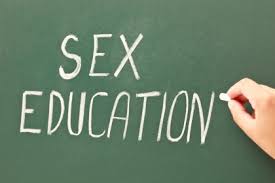
Nigerians are divided on the introduction of the comprehensive sex education (CSE) curriculum in schools to give students an understanding of their sexuality.

The West African country is among the most religious countries in the world with 186 million people made up of predominantly Christians and Muslims. With its over 300 tribes, Nigeria is seen as a conservative country.

These characteristics influence the divisions on the teaching of sex education in schools.

Nigeria has been praised by UNESCO for scaling up and sustaining the comprehensive sex education (CSE) programme in basic schools among a few developing countries in the world.

Nigeria’s CSE curriculum is known as family life HIV education and is designed to prevent students from contracting sexually transmitted infections including HIV, reduce teenage pregnancy and lower rates of sexual violence.

The CSE brought forth text books for the government and private primary and secondary school students with lessons on abstinence and other sexuality topics. The children are between the ages of eight and 15.

One of such books is the Junior Secondary School (JSS 1) Social Studies textbook written by S. O. Omotuyole.

This book has been condemned for its content on Page 50 that spells out “ways to give and receive sexual pleasure and develop closeness without sexual intercourse”.

Among the answers for the topic on abstinence in the book are: kissing, hugging and the undesirable “mutual masturbation”.

One parent, Bello Abdullahi, expressed concern on Facebook about the text book and called on other parents to protect their children and educate them according to the “scriptures”.

“We must keep a close watch on what is being taught our children at school and re-educate them in line with scriptures. Please alert other parents and let’s protect our children,” he said.

He received a diverse response from the public as some blamed the country’s educational board for the publication while others believe the time is right for sexual education.

The NGO Association of Concerned Mothers (ASCOM) has petitioned the Ministry of Education to withdraw the textbook for its “unwholesome and dangerous ideology.”

Also, the National Association of Proprietors of Private Schools (NAPPS) launched a campaign in July 2017 against the comprehensive sex education in schools to rather “impact moral values in the children”.

Meanwhile, reproductive health body IPAS has supported the introduction of CSE to reduce incidences of rape among children.

The Country Director of IPAS Nigeria Hauwa Shekarau said last week that adolescents needs to be equipped with information to prevent them from the various consequences of unprotected sex.

“Comprehensive sexuality education is not a taboo. Young people should be able to acquire sex education the appropriate way. If you don’t tell them the right things, they will get the information, whether right or wrong, elsewhere,” she said.

The News Agency of Nigeria (NAN) on Monday published a report carrying views of education stakeholders on the matter in the North West and North East states of the country.

They also expressed diverse views on the teaching of comprehensive sex education (CSE) in schools.

Some supported it while others disapproved of it citing religious reasons.

“Parents should not hide the truth from their children, but teach them what they need to know based on their level of comprehension and take them gradually as they develop. The rationale is to catch them young and prevent them from getting the wrong information from outsiders who may eventually exploit them,” Okene Oloruwagba, a mother told NAN.

“Sex education is an intuitive knowledge and in my opinion government should not introduce sexuality in school curriculum because it will corrupt the minds of teenagers,” Ustaz Abdulrahim Shuaibu, Muslim cleric said.

He was supported by a pastor, Ahmadu Samuel, who said: “Teaching children about sexual relationships apart from promoting immorality is like teaching a child to drive a car without explaining the traffic laws.”

The debate has heightened and the onus lies in the hands of the government to decide on scrapping sex education in schools, reviewing the policy or maintaining it as it is.

Source:

https://stluciatimes.com/2017/08/21/nigerians-divided-sex-education-schools


Comparte este contenido:

Namibia elogia apoyo chino para impulsar educación universitaria

Namibia/21 agosto 2017/Fuente: Spanish China

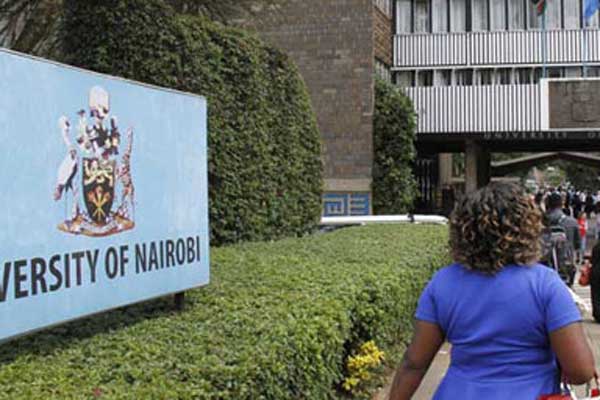
La inyección de capital y el apoyo técnico de China a la asociación de educación terciaria de Namibia ha transformado la prosperidad económica en la Universidad de Namibia, dijo hoy Lazarus Hangula, rector adjunto de la universidad.

Hangula hizo los comentarios durante el festival cultural anual de la institución, que coincidió con la celebración del XXV aniversario de la universidad, y añadió que la ayuda china ha ayudado al recinto a convertirse en una institución reputada.

El apoyo otorgado incluye recursos humanos, financiamiento académico y un acuerdo con la Universidad de Geociencias de China que brinda ayuda técnica, liderazgo y apoyo de infraestructura a la Universidad de Namibia.

«A través de las relaciones bilaterales, China ha dotado a la Universidad de Namibia con equipo, becas y conocimiento profesional. El Instituto Confucio constituye una oportunidad para los namibios que buscan oportunidades académicos o para aquellos que desean explorar iniciativas empresariales en China o aprender el idioma y cultura chinos», indicó Hangula.

De acuerdo con Hangula, un creciente número de profesores e investigadores de la universidad también cuentan con certificaciones de universidades chinas.

Por otra parte, Zhang Yiming, embajador chino en Namibia, dijo que China desea incrementar la inversión en educación en Namibia, lo que ampliará los intercambios culturales y la cooperación entre los dos países.

Fuente noticia: http://spanish.china.org.cn/international/txt/2017-08/18/content_41430567.htm

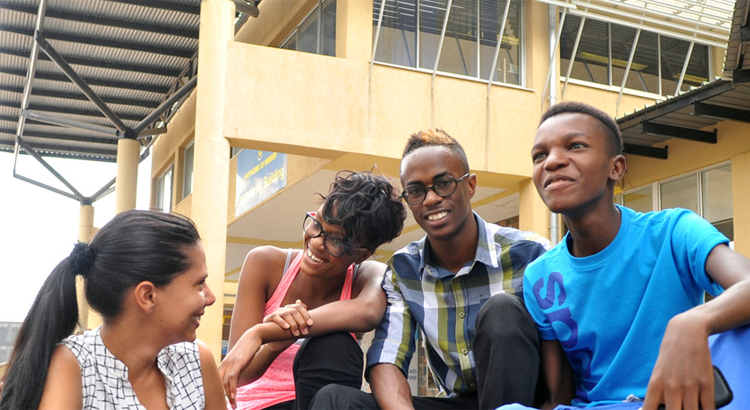
Fuente imagen: http://nbii.polytechnic.edu.na/nust.na/web/sites/default/files/students-1stps.png

Comparte este contenido:

Afganistán: Las ONG piden el fin de los ataques a los trabajadores humanitarios

Afganistán/21 de Agosto de 2017/Telemadrid

Las ONG han pedido hoy, en el Día Mundial de la Asistencia Humanitaria, el fin de los ataques contra los trabajadores humanitarios en conflictos, catástrofes y crisis.

Médicos del Mundo precisa que, en el primer semestre de este año, 62 miembros del colectivo sanitario han sido asesinados, han desaparecido, han resultado heridos o han sido asaltados en trece países como Siria, Pakistán, Afganistán, El Salvador, Ucrania, México o Nigeria.

«No solo queremos denunciar lo que se incumple, sino también proponer caminos alternativos a través de nuestra experiencia, como el refuerzo de los sistemas preventivos de seguridad», señala el presidente de Médicos del Mundo en España, José Félix Hoyo.

Desde su punto de vista, «el personal sanitario local debe estar amparado por el mismo sistema de protección que los equipos internacionales».

Médicos del Mundo ha puesto en marcha una campaña consistente en distorsionar su logotipo para mostrar que aquello en lo que no quiere convertirse: «Objetivos del Mundo».

«Las instalaciones sanitarias deben ser protegidas y, en ningún caso, atacadas deliberadamente. Hoy en día, el derecho humanitario no se respeta en absoluto: curar no debe ser considerado como un acto de guerra», indica la vocal de Programas Internacionales de Médicos del Mundo, Iria Galván.

Desde Acción contra el Hambre, su director general, Olivier Longué, subraya que los países donde los trabajadores humanitarios están más amenazados por la violencia y los ataques son los que necesitan ayuda humanitaria de manera más urgente.

«En 2016, cinco países afectados por conflictos concentraron la mayor parte de los principales ataques contra actores humanitarios, Afganistán, Somalia, Sudán del Sur, Siria y Yemen, zonas de guerra donde el derecho internacional humanitario ha quedado relegado», resalta Longué.

De Afganistán a Ucrania, de Nigeria a Yemen, de Sudán del Sur a Siria, «a pesar de los riesgos por falta de seguridad en estos países, nuestros equipos se han movilizado para desplegar la respuesta humanitaria necesaria», precisa Longué.

Acción contra el Hambre no solo pide el fin de estos conflictos, sino el respeto del derecho internacional humanitario para que las personas tengan acceso a los servicios básicos mínimos para tener una vida digna.

World Vision se ha unido a la campaña «No son un objetivo» para invitar a los líderes mundiales a garantizar la protección de civiles y trabajadores humanitarios.

Esta entidad pone de relieve el valor de los trabajadores humanitarios y reclama el fin de la violencia contra los niños, así como de la destrucción intencionada de los servicios médicos y educativos.

El Programa Mundial de Alimentos, la mayor agencia humanitaria que lucha contra el hambre en el mundo, expresa su apoyo a las personas que se encuentran atrapadas en conflictos y rinde homenaje a los trabajadores humanitarios que se preocupan por ellas.

Destaca el compromiso de los que trabajan para aliviar el sufrimiento y cubrir las necesidades de los más vulnerables en todos los rincones del mundo, con frecuencia, poniendo en peligro su propia seguridad.

 Fuente: http://www.telemadrid.es/noticias/sociedad/noticia/las-ong-piden-el-fin-de-los-ataques-los-trabajadores-humanitarios
Comparte este contenido:

Nigeria: FG, ASUU Meeting Deadlocked, Postponed Till Next Week

Nigeria/ August 21, 2017/ Allafrica

Resumen: La esperanza de una reanudación temprana de las actividades académicas en los campus universitarios por parte de los estudiantes y sus padres se desvaneció el jueves, cuando la reunión de conciliación entre el gobierno federal y la Unión de Universidades Universitarias (ASUU) sigue estancada.

The hope of early resumption of academic activities on university campuses by students and their parents was dashed thursday as the conciliation meeting between the federal government and the Academic Staff Union of Universities (ASUU) remains deadlocked.

The parties have agreed to resume meeting in a week’s time.

The meeting which was conveyed thursday by the Minister of Labour and Employment, Senator Chris Ngige, in his office, had in attendance; the Minister of Education, Malam Adamu Adamu, and his team, the Director General, Budget Office of the Federation, Mr. Ben Akabueze; Chairman of the Salaries and Wages Commission, representatives of the National Universities Commission (NUC), members of ASUU led by its National President, Dr. Debo Ogunyemi, and senior staff of the Ministry of Labour and Employment.

Ngige in his opening remarks accused ASUU of not following the proper procedure before embarking on strike.

According to him, «There must be a mandatory letter of 15 days to labour ministry, to education before going on strike.»

He insisted that all agreements were supposed to be domiciled in ministry of labour in order to track implementation as agreement gives room to renegotiation.

The minister said: «Two days ago, we met here on the ban of ASUU by the Kogi State Government and thereafter, on the sideline, we touched the current ASUU strike which has led us to where we are. Today, we are going to discuss the issue of that strike. We don’t want to apportion blames because if we do, we will not resolve the issues. Also, we don’t want to be legalistic because if we do, the strike should not have occurred without the mandatory notice as required by the Trade Dispute Act.

«If we want to apportion blames, certain things have also been done by the government side that went to do the negotiation in the National Assembly and made political agreement with them, and that collective bargaining agreement was not domicile in this ministry. This is the ministry which is the only agency that has the mandate to resolve labour issues between employers and employees as per the Nigerian constitution. In all, government is desirous to attend to the issues raised and is not trying to show any bad faith. The issues are well known to all of us because they are a product of the 2009 agreement whose fallout was the memorandum of understanding (MoU) signed in 2013 with which government was supposed to release some funds.

«Last November, we all agreed that the funds released should be audited forensically and that why that is going on, some amount of money should be released. One or two things happened and due to laspses to Labour administration, there were some trajectory that made it impossible for some of the conditions not to have been fulfilled.

«The Babalakin committee is working on those issues and I know that ASUU members, as knowledgeable men are aware that ILO conventions permits that there should be renegotiation and that was why we allowed the Ministry of Education go ahead with the renegotiation of the CBA.»

However, before the parley went into a technical session, Ngige noted that government is desirous to many of the issues raised by ASUU, hence the decision to call the conciliation meeting to look into a possible renegotiation between the two sides in line with the International Labour Organisation Convention.

He said it was based on this that he, as the chief conciliator, urged the Ministry of Education to go ahead with the renegotiation so that students can go back to school and conclude their examinations.

He gave an insight into the modality of the meeting that it will not leave any room for apportioning of blames, and that it would not be legalistic for a melting point to quickly be reached.

But Ogunyemi, in his response, disagreed with Ngige, stressing that the minister had taken side with his education counterpart, Adamu.

He insisted that ASUU informed relevant ministries before embarking on strike, noting that there was a letter dated July 10 to inform the major stakeholders.

The ASUU president said in the last 10 months, the union had written 10 letters trying to reach out to relevant stakeholders after suspending the seven days warning strike in November last year.

He clarified that the strike is not a fresh action and that they are open to suggestions.

After their opening remarks, the meeting later went into a technical session, which lasted for hours.

While briefing the media afterwards, Ogunyemi said there was progress in the discussions but that it was unfortunate that it was not finalised because the leadership of ASUU had to go back and brief its members on the terms given by the government and come back in a week’s time when the meeting would resume with a further resolution of the universities teachers.

He, however, did not give a hint of government’s proposal but said the strike would continue and that the union would revert to the government next week.

On whether the strike will be called off before then, he said: «The leadership of the union did not call the strike, our members called the strike and they will decide when to suspend the strike.

«So, when our members decide otherwise, it will be off,» he said.

On his part, Ngige said: «Within the last 48 hours, government has been working. The Minister of Education, Minister of Finance, Attorney General of the Federation and we have taken some government positions which we have communicated to ASUU for them to take back to their members to see if that can be adequate enough for them to call off the strike.

«The major issue is that we want the strike called off so that our children in school can write their degree and promotion exams. ASUU graciously said they will come back to us on a date within the next one week. It will not be later than one week so that we then take it from there.»

Meanwhile, the federal government has disclosed that it has demanded the details of the expenditure of N30 billion from ASUU, as a precondition for the release of N23 billion being requested for, by the striking union.

It also refused to back down from its insistence that the universities would not be excluded from the Treasury Single Account (TSA), despite the opposition of ASUU, which declared an indefinite strike last Monday, following the non implementation of the 2009 agreement.

The Minister of Education, Adamu, while, speaking before the Senate Committee on Tertiary Education yesterday, however expressed hope that the strike would be called off next week, as negotiations are currently ongoing.

«They (ASUU) asked for N23 billion to be paid. But we said the condition for that N23 billion to be released, was for them to account for the N30 billion they had taken, and they were not able to account for it,» he said.

Adamu did not reveal when the N30 billion was given to the universities.

«The Minister of Finance undertook to do the audit from the ministry, and we agreed that the result will be known in six months. During that six months, government undertook to be paying them N1.5 billion each month during the time they are waiting for this. And their grouse was the forensic audit promised by the Minister of Finance had not been done and the money promised had not been paid,» he added.

 Fuente: http://allafrica.com/stories/201708180105.html
Comparte este contenido:

Nigeria: In a First, Govt Accepts Blame for ASUU Strike

Nigeria/August 21, 2017/Allafrica

Resumen: El gobierno federal, en una salida de la norma, admitió el miércoles que su incumplimiento en la negociación con la Unión de Personal Académico de Universidades (ASUU) dio lugar a la huelga emprendida por los profesores de las instituciones terciarias el domingo.

The federal government, in a departure from the norm, wednesday admitted that its failure to fulfil its side of the bargain with the Academic Staff Union of Universities (ASUU) resulted in the strike action embarked upon by the lecturers of tertiary institutions on Sunday.

Briefing newsmen in the State House, after the Federal Executive Council (FEC) meeting, the Minister of Education, Malam Adamu Adamu said it was saddening that ASUU went on strike owing to the failure of the federal government to fulfil its side of the bargain with the union last year.

Adamu, however, said the federal government was not happy over the way ASUU proceeded on strike, observing that it failed to follow due process by giving the government reasonable notice as the case should be.

Nevertheless, he said he hoped to meet with the lecturers later wednesday or today and expressed optimism that both camps would strike a deal that could end the strike, just as he itemised the demands of ASUU and gave an update on each of them.

«It’s very sad that I am here and ASUU is on strike. Late last year, we had a meeting because ASUU gave a one-week notice of strike and we were able to work out some agreement.

«I must confess that government has not fulfilled its side of the bargain, even though we are unhappy that ASUU went on this strike without following due process and giving us good notice, we realised that we promised something and we did not fulfill it.

«I hope I will be meeting them later today or tomorrow and I’m sure we will be able to reach some agreement so that the strike will be called off as soon as possible. I’m sure you are aware of the issues we agreed on.

«There is the issue of re-negotiation which is the only one that they agreed government has done what it promised, because we set up the re-negotiation team and negotiations are already ongoing.

«There is the issue of unpaid earned allowances and I think because of some miscommunication, what we promised could not be done, but I am assuring ASUU and the whole nation that this is going to be done.

«There is the issue of registration of the Nigerian Universities Pension Commission. I think that one, there are few issues that need to be sorted out with the National Pension Commission. I believe there will be no problem with that.

«There is the issue of their staff schools, which I think the court has given them a verdict to go ahead with it. They have also requested that they should be allowed not to remit their funds to the TSA (Treasury Single Account) and I think government will not do this, but there are some peculiar funds in the university like the endowment funds which are monies kept and all the interest they generate, prices and so on are given.

«Government will exempt the endowment funds, but in universities, it is part of the peculiarities. I hope later on when I meet them today, there will be total agreement,» he said.

Also, the Minister of Information, Mr. Lai Mohammed, said the council approved the award of a contract for the rehabilitation of the Itakpe-Ajaokuta rail line and the completion of 12 railway stations in the country.

According to him, the contract was awarded to CCEC at the cost of $122.6 million, including all taxes and at the exchange rate of N305/$, with a completion period of 15 months.

He also said the council approved another memorandum from the Minister of Transportation, Rotimi Amaechi, for the interim construction of the narrow rail gauge system.

He said the second approval would aid the completion and full utilisation of the Lagos-Kano, Calabar-Maiduguri, Port Harcourt-Maiduguri rail lines from October this year.

He said the development «means that with effect from October this year, there will be new locomotives with about 17 wagons that will be in use; we’ll be able to move a million tonnes of our goods, and by this, preserve the lifespan of our roads».

He also said the council approved the revised estimate cost for the construction of 1150MVA and 330, 132 KVA transformers for Birnin Kebbi and reinforcement of 330KVA sub-stations.

NANS Bemoans Strike

Meanwhile, the National Association of Nigerian Students (NANS) has lamented that the strike embarked upon by ASUU would come with the attendant challenges and hardship to both university students and their parents.

The President of NANS, Mr. Chinonso Obasi, at a briefing in Abuja wednesday, said incessant strikes by ASUU translate to the distortion of learning and unnecessary delays and waste of time in the completion of courses of study.

Obasi also said the current strike poses a risk to the students who are forced to travel back and forth, amounts to a waste of scarce resources, adds pressure on the parents, and results in economic losses.

He called on the federal government to consider the monumental risk to the millions of idle and redundant young people by urgently addressing the lingering issues that led to the strike embarked upon by ASUU so that the students can return to school.

He said the NANS leadership was also questioning the imperative of the over N1 billion expended to develop the National Economic Recovery and Growth (NERG) plan that did not make provisions to address the critical challenges of Nigerian universities and its students.

«NANS is of the considered opinion that human capital development is an integral component of the nation’s economic development and growth and so excluding appropriate consideration for the sustainable development of the nation’s tertiary institutions in a strategic roadmap for building a prosperous future for the country, is not only an absurdity but an aberration that is grossly not acceptable,» he said.

According to Obasi, the NERG plan was purported to contain a holistic solution to the numerous challenges bedeviling the nation and designed to engender not only the recovery of the nation’s ailing economy but one that would move the country forward towards building a sustainable and prosperous future for the country with the youth at the center.

He emphasised that social inclusion and active participation of young people on issues that concerns them is a global trend, adding that Nigerian students and youths cannot continue to sit back and fold their arms while things go wrong.

He harped on the need for students and youths to become conversant with the NERG and how it directly impacts on their lives now and in the future and understand how they can actively participate in the implementation of the plan.

Fuente: http://allafrica.com/stories/201708170064.html

Comparte este contenido:
Page 286 of 622
1 284 285 286 287 288 622