Page 297 of 622
1 295 296 297 298 299 622

África: How building your child’s spoken word bank can boost their capacity to read

África/Julio del 2017/Noticias/https://theconversation.com/

Children’s oral vocabulary – their knowledge of the sounds and meanings of words – is strongly positively associated with their reading all the way through school. Understanding this relationship is important for making children’s reading as strong as possible.

Our new research has pointed to one mechanism underlying this association: when primary school children know a spoken word, they form an expectation of what that word should look like when it is written down – and they do this even if they have never seen it before.

Using eye-tracking technology, we demonstrated that these expectations can help children to process orally familiar words more quickly when they read them for the first time.

The tech: understanding eye-tracking

Advances in technology have made it much easier to use eye-tracking with children. Unlike old systems that were mounted on participants’ heads, new systems (shown below) sit on the desk in front of the child. The eye-tracker finds a small target sticker on the child’s forehead and uses it to work out where the child’s eyes are.

Jo Stephan, Macquarie UniversityAuthor provided

Eye-trackers are special cameras that can follow the movement of the eyes as children read in real time. They provide information about where children look and how long they look for, giving insight into what is happening when children read.

When the properties of a written word are changed (for example, how many letters it has or how frequently it occurs in written language), this influences how easy or difficult those words are to process.

Put simply, when processing is easy, looking times are shorter. When processing is hard, looking times are longer.

The experiment: from hearing to seeing

In order to form expectations about written words that have not yet been seen, children require a combination of knowledge about:

  • the pronunciation and meaning of a spoken word; and
  • the links between the sounds in spoken words and the written letters that represent them.

The figure below illustrates that by drawing this information together, children can imagine the written form of words they cannot see.

The formation of ‘Finch’. Author provided

We taught children in Year 4 the pronunciations and meanings of some made-up words. We told them the words were inventions coming from “Professor Parsnip’s invention factory”. Each invention had a name and a function. A “nesh”, for example, is an automatic card shuffler (see below).

During this training period children learned some new oral vocabulary but they never saw any of the words written down.

Author provided

Later we took the words the children had learned about and some other words they hadn’t learned about, and put them into some simple sentences. We then tracked the movement of the children’s eyes as they read.

Previously heard versus previously unheard words

We found that when children had previously learned about a spoken word, they spent less time looking at it than other words they hadn’t heard about. This suggested their reading was enhanced by their previous oral vocabulary.

The time spent looking at the words they had learned about was also affected by how predictable the spellings of the words were. This revealed that children formed advance expectations about how the words were likely to be spelled.

When a word was spelled in a way that was what they expected to see, this helped their reading. For example, if the children had learned the spoken word “nesh”, we showed them the written word nesh.

But when we showed them a word that was spelled in a way the children probably did not expect to see, the children were surprised by this and they focused on it longer. For example, the children were surprised when they learned the spoken word “coib” but we showed them the written word koyb.

In the two videos, there is a clear difference in reading times for the unpredictably spelled word koyb and the predictably spelled word nesh.

The fact that children’s reading was affected by whether they knew the spoken form of the word and how predictably it was spelled shows that when children hear spoken words they form expectations about what those words should look like before they see them. In turn, this can help their reading.

Building oral vocabulary and boosting literacy skills

Making deposits in children’s spoken word banks – their store of words with known pronunciations and meanings – is an important and practical way of helping to support their literacy development.

Classrooms are logical places to teach children new spoken words, but parents can create learning opportunities at home too. If an unfamiliar word arises during conversation or shared book reading, perhaps try starting a dialogue by asking your child whether they have heard it before.

Fuente:

https://theconversation.com/how-building-your-childs-spoken-word-bank-can-boost-their-capacity-to-read-80888

Fuente imagen:

https://lh3.googleusercontent.com/SNf4wJ4VOlpP0ZJZNgRK35S8_L_iqoMVFUxQlkmd156sWYCiA4EjMTOsh5U8EaA59GMf6Q=s85


Comparte este contenido:

Tanzania: Los dirigentes sindicales apoyan las iniciativas para lograr la igualdad de género

Por: Internacional de la educación

Los dirigentes del Tanzania Teachers’ Union han convenido sobre la importancia de lograr la igualdad de género en el seno de su sindicato y de potenciar las habilidades de liderazgo de las mujeres, y se han comprometido a poner en marcha estrategias para lograrlo.

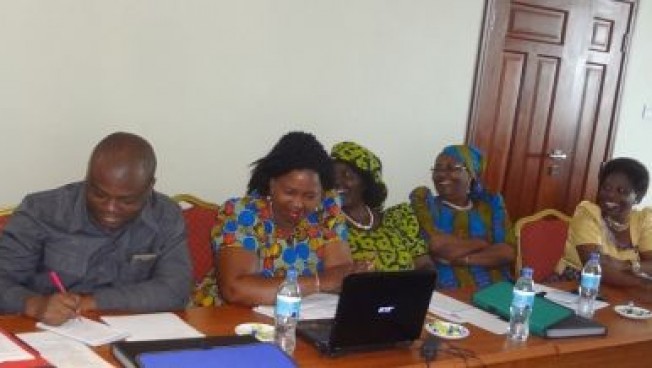
Los compromisos fueron adoptados por 29 oficiales de género de distrito y regionales del Tanzania Teachers’ Union (TTU) y por altos líderes sindicales que se reunieron para desarrollar un taller de formación sobre género y liderazgo en Dar-es-Salaam, Tanzania, del 12 al 14 de julio. El taller fue organizado por la Red Africana de Mujeres en la Educación de la Internacional de la Educación (AWEN, por sus siglas en inglés).

Como resultado de esta formación, los 29 participantes obtuvieron un mayor conocimiento y comprensión de las cuestiones relacionadas con la igualdad de género, y adquirieron habilidades en materia de liderazgo que les permitirán transmitir la información y los conocimientos a los demás miembros del sindicato.

Fomentar la participación de las mujeres

Asimismo, se debatieron estrategias destinadas a fomentar la participación de las mujeres en las actividades sindicales, la creación de redes y la movilización de recursos, y los dirigentes sindicales obtuvieron información sobre las actividades llevadas a cabo por la Red de Mujeres de África Oriental (WNEA, por sus siglas en inglés) y la AWEN.

Dado que el número de mujeres que ocupan puestos en la dirección del TTU es todavía reducido, los participantes también reflexionaron sobre posibles maneras de ayudar a más mujeres a acceder a los órganos de toma de decisiones del sindicato. Para ello recomendaron que se intensificaran los esfuerzos por parte de los dirigentes del TTU para integrar la perspectiva del género en su sindicato. Por otra parte, formularon estrategias para que todos los dirigentes sindicales respalden y garanticen la aplicación efectiva de la política sobre género del sindicato, con el fin de potenciar la igualdad de género en el seno del sindicato.

Apoyo al más alto nivel

El secretario general del TTU, Yahya Msulwa, hizo hincapié en la importancia que tiene la participación de las mujeres en las diferentes actividades del sindicato, especialmente en el ámbito de la dirección, y de que aumente la proporción de mujeres en los órganos de toma de decisiones del sindicato.

Citando el ejemplo de la representante nacional del TTU para las Mujeres y miembro del Comité Regional Africano de la IE, Stellar Mamotto, también presente en la reunión, el secretario general instó a todos los participantes a apoyar plenamente a las mujeres en el proceso de lograr la igualdad de género en el seno del sindicato.

En nombre de la dirección del TTU, el tesorero nacional, Abubakary Allawi, aseguró a los participantes que su sindicato seguirá empoderando a las mujeres y respaldando sus actividades, y que todas las recomendaciones del taller se enviarán a los órganos de toma de decisiones del sindicato para su adopción y aplicación.

El taller fue impartido por la presidenta del WNEA y miembro del Uganda National Teachers’ Union, Mary Josephine Nabuyungo, y la coordinadora del WNEA y miembro del TTU, Mwandile Kiguhe.

*Fuente: https://www.ei-ie.org/spa/detail/15258/tanzania-los-dirigentes-sindicales-apoyan-las-iniciativas-para-lograr-la-igualdad-de-g%C3%A9nero

Comparte este contenido:

África: The SDGs won’t be met without active citizens fortified with new knowledge

África/julio del 2017/Noticias/https://theconversation.com/

Outside a courthouse in Cape Town in South Africa demonstrators performed a short skit to draw attention to the dangers of a “secret nuclear deal” that could cost the country more than a trillion rand and indebt citizens for many decades to come, while no doubt enriching a handful of well-connected elites.

The performers acted out well-known corruption scenarios, and then invited discussion among the protesting spectators.

A week later, the same performance, this time in a community hall, formed part of a popular education workshop where experts interacted with citizens, focusing on the pros and cons of nuclear, solar and wind energy. 75 people, young and old, participated enthusiastically. Most had never learnt about different sources of energy – despite the fact that energy prices and environmental concerns are very much their business.

The workshop was organised by the Popular Education Programme and the South African Faith Community Environmental Institute. Both are part of a coalition of organisations united under the #StopCurruptNuclearSA banner. It’s trying to stop the deal from being pushed through without proper citizen engagement and participation.

The initiative recognises the opportunity that the nuclear deal gives to engage large number of citizens in education, experimentation and debate about various energy scenarios. It aims, literally, to put power in the hands of the people.

It also shines an important light on the relationship between lifelong learning and its essential role in achieving the United Nation’s Sustainable Development Goals (SDGs). The link is this: the SDGs are unlikely to be met without the active participation of ordinary people. But for that to happen, communities need to learn a range of new skills, understandings and attitudes. That can only happen if they’re in a constant cycle of learning – whatever their age.

Sustainable development is everyone’s business

The UN has adopted 17 SDGs, each with specific targets to be achieved by 2030. The goal is “to end poverty, and ensure prosperity for all as part of a new sustainable development agenda”.

Sustainable development is about using the world’s resources in a way that doesn’t permanently destroy but regenerates them. It’s about society consuming and producing in a way that recognises the world’s limits.

The SDGs are contested. Some critics argue that sustainability can’t be achieved without tackling capitalist growth – the fundamental cause of poverty and ecological crisis.

Whatever way you look at it energy issues are at the heart of the sustainable development question. This is reflected in SDG 7, which aims to ensure access to “affordable, reliable, sustainable and modern energy for all”. The UN website states that

Energy is central to nearly every major challenge and opportunity the world faces today. Be it for jobs, security, climate change, food production or increasing incomes, access to energy for all is essential.

Energy solutions profoundly affect the economy, politics and the environment – from agriculture to waste management, food security, sanitation, transport, housing, health, jobs and forms of governance.

These issues affect all citizens. And it is low-income communities and communities on the periphery that tend to be the most seriously affected by polluting and costly energy systems. They are, of course, the vast majority.

The fact is that citizens can’t depend on governments alone to make the right decisions. The way that the South African government, along with other vested interests, is pushing for nuclear energy is a perfect example.

Of course SDGs need to be engaged at the level of the UN agencies and governments. But it’s essential that they are also engaged on the ground – by social movements and organisations of women, men, girls and boys across social class, age and geography. It’s here that new knowledge is often created through participating actively in the struggles for social and environmental justice.

As University of Pretoria professor Lorenzo Fioramonti argues in his book Wellbeing Economy, “participatory governance is key to achieving sustainability and well being”.

For this to work the majority of people need to be educated about energy options so that they can participate in decisions that affect their lives. But to be able to do this they need to be fully informed and engaged in the issues at hand, regardless of age or formal educational background.

This is consistent with SDG 4, which stresses the need to:

Ensure inclusive and equitable quality education and promote lifelong learning opportunities for all.

Rethinking lifelong learning

The UN’s commitment to lifelong learning certainly sounds hopeful, but the responses of governments and funders to similar commitments made in the UN’s Millennium Development Goals were underwhelming. For the most part, lifelong learning has been understood in a very limited way. The focus has been on young people and anyone not at school, college or university is often discounted, unless they pay for it themselves.

This means that the majority of citizens are left out. What this adds up to is that socio-economic relations will remain the same and the SDGs are unlikely to be met.

Instead, we need adult and popular education to be accepted as integral to lifelong learning and essential to the empowerment of local communities.

This can be achieved if more pressure is brought to bear on governments and funders to support, for example, mass popular education programmes in which experts and grassroots people of all ages engage actively on issues that matter.

Fuente:

https://theconversation.com/the-sdgs-wont-be-met-without-active-citizens-fortified-with-new-knowledge-81279

Fuente imagen:

https://lh3.googleusercontent.com/XcvGkzCcsmzBIlMf1dS_epD7qWHL1kGD_j7HMM3Db1T0_Imc5TTQRAHmTbRWUPGmCnIZ=s85

Comparte este contenido:

Nigeria tiene «el mayor número de niños fuera de la escuela»

Africa/Nigeria/BBC

Nigeria tiene el mayor número de niños en el mundo que no están siendo educados, dijo el gobierno.

Reconociendo la magnitud del problema, el secretario permanente del Ministerio de Educación, Adamu Hussaini, dijo que era «triste notar» que Nigeria tenía 10.5 millones de niños fuera de la escuela.

Esta es la primera vez que altos funcionarios han admitido el tamaño del problema.

Los factores culturales se consideran una de las causas, pero los críticos señalan la falta de dinero destinado a la educación pública dado que los mismos van a las escuelas financiadas con fondos públicos.

La agencia de la ONU para la infancia, Unicef, ha estado haciendo campaña en este tema, así como en otros grupos.

En una visita al país la semana pasada, la activista de educación Malala Yousafzai se reunió con el presidente interino Yemi Osinbajo y le pidió que declarara lo que ella llamó «un estado de emergencia de educación en Nigeria».

Malala Yousafzai, galardonada con el Premio Nobel, presenta a su padre Ziauddin Yousafzai ya los estudiantes de la escuela financiada por la Unicef ​​en el campamento de Bakassi en Maiduguri, Nigeria 18 de julio de 2017Derechos de autor de la imagenREUTERS
Elactivista Malala Yousafzai visitó Nigeria la semana pasada

El Sr. Hussaini dijo que los más afectados son las niñas, los niños de la calle y los niños de los grupos nómadas y añadió que la prosperidad económica sólo puede lograrse con un «sistema educativo inclusivo y funcional».

Pero el editor de la BBC Hausa, Jimeh Saleh, dice que el fracaso en el sistema educativo se debe a la falta de fondos gubernamentales, más que a cualquier factor cultural sugerido por el ministerio.

«Las escuelas financiadas por el gobierno en Nigeria prácticamente se han derrumbado a lo largo de los años debido a la escasa financiación que deja a los niños de hogares pobres sin ir a ninguna parte sino a las calles», dice.

Unicef ​​estima que el 60% de los niños nigerianos que no asisten a la escuela viven en el norte del país.

Fuente: http://www.bbc.com/news/world-africa-40715305

Comparte este contenido:

FAO urge a ministros de Agricultura abordar el desempleo juvenil en África

Julio de 2017/Fuente: Telesur

La Organización de Naciones Unidas para la Alimentación y la Agricultura (FAO, por su sigla en inglés) exhortó este domingo a los ministros de Agricultura a abordar el problema del desempleo juvenil en África.

«Promover la agricultura sostenible y el desarrollo rural es esencial para absorber a estos millones de jóvenes que buscan un trabajo. Un mundo sostenible sólo puede lograrse con la plena participación de los jóvenes. Deben sentirse integrados y creer que un mundo más pacífico y próspero es posible», expresó el director general de la FAO, Graziano da Silva, explicó: .

La FAO detalló que en 2014 sólo 11 millones de jóvenes africanos entraron al mercado laboral, pero muchos de ellos “ven pocas oportunidades en el sector agrícola y están limitados por la falta de habilidades, los bajos salarios y el acceso limitado a la tierra y a los servicios financieros. Estos factores, combinados, los hace más propensos a migrar de las zonas rurales”.

El director general de la FAO describió cinco pasos para involucrar a los jóvenes en la agricultura y el desarrollo rural:

1. Mejorar la participación y liderazgo de los jóvenes en organizaciones productoras e instituciones rurales.

2. Estimular inversiones del sector privado para modernizar el sector agrícola.

3. Ofrecer mejores servicios de salud, electricidad y educación a las zonas rurales.

4. Fortalecer los vínculos económicos, sociales y políticos entre los centros urbanos.

5. Invertir más en Tecnologías de la Información y la Comunicación (TIC).

La  FAO apoya la aplicación de varios programas dirigidos a los jóvenes de las zonas rurales. Este plan se desarrolla tras la reunión realizada por la Comisión de la Unión Africana, la Comisión Europea y la Presidencia estonia del Consejo de la UE, a la que asistieron los ministros de Agricultura de la Unión Africana y la Unión Europea.

Fuente: http://www.telesurtv.net/news/FAO-urge-a-ministros-de-Agricultura-abordar-el-desempleo-juvenil-en-Africa-20170702-0035.html

Comparte este contenido:

Nigeria cuenta con el mayor número de niños sin escolarizar

Nigeria/27 julio 2017/Fuente: TRT

Los 10,5 millones de unos 20 millones de niños sin escolarizar en el mundo están en Nigeria.

“Cerca de 20 millones de niños en el mundo están fuera de la escuela. Los 10,5 millones de estos niños, es decir la mitad, están en Nigeria”, declaró el secretario permanente del Ministerio Federal de Educación, Adamu Husaini, durante la inauguración de la edición 62 del Consejo Nacional de Educación en el norteño estado nigeriano de Kano.

Husaini expresó sus preocupaciones por el sistema educativo en Nigeria, y precisó que la cifra de afectados incluye hijos de pescadores, ganaderos y agricultores migratorios, entre ellos los pastores de la etnia Fulani, el mayor pueblo nómada del mundo.

Los niños no pueden acceder a colegios principalmente por la pobreza y el desplazamiento de las familias debido a los conflictos, destacó. “El Gobierno y las fundaciones privadas emprenden en los años recientes intensos trabajos para que los niños puedan asistir a escuelas. Pero estos trabajos son insuficientes”, criticó Husaini.

La pobreza y los ataques de la organización terrorista Boko Haram impactan negativamente la asistencia a la enseñanza en Nigeria, que tiene una población de unos 200 millones de habitantes.

Fuente: http://www.trt.net.tr/espanol/vida-y-salud/2017/07/26/nigeria-cuenta-con-el-mayor-numero-de-ninos-sin-escolarizar-777793


Comparte este contenido:

Kenia: Do not use spellcheckers to correct mistakes, pupils told

Kenia / 26 de julio de 2017 / Por: WINNIE ATIENO / Fuente: http://www.nation.co.ke

Pupils have been warned against using technological tools to check spellings.

The Education ministry said due to advancement in technology, learners had resorted to the use of spellcheckers to autocorrect their mistakes, eroding their mastery of the English language.

Education Principal Secretary Belio Kipsang warned against the use of “spellcheckers in communication gadgets such as mobile phones, computers, tablets and laptops”.

In his statement Dr Kipsang added: “Although a spellchecker is a handy tool for general use, it will never fully take the place of educating yourself properly and polishing your vocabulary, grammar and writing skills.

The Kenya National Spelling Bee (KNSB) programme manager Eric Mosoti said the government was spearheading literacy in English and improving the reading culture among pupils in the country.

VOCABULARY

He said their research had shown people who were exposed to books and a lot of vocabulary were often good spellers.

“Those very high-achieving spellers have heightened sensitivity to those letter patterns. They can proofread and edit by identifying quite easily what parts of words might be correct or incorrect,” said Mr Mosoti.

Last year at the African Spelling Bee championships, Kenya tied with Ethiopia in the second position while South Africa emerged top.

The competition, which started last year in Nairobi, proved successful with three champions, Alma Wanjiru (St Mary’s, Ruaka), Paul Mwangi (Bondeni Primary School, Embakasi) and Abigael Simiyu (St Mary’s, Ruaka) emerging winner, runner-up and second runner-up, respectively.

SECOND

They represented Kenya in the Africa Spelling Bee Competition in Johannesburg, South Africa, emerging second out of the 10 participating countries.

The African Spelling Bee was founded in 2016 by representatives from Botswana, Ethiopia, Kenya, Lesotho, Nigeria, Malawi, South Africa, Uganda and Zimbabwe.

They had the very first African Spelling Bee Competition in the same year in Johannesburg, South Africa, bringing together 27 national champions from each of the countries that participated.

Under the theme, “Read to Succeed” KNSB intends to promote a reading culture and help students improve their spelling, polish their vocabulary, learn concepts and develop their skills.

Fuente noticia: http://www.nation.co.ke/news/education/Pupils-warned-against-use-of-spellcheckers-/2643604-4030274-u04m02/index.html

Comparte este contenido:
Page 297 of 622
1 295 296 297 298 299 622