Page 308 of 622
1 306 307 308 309 310 622

Combating global poverty with education

By: Sarwar Md. Saifullah Khaled

Education is at the core of progress in all fields in the world. Its role in eradicating poverty through equitable distribution of income and achieving progress and prosperity can hardly be over-emphasised. There is no alternative to education to achieve Sustainable Development Goal (SDG) to alleviating poverty by 2030. A new United Nations Educational, Scientific and Cultural Organisation (UNESCO) policy paper shows that the global poverty rate could be more than halved if all adults completed secondary school.

But new data from the UNESCO Institute for Statistics (UIS) show persistently high out-of-school rates in many countries. This makes it likely that completion levels in education will remain well below the target for generations to come. The paper titled ‘Reducing global poverty through universal primary and secondary education’ is being released ahead of the UN High Level Political Forum (10-19 July), which will focus on poverty eradication in pursuit of the 2030 Agenda for Sustainable Development (ASD).

The paper demonstrates the importance of recognising universal primary and secondary education as a core lever for ending poverty in all its forms everywhere in the world. UNESCO Director-General Irina Bokova was quoted as saying in a message received from Paris that the new analysis on education’s far-reaching benefits should be good news for all those working on the Sustainable Development Goal (SDG) to eradicate poverty by 2030. She said, «It shows we have a concrete plan to ensure people no longer have to live on barely a few dollars a day».

The new analysis on education’s impact on poverty and income inequality by the UNESCO’s Global Education Monitoring (GEM) Report team is based on average effects of education on growth and poverty reduction in developing countries from 1965 to 2010. It shows nearly 60 million people of the world could escape poverty if all adults had just two more years of schooling. If all adults completed secondary education, 420 million could be lifted out of poverty in the world, reducing the total number of poor people by more than half globally and by almost two-thirds in sub-Saharan Africa and South Asia. Studies have shown that education has direct and indirect impacts on both economic growth and poverty.

Education provides skills that boost employment opportunities and incomes of people while it helps protect people from socio-economic vulnerabilities. A more equitable expansion of education globally is likely to reduce inequality of income, lifting the poorest from the bottom of the income ladder. Despite education’s immense potential, the new UIS data show that there has been virtually no progress globally in reducing out-of-school rates in recent years. Nine per cent of all children of primary school age globally are still denied of their right to education with rates reaching 16 per cent and 37 per cent for youth of lower and upper secondary ages, respectively. In total, 264 million children, adolescents and youth were out of school in 2015.

Sub-Saharan Africa remains the region with the highest out-of-school rates for all age groups. More than half (57 per cent) of all youth between the ages of 15 and 17 are not in school, as are more than one-third (36 percent) of adolescents between 12 and 14 years and one-fifth (21 percent) of children between the ages of about 6 and 11. Six countries, namely Ethiopia, India, Indonesia, Nigeria, Pakistan and Sudan are home to more than one-third of all out-of-school children of primary age. Of the 61 million children of primary school age currently out of school, 17 million will never to set foot in a classroom if current trends continue. This affects one in three children out of school in sub-Saharan Africa, Western Asia and Northern Africa, and more than one in four of those in Central Asia and Southern Asia.

Girls in poor countries continue to face barriers to education. According to UIS data, in low-income countries, compared to almost 9 million of boys, more than 11 million girls of primary age are out of school. But the good news is that the girls who do manage to start school at primary level tend to complete the primary cycle and pursue their studies at the secondary level.

Education must reach the poorest to maximise its benefits and reduce global income inequality. Yet the GEM Report shows that children from the poorest 20 per cent of families are eight times as likely to be out of school as children from the richest 20 per cent in lower middle-income countries like Bangladesh. Those of primary and secondary school age in the poorest countries are nine times as likely to be out of school as those in the richest countries.

While urging countries to improve the quality of education, the paper stressed the need to reduce direct and indirect costs of education for families. New UIS data confirm that many households still have to bear expenses relating to education, totalling US $87 per child for primary education in Ghana, US $151 per child in Côte d’Ivoire and US $680 in El Salvador. This is higher in comparison to the level of cost that they can afford comfortably.

Source:

http://www.thefinancialexpress-bd.com/2017/07/02/75725/Combating-global-poverty-with-education

Comparte este contenido:

Nigeria: Education. Sen. Uba Wants Intervention, Renovates School

Nigeria/July 4, 2017/Source: http://independent.ng

Senator Andy Uba has expressed displeasure over what he termed infrastructural decays in schools stressing that there was need for urgent intervention especially in Anambra state.

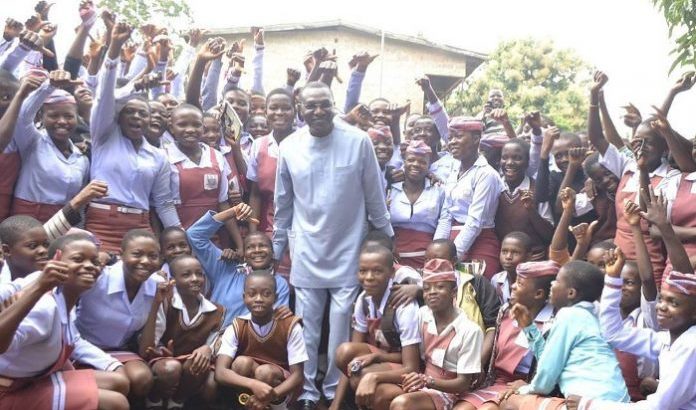
The lawmaker made the observation while on a routine visit to Girls High School Uga in Aguata Local Government Area, one of the schools he renovated a few months ago to enhance academic activities in the state.

Uba, a governorship aspirant of the All Progressives Congress (APC) stressed that the situation of things in many schools in the state was so bad that it was no longer conducive for learning.

The Senator who represents Anambra South Senatorial district said that the standard of education in the state had also declined to a pitiable level adding that such was unacceptable.

He insisted that investment in education should be a priority project of any good government.

“The infrastructure in many of our schools in Anambra is dilapidated, classrooms are not fit for learning and the hostels are not conducive for students to rest.

“Indeed no serious academic work can go on in this kind of condition, which is why the level of education is dwindling fast.

“We must intervene; education should be a priority project of any good government. This level of decay must not be allowed to continue,“ he said.

The senator who was saddened on seeing the hostel blocks of the girls’ school also promised to renovate it so that it would be conducive for the students.

He said that it was pitiable that “our children would be allowed to live in this kind of environment”.

The students and teachers of the schools expressed gratitude to the governor aspirant for his kind gesture.

They said that his intervention in renovating the classroom block had indeed repositioned the school adding that his pledge to renovate the dilapidated hostel was a very cheering news.

One of the elated students said that they would no longer be suffering from leaking roofs in the hostel.

Source:

Education: Sen. Uba Wants Intervention, Renovates School

Comparte este contenido:

FAO insta a ministros a favorecer el empleo juvenil agrícola en África

África/03 julio 2017/Fuente: Prensa Latina

El director general de la FAO, José Graziano da Silvia, destacó hoy la importancia de desarrollar el empleo juvenil en el sector agrícola para enfrentar los retos económicos y demográficos en África.
Da Silva intervino en una reunión conjunta entre la Unión Africana y la Unión Europea a la que asistieron los ministros de Agricultura de ambas entidades, realizada en la sede de la Organización de las Naciones Unidas para la Alimentación y la Agricultura (FAO), en esta capital.

El encuentro giró en torno a cómo generar puestos de trabajo sostenibles e inclusivos para la juventud africana en el sector rural.

‘Un mundo sostenible sólo puede lograrse con la plena participación de los jóvenes. Deben sentirse integrados y creer que un mundo más pacífico y próspero es posible’, señaló Da Silvia, según un comunicado circulado aquí por la oficina de prensa de la FAO.

Según el texto, solo en 2014, unos 11 millones de jóvenes africanos entraron en el mercado de trabajo, muchos de los cuales ven pocas perspectivas en la agricultura por falta de habilidades, más bajos salarios, acceso limitado a la tierra y a servicios financieros, lo cual los impulsan a abandonar el medio rural.

En la reunión Da Silva expuso los cinco pasos para involucrar a los jóvenes en la agricultura y en el desarrollo rural.

Enumeró la necesidad de mejorar su participación y liderazgo, tanto en las organizaciones de productores, como de instituciones rurales; además de estimular las inversiones en el sector, y asegurar a las zonas rurales mejores servicios como electricidad, educación y salud.

También valoró la urgencia de fortalecer los vínculos físicos, económicos, sociales y políticos entre los pequeños centros urbanos y sus zonas rurales circundantes; así como invertir más en Tecnologías de la Información y la Comunicación y facilitar el acceso a mercados, información y oportunidades de negocio.

Fuente noticia: http://www.prensa-latina.cu/index.php?o=rn&id=97850&SEO=fao-insta-a-ministros-a-favorece-el-empleo-juvenil-agricola-en-africa

Fuente imagen: http://www.fao.org/uploads/pics/FAO_logo_Blue_3lines_en_01.jpg

Comparte este contenido:

Crecimiento del número de universidades en Angola dejó calidad detrás

Angola/03 de Julio de 2017/Prensa Latina

El secretario general de Educación Superior de Angola, Ndilu Nkula, aseguró que el número de universidades creció en el país sin la compañía hasta hoy de la calidad.
Tenemos muchas instituciones de altos estudios que no tienen laboratorios dignos para impartir cursos prácticos, ejemplificó Nkula durante el cierre de la Conferencia sobre costos y financiación de la Enseñanza Superior.

Hace 16 años teníamos una sola universidad y ahora tenemos 62, ocho de ellas públicas, pero hay que mejorar los niveles de calidad en la formación, puntualizó el directivo.

Ni los estudiantes ni las empresas están satisfechos con los resultados de la enseñanza que se presta, añadió al asegurar que los principales problemas están relacionados con la falta de docentes debidamente preparados y el limitado acceso a Internet.

‘Por eso decidimos presentar el estudio a todos los actores de la Enseñanza Superior para que juntos podamos encontrar soluciones que apunten a la mejora significativa en términos de la calidad de los alumnos en las universidades’, agregó.

El principal objetivo del estudio sobre los costos y la financiación de la Enseñanza Superior es contribuir a la mejora de las políticas públicas en el sector como factor contribuyente al desarrollo de las regiones y del país.

‘El gran desafío del Ministerio de Educación Superior es saber cómo vamos a financiar todas estas instituciones de modo que puedan alcanzar el nivel deseado por todos nosotros en lo que respecta a la calidad’, precisó Nkula.

La investigación analizó los costos globales en la Enseñanza Superior, desde las mensualidades, material de apoyo de los estudiantes, acceso a Internet, valor de los exámenes, todo lo que implica la vida de los estudiantes en las universidades, expuso.

Entretanto, el representante del Banco Africano de Desarrollo, Septime Martin, aseguró que la institución mantendrá su cooperación con el Gobierno en el sector educacional.

Señaló que el apoyo tendrá varias aristas como la articulación entre el sector público y el privado, del enfoque prospectivo y de la financiación.

Fuente: http://www.prensa-latina.cu/index.php/component/content/?o=rn&id=97597&SEO=crecimiento-del-numero-de-universidades-en-angola-dejo-calidad-detras
Comparte este contenido:

Subsahariana: La tecnología da una mano a las innovaciones educativas que más destacan este año

Subsahariana/03 de Julio de 2017/EyN

Entre ellas hay plataformas que a través de dispositivos móviles transmiten contenido didáctico en zonas donde escasean los profesores. Algunos proyectos web incluso son capaces de medir cuánto ha aprendido un niño, para luego personalizar la información que se le entrega. 

Los desafíos en educación no son pocos ni representan un único frente. Mientras los países del norte de Europa tienen la mirada puesta en cómo disminuir los altos niveles de matonaje, en África subsahariana el reto todavía supone que más niños accedan a una sala de clases: la falta de profesores capacitados y la prevalencia de enfermedades como neumonías, cólera o malaria dificultan la tarea.

Desde el año 2009 y como una forma de visibilizar a quienes trabajan creando soluciones para estos desafíos tan distintos, la Fundación Qatar (en alianza con representantes universitarios e instituciones como el Banco Mundial y el Foro para Mujeres Africanas que Educan) escoge 15 iniciativas que destacan a nivel mundial.

En noviembre -al término de la Cumbre Mundial de Educación que cada dos años se realiza en Doha-, seis de ellas serán galardonadas con el Premio WISE, reconocimiento que entrega 20 mil dólares a cada una.

«Los proyectos finalistas han desarrollado soluciones efectivas y contrastadas ante los desafíos educativos globales, ya sea por asegurar el acceso a la educación primaria fundamental o por preparar a los jóvenes de cara al trabajo del siglo XXI. Cada uno de los proyectos está transformando vidas y constituye un modelo inspirador para que otras comunidades los adopten», comenta Stavros Yiannouka, director ejecutivo del premio WISE.

En la región

Este año, las 15 iniciativas finalistas provienen de nueve países, dos de ellos iberoamericanos. Entre los proyectos de habla hispana está Luces para Aprender , que lidera la Organización de Estados Iberoamericanos para la Educación, la Ciencia y la Cultura (OEI). Su propuesta es instalar módulos fotovoltaicos, que permiten el suministro de energía eléctrica en escuelas rurales de la región. Más de 20 mil alumnos de 556 escuelas se han visto beneficiados con la iniciativa, que trabaja en países como Bolivia, El Salvador, Guatemala y Perú.

Science Bits es una propuesta nacida en Barcelona, que invita a los profesores a enseñar ciencias accediendo a contenido multimedia, volviendo más estimulante el aprendizaje. «A pesar de que en los últimos años la tecnología ha empezado a introducirse en las escuelas rápidamente, la mayoría de las soluciones que se ofrecen usan la tecnología para seguir reproduciendo un modelo educativo del siglo XIX, transmisivo y memorístico», comenta Héctor Martin, representante de la iniciativa. Esta genera recursos interactivos que promueven «la indagación, el descubrimiento, la discusión y el razonamiento. Proporcionamos un sustituto del libro de texto que ayuda a implementar metodologías activas que motiven a los alumnos y permiten desarrollar aprendizajes significativos y conectados con su mundo».

TV didáctica

El uso didáctico de recursos tecnológicos se repite entre los seleccionados de este año. Mientras PhET Interactive Simulations (Estados Unidos) fomenta el aprendizaje de matemáticas y ciencias a través de simulaciones interactivas gratuitas, Ubongo Edutainment (África subsahariana) propone educar a niños entre 3 y 14 años, a través de contenido multimedia que se transmite por televisión y dispositivos móviles. «Ayudamos a las comunidades rurales a crear clubes para que los niños puedan reunirse a mirar nuestros programas. Una comunidad llamada Njeula no tenía un espacio para albergar el club, pero después de que hicimos una proyección pública, los padres se unieron y construyeron una», cuenta Nisha Ligon respecto de la iniciativa, que a través de caricaturas enseña Lenguaje y habilidades socioemocionales en zonas donde los docentes son escasos: en Tanzania hay un déficit de 1,5 millones de profesores.

La tecnología de Mindspark (India) va un paso más allá, con un software capaz de reconocer cuánto y cómo aprende cada niño sobre matemáticas y lenguaje. «Es una solución que -haciendo uso de la inteligencia artificial- logra diagnosticar el nivel de aprendizaje actual de la persona, prescribiendo un camino de aprendizaje personalizado», explica su representante, Aarthi Muralidharan.

Enseñando a enseñar

Entre las propuestas que no se enfocan exclusivamente en tecnología destaca Shams Generation, de Qatar, que apuesta por enseñar sobre energías renovables a alumnos de un país donde el petróleo y el gas natural son los recursos primarios para satisfacer las necesidades de electricidad.

La iniciativa consiste en llevar pequeños paneles a las aulas, que los alumnos los prueben y que una vez usados, los materiales se reciclen y reutilicen en proyectos de arte.

Por su parte, Aneer de Marruecos, se enfoca en capacitar a mamás de zonas vulnerables en torno a las mejores técnicas para enseñar a sus hijos a leer. Bajo este modelo, un grupo de educadoras enseña a algunos apoderados y estos después se organizan para traspasar este conocimiento a través de sus juntas de vecinos.´

Los 15

proyectos

preseleccionados para los premios WISE 2017 se pueden conocer en detalle visitando el sitio web www.wise-qatar.org/wise-awards-2017.

Fuente: http://www.economiaynegocios.cl/noticias/noticias.asp?id=375235

Comparte este contenido:

Kenya: How Social Media Post On Exam Leakage Landed Teacher in Court

Kenya/03 de Julio de 2017/Allafrica

Reseña: Un maestro de escuela primaria se encontró detrás de las rejas por presumir en las redes sociales que filtró el año pasado  Certificado de los exámenes de la educación primaria.

A primary school teacher found himself behind bars for bragging on social media that he leaked last year’s Kenya Certificate of Primary Education examination papers.

A witness told a Wundanyi court that Jackson Sais Mganga later claimed that his posting was a joke and he did not mean it.

«Upon interrogation, the suspect owned up that he posted the message and said he was joking but I did not believe him,» Investigating Officer Gresom Katola said in his testimony.

The accused is said to be the administrator of Teachers Notice Board Kenya, where he posted that he had prior knowledge of the examination papers and had revised them with his pupils.

MATIANG’I

In the alleged posting the suspect wrote, «The leaked papers which I revised with my pupils yesterday are the true papers, my pupils are going to pass with flying colours, very happy indeed!!»

In yet another message, the accused is alleged to have bragged and laughed off Education Cabinet Secretary Fred Matiang’i, saying his efforts to curb exam cheating had flopped.

«Somebody tell Matiang’i this is Kenya!!» he wrote in another post.
 The investigating officer told the court the message attracted the attention of Kenya National Examination Council (Knec) officials, who investigated and arrested Mr Mganga.

«Through his Safaricom mobile numbers on his Facebook page, we were able to trace and arrest the suspect, Mr Katola said.

FORENSIC ANALYSIS

He said two mobile phones seized from the suspect were subjected to forensic analysis and helped in linking the accused to the posts.

The suspect had denied committing the offence on November 1 last year at Mwatango Hills in Taita Taveta County.

Mr Mganga is accused of unauthorised possession of examination papers, materials or information contrary to section 27(1) of Knec Act 2012.

The charge indicates that the suspect had information on his Facebook page purportedly related to the contents of the 2016 KCPE examination papers without lawful excuse.

The suspect is out on a Sh600,000 bond.

Fuente: http://allafrica.com/stories/201706301058.html

Comparte este contenido:

South Africa: Target Schools to Offer African Language From Grade 1 in 2018

South Africa/03 de Julio de 2017/Allafrica

Resumen: El Ministerio de Educación dice que planea que las últimas escuelas ofrezcan una lengua africana como un sujeto que implemente su política de IIAL desde el grado 1 el próximo año.

The Department of Education says it plans to have the last remaining schools not yet offering an African language as a subject implementing its IIAL policy from Grade 1 next year.

The department gave a presentation to the portfolio committee on basic education this week, and said the Incremental Implementation of African Languages (IIAL) deadline for the remaining 3 558 schools had been moved up from 2020 to 2018.

 There are approximately 25 000 schools in the country, most of which already offer a previously marginalised African language as a subject, including many private schools, director general Mathanzima Mweli said.

The ministerial management committee had resolved in May to push the deadline up for the last remaining 3 558 target schools that don’t offer any indigenous language.

«At the core of this strategy is to contribute toward social cohesion. Schools are incubators of future citizens,» Mweli told the committee.

«Many people believe African languages don’t have currency, they won’t take you overseas, and so on. That’s the misconception, but languages can sell. You can exchange experiences.»

All the provinces were on board, and had committed to implementing the IIAL in all their target schools from Grade 1 next year, he continued.

Thereafter, in those remaining schools, Grades 4-6 would be implemented from 2021-2023, Grades 7-9 from 2024-2026, and Grades 10-12 from 2027-2029.

Department spokesperson Elijah Mahlangu told News24 on Thursday that the implementation rate had been slow in the final few schools.

The Western Cape had the worst implementation rate, with only 1% of the targeted 817 schools implementing isiXhosa so far.

The Northern Cape had the best, with 90% of its 29 targeted schools now offering either Setswana or isiXhosa.

Gauteng stood at 36% of its 682 targeted schools, and had a choice of six different previously marginalised languages.

Mweli said the teaching personnel for the remaining schools would be provided on a national basis. A group of qualified teachers would be drafted to the schools when requested.

The purpose of the IIAL is to develop a conversational competency for those who do not speak an indigenous African language as a second language.

It was borne out of the National Development Plan’s desire to promote and celebrate multilingualism.

A pilot was trialled in 264 target schools in 2014. The committee has previously expressed its unanimous support for the policy.

The department also updated the committee on plans to possibly introduce History as a compulsory subject.

History is currently compulsory from Grades 4-9. The plan would look at making it compulsory from Grades 10-12. An alternative could be to include aspects of History as part of Life Orientation, which is already compulsory.

The National Development Plan also highlights the importance of history, heritage and culture being taught to South African children to foster an understanding of our diverse past.

The department was also aware that the subject was losing popularity, and was aware that a lack of historical knowledge could make future citizens open to propaganda.

The plans were still developing, following the conclusion of a study of other countries’ best practices in Africa and Europe.

Fuente: http://allafrica.com/stories/201706300312.html

Comparte este contenido:
Page 308 of 622
1 306 307 308 309 310 622