Page 310 of 622
1 308 309 310 311 312 622

África: Adesina Named 2017 World Food Prize Winner – the ‘Nobel’ of Agriculture

África/Junio del 2017/Noticias/http://allafrica.com/

Monrovia’ — Akinwumi Adesina, president of the African Development Bank, has been named the winner of this year’s World Food Prize.

The prestigious U.S.$250,000 prize is given annually to a person who has worked to advance human development by «improving the quality, quantity or availability of food in the world». Over a 31-year existence, the award has become known as the ‘Nobel Prize’ for food and agriculture.

Monday’s announcement by the president of the World Food Prize, Ambassador Kenneth Quinn, was made at a ceremony held at the U.S. Department of Agriculture attended by U.S. Secretary of Agriculture Sonny Perdue. Since its founding in 1986, the Prize has honored 45 individuals for their outstanding contributions to food security around the world.

«These individuals have been at the forefront of every major breakthrough in agriculture and food production in the last 30 years», Quinn told AllAfrica in a telephone interview before Monday’s announcement. He said the laureates have led the «single greatest period of food production and hunger reduction in all human history». Nominations for the prize, he said, are submitted by organizations and prestigious individuals. A selection committee – made of individuals from around the world – makes the decision.

Quinn announced that the committee noted a couple of «distinct achievements» of Adesina: his role in organizing and making the African fertilizer summit a «great success»; his work with leading non-profit organizations and banks to expand the availability of commercial credits to agriculture and farmers across the continent when he was a senior executive of the Alliance of Green Revolution of Africa; the digital e-wallet scheme during his five-year tenure as minister of agriculture of Nigeria, which helped tackle corruption that had pervaded the fertilizer industry.

Quinn said Adesina has helped galvanize support to transform agriculture on the continent through his various initiatives which increased farmers’ yield and incomes. «All of his policies were very farmer friendly, and he became known as the ‘farmer’s minister'». The committee was also «taken» by Adesina’s own life that began with him growing up in a poor village, and how education «allowed him to lift himself up,» Quinn said.

The AfDB president came from a family of farmers. With some education, however, his dad got a job as a civil servant which provided the means to send his four sons to school. Adesina, the second, experienced the poverty of smallholder farmers and their families during his years of schooling in the village.

Adesina told AllAfrica that he was thrilled when he first learned that he had been selected as this year’s winner for the work he’s done over the years. «But for me it’s not about the past as much as even the future; I feel greatly inspired and motivated to do even more until we free Africa and the world of hunger».

He is excited about what lies ahead. «I see a future where agriculture is treated as a business, not as a way of life; I see a continent in the next ten years that will be able to feed itself; I see a continent that will be able to transform its rural economy from zones of misery to zones of economic prosperity; I see a continent that is able to end malnutrition».

Since he became president, he said, the bank has committed itself to a strategy which aims to end hunger and rural poverty on the continent in the next decade. Feed Africa, the second of the AfDB’s top five priorities to which it has already committed $24 billion dollars, was launched at its headquarters in Abidjan last year.

Adesina said some of the areas of focus of the new plan will be «how to get technology to farmers – at the scale of millions of farmers all across Africa – and how to get the youth to be involved in agriculture as a business».

He will be at the center of attention this week in Des Moines, Iowa, where guests from dozens of countries, including scientists, ministers, CEOs and heads of NGOs will gather for a week of activities. He is scheduled to speak at various events including the «Borlaug Dialogue», a symposium which organizers say brings together 1,200 people from 65 countries, named after Norman Borlaug, the 1970 winner of the Nobel Peace Prize who conceived the idea of the World Food Prize.

Comparte este contenido:

Africa: Ethiopia Was Colonised

África /Etiopia/Junio del 2017/Noticias/http://allafrica.com

We kept the imperialists at bay, but it wasn’t enough.

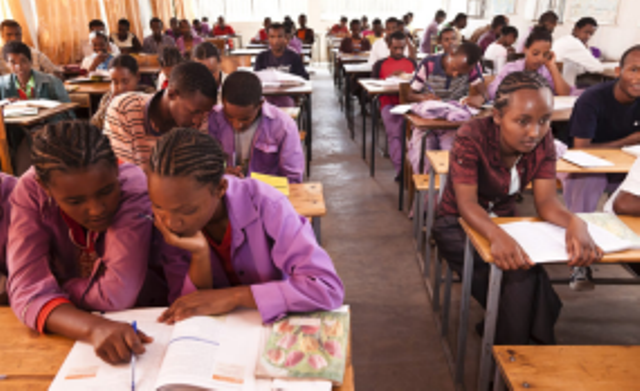
Like many African countries that were colonised by the British, Ethiopia’s educational system strongly privileges the English language. I learnt this first hand going through school in the capital Addis Ababa.

Along with my classmates across the vast country, I was taught in my local language from Grades 1 to 6 (ages 6 to 12). But after that, the language of instruction switched. History, maths, sciences and the rest were now taught in English, while Ethiopia’s official language Amharic became its own separate subject.

Growing up in Ethiopia, fluency in English was considered a mark of progress and elite status. At my school, we were not only encouraged to improve our proficiency, but made to feel our future depended on it. When I was in grade 4, one of my tasks as a class monitor was to note down names of classmates I heard speaking Amharic during English lessons or lunchtime. Our teacher would enforce a 5-cent penalty for every Amharic word that slipped through our lips during lessons.

At the same time, we were proudly educated in Western history and literature. I learnt to take pleasure in reading books in English. I listened to American songs. And I looked to emulate the lives of the people I saw in Hollywood films.

At primary and secondary school, we were taught about Ethiopian history too. But many aspects of the country – from its philosophy to its architecture to its unique methods of mathematics and time-keeping – were neglected. I left school feeling I lacked a coherent understanding of my country’s history. And today, like most of my classmates, I would struggle to write even a short essay in Amharic.

My experience no doubts resonates with many people across Africa, where colonialism elevated European languages and history in the education system while devaluing local languages, methods of instruction, and histories. This is what has spurred vigorous movements across the continent today calling for the academy to be decolonised.

The strange thing though is that Ethiopia was never colonised in the first place.

Native colonialism

So how did the country’s school system come to be the way it is? According to Yirga Gelaw Woldeyes’ brilliant new book, Native Colonialism: Education and the Economy of Violence Against Traditions in Ethiopia, the answer is that Ethiopia was «self-colonised» and that education played a big part.

In the academic’s extensive study, he sets out to show «how and at what cost western knowledge became hegemonic in Ethiopia». He suggests that the 1868 British expedition to Abyssinia, which resulted in the British looting massive national treasures and intellectual resources that Emperor Tewodros II had accumulated over time, was a turning point in Ethiopians’ perception of power. Although the Emperor’s defeat in Magdala did not result in the country’s colonisation, it brought about a new, outward-looking consciousness. «This reaction to the European gaze created the desire to acquire European weapons in order to defend the country from Europe,» writes Woldeyes.

Successive rulers maintained a contradictory relationship with Europe – between friendship and enmity – until Emperor Haile Selassie, who ruled up to 1974, initiated a period of radical westernisation post-WW2. In that process, Woldeyes explains, Haile Selassie entrusted certain elites to establish Ethiopia’s modern education system. This group was educated in Western languages and teachings. They embraced European epistemology as a singular, objective basis of knowledge, seeing it as synonymous with «modernity» and naturally superior to the local.

These elites, who Woldeyes refers to as «native colonisers», introduced a system of education into Ethiopia that mimicked Western educational institutions. Contributions from traditional Ethiopian educators such as elders, religious leaders, and customary experts were squeezed out.

The result is that Ethiopia’s schools came to lack a meaningful connection with the culture and traditions of the communities in which they are located. Instead, they prepare students in the skill of imitation using copied curricula and foreign languages. Schooling today, argues Woldeyes, is as much a process of unlearning local tradition as it is about learning the art of foreign imitation.

This disconnect at the heart of Ethiopian teaching has many negative ramifications. An education that doesn’t speak to students’ lived experience limits their capacity to create, innovate, and deliver solutions to problems in their surrounding world. It leads young Ethiopians to feel alienated from their own culture, lowers self-esteem, and leads to a disoriented sense of identity.

Moreover, without a comprehensive understanding of their country’s history and politics, graduates lack the knowledge and skills to confront the nation’s ongoing problems.

Text kills, meaning heals

In Native Colonialism, Woldeyes does not stop at diagnosing the problem. He goes on to propose remedies – namely that the education system be reconstituted on the foundations of Ethiopia’s «rich legacy of traditional philosophy and wisdom».

He argues that: «before the rise of western knowledge as the source of scientific truth, one’s political and social status in Ethiopia was justified on the basis of traditional beliefs and practices». In the tradition of the Ethiopian Orthodox Tewahido Church, he says, education was not a means to an end, but part of «an endless journey» of knowledge-seeking. This quest was grounded in the two core values of wisdom and humility.

Woldeyes argues that we need to put these core values back at the centre of the country’s education, which should reflect indigenous beliefs, knowledges and philosophies. This does not mean foreign ideas should be rejected. Students should be exposed to a variety of teachings. But they should, he says, be disseminated through an Ethiopian frame of reference.

Woldeyes argues that this approach was the norm in Ethiopian education for centuries. Through trade and diplomatic relations, scholarship from as far as Asia and Europe has been making its way to Ethiopia for hundreds of years. But traditionally, scholars did not simply translate these works into local languages.

Instead, they used an Ethiopian interpretative paradigm called Tirguamme «to evaluate the relevance and significance of knowledge». Woldeyes defines this as «a process that searches for meaning by focusing on the multiplicity, intention, irony and beauty of a given text». This unique process of inquiry is based on a traditional principle that literally translates as «text kills, but meaning heals». It is apparent in different Ethiopian cultural practices such as the multi-layered poetic practice of «wax and gold», allegorical puzzle games, the art of judicial debating, and storytelling.

Woldeyes’s methodology offers a potential framework for reforming the current education system in Ethiopia. It envisions a system of education centred on local priorities and ways of being, whilst also incorporating ideas from around the world.

Decolonising the academy

Woldeyes’s ground-breaking analysis demonstrates that despite the fact that no colonial power managed to conquer Ethiopia, the country did not escape being colonised in other ways.

Moreover, his study shows that decolonising education across Africa will require an investigation of how indigenous epistemologies were violently discarded. It will also entail a critical study of the modes of scholarship previously side-lined as «traditional».

Woldeyes’s research suggests that the decolonization movement cannot be confined to the four walls of elite educational institutions. It must reach out beyond to members of society that were previously closed out, such as traditional leaders, elders, and others.

Emperor Tewodros believed that Ethiopia needed European weapons to defend the country from Europe. Today, we may need native epistemologies to take back the country from native colonisation.

Fuente: http://allafrica.com/stories/201706210608.html

Fuente imagen:

https://lh3.googleusercontent.com/mlmCdqbuYeD-mBExDY3ugEekwAvDyre4RdCToHO9HaZIYoQBD4VTnwt1bDMqncTnScGbeQ=s139

Comparte este contenido:

Sudáfrica prohíbe escuelas de un solo religión

El objetivo no es prohibir las prácticas religiosas en las escuelas, sino proteger a los niños

Africa/Sudafrica/Independent.co.uk

Escuelas de una sola religión han sido prohibidas en Sudáfrica después de un fallo en el Tribunal Superior de Johannesburgo. Las escuelas públicas ya no pueden promocionarse como espacios de enseñanza de una sola religión en particular, excluyendo a las demás, el tribunal falló.

El Organisasie vir Godsdienste-Onderrig en Demokrasie (Organización para la educación religiosa y la Democracia), o OGOD, que lucha contra el adoctrinamiento religioso a través de las escuelas públicas en Sudáfrica, dio la bienvenida al juicio.Dijo que el juicio significa que las escuelas públicas  ya no pueden promover una religión específica y excluir a otros.

“Nuestro caso fue construida sobre el hecho de que en las escuelas cristianas los alumnos se vieron forzados a participar “, dijo Pietersen, de acuerdo con declaraciones dadas al diario sudafricano The Times .

OGOD presentó la demanda contra seis escuelas públicas predominantemente cristianas- Si bien el tribunal no concedió la orden de restricción, la sentencia indica que las escuelas habían violado una sección de la Ley de escuelas por lo que es una ofensa promover una religión y excluir a otros.

 «El tema constitucional fundamental es que nuestra sociedad es diversa, que la diversidad debe ser celebrada y que los derechos específicos son conferidos y tratado en virtud de ese principio·Dentro de este contexto, las escuelas públicas son bienes públicos que sirven a los intereses de la sociedad en su conjunto.»

El Departamento Nacional de Educación dijo que el fallo fue consistente con su propia política de que ninguna religión debe ser promovida por encima de otra.

“El objetivo no es prohibir las prácticas religiosas en las escuelas, sino de proteger a los niños haciendo hincapié en que las escuelas deben participar en la educación de la religión en lugar de la formación religiosa y no promover una religión sobre otra,” dijo un portavoz del departamento nacional de Educación.

Fuente: http://www.independent.co.uk/news/world/africa/south-africa-single-religion-schools-outlaw-ban-faith-christian-muslim-jewish-a7814231.html

Comparte este contenido:

IBE-UNESCO: Herramientas de Formación para el Desarrollo Curricular: Una Caja de Recursos.

La Caja de Recursos edición 2017 es concebida como una herramienta de formación destinada a apoyar a especialistas y profesionales involucrados en los procesos de cambio y desarrollo curricular. La Oficina Internacional de Educación (OIE-UNESCO) enfatiza el rol fundamental que los procesos de desarrollo curricular de calidad desempeñan en sentar bases fundamentales para integrar y congeniar equidad, inclusión, relevancia y excelencia en la educación.

Los temas clave que se presentan son:
Módulo 1: Formulación y diálogo en torno a políticas
Módulo 2: Cambio curricular
Módulo 3: Diseño curricular
Módulo 4: Gobierno y administración del sistema
Módulo 5: Desarrollo de libros de texto y materiales de enseñanza y aprendizaje
Módulo 6: Desarrollo de capacidades para la implementación curricular
Módulo 7: Procesos de implementación curricular
Módulo 8: Evaluación de los estudiantes y del currículo
Anexos: Recursos, herramientas, modelos y orientación adicionales.

Como centro mundial especializado en temas de currículo, aprendizaje, evaluación y asuntos conexos y como instituto orientado hacia el trabajo en el terreno que apoya la acción de la UNESCO en el marco de la Agenda de Educación 2030 que se ha propuesto “garantizar una educación inclusiva, equitativa y de calidad y promover oportunidades de aprendizaje durante toda la vida para todos”, la OIE-UNESCO también proporciona capacitación y materiales de formación en las siguientes áreas temáticas:

  • Educación inclusiva
  • Educación STEM
  • Educación de jóvenes
  • Educación para la ciudadanía
  • Educación para el desarrollo sostenible

Descargar aqui

Fuente: http://inprogressreflections.ibe-unesco.org/una-caja-de-recursos/

Comparte este contenido:

Internacional de la Educación: La resolución de la ONU exime a los gobiernos de su responsabilidad

Prensa Internacional de la Educación

En muchos sentidos, la nueva resolución de las Naciones Unidas sobre el derecho a la educación constituye un avance positivo, pero desafortunadamente opta por el desarrollo de regulaciones relativas a los proveedores privados en lugar de instar a los gobiernos a que asuman sus responsabilidades.

Al solicitar un marco regulador para los proveedores de la educación, la resolución del Consejo de Derechos Humanos de la ONU ha abierto la puerta a la legitimación de actores con fines de lucro en el ámbito de la educación.

La Internacional de la Educación (IE) ha señalado que en lugar de fortalecer su compromiso de garantizar que los gobiernos «proporcionen fondos y recursos adecuados a la educación pública», en realidad, la ONU ha conseguido que a los gogiernos les resulte más fácil  eximirse de su obligación.

Susan Hopgood, Presidenta de la IE, dejó claro que «la existencia de la enseñanza privada no es un derecho, y en la mayoría de los casos es ideológico».

Hopgood, quien tiene previsto representar a la IE en un evento de Alto Nivel de las Naciones Unidas sobre educación, que tendrá lugar el 28 de junio en Nueva York, prosiguió aclarando que «cuando existen actores no estatales y forman parte de un sistema de reglamentación de actores no estatales y están registrados para ejercer sus actividades, estos deben cumplir un conjunto de normas mínimas».

La Internacional de la Educación sigue abogando por un sistema de reglamentación de los actores no estatales, y no para beneficio de los actores no estatales.

Fuente: https://www.ei-ie.org/spa/detail/15201/la-resoluci%C3%B3n-de-la-onu-exime-a-los-gobiernos-de-su-responsabilidad

Comparte este contenido:

Wise Accelerator busca impulsar cinco proyectos educativos innovadores de todo el mundo

La Qatar Foundation convoca su concurso anual para premiar y desarrollar durante un año iniciativas tecnológicas

PeriodicoEscuela.es/Daniel Sánchez

Se busca: proyecto educativo tecnológico, en fase inicial pero no experimental, con un cierto desarrollo y posibilidades de crear un cierto impacto. Se ofrece: mentorización y asesoramiento personalizados de expertos en el área, visibilización mundial y ayuda para buscar financiación posterior. Razón: Wise, la plataforma educativa de la Qatar Foundation y responsable, entre otros eventos, de los llamados «Óscar de la educación», el premio que se entrega cada año al mejor docente del curso.

La cuarta edición de WISE Accelerator está en marcha. Este programa se convoca cada año para premiar y apoyar cinco proyectos innovadores en el campo de la educación y la tecnología, según explica la propia fundación. Cualquiera que cumpla unos determinados requisitos puede presentarse hasta el 14 de junio. Las bases del concurso y cómo aplicar se encuentran en http://www.wise-qatar.org/wise-accelerator.

La organización recuerda que los candidatos deben tener dos características iniciales fundamentales: escalabilidad (traducción literal del inglés, scalability, alude a la capacidad de un proyecto de crecer y de absorber ese crecimiento) y un impacto en la educación. «Estos programas aprovechan el poder de la tecnología para transformar la educación, de modo que personas de todo el mundo puedan sacar su verdadero potencial», explica Ameena Hussain, directora de Programas y Desarrollo de la Comunidad de WISE.

Los requisitos

Más allá de esta generalidad, hay ciertos elementos más palpables a tener en cuenta. Los candidatos deben tener una vida de al menos dos años, un «significativo» número de beneficiarios o clientes, un registro de actividad del producto o servicio que haya sido satisfactoriamente implementado más allá de un modelo en pruebas, unos ciertos ingresos estables, un equipo dedicado en exclusiva con un espacio físico en el que trabajar, gran conocimiento del mercado o el mundo educativo, unos objetivos claros de futuro y un conocimiento de los retos y dificultades que afronta el proyecto para crecer.

Los programas candidatos deben estar en una fase inicial, pero no experimental. Se les pide que ya lleguen a un cierto número de beneficiarios. A cambio, Wise impulsará el proyecto y le dará visibilidad mundial

A partir de aquí, un comité de expertos seleccionará los cinco proyectos ganadores. Lo que ofrece WISE es básicamente asesoramiento personalizado respecto a los principales retos que afronta el programa seleccionado, visibilización internacional y técnicas de comunicación para darse a conocer, la posibilidad de entrar en contacto con potenciales inversores y una evaluación de los progresos y retos de futuro al finalizar el proceso. También se dan alianzas entre proyectos con objetivos o elementos comunes, de manera que se retroalimentan en cuanto a experiencias y buenas prácticas.

Ser seleccionado por WISE Accelerator no es fácil. Cada convocatoria reúne a un centenar de aplicantes para cinco plazas. Pero las seleccionadas recibirán un notable impulso durante todo un año y contarán con la carrerilla que han cogido para seguir avanzando.

Los precedentes

En anteriores ediciones, Wise Accelerator ha premiado proyectos de lo más diverso. Entre los más destacados, la propia Qatar Foundation señala IdeasBox, precisamente el programa de Libraries Without Borders, que consiste en un kit multimedia portátil destinado a llevar la educación a entornos difíciles, como los campos de refugiados. Es uno de los mejores exponentes de un caso de éxito de WISE Accelerator: el proyecto logró un millón de dólares de financiación y actualmente beneficia a 100.000 personas de todos los continentes, según explican desde WISE.

«Estos programas aprovechan el poder de la tecnología para transformar la educación para que personas de todo el mundo puedan sacar su potencial», explica una responsable del proyecto.

MGCubed, seleccionado en el curso 2015-16, es el primero proyecto de enseñanza a distancia de Ghana. Mediante tecnología VSAT (internet por satélite) para llevar la educación a lugares remotos y pobres del país. El programa ha equipado dos aulas en 72 colegios de Primaria con ordenadores y proyectores que funcionan con energía solar. Cada día, seis docentes dan clases de Matemáticas e Inglés a distancia que llegan a más de 6.000 alumnos, con un foco especial en niñas de 7 a 16 años.

El proyecto Sterio.me, de origen chileno, entró en Wise Accelerator en su primera edición, en el curso 2014-15. La idea que tiene detrás es sencilla: permite a los profesores grabar en formato de audio clases, problemas o lo que considere y enviárselo a los alumnos vía SMS, de manera que no es necesario internet. Se está utilizando mucho para mandar deberes. El profesor envía un código vía SMS a sus alumnos. A continuación, reciben una llamada telefónica con un cuestionario interactivo, que deben contestar a través del teclado o hablando con el teléfono. El programa registra las respuestas y se las envía al profesor. «Sterio.me es refuerzo educativo simple, efectivo y asequible», explica Wise.

Fuente: http://www.periodicoescuela.es/Content/Documento.aspx?params=H4sIAAAAAAAEAMtMSbH1czUwMDA0NjI2sTBRK0stKs7Mz7M1MjA0NzAzMFXLy09JDXFxti3NS0lNy8xLTQEpyUyrdMlPDqksSLVNS8wpTlVLTcrPz0YxKR5mAgA1L5B4YwAAAA==WKE

Comparte este contenido:

Sudáfrica: No Education for Village Children After Government Shuts Down Their School

Sudáfrica/Junio de 2017/Autor: Mbulelo Sisulu/Fuente: All Africa

Resumen:  Sin dinero para el transporte, los estudiantes no pueden llegar a la escuela más cercana en las zonas rurales del Cabo Oriental. Desde el año 2015, el gobierno de Eastern Cape ha emprendido un proceso de racionalización del número de escuelas en su provincia. Ha estado cerrando colegios que considera inviables, aquellos con menos de 150 alumnos, y los fusiona con otras escuelas. El proceso ha contado con el apoyo cauteloso de las organizaciones de la sociedad civil. Sin embargo, su mala implementación ha tenido serias consecuencias para algunos estudiantes.

Without money for transport, learners can’t get to nearest school in rural Eastern Cape

Since 2015, the Eastern Cape government has undertaken a process of rationalising the number of schools in its province. It has been closing schools it deems unviable, those with fewer than 150 pupils, and merging them with other schools. The process has had cautious support from civil society organisations. However, its poor implementation has had serious consequences for some learners.

Mhala Primary School in Xesi Village, outside East London, was one of the schools not reopened after the Easter holidays. Its more than 60 learners were to be transported to Lungisa Primary School, seven kilometres away, and taxi owner Zamekile Ncede was engaged by the education department.

Ncede says he was not paid. He says he was told there was a crisis with school transport that needed to be solved. After three weeks, he stopped transporting the learners. He was paying the drivers out of his own pocket.

Parents then started paying R400 per child per month for transport. But not all parents can afford this.

Notsukumetse Hlekani, grandmother of ten-year-old Liyema, said, «Our kids used to walk a few minutes to school and we were not paying even a cent. But now, our government decided to close our school without even consulting us as parents of these kids. Now, my granddaughter is no longer attending school because I cannot afford to pay for transport.»

She said: «It was my dream to send my granddaughter to school so that she can have a better future like other kids. But our government decided to limit our kids to get education.»

Nolusapho Potwana, grandmother of seven-year-old Kuhle Potwana, says her grandson is now looking after livestock because there is no money for transport. «Some kids tried to go to school by foot,» she said, «but they stopped because the distance is long for them.»

Children who walk to Lungisa Primary have to cross the R72.

Nomboniso Dama, 77, is paying the R400 for her grandchild. «It is not that I can afford to pay this, but I pay it because I want my grandchild to get education. There are times where we live at home without food because of this school transport.»

Mfuniseli Dama, 72, said, «Most of the children here are not educated because we do not have a high school [nearby]. Government does not transport our kids who want to go to high school.»

Spokesperson for the Eastern Cape Department of Education Mali Mtima said, «We handed letters to these schools saying they must give reasons why their school must not be closed. These letters we handed [over] last year, but I cannot remember the date. So these schools were given 30 days to reply in this matter.»

Mtima said that teachers have been relocated to other schools. «As we speak, the education and transport departments are busy trying to solve this problem so that kids can be at school and get education. Yes, we are aware about the situation of Mhala Primary school,» he said.

 Fuente: http://allafrica.com/stories/201706290248.html


Comparte este contenido:
Page 310 of 622
1 308 309 310 311 312 622