Page 309 of 622
1 307 308 309 310 311 622

Tanzania: Activists Want Magufuli to Reconsider Teen Mothers School Ban

Tanzania/03 de Julio de 2017/Allafrica

Resumen: Las sociedades civiles de Tanzania han instado al gobierno a escuchar el clamor público después de la decisión del presidente John Magufuli de que, durante su tiempo en la oficina, las madres adolescentes no se les permitirá volver a la escuela después de tener su hijos.

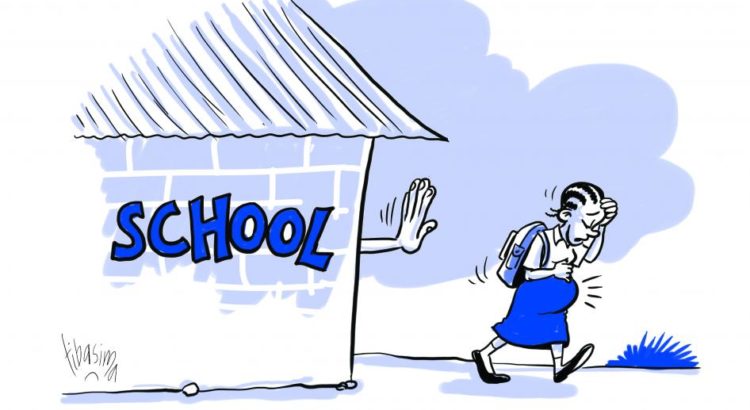
Tanzania’s civil societies have urged the government to listen to the public outcry following President John Magufuli’s decision that, during his time in the office, teen mothers will not be allowed back to school after having their babies.

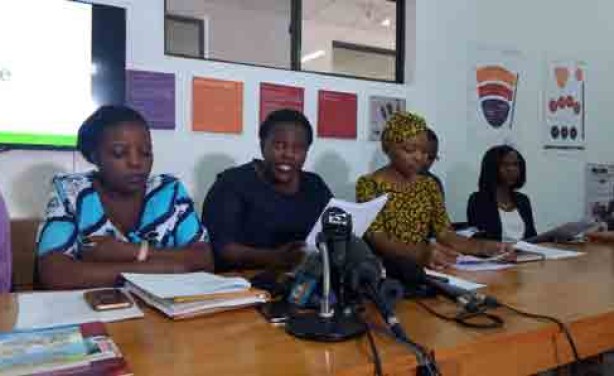
Dar es Salaam — Civil society organisations (CSOs) say they will not be silenced in the current debate on whether to allow teen mothers back to school.

Speaking on behalf of a coalition of CSOs in Dar es Salaam on Thursday, acting Legal and Human Rights Centre executive director Anna Henga said the organisations were operating in line with the law, adding that no amount of intimidation would silence them.

The coalition was reacting to the recent threat by Home Affairs minister Mwigulu Nchemba to deregister non-governmental organisations that would continue to press for schoolgirls who became pregnant to be readmitted to school after giving birth even after President John Magufuli rejected the proposal last week.

Ms Henga said CSOs were not breaking the law by taking a stand that contradicts the President’s publicly declared position on the matter, adding that any attempt to register them must also be within the confines of the law.

«We cannot remain silent on this issue…we are fighting for girls’ rights. It should be remembered that women and girls comprise 51 per cent of Tanzania’s population.

 «What we are doing is perfectly legal because we are here to defend and advocate human rights. We will not stop doing our work just because we have been threatened with deregistration,» Ms Henga said.

She added that various studies showed that the majority of Tanzanians were in favour of girls being readmitted to school after giving birth, and urged the government to consider public opinion.

Ms Henga said the importance of education for teen mothers was mentioned in CCM’s 2015-2020 election manifesto and the 2014 Education and Training Policy. «Neighbouring countries including Kenya have adopted the reentry policy. Zanzibar has since 2010 been readmitting girls as part of a wider plan to reduce the rate at which girls were dropping out of school,» she said.

The executive director and founder of the girls’ rights advocacy organisation Msichana Initiative, Ms Rebecca Gyumi, called for continued public debate, saying this would help the government to come up with inclusive policies that considered the interests of all groups.

«Matters of public interest require exhaustive debate among stakeholders in order to find the best way forward for all,» she said.

Speaking during a fundraiser in Dodoma last Sunday, Mr Nchemba said NGOs that were critical of the government’s «official position» on various matters risked being struck off the register.

He also threatened to deport foreign representatives of international organisations that were «promoting homosexuality».

Mr Nchemba spoke a few days after President Magufuli said there was no way his government would allow schoolgirls who became pregnant to resume their studies after giving birth.

Opening the 64-kilometre Msata-Bagamoyo road during the final leg of his three-day tour of Coast Region, Dr Magufuli said the idea of allowing teen mothers back to school was a foreign concept «championed by NGOs and other people who do not wish this country well».

«There are many alternatives in life for teen mothers. They can join vocational training colleges or seek loans and become small-scale entrepreneurs.

«Let those NGOs that are making noise build schools for teen mothers. If we allow young mothers back into public schools we will one day have Standard One pupils rushing back home to breast-feed their babies. We will be destroying this nation,» Dr Magufuli said, adding that allowing teen mothers back to school would encourage more girls to engage in premarital sex.

The declaration was praised and condemned in equal measure.

Fuente: http://allafrica.com/stories/201706300519.html

Comparte este contenido:

Africa: Make Girls’ Access to Education a Reality

África/Julio de 2017/Fuente: Human Rights Wath

Resumen: Millones de adolescentes embarazadas y casadas de muchos países africanos se les está negando su educación debido a políticas y prácticas discriminatorias, dijo hoy Human Rights Watch en el Día del Niño Africano. Más de 49 millones de niñas están fuera de la escuela primaria y secundaria en el África subsahariana, 31 millones de ellas de educación secundaria, socavando sus derechos y limitando sus oportunidades. El matrimonio precoz y el embarazo en la adolescencia son factores importantes. En el África subsahariana, el 40% de las niñas se casan antes de los 18 años y los países africanos representan 15 de los 20 países con las tasas más altas de matrimonio de niños a nivel mundial. La región también tiene la mayor prevalencia mundial de embarazos de adolescentes. En 14 países subsaharianos, entre el 30 y el 51 por ciento de las niñas dan a luz antes de los 18 años. Las creencias culturales o religiosas a menudo estigmatizan a las niñas solteras y embarazadas, con el resultado de que muchas niñas embarazadas son forzadas a matrimonios tempranos.

Millions of pregnant and married adolescent girls across many African countries are being denied their education because of discriminatory policies and practices, Human Rights Watch said today, on the Day of the African Child. More than 49 million girls are out of primary and secondary school in sub-Saharan Africa, with 31 million of them out of secondary education, undermining their rights and limiting their opportunities.

Early marriage and teenage pregnancy are significant factors. In sub-Saharan Africa, 40 percent of girls marry before age 18, and African countries account for 15 of the 20 countries with the highest rates of child marriage globally. The region also has the world’s highest prevalence of adolescent pregnancies. In 14 sub-Saharan countries, between 30 and 51 percent of girls give birth before they are 18. Cultural or religious beliefs often stigmatize unmarried, pregnant girls, with the result that many pregnant girls are forced into early marriages.

“The African continent has one of the world’s highest rates of adolescent pregnancy, but many governments insist on tackling this social and public health challenge by punishing girls and jeopardizing their future,” said Elin Martínez, children’s rights researcher at Human Rights Watch. “Governments should focus on helping girls prevent unintended pregnancies and support their efforts to stay in school.”

Although most sub-Saharan African countries have made commitments to guarantee compulsory primary and lower-secondary education for all children, many exclude or expel pregnant girls and young mothers from school.

Tanzania and Sierra Leone are among the sub-Saharan African countries that have harmful policies and practices that discriminate against pregnant and married girls, Human Rights Watch research shows. In Tanzania, Human Rights Watch found that school officials conduct pregnancy tests and expel pregnant students. Nineteen-year-old Rita, from northern Tanzania, said she was expelled when she became pregnant at age 17. “Teachers found out I was pregnant,” she said. “I found out that no student is allowed to stay in school if they are pregnant … I didn’t have the information [sexual education] about pregnancies and what would happen.”

Some countries, including Cameroon, South Africa, and Zambia, have adopted “re-entry” policies so that adolescent mothers can return to school after giving birth. However, even if governments have these policies, school officials often fail to carry them out adequately or at all. Young mothers frequently lack support to re-enroll due to school fees and related costs, limited support from their families, stigma in school, and a lack of affordable childcare and related early childhood services.

Many adolescent girls become pregnant because they lack the information needed to make informed decisions about their sexuality, family planning, and their reproductive health, while others are coerced into sex and require protection and access to health services and support. According to the United Nations, 80 percent of women ages 15 to 24 who have HIV globally live in sub-Saharan Africa and across the continent, and girls aged 15 to 19 are five times more likely to be infected with HIV than boys.

Sexuality and reproduction are often not included in the national school curricula. In a handful of countries where they are included in HIV awareness or “life skills” programs or subjects, teachers are frequently unwilling to teach these subjects because of the sexual and reproductive health content, or due to constraints on teaching time and resources.

All African governments have made a commitment to the UN Sustainable Development Goals to guarantee gender equality and universal access to free primary and secondary education for all children by 2030. The African Union has recognized the importance of ending child marriage, understanding that it is a major impediment to regional development and prosperity, and of eliminating all forms of gender-based violence and discrimination.

African governments should guarantee that girls have equal access to free quality primary and secondary education and support to stay in school, Human Rights Watch said. Governments should reverse harmful policies and practices that stigmatize girls, including forced pregnancy testing and regulations that allow for the expulsion of pregnant or married girls. Governments should also adopt laws that clearly set 18 as the minimum marriage age for boys and girls.

They should also adopt clear guidelines that instruct schools to re-enroll young mothers, provide support services in schools, and ensure that young mothers have access to early childhood services. Governments should also ensure that all children have access to age-appropriate, comprehensive sexuality, and reproductive education. Where possible, school-based services should be connected to youth-friendly health services to ensure that adolescents receive impartial, nonjudgmental information.

“Governments have the prime responsibility to ensure that girls access free primary and secondary education, without facing stigma and discrimination,” said Martínez. “All governments should scrap policies that exclude pregnant or married girls, and put in place special measures to ensure that all adolescent girls can go to school.”

In Girls’ Own Words

Malawi
In Malawi, roughly half of all girls marry before age 18. Between 2010 and 2013, 27,612 girls in primary and 4,053 girls in secondary schools dropped out due to marriage. During the same period, another 14,051 primary school girls and 5,597 secondary school girls dropped out because they were pregnant.

Girls told Human Rights Watch that marriage interrupted or ended their education, and with it their dreams to be doctors, teachers, or lawyers. Many said that they could not return to school after marriage because of lack of money to pay school fees, childcare, flexible school programs or adult classes, and the need to do household chores. Others said that their husbands or in-laws would not allow them to stay in school.

Kabwila N., 17, said she left school in standard eight at age 15 because of poverty. She said she could not go back to school because she felt ashamed about her pregnancy: “I would not want to go back to school because I started having sex with my boyfriend while at school. I am not fit to go back.”

South Sudan
In South Sudan, 52 percent of girls marry before their 18th birthday. According to UNESCO, over 1.3 million primary-school-age children are out of school, and the country has the world’s lowest secondary school enrollment rate, at four percent.

Mary K., of Yambio County, said: “My father refused me to go to school. He said it is a waste of money to educate a girl. He said marriage will bring me respect in the community. Now I have grown up and I know that this is not true. I cannot get work to support my children and I see girls who have some education can get jobs.”

Anyier D., 18, said that her uncles forced her to leave school at 14 in 2008 to marry an old man she did not know: “I would wish to return to school even if I have children. People think that I am happy but I am not because I don’t have an education. I don’t have something of my own and I am only cleaning offices. If I had gone to secondary school, I would get a good job.”

Tanzania
In Tanzania, fewer than a third of girls who complete primary schooling complete lower-secondary school, and over 15,000 girls drop out annually due to pregnancy. Human Rights Watch found that in some cases adolescent girls dropped out of lower-secondary school due to sexual exploitation and violence by teachers.

Joyce, 17, from Shinyanga, said: “There are teachers who engage in sexual affairs with students – I know many [girls] it has happened to … If a student refuses, she is punished … I feel bad … even if you report the matter it won’t be taken seriously. It makes us feel unsafe. Three girls dropped out because of teachers and sex in 2015.”

Fuente: https://www.hrw.org/news/2017/06/16/africa-make-girls-access-education-reality

Comparte este contenido:

Unesco defiende papel central de la educación en Agenda 2030

Naciones Unidas/01 Julio 2017/Fuente: Prensa Latina

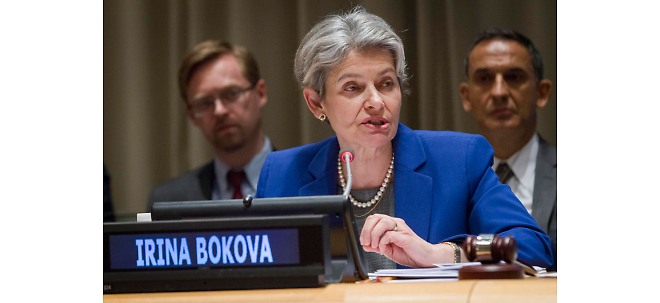
La directora general de la Organización de las Naciones Unidas para la Educación, la Ciencia y la Cultura (Unesco), Irina Bokova, defendió el papel central de la educación en la implementación de la Agenda 2030 de Desarrollo Sostenible.
Al intervenir en la instalación de un foro de alto nivel de la Asamblea General de la ONU, la funcionaria recordó que la Agenda establecida en 2015 para erradicar la pobreza extrema y reducir las desigualdades tiene como principio el no dejar a nadie atrás.

Pero eso no está pasando en las escuelas, dijo Bokova, quien lamentó que más de 260 millones de niños, adolescentes y jóvenes estén fuera de las aulas, un fenómeno que afecta de manera abrumadora a los residentes en países pobres.

De acuerdo con la directora general de la Unesco, el objetivo de la Agenda de alcanzar una educación inclusiva y de calidad para 2030 guarda una estrecha relación con las otras 16 metas plasmadas en la ambiciosa plataforma de progreso humano.

Si le preguntamos a cada en familia en cualquier lugar del mundo o a cada niño y niña qué es lo que más necesitan, la respuesta es clara: educación, subrayó en el evento que reúne a ministros y diplomáticos de los cinco continentes.

Para Bokova, todos los gobiernos del mundo deberían colocar a la enseñanza como una prioridad, por su potencial impacto en la erradicación de la pobreza y la construcción de sociedades pacíficas.

El acceso a la educación pudiera reducir la pobreza en más de la mitad, precisó.

La directora general de la Unesco insistió en que la educación no constituye una opción, sino un derecho humano básico y el cimiento para el desarrollo inclusivo y sostenible.

Fuente: http://www.prensa-latina.cu/index.php?o=rn&id=96825&SEO=unesco-defiende-papel-central-de-la-educacion-en-agenda-2030
Comparte este contenido:

África: Govt Views On Teen Mums ‘Not At Par With Findings’

Africa/Tazania/Junio del 2017/Noticias/http://allafrica.com


The recent statement made by President John Magufuli on the government’s stand concerning teenage mothers’ return to school is contrary to what most wananchi want, The Citizen has learnt.

According to a Twaweza 2016 report dubbed ‘Reality Check: Citizens’ views on education in a fee free era’, 62 per cent of wananchi prefer that girls be allowed to resume school after giving birth. Only 21 percent want girls to be expelled and not allowed back to school.

The brief is based on data from Sauti za Wananchi, Africa’s first nationally representative high-frequency mobile phone survey. The findings are based on data collected from 1,806 respondents across Mainland Tanzania (Zanzibar is not covered in these results) between 7 and 14 August 2016.

While critics have campaigned against this policy on the basis that expelling teenage mother from schools punishes them and exacerbates the already poor state of girls’ education in Tanzania, President John Magufuli has made it clear that during his reign no impregnated school girl will be allowed back to school after giving birth. He even went on further to accuse Non Governmental Organisations, which have been urging the government to permit teen mothers to re-enter the education system, of being used by foreign agents for their own agenda.

In the Twaweza survey, another 7 percent want legal action to be taken against those who impregnate girls while; 7 percent want girls to be allowed to continue with their studies while still pregnant; and 2 percent of wananchi want girls to be allowed to continue with their studies but in another school.A report by Human Rights Watch says about 8,000 girls who drop out of school every year due to pregnancy.

Twaweza’s report said in conclusion concerning their findings, «This should persuade the government to reconsider their position about this issue given its commitment to improve girls’ education. This is particularly important now given the increasing trend in school dropouts. The Uwezo assessment report indicates that the school dropout rate for 2014 was 18 percent.»

Fuente:

http://allafrica.com/stories/201706270116.html

Fuente imagen:

https://lh3.googleusercontent.com/fdrn9MojQ8ZAruVinRDU9xqfUOx8quCqctaHnsSBZMniBd1K3vDVQejkIesQ6nTeqIf_WA=s138


Comparte este contenido:

África: Adesina Named 2017 World Food Prize Winner – the ‘Nobel’ of Agriculture

África/Junio del 2017/Noticias/http://allafrica.com/

Monrovia’ — Akinwumi Adesina, president of the African Development Bank, has been named the winner of this year’s World Food Prize.

The prestigious U.S.$250,000 prize is given annually to a person who has worked to advance human development by «improving the quality, quantity or availability of food in the world». Over a 31-year existence, the award has become known as the ‘Nobel Prize’ for food and agriculture.

Monday’s announcement by the president of the World Food Prize, Ambassador Kenneth Quinn, was made at a ceremony held at the U.S. Department of Agriculture attended by U.S. Secretary of Agriculture Sonny Perdue. Since its founding in 1986, the Prize has honored 45 individuals for their outstanding contributions to food security around the world.

«These individuals have been at the forefront of every major breakthrough in agriculture and food production in the last 30 years», Quinn told AllAfrica in a telephone interview before Monday’s announcement. He said the laureates have led the «single greatest period of food production and hunger reduction in all human history». Nominations for the prize, he said, are submitted by organizations and prestigious individuals. A selection committee – made of individuals from around the world – makes the decision.

Quinn announced that the committee noted a couple of «distinct achievements» of Adesina: his role in organizing and making the African fertilizer summit a «great success»; his work with leading non-profit organizations and banks to expand the availability of commercial credits to agriculture and farmers across the continent when he was a senior executive of the Alliance of Green Revolution of Africa; the digital e-wallet scheme during his five-year tenure as minister of agriculture of Nigeria, which helped tackle corruption that had pervaded the fertilizer industry.

Quinn said Adesina has helped galvanize support to transform agriculture on the continent through his various initiatives which increased farmers’ yield and incomes. «All of his policies were very farmer friendly, and he became known as the ‘farmer’s minister'». The committee was also «taken» by Adesina’s own life that began with him growing up in a poor village, and how education «allowed him to lift himself up,» Quinn said.

The AfDB president came from a family of farmers. With some education, however, his dad got a job as a civil servant which provided the means to send his four sons to school. Adesina, the second, experienced the poverty of smallholder farmers and their families during his years of schooling in the village.

Adesina told AllAfrica that he was thrilled when he first learned that he had been selected as this year’s winner for the work he’s done over the years. «But for me it’s not about the past as much as even the future; I feel greatly inspired and motivated to do even more until we free Africa and the world of hunger».

He is excited about what lies ahead. «I see a future where agriculture is treated as a business, not as a way of life; I see a continent in the next ten years that will be able to feed itself; I see a continent that will be able to transform its rural economy from zones of misery to zones of economic prosperity; I see a continent that is able to end malnutrition».

Since he became president, he said, the bank has committed itself to a strategy which aims to end hunger and rural poverty on the continent in the next decade. Feed Africa, the second of the AfDB’s top five priorities to which it has already committed $24 billion dollars, was launched at its headquarters in Abidjan last year.

Adesina said some of the areas of focus of the new plan will be «how to get technology to farmers – at the scale of millions of farmers all across Africa – and how to get the youth to be involved in agriculture as a business».

He will be at the center of attention this week in Des Moines, Iowa, where guests from dozens of countries, including scientists, ministers, CEOs and heads of NGOs will gather for a week of activities. He is scheduled to speak at various events including the «Borlaug Dialogue», a symposium which organizers say brings together 1,200 people from 65 countries, named after Norman Borlaug, the 1970 winner of the Nobel Peace Prize who conceived the idea of the World Food Prize.

Comparte este contenido:

Africa: Ethiopia Was Colonised

África /Etiopia/Junio del 2017/Noticias/http://allafrica.com

We kept the imperialists at bay, but it wasn’t enough.

Like many African countries that were colonised by the British, Ethiopia’s educational system strongly privileges the English language. I learnt this first hand going through school in the capital Addis Ababa.

Along with my classmates across the vast country, I was taught in my local language from Grades 1 to 6 (ages 6 to 12). But after that, the language of instruction switched. History, maths, sciences and the rest were now taught in English, while Ethiopia’s official language Amharic became its own separate subject.

Growing up in Ethiopia, fluency in English was considered a mark of progress and elite status. At my school, we were not only encouraged to improve our proficiency, but made to feel our future depended on it. When I was in grade 4, one of my tasks as a class monitor was to note down names of classmates I heard speaking Amharic during English lessons or lunchtime. Our teacher would enforce a 5-cent penalty for every Amharic word that slipped through our lips during lessons.

At the same time, we were proudly educated in Western history and literature. I learnt to take pleasure in reading books in English. I listened to American songs. And I looked to emulate the lives of the people I saw in Hollywood films.

At primary and secondary school, we were taught about Ethiopian history too. But many aspects of the country – from its philosophy to its architecture to its unique methods of mathematics and time-keeping – were neglected. I left school feeling I lacked a coherent understanding of my country’s history. And today, like most of my classmates, I would struggle to write even a short essay in Amharic.

My experience no doubts resonates with many people across Africa, where colonialism elevated European languages and history in the education system while devaluing local languages, methods of instruction, and histories. This is what has spurred vigorous movements across the continent today calling for the academy to be decolonised.

The strange thing though is that Ethiopia was never colonised in the first place.

Native colonialism

So how did the country’s school system come to be the way it is? According to Yirga Gelaw Woldeyes’ brilliant new book, Native Colonialism: Education and the Economy of Violence Against Traditions in Ethiopia, the answer is that Ethiopia was «self-colonised» and that education played a big part.

In the academic’s extensive study, he sets out to show «how and at what cost western knowledge became hegemonic in Ethiopia». He suggests that the 1868 British expedition to Abyssinia, which resulted in the British looting massive national treasures and intellectual resources that Emperor Tewodros II had accumulated over time, was a turning point in Ethiopians’ perception of power. Although the Emperor’s defeat in Magdala did not result in the country’s colonisation, it brought about a new, outward-looking consciousness. «This reaction to the European gaze created the desire to acquire European weapons in order to defend the country from Europe,» writes Woldeyes.

Successive rulers maintained a contradictory relationship with Europe – between friendship and enmity – until Emperor Haile Selassie, who ruled up to 1974, initiated a period of radical westernisation post-WW2. In that process, Woldeyes explains, Haile Selassie entrusted certain elites to establish Ethiopia’s modern education system. This group was educated in Western languages and teachings. They embraced European epistemology as a singular, objective basis of knowledge, seeing it as synonymous with «modernity» and naturally superior to the local.

These elites, who Woldeyes refers to as «native colonisers», introduced a system of education into Ethiopia that mimicked Western educational institutions. Contributions from traditional Ethiopian educators such as elders, religious leaders, and customary experts were squeezed out.

The result is that Ethiopia’s schools came to lack a meaningful connection with the culture and traditions of the communities in which they are located. Instead, they prepare students in the skill of imitation using copied curricula and foreign languages. Schooling today, argues Woldeyes, is as much a process of unlearning local tradition as it is about learning the art of foreign imitation.

This disconnect at the heart of Ethiopian teaching has many negative ramifications. An education that doesn’t speak to students’ lived experience limits their capacity to create, innovate, and deliver solutions to problems in their surrounding world. It leads young Ethiopians to feel alienated from their own culture, lowers self-esteem, and leads to a disoriented sense of identity.

Moreover, without a comprehensive understanding of their country’s history and politics, graduates lack the knowledge and skills to confront the nation’s ongoing problems.

Text kills, meaning heals

In Native Colonialism, Woldeyes does not stop at diagnosing the problem. He goes on to propose remedies – namely that the education system be reconstituted on the foundations of Ethiopia’s «rich legacy of traditional philosophy and wisdom».

He argues that: «before the rise of western knowledge as the source of scientific truth, one’s political and social status in Ethiopia was justified on the basis of traditional beliefs and practices». In the tradition of the Ethiopian Orthodox Tewahido Church, he says, education was not a means to an end, but part of «an endless journey» of knowledge-seeking. This quest was grounded in the two core values of wisdom and humility.

Woldeyes argues that we need to put these core values back at the centre of the country’s education, which should reflect indigenous beliefs, knowledges and philosophies. This does not mean foreign ideas should be rejected. Students should be exposed to a variety of teachings. But they should, he says, be disseminated through an Ethiopian frame of reference.

Woldeyes argues that this approach was the norm in Ethiopian education for centuries. Through trade and diplomatic relations, scholarship from as far as Asia and Europe has been making its way to Ethiopia for hundreds of years. But traditionally, scholars did not simply translate these works into local languages.

Instead, they used an Ethiopian interpretative paradigm called Tirguamme «to evaluate the relevance and significance of knowledge». Woldeyes defines this as «a process that searches for meaning by focusing on the multiplicity, intention, irony and beauty of a given text». This unique process of inquiry is based on a traditional principle that literally translates as «text kills, but meaning heals». It is apparent in different Ethiopian cultural practices such as the multi-layered poetic practice of «wax and gold», allegorical puzzle games, the art of judicial debating, and storytelling.

Woldeyes’s methodology offers a potential framework for reforming the current education system in Ethiopia. It envisions a system of education centred on local priorities and ways of being, whilst also incorporating ideas from around the world.

Decolonising the academy

Woldeyes’s ground-breaking analysis demonstrates that despite the fact that no colonial power managed to conquer Ethiopia, the country did not escape being colonised in other ways.

Moreover, his study shows that decolonising education across Africa will require an investigation of how indigenous epistemologies were violently discarded. It will also entail a critical study of the modes of scholarship previously side-lined as «traditional».

Woldeyes’s research suggests that the decolonization movement cannot be confined to the four walls of elite educational institutions. It must reach out beyond to members of society that were previously closed out, such as traditional leaders, elders, and others.

Emperor Tewodros believed that Ethiopia needed European weapons to defend the country from Europe. Today, we may need native epistemologies to take back the country from native colonisation.

Fuente: http://allafrica.com/stories/201706210608.html

Fuente imagen:

https://lh3.googleusercontent.com/mlmCdqbuYeD-mBExDY3ugEekwAvDyre4RdCToHO9HaZIYoQBD4VTnwt1bDMqncTnScGbeQ=s139

Comparte este contenido:

Sudáfrica prohíbe escuelas de un solo religión

El objetivo no es prohibir las prácticas religiosas en las escuelas, sino proteger a los niños

Africa/Sudafrica/Independent.co.uk

Escuelas de una sola religión han sido prohibidas en Sudáfrica después de un fallo en el Tribunal Superior de Johannesburgo. Las escuelas públicas ya no pueden promocionarse como espacios de enseñanza de una sola religión en particular, excluyendo a las demás, el tribunal falló.

El Organisasie vir Godsdienste-Onderrig en Demokrasie (Organización para la educación religiosa y la Democracia), o OGOD, que lucha contra el adoctrinamiento religioso a través de las escuelas públicas en Sudáfrica, dio la bienvenida al juicio.Dijo que el juicio significa que las escuelas públicas  ya no pueden promover una religión específica y excluir a otros.

“Nuestro caso fue construida sobre el hecho de que en las escuelas cristianas los alumnos se vieron forzados a participar “, dijo Pietersen, de acuerdo con declaraciones dadas al diario sudafricano The Times .

OGOD presentó la demanda contra seis escuelas públicas predominantemente cristianas- Si bien el tribunal no concedió la orden de restricción, la sentencia indica que las escuelas habían violado una sección de la Ley de escuelas por lo que es una ofensa promover una religión y excluir a otros.

 «El tema constitucional fundamental es que nuestra sociedad es diversa, que la diversidad debe ser celebrada y que los derechos específicos son conferidos y tratado en virtud de ese principio·Dentro de este contexto, las escuelas públicas son bienes públicos que sirven a los intereses de la sociedad en su conjunto.»

El Departamento Nacional de Educación dijo que el fallo fue consistente con su propia política de que ninguna religión debe ser promovida por encima de otra.

“El objetivo no es prohibir las prácticas religiosas en las escuelas, sino de proteger a los niños haciendo hincapié en que las escuelas deben participar en la educación de la religión en lugar de la formación religiosa y no promover una religión sobre otra,” dijo un portavoz del departamento nacional de Educación.

Fuente: http://www.independent.co.uk/news/world/africa/south-africa-single-religion-schools-outlaw-ban-faith-christian-muslim-jewish-a7814231.html

Comparte este contenido:
Page 309 of 622
1 307 308 309 310 311 622