Page 328 of 622
1 326 327 328 329 330 622

Uno de cada cuatro niños vive en pobreza en Oriente y África

22 mayo 2017/Fuente: Telesur

Lo menores afectados carecen de servicios mínimos para desarrollar una vida digna.

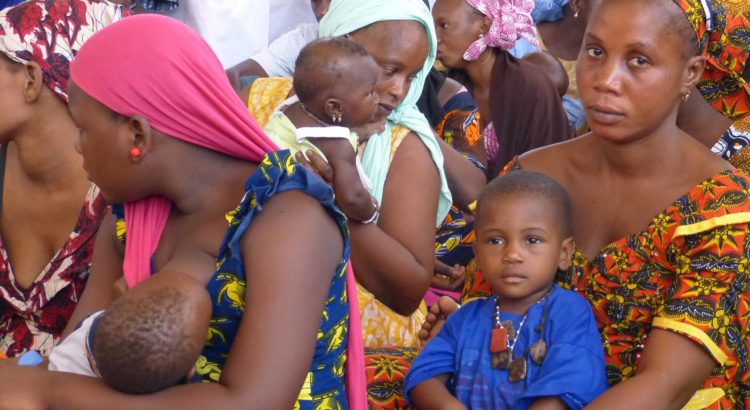
 El Fondo de Naciones Unidas para la Infancia (Unicef, por su sigla en inglés) alertó este sábado que al menos uno de cada cuatro niños vive bajo el umbral de la pobreza en Oriente Próximo y el norte de África, donde cerca de 29 millones de menores están afectados por este fenómeno.

«La pobreza infantil está relacionada con mucho más que los ingresos de las familias. También está relacionada con las necesidades más básicas, la educación, la vivienda, la alimentación, la salud y el acceso a agua potable», indicó Geert Cappelaere, director regional de Unicef para Oriente Próximo y el norte de África.

Los menores que viven en familias cuyos miembros no han recibido ningún tipo de educación tienen mayor peligro de vivir en la pobreza. Un cuarto de los niños de entre 5 y 17 años no están escolarizados. La mitad de estos menores viven en condiciones precarias y no han recibido la asistencia sanitaria correspondiente.

«Para ello son necesarios un liderazgo consecuente, una inversión responsable, tanto pública como privada, y una apuesta por parte de la sociedad civil y la comunidad internacional», añadió el representante de Unicef.

Fuente: http://www.telesurtv.net/news/Uno-de-cada-4-ninos-vive-bajo-el-umbral-de-pobreza-en-Oriente-y-Africa-20170520-0031.html

Comparte este contenido:

La violencia de género es una lacra oculta en Senegal

Senegal/22 mayo 2017/Fuente: El País

La Asociación de Juristas Senegalesas recibe la Medalla de la Cruz Roja por defender a las mujeres.

La violencia machista es un ejemplo de ese desconocimiento. “Los maridos pegan a sus mujeres y el asunto suele quedar dentro de las paredes de la casa. En nuestra cultura tradicional se establece que la mujer no puede decir nada porque para ir al Paraíso hay que obedecer al hombre”, explica. Kanté advierte de que la violencia en el matrimonio “es un delito y si la víctima es la mujer es un agravante penado con dos años de prisión. Hay que denunciar y afortunadamente las mujeres empiezan a hacerlo”.

Su posición, considerada radical en parte de la sociedad, ha llevado a que las miembros de la AJS sean calificadas despectivamente de “mujeres libres”, “insumisas” o “lesbianas”, pero eso no inmuta a Kanté. “Hay un aspecto en la legislación que tenemos que cambiar ya. Si una mujer rechaza sexualmente a su marido esto es causa suficiente de divorcio para él. En este país se producen muchas violaciones fruto de la pobreza, de la promiscuidad, de la creencia de los hombres de que pueden poseer a las mujeres a su antojo. Pero también existen en el matrimonio y no están tipificadas como tal, están invisibilizadas”, añade.

Otro caballo de batalla de Kanté es el aborto, que en Senegal sólo está autorizado en caso de peligro para la vida de la mujer o el bebé. “Hay que ampliar los supuestos a casos de violación, incestos y otros. Hay mucha interrupción del embarazo clandestina porque sólo es para ricos, los pobres no pueden acceder, y las consecuencias son nefastas, muertes, infecciones. Esta sociedad no está preparada para un aborto totalmente libre, sobre todo porque los líderes religiosos se oponen, pero las mujeres creemos que hay que ampliar los supuestos”, explica.

Senegal vive en la aparente contradicción de ser un país firmemente anclado en sus tradiciones y a la vez abierto a influencias externas, lo que se pone de manifiesto, por ejemplo, en el hecho de que cuente con una progresista ley de paridad, “un paso adelante pero insuficiente” a juicio de Kanté, y que sin embargo las prácticas homosexuales estén penadas con la cárcel. Otra muestra es la mutilación genital femenina. La ley la prohíbe, pero la tradición hace que se siga practicando de manera clandestina. “Son prácticas nefastas, pero la gente no denuncia. El Estado debe seguir sensibilizando y los ciudadanos tienen que acudir a la Justicia, nosotros no podemos actuar si no nos llegan los casos”.

La juez sabe bien de las dificultades que sufren las niñas para desarrollar una carrera profesional. Sus padres, de origen humilde, llegaron a Dakar procedentes de Ziguinchor e hicieron todo lo posible por darle unos estudios. “Yo tenía que dictarle la lección a mi madre cada día y hasta que no tuve quince años no me di cuenta de que ella, en realidad, no sabía leer. Me cogía los libros y cuando me veía dudar me hacía empezar de nuevo, pero en realidad ella no estaba leyendo, no sabía. Eso me impresionó”.

“Este no es un país igualitario pese a lo que digan las leyes. En la sociedad senegalesa hay una preponderancia de lo masculino, los hombres siguen creyendo que son superiores”, apunta, deslizando una crítica sobre una práctica común en muchos países de mayoría musulmana. “La poligamia, por ejemplo, es sinónimo de violencia porque no hay igualdad en ella. Puede que no sea física, pero es moral. Por mi trabajo y experiencia puedo decir que esta costumbre es fuente de enormes problemas que acaban en mi despacho”.

En la actualidad, la Asociación de Juristas Senegalesas colabora con la Cruz Roja Española en un proyecto para divulgar y defender los derechos de las mujeres del que Kanté habla con entusiasmo. “Hemos conseguido buenos resultados. La violencia de género ya es un tema de debate del que antes apenas se hablaba, por ejemplo”, observa.

Fuente: http://elpais.com/elpais/2017/05/11/africa_no_es_un_pais/1494472010_500907.html

Comparte este contenido:

South Africa: Police Fire Teargas At Nehawu Protesters Outside University of Pretoria

South Africa/22 de Mayo de 2017/Allafrica

Resumen: La policía usó gases lacrimógenos contra los miembros de Nehawu quienes protestaban fuera de la Universidad de Pretoria el viernes por la mañana.  Los trabajadores exigían un 13º cheque, una mejor asistencia médica y un aumento del 8%.

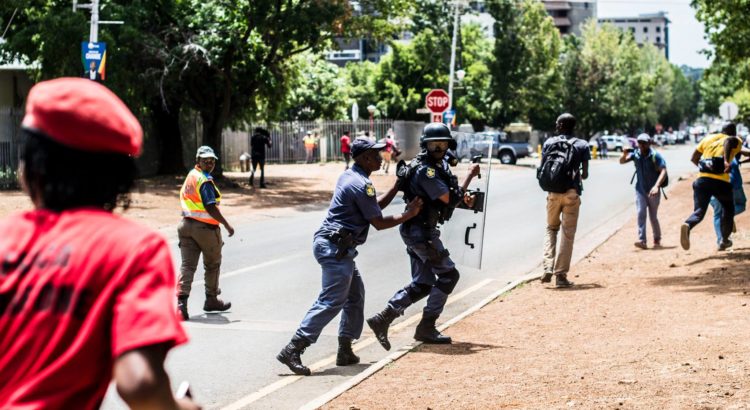
Police used teargas against protesting Nehawu members outside the University of Pretoria on Friday morning.

The workers were demanding a 13th cheque, better medical aid, and an 8% increase.

Protesters tried to get onto the university grounds at an open gate on Lynnwood Road after the main gate was closed.

Police fired two canisters of teargas at the protesters, who responded by throwing stones and bricks at the police, before being calmed down by Nehawu leadership.

Regional branch chairperson for Nehawu Joseph Makhasa said other universities not only paid their employees more, but that they also provided a 13th cheque.

Makhasa said if their demands were not met, they intended on disrupting the university’s open day, to be held this Saturday.

Nehawu members continued singing and dancing outside the university’s main gate in Lynnwood Road.

Fuente: http://allafrica.com/stories/201705190904.html

Comparte este contenido:

Meet the 34-Year-Old Ugandan With Two PhDs

Uganda/22 de Mayo de 2017/Allafrica

Reseña: A los 34 años, tiene dos doctorados en ingeniería química adquiridos de la Universidad de Kuala Lumpur, Malasia (2014) y la Universidad de Nottingham, Reino Unido (2016).

On a cold Monday afternoon I make my way to Nsangi, a township south of Kampala in Wakiso District.

While in Nsangi, I intend to attend a workshop for a few hours before I link up with Hussein Kisiki Nsamba, a 34-year-old engineer who runs Invention Plus Group of companies that he started in 2007 while at Makerere University.

Nsamba speaks softly as we start our interview that goes on into the later part of the evening.

He is so inviting and a down to earth young man but with a larger-than life CV that speaks volumes.

At 34 years, he has two PhDs in chemical engineering acquired from the University of Kuala Lumpur, Malaysia (2014) and the University of Nottingham, UK (2016).

Nsamba was born in 1983 in Nsangala Mawogola, current Sembabule District to Muhammadi Kaluuma and the late Tijarah Najjemba.

He attended Sydney Paul Primary School in Kinoni, Lwengo District before moving to Masaka Secondary School in Masaka District where he completed his secondary education.

From Masaka Secondary School, he proceeded to Makerere University to study a bachelor’s degree in Industrial Chemistry, which he completed in 2008.

In 2011 he attained a Master’s in Chemical engineering in Malaysia from the Research University of Putra, before acquiring two PhDs in chemical engineering from the University of Kuala Lumpur and University of Nottingham in 2016.

The two PhDs, according to Nsamba, focus on different aspects of engineering with the one (from Kuala Lumpur) concentrating on design and performance evaluation of biochar production system while the other (from Nottingham) focusing on power generation from plant materials.

Nsamba, to Ugandan standards, is an accomplished man whose education is purposed towards seeking solutions to problems.
 «My purpose in education [PhDs] is to look for where there are problems and find solutions,» he says, although he notes that this has not been without challenges because at some point he had felt like giving up, especially his second PhDs.

«Some people told me it was hard to achieve [second PhD). But I thought I should disapprove them,» he says, although he admits that it was a bit dispiriting.

«My motivation was centred on the basis of working hard to prove the naysayers wrong,» he says.

Indeed Nsamba achieved his targets in life although many do not he can have such a larger-than life CV at his age.

«Some people don’t believe that at my age, I have two doctorates. They think that people who have PhDs must be at some age [advanced]. But that is a wrong perception. You can achieve anything if you are focused,» he says.

Currently, Nsamba is a lecturer of industrial chemistry at Makerere University and is a founding member of Invention Plus Group of companies, a consortium of several business enterprises including fabricators of engineering designs, building contracts, chemical supplies and energy solutions, among others.

«I started the company to apply science as well as creating jobs,» he says.

Nsamba, who is married with three children has previously been recognised and awarded the best presentation award during the Third Technological and Innovation Conference in Nongkhai, Thailand.

He is inspired by his father Kaluuma, an engineer by profession, who he says made sure that stays in school amid various challenges.

«He is an electrical engineer who always kept motivating and encouraging me to work hard. He always made things seem easy, even when they were not,» he says.

According to Nsamba, the world today demands more than skills, it looks more at solutions and how you attain those solutions is the question that must be thought through with a practical education system.

Fuente:  http://allafrica.com/stories/201705190006.html


Comparte este contenido:

Zambia: Managing after-effects of child abuse

Zambia/Mayo de 2017/Fuente: Zambia Daily Mail

Resumen: GETRUDE Chanda, de 17 años, (no nombre real) es una ex víctima de abuso infantil. Ella fue traída por su tía, que la consiguió de sus padres en el pueblo para llevarla a la escuela en Lusaka. A su llegada a Lusaka, Gertrude fue llevada a la amiga de su tía, donde trabajaba como empleada sin paga. Pero lo peor de todo, había un plan para atraerla al Reino Unido, donde debía trabajar como niñera. Con la ayuda de una vecina a quien ella había propinado sobre el plan, la policía entró rápidamente y la llevó a Vision of Hope. Eso fue en 2012. Ahora en Grado Siete, Gertrude sueña grande y aspira a convertirse en periodista cuando complete su educación secundaria.Ella quiere usar su carrera para combatir el abuso de niñas y poner en evidencia desafíos que afectan el bienestar de la niña.
Según la Convención de la Organización Internacional del Trabajo (OIT) sobre la edad mínima, los niños entre 13 y 15 años de edad pueden realizar trabajos ligeros, siempre y cuando no amenace su salud y seguridad, o obstaculicen su educación o orientación vocacional y formación .

GETRUDE Chanda, 17, (not real name) is a former victim of child abuse. She was brought by her aunt, who got her from her parents in the village to take her to school in Lusaka. Upon arrival in Lusaka, Gertrude was taken to her aunt’s friend where she worked as a maid without pay.

But worse of all, there was a plan to traffic her to the United Kingdom, where she was to work as a babysitter. With the help of a neighbour who she had tipped about the plan, police swiftly came in and took her to Vision of Hope. That was in 2012. Now in Grade Seven, Gertrude dreams big and aspires to become a journalist when she completes her secondary education.

She wants to use her career to fight girl child abuse and bring out challenges affecting the welfare of the girl-child.
According to the International Labour Organisation (ILO) convention on minimum age, children between the ages of 13 and 15 years old may do light work, as long as it does not threaten their health and safety, or hinder their education or vocational orientation and training. But in Gertrude’s case, the opposite is true, she was forced to do hard work as early as 12. Her aunt took advantage of her parents’ poverty to exploit her. Majory Kabwe (not real name), seven, was sexually abused by her uncle when she was five. Her shyness and stammering voice during the course of the interview were a clear indication that she is still mentally affected.

“I was asleep in the night and my uncle came on top of me, I told my mother in the morning and he was taken to the police,” Majory said. Though she would love to re-unite with her family, she may not be assured of social freedom due to the stigma in society. Seclusion and special counselling is what is required for many other little children in Majory’s situation. Michel Banda (not real name) was forced into early marriage by her grandmother after the death of her parents. At 20, with two children, she was forced to go on the streets after her husband deserted her. While on the streets, Michel started abusing substances. One day whilst intoxicated, Michel had her legs burnt as she was trying to prepare food for her children. “My husband’s relatives convinced him to chase me and marry another woman. I tried in my powers to hold on to the marriage but it still did not work. I had no option but to start living on the street,” she said.

Michel is now happy to have found solace and comfort at Vision of Hope reformatory centre. She can now have a decent shelter for herself and her two children. When she leaves Vision of Hope, her dream is to start up a business which will help her look after her children. And Salome Ng’andu (not real name), 17, was ill-treated by her cousin for unknown reasons. When her grandmother, who was looking after her, died, Salome left Kasama for Lusaka to live with her cousin. Though coming to Lusaka signified a transition in her life, it was not long before she found out the cruelty of her cousin. “My cousin turned me into a slave, I used to do all the house work after which she would deny me food. She was in the habit of stealing money from her husband and would accuse me of being a thief,” Salome said.

She can now afford a smile as she has found hope at Vision of Hope reformatory centre. Salome believes that it is better to live with other people who care for her unlike living with family which mistreats her. Despite many attempts by the government to curtail child labour and other forms of abuse, the vice has been rampant, especially among the girl-children because of their vulnerability. In most instances, cases of child abuse have gone unreported because most victims are entangled in indecision about reporting the matter. However, the scourge is likely to reduce with positive strides that organisations like Vision of Hope rehabilitation shelter have taken. Vision of Hope is a rehabilitation centre for girls and women who have undergone various forms of abuse.Since inception in 2002, Vision of Hope has transformed over 600 girls and women who have undergone various forms of abuse.

Victims are usually picked from social welfare, police, the streets and other sources and taken to the centre, where they undergo counselling for a given period. The centre also has class sessions where the victims are imparted with various survival sustainable skills. During the course of counselling, the girls are put in different literacy classes where they are taught how to read and write. This class sessions run from about 08:00 to 10:00 hours after which they are taught practical lessons in tailoring, which goes to 12:00 hours. In the late afternoon they do various land-scape and gardening works around the yard. When the counselling is done, one is then allowed to go home, where they will be monitored for a certain period of time.

Founder Chitalu Chishimba felt the need to come up with the reformatory centre after being a victim of abuse. “I was in an abusive marriage for about five years and time came when I felt I needed to move out of it and find a way to live a different life. “My experience taught me that there were so many people out there who are going through what I had been through and there was need to change their situation,” Chishimba said. Her dream is to make the centre bigger and reach out to many people throughout the country undergoing different forms of abuse.

Meanwhile, Ladies Circle Number Seven chairperson Judith Makukula and her organisation have pledged to support the centre with basic necessities. “We feel we can do something to help transform the lives of other vulnerable girls and women so that we give them hope for a better tomorrow,” she said.

Fuente: https://www.daily-mail.co.zm/managing-after-effects-of-child-abuse/

Comparte este contenido:

Entrevista a Nawal al Saadawi. Para ser feminista no basta con ser mujer

“Para ser feminista no basta con ser mujer”
Entrevista a Nawal al Saadawi, escritora y psiquiatra, de 84 años, firme defensora de los derechos de la mujer, lleva décadas luchando contra el machismo y el extremismo religioso.
Nawal al Saadawi (Kafr Tahl, Egipto, 1931) rehúsa retratarse con el cartel de la institución que la invita. Cuando una asistente a las jornadas que la cooperación española organizó el 9 y 10 de septiembre sobre igualdad de género en el Norte de África y Oriente Próximo le pidió una fotografía, la novelista, feminista y médico egipcia sugirió con una sonrisa un fondo alternativo.

“Mejor la pared de un pasillo que un cartel, no voy a hacer propaganda a ningún Gobierno”, dijo en alto sin reparos, a pesar de que acababa de participar en la inauguración del evento. Al Saadawi está “en contra de todos los Gobiernos”. Y lo afirma sin pudor frente a sus anfitriones. Lo único que oculta son sus manos, en unos coquetos guantes blancos. “No estoy segura de que me vuelvan a invitar, de hecho ni siquiera sé por qué me han invitado”, afirma sin dejar de sonreír antes de comenzar la entrevista en la sede de la Agencia Española de Cooperación Internacional (AECID). Pero sus credenciales como feminista en Egipto y en el mundo árabe hacen imprescindible su presencia allá donde se traten los derechos de la mujer.

Doctora y psiquiatra, ha escrito más de medio centenar de libros entre novelas, cuentos y obras de teatro, en los que aborda tanto los problemas de la mujer en el mundo, desde la mutilación genital y la violencia machista a la prostitución, como los efectos perniciosos del extremismo religioso. Su libro La mujer y el sexo, publicado en 1972, con duras críticas a la extirpación del clítoris, que ella misma sufrió cuando tenía seis años –“me mutilaron con una navaja de afeitar”– fue la causa de que perdiera su trabajo como directora general de salud pública en Egipto.

No ha sido la única consecuencia “de haber hablado siempre alto”. En 1981, bajo el Gobierno de Anwar el Sadat, pasó varios meses en prisión por criticar al régimen, aunque aprovechó su estancia para escribir sus memorias en un rollo de papel higiénico con un lápiz de contrabando. Ha “sufrido el exilio durante diez años”, a causa de las amenazas de grupos extremistas islámicos. Ahora, bajo el Gobierno de Abdelfatá Al Sisi, trabaja en Egipto para que los jóvenes sean “cada vez más radicales”.


Pregunta. ¿No hay ningún Gobierno en el mundo que le guste?

Respuesta. No. Estoy en contra de todos los Gobiernos, porque solo apoyan a las mujeres que trabajan para ellos. Por eso me sorprende que me haya invitado el Gobierno español. Nawal al Saadawi, durante su visita a Madrid.KIKE PARA

P. ¿Ni siquiera si los dirige una mujer?

R. No, ni siquiera, porque yo no distingo entre hombres y mujeres. Lo más importante es la mente. Mire a Hillary Clinton [aspirante a la candidatura del Partido Demócrata en las próximas elecciones de Estados Unidos]. Ella está en contra de las mujeres y solo usa el tema de la mujer para ganar las elecciones. Sin embargo, lo único que quiere en realidad es dinero y poder. Para ser feminista no es suficiente con ser una mujer, porque Clinton es mujer pero también es a la vez capitalista, patriarcal y religiosa, que son las causas por las que las mujeres están oprimidas en el mundo. Yo no divido a las personas por sus órganos genitales sino por lo que hay en su cabeza.

P. ¿Cree que las mujeres que llegan a puestos de poder político son machistas?

R. Exacto. No tiene más que mirar a Margaret Thatcher [ex primera ministra de Reino Unido]. Cuando Thatcher estaba en el poder, yo estuve en Reino Unido y las mujeres en aquel país estaban en contra de Thatcher porque perdieron muchos derechos durante su Gobierno.

P. ¿Qué es entonces el feminismo para usted?

R. El feminismo es liberar la mente del sistema patriarcal, de la religión y del capitalismo, que son las principales amenazas para la mujer. Aunque no solo son amenazas para la liberación de la mujer sino también para los pobres. Yo no separo entre la opresión de clase y la opresión patriarcal. Para mí, están relacionadas y siempre van juntas de la mano. De hecho, para mí una mujer es independiente cuando se alimenta por sí misma.

P. ¿Hay algún lugar libre de estas amenazas?

R. No, la opresión de la mujer es universal, no solo afecta a los países pobres. Se da por ejemplo en todas las religiones: en el cristianismo, en el judaísmo, en el islam o en el budismo la mujer es siempre inferior. Como ve, no me gustan las divisiones, tampoco separo entre Oriente y Occidente o entre Norte y Sur, porque todos vivimos en un solo mundo.

P. Usted participó en las manifestaciones de la revolución de Egipto de enero de 2011. ¿Cómo vive bajo el régimen de Abdelfatá al Sisi?

R. En Egipto hubo dos revoluciones. En enero de 2011, la gente se levantó contra el régimen de [Hosni] Mubarak y la dominación de Estados Unidos, que siempre ha intentado que Egipto dependa comercialmente de ellos. Washington impulsó a los Hermanos Musulmanes hasta el poder. Así que la segunda revolución, en junio de 2013, surgió en contra de los Hermanos Musulmanes y consiguió expulsarlos del Gobierno. Y Abdelfatá al Sisi fue positivo porque apoyó al pueblo en su lucha contra los islamistas, ya que el pueblo egipcio no podía ser libre bajo el régimen teocrático de los Hermanos Musulmanes. No obstante, yo siempre he estado en contra de todos los Gobiernos, también de los de Egipto.

P. Los observadores internacionales consideraron, sin embargo, las elecciones de junio de 2012, que llevaron a Mohamed Morsi al poder, como las primeras elecciones libres en Egipto.

R. Esa es una gran mentira. No fueron elecciones libres, dependieron del dinero que muchos Gobiernos dieron a Morsi. Los países europeos y Estados Unidos propagaron mentiras sobre Egipto. También los medios de comunicación, que siempre están mintiendo y ofrecen una mala imagen de los pobres, porque son propiedad de los Gobiernos y de los millonarios.

P. Pero usted… ¿vive ahora libre en Egipto?

R. Me dejan trabajar con libertad porque ahora Al Sisi necesita mujeres como yo. De lo contrario, ya me habrían mandado a la cárcel.

P. ¿Cree que hoy en día su libro La mujer y el sexo produciría reacciones similares en Egipto?

R. Sí, porque hoy en día mis libros siguen causando fuertes reacciones.

P. ¿Está escribiendo?

R. Yo ahora tengo 84 años y no sé hasta cuándo voy a vivir. Tampoco me importa. Solo tenemos una vida y tenemos que hacer lo mejor que podamos con ella. Pero incluso aunque muera, mis libros van a estar ahí, mi mente va a seguir viva en mis libros. Aunque soy médico, me siento fundamentalmente novelista. Yo cada vez soy más radical y mi sueño ahora es enseñar a la gente joven, que los jóvenes egipcios hagan una verdadera revolución.

Fuente: http://www.rebelion.org/noticia.php?id=226844&titular=%93para-ser-feminista-no-basta-con-ser-mujer%94-
Comparte este contenido:

Ghana: Provocative Conscience – A case for French Language education

Ghana/Mayo de 2017/Autor: Frederick K. Kofi Tse/Fuente: Graphic Online

Resumen: Esto ha encendido un debate entre ghaneses, especialmente políticos e interesados ​​en el sector de la educación; Y como algunos piensan que las deliberaciones sobre la idea son hace mucho tiempo, otros argumentan que es un movimiento equivocado. Un cambio en la estructura educativa puede tener efectos dinámicos en la economía, así que aprecio los diversos debates sobre esta política que ha planteado el Presidente. A decir verdad, la llamada para la enseñanza de la lengua francesa ha sido hecha por varios otros, incluyendo a la Sra. Hannah Tetteh, que instó a los políticos el año pasado a aprender a hablar francés y portugués.

This has ignited a debate among Ghanaians, especially politicians and stakeholders in the education sector; and as some think deliberations on the idea are long overdue, others argue that it is a wrong move.

A change in the educational structure may have dynamic effects on the economy, thus, I appreciate the various debates on this policy that has been raised by the President. Truth be told, the call for French language education has been made by several others, including Ms Hannah Tetteh who urged politicians last year to learn to speak both French and Portuguese.

As a language lover, I find it an important policy by President Akufo-Addo to give a chance to all Ghanaian children to have a taste of one of the most influential languages on earth. Ghanaians, like many other nationals, go for holidays in France and brag about French brands such as Louis Vuitton, Chanel, Dior and Hermes and also enjoy French fries. Others also travel for business in Togo and Burkina Faso but French Language which will make trade easy for such businessmen and women has been denied many because of the education structure.

Curriculum

Adjusting the curriculum to make room for a bilingual population is good. Here is a country surrounded by three francophone countries―Togo, Burkina Faso and Ivory Coast― and in an Economic Community Of West African States (ECOWAS) which has eight French-speaking countries as majority members. What is more, Africa is the continent with the largest French-speaking population in the world and 31 countries in Africa have French as a first or second language.

It is true that Ghana’s structure of education calls for a review, and foreign languages are the least of our woes. However, if government wants to solve our problems starting from the least, we ought to be looking at the positives and suggesting ways of making government’s position more favourable to the interest of students and the economy at large. Apart from English language, French is one language which has a global reach. The French in their efforts to remain relevant after World War II set up Organisation International de la Francophonie, simply called La Francophonie.  It is a body representing countries in which a significant portion of their population speak French. La Francophonie is made up of 56 countries, almost a third of the world’s nations, and this includes rich countries such as Canada, Switzerland and Belgium.

 Today’s western and even Chinese millennials are either bilingual or multilingual. They are either switching codes from English to Mandarin to French or from French to English and to Spanish. So equipping our children with the French language opens up their capacity to work and compete with their equals around the world.

Language with reach 

As a language with a global reach, it will enhance our appreciation of art, history and literature, and this absorbs cultural shocks when we travel to any of Ghana’s three neighbouring countries. As the world’s institutions are calling for deepening globalisation, French is an essential tool for trade, business and diplomacy. Even in the recent election in France, the French language was projected by the President of the European Union (EU), Mr Jean-Claude Juncker, who stated that English was losing its relevance in the EU, in a bid to appeal to France to remain in the EU. Though this statement was mischievous, it still carries some weight as he himself switched to French immediately after he ended that statement. President Akufo-Addo himself knows how useful the French language has been to him as a lawyer and as a former foreign minister, and that is why he is so passionate about making it compulsory. I also know many development agencies that prefer bilingual employees to those who speak only one official language.

Reconsideration

Nevertheless, the government has to reconsider making any language compulsory; otherwise, it should not be examinable for all students. There are many who do not like French and as such do not perform well in the language. You can open their heads like coconut and force a Dictionnaire Français into it and add one terabyte of artificial memory and they will still fail to utter je parle Français. Forcing such students to write an examination on the subject will be disastrous.

The attitude of French teachers will also either be an incentive or disincentive to students to learn French. Those of us who attended “syto” started the French course in Junior High School (JHS) and it was hell. Our French teachers seemed to have had a different training from non-French teachers and so had a different attitude on the job; they beat us as if they were not happy we were learning a foreign language. One time, I was chased by Mr Nutsukpoe, my French teacher, in the class until I jumped through the window. Imagine that! Since then, I never stepped my foot into the class until I finished school.  En fait, j’avais fini.

Fuente: http://www.graphic.com.gh/features/opinion/provocative-conscience-a-case-for-french-language-education.html

Comparte este contenido:
Page 328 of 622
1 326 327 328 329 330 622