Page 330 of 622
1 328 329 330 331 332 622

South Africa’s public-private school plans require healthy scepticism

África/Liberia/ Uganda / Kenia.Mayo del  2017/Noticias/https://theconversation.com/


Public school systems across Africa are struggling. Some people believe that public-private partnerships are the solution to fixing ailing government education systems.

Public-private partnerships (PPPs) first took root in the form of charter schools in the US, and academies in the UK, arrangements where private entities take over the management of public schools, sometimes for profit, sometimes not. Such schools have now also sprung up in Liberia, Uganda and Kenya. Now officials in the Western Cape province are working to explore the model in South Africa: in 2015, five fee-free schools were set up as pilot “Collaboration Schools”.

The Western Cape Education Department hosted an information session in February 2017 to extol the virtues of PPPs to potential operating partners and philanthropic funders, with a view to expanding the project to 50 schools in the next few years.

Despite the project being designated a pilot, there’s already draft legislation that proposes giving the provincial education minister powers to reclassify any school as a Collaboration school.

It’s irrefutable that there are huge challenges in South Africa’s public schools. The question is whether using PPPs is the correct way to address them. A great deal of research evidence suggests that this approach should be treated with caution.

An internationally contentious system

The model that’s being proposed in the Western Cape is based on US charter schools and UK academies. Ark, one of the major organisations backing academies in the UK, and also a partner of the controversial Bridge schools, is acting as an advisor to guide the Western Cape’s arrangements.

But Bridge schools in Uganda have been ordered by the country’s courts to shut down because of poor infrastructural conditions and under-qualified teachers. In April 2017 several groups protested against the World Bank’s decision to advocate for Bridge Schools in Africa.

PPP schooling arrangements are controversial and give rise to several concerns.

The first is whether public schooling, should be directed and influenced so heavily by private parties. These parties have no public mandate that governs their actions. We know, too, that private provision of what used to be public services often exacerbates inequality – be it in the health care space or basic utilities. There’s no reason to believe the education space will be different.

Secondly, many (but not all) Charter operators enter the schooling arena because they perceive education as a new market for profit generation. Some scholars have questioned whether profit should be made in sectors such as health and education. These areas are critical to social development and directly related to basic fundamental human rights.

The argument closer to home

The proponents of PPPs offer three main arguments in support of the model being deployed in fee-free schools.

Firstly, they say schools are given more flexibility to govern and administrate according to pupils’ specific needs. They also say this model offers greater “accountability” by schools to government and parents, based primarily on something they term “Outcomes Based Assessment”. And finally, these schools, which may not legally charge fees and struggle to raise alternative funds, benefit from much needed extra resources supplied by the collaboration or philanthropic partner.

All these changes are alleged to offer improved teaching and learning – and to do so more efficiently than is currently the case.

Research evidence has contradicted these claims. A recent large-scale study compared state district, non-profit charter and for-profit charter schools across multiple states in the US. They showed learning outcomes vary broadly, with no conclusive evidence of charters of either type performing better than their public counterparts.

Trends identified in the same study showed that collaboration arrangements in school management resulted on average in a) more money per pupil being paid for administrative and management costs and b) less money per pupil being paid on instructional costs – that is, teaching and learning.

The researchers also found that, as a general trend, both for- and non-profit charters kept teacher salaries low by relying on younger, less experienced staff. They also experienced high staff turnover. Separate research has found that rapid teaching staff turnover correlates negatively and significantly with lower learning outcomes.

Such findings directly contradict the premise of efficiency that’s used to justify public-private partnerships as being superior to purely public schools.

If, in fact, instructional costs go down and management costs concomitantly go up, such arrangements could be viewed instead as a mechanism whereby private “managers” infiltrate struggling public schools and inadvertently redirect teaching salary funds towards themselves. This might not be the explicit intention, but it’s the overall net effect.

In the South Africa case, the PPP arrangement has tried to distance itself from the charter school model by insisting that PPP schools remain absolutely public. But there’s a real long-term risk of a similar shift in salary allocation like the US case, with substantial sums at play. The largest part of South Africa’s education budget, divided through equitable shares to the country’s nine provinces, goes to salaries. This is around 80% of more than R200 billion.

As has been the case in charter schools and academies, teachers in PPP schools will most likely experience decreased job security under the auspices of “accountability” as measured by standardised test performance. Such pressures to pin student test scores on teachers ignore the fact that many of the factors which determine a child’s school performance originate in the home, not the classroom.

While some PPP arrangements justify decreased job security with the claim they pay more at comparative experience levels than their public counterparts, this obfuscates the youthful staffing that automatically decreases overall salary costs. The “churn and burn” effect ensures teachers rarely stay at the school long enough to command a senior salary.

Caution needed

There’s a growing consensus that South Africa’s poorest performing schools are still under-funded. So it seems pragmatic to source extra resources from NGOs, philanthropists and private operators, especially in light of a lean and over-stretched public fiscus.

But South Africa should carefully heed the lessons learnt from charter arrangements in the US and the current Bridge debacle in Uganda. Healthy scepticism is a good idea. While the project’s individual proponents may be well-intentioned, there’s a real risk of such models laying the country’s public education coffers vulnerable to capture by private interests.


Fuente:

https://theconversation.com/south-africas-public-private-school-plans-require-healthy-scepticism-77335


Fuente Imagen:

https://lh3.googleusercontent.com/hQTMjCkcLWAZt1SozxV9DbUFYa9PehOsBH5DPNdBXzFJ1nITHJXOpH-AQkVu60w7EJ21=s85

Comparte este contenido:

African universities must take a critical view of knowledge and how it’s made

África/Mayo del 2017/Noticias/ https://theconversation.com/

Most universities boast “centres” or “institutes” designed to announce their strengths in a certain field. But there’s more to it than that: when a university establishes a new centre, it is making a statement of intent. It’s saying that it perceives a need for more work in that area, and that it intends to drive that work.

The University of Johannesburg’s African Centre for Epistemology and Philosophy of Science, which has just opened, is an example of this. Why is such a centre necessary? Why now? And why in South Africa?

To answer these questions, we need to think about the relationship between three big and complicated things: knowledge, science and Africa. Critical thinking about the nature of knowledge, and the way Africa participates in science, is an essential part of the project of decolonisation – if that project is to be a success.

A fraught history

Epistemology is the philosophical study of knowledge: what it is, how we get it, and how sure we can be of it. Science is a major source of new knowledge at the moment – it helps people to find out about things. It’s also a major source of power and influence over the world we discover, and over each other.

The history of science and the history of European empire are connected. The language used to talk about science shows this in phrases like “frontiers of knowledge”.

The relationship of the West to science is by no means straightforward, of course. One need only think of the politics around teaching of evolution in American schools to see that. But Africa – the whole continent, in all its enormity and variety – has had a particularly difficult relationship with science and has not always benefited from the power it provides.

Much of the African continent has also had a difficult relationship with knowledge more generally – the power it yields or accompanies, its sharing or deliberate withholding, and the rhetoric concerning who has it and who does not.

One strategy to improve this relationship is to afford greater recognition to knowledge generated locally and to set about generating more of it. This is one of the themes of the recent calls for the decolonisation of knowledge. The trouble, of course, is that generating knowledge is not like manufacturing cars or tin cans. It’s not even like writing a novel.

Phrases like “knowledge production” conceal the fact that knowledge answers to something beyond itself and beyond us. To produce knowledge is to find out about something. This means to risk being wrong about it. You can’t just make more knowledge, because knowledge isn’t something we make. It’s not something we produce at will. It is something we acquire; and sometimes we fail to acquire it even though we want it.

So while we might say we want to produce knowledge locally, we may find ourselves unable to do so, especially if resources are scarce (as they are in many parts of Africa).

Examining knowledge claims

A related difficulty accompanies the recognition of local knowledge. You can’t simply decide to treat what somebody says as knowledge on the basis of where they live or what their name is. Well, you can – but in doing so the pursuit of knowledge is abandoned.

When accepting a knowledge claim, a person ought to perform some sort of assessment of how likely it is that what the person says is true.

In the case of a scientific knowledge claim, this assessment is more likely to turn on the source’s credibility than on any assessment of the subject matter. Stephen Hawking’s pronouncements are believed by most of us not because we have checked his sums, but because he is a famous professor at a famous university. A junior lecturer at an obscure university, perhaps somewhere in Africa, could say the same things as Hawking and would probably not receive the same recognition.

This is one of the points motivating calls to decolonise knowledge. These calls can only be answered effectively if people have a better understanding of what knowledge – and especially scientific knowledge – is.

When then South African President Thabo Mbeki denied that AIDS had a viral cause, he was partly motivated by decolonising ideals. He was aware of the damage that pharmaceutical companies have done in sub-Saharan Africa, and of their tendency to monetise illness and its cures. Mbeki also recognised that the biological cause of AIDS cannot be addressed in isolation of social causes.

Yet his denial was wrong and costly, in both monetary and human terms.

In fact, the impossibility of addressing AIDS without understanding social causes is a good scientific point. The epidemiologist Quarraisha Abdool Karim also emphasises it, but without denying that HIV causes AIDS. Her point is that social factors explain why certain attempts to block transmission of the virus fail.

What is it that makes Karim’s work groundbreaking and Mbeki’s pronouncements damaging?

Context and critical thinking

The difference is that Karim considers the local context without dropping her critical guard. She does not tout a solution to the problem of HIV infection of school-age girls simply because it’s African. Her team trialled various failed interventions. Each of these was a response to local context; each was “African”. They were rejected because they didn’t work.

Eventually the team found an intervention that was effective at reducing infection rates. This is local knowledge. It was “produced” in Africa and it “works” in Africa, or, to be more precise, in rural Kwazulu-Natal.

The Tenofovir Gel that proved effective in Kwazulu-Natal might turn out not be the best strategy in San Francisco, just as some of the strategies for preventing infection in San Francisco didn’t work in rural Kwazulu-Natal. But the point is this: the claim that Tenofovir works in this African locality was subject to a high level of critical scrutiny. Mbeki didn’t subject his own claims about AIDS causation and prevention to the same level of scrutiny.

If the decolonisation of knowledge is to be successful, it needs to be driven by critical thinking about the nature of knowledge and related concepts like justification, evidence, method and explanation. It cannot simply be a parochial endorsement of the local, like supporting your local team.

Both strands of thinking – critical and uncritical – are present in the decolonisation rhetoric. The role of an African Centre for Epistemology and Philosophy of Science, in this time and place, is to champion critical decolonisation, both against reactionary opposition to decolonisation, and against the temptations of dropping our critical guard.

Fuente:

https://theconversation.com/african-universities-must-take-a-critical-view-of-knowledge-and-how-its-made-77878

Fuente imagen:

https://lh3.googleusercontent.com/LaimsA0BqfD7cJUcuc27YGsko7lNtyaUWhYB0zdqyiHT0OmQDYNcE_qTElEHG-qeICYF=s85

Comparte este contenido:

África: Academics can’t change the world when they’re distrusted and discredited

África/Mayo del 2017/Noticias/https://theconversation.com/


There have been persistent calls for academics and scientists to venture forth from academia’s ivory towers to engage with a wider audience on the critical issues facing society. It’s a reasonable argument. Academics stepping out of their traditional roles to disseminate scientific knowledge can offer great value to public policy debates.

By occupying public forums and social media platforms as public intellectuals and thought leaders, academics can contribute significantly to making the world a better place.

But not all academics want to be public intellectuals and those who do, don’t always have the necessary skills. That can be dealt with through training, encouragement or incentives. But the real challenge for academics in the public sphere is that we’re living in a post-truth world. This describes a world where objective facts – scientific evidence – doesn’t influence public opinion. Instead, appeals to emotion and personal beliefs set the agenda.

Populist movements are on the rise. Their supporters distrust the establishment, elites, authority and official sources – including highly qualified academics. The post-truth world is a post-expert world.

If, as research suggests, people trust their Twitter and Facebook friends more than institutions such as the mainstream media, then experts may have no option but to immerse themselves in popular culture. They will have to engage on social media platforms, building new alliances and finding ways to build trust.

Post-truth politics

Post-truth politics and the mistrust of experts are not new. Some post-colonial African leaders have been described as post-truth strategists, “manipulating the truth, distorting facts and fashioning alternative realities to cover-up their failures, to enrich themselves and stay in power”.

And politicians the world over have always been adept at manipulating popular opinion and discrediting scientific evidence that contradicts their ideological agendas or thwarts their political aspirations.

During his time in office former South African president Thabo Mbeki’s administration snubbed scientific evidence about the treatment of HIV/Aids. This had devastating consequences.

The country’s current president, Jacob Zuma, has also dabbled in post-truth. Zuma has referred to urban black intellectuals as “clever blacks” on many occasions. When questioned in 2014 about corruption and the use of state expenditure for his private residence he said that only “very clever and bright people” were concerned with the issue.

He has effectively driven a schism between rural black voters, where most of his support base lies, and the so–called “clever” urban black elite, many of whom are now calling for his resignation.

So how can academics adapt to a world in which populism trumps truth, perhaps more than ever before?

Social media drives post-truth

Some have argued that experts need to be schooled in the art of persuasive rhetoric. This will allow them to counteract junk science and anti-intellectualism. But there’s really no amount of training in persuasive communication that can prepare academics and scientists for engaging with dissenters on sites like Facebook or Twitter.

And it’s very evident that the internet, especially social media, is the main driver of the post–truth era.

There’s an overwhelming amount of contradictory information on the internet. Many people find it easier to retreat into their social media echo chambers that bolster their pre-existing beliefs and value systems than to engage with new ideas.

Professor Mary Beard, the Cambridge University classicist, is a case in point. She took part in a BBC1 panel programme in 2013 and cited a report that claimed immigration had brought some benefits to the UK. Her statements, based on evidence-based research, unleashed a torrent of sexual taunts and horrific verbal abuse. This illustrates how evidence can clash with individuals’ beliefs and create a severe “backfire effect” that is further amplified in the post-truth digital space.

Dr Stella Nyanzi in Uganda illustrates the severe backlash that academics face when they take on powerful forces. Nyanzi has run afoul of Uganda’s President and First Lady with a series of radical and explicit posts on Facebook. These led to her arrest on charges of cyber harassment under Uganda’s Computer Misuse Act 2011. After four weeks in prison she was finally released on bail. Amnesty International has called for all charges against her to be dropped.

The internet is a democratic space in that it can be accessed by almost anyone. The problem is that for every qualified academic and expert you find online, sharing information based on peer-reviewed, highly scrutinised research, there’s a snake oil salesman, pseudo-scientist, hate-mongerer and conspiracist who wants to spread false, misleading, anti-science information to the masses. And, as Nyanzi’s case illustrates, powerful politicians might prefer those who don’t bring evidence to the table.

How, then, do academics and scientists fight distrust and denigration whilst bringing cutting edge, evidence based research to public policy debates?

Adapt or die?

Rapid advancements in digital technology and communications dictate that the “genie is out of the bottle”. So withdrawing when your research and evidence is attacked online may not really be an option. Just like Nyanzi, Beard chose to escalate her intellectual interaction on Twitter – as many academics are doing. She pushed back at her detractors and has been described as a “troll slayer”.

It’s evident that even academics who’ve been wary of public engagement may not have the luxury of remaining invisible any more. They will have to rethink their traditional roles, functions and develop new ways of being. This may come more naturally as younger researchers – millennials – move into the academy. This generation tends to be more at ease with the cut and thrust of social media than the current crop of “baby boomers”.

Fuente :

https://theconversation.com/academics-cant-change-the-world-when-theyre-distrusted-and-discredited-77420

Fuente imagen:

https://lh3.googleusercontent.com/p5W5MzmTman3umBvoFsVGR1RGSfnMu9QN7OsHy9BWq_P5PLCzTkua1gf1YbMJbNnZd56HNY=s85

Comparte este contenido:

Trabajando para mejorar la formación mundial del profesorado en la educación sobre el cambio climático

Europa/Alemania/Prensa IE

La educación internacional ha inyectado la voz de los maestros en un evento reciente sobre el cambio climático auspiciado por la ONU, destacando la necesidad de capacitar a los maestros para mejorar los planes de estudios y alcanzar una mayor sensibilización sobre los temas asociados al cambio climático.

La federación de maestros globales se unió a la comunidad internacional en Bonn, Alemania, del 8 -18 de mayo, en la Conferencia sobre el Cambio Climático de las Naciones Unidas. La conferencia tuvo como objetivo revisar los progresos realizados en el Acuerdo de París 2015 y el trabajo realizado posterior a la 22 ª Conferencia de las Partes en la Convención Marco de las Naciones Unidas sobre el Cambio Climático (COP22), celebrada en Marrakech, Marruecos, en noviembre el 2016.

Intercambio de las mejores prácticas

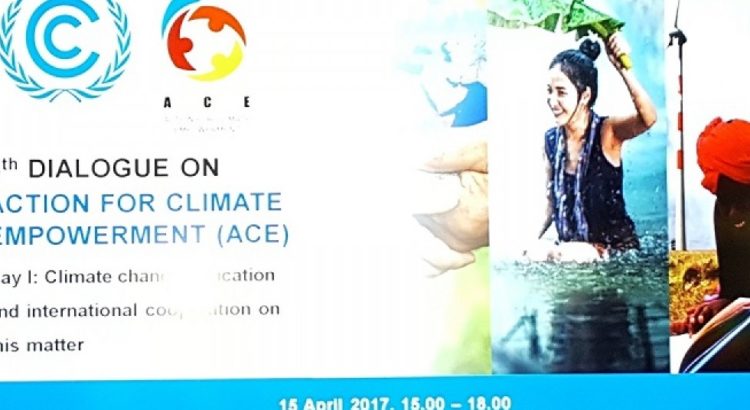
El evento, que tuvo lugar antes de la COP23 de noviembre en Bonn, permitió a los interesados compartir sus ideas y mejores prácticas sobre educación y formación sobre el cambio climático. Esto se llevó a cabo en el marco del Diálogo para la Acción Climática, una iniciativa lanzada en la COP18 que adoptó directrices sobre educación, formación y sensibilización para el público en general. Esto estaba en consonancia con el artículo 6 de la Convención de las Naciones Unidas sobre el Cambio Climático, que se refiere a la necesidad de informar mejor, educar y formar a las personas en el tema del cambio climático.

El trabajo se llevó a cabo en el transcurso de dos sesiones, permitiendo a los interesados ​​tener en cuenta que, a pesar de los avances esporádicos aún mayor en algunos países, la mayoría de los maestros carecen de la formación y los recursos para proveer educación de calidad sobre el cambio climático.

Recursos basados ​​en la acción

Marie-Christine Ghanbari, profesora de la Universidad de Münster de Alemania, y finalista del Premio Global Maestro 2017, dijo a los asistentes que “es difícil de enseñar este tema cuya naturaleza abstracta puede distraer fácilmente a los estudiantes, y los estudiantes más jóvenes en particular. Es por esto que es importante utilizar métodos de enseñanza orientados hacia la acción y la cooperación. Nuestros maestros están actualmente enseñando a los futuros agentes de cambio en nuestras sociedades. Por lo tanto, proporcionándoles recursos para que coincida con sus responsabilidades es urgente!”

Esta observación, compartida por los miembros de la Educación Internacional (EI), también podría aplicarse a todos los temas relacionados con los retos que enfrenta la educación el desarrollo sostenible en donde formación de la profesión docente sigue siendo lamentablemente insuficiente. Esto es particularmente cierto en un contexto global de la escasez de docentes y la contratación masiva de personal insuficientemente cualificado.

El éxito de Bélgica

Sin embargo, mientras que las lagunas en la formación y la falta de recursos siguen siendo considerables, un número creciente de herramientas para la enseñanza sobre el cambio climático, hacen que sea posible llevar a cabo experimentos prometedores. En Bélgica, por ejemplo, una herramienta web llamada “ Mon2050 ” (Mi 2050) se dirige a los estudiantes de escuelas públicas y secundaria y alienta el debate sobre el cambio climático. Permite a diversos escenarios de transición a una sociedad de bajo carbono 2050 para ser explorado. Este y otros ejemplos demuestran que aunque los recursos pueden faltar, imaginación y creatividad no lo son.

Sin embargo, la IE destaca que estos experimentos alentadores no deben ocultar la necesidad urgente de movilizar suficientes recursos financieros de todo el mundo con el fin de garantizar la formación adecuada del profesorado, lo cual es un requisito previo a la educación de calidad sobre el cambio climático.

Fuente: https://www.ei-ie.org/en/detail/15066/work-underway-to-improve-teacher-training-on-climate-change-education

Comparte este contenido:

Trabajadores de la educación y sindicatos mundiales se unen en contra la discriminación

Prensa Internacional de la Educación

En el 17 de mayo, día internacional contra la homofobia, tres confederaciones sindicatos emiten una declaración conjunta,  la Internacional de educación reafirma su compromiso por la realización de los derechos humanos y la promoción de la igualdad y la solidaridad en los sindicatos y en la sociedad.

DECLARACIÓN SINDICAL CONJUNTA 17 DE MAYO – DIA INTERNACIONAL CONTRA HOMOFOBIA

El movimiento sindical internacional está fuertemente comprometido con el ejercicio pleno de todos los derechos humanos y la promoción de la igualdad y solidaridad en los sindicatos y en todas las sociedades. Los sindicatos juegan un rol clave en la promoción de los derechos humanos y la inclusión social de las personas lesbianas, gays, bisexuales, transgénero e Intersexuales (LGBTI) tanto en el trabajo como en la sociedad en general. En las últimas décadas se ha logrado grandes avances. Sin embargo, la necesidad de desafiar los prejuicios y la ignorancia permanece aún en algunos contextos mientras que en otros emergen nuevos desafíos, que pocos podrían haber imaginado hace algunos años. Los miembros de los sindicatos trabajan y viven en muchos países en donde se criminaliza la homosexualidad o las relaciones entre personas del mismo sexo, y donde las personas transgénero aún experimentan con frecuencia altos niveles de violencia, incluyendo la violencia en el mundo del trabajo. En ocasión del Día Internacional contra la Homofobia, hacemos un llamado a las dirigencias sindicales para que se pronuncien contra todas las formas de discriminación y digan “¡Basta!” a la promoción del discurso que incita al odio y a las falsedades dirigidas contra las personas LGBTI. Así mismo, convocamos a los sindicatos para que mantengan una posición firme en contra de los retrocesos en leyes y actitudes discriminatorias que pretendan revocar los derechos LGBTI duramente ganados Demandamos que los gobiernos promuevan políticas públicas que fomenten la igualdad y penalicen toda forma de discriminación. Sindicalistas trabajando juntos por los derechos LGBTI Dos confederaciones sindicales, la Internacional de la Educación (IE) y la Internacional de Servicios Públicos (ISP) han estado al frente de la lucha para asegurar, proteger y promover los derechos LGBTI y terminar con la discriminación, acoso y violencia en el lugar de trabajo, desde el inicio de la primera publicación conjunta “IE/ISP “Trabajando en conjunto por los derechos de trabajadores Gays y Lesbianas”, en 1999 y revisada en 2007. Estas materiales fueron diseñadas para sensibilizar sobre los temas que afectan a las y los trabajadores gays y lesbianas, sirvieron como una herramienta para compartir las buenas prácticas sindicales en torno al reclutamiento y movilización de trabajadores lesbianas, bisexuales, gays y trans. En el 2004, IE e ISP establecieron un foro conjunto que se reunió antes de varios Congresos Mundiales de IE e ISP (Brasil 2004, Viena 2007 y Ciudad del Cabo 2011). El próximo foro conjunto se realizara previo al 30avo. Congreso de la ISP el día Octubre 30 en Ginebra. Colocando los derechos LGBTI en la agenda sindical Se han incrementado las federaciones sindicales que priorizan los derechos LGBTI en el lugar de trabajo, incluida la integración de estos en acuerdos de la negociación colectiva y estableciendo órganos y programas sindicales específicos para promover sus derechos. Podemos hacer aún más. En el periodo político actual, cuando los derechos LGBTI están siendo amenazados en tantos países, los sindicatos debemos mantener un liderazgo claro y decisivo en la protección y promoción de los derechos LGBTI. “Muchas afiliadas hacen un trabajo valioso que precisa ser reconocido”, afirma Fred van Leeuwen, Secretario General de la IE. Rosa Pavanelli Secretaria General de la ISP declara que “el movimiento sindical necesita desarrollar estrategias conjuntas para combatir la discriminación y la violencia por razones de la orientación sexual y la identidad de género en el lugar de trabajo”.

Descargar la declaración aquí.

Escuche también emisión especial de RadioLabour en el día internacional contra la homofobia aquí.

Fuente: https://www.ei-ie.org/spa/detail/15058/trabajadores-de-la-educaci%C3%B3n-y-sindicatos-mundiales-se-unen-en-contra-la-discriminaci%C3%B3n

Comparte este contenido:

Sudáfrica: Dlamini-Zuma says education is ‘number one‚ number two and number three’ priority

Sudáfrica/Mayo de 2017/Fuente: Times Live

Resumen: Acompañado por el primer ministro de KwaZulu-Natal, Willies Mchunu, y el ministro de agua y saneamiento Nomvula Mokonyane, Dlamini-Zuma aconsejó a los estudiantes que era importante estudiar y preparar su futuro para trabajar en Sudáfrica. Dijo que nadie debería pisotear su derecho a aprender. «Debo enfatizar también que, como estudiantes, usted tiene derechos, el derecho a ser educado, el derecho a la salud, el derecho al uniforme y su responsabilidad es estudiar y aprender», dijo. Dlamini-Zuma dijo que la educación era una gran prioridad para el país. «La educación es número uno, número dos y número tres, todo comienza a los cuatro años, por eso se necesitan habilidades porque son un ecualizador y la economía crecerá si se tienen habilidades y talento», dijo a los alumnos.Mchunu introdujo anteriormente Dlamini-Zuma a los estudiantes como una madre y un político carismáticos.

Accompanied by KwaZulu-Natal Premier Willies Mchunu and water and sanitation minister Nomvula Mokonyane‚ Dlamini-Zuma advised learners that it was important to study and prepare their future for a working South Africa. She said nobody should trample their right to learn.

«I must stress also that‚ as learners‚ you have rights; the right to be educated‚ the right to health‚ the right to uniform. And your responsibility is to study and learn‚» she said.

Dlamini-Zuma said education was a huge priority for the country.

«Education is number one‚ number two and number three; everything else starts at four. This is why you need skills because they are an equaliser and the economy will grow if you have skills and talent‚» she told the learners.

Mchunu earlier introduced Dlamini-Zuma to the learners as a charismatic mother and politician.

«It’s through her humility that we even forget that she’s a doctor. She’s Dr Dlamini-Zuma. She’s an accomplished doctor‚ accomplished politicians and accomplished mother‚» he said.

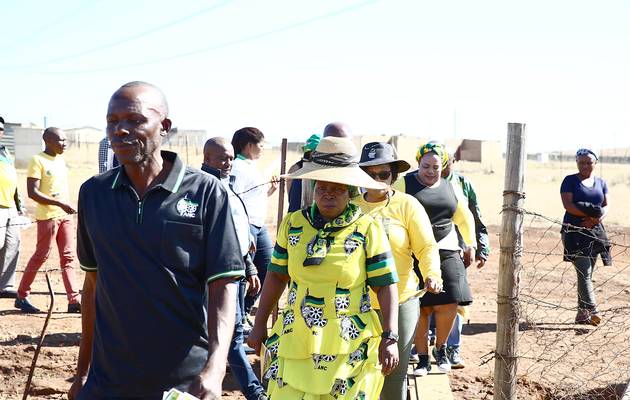
Dlamini-Zuma then moved to a door-to-door visit.

Clad in a huge grass hat and a yellow ANC-themed short dress and black leggings‚ she went to Goodness Mnyandu’s modest home. The 72-year-old urged Dlamini-Zuma to build a pension paypoint point closer to the community.

«We also want some houses. Some of us have been here longer but the houses are only obtained by new people in this area‚» said Mnyandu.

Dlamini-Zuma promised to take up all her issues with the leadership of the party.

She then handed over ANC T-shirts and pamphlets bearing the face of Ward 6 councillor candidate‚ Zamani Mathe. She is in Nquthu as part of the ANC’s all-out attempt to win the local municipality.

The by-election takes place next week‚ with every ward up for grabs after the entire council was dissolved.

The area includes the well-known international tourist destination Isandlwana‚ which was the site of the historic Anglo-Zulu war battle of 1879.

Fuente: http://www.timeslive.co.za/politics/2017/05/18/Dlamini-Zuma-says-education-is-number-one%E2%80%9A-number-two-and-number-three-priority

Comparte este contenido:

Technical Education Key to Industrial Revolution in Ghana

Ghana/22 de Mayo de 2017/Allafrica

Resumen:  La educación técnica es clave para la revolución industrial en Ghana. Las ambiciones que tenemos para este país van a ser fructíferas y depende en gran medida de lo que va a suceder en lugares como este, que estarán en el centro de la revolución industrial de nuestro país. 

The President Nana Addo Dankwa Akufo-Addo has hinted of government’s resolve to reposition technical education to be the centre of the country’s industrial revolution.

«If the ambitions we have for this country are going to come into fruition, a great deal of it depends on what is going to happen in places like this. You are going to be at the centre of the industrial revolution of our country,» he stated.

The President was addressing the Ho Technical University community as part of his two day working visit to the Volta Region at the weekend.

He said the country could not continue to be a raw material producing nation, emphasizing that it would continue to be poor if it went down that line.

The President said government was therefore prioritizing educational expenditure, especially technical education to change the structure of the country’s economy.

 He promised to complete abandoned projects at the Ho Technical University and charged the students to study hard to contribute to the progress and development of the country.

The President said Ghanaian was a rich country and called for unity among the citizenry and underscored the need for all to eschew corruption, tribalism and focus on excellence in the interest of the country.

Earlier, he paid a courtesy call on Togbe Afede XIV, Agbogbomefia of Asogli and President of the National House of Chiefs and reiterated his commitment to fulfilling promises made during the campaign and developing all parts of the country.

Fuente: http://allafrica.com/stories/201705150900.html

Comparte este contenido:
Page 330 of 622
1 328 329 330 331 332 622