Page 326 of 622
1 324 325 326 327 328 622

Sudáfrica: Trading in finance to become a teacher

Sudáfrica/Mayo de 2017/Autor: Msindisi Fengu/Fuente: News 24

Resumen: El  tutor voluntario Anelisa Dyonase decidió dejar de lado su sueño de trabajar en el sector financiero y convertirse en maestro después de presenciar las sonrisas en los rostros de los alumnos que había ayudado a pasar las matemáticas. Nacido en la Cuenca de Qamata en Cofimvaba, Eastern Cape, Dyonase, que recibió el premio al mejor profesor de matemáticas provincial por el Northern Cape el año pasado, se involucró en la tutoría en escuelas secundarias locales mientras estudiaba para obtener su BSc en ciencias matemáticas en la Universidad Del cabo occidental.

Volunteer tutor Anelisa Dyonase decided to set aside his dream of working in the financial sector and become a teacher after witnessing the smiles on the faces of the pupils he had helped to pass maths.

Born in Qamata Basin in Cofimvaba, Eastern Cape, Dyonase, who was given the award for best provincial maths teacher by the Northern Cape last year, became involved in tutoring in local high schools while he was studying for his BSc in mathematical science at the University of the Western Cape.

The 28-year-old is one of 553 graduates in various fields who were recruited between 2009 and this year by Teach SA, a nonprofit organisation that works closely with the department of basic education.

The organisation was established to attract young graduates to the teaching profession to alleviate the shortage of maths, science, English and information technology teachers in previously disadvantaged schools around the country.

Dyonase said that helping maths pupils in Khayelitsha during a break from his university studies was very rewarding.

“They would come to my home and I would help them with their lessons. Even if I was busy in a library, they would come and ask for help. At the end of the term, they came to me all excited that I had helped them to pass.

“Even matric pupils would show me their excellent matric results. That made me very proud of myself. I discovered that I have the ability to impart knowledge to others,” Dyonase said.

A different path

While he had no aspirations of becoming a teacher and had instead dreamt of working in the financial sector and earning big bucks, the pupils’ smiles were overwhelming.

His plan had been to pursue his honours in financial mathematics after his junior degree.

However, he decided to apply for a position when he saw a Teach SA poster.

He was surprised by how well he did in the interviews and he became one of the ambassadors of the programme after obtaining a postgraduate certificate in education at the University of South Africa.

After going through training, Dyonase was placed at the then poorly performing Ratang-Thuto High school in the ZF Mgcawu district of the Northern Cape in 2013.

He remembers that, when he arrived at the school in 2013, it had recorded a 33% pass rate the previous year. He was assigned to teach Grade 11 and Grade 10 maths. He was also asked to give after-school lessons to the school’s nine Grade 12 pupils.

In the Grade 11 class, he had 17 pupils, but three other children who had previously not studied maths wanted to join, and he welcomed them. The pass rate jumped to 78% in 2013 and, in 2014, the school obtained a 94.7% pass rate. Out of the 20 pupils, only one failed, even though she had passed the September exams that year.

“That broke my heart. It still hurts me that she failed. I really don’t know why, but I understand that she had difficulties and a colleague and I tried to intervene. We raised R800 to buy her food, but I don’t know what happened in December,” Dyonase said.

He said the school’s pass rate dropped in 2015 to 75%, but improved again last year to 78%.

No funding

Another Teach SA ambassador, Tshegofatso Zingwita, who graduated in political science and international relations from North-West University, said she resigned two months before her internship contract ended with the department of public enterprises to join the programme.

“I saw that there was more stability in teaching and I was not sure if I was going to get hired elsewhere,” she said, adding that she would consider returning to her previous career, but only in five years.

Zingwita, who teaches English in Grade 10 and Grade 11 at Elizabeth Matsemela Secondary School in Soshanguve, Gauteng, is considering pursuing a postgraduate certificate in education.

Lerato Mathenjwa of Teach SA said that while there was no funding for the organisation’s training programme from the department of basic education, the collaboration was beneficial because the department provided posts and paid the salaries of their ambassadors.

She said the programme also wanted to help pupils in disadvantaged schools who were bedevilled by the perception that maths and science were difficult improve their performance in these subjects.

The programme is also helping reduce unemployment among young graduates and is therefore improving the country’s economy, she said.

Education department spokesperson Elijah Mhlanga said the partnership with Teach SA formed part of the department’s national strategy to address the shortage of maths teachers and to promote it as “a subject necessary for the growth of the South African economy”.

Fuente: http://www.news24.com/SouthAfrica/News/trading-in-finance-to-become-a-teacher-20170528-2

Comparte este contenido:

Nigeria: Plan Internacional alerta de toda ‘una generación de niños perdida’ para la educación

África/Nigeria/28 Mayo 2017/Fuente:diariosigloxxi /Autor:SERVIMEDIA

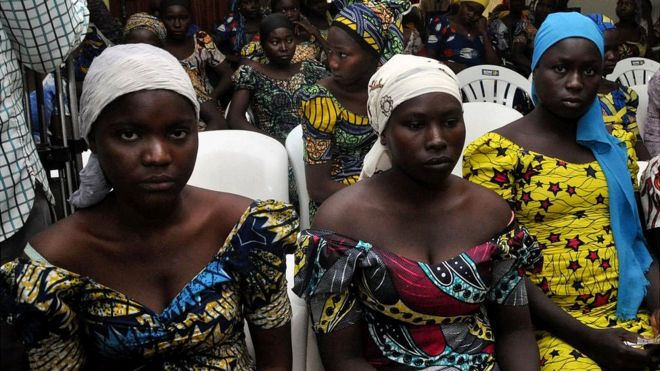
La violencia de Boko Haram en el noroeste de Nigeria ha dejado a toda una generación de niños y niñas sin educación, según alertó este martes Plan International con motivo del día de África, que se celebra el próximo 25 de mayo.

En la cuenca del Lago Chad, que se extiende por Nigeria, Camerún, Níger y Chad, cientos de miles de niños y niñas han visto negado su derecho a la educación porque las escuelas han sido quemadas, bombardeadas o utilizadas para luchar contra la insurgencia. Además, en muchos lugares, los profesores y profesoras han huido debido a los ataques.

En un comunicado, la ONG alertó del impacto de la emergencia en la infancia, sobre todo en las niñas, que son las más vulnerables en situaciones de crisis.

A su juicio, las adolescentes y mujeres jóvenes están más expuestas a sufrir violencia y abusos, embarazos precoces, matrimonios infantiles, esclavitud y tráfico.

Hussaini Abdu, director de Plan International en Nigeria, expresó su preocupación sobre “las consecuencias de una generación perdida. Los niños y niñas que hoy tienen 15 años tenían solo siete cuando comenzó este conflicto, en 2009.

En Nigeria, el acceso a la educación se ha visto especialmente afectado en el noreste del país, escenario de los peores ataques. Más de un millón de personas de la región se encuentran desplazadas de sus hogares, a menudo obligadas a huir de una comunidad a otra por la violencia, lo que dificulta la asistencia al colegio de los niños. En el caso de las niñas, los padres evitan su escolarización por el alto riesgo de secuestros y abusos, agregó Abdu.

Según sus estimaciones, más de 7.000 niñas y mujeres han sido víctimas de la violencia de Boko Haram en el noreste del país, incluyendo matrimonio infantil, violaciones y esclavitud.

“Sin acceso a la educación, los niños y niñas están en mayor peligro de ser reclutados por las organizaciones extremistas y las bandas criminales” o por grupos armados que los utilizan en ataques suicidas o como cascos humanos. A largo plazo, “todo esto dificultará el fin del ciclo de violencia que afecta a la región”, subrayó.

Fuente de la noticia: http://www.diariosigloxxi.com/texto-s/mostrar/238454/plan-internacional-alerta-toda-039una-generacion-ninos-perdida-039-educacion-nigeria

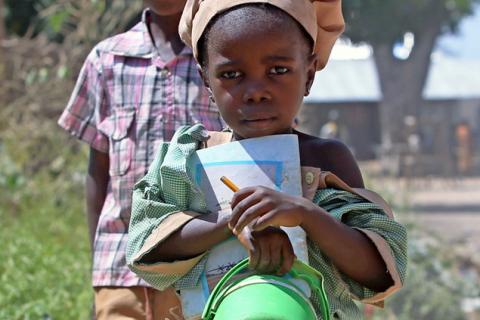
Fuente de la imagen: https://plan-international.es/sites/files/plan/styles/blog_index/public/media_wysiwyg/girl_on_way_to_school.jpg?itok=u-dP

Comparte este contenido:

UBUNTU: El Juego en la ética sudafricana ¿Cómo voy a ser feliz si los demás están tristes?

Sudáfrica, 27 de mayo de 2017. Fuente: muhimu

Ubuntu es una regla ética sudafricana enfocada en la lealtad de las personas y las relaciones entre éstas. La palabra proviene de las lenguas zulú y xhosa. Ubuntu es visto como un concepto africano tradicional.

Hay varias traducciones posibles del término al español, las comunes son:

  • “Humanidad hacia otros”
  • “Soy porque nosotros somos”
  • “Una persona se hace humana a través de las otras personas”
  • “Una persona es persona en razón de las otras personas”
  • “Todo lo que es mio, es para todos”
  • “Yo soy lo que soy en función de lo que todos somos”
  • “La creencia es un enlace universal de compartir que conecta a toda la humanidad.”
  • Humildad
  • Empatía

Esta última, por Desmond Tutu, es una definición más extensa y adecuada:

Una persona con ubuntu es abierta y está disponible para los demás, respalda a los demás, no se siente amenazado cuando otros son capaces y son buenos en algo, porque está seguro de sí mismo ya que sabe que pertenece a una gran totalidad, que se decrece cuando otras personas son humilladas o menospreciadas, cuando otros son torturados u oprimidos.

Aquí va la propia concepción de Nelson Mandela de la palabra Ubuntu:

Por último, les dejamos con la siguiente historia, muy propicia en la celebración del día del juego.

Un antropólogo propuso un juego a los niños de una tribu africana. Puso una canasta llena de frutas cerca de un árbol y le dijo a los niños que aquel que llegara primero ganaría todas las frutas.

Cuando dio la señal para que corrieran, todos los niños se tomaron de las manos y corrieron juntos, después se sentaron juntos a disfrutar del premio.

Cuando él les preguntó por qué habían corrido así, si uno solo podía ganar todas las frutas, le respondieron: UBUNTU, ¿cómo uno de nosotros podría estar feliz si todos los demás están tristes?… Ubuntu, en la cultura Xhosa significa: “Yo soy porque nosotros somos.”

Fuente: https://muhimu.es/diversidad/ubuntu

Comparte este contenido:

Julia Gillard: Immediate and radical action needed to invest more in the education of the world’s children

Europa/ReinoUnido/Prensaglobalpartnership.org

Resumen: Julia Gillard, ex primer ministro de Australia, y Presidente de la Asociación Mundial para la Educación(GPE), dice que la crisis global de la educación tiene que estar en la parte delantera de las mentes de los líderes mundiales. «Los primeros ministros y presidentes necesitan ver la educación como una inversión necesaria, similar a las inversiones que realizan en la infraestructura nacional y la defensa.» . En su intervención en la London School of Economics , Gillard describe una crisis global de aprendizaje en el que 263 millones de niños en edad escolar primaria y secundaria están fuera de la escuela y sólo uno de cada diez niños en los países de bajos ingresos recibirán más que una educación primaria básica.

London, May 22, 2017 – Julia Gillard, former Australian Prime Minister and Chair of the Global Partnership for Education (GPE), says the global education crisis needs to be at the front of the minds of world leaders.

«Prime ministers and presidents need to see education as a necessary investment, akin to the investments they make in national infrastructure and defence.»

Speaking at the London School of Economics, Gillard described a global learning crisis in which 263 million children of primary and secondary school age are out of school and only one in ten children in low-income countries will receive more than a basic primary education.

«Without immediate and radical action to invest more in education, over half of the world’s upcoming youth generation – 825 million of the 1.6 billion young people who will be alive in 2030 – will simply not be equipped to work and thrive in the 21stCentury. The ones who miss out will be defined by pre-existing patterns of poverty.»

«Condemning hundreds of millions of children to a dismal future, regardless of their aptitude is a huge injustice, a violation of basic human rights and poses significant risks.»

Gillard described investment in inclusive, quality education as «foundational» to the sustainable development agenda, economic growth and security, «the clearest pathway for nations to leave poverty and aid dependence behind».

«If we want to reduce armed conflict and stem irregular migration flows, equitable access to quality education is essential.»

«Quality education for all matters whether you are a business leader searching for talent, a security analyst fretting over the risk of conflict, a voter who worries about rising numbers of asylum seekers, or a feminist who admires Malala’s courage. I am convinced that people everywhere are able to embrace the education  agenda.»

The Global Partnership for Education is seeking US$3.1 billion from international donors to invest in improving learning quality and access to education in 89 developing countries that are home to 78 percent of the world’s out of school children. GPE aims to scale up its funding base to US$2 billion a year by 2020 and US$4 billion by 2030.

«We have an opportunity to start an ambitious scale up and deliver the step-change that is needed in global education financing. But to realise the promise of this moment, we need to put the global education crisis – and the opportunity to fix it – at the front of the minds of world leaders.»

Gillard said that the UK can put the case for education «powerfully» to the world and that there has been a clear recognition in the UK’s own aid priorities that education matters.

However, she pointed out that the vast majority of funds for education would come from developing countries themselves, and GPE supports them to develop robust national education sector plans, funded by domestic resources as well as new mechanisms to catalyse co-financing for investment in education.

«The old ways of doing aid, where a small number of donor country governments write the lion’s share of grants for developing countries, just will not be enough.»

Read the full speech

***

The Global Partnership for Education (GPE) works with developing countries to ensure that every child receives a quality basic education, prioritizing the poorest, the most vulnerable and those living in countries affected by fragility or conflict. GPE mobilizes financing for education and supports developing countries to build effective education systems founded on evidence-based planning and policies.

GPE’s support has achieved the following results in its partner countries:

  • 64 million more children in primary school in 2014 compared with 2002
  • 73% of children in GPE partner countries completed primary school in 2014 compared to 63%in 2002.
  • 71% primary school completion rate for girls in 2014 compared with 56% in 2002
  • Between 2002 and 2013, GPE partner countries increased their education budgets from 15.2% to 16.6% of total government expenditure, more than three times the average increase in all low and middle-income countries.

MEDIA CONTACTS:

Katy Cronin (London): katycronin@globalpartnership.org  +44 7788 710 789

Alexandra Humme (Washington DC): ahumme@globalpartnership.org +1 202 458 5511

Fuente: http://www.globalpartnership.org/news-and-media/news/julia-gillard-immediate-and-radical-action-needed-invest-more-education-worlds-children

Comparte este contenido:

E.I. research reinforces advocacy against growing privatisation of public education

Prensa Internacional de la Educación

Resumen:

En el marco de su respuesta mundial a la privatización de la educación, la Internacional de la Educación ha publicado documentos que exploran la privatización y su impacto en el acceso a la educación, la educación de calidad, y las condiciones de trabajo de los maestros. Cada tema se considera a través del prisma de cuatro estudios de casos basados ​​en investigaciones llevadas a cabo en nombre de la Internacional de la Educación (IE) en Kenia, Uganda, Ghana y Filipinas. Para la IE, la privatización y la comercialización de la educación sigue siendo la mayor amenaza para el logro de la calidad, la educación inclusiva y equitativa para todos, tales como el desarrollo sostenible Objetivo 4 (SDG4). En un mundo donde prevalece el afán de lucro, los estudiantes, los profesores, la calidad de la educación, y las comunidades atendidas por los educadores, son los primeros en ser afectados.

In the framework of its Global Response to the privatisation of education, Education International has published documents exploring privatisation and its impact on access to education, quality education, and teachers’ conditions of employment.

Each topic is considered through the prism of four case studies based on research undertaken on behalf of Education International (EI) in Kenya, Uganda, Ghana, and the Philippines. For EI, the privatisation and commercialisation of education remains the greatest threat to the achievement of quality, inclusive and equitable education for all, such as the Sustainable Development Goal 4 (SDG4). In a world where the profit motive prevails, students, teachers, the quality of education, and the communities served by educators are the first to be affected.

Access to education

Following SDG4, Target 4.1, governments have committed to ensuring that all girls and boys complete free, equitable and quality primary and secondary education leading to relevant and effective learning outcomes. The EI’s research underlines that the growing presence of corporate actors in many countries and across sectors poses serious human rights challenges to achieving free quality public education for all. Whilst claiming to offer “affordable” education, the fees charged are certainly not affordable for the populations they purport to serve. The evidence shows that any price put on accessing education serves as a barrier for the poorest and most disadvantaged and therefore deepens inequality and segregation.

Education International reaffirms that anything other than free quality education for all undermines inclusive and equitable education.

Quality education

In addition, the business model implemented by for-profit corporate-backed school chains involves measures designed to increase profitability and which compromise quality teaching and learning. EI insists that that this business model is predicated on the employment of unqualified staff and delivers a standardised scripted curriculum showing little, if any, respect for inclusive education and cultural and linguistic diversity. It is a curriculum which invariably does not satisfy national standards.

This does not constitute quality education, EI stresses.

Teachers’ conditions of employment

Noting that teachers’ salaries account for approximately 70 percent of a school budget, EI strongly deplores the practice of employing fewer teachers, underqualified teachers, or unqualified staff in order to boost profit margins.

Privatisation, and the associated deregulation of working conditions that accompanies it, results in downward pressure being put on professional standards, salaries and working conditions for all teachers, and ultimately the quality of education.

Fuente: https://www.ei-ie.org/en/detail/15075/ei-research-reinforces-advocacy-against-growing-privatisation-of-public-education

Comparte este contenido:

UNICEF joins tech giants in artificial intelligence group

América del Norte/EEUU/Prensa UNICEF

Resumen:

UNICEF se une a la Asociación para la Inteligencia Artificial (IA) fundada por Amazon, Apple, Google / DeepMind, Facebook, IBM y Microsoft, a través de la asociación de la Oficina de Innovación de UNICEF, con el propósito de establecer colaboraciones para escalar el uso de la IA para el bien social a través de soluciones innovadoras a los retos humanitarios en beneficio de los niños.  Con ello se espera que a través de colaboraciones con empresas de tecnología tecnólogos de datos de UNICEF pueden utilizar AI para resolver los problemas sociales. Un ejemplo de esto es la plataforma Caja Mágica, que reúne datos de los socios como IBM, Google, Amadeus, y Telefónica para informar en tiempo real la toma de decisiones en situaciones de emergencia como terremotos e inundaciones.

UNICEF joins the Partnership on Artificial Intelligence (AI) founded by Amazon, Apple, Google/DeepMind, Facebook, IBM and Microsoft.

Through the partnership UNICEF’s Office of Innovation will forge collaborations to scale the use of AI for social good through innovative solutions to humanitarian challenges to benefit children.
Through collaborations with tech companies UNICEF data technologists can use AI to solve societal problems. An example of this is the Magic Box platform, which pools data from partners like IBM, Google, Amadeus, and Telefonica to inform real-time decision-making in emergencies like earthquakes and floods.

Chris Fabian, Senior Advisor, Ventures, UNICEF Innovation said, “UNICEF has always been an organization driven by data – and the capacity to process and learn from the massive amounts of data that exist around us will let us work to improve the life of every child.

“We are in a position where we can connect the needs of the world’s most vulnerable children to the capacities of the most advanced technology.

“We believe that machine learning and the future of AI will help us address globally relevant issues like the spread of disease, responses to climate change and disasters, and the uncertain future of jobs and employment.”

###

Notes to Editors:

About UNICEF
UNICEF promotes the rights and wellbeing of every child, in everything we do.  Together with our partners, we work in 190 countries and territories to translate that commitment into practical action, focusing special effort on reaching the most vulnerable and excluded children, to the benefit of all children, everywhere.

For more information about UNICEF and its work for children, visit www.unicef.org.
For more information about UNICEF Office of Innovation visit www.unicefstories.org and @unicefinnovate
Follow UNICEF on Twitter and Facebook

About The PAI
The Partnership on AI to Benefit People and Society (Partnership on AI) is a not-for-profit organization, founded by Amazon, Apple, Google/DeepMind, Facebook, IBM and Microsoft.  Our goals are to study and formulate best practices on the development, testing, and fielding of AI technologies, advancing the public’s understanding of AI, to serve as an open platform for discussion and engagement about AI and its influences on people and society and identify and foster aspirational efforts in AI for socially beneficial purposes. We actively designed the Partnership on AI to bring together a diverse range of voices from for-profit and non-profit, all of whom share our belief in the tenets and are committed to collaboration and open dialogue on the many opportunities and rising challenges around AI.

Full list of partners

AI Forum of New Zealand (AIFNZ), Allen Institute for Artificial Intelligence (AI2), Centre for Democracy & Tech (CDT), Centre for Internet and Society, India (CIS), Cogitai, Data & Society Research Institute (D&S), Digital Asia Hub, eBay, Electronic Freedom Foundation (EFF), Future of Humanity Institute (FHI), Future of Privacy Forum (FPF), Human Rights Watch (HRW), Intel, Leverhulme Centre for the Future of Intelligence (CFI), McKinsey & Company, SAP, Salesforce.com, Sony, UNICEF, Upturn, XPRIZE Foundation and Zalando.

For more information, please contact:
Ms Gbolayemi (Yemi) Lufadeju, UNICEF New York, Tel: +1 917 213 4034, glufadeju@unicef.org

Fuente: https://www.unicef.org/media/media_95995.html

Comparte este contenido:

Sudáfrica: DA to ask Public Protector about education ‘Jobs for Cash’

Sudáfrica/Mayo de 2017/Fuente: News 24

Resumen: La Alianza Democrática va a pedir al Protector Público que investigue el escándalo llamado «Empleos por Efectivo». El parlamentario de la AP, Gavin Davis, dijo el jueves que la ministra de Educación Básica, Angie Motshekga, dejó en claro que no tiene la voluntad política para lidiar con la participación de la Unión Sudafricana de Docentes Democráticos Sadtu en el escándalo » El miércoles, antes de presentar su presupuesto al Parlamento, Motshekga dijo: «Ninguna evidencia apunta a Sadtu, que ha sido fundamental en las mejoras que hemos visto en las escuelas rurales y pobres». Motshekga dijo que la venta de puestos continuó y que estaba siendo realizada por funcionarios del distrito.

The Democratic Alliance is going to ask the Public Protector to investigate the so-called «Jobs for Cash» scandal.

DA MP Gavin Davis said on Thursday Basic Education Minister Angie Motshekga has made it clear that she does not have the political will to deal with the involvement of the South African Democratic Teachers Union Sadtu in the «Jobs for Cash» scandal.

On Wednesday, before presenting her budget to Parliament, Motshekga said: «No evidence points to Sadtu‚ which has been instrumental in the improvements we have seen in rural and poor schools.»

Motshekga said the selling of posts continued and it was being done by district officials.

«We allowed them to hide because there is this big gogga [insect] called Sadtu.»

«This flies in the face of the findings contained in her Ministerial Task Team report that sets out, in no uncertain terms, Sadtu’s central role in the racket,» Davis responded on Thursday.

Inappropriate influence

According to Davis, the task team found that Sadtu bosses have captured six out nine provincial education departments, and is using its power to inappropriately influence the appointment of teachers.

Motshekga has also admitted in a letter to the South African Human Rights Council that Sadtu is involved in the «Jobs for Cash» scandal.

«The Ministerial Task Team (MTT) Report on the alleged selling of posts does point to some gaps in the management in the appointment of personnel and has made material findings and recommendations about the role of union members, particularly from Sadtu, in influencing the selection process, unduly,» she wrote in the letter.

Davis claims Motshekga’s «exoneration of Sadtu» is purely political.

«It indicates that she is more interested in securing Sadtu’s support for Cyril Ramaphosa in the run-up to the ANC conference than rooting out systemic bribery and corruption in the education system,» he said.

He said it is now up to independent institutions to hold Sadtu to account for its central role in the buying and selling of teachers’ posts.

«The DA will, therefore, be writing to the Public Protector to request that she investigates systemic bribery and corruption in the education sector at the hands of Sadtu,» he said.

«This doesn’t mean we will stop holding Minister Motshekga’s feet to the fire. We will keep using every parliamentary mechanism at our disposal to force her to act on the ‘Jobs for Cash’ report’s findings.»

Motshekga established a ministerial task team in 2015 to investigate allegations that teaching posts were sold for cash. The task team’s report was released a year ago.

Fuente: http://www.news24.com/SouthAfrica/News/da-to-ask-public-protector-about-education-jobs-for-cash-20170525

Comparte este contenido:
Page 326 of 622
1 324 325 326 327 328 622