Page 348 of 622
1 346 347 348 349 350 622

Cientos de migrantes vendidos como esclavos en África

África/13 abril 2017/Fuente: notimundo

Cientos de migrantes jóvenes de África son vendidos como esclavos en mercados de Libia por redes de contrabandistas.

Informaron varios testigos y declaraciones de defensores de derechos humanos a la Organización Internacional para las migraciones (OIM).

La OIM detalló que el precio de los migrantes oscila entre 200 y 500 dólares y que en su mayoría proceden de Nigeria, Senegal y Gambia. Además, la organización indicó que el comercio de seres humanos se ha incrementado el último año en Libia.

“Una vez adquirido, se entrega el migrante al comprador y queda bajo su responsabilidad. Muchos de ellos logran escapar, pero otros son sometidos a esclavitud u obligados a realizar trabajos forzosos”, dijo el jefe de la misión de la OIM en Libia, Othman Belbesi.

Belbesi señaló que los hombres son generalmente obligados a trabajar en los sectores de construcción y agricultura, mientras que las mujeres y niñas son esclavas sexuales. Además, indicó que, en algunos casos, los compradores piden a las familias de esas personas que les paguen rescate para su liberación.

Belbesi recordó que, en su ruta hacia Europa, los migrantes se encuentran con numerosos obstáculos, como la captación por redes de contrabandistas, falta de empleo, detenciones arbitrarias y recursos muy limitados.

Fuente: https://www.notimundo.com.mx/mundo/migrantes-vendidos-esclavos-africa/

Comparte este contenido:

Kenia: Who says engineering is an exclusive boys’ club?

Kenia / 12 de abril de 2017 / Por: ELVIS ONDIEKI / Fuente: http://www.nation.co.ke/

You cannot make this stuff up. Neither can you engineer it. Going through the list of registered engineers in Kenya, you will be forgiven to think it is an exclusive boys’ club with a few female names sprinkled to break the monotony.

You will count 355 men but only eight women in the list of registered consulting engineers, according to data from the Engineers Board of Kenya.

And when you go to the roll of registered professional engineers, the list tells you that if you throw a stone at 100 of them, the probability of hitting a woman is one out of 20 because there are only 86 women in a crowd of 1,597 men.

In the list of registered graduate engineers, you will equally be left in need of a magnifying glass. For every 100 heads of the registered graduates, only eight are women’s because men are 8,639 while women are just 757.

Ms Jane Mutulili Wanjiru is one of the only eight women with a government licence to operate as engineering consultants. Having been a civil engineer since 1990, she has interacted with a number of people in the field and when she spoke to Lifestyle on Thursday afternoon, she flashed back to a conversation she had had with a young engineer earlier that day.

“She called, crying. She said, ‘You know [name withheld] is really harassing me, I’m going to leave this job’. I told her ‘It’s okay, I’ll deal with it’,” said Ms Wanjiru

“She’s an assistant resident engineer. And you know, when you’re a resident engineer, you actually check the quality of work by the contractor. So, when the contractor tries to take shortcuts and you want to report, they really start harassing you so that you don’t go to the site,” she said.

Harassment from various quarters is but one of the many challenges that women in engineering face every day, and they have been organising meetings to compare notes on how best to cope.

They have also been plotting how to inspire and attract more women into the profession.

Their latest meeting was held on April 1 in Nairobi’s Silver Springs Hotel — themed around positioning women engineers for leadership — where the guest speaker was Gender Cabinet Secretary Sicily Kariuki. Mrs Kariuki did not attend but was represented by Mrs Zeinab Hussein, one of her Principal Secretaries.

From Mrs Kariuki’s speech, it emerged that even for the few women engineers who have been hired by various government agencies, just a small percentage has been given leadership roles.

“Less than one per cent of the senior engineering management positions are held by women in the infrastructure sector bodies. There are only three women professional engineers who are board members in the public sector,” Mrs Kariuki’s speech read in part.

FEW AMONG MANY

She added: “This is a situation my ministry would like changed within our mandate of gender mainstreaming and I am happy you have made the first significant step in this respect by forming yourself into an association and organising this conference.”

As she officially closed the gathering, Mrs Kariuki challenged the women to be “clear about what you want”.

Following last Saturday’s meeting, which was organised by the Women Engineers Chapter of the Institute of Engineers of Kenya, Lifestyle interviewed five women engineers to share their experiences in the male-dominated profession.

Besides Ms Wanjiru, we spoke to Mrs Margaret Ogai, Ms Grace Apiyo, Ms Emily Kilogi and Ms Lucy Wanjiku.

Mrs Ogai is the senior manager in charge of contracts at Kenya Roads Board. An alumnus of Limuru Girls’ High School, she has risen in the civil engineering field since graduating from the University of Nairobi in 1990.  She worked in three consultancy firms before joining the Kenya Roads Board in 2002.

“For the first 12 years when I worked in Kenya Roads Board, I was the only woman engineer. But now we’ve been fortunate. We have employed three others,” said the mother of two teenagers.

Ms Apiyo is currently the project manager in charge of technical vocational programmes at ArcSkills, a training institution in Nairobi that is part of a global network.

She was in the class of 1997 at Pangani Girls’ Secondary School, and she obtained her engineering degree in electrical and electronics from the University of Northumbria in Newcastle, England.

“My career started at the Ministry of Public Works. And for a while, I was the only female engineer in that department with more than 70 men. And because when I first joined I was very small (in physique), I was easily intimidated,” said the mother of a six-month-old girl.

Ms Kilongi is the technical manager at Athi Water Services Board, the institution overseeing water and sewerage provision in Nairobi and Kiambu counties.

She owes her education to Pangani Girls, where she left in 1998, and the Jomo Kenyatta University of Agriculture and Technology where she obtained her Bachelor of Science in civil engineering in 2005.

“In my civil engineering class, we were five women against 20 men. And at that time, our class was the biggest that the university had seen in terms of the population of women. Previously there used to be one or two. There is even a year which had no lady at all,” said Ms Kilongi, a mother of three.

Ms Wanjiku is the founder and director of EcoCycle, a company that installs systems that enable organisations recycle their waste water — even sewage.

She was a shining star at Muthetheni Girls High School in Machakos County in 1997, after which she was admitted to Moi University and majored in production engineering. She graduated in 2004.

“In my mechanical engineering class, we were three women in a class of 40. If I look at the chemical engineering class, I think it had two women out of 40. So, it was something of 3 out of 40, 1 out of 30 — that range,” she said.

Ms Wanjiru is the founder and director of La Femme Engineering, a Nairobi-based consultancy firm. She is the second vice president of the Institution of Engineers of Kenya (IEK) and the vice chair of the IEK Women Engineers Chapter.

She is an alumnus of Githumu High School in Murang’a County, from where she sat her “A” level examinations in 1986. She studied civil engineering at the University of Nairobi from 1986 to 1990. Afterwards she worked with City Hall up to 2000 then in 2004 started her consultancy firm.

The women were candid about the pitfalls they have been facing in the field, some of which they attributed to negative perceptions towards women.

“In terms of attitude, we do still have challenges. This is not at the official level but when you work with certain colleagues, there is an expectation that you’ll behave in a certain way, maybe they’d want to be served tea. You know, there are some little things which are a challenge because you really have to tell them “I’m here as a professional,” said Mrs Ogai.

She added: “You find somebody challenging you that you should be gentler.  Some people are used to a submissive woman which I feel I am not.”

Ms Apiyo believes that female engineers are not given proper nurturing in the industry.

UNIVERSAL CHALLENGES

“A lot of women join and they find it too hard and they eventually drop out,” she said.

For Ms Kilongi, her biggest headache is not about earning respect but it concerns reserving time to attend to her family.

“The challenge is finding the work-life balance; finding the balance of where you stop with work, where you begin with your social and family life. That is the only thing I would say I have to grapple with,” she said.

In her speech, the Gender Cabinet Secretary said some of the challenges faced by women engineers are not having flexible working hours for women with young children, lack of family support because their work involves frequent travel, inadequate women role models and mentors, negative stereotyping among others.

But she dropped a cliché: “These challenges are not specific to your field but are commonly faced by women across all the sectors, a situation which is of great concern to the government and specifically to my ministry.”

The need to address the challenges, said Ms Wanjiru, is the reason the Women Chapter of the engineers’ institute was founded in 2014.

“What we’ve been trying to do is bring the young ones to develop interest in engineering and the young ones who are engineers to make them stay,” she said.

Ms Wanjiru noted that the resilience exhibited by women engineers is exemplary.

“ I think we get hardened along the way. When you’re harassed by somebody, you either yield or you grow. For a lot of us, you can’t leave the field. There’s nothing else you know how to do. You decide you’re staying and you’re staying on your terms, not theirs,” she said.

The Women Chapter has visited schools previously to agitate for a change of attitude which can ensure more females try their hand in engineering.

“Engineering requires you to be very strong in Mathematics and most girls are, one, not confident about it; two, we were socialised to do Arts, History and the languages. So, you’ll find most of the women, especially in my age set — because I’m approaching 50 — most of them having done the arts. They went and did Bachelor of Arts; some went and studied Law. But very few did the technical courses. We need to go back to the schools and encourage girls,” said Mrs Ogai.

She added: “Recently we had a very successful mentorship at one of the girls’ schools here in Nairobi  and that is one area we want to actually grow because the problem is at the supply end. We do not have the women coming through to do engineering. So, we are going to try and have a much bigger outreach mentorship programme targeting most schools and should be more regular.”

During the April 1 gathering, the women spent a considerable amount of time discussing how they can capture positions of influence.

“Before this event I actually called a few of the water boards. Except Petronillah, we don’t have any other CEO in a water board. But we don’t even have others in the third, fourth positions. That is not right,” said Ms Wanjiru, the vice chair of the Women Engineers’ Chapter.

She was referring to Petronillah Ogut, the Chief Executive Officer at Lake Victoria South Water Service Board.

The reason why there are few senior women engineers, she explained, could be because of the women themselves.

BRIGHT FUTURE

“Some say we are probably not aggressive enough. But it’s not that we’re not aggressive. There’s a point where you get aggressive and you become abrasive. So, we don’t want to be abrasive. But we also want to be recognised. We want to be given the position that is ours,” Ms Wanjiru said.

Ms Apiyo concurred with her: “Women are afraid. They’re afraid to take up challenges especially when it comes to technical jobs and technical roles. So, you’ll find a lady who studied engineering ends up working in a bank or ends up in a different field altogether; just because they feel intimidated by the males. You know, it’s a male-dominated world.”

Following the April 1 event, Ms Kilongi is optimistic that there can be more women engineers if they act on their discussions.

“If we sustain the kind of ideas that we have, the fact that we have a forum as women where we can purpose to carry out activities that will encourage movement within the profession, I see in the future, the numbers are going to increase,” she said.

Ms Wanjiku, who brought the water recycling project to Kenya after observations she made while in Germany on a one-year training, said in fact women can use their rarity in the industry to their advantage.

“To be honest, I have never felt like my gender has disadvantaged me anywhere. If anything, I feel like when I approach customers as a lady and then I display and portray high-level expertise, it’s like you win trust faster, especially after I tell them what I can do and then I take them to a place where we have executed it and it looks so perfectly done and it’s working well. I feel like I sort of win and convince the trust of customers very fast,” she said.

It remains to be seen whether the initiatives by the IEK Women’s Chapter can cause an increase in the number of women, but Mrs Ogai believes the education system needs to be changed.

“I believe there are many women who are strong in Mathematics but did not come into engineering because they could not see any way forward, partly because of our education system. Actually what was being emphasised when we were in Form One and Two, is that you do cookery whereas the men were doing technical drawing. I came to university never having seen, or even known, a thing called technical drawing. I’d never seen a T-square, for instance,” she said.

Fuente noticia: http://www.nation.co.ke/lifestyle/lifestyle/Who-says-engineering-is-an-exclusive-boys-club/1214-3882742-xxcqv4/index.html

Comparte este contenido:

El FMI, la OMC y la OCDE quieren defender el libre comercio frente al proteccionismo

Unesco / www.globovisison.com / 12 de Abril de 2017

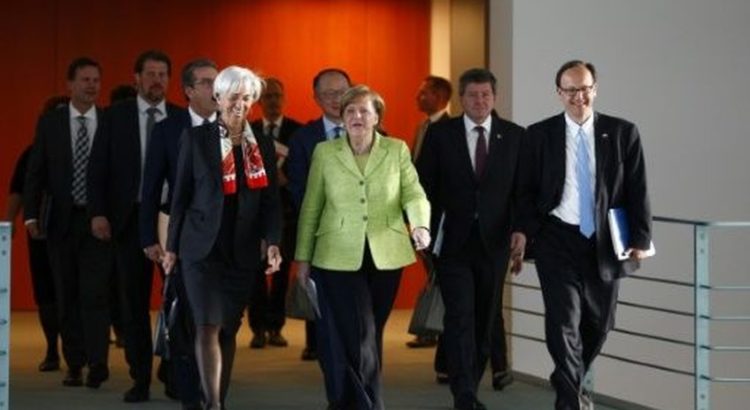
Los responsables del Fondo Monetario Internacional (FMI), la Organización Mundial de Comercio (OMC) y la Organización de Cooperación y Desarrollo Económico (OCDE), así como Alemania, indicaron que quieren «apoyar más» al comercio internacional frente al «peligro» proteccionista, en una declaración publicada este lunes en Berlín.

«Las cifras de crecimiento decepcionantes del comercio mundial y el peligro de las tendencias proteccionistas crecientes son para nosotros una incitación clara para apoyar al sistema comercial internacional aún más», subraya esta declaración, publicada con motivo de la reunión de dirigentes de estas organizaciones con la canciller de Alemania, Angela Merkel, en su capital.

Se trata de Christine Lagarde, del FMI; Roberto Azevedo, de la OMC, y Ángel Gurría, de la OCDE.

El texto también fue firmado por el presidente del Banco Mundial (BM), Jim Yong Kim, y el director general de la Organización Internacional del Trabajo (OIT), Guy Ryder, que también participaron en este encuentro.

Aunque la declaración no menciona directamente al presidente de Estados Unidos, Donald Trump, su contenido no deja ninguna duda sobre el origen del «peligro» proteccionista al que hace alusión.

«El comercio internacional y los mercados abiertos son necesarios» para el crecimiento económico y el empleo, señala por su parte la declaración de Berlín. También sale en defensa de la OMC, de una «importancia decisiva».

 Fuente:http://globovision.com/article/el-fmi-la-omc-y-la-ocde-quieren-defender-el-libre-comercio-frente-al-proteccionismo
Comparte este contenido:

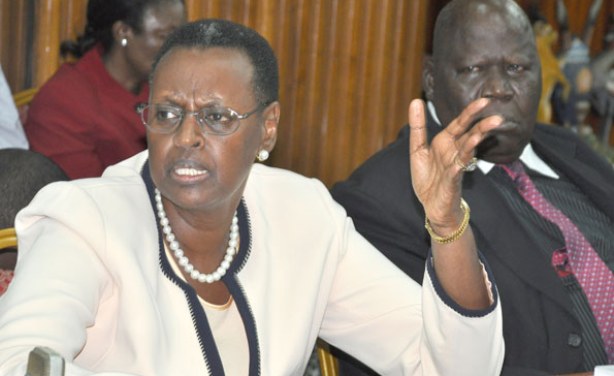
Janet Museveni’s No-Win Situation as Education Minister in Uganda

Uganda/ April 11, 2017/By:Daniel Kalinaki/Source: All Africa

Why has there been so much truculent criticism of First Lady Janet Museveni since she became Education minister? This question, which your columnist has pondered for many months, is easy to answer but difficult to explain.

The Banana Republic-esque optics, of a president and his wife sitting together in cabinet, are certainly damning. But Janet has been in cabinet for 10 years and, in the first of her two parliamentary race wins, in 2006, had the highest number of votes of any MP countrywide.

Her decade in cabinet, albeit in a provincial role, has put some executive knowledge and managerial nous under her belt – and she is far from the least qualified minister.

Questions about her failure to carry out teaching practice, a key requirement for her first degree, in Education, are not new; in any case better them than the allegations of outright forgery of academic credentials levelled against many other public officials.

One might say that it has to do with the crumbling state of the education sector but these problems, deep-seated as they are, are neither new nor peculiar to it. The health and agriculture sectors, for instance, are in similar dire straits but few people can name the line ministers.

Even Ms Museveni’s well-publicised public utterances do not tell the whole story. Her concerns about school children on overcrowded boda bodas; long school hours or infamously asking poor parents to buy food flasks have a heart-warming naiveté about them – but they are not the worst we’ve heard in a country where a minister can justify rape and keep their cabinet post.

First, it seems that Ms Museveni has not leveraged her political capital in the time she has been in the Education ministry. Being the wife of the President is an optical handicap but the access can also be a practical asset. Instead of bemoaning the lack of money for sanitary pads, for instance, Ms Museveni could have pushed Parliament and the President to help the most-in-need girls in the short-term and incentives for local manufacturing capacity in the medium term.

Yet one suspects that Ms Museveni can say the right things, promote the right policies, and still, invariably, invite invectives. Even the best government would struggle to remain popular after 30 years in power – now imagine how hard it is if, as a recent report by the charity Oxfam pointed out, in those years the rich have become richer and the poor have become poorer.

It is hard for people you’ve never shared a wooden bench with in a crowded hospital, or waited with you outside a headmaster’s office while looking for a place, to believe it when you say you share their pain.

I give the minister the benefit of the doubt when she says she wants to reform the public education system but for an entire generation it feels like closing the kraal gate long after the cows have escaped considering that many of their contemporaries born to the privileged fighting class have been educated in expensive schools abroad, many at taxpayer’s expense?

It seems, therefore, in a rather counter-intuitive manner, that Janet was appointed to cabinet 20 years too late. If she had been appointed minister in 1996 when President Museveni was at his most popular and had a new constitution he had not yet tampered with, it would have raised fewer eyebrows and allowed her to get her hands dirty and develop her own political capital.

Her concern about the welfare of children, for instance, would have fed into the design of the UPE programme, which kicked off soon after the election. When schools and sports fields were being relocated to make way for hotels, Ms Museveni could have been the voice of reason. Twenty years later, and her best intentions not withstanding, it feels like a doctor has been sent to a patient who needs a priest.

That is what one can call Janet’s ‘Museveni dilemma’. To overcome suspicions of dynastic intent (or even justify them!) and stop being the lightning conductor for criticism of the Museveni family, she has to force through reforms that undo the patronage and corruption that have kept the system in power for 30 years. But to do so risks unplugging the patient’s life support equipment.

Janet’s naiveté – in the kindest sense of the word – is her greatest strength, for she can question and challenge many flaws that we’ve come to consider normal in our education system. It is also her greatest weakness, for how could she not have seen or known when the rain started beating the rest of us?

Mr Kalinaki is a Ugandan journalist based in Nairobi.

Source:

http://allafrica.com/stories/201704060035.html

Comparte este contenido:

Ser albino en África, el «pasaporte» a la mutilación

África/10 abril 2017/Fuente: debate

Va en aumento el tráfico de albinos ya que son considerados “mágicos” y partes de sus cuerpos son utilizadas en la brujería

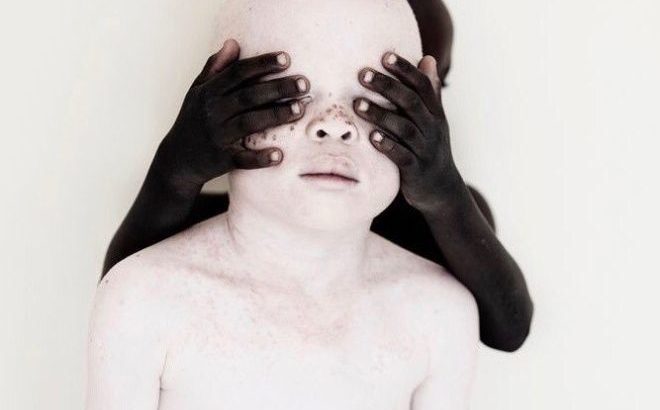
Las personas albinas en África no solamente deben preocuparse por los problemas o inconvenientes producidos de su trastorno, sino además, de no ser víctimas de crueles ataques, que van desde ser mutilados hasta la muerte.

El albinismo es una alteración genética caracterizada por la ausencia congénita de pigmentación de ojos, piel y pelo; puede causar cáncer de piel y ceguera a temprana edad.

En Tanzania, comenzó el tráfico de albinos, con fines de utilizar partes de su cuerpo en la brujería. En este lugar, los albinos son considerados “fantasmas” o que tienen relación con el diablo y creen que miembros como brazos, piernas e, incluso, genitales son necesarios para diversas pociones de la brujería.

Ser albino entre la raza negra es una «condena». FOTO: AFP

Se cree que el cuerpo albino sin vida es de “buena suerte” y “mágico”.

Es por eso que ser un individuo de piel blanca entre una población negra, es sinónimo de sufrir daños psicológicos,mutilaciones y hasta la muerte.

Los niños y mujeres son el objetivo principal. FOTO: forosdelavirgen.com

Las partes del cuerpo de estos inocentes se cotizan hasta en nueve mil euros en el mercado negro, un aproximado de 178,482.19 pesos, por lo mágico de sus huesos para los rituales. El cuerpo completo ronda los 60 000 euros, 1,189,881.25 pesos aproximadamente, apuntan los últimos datos del Alto Comisionado de las Naciones Unidas para los Refugiados (ACNUR).

El tráfico se extiende a otros países

Los traficantes se han extendido a diversos países cercanos, entre ellos Malaui, Burundi y Kenia.

“Estamos muy preocupados. Es difícil sentirse seguro porque nuestras vidas están en juego”, admite a EFE el coordinador de la Sociedad de Albinismo en Kenia, Isaac Mwaura.

Las víctimas son atacadas con machetes. FOTO: forosdelavirgen.com

En Kenia, tres hombres atacaron con machetes a un albino de 56 años e intentaron cortarle las extremidades.

“Yo mismo he vivido de cerca estos ataques. Hace poco intentaron secuestrar a uno de los niños albinos que viven conmigo. Por suerte, está bien”, relata Mwaura.

Los ataques van en incremento en África. FOTO: marcianos.mx

El Gobierno tanzano prohibió la brujería en enero; sin embargo, son los políticos y grandes empresarios los que pagan grandes sumas de dinero para conseguir huesos, cabellos o extremidades de albinos, lo que complica la erradicación de estas prácticas.

“Tenemos mucho miedo. Pedimos a las autoridades del país que nos protejan”, añade Mwaura que, pese a las dificultades, ha conseguido convertirse en el primer albino en el Parlamento keniano.

Los albinos viven un «infierno» en África. FOTO: @ondaverdediario

Los más atacados son las mujeres y niños, por creerse el grupo más débil de la población y por la creencia de que tener relaciones con personas albinas cura el VIH y el SIDA, muchas mujeres son abusadas sexualmente.

A través de Global Medical Relief Fund, una organización caritativa iniciada por Elissa Montanti en 1997, se han refugiado a niños albinos mutilados en los Estados Unidos que están huyendo del “infierno” y les ayudan a encontrar prótesis personalizadas, según publica The Associated Press.

Muchos niños han sido mutilados por estas prácticas. FOTO: Badabum.com

El mundo tiene indignación hacia este «fenómeno», creen increíble que en este siglo continúen este tipo de creencias que dañan a la humanidad.

Los albinos sufren problemas de piel, vista, entre otros. FOTO: 13Tves

Fuente: https://www.debate.com.mx/mundo/-Ser-albino-en-Africa-el-pasaporte-a-la-mutilacion-20170409-0074.html

Comparte este contenido:

Mozambique: Violencia machista en el país de Josina Machel

Mozambique/10 abril 2017/Fuente: El País

Mozambique celebra el Día de la Mujer el 7 de abril para conmemorar la muerte de la heroína africana.

Hoy se celebra el Día de la Mujer, al menos en Mozambique. No es 8 de marzo, pero este país africano ha preferido escoger su propia jornada de reivindicación al margen de la mundialmente reconocida. La fecha tiene mucho que ver con su propia historia, pues conmemora la muerte, hace 46 años, de la heroína de la independencia Josina Machel. Una efeméride que este año viene cargada de enfado e indignación en un país en el que la mujer ha logrado importantes conquistas en el ámbito público, pero donde existe una elevada incidencia de violencia de género que está traspasando la esfera privada y saliendo a la luz, con casos muy mediáticos como los de las hijas de dos expresidentes.

“En este país hay bastante igualdad de oportunidades. Yo, por ser mujer, no encontré impedimentos para hacer mis estudios y trabajar igual que un hombre”, asegura Angelina Nascimento, bióloga de 35 años que cursó sus estudios en la capital, Maputo, a 1.500 kilómetros de Tete, su ciudad, situada en el centro del país. “El Gobierno siempre ha incentivado mucho a las chicas para que no abandonen los estudios, recuerdo campañas públicas desde que estoy en Primaria. Por ejemplo, se consiguió que los ritos de iniciación se llevaran a cabo en periodo no lectivo y también se permite que las chicas embarazadas vayan al colegio”, añade Nascimento.

Como muchas mozambiqueñas, ella estudió la figura de Josina Machel en la escuela. Este 7 de abril, las tiendas de capulanas, tejido típico de Mozambique, se inundan con piezas estampadas con su rostro y en todas las localidades del país se rinde homenaje a quien consideran la pionera en las políticas de igualdad lanzadas por este país tras la independencia de Portugal. Se llamaba Josina Muthemba y nació en 1945. Desde muy joven se implicó en la lucha contra los portugueses y con apenas 19 años protagonizó una novelesca huida de su país para incorporarse al Frente de Liberación de Mozambique (Frelimo) que tenía su base en la vecina Tanzania. Allí se integró rápidamente en el Destacamento Femenino y recibió entrenamiento militar para la lucha de liberación.

Como responsable de la sección de mujeres del movimiento guerrillero promovió la participación femenina en todos los ámbitos del combate y se preocupó especialmente por la creación de orfanatos y centros educativos para los niños. Casada con el líder guerrillero y luego primer presidente del país Samora Machel, de quien tomó su apellido, Josina cayó enferma de cáncer en 1970 y murió de forma prematura tan solo un año después sin llegar a ver cumplido su sueño de la independencia. Sin embargo, su entrega a la causa anticolonial y su firme defensa de los derechos de las mujeres la han convertido en un símbolo en el continente africano.

Paradójicamente, Mozambique celebra su Día de la Mujer envuelto en un inquietante ambiente de aumento de un 25% de los casos de violencia de género en 2016 con respecto a 2015. Justo a finales del año pasado, Valentina Guebuza, hija del expresidente Armando Guebuza (2005-2015), fue asesinada de cuatro disparos en su domicilio a manos de su marido. La joven, de 36 años, era una destacada empresaria directora de un holding familiar con presencia en diversos sectores, como la banca, las telecomunicaciones, la pesca, los transportes o los minerales.

Machel se implicó desde muy joven en la lucha contra los portugueses y con 19 años se incorporó al Frelimo

La muerte de Valentina, a quien la revista Forbes situó como una de las jóvenes más poderosas de África en 2013, generó un enorme impacto en Mozambique. Un año antes, en diciembre de 2015, fue la hija de Samora y de Graça Machel, llamada Josina en homenaje a la primera esposa de Samora y heroína de la independencia mozambiqueña, la que se convirtió en una mediática víctima de la violencia de género. En este caso fue el empresario Rofino Licuco, novio de Josina durante tres años, quien le propinó un fuerte golpe en la cara a la joven por el que perdió la visión del ojo derecho.

Hace menos de dos meses un tribunal de Maputo condenaba a Licuco a tres años y cuatro meses de prisión y a una multa de 2,7 millones de euros en un proceso judicial muy seguido por los medios. “Esta victoria debe ser celebrada por todas las mujeres que sufren abusos verbales, emocionales, económicos y sexuales”, anunciaba eufórica Josina Machel, de 40 años, tras conocerse la sentencia al tiempo que dedicaba su victoria judicial a “todas las que sufren en silencio”, sacando una vez más a la palestra el problema de la violencia machista en Mozambique.

Sin embargo, su madre Graça Machel, quien también fuera esposa del Premio Nobel y expresidente sudafricano, Nelson Mandela, fue mucho más tibia al asegurar: “Todos los agresores, todos los que abusan de las mujeres, deben recibir el mensaje de que acabarán en prisión y no la impresión de que si pagan pueden quedar impunes”, en referencia a la posibilidad de reducir su condena previo pago de la sanción.

Fuente:http://elpais.com/elpais/2017/04/06/africa_no_es_un_pais/1491472765_312855.html

Comparte este contenido:

Guerra civil en Sudán del Sur crea otra generación perdida

Sudán del Sur/10 de Abril de 2017/La Hora

Santo, de seis años, viste orgulloso una camiseta de Harvard como si acabara de ser aceptado en la prestigiosa universidad. Pero las letras estropeadas, las capas de suciedad y los agujeros revelan más sobre el futuro del joven refugiado.

Tras huir de la guerra civil iniciada en Sudán del Sur hace tres años, Santo y su familia se ven en el endeble asentamiento de Bidi Bidi, en el norte de Uganda, con cientos de miles de personas que protagonizan la crisis de refugiados de más rápido crecimiento en el mundo.

El padre de Santo, Godfrey Moro, describió las desoladoras condiciones en las que vive su hijo: no hay escuela, ni electricidad o agua corriente. La comida escasea y hay poca protección del sol abrasador.

Mientras Moro hablaba con The Associated Press, el pequeño se mordisqueaba las manos para distraerse.

“La guerra ha afectado a estos niños de muchas maneras”, dijo Moro.

Sudán del Sur es conocida por sus “niños perdidos”, unos 20 mil huérfanos que huyeron a pie del sur de Sudán en la década de 1980 durante la lucha por la independencia de la región. Tres décadas más tarde, el joven Santo forma parte de otra generación perdida. Su país, apenas mayor que ellos, se ha visto desgarrado por la violencia.

El personal de Naciones Unidas alerta del riesgo de limpieza étnica, y sus datos describen un sombrío paisaje de inocencia perdida: Más de 200 mil niños corren peligro de muerte por falta de comida. Más de 17 mil han sido niños soldados para el gobierno o para algún grupo rebelde. Un funcionario de la ONU expresó una creciente preocupación por los suicidios de menores en los abarrotados campos de desplazados que gestiona la ONU en Sudán del Sur, en condiciones penosas.

Las autoridades sursudanesas reconocen el nivel del desafío.

“Las escuelas quedaron en ruinas, algunas ocupadas por bandos combatientes, las muertes de inocentes son rampantes”, comentó en un correo electrónico Michael Lopuke, subsecretario del Ministerio de Educación.

Joyce y Florence son dos chicas adolescentes en el asentamiento de refugiados de Bidi Bidi, al que han llegado más de 270 mil personas desde julio, cuando la violencia volvió a estallar en la capital de Sudán del Sur. Las dos perdieron a sus padres en septiembre, en asesinatos por motivos étnicos. Ambas encontraron una familia de acogida en Moro, su esposa y sus hijos.

Cuando les preguntan por qué los adultos pelean en su país, Joyce tuvo problemas para explicar las complejidades de una guerra que ha trastocado su vida. “No lo sé”, dijo con timidez.

Las dos forman parte de una creciente población de niños a los que la guerra civil ha dejado huérfanos. En torno al 25% de los estudiantes en el asentamiento de Bidi Bidi son huérfanos, según Amanda David, profesora jefa en una de las escuelas recién habilitadas. Muchos de los niños viven con familias de acogida.

Los niños estudian en un mosaico de grandes tiendas grises que sirven de aula. Hay más de 100 alumnos por maestro, sin material escolar, y muchos niños no reciben cuidados médicos o higiene adecuada en casa.

Aun así, los niños refugiados tienen más posibilidades de conseguir una educación que los que quedaron atrás. La ONU dijo el año pasado que en torno al 50% de los menores en Sudán del Sur, o 1,8 millones de niños, está sin escolarizar, la tasa más alta del mundo. Muchos profesores no han cobrado en meses.

El gobierno de Sudán del Sur dice estar comprometido con poner fin a la miseria de los niños. El presidente, Salva Kiir, dijo en agosto que pasa “noches en vela y paso cada momento del día pensando en el niño sursudanés que está hambriento en la aldea”.

Sin embargo, grupos observadores y otros han señalado que el gobierno de Sudán del Sur gasta unas 10 veces más dinero en su ejército que en educación, según el presupuesto nacional. Todos los bandos en la guerra civil siguen utilizando niños soldados, pese a las promesas de detener la práctica.

Un informe de Naciones Unidas describió el año pasado cómo el ejército sursudanés había atacado escuelas y describió “niños a los que se obligó a matar a civiles”. La ONU verificó que 430 niños en todo el país habían sido víctimas de violencia sexual por parte militares del país, y añadió que “según los registros, los chicos sufrieron castraciones y mutilaciones sexuales, mientras que las niñas que se resistieron a la violación fueron asesinadas”.

Un reporte interno de la ONU al que tuvo acceso Associated Press describió cómo funcionarios de Naciones Unidas habían visitado en marzo una escuela en la zona de Jongley que había sido tomada por una milicia local en la que había niños. Los funcionarios encontraron “rifles AK-47 y lanzagranadas apoyados contra la pared y junto a la puerta del aula”, según el informe.

A finales del año pasado, un grupo de niños y chicos jóvenes de entre 14 y 19 años dijeron a AP que habían sido secuestrados por soldados del gobierno en la localidad de Mayom y obligados a unirse al ejército.

Un chico de 14 años describió cómo había escapado a un campo de desplazados de la ONU.

“Quiero decirle a Salva Kiir que deje de reclutar soldados jóvenes”, dijo el chico. “Quiero unirme a los que van a la escuela”.

Fuente: https://lahora.gt/guerra-civil-sudan-del-sur-crea-otra-generacion-perdida/


Comparte este contenido:
Page 348 of 622
1 346 347 348 349 350 622