Page 346 of 622
1 344 345 346 347 348 622

Nigeria: Las niñas supervivientes de Boko Haram: «Nuestra vida aún corre peligro»

Nigeria/Abril de 2017/Fuente: El Periódico

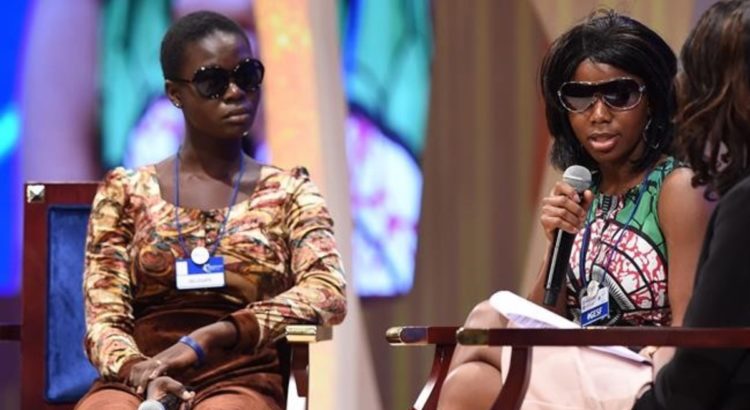
Sa’a estaba a punto de cumplir 15 años cuando un grupo de hombres armados irrumpió, en plena noche, en el colegio en el que ella estaba entonces interna. Corría la primavera del 2014, pronto hará tres años, y era ya la segunda vez que las 276 alumnas de aquella escuela de educación secundaria de la región de Chibok -en el norte de Nigeria- vivían un ataque como ese. «Aquellos hombres hablaban una lengua que nosotras no entendíamos y las chicas, aterrorizadas, no sabíamos qué hacer», explica esta joven de dulces rasgos, que oculta tras unas enormes gafas de sol. «Las uso porque mi vida está aún en peligro. También Sa’a, el nombre que utilizo, es un nombre falso», cuenta.

«Aquel día pensé que iba a morir, no sabía ni qué hacer ni dónde esconderme… Los asaltantes nos preguntaron dónde estaban los chicos, pero nosotras respondimos que nuestros compañeros solo venían por la mañana, que no había chicos de noche», sigue relatando la joven. «Poco rato después supimos que eran hombres de Boko Haram«, desvela. Los terroristas reprocharon a gritos a las niñas que estuvieran estudiando y les recriminaron que, a su edad, no estuvieran todavía casadas.

Si Sa’a está este sábado narrando su historia en el foro Global Education and Skills, que se organiza en Dubái, es porque aquella noche del 2014 se atrevió a saltar en marcha del camión en el que aquellos hombres armados amontonaron a las estudiantes. «Habíamos viajado durante varias horas, íbamos sentadas las unas sobre las otras y cuando entramos en una zona de bosque le dije a la chica que tenía al lado que yo iba a saltar y que ella saltara conmigo», explica serena y con voz firme. «No quise hacerlo sola porque pensé que si me perdía en el bosque o si en el salto me rompía algo, iba a necesitar de la ayuda de alguien», prosigue.

Pero fue su compañera la que se hizo daño en el tobillo. Estaban en un lugar inhóspito, lejos de cualquier punto conocido. «Nos encaramamos como pudimos a un árbol hasta el dia siguiente y cuando amaneció mi amiga me animó a marcharme sola«, continua Sa’a. Solo recordando ese momento se le entrecorta la voz. «‘¿Cómo le voy a decir a tu padre que te he dejado morir?‘, le respondí y salí en busca de ayuda», cuenta. Encontró a un pastor que las llevó en su bicicleta y las alejó de allí.

DAR VOZ A LAS MENORES AÚN DESAPARECIDAS

Sa’a pasó los siguientes cuatro meses escondida en casa de sus padres. «Estaba aterrada, porque los de Boko Haram nos habían dicho que si escapábamos nos buscarían donde fuera y que nos matarían, a nosotras y a nuestras familias». Pero su familia insistió en que no se dejara vencer, que no abandonara los estudios. «Comprendí que tengo que ser la voz de las más de cien compañeras de curso aún están secuestradas». Sa’a es también la voz de los padres, los hermanos, los maridos en algún caso, de las chicas que siguen en manos de los terroristas y «que no son una cosa o un capítulo del libro sobre el que se pueda pasar página», dice.

A su lado, sobre el escenario de la sala de congresos del opulento hotel Atlantis de Dubái, donde se celebra el encuentro educativo, una tímidisima Rachel (también con grandes gafas de sol y también con nombre ficticio), apenas susurra mientras explica cómo Boko Haram mató a su padre y sus tres hermanos menores. «Yo no formaba parte de las niñas secuestradas, pero comparto su dolor», afirma. «En aquella época yo soñaba con ser médico… Ahora ya no, ahora quiero ser un alto cargo militar para poner fin a todo lo que está pasando en mi país», clama.

Las niñas secuestradas en abril del 2014 por Boko Haram han sufrido constantes violaciones sexuales por parte de los milicianos y muchas se han quedado embarazadas y han dado a luz a uno o más hijos en el cautiverio. Uno de los últimos videos de la organización terrorista, divulgado el pasado agosto, mostraba a algunas de las menores y aseguraba que muchas de ellas habían resultado heridas en bombardeos del Ejército nigeriano y que cerca de 40 habían sido casadas a la fuerza.

LA EDUCACIÓN DEBE CONTINUAR

Sa’a y Rachel están estudiando actualmente en Estados Unidos. Sa’a hace Medicina, lo que la convierte en la primera de aquellas niñas secuestradas que llega a la universidad. Ambas forman parte del programa Education Must Continue (la educación debe continuar), que atiende a jóvenes que han sido víctimas de situaciones traumáticas como las suyas, por culpa de la guerra o por alguna crisis humanitaria. «Lamentablemente, la educación en esos casos se convierte en una causa invisible«, lamenta la directora general de la Unesco, Irina Bokova, que también participa en las jornadas de Dubái.

Solo en Nigeria, explica Bokova, hay más de un millón de niños sin escolarizar. En Siria, hay niños que llevan cinco y seis años sin ir al colegio, «lo que significa toda una generación perdida», subraya. «Es necesario, urgente, que los gobiernos de esos países tomen consciencia de la situación y creen programas para estimular la educación: que consigan que las escuelas sean lugares seguros, que habiliten programas alimentarios escolares, que sensibilicen a las familias contra el trabajo infantil y que aumenten la presencia de mujeres en la profesión docente, porque son figuras clave para que las chicas sigan estudiando», defiende la directora general de la Unesco.

Fuente: http://www.elperiodico.com/es/noticias/internacional/supervivientes-boko-haram-nuestra-vida-aun-corre-peligro-5907976

Comparte este contenido:

Sudáfrica: Schools are anti-ANC

Sudáfrica/Abril de 2017/Fuente: IOL

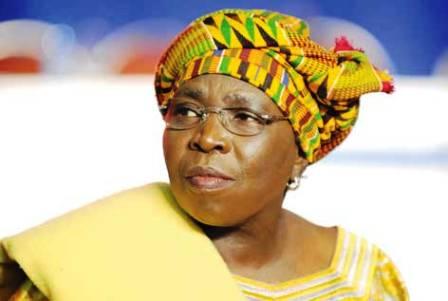
Resumen: Las acusaciones presidenciales de Nkosazana Dlamini Zuma de que las antiguas escuelas del Modelo C están enseñando a los alumnos anti-ANC ha sido calificada como una propaganda electoralista y sin fundamento. Tim Gordon, jefe ejecutivo nacional de la Fundación del Consejo de Administración, dijo que las declaraciones de Dlamini Zuma eran «completamente desacertadas». Sus críticas siguen los comentarios que hizo en una visita a Zamdela en el Estado Libre. Ella dijo a su audiencia el jueves que no era sorprendente que los alumnos en las escuelas modelo C anterior piensan que el ANC es corrupto e inútil porque esto es lo que se estaban enseñando en la escuela. «Sus comentarios fueron irresponsables y no es justo tomar un amplio golpe en las escuelas. Sin mencionar que no es cierto … » Dijo además que era simplemente politica de partido barato. «No hay un enfoque político en las escuelas para enseñar estas cosas. Posiblemente en algunos foros, como los equipos de debate y la orientación de la vida, la política surgirá, pero no hay una directiva que la política se enseñe de tal manera «, dijo. Jessica Shelver, portavoz de Debbie Schafer, la MEC para la Educación en la provincia de Western Cape, dijo que Dlamini Zuma era «electoralista». La desafió a producir evidencia.

Presidential hopeful Nkosazana Dlamini Zuma’s accusations that former Model C schools are teaching pupils anti-ANC “propaganda” has been branded as electioneering and baseless.

Tim Gordon, national chief executive of the Governing Body Foundation, said Dlamini Zuma’s utterances were “completely uncalled for”.

His criticism follows comments she made on a visit to Zamdela in the Free State. She told her audience on Thursday that it was not surprising pupils at former Model C schools think the ANC is corrupt and useless because this is what they were being taught at school.

“Her comments were irresponsible and it is not fair to take a broad swipe at schools. Not to mention that it’s not true…”

He further said it was just cheap party politicking.

“There is no policy approach at schools to teach such things. Possibly in some forums, such as debate teams and life orientation, politics will come up, but there is no directive that politics be taught in such a manner,” he said.

Jessica Shelver, spokesperson for Debbie Schafer, the MEC for Education in the DA-run Western Cape, said Dlamini Zuma was “electioneering”. She challenged her to produce evidence.

Shelver asked Dlamini Zuma to name the schools that were doing this – and she called on her to specify what kind of propaganda was being fed to the pupils. “Without evidence they (the claims) are baseless and electioneering at best,” she said.

Education expert Professor Ruksana Osman, the dean of the Faculty of Humanities at Wits University, said it was worrying and warned the government cannot intervene in what was taught in schools along party lines.

“The state should not meddle in what is taught in schools, especially when we see ourselves as a democracy.

«The job of schools is to ensure children learn to live with all and respect the rights and views of all,” said Osman, adding that the role of teachers was to encourage pupils to have a multiplicity of views and for them to make choices from this.

“Schools cannot be places where the government intervenes along party lines. This will be detrimental to our young democracy and to our children who represent our future. Government involvement in what is taught in classrooms and how it’s taught is dangerous,” said Osman.

Social media also lashed out at the former president of the AU. “South Africa cannot afford another Zuma, especially after she blames education as the party’s downfall, not her ex,” tweeted Wade.

Michelle Igwe tweeted: “@DlaminiZuma Dear Mrs Zuma, do you propose a change to the education curriculum so that our kids can turn into ‘brainwashed idiots’?»

Africa Yearning wrote: “This just shows that while education is necessary and good, it doesn’t insulate one from being dumb. Nkosazana Dlamini Zuma exposes herself”.

But KwaZulu-Natal Education MEC Mthandeni Dlungwana said they shared her views.

Dlungwana’s spokesperson, Kwazi Mthethwa, said the education system must be transformed.

He said Dlungwana was not only making a noise about this, but was taking steps to address it.

Last Thursday Dlungwana signed an agreement that would see the movie Kalushi – about Solomon Mahlangu who was hanged on April 6, 1979 – distributed at schools.

The MEC also hosted members of the cast last week, said Mthethwa.

“We have been teaching European and US history at the expense of our African heroes and heroines.

«There is a lot we are doing to transform education. It is correct that our learners must be taught the true reflection of our history and not a distorted version of history,” said Mthethwa.

Fuente: http://www.iol.co.za/ios/news/schools-are-anti-anc-8665092

Comparte este contenido:

Uganda: Stella Nyanzi on the Fight to Get Free Pads for Uganda’s Schoolgirls

África/Uganda/16 Abril 2017/Fuente:newsdeeply /Autor:Amy Fallon

Resumen: La académica y activista Dr. Stella Nyanzi , de 42 años, siempre rodeada de controversias. Recientemente debido a las critica que realizar  al gobierno y su campaña de proporcionar toallas sanitarias gratuitas para los escolares del país le han ocasionado problemas.

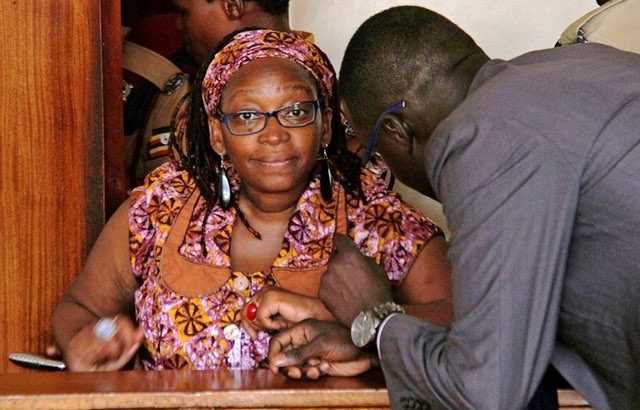
Stella Nyanzi’s criticism of the Ugandan president and his wife has landed her in prison. Before her arrest, the activist spoke to Women & Girls about her determination to hold the government to its promise of free sanitary pads for the country’s schoolgirls.

Ugandan academic and activist Dr. Stella Nyanzi, 42, is no stranger to controversy. In 2016 she undressed and posted images and a video of herself on Facebook during a contract dispute with a Kampala university. And now her criticism of the government and the campaign she has started to provide free sanitary pads for the country’s schoolgirls have landed her in trouble.

The charges against Nyanzi come on the heels of her public criticism of Janet Museveni, Uganda’s first lady and education minister, on Facebook in February, after the MP told parliament that the government had reneged on an election campaign promise veteran president Yoweri Museveni made in 2015 to provide free sanitary pads to schoolgirls. Among other barbs, Nyanzi said in her post: “[The first lady’s] tongue is too thick to convince Museveni to either buy less bullets or pay less bribes, and instead buy the pads to protect the feminine dignity of Uganda’s young women.”

On April 7, she was arrested and later charged over a January 28 Facebook post in which she labeled the president a “pair of buttocks.” On Monday, Nyanzi pleaded not guilty to “cyber harassment” and “offensive communication,” in a case human rights activists have taken up to draw attention to the increasing restrictions on freedom of speech in Uganda. The single mother of three was remanded in custody until April 25.

For Nyanzi, the issue of sanitary pads is really about government accountability. During their periods, many girls around the world skip school because they don’t have access to sanitary pads. Research varies, but a 2012 study by the SNV Netherlands Development Organisation revealed that in Uganda – where some resort to using old clothes, leaves and even parts of foam mattresses as substitutes for pads – over 60 percent of schoolgirls have missed class during their period. Some girls end up dropping out altogether.

The government’s attempts to silence Nyanzi over her criticisms of the first lady prompted Nyanzi to launch the Pads4GirlsUg campaign, which aims to collect 10 million pads within a year to distribute to schoolgirls. According to the campaign, through various sources of contributions, they’ve raised enough for over 5 million pads, and donations keep coming in.

The government did not respond to requests from Women & Girls for comment on Nyanzi’s weekend arrest. One of her lawyers, Isaac Semakadde, tells Women & Girls that the case is a “farce.” Maria Burnett, associate director of the Africa division of Human Rights Watch, said the charges brought against the activist were “yet another clear indicator that those who express critical views of the government can face its wrath,” and Amnesty International has called for Nyanzi to be released “immediately and unconditionally.”

Despite the authorities trying to stop the campaign, Nyanzi’s volunteers insisted on Monday that they’ll keep going. “Nyanzi’s only a woman trying to advocate for other women,” says one of the volunteers, who asked not to be named.

Women & Girls spoke with Nyanzi on March 16, eight days into her ambitious campaign, about bringing Ugandans together on the issue of menstrual health.

Women & Girls: Why are you focusing on sanitary pads?

Stella Nyanzi: It was totally, utterly shocking when the first lady, also minister of education, goes to address a committee in parliament and has the audacity to say there’s no money for sanitary pads. She is a woman; she has access to powerful groups, donors. She’s called Mama Janet. A mother doesn’t neglect her children. Anybody who’s a woman – whether you’re Christian, Muslim, religious, animist – we all menstruate. Whether you support Uganda’s ruling party National Resistance Movement (NRM) or opposition Forum for Democratic Change (FDC), we all menstruate. Menstruation unites us as women. I thought if the government wants to gag me, I’ll give them shit for shit. I’m not very easy to discipline or control.

Women & Girls: Why do you think the campaign has resonated with so many?

Nyanzi: A lot of us are just so disheartened by our current government – the graft, embezzlement … Some of us are like, f*** the government, let’s show them it doesn’t take a lot to care for underprivileged girls.

Women & Girls: And why do you think you were interrogated by police?

Nyanzi: It’s difficult to see into the governments’ mind, because it’s sick. But the way I interpreted it was as intimidation. I have quite a sizable following online and I think to punish me is to send a message to others. So I think it was more an intimidation tactic.

Women & Girls: Besides local pad producers and citizens, who else has come onboard?

Nyanzi: A lot of foreign missions and international organizations are saying, “Let’s have a conversation.” Then there are “pad banks” collecting pads and money on our behalf.

Ugandans in the diaspora are very motivated to be part of the efforts. The men who are responding want to see the government being a bit more involved in the issue. It would be good to collect 10 million pads in a year. If we get that earlier, then we’ll go for 100 million.

Women & Girls: Besides access to pads, what other issues are involved?

Nyanzi: Most public schools in Uganda lack running water and flush toilets. Some have boreholes. Pit latrines that are widely used have no running water. This raises questions about menstrual hygiene and changing reusable pads during any school day.

Women & Girls: Have you had any backlash?

Nyanzi: I’ve been told the campaign’s ambitious. There’s been a lot of backlash from people who are shocked that an ordinary woman can question the power of the president’s wife. But Ugandans are saying, “We’re the people; let’s do what you failed to do.”

Fuente de la noticia: https://www.newsdeeply.com/womenandgirls/community/2017/04/12/stella-nyanzi-on-the-fight-to-get-free-pads-for-ugandas-schoolgirls

Fuente de la imagen: https://newsdeeply.imgix.net/20170412120414/UGANDA-POLITICS-COURT.jpg?w=640&fit=max&q=60

Comparte este contenido:

Nigeria: Education Education of displaced kids in limbo as teachers threaten strike

África/Nigeria/16 Abril 2017/Fuente:dailytrust /Autor:  Kashimana Michael-Ejegwa

Resumen: Maestros, incluyendo los miembros del cuerpo y otros voluntarios en el campo de desplazados internos en Nueva Kuchigoro, Abuja Consejo del Área Municipal (AMAC), han amenazado con retirar sus servicios debido al pago irregular.Un maestro en Nueva Kuchigoro IDP la escuela primaria, que no quiere que su identidad revelada, dijo que «no hay pago regular y en ocasiones la gestión nos paga la mitad del salario.

Teachers, including corps members and other volunteers in the internally displaced persons’ camp in New Kuchigoro, Abuja Municipal Area Council (AMAC), have threatened to withdraw their services due to irregular payment.

A teacher at New Kuchigoro IDP primary school, who does not want her identity revealed said there is “no regular payment and sometimes the management pays us half salary.

“Our major challenge as teachers is non-payment of salary. Many teachers in the camp are graduates, NCE, HND and diploma holders. They can teach but because of nonpayment, they have refused to.”

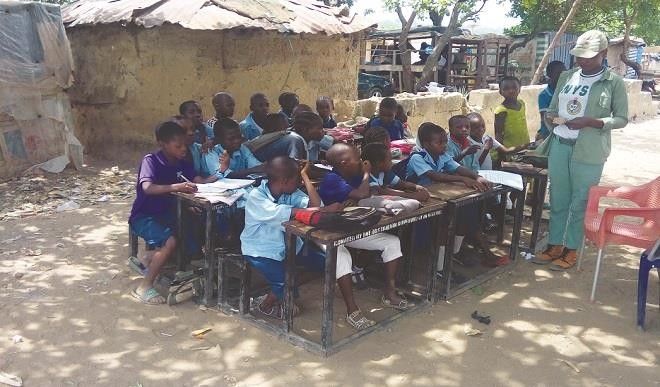
A survey of some of the Internally Displaced Persons (IDPs) camps revealed that there are currently no formal schools in most of the camps in the Federal Capital Territory (FCT). In some places, however, this void is filled by makeshift learning outfits run by non-governmental organisations (NGOs). The Life Builders Initiative, for instance, is responsible for the management of the New Kuchigoro IDP Camp primary school and the IDP camp in Area One.

A teacher spoken to said, “In kindergarten class, we have 108 pupils and 80 pupils in nursery one. In my class – nursery two – I have over 60 children to teach. This environment is not a friendly one.”

However, a corps member serving in Kuchigoro IDP school, who did not wish to be named, said many NGOs were exploiting children in IDP camps to enrich themselves.

“I observed that most NGOs come here claiming to help the children but, once they get what they want, they abandon them. They do nothing for the children. All you see here are donated by well-meaning Nigerians and NGOs not operating here. So it is perplexing that the management of the camp cannot pay salaries,” she said.

She claimed that the teachers used their money to buy teaching materials such as markers and lesson notes.

A volunteer at the school, who gave his name as Civic, said: “We know that people donate money to the school but we don’t have the right to ask how it is spent. I am paid N10,000, though not regularly, so it will be difficult to continue teaching here.”

However, Sanwo Olatunji David, the Chairman, Board of Trustees of Life Builders Initiative, the body running the school said he paid teachers between N15,000 and N35,000, adding: “We are not owing any teacher beyond the month of March, and today is April 3.

“I will be very embarrassed, not surprised, if they say I don’t pay them.”

Olatunji said the journey has been very challenging. “We don’t have any international partner, no local partner on financial level. Churches, Muslim organisations, private concerns and NGOs give us material support, but none has ever given us money.

“The government should wake up to its responsibility and accept that these pupils are  also Nigerians.”

But the Head, Department of Education and Social Development, Abuja

Municipal Area Council (AMAC), Mrs Tukura Dinatu, said: “The government has not neglected its responsibility because we have government schools in the communities where we have IDPs; the schools are for everyone. No discrimination in the FCT and everyone should enjoy government’s facilities.”

Fuente de la noticia: https://www.dailytrust.com.ng/news/education/education-of-displaced-kids-in-limbo-as-teachers-threaten-strike/193326.html

Fuente de la imagen: https://images.dailytrust.com.ng/cms/gall_content/2017/4/2017_4$large_PAGE_31_B.jpg

Comparte este contenido:

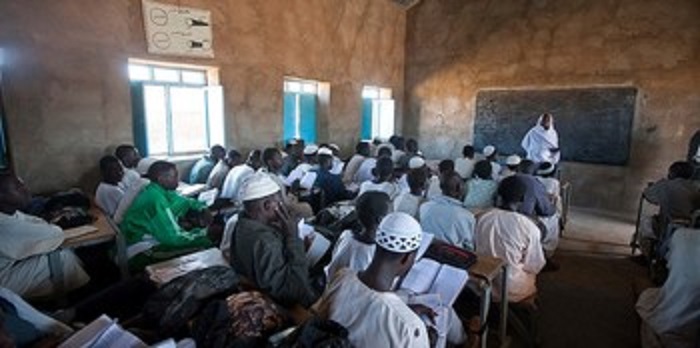
Sudan: Displaced Students Take Top Honours in Central Darfur Exams

África/Sudan/16 Abril 2017/Fuente:dabangasudan /Autor: ZALINGEI

Resumen: Dos estudiantes desplazados de los campos de Darfur central han alcanzado las puntuaciones más altas en los exámenes escolares básicos, que fueron tomadas por 11.435 estudiantes en el estado. El estudiante desplazados Nurul Saada Musa Ahmed Adam de la escuela El Hassahisa logra primer lugar, con una puntuación de 276 marcas. Salma Suleiman Ibrahim de campo de Dar El Salaam quedó en segundo lugar.

Two displaced students from Central Darfur camps have achieved the top scores in the basic school examinations, that were taken by 11,435 students in the state.

The displaced student Nurul Saada Musa Ahmed Adam from El Hassahisa School achieved first place, with a score of 276 marks. Salma Suleiman Ibrahim from camp Dar El Salaam came in second,

The Central Darfur Minister of Education, Dr Mohammed Hassan Bashir, confirmed to Radio Dabanga from Zalingei that 11,435 students sat for examinations this session.

The education council of the camps for the displaced in Central Darfur congratulated students Nurul Saada Musa Ibrahim and Salma Suleiman Ibrahim for their respective first and second places.

Teacher Adam Abelmajid Abakar, the chairman of the educational councils of the state, said the results of the basic school certificate exams that were announced on Wednesday showed that the Ayor Barakat, El Amel, and Ibn Sina schools for the displaced rank among the top ten schools in the state.

Fuente de la noticia: https://www.dabangasudan.org/en/all-news/article/displaced-students-take-top-honours-in-central-darfur-exams

Fuente de la imagen:

https://www.dabangasudan.org/uploads/cache/article_detail_image_half_width/uploads/media/556f478b9d055.jpg

Comparte este contenido:

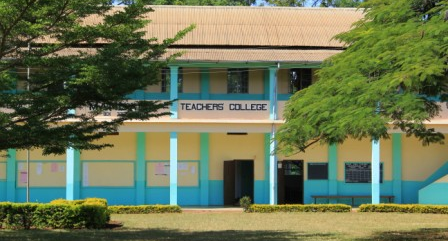
Tanzania: Morogoro Teachers College Laments Over Parcelled Out Land

Resumen: Maestros del Colegio Morogoro han lamentado la decisión de las autoridades municipales para anexionarse parte de su tierra y distribuirla a los individuos. De acuerdo con la gestión de la universidad, esto no era la primera vez que su tierra fue parcelada y distribuida a las personas, algo que ha causado la universidad para quedarse con sólo una pequeña porción de tierra para sus actividades.

Morogoro — The Morogoro Teachers College has lamented over the decision by the municipal authorities to annex part of its land and distribute it to individuals.

According to the college management, this was not the first time their land was parcelled and distributed to individuals, something that has caused the college to remain with only a small portion of land for its activities.

The principal of the college, Mr August Sahili, told The Citizen that for a very long time they have been applying to have their land surveyed, but all has been in futile.

«We’ve even twice paid for this matter with the municipal council, and we have written a number times to remind them, but there has been no response forthcoming and no action at all,» said Mr Sahili.

 He revealed that records showed that in 2004 the college paid a total of Sh2.1 million and in 2011 it paid Sh3 million for the survey of its land, but this has not happened.

Mr Sahili said since the college was established over 50 years ago, its land has been being parcelled out and plots allocated to individuals, thus sometimes fuelling disputes with the college management.

Responding to the allegations, Municipal’s Communications officer Lilian Henerico said there were no any records showing that the college had ever requested to have its land surveyed.

«I have spoken to our Land Officer on this matter. He told me that there were no records of any kind that the college ever applied to have its land surveyed,» she said, asking the collage authorities to write a letter indicating that they had applied for the matter.

Fuente de la noticia: http://allafrica.com/stories/201704140370.html

Fuente de la imagen:

http://www.thecitizen.co.tz/image/view/-/3889550/highRes/1614908/-/maxw/600/-/13439mmz/-/MORO.png

Comparte este contenido:

Liberia: VP Boakai to Address Liberia Educational Forum in the U.S.

África/Liberia/15 Abril 2017/Fuente:gnnliberia /Autor: Cholo Brooks

Resumen: El vicepresidente Joseph N. Boakai, se encuentra en los Estados Unidos por invitación de la Comisión de Alcaldes de África, el Caribe inmigrantes Exteriores de la Ciudad de Filadelfia, en Pensilvania.Una vez allí, se abordará el Foro Educativo de Liberia en la Universidad de Drexel, que se centra en el crecimiento de la educación de calidad en Liberia.

Vice President Joseph N. Boakai, is in the United States at the invitation of the Mayors’ Commission on African Caribbean Immigrant Affairs of the City of Philadelphia in Pennsylvania.

While there, he will address the Liberian Educational Forum at the Drexel University, which focuses on the growth of quality education in Liberia.

The forum is a follow-up on to the memorandum of understanding signed during the Vice President’s last visit to Philadelphia which resulted to Philadelphia educators coming to Liberia to teach at the William V. S. Tubman University in Maryland County.

It also led to the signing of a memorandum between the Mayor of Monrovia and the Philadelphia City Mayors’ Commission, as well as the organization of a higher education consortium with colleges and universities in Philadelphia to collaborate with colleges and universities in Liberia.

Vice President Boakai will also address the Liberian Business Forum at the Greenberg Traurig Two Commerce Square, where he is expected to provide an overview of the primary economic sectors for growth in Liberia.

Ambassador Boakai is expected to discuss the significant opportunity for a two-way trade and investment between Philadelphia and Liberia, according to a press release from the office of the Vice President.

In the city of Philadelphia, VP Boakai will also address a high-level dinner attended by municipal, state and federal as well as other high level dignitaries from the private sector to explore areas of cooperation between Liberia and the State of Delaware.

According to the itinerary, Vice President Boakai will attend the Annual Founders Day Program honoring of General George Sullivan and also receive Lifetime Honorary Membership in the Society.

The Vice President will participate in a town hall meeting of Liberians and friends of Liberia to update them on developments in the country and entertain questions from the audience on areas of interest in national governance.

According to the release, the Vice President will visit Washington D.C. where he is expected to meet with the United States Secretary of Health and Human Services as well as the new United States Assistant Secretary of State for African Affairs, during which the two will familiarize and compare notes on areas of interest to Liberia.

Also in Washington D.C., Vice President Boakai will launch the «Shoes for Liberian Children.»

Fuente de la noticia: http://gnnliberia.com/2017/04/14/vp-boakai-address-liberia-educational-forum-u-s/

Fuente de la imagen:http://gnnliberia.com/wp-content/uploads/vp2-3.jpg

Comparte este contenido:
Page 346 of 622
1 344 345 346 347 348 622