Page 372 of 622
1 370 371 372 373 374 622

Senegal acogerá trienal sobre desarrollo de la educación en África

Senegal/20 de Febrero de 2017/Prensa Latina

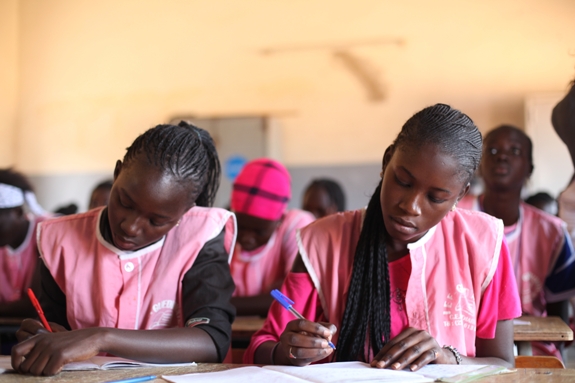
Senegal será la sede de la II Trienal de la Asociación para el Desarrollo de la Educación en África (ADEA) entre el 14 y el 17 de marzo próximo, informó hoy el organismo en un comunicado oficial.

La reunión será patrocinada por el presidente del país, Macky Sall, coordinador el Comité de Jefes de Estado que agrupa a líderes de la región en educación superior, ciencia y tecnología, destaca el texto.

Considerado el más importante foro africano de diálogo sobre políticas de educación, la trienal activará los objetivos de la ADEA de promover y reforzar los vínculos entre los ministerios de Educación y las agencias de desarrollo de los estados y organismos.

Entre los objetivos de la ADEA, uno de los principales asociados de la Unesco en la enseñanza secundaria, figuran los estudios y programas para la creación de capacidades profesionales y el intercambio entre organismos internacionales, funcionarios del sector y miembros de la comunidad de investigadores.

La reunión, que tiene como antecedente la primera celebrada en 2012 en Burkina Faso, servirá como plataforma para elaborar estrategias, términos, condiciones y factores para la puesta en marcha y ejecución de acciones mundiales y continentales, apunta el comunicado.

Los temas de la cita de marzo incluyen la implementación de la educación y el aprendizaje para el desarrollo sostenible, la promoción de la ciencia, las matemáticas y las tecnologías de la información y la comunicación, la educación para la reactivación de la cultura y la promoción de la paz mundial.

Fuente: http://www.prensa-latina.cu/index.php/component/content/?o=rn&id=65140&SEO=senegal-acogera-trienal-sobre-desarrollo-de-la-educacion-en-africa
Comparte este contenido:

South Sudan: Building Peace Through Video Games in South Sudan

Sudán del Sur/20 de Febrero de 2017/Allafrica

Resumen: Lual Mayen, un ingeniero de software de 24 años, está decidido a hacer lo que pueda para llevar el cambio a Sudán del Sur, un país destrozado por la guerra civil.  Mediante el uso de tableros y videojuegos, quiere promover la unidad y difundir su mensaje de paz en todo el mundo.

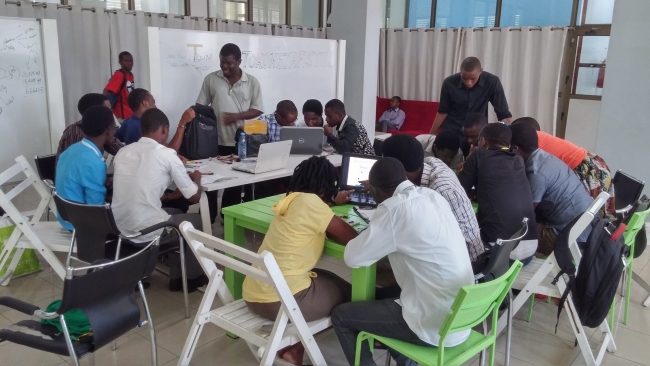
Lual Mayen, a 24-year-old software engineer, is determined to do what he can to bring change to South Sudan, a country ripped apart by civil war.

Through the use of board and video games, he wants to promote unity and spread his message of peace throughout the world.

«After the conflicts that started in 2013, I saw the horrible effects mass displacement could have with my own eyes. I witnessed it in IDP and refugee camps, but also online,» Mayen told Al Jazeera.

«These social clubs, both online and offline, were turned into sites for social evils and I could see the conflict brewing among various tribes that were crammed together. I knew that these scenarios could turn political and even physical, with people wanting revenge for what was happening to them.»

This made him start Junub Games, which by now has engaged some 20 software engineers, designers and developers.

In six months, Mayen and his team have created three games: one mobile game for Android smartphones and two board games.

«Salaam – the Arabic word for peace – is a game in which you must destroy symbols of war to [to promote peace],» Mayen explains.

While playing the game, a song called One People, One Nation can be heard in the background, driving home the point that the people of South Sudan must unite.

The incorporation of South Sudanese culture is a prominent feature of all of Mayen’s games. Through this, he hopes to attract young people who now usually play games made outside South Sudan.

The two other games made by Junub are board games. One of them, a card game named Wahda – an Arabic word referring to unity – is comparable to the classic game of Uno.

«The cards have words like Love, Hate, War, and Peace written on them,» Mayen explains. «Negative cards like War can be countered with positive words like Peace. Penalties on certain cards have the players pick up more cards. The goal of the game is to get rid of your cards as fast as possible, and the winner of the game is crowned ‘Peacemaker’.»

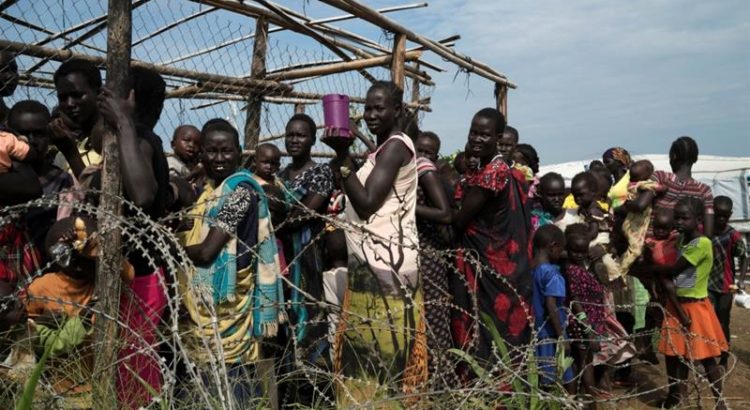
 Since the conflict in South Sudan started in 2013, only two years after its independence, tens of thousands of people have been killed. More than 1.5 million people have fled the country and another two million have been internally displaced.

 To prevent this vulnerable group falling prey to a message of hate and violence, Mayen is working to get his games distributed in refugee camps and other hubs of social activity.

«We are now doing pilot tests for these games in Kakuma Refugee Camp in Kenya and Nyamanzi in northern Uganda. For the mobile games we will also have social media campaigns to spread the message of peace,» he said.

His plans are bigger than just South Sudan: «These games could work everywhere. It would work in refugee camps across the world as well, in Syria for example.»

In an effort to expand Junub Games, Mayen was the first person to organise a so-called Game Jam in South Sudan. These community-driven events are held in several locations across the world and have people come together to create one or more games in a very short amount of time.

Organising the event in the youngest country on Earth led Mayen to connect with contacts within the international video game developers’ community. He has been invited to San Francisco to talk at the Games Developers Conference (GDC) – the world’s largest convention for video game developers – to talk about his efforts to create peace-building games.

«It’s about 90 percent sure I will get to go to San Francisco. I’m just waiting for my visa now,» he said.

The GDC might be the start of Mayen’s next big dream. His ultimate goal is to create a South Sudanese version of Silicon Valley.

«I want to get the attention of the government and talk about possibly starting courses in schools and universities for young people that want to become game developers. I want to do this to boost South Sudan’s economy so the country can become more stable,» he said.

For now, however, Mayen’s plans for South Sudan’s game developing community are still focused on making the country a safer place.

«Building peace is a long process, not something that can be achieved with one decision. Decisions have to be made at different levels and it takes a lot of different processes, people, and approaches,» he said.

«True peace is built over time. The way I do this is by creating games. Games to preach peace.»

This story from Al Jazeera was supplied to AllAfrica under an agreement with the African Media Agency.

Comparte este contenido:

Zambia: Mushrooming Universities Compromising Quality Education – Catholic Priest

Zambia/Febrero de 2017/Fuente: Zambia Reports

RESUMEN: Un cura católico ha observado que la cantidad sin precedentes de las universidades que proliferan en Zambia, compromete la calidad de la educación terciaria. P. Patrick Chilambwe,  Rector de la Universidad Católica de Zambia, dice que hace falta  un marco para ofrecer una educación de calidad, la mayoría de las instituciones de educación superior están por debajo.

A Catholic priest has observed that the unprecedented number of mushrooming universities in Zambia is compromising the quality of tertiary education.

Fr Patrick Chilambwe, the Vice Chancellor of the Zambia Catholic University, says in the absence of a framework to deliver quality education, most higher learning institutions are falling short.

BELOW IS THE STATEMENT ISSUED BY ZCCB COMMUNICATIONS OFFICER MWENYA MUKUKA

Vice Chancellor of the Zambia Catholic University (ZCU) has observed that plurality of Universities without a framework has continued to be a challenge on the quality of tertiary education in the country.

Fr. Patrick Chilambwe said that when the country has a too many higher learning institutions there should be a frame work to regulate quality of education being delivered.

“When you have so many institutions of higher learning, there must be a framework to ensure that that what matters is not the number, but the quality of education being offered. And I am sure that quality is a challenge the education system is facing in Zambia. We are however hopeful that in the coming few years this will be addressed,” he said.

And Fr. Chilambwe has said the Catholic Church strongly believes that education in its truest sense is about giving people orientation, direction and true meaning of life.

He said that it is about opening minds to life long search for wisdom adding that it is deeper than information giving because enables people to be proactive, be in control of their lives and broaden economic, social and other opportunities.

“Education goes beyond the getting of knowledge. It is for an application of the dignity of each and every member of society. The Catholic education believes that education is vital for the integral development of the people in social, economic, cultural, spiritual, political and religious spheres,” he noted.

And the ZCU Vice Chancellor said that there cannot be true and authentic development without well-educated citizens.

“There cannot be true and authentic development without well-educated citizens, therefore education is not a privilege for a few people but is basically a fundamental right for each and every citizen of any given country,” he noted.

Speaking when a conducted Holy Mass at Zambia Catholic University (ZCU), Mass Communications Faculty in Lusaka on Friday, 17th February, 2017, Fr. Chilambwe re-echoed Pope John II’s message that education is above all the communication of Christ and helping to form Christ in the lives of others.

“Education is not a commodity, even if Catholic schools equip its graduates with enviable skills, but rather a Catholic school sets out to be a place of human person and of human persons adding the Catholic University should be grounded on the community of people who believe in Jesus Christ,” he observed.

He further said that specific the purpose of a Catholic education is for the formation of students who will not only be good citizens of today but also for the world to come.

Fuente: https://zambiareports.com/2017/02/18/mushrooming-universities-compromising-quality-education-catholic-priest/


Comparte este contenido:

Kenya: Address the gaps in new education curriculum

Kenya/Febrero de 2017/Autor: Mwongera Jakubu/Fuente: Standard Digital

RESUMEN: Una omisión flagrante en el marco propuesto de currículo de educación básica presentado a los interesados para su validación el mes pasado es el lugar de la alfabetización de los medios de comunicación y la información. Esto es extraño, dado que la agencia de desarrollo curricular KICD trabaja en estrecha colaboración con la Unesco, quien ha dedicado importantes recursos e investigaciones a lo largo de los años y ha recomendado que los currículos de todo el mundo adopten la alfabetización mediática y informacional como una competencia inalienable para una existencia de calidad en el siglo XXI. Sociedades del conocimiento. Los medios de comunicación y la alfabetización de la información (MIL) se utiliza como un concepto compuesto para referirse a un conjunto de competencias que faculta a los ciudadanos a acceder, recuperar, comprender, evaluar y utilizar, crear, así como compartir información y contenido multimedia en todos los formatos. Herramientas de una manera crítica, ética y efectiva.

A glaring omission in the proposed basic education curriculum framework presented to stakeholders for validation last month is the place of media and information literacy. This is strange given that the curriculum developing agency, KICD, works closely with Unesco, who have dedicated substantial resources and research over the years and recommended that curricula the world over adopt media and information literacy as an inalienable competence for quality existence in the 21st century knowledge societies. Media and Information Literacy (MIL) is used as a composite concept to refer to a set of competencies that empowers citizens to access, retrieve, understand, evaluate and use, create, as well as share information and media content in all formats, using various tools in a critical, ethical and effective way.

More broadly, media and information literacy is a basis for enhancing access to information and knowledge, expression, and quality education. It describes skills and attitudes needed to value the functions of media and other information providers, including those on the Internet, in societies and to find, evaluate and produce information and media content. In a situation where the government is implementing a variety of cross-cutting initiatives that have a direct bearing on the lives of all citizens in the information age, it is envisaged that elaborate MIL initiatives are needed in Kenya to bring the various citizen groups – including children and youth – up to speed with the rapid development of digital technologies. In this regard, implementation of media and information literacy initiatives will help create a media literate population with capacity and skills for access to quality information citizens need to make informed decisions within the new media and information environment. MIL will also equip citizens with skills to participate actively in governance and community development and be critical players to take advantage of the opportunities generated by the information age. ALSO READ: Sustain reforms in education sector Already, a number of state and non-state actors are undertaking various initiatives which fall squarely within the realms of media and information literacy. Aside from the Digital Literacy Programme spearheaded by Education and ICT ministries and their agencies, other initiatives include the media literacy public talk-shops organised by the Media Council of Kenya and the Film Classification Board’s school visit programmes dubbed “You Are What You Consume” to sensitise students on film and media content safety, and responsible Internet use. There cannot exist a better way to augment these disparate initiatives and rope in the future Kenyan citizen than integrating MIL into the new curriculum.
Fuente: https://www.standardmedia.co.ke/article/2001229753/address-the-gaps-in-new-education-curriculum
Imagen: https://postcardpom.com/2014/08/05/kenyas-future-el-futuro-de-kenia/
Comparte este contenido:

Senegal acogerá trienal sobre desarrollo de la educación en África

Senegal/Febrero de 2017/Fuente: Prensa Latina

Senegal será la sede de la II Trienal de la Asociación para el Desarrollo de la Educación en África (ADEA) entre el 14 y el 17 de marzo próximo, informó hoy el organismo en un comunicado oficial.
La reunión será patrocinada por el presidente del país, Macky Sall, coordinador el Comité de Jefes de Estado que agrupa a líderes de la región en educación superior, ciencia y tecnología, destaca el texto.

Considerado el más importante foro africano de diálogo sobre políticas de educación, la trienal activará los objetivos de la ADEA de promover y reforzar los vínculos entre los ministerios de Educación y las agencias de desarrollo de los estados y organismos.

Entre los objetivos de la ADEA, uno de los principales asociados de la Unesco en la enseñanza secundaria, figuran los estudios y programas para la creación de capacidades profesionales y el intercambio entre organismos internacionales, funcionarios del sector y miembros de la comunidad de investigadores.

La reunión, que tiene como antecedente la primera celebrada en 2012 en Burkina Faso, servirá como plataforma para elaborar estrategias, términos, condiciones y factores para la puesta en marcha y ejecución de acciones mundiales y continentales, apunta el comunicado.

Los temas de la cita de marzo incluyen la implementación de la educación y el aprendizaje para el desarrollo sostenible, la promoción de la ciencia, las matemáticas y las tecnologías de la información y la comunicación, la educación para la reactivación de la cultura y la promoción de la paz mundial.

Fuente: http://www.prensa-latina.cu/index.php?o=rn&id=65140&SEO=senegal-acogera-trienal-sobre-desarrollo-de-la-educacion-en-africa
Comparte este contenido:

Ghana: Ablekuma South MP to enhance education

Ghana/Febrero de 2017/Fuente: Graphic On Line

 El diputado de la circunscripción de Ablekuma South, el doctor Alfred Okoe Vanderpuije, ha asegurado a los directores que está dispuesto a colaborar con la Asamblea Metropolitana de Accra (AMA) para promover una educación de calidad en la circunscripción.

De esa manera, dijo, el desempeño académico en todas las escuelas básicas de la metrópoli sería mejorado.

El ex alcalde de Accra dijo esto durante una llamada de cortesía de los directores de la circunscripción para felicitarlo por su victoria en las elecciones de diciembre.

El Dr. Vanderpuije les aseguró que se aseguraría de que se construyeran más escuelas del milenio para poner fin al sistema de turnos en el nivel básico.

«Aprovecho esta oportunidad para asegurarles que trabajaré con la AMA para construir más escuelas del milenio en el distrito electoral. Aunque construí cinco de ellos cuando era alcalde de Accra, les aseguro que me aseguraré de que mejoremos todas las necesidades de infraestructura del distrito electoral para promover las actuaciones académicas «, afirmó.

El Dr. Vanderpuije expresó su insatisfacción con el número de niños que abandonaron la escuela, e instó a los directores a dar seguimiento a los estudiantes que no asistían a la escuela regularmente.

Dijo que si los maestros continuaran dando seguimiento a esos estudiantes, reduciría el número de niños que abandonan la escuela.

También señaló que el ausentismo del personal y de los estudiantes debe terminar para promover una educación de calidad, agregando que el hábito de los estudiantes que vagan en la ciudad durante las horas de clases con la excusa de que «mi maestro me envió» debería terminar.

Insinuó que las tres mejores escuelas serían recompensadas anualmente, y los directores recibirían un paquete para motivarlos a trabajar duro.

Consejo

El Portavoz de la Asociación de Jefes de Escuela, John Wilson Adjorlolo, expresó su agradecimiento al MP por su compromiso y disposición a trabajar con ellos en el desarrollo de la educación en el distrito electoral.

El Sr. Adjorlolo hizo un llamamiento al diputado para que se tomara un tiempo libre de su apretada agenda para conocer a los maestros de las diferentes escuelas, padres y estudiantes, para escuchar sus quejas.

Fuente: http://www.graphic.com.gh/news/politics/ablekuma-south-mp-to-enhance-education.html

Comparte este contenido:

La ONU expresa gran preocupación por desplazados en Nilo Alto, Sudán del Sur

Äfrica/Febrero 2017/Noticias/http://www.cinu.mx/noticias/

La falta de información acerca de la situación de 20,000 personas desplazadas por la violencia en la ribera oeste del Nilo en Sudán del Sur es un gran problema, advirtió David Shearer, el jefe de UNMISS, la Misión de la ONU en ese país, en su primera visita al área desde que asumió el cargo.

UNMISS cree que los desplazados huyeron hacia Kodok desde Wai Shilluk, una ciudad localizada 13 kilómetros al norte de la base de las Naciones Unidas en Malakal.

Este jueves, una unidad de cascos azules intentó patrullar esa zona, pero fue detenida por soldados de las fuerzas gubernamentales, lo que Shearer calificó como frustrante.
«Queremos saber qué pasó con esas personas y ayudarlas si lo necesitan», dijo.

La semana pasada, la lucha entre las fuerzas gubernamentales y la oposición se expandió geográficamente a lo largo de la ribera oeste del Nilo y no da señales de disminución, obligando a más personas a huir de sus hogares.

«La población Shilluk de Malakal abandonó la ciudad y 33.000 personas se refugian en el campamento administrado por la UNMISS, estamos muy preocupados de que los combates se expandan una vez más en la región del Nilo Alto», aseguró Daniel Dickinson, portavoz de la Misión.

Dickinson, agregó que la UNMISS considera que el plan del gobierno para reubicar desplazados internos por aire es insostenible si no se complementa con ayuda humanitaria.

Con información del Centro de Noticias de la ONU

Fuente


http://www.cinu.mx/noticias/africa/la-onu-expresa-gran-preocupaci/

Fuente

https://lh3.googleusercontent.com/xGhI8j7OAPV7zjnKtG7V-tc6Ws_YO5l6M4kF3J_qnh4W7wvvmQnsU6lPvOLsqoRUKc3qnw=s85

Comparte este contenido:
Page 372 of 622
1 370 371 372 373 374 622