Page 482 of 622
1 480 481 482 483 484 622

South Africa: Angry parents close primary school

África/SouthAfrica/07 Agosto 2016/Fuente:groundup /Autor: Joseph Chirume

Resumen: Escuela Primaria Astra en Bethelsdorp cerca de Port Elizabeth cerró la semana pasada debido a que los  padres y representantes decidieron cerrarla por encontrarse inconformes en cuanto a la cantidad de maestros. Los padres enojados cerraron las puertas de la escuela, colocaron piquetes y quemaron neumáticos, exigiendo la provisión de diez profesores más. En la actualidad, la escuela cuenta con 1.128 estudiantes y 22 profesores, una proporción de más de 50 a una clase, asumiendo cada maestro enseña en cada período.

Far too few teachers for number of students

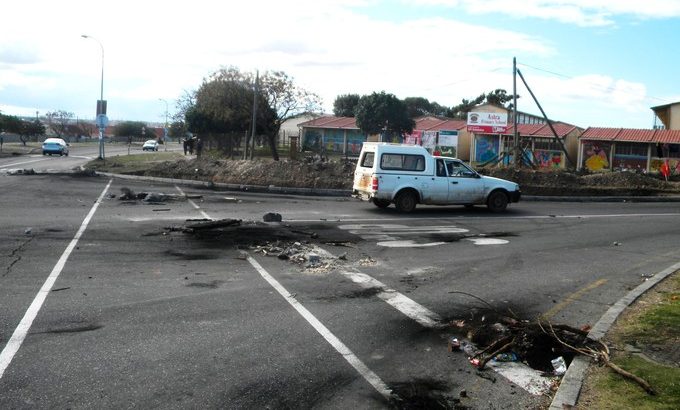
Astra Primary School in Bethelsdorp near Port Elizabeth was closed last week by angry parents who shut the school gates, picketed and burned tyres. They are demanding the provision of ten more teachers.

Currently, the school has 1,128 students and 22 teachers, a ratio of more than 50 to a class, assuming every teacher teaches in every period.

Acting principal Desmond Lewis said the school held a meeting with parents on 19 July to tell them they needed ten more teachers. «The parents then decided to close down the school until the situation is resolved … We had hired four teachers last year because as a school we felt we needed more teachers for slow learners. These were being paid [for] by the parents from donations and fundraising.»

Astra Primary has more than 50 students per class, assuming every teacher teaches in every period.

Astra Primary is a no-fees school. Lewis explained that because staff members retire and others go on maternity and sick leave, the school had six more vacancies that the department had approved.

«The school was paying for ten teachers. It was very painful to explain this to the parents. Now the school can no longer afford to pay these teachers. Our coffers are dry.

«The crisis started years ago, but this time it’s unfortunate that our funds got dry. We informed the concerned teachers in June that their contracts wouldn’t be renewed as the school had no money to pay them.»

A spokesperson for the Eastern Cape education department, Malibongwe Mtima, said the department was aware of the situation, but differed on the number of teachers needed.

«We are busy sorting out the problem at the school. There is a shortage of six teachers not ten. The school should have approached the department on time. Because of maternity leave, sick leave and retirement, schools always face such teacher crises.

«We have approved a grade R foundation phase teacher for the school. The outstanding salary for one teacher has been paid this week. We are in the process of finalising the post of head of department, and that of the deputy principal posts. We even gave the school the go-ahead to fill in the[se] vacancies. The problem is the school delayed to apply for substitute teachers.»

But Lewis says the department knew long ago about the critical staff shortage.

One parent, Alphus Wolmarans, said, «I have two stepchildren attending school there. We have had several meetings concerning this issue. The only thing is to close the school down. I don’t like that route, but there’s no option.»

On Monday morning, at a meeting between the principal and the parents, it was decided to keep the school shut.

Fuente de la noticia: http://www.groundup.org.za/article/angry-parents-close-primary-school/

Fuente de la imagen: http://www.groundup.org.za/media/_versions/images/photographers/Joseph%20Chirume/Astra-20160725-JosephChirume_large.JPG

Comparte este contenido:

Nigeria: Accelerating technical education in Delta State

África/Nigeria/07 Agosto 2016/Fuente:Thisdaylive/Autor: Omon-Julius Onabu

Resumen: A la luz de los retos cada vez más complejos en el mundo de hoy, incluidos los problemas de empleo, el papel del capital humano bien cuidado consistentemente ha puesto de relieve a nivel mundial. Uno de los líderes de Nigeria que no tiene pelos en la lengua, alerto sobre la necesidad de revisar los planes de estudio para que sean más funcionales para el desarrollo sostenible en el país es el gobernador del estado de Delta, el Dr. Ifeanyi Okowa.


Warri — In light of the increasingly complex challenges in today’s world, including employment challenges, the role of well-groomed human capital has consistently been stressed globally.

One Nigerian leader who has not minced words on the need to review the curricula to make them more functional towards sustainable development in the country is the Governor of Delta State, Dr. Ifeanyi Okowa.

He has maintained the desire to build a functional, result-oriented technical education system as a dependable human capital base for middle level manpower needs of the state. The recent inauguration of upgraded facilities at the Ofagbe Technical College, Isoko North Local Government Area of the state has further given credence to the commitment of the administration to restore not only the glorious days of technical education in the state, but to raise the standards to compete globally.

The governor had, shortly after his inauguration last year, identified six state-owned technical colleges for infrastructural and academic upgrading. He immediately awarded the contract for the reconstruction of three of the schools, Ofagbe Technical College, Sapele Technical College and Agbor Technical College. The other colleges are Uta-Gbogbe Technical College, Ogor Technical College and Issele-Uku Technical College.

Speaking at the ceremony, the Commissioner for Basic and Secondary Education, Mr. Chiedu Ebie, said the completion of the first and second phases of the infrastructure and other resource bases of the college was a promise religiously kept by the governor.

According to him, Ofagbe Technical College had been practically abandoned for over 20 years before the inception of the Okowa administration; he recalled what the governor said while inspecting renovation work at the school late last year, saying, «we will take technical schools in the state to greater heights and it will impact positively, not only on the lives of the students, but also on their host communities. I am satisfied with the progress of work and I assure the people that the project will not be abandoned as we will manage the resources and funds we have to complete the work.»

While highlighting developments in the chequered history of the school since its establishment by Pilgrim Baptist Mission- Pilgrim Baptist Trades School on February 15, 1966, exactly one month after the first military coup in Nigeria, Ebie said it was heartwarming that the governor ensured that the first and second sets of projects were duly completed within 10 months «despite the economic downturn in the country.»

He said the gesture was a testimony to Okowa’s commitment to technical and vocational education, «which is timely, visionary, legendary, second-to-none and worthy of commendation.»

The school, which took off with just 47 students at its inception, currently has an enrollment figure of 188, made up of 137 male and 51 female students.

While providing details of the turn-around work done so far at the college, Ebie announced the state’s plans to do more. The projects include the construction of the internal roads by the state’s Direct Labour Agency (DLA), the contracts awarded in two phases for the construction of staff quarters, male.

The completed aspects include the reconstruction and upgrading of the staff quarters, male hostel block, library, examination hall, administrative and science blocks, mechanical, auto mechanical and electrical workshops.

«This phase also included the procurement contract for the supply of various machines and equipment required for the workshops to enhance teaching and learning as well as the supply of computers and students’ furniture.»

After the governor’s visit to Ofagbe last year, additional contracts under the second phase were awarded, including the construction of a perimeter fence, a gatehouse and an electrical block of four classrooms with an office, all of which have been completed.

Ebie urged the students and members of the community to justify the huge investment of the government by ensuring that the infrastructure and amenities are maintained and not vandalised. «Now that Ofagbe Technical College has been repositioned as a world-class institution, there comes the need for the entire Ofagbe community to reciprocate this kind gesture through community participation to secure and protect the school from vandalism and theft.»

Indications that the revamping of technical education in the state will be prioritised by the government came to the fore during the maiden Delta State Education Summit in January. It is noteworthy that the government is looking beyond the construction of beautiful buildings without the provision of the basic tools and distinct policy framework for serious technical training.

According to the commissioner, restructuring of the colleges involves not just a programme for training and retraining of teachers but also partnership with competent organisations for necessary in-depth technical assistance. He disclosed that schools’ curricula are being reviewed to sharpen the functionality and contemporary market relevance.

«With the refocusing of technical and vocational education in the state, the upgrade and equipping of this institution, enrollment is expected to significantly increase in the near future. To guarantee focused attention in this sub-sector of education, the Technical and Vocational Education Board (TVEB) has been established with a full complement of institutional framework, funding and personnel. Effort is currently being made to review and enrich the technical education curricula to make it responsive to extant challenges.»

Aside the traditional cutting of the tape to formally open the school, the highpoint of the event was perhaps the hint by Okowa that his administration is favorably disposed towards the reintroduction of boarding schools at the secondary level. He said the desired quality of technical education in the state would be enhanced by the move, stressing that there would be no compromising his government’s firm policy on technical education.

The excitement of the people of not just Ofagbe town but the entire Isoko ethnic nation was palpable as traditional rulers, local, state and national political representatives of the people, cultural associations, women and youth groups expressed their joy at what they termed the governor’s rescue mission at Ofagbe College.

The President-General of Isoko Development Union (IDU), Chief Iduh Amadhe, aptly captured the people’s sense of appreciation at the occasion thus: «Your excellency, we express our appreciation for your magnanimity towards the Isoko nation.

«We will remember you for making the best out of a difficult situation by completing the DELSU, Oleh Campus access road, completion and commissioning of the DELSU, Oleh Campus Law Faculty Complex and on-going efforts by your administration at ensuring the accreditation of courses for Law and Engineering Faculties at the campus; upgrading and improvement of physical structures of the Ofagbe Technical College.»

Fuente de la noticia: http://www.thisdaylive.com/index.php/2016/07/13/accelerating-technical-education-in-delta-state/

Fuente de la imagen: http://i1.wp.com/leadersandco.s3-eu-west-1.amazonaws.com/wp-content/uploads/2016/07/01185234/Ifeanyi-Okowa.jpg?fit=800%2C600

Comparte este contenido:

El acopio masivo de agua de lluvia alivia la escasez en Kenia

Kenia/06 agosto 2016/Fuente: IPS Agencia de Noticias

En Kenia, al igual que en otros lugares, no es nada nuevo cosechar agua de lluvia. Pero en este país caracterizado por el déficit hídrico y donde las dos terceras partes de su territorio son áridas y semiáridas, la búsqueda de una solución duradera a la escasez permitió innovar en esta práctica antiquísima.

El no gubernamental Banco de Agua de África (AWB) se comprometió a suministrar agua potable mediante un método mucho más eficiente.

El eje de la tecnología es cosechar y almacenar grandes cantidades de líquido mediante métodos como una área de recolección mejorada, un sistema de canalones y de almacenamiento, además de filtros, medidores de nivel de agua y aparatos para descargarla.

Un sistema de recolección típico almacena entre 400.000 y 450.000 litros de agua en dos a tres horas de lluvia intensa. Tiene un techo artificial de entre 900 y 1.600 metros cuadrados y tanques de almacenamientos.

El tanque más grande construido en este condado keniata de Narok tiene una capacidad de 600.000 litros. Todas las unidades pueden ampliarse según las necesidades de sus propietarios.

Con ese volumen se cubren las necesidades de una comunidad de unas 400 personas durante unos 24 meses sin lluvias adicionales. Se puede aumentar su capacidad a unos 220.000 litros al año. El sistema es de bajo costo y se mantiene totalmente con insumos locales. También usa capacidades, trabajo, materiales y tecnología locales.

Chip Morgan, director ejecutivo de AWB, explicó que el sistema “equivale a ganar dinero y ahorrarlo en un banco, por eso nos llamamos Banco de Agua”.

El tamaño que se instala en cada hogar depende de sus necesidades, precisó Morgan, quien trabajó durante décadas en cuestiones de desarrollo en su Australia natal, donde la escasez hídrica es un gran desafío para muchas comunidades de las zonas áridas.

AWB trabaja actualmente en este condado de la región del Valle del Rift, habitada principalmente por la comunidad pastoril maasai.

Pero la tecnología también se instaló en los condados semiáridos de Pokot, Machakos, Samburu y Kajiado, en Kenia, así como en el distrito de Chavuma, en Zambia. La mayoría de los clientes son domicilios particulares e instituciones como hospitales y escuelas.

La construcción de los tanques se financia con fondos de las comunidades, donantes e individuos que cubren 50 por ciento del costo antes del inicio de las obras.

Hay una gran demanda, indicó Morgan, pero todavía están en la etapa en que la gente se interioriza de sus enormes beneficios. “Este año estamos totalmente ocupados. Nuestro objetivo es construir 50 unidades al año”, acotó.

Según un informe del Programa de Monitoreo Conjunto de 2012, el acceso seguro a fuentes de agua potable en Kenia es de 59 por ciento, mientras que a sistemas de saneamiento es de 32 por ciento.

La situación puede haber mejorado desde entonces, pero el desafío de facilitar la disponibilidad de agua sigue siendo grande tanto en el campo como en las ciudades.

La falta de sistemas adecuados de agua y saneamiento propicia las enfermedades derivadas de las malas condiciones de higiene en menores de cinco año.

Además, un tanque pequeño permite regar un invernadero de unos 1.300 metros cuadrados y así mejorar la seguridad alimentaria.

Además, las mejores condiciones de agua y saneamiento ayudan a aliviar la carga de trabajo de las mujeres, encargadas de buscarla, lo que les permite dedicar ese tiempo a otras actividades formativas y laborales.

Morgan precisó que emplean trabajadores locales capacitados y no capacitados y continuamente mejoran la formación de sus técnicos. Esto es fundamental porque el surgimiento de los tanques de plástico eliminó la demanda de obreros, con lo que disminuyó el número de especialistas en la materia.

Los tanques de material pueden durar toda la vida, arguyó.

AWB cuenta con dos ingenieros que forman técnicos que vienen del extranjero a capacitarse. Cuatro organizaciones de Uganda aprovecharon su programa de transferencia de capacidades y enviaron a sus empleados a formarse en la tecnología de acopio de agua de lluvia.

Fuente: http://www.ipsnoticias.net/2016/08/el-acopio-masivo-de-agua-de-lluvia-alivia-la-escasez-en-kenia/

Comparte este contenido:

UNESCO: 19 países más apoyan el Llamamiento a la Acción sobre la violencia homófobica y transfóbica

UNESCO / unesco.org/ 6 de Agosto de 2016

La iniciativa para erradicar a la violencia homófobica y transfóbica en el sector educativo ha recibido el refuerzo de 19 países más que han manifestado su apoyo al Llamamiento Ministerial a la Acción, con lo que el número de países que lo apoyan aumenta ahora a 45.

Países siguen manifestando su apoyo a este Llamamiento a la Acción, que se hizo público al término de la reunión ministerial internacional de dos días de duración sobre la violencia con motivo de orientación sexual o expresión/identidad de género, que tuvo lugar en la Sede de la UNESCO en París.

La reunión congregó a Ministros y delegados gubernamentales, entidades de la sociedad civil, organizaciones de las Naciones Unidas y otros organismos multilaterales de un total de 67 países.

Albania, Alemania, Andorra, Argentina, Canadá, República Checa, Colombia, Dinamarca, Grecia, Honduras, Israel, México, Noruega, Perú, Filipinas, Rumania, Serbia, Suiza y Uruguay se incorporaron a la lista de 26 otros países que apoyan el Llamamiento a la Acción, que compromete a sus signatarios a fortalecer y mejorar las respuestas del sector educativo a fin de garantizar que las escuelas sean lugares donde los niños y los jóvenes puedan aprender sin estar sujetos a amenazas y violencias.

El informe mundial de la UNESCO titulado  Out In The Open  que trata del tema, muestra que los estudiantes que supuestamente no se ajustan a las normas vigentes relativas al sexo y el género, comprendidas las personas lesbianas, gays, bisexuales o transgénero (colectivo LGBT), son especialmente vulnerables. En los Estados Unidos, el 85 por ciento de los alumnos LGBT ha padecido violencia homófobica y transfóbica en la escuela, mientras que en Tailandia el 24 por ciento de los estudiantes heterosexuales  fueron víctimas de la violencia porque se consideró que su expresión de género no se ajustaba a las pautas vigentes.

Tolerancia cero con todas las modalidades de acoso

En la reunión celebrada en la UNESCO en mayo pasado, el Ministro de Educación e Investigación de Noruega, el Sr. Torbjørn Røe Isaksen, declaró: “Este no es únicamente un hecho terrible para todos los alumnos o padres involucrados, sino que también constituye un grave problema para nuestras sociedades. Debemos tener tolerancia cero con todas las modalidades de acoso y prestar especial atención a los grupos ya vulnerables”, afirmó.

La Ministra danesa de la Infancia, la Educación y la Igualdad de Género, la Sra.Ellen Trane Nørby, dijo que el acoso homófobico y transfóbico que se ejerce en la escuela tiene graves consecuencias para el bienestar y las perspectivas futuras de niños y jóvenes.

El texto final del Llamamiento Ministerial a la Acción, en el que figurará la lista de todos los países adherentes, se publicará en septiembre de 2016. El documento figurará en una nueva publicación de la Oficina de laRepresentante Especial del Secretario General de las Naciones Unidas sobre la Violencia contra los Niños que tratará de la protección de los niños contra el acoso y el ciberacoso. Esta publicación saldrá a la luz durante la Asamblea General de las Naciones Unidas (UNGA), que tendrá lugar en octubre de 2016.

Los países que hasta el momento se han adherido al Llamamiento Ministerial a la Acción son los siguientes: Albania, Alemania, Andorra, Argentina, Austria, Bélgica, Bolivia (Estado Plurinacional de), Cabo Verde, Canadá, República Checa, Chile, Colombia, Costa Rica, Dinamarca, El Salvador, España, Fiji, Filipinas, Finlandia, Francia, Grecia, Guatemala, Honduras, Israel, Italia, Japón, Madagascar, Malta, Mauricio, México, Moldova, Montenegro, Mozambique, Países Bajos, Nicaragua, Noruega, Panamá, Perú, Rumania, Serbia, Sudáfrica, Suecia, Suiza, Estados Unidos de América y Uruguay.

El plazo hasta el cual  países podrán manifestar  su apoyo al Llamamiento a la Acción se ha extendido del 29 de julio al 16 de septiembre de 2016. Las Delegaciones Permanentes ante la UNESCO deben ponerse en contacto con el Sr. Christophe Cornu, en la Sección de Salud y Educación,c.cornu(at)unesco.org y con el Sr. Yongfeng Liu yf.liu(at)unesco.org.

Fuente:http://www.unesco.org/new/es/education/resources/online-materials/single-view/news/six_more_countries_sign_call_for_action_on_homophobic_and_tr/#.V6YQ8RKfiRQ

Comparte este contenido:

Kenia: Five schools closed over arson fears in Narok, Bomet

Kenia / 06 de agosto de 2016 / Por: RUTH MBULA – GEOFFREY RONO / Fuente: http://www.nation.co.ke/

Five secondary schools in Narok and Bomet counties have been closed following arson fears by the schools’ management.

Students at Endoinyo–Enkopit, Shankoe, Sosio and Shartuka secondary schools in Trans Mara as well as Kabungut Boys Secondary School in Bomet County have been sent home.

On Wednesday, Trans Mara West Sub-County Education Officer Samuel Sankale said students at Endoinyo–Enkopit and Shankoe Secondary schools had demanded that their school be closed since they wanted to go home like other neighbouring schools.

“They said they wanted to join their brothers [from] Shartuka Boys and Kilgoris Boys who have already been sent home after they too threatened to burn their respective schools,” said Mr Sankale.

The students are reported to have said that they could not be left to study alone while others were «enjoying [themselves]at home».

Mr Sankale said the students had started to show signs of unrest and they took the move to prevent damage on school property.

BREWING ANIMOSITY

The Education officer, however, applauded the students for not resorting to burning property to air their grievances, saying no school has so far been burned in Trans Mara.

But he said students at Sosio and Shartuka Boys secondary schools were ordered to go home after they became unruly.

He said they had threatened to go on the rampage and destroy property if their demands were not addressed.

At Sosio Secondary School, there had been a stand-off between Form Four and Form Three students since Saturday following the election of a Form Three student as head boy.

The situation worsened when the newly appointed head prefect questioned a Form Four student who turned up late for supper.

He said the school management got concerned about brewing animosity and decided to close the school before the situation could get out of hand.

HUNGER STRIKE

At Kabungut Boys in Bomet Central Constituency, the Nation learnt that the students had been on a hunger strike since Saturday following the administration’s decision to handpick prefects rather than through an election system.

They also skipped breakfast on Sunday morning.

On Monday, however, the students forcibly demanded the supper they had missed on Saturday alongside breakfast.

Some parents said they had received text messages from the school principal announcing the abrupt closure of the school and requested them to personally come and pick up their children.

“Kabungut Boys was closed on Wednesday due to students’ demands and the county director of Education has granted permission for its closure. No destruction has been done. Thanks,” said a text message sent to a parent.

School Principal Nelson Siele could not be reached for comment as his phone had been switched off.

Fuente noticia: http://www.nation.co.ke/counties/Five-schools-closed-over-arson-fears-in-Narok-Bomet/1107872-3329036-q6vuul/index.html

Comparte este contenido:

Arsonists torching schools in Kenya to protest education reform

Africa/Kenya/06 de Agosto de 2016/Autora: Briana Duggan/Fuente: CNN

RESUMEN: Una ola de ataques incendiarios ha quemado cerca de 120 escuelas secundarias desde junio a través de Kenia, donde las autoridades han identificado a un culpable desalentador: los estudiantes. Los incendios, que en su mayoría se dirigen a los dormitorios, han destruido útiles escolares y pertenencias personales. Otras escuelas han cerrado preventivamente por miedo a más incendios. Mientras que los ataques incendiarios en las escuelas no son un fenómeno nuevo en Kenia, la tasa cada vez mayor de los incendios tiene todos los ojos en los desafíos que enfrenta el sistema educativo de Kenia. La gente y los motivos detrás de las llamas siguen sin estar claros, pero muchos sospechan de los estudiantes, citando la ira de los  estudiante por las  nuevas y estrictas políticas destinadas a la limpieza de escuelas después de una serie de escándalos de engaño.

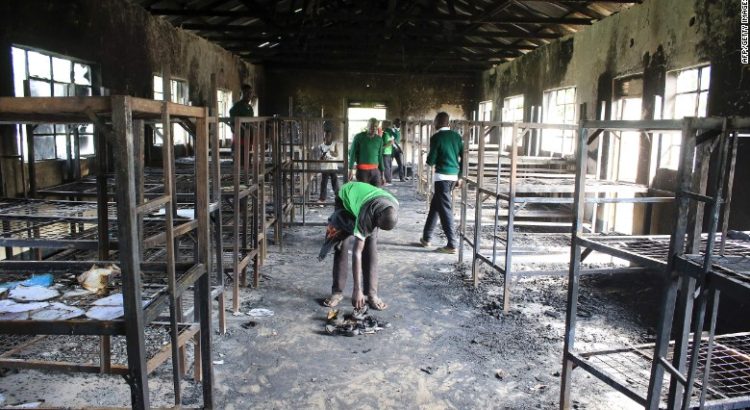
A wave of arson attacks has torched about 120 secondary schools since June across Kenya, where authorities have identified a dismaying culprit: students.

The fires, which mostly target dormitories, have destroyed school supplies and personal belongings and forced thousands of students out of school. Other schools have preemptively closed out of fear of more blazes.

While arson attacks in schools are not a new phenomena in Kenya, the escalating rate of the fires has all eyes on the challenges facing Kenya’s education system. The people and motives behind the blazes remain unclear, but many suspect students, citing student anger about strict new policies intended to clean up schools after a series of cheating scandals.

The fires have caused several minor injuries but no deaths, which some people say suggests that students had prior knowledge of the blazes.

«Students have a lot of tension over the sudden change of programs. They are venting their frustration and anger through fires,» said Wilson Sossion, Secretary General of the Kenya National Union of Teachers.

«It is a clear coded message: they want to have more time at home than at school.»

In recent months more than 45 students have been charged with arson in connection to the school fires, according to Kenya media reports. On Tuesday alone, 13 boys were charged with burning a dormitory and classrooms at their high school in Nairobi. They have denied the charges.

The recent spate of school fires began after Kenya’s Ministry of Education announced new reforms in May which cut school holidays by several weeks and limited social events, prayer days and parental visits. The changes were part of broader reforms aimed at curbing cheating on exams, in part by limiting contact between students and outsiders who take payments to send them exam answers via mobile phone.

The man behind the strict new policies, Education Minister Fred Matiang’i, has stood by the measures. He has blamed the arson attacks on the cheaters themselves — students who were angry they could not access national examination papers in advance of their exams.

«Students who have been arrested and are facing charges have told police that they were protesting because they had paid for the (exam) papers but they have not received them,» Matiang’i told the Daily Nation.

Reports of cheating abound in Kenya, where some 7,000 primary and secondary school exam results were canceled last year due to concerns over their legitimacy.

In a country where school fees are prohibitively expensive for many, meaning that only about half the school-age population attends secondary school, the slew of arson attacks has caused a flurry of chatter and questions within Kenyan society.

Many Kenyans have questioned these divisions in the east African country and blamed parents for raising a generation of kids they see as entitled and overworked. Others question the quality of schools.

But Sossion, of the teachers’ union, says the problem is not about privilege.

«It’s the right of every child in Kenya to access education of good quality,» he said. «You cannot teach students who are not happy. They must be happy and they must be comfortable.»

Fuente: http://edition.cnn.com/2016/08/03/africa/kenya-school-fires-education-reform/index.html

Comparte este contenido:

Ethiopia: China grants scholarship to 26 ethiopians

África/Ethiopia/06 Agosto 2016/Fuente: geeskaafrika/Autor: Girmachew Gashaw

Resumen:  Los ganadores de las becas serían perseguir su educación de aprendizaje en las mejores universidades chinas en la ciencia médica, el idioma, la ingeniería, la informática y otros campos de estudios que serían vitales para mover la industrialización del país. El gobierno de China anunció que concederá beca de postgrado de 26 estudiantes procedentes de universidades públicas.

The scholarship winners would pursue their high learning education in the top Chinese universities in medical science, language, engineering, computer and other fields of studies which would be vital to nation’s industrialization move.

The government of China announced that it granted postgraduate scholarship to 26 students drawn from public universities.

Handing out credentials to the winners at a ceremony held on the premises of the embassy yesterday Chinese Ambassador to Ethiopia La Yifan said that over the year the Chinese government has granted 236 scholarship to Ethiopian students.

The Ambassador noted that human resource development is one of the pillars of cooperation with Ethiopia.

The scholarship winners would pursue their high learning education in the top Chinese universities in medical science, language, engineering, computer and other fields of studies which would be vital to nation’s industrialization move.

Representing the Ministry of Education, Dr. Zerihun Kebede said that China and Ethiopia have long standing relations which is being manifested in different forms of cooperation and support. This relations has gained momentum since recent years as the two sisterly countries have established a broader scope of bilateral relation and cooperation especially in the field of education.

He also said that the government of China is supporting the human resource development programme through long and short term capacity building schemes.

He said: «The government is grateful for the support the Chinese government has been providing which has immense contribution to our capacity building programmes.»

Fuente de la noticia: http://www.geeskaafrika.com/22261/ethiopia-china-grants-scholarship-26-ethiopians/

Fuente de la imagen:http://afrikageeska.gtawi6bzfyfak.netdna-cdn.com/wp-content/uploads/2016/08/china-sichuan-40.jpg

Comparte este contenido:
Page 482 of 622
1 480 481 482 483 484 622