Page 543 of 622
1 541 542 543 544 545 622

The Paradox of Congo: How the World’s Wealthiest Country Became Home to the World’s Poorest People

Africa/Congo/May 2016/Autor:  Esther Yu-Hsi Lee/ Fuente: ThinkProgress

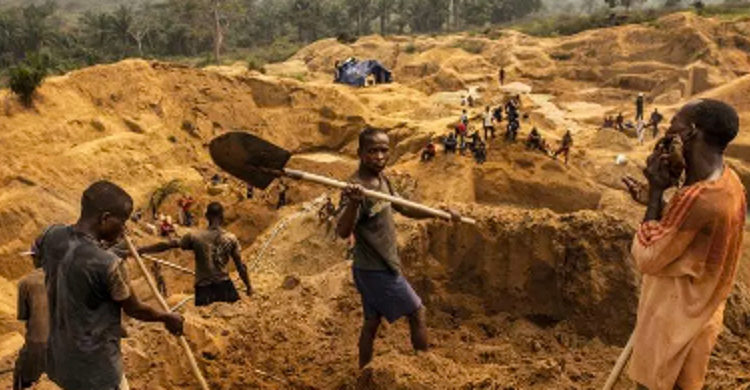
Resumen:  En la República Democrática del Congo (RDC), la gran mayoría de las personas viven en la pobreza extrema, ganando solamente 400 $ al año. El país se está recuperando de la inestabilidad, el hambre y las enfermedades. Uno de cada siete niños muere antes de cumplir los 5 años de edad. Y más de 5,4 millones de personas han muerto desde 1993 a causa de los conflictos armados. Pero los problemas que afectan a los ciudadanos congoleños están en agudo contraste con la riqueza del país. La República Democrática del Congo, se asienta sobre los minerales en bruto sin explotar $ US 24 trillón – dinero que no se benefician directamente a las personas que viven allí.

In the Democratic Republic of Congo (DRC), the vast majority of people live in extreme poverty, earning only around $400 a year. The country is reeling from instability, hunger, and disease. One in seven children dies before they turn 5 years old. And more than 5.4 million people have died since 1993 because of armed conflict. But the issues plaguing Congolese citizens are in sharp contrast to the country’s wealth. The DRC sits on untapped, raw mineral ores worth $24 trillion — money that isn’t directly benefiting the people who live there.

“Why are we living through hell in paradise?” Vital Kamerhe, a Congolese politician and leader of the Union for the Congolese Nation, asks in the film When Elephants Fight, which details how foreign interests have ravaged the Congo region. “That is the paradox of Congo.”

Foreign companies have made large investments in eastern Congo’s mines, buying from suppliers funding armed groups within the country. This type of foreign investment in the Congo’s extraction industry has led to a loss of at least $1 billion in resource revenue that could otherwise be used to reform the country’s security, health, and education sectors.

Now, two well-known activists have begun a campaign to pressure mining companies, the DRC government, and Western governments to disclose exactly what they’re doing in the region. Alongside House of Cards television star Robin Wright, JD Stier, the president of the social activism organization Stier Forward, created the #StandWithCongo campaign to get mining entities to disclose the beneficial owners of offshore companies that are profiting from these mining deals.

“The #StandWithCongo campaign is addressing shady billion-dollar mining contracts — mostly relating to mining concessions in the south of the country,” Stier told ThinkProgress. “Transparency from technology companies to mining multinationals can ensure that the human rights of Congolese are respected and that more revenue can support development for Congolese people.”

The affected mines, mainly in Congo’s Katanga and Kivu provinces, contain some of the world’s largest reserves of cobalt, gold, copper, and diamonds, as well as tin, tungsten, and tantalum.

These raw minerals have fueled one of the world’s bloodiest conflicts globally since World War II to an obscene degree: 48 women are raped every hour in the Congo while 10,000 civilians are estimated to die every month. Militia groups made an estimated $185 million from conflict minerals in 2008, while gold remains a steady source of funding for them and for Congo’s army.

And, because the minerals mined in the Congo are used to make everyday objects like smartphones, lightbulbs, computers, and jewelry, nearly everyone reading this article is complicit in the ongoing conflict.

At least some of the mines purportedly belong to Israeli billionaire Dan Gertler, named more than 200 times in the Panama Papers. An ally to Congo President Joseph Kabila, Gertler allegedly had a hand in the mining deals in 2011 “that robbed the Congolese people of more than $1bn,” The Guardian reported.

The Africa Progress Panel, a panel that promotes the equitable and sustainable development for Africa, estimated that the sale of mining contracts to five anonymous British Virgin Island companies deprived Congolese citizens of $1.35 billion, or about twice their health and education budgets combined. And while assets were sold at one-sixth their commercial value, these offshore companies bankrolled 500 percent in profits.

“The DRC government should commit to immediate full disclosure of state-owned companies’ revenues and spending, to the publication of all mining contracts, and to ensuring company compliance with Organization for Economic Co-operation and Development (OECD) standards on conflict minerals,” Stier said. The OECD, an international economic organization, has helped to issue due-dilligence guidance for companies to move away from the use of such minerals.

Conflict in the Congolese region may only accelerate as the country’s term-limited president, Joseph Kabila, appears poised to extend his incumbency into a third term. Though he is bound by the DRC’s constitution to step down after two consecutive terms, Kaliba — under whom many abuses in the region, particularly those against women, have gone unpunished — has not categorically said that he will not seek a third term. In order to stay in power, Kabila could delay the November 2016 elections or change the constitution.

Kabila’s cling to power has so far resulted in the arrest and detention of opposition supporters. As many as 40 people were killed last year during protests opposing a draft law that would have extended his term. And on Thursday, peaceful protesters who took to the streets in Goma, an eastern city in the DRC, were met by armed security personnel who used tear gas to disperse the protests. As many as six people were shot, including a target=»_blank»12-year-old boy and 6-year-old child, according to a Human Rights Watch researcher.

Although the use of conflict minerals is unlikely to completely halt, Stier is hopeful that the DRC and Western governments may be able to follow other countries’ example to implement sustainable, peaceful trade “that fosters human rights.”

“In recent years, activist efforts have led to significant reforms in the technology sector,” Stier said. “Tech giants Apple and Intel acknowledged their products contain minerals linked to the financing of rape and war in eastern Congo, and have since invested significant resources in tracking their supply chains — moving in the direction of a closed loop, traceable minerals supply chain.”

Apple Inc. announced in March that it would now audit 100 percent of its suppliers sourcing minerals from the DRC. Intel Corp., the world’s largest chip maker, said in 2014 that the company was “committed to using only conflict-free mineral resources” and would track raw materials, though it appears to be a work in progress as evidence of fraud, smuggling, and a lack of oversight has plagued the current audit system.

There’s also been some legislative movement here in the United States. Under the Dodd-Frank Wall Street Reform and Consumer Protection Act, companies using gold, tin, tungsten, and tantalum are required to make efforts to determine whether those minerals came from the DRC and whether those mineral purchases are funding armed groups in eastern DRC.

According to the policy organization Enough Project, “216 out of approximately 324 smelters and refiners worldwide (67 percent) have passed conflict-free audits and an additional 50 smelters/refiners are in the process of being audited, for a total of 266 participating companies (82 percent).” A 2014 International Peace Information Service study also found that “70 percent of tin, tungsten, and tantalum mines surveyed in eastern Congo were no longer controlled by armed groups, and 204 mines in Congo are now officially certified as conflict-free.”

“We may not have serious strategic interests in this region, but that doesn’t mean we don’t care,” U.S. Special Envoy to the Great Lakes Region of Africa Thomas Perriello told ThinkProgress. “One of the biggest myths about the DRC is that it is hopeless. While that’s a convenient excuse for inaction, we have seen major progress from constitutionalism to conflict-free mineral programs.”

And Stier believes the momentum will only continue.

“Many people in the West feel detached from Congo and the conflicts there,” he said. “However, Millennials get it. They are Skyping with people around the world… and have the pragmatic idealism to act when they see some of the greatest unaddressed injustices on the planet. Further, they recognize that Congolese will ultimately create peace in their country but that we can help support these efforts.”

Fuente de la noticia: http://readersupportednews.org/news-section2/318-66/37127-the-paradox-of-congo-how-the-worlds-wealthiest-country-became-home-to-the-worlds-poorest-people

Fuente de la imagen: http://readersupportednews.org/images/stories/article_imgs21/021222-congolese-miners-052816.jpg

Comparte este contenido:

Investigadores y Académicos de 28 países respaldan la Ley de Semillas de Venezuela

El 23 de diciembre del 2015 se aprobó la nueva ley de semillas del país, ampliamente discutida por diversos sectores del pais durante casi 3 años. Esta ley reconoce tanto a la semilla certificada como a la semilla producida, resguardada y mantenida por comunidades locales, campesinas, indigenas y afrodescendientes, ademas prohíbe semillas transgénicas y las patentes sobre semilla. Por estos elementos la ley ha recibido recientemente un amplio reconocimiento por parte de la comunidad académica internacional. Asi 137 individualidades y 55 instituciones del sector académico de 28 países, han declarado la solidaridad internacional con la ley de semillas venezolana.

Esta declaratoria fue difundida por primera vez el pasado 21 de mayo durante la jornada mundial contra la transnacional del agronegocio Monsanto, que se desarrollo en mas de  30 paises. En esta jornada participaron diversas experiencias del poder popular vinculadas con la producción de semillas, distribucioó de alimentos y procesamiento alternativo como respuesta al acaparamiento de alimentos procesados y dependencia de la agroindustria.

La jornada arranco desde la mañana en Antímano, donde la comuna Sueños del Comandante Eterno Hugo Chavez organizo una distribución planificada de alimentos el marco del Plan Pueblo a Pueblo, alianza comunera del campo y la ciudad desde la que se han venido distribuyendo autogestionadamente hortalizas, tubérculos y otros rubros producidos por comunas campesinas del estado Trujillo a precios justos calculados  a partir de la estructura de costos que estiman los comuneros.

La jornada continuo en la sede de la Universidad Nacional Experimental Simón Rodríguez en el Valle donde diversas experiencias de los estados Anzoategui, Lara, Merida, Barinas, Baruta, Distrito Capital y Yaracuy, presentaron como han venido implementando la ley de semillas a través de la comunalización de la ley, la producción de semillas, la creación de los consejos populares de resguardo de semillas, y la declaratoria de bien de interés cultural de conocimientos y practicas asociadas a las papas nativas. Se presentaron una diversidad de semillas que vienen siendo seleccionadas y multiplicadas por las comunidades, obteniendo buenos resultado en el rendimiento y calidad.

En la jornada participo también Eduardo Saman con un conversatorio sobre el expediente de Monsanto. Por parte de la institucionalidad participaron Alejandrina Reyes rectora de la universidad anfitriona, Osly Hernandez presidenta de la Mision Arbol y Lorena Freites ministra de agricultura urbana, quienes se manifestaron su apoyo las iniciativas de resguardo y producción de semillas.

Desde este espacio se manifestó la conformación de un comité promotor para la implementación de la ley a nivel nacional de cara al plan popular de semillas, y se planteo la importancia de la semilla como elemento que vincula la agricultura urbana con la agricultura campesina. La jornada cerro con la celebración del velorio de la cruz de mayo en el conuco 86 en el Valle.

Todas estas acciones muestran  como la semilla, elemento clave de la producción de alimentos, esta hoy en el centro de la discusión política sobre el sistema agroalimentario del país, que aun depende en buena parte de semilla importada  para rubros como hortalizas, pastos y otros, pero que también cuenta con una amplia diversidad de variedades de cultivos tradicionales que se han ido perdiendo y con esta nueva ley, se plantea la oportunidad de revalorizar.

Declaración Internacional de Solidaridad con la Ley de Semillas de Venezuela

El día 23 de diciembre de 2015, la Asamblea Nacional de Venezuela aprobó una nueva Ley de Semillas que prohíbe la importación, producción y siembra de semillas transgénicas o genéticamente modificadas (OGM); y protege la producción e intercambio libre de variedades de semillas pertenecientes a las comunidades agrícolas de Venezuela (indígenas, campesinas y afrodescendientes), entre otras disposiciones.

La prohibición de los OGM se basa en el principio de precaución, dado que los efectos de la tecnología transgénica aún no se conocen completamente y lo que se ha documentado hasta hoy, en términos de impacto a la salud humana y el medio ambiente, suscita preocupaciones significativas. A esto se suman las preocupaciones relacionadas al impacto socio-económico y a los derechos humanos de los pequeños productores y productoras, quienes conforman la mayor parte de la población que padece hambre en el mundo. La protección especial de semillas adaptadas localmente, reconoce la importancia de la conservación local para mantener el máximo de diversidad genética. Algo cada vez más importante para para enfrentar con resiliencia el cambio climático. Adicionalmente, la ley es producto de la formulación de políticas desde abajo con apoyo institucional, al estilo “abajo-arriba”; resultado de un proceso de tres años en el cual movimientos sociales se opusieron a un proyecto de ley de semillas que tenía franco respaldo del sector agroindustrial. Contrariando los intereses de dichos sectores, estos movimientos presionaron para obtener una legislación más transformadora, y a través de una serie de consultas públicas-participativas en todo el país, desarrollaron esta alternativa.

La aprobación de la Ley marca una victoria histórica para los movimientos de agroecología y soberanía alimentaria en Venezuela y más allá. Es quizás una de las pocas leyes nacionales en el mundo que garantiza y protege el derecho de los campesinos a las semillas. Sin embargo, a pesar del amplio apoyo nacional y el interés internacional que ha cosechado, la ley está siendo atacada por representantes de la industria y sus seguidores por considerarla “anti-científica”. Esto coloca a la Ley de Semillas en riesgo de ser anulada por la Asamblea Nacional actual, la cual se constituye de una mayoría opositora, desde enero de este año.

Como científicos, profesionales y defensores involucrados en alimentación y agricultura, ponemos en duda y cuestionamos los fundamentos de estos ataques. La idea central de la Ley es priorizar las prácticas de agricultura agroecológica, sosteniéndose en el creciente consenso científico sobre la importancia de esta transición de la agricultura convencional a sistemas de agricultura basados en la ecología, que valoran los conocimientos de los productores y productoras locales y los involucran en la toma de decisiones. Esto ha sido enfatizado por ejemplo en la Evaluación Internacional del Papel del Conocimiento, la Ciencia y la Tecnología en el Desarrollo Agrícola (IAASTD por sus siglas en inglés) desarrollado por 400 destacados expertos mundiales y respaldado por 59 países.

Por lo tanto, estamos acompañando con mucho interés esta emergente lucha en defensa de la Ley de Semillas de diciembre del 2015 y su implementación, no solamente por sus implicaciones para Venezuela, sino también por todas las posibles implicaciones de mayor alcance, en un escenario donde ocurre una consolidación corporativa del acaparamiento de los recursos genéticos, tan necesarios para el presente y futuro de la seguridad y soberanía alimentaria. Apoyamos a los productores y productoras de alimentos, las y los científicos y los movimientos de base local que en Venezuela impulsan esta defensa y esta construcción, instando a la Asamblea Nacional a que mantenga la integridad de esta Ley y apoye su implementación plena.

Suscriben:

Olivier De Schutter, Co-presidente del Grupo Internacional de Expertos en Sistemas de Alimentación Sostenible (IPES – Alimentos) , Ex Relator Especial de la ONU sobre el Derecho a la Alimentación (2008-2014) , miembro del Comité de la ONU para los Derechos Económicos, Sociales y profesor de la Universidad de Lovaina , Bélgica
Jack Kloppenburg, Professor Emeritus, Universidad de Wisconsin-Madison y fundador de Open Source Seed Initiative, EEUU
Sofia Monsalve,Secretaria General de  FIAN International
Frances Moore Lappé, Small Planet Institute,  EEUU
Miguel Altieri, Profesor, Universidad de Berkeley California ,  EEUU
Fred Magdoff, Profesor Emérito de la Universidad de Vermont  en Ciencias del suelo, EEUU.
Philip McMichael, Profesor de la Universidad de Cornell, EEUU
Ian Scoones, Profesor del Institute of Development Studies, Universidad de Sussex, Reino Unido.
Eric Holt-Giménez, Food First/The Institute for Food and Development Policy, EEUU.
Jan Douwe van der Ploeg, Profesor de la Universidad de  Wageningen, Holanda.
Bernardo Mançano Fernandes, Universidade Estadual Paulista (UNESP), Brasil.
Gayatri Menon,  Profesor Asistente de la Universidad Azim Premji , India
Esteve Corbera, Universitat Autònoma de Barcelona, España.
Frederick Mills, Profesor, Universidad Estatal de Bowie, EEUU
Anna Lappé, Small Planet Institute, EEUU
Jennifer Clapp, Cátedra de Investigación en Seguridad Global de Alimentos y Sustentabilidad y Profesora del School of Environment, Resources and Sustainability, Universidad de Waterloo, Canadá
Ivette Perfecto, Profesora de School of Natural Resources and Environment, Universidad de Michigan, EEUU
Juliette Majot, Directora Ejecutiva del Institute for Agriculture and Trade Policy, USA
Sophia Murphy, Investigadora del British Columbia, Canadá
Alastair Iles, Profesor de la  Universidad de Berkeley California,EEUU
Susanna Hecht, Profesora del Luskin School of Public Affairs and Institute of the Environment and Sustainability, UCLA, EEUU
Nettie Weibe,Agricultor y Profesor de St. Andrew’s College – Universidad de Saskatchewan, Canadá
Tamara Wattnam, M.Sc. en Agroecología y candidata a PhD  en  Sociología, Universidad de Wisconsin-Madison, USA
M. Jahi Chappell, PhD, Investigador del Centre for Agroecology, Water and Resilience, Universidad de Coventry , Reino Unido.
Nora McKeon, Terra Nuova, Italia
Mindi Schneider, Profesor Asistente del International Institute of Social Studies (ISS), Holanda.
Rachel Bezner Kerr,Profesora Asociada del Departamento de Sociología del Desarrollo, Universidad de Cornell, EEUU
Peter Newell, Profesor de Relaciones Internacionales de la  Universidad de Sussex, Reino Unido.
Robin Broad, Profesor, del School of International Service, American University, EEUU
John Vandermeer,Profesor de Ecología y Biología Evolutiva de la  Universidad de Michigan, EEUU
Edmund Oh, Profesor Asociado del ELM Graduate School,  Universidad HELP, Malaysia
Jessica Duncan, Profesora Asistente de la Universidad de Wageningen, Holanda.
Josh Brem-Wilson, Investigador del  Centre for Agroecology, Water and Resilience, Universidad Coventry , Reino Unido
Laura Enríquez, Profesora del Departmento de Sociología de la  Universidad de Berkeley California , EEUU
Elizabeth Fitting, Coordinadora de Postgrado y Profesora Asociada de la Universidad de Dalhousie University, EEUU
Sarah Lyon, Profesora Asociada y Directora de Estudios de Postgrado, Universidad de Kentucky, EEUU
Simon Nicholson, Director del Global Environmental Politics Program, American University, USA
Molly D. Anderson, William R. Kenan, Jr. Professor of Food Studies at Middlebury College, USA
Brian Tokar, Catedrático de  Environmental Studies, Universidad de Vermont, USA
Dr Francisco Dominguez, Director de  Latin American Studies,  Universidad Middlesex, Londres, Reino Unido.
Marc Edelman, Profesor de Antropología del Hunter College & the Graduate Center, Universidad de New York, EEUU
Wendy Wolford, Polson Profesora de Sociología del Desarrollo, Universidad de Cornell, EEUU.
Timothy A. Wise, Investigador del Global Development and Environment Institute, Tufts University, EEUU.
Michel Pimbert, Profesor del Centre for Agroecology, Water and Resilience at Coventry University, UK.
John Bellamy Foster, Profesor de la  Universidad de Oregon y Editor del Monthly Review, EEUU.
Hannah Wittman,  Profesora Asociada de la Facultad de Land and Food Systems and Academic  y Directora del  Centre for Sustainable Food Systems, University of British Columbia, Canada
Jun Borras, Profesor del International Institute of Social Studies (ISS), Holanda.
Eva Frankova, Department of Environmental Studies, Faculty of Social Studies, Masaryk University,  República Checa
David Primrose, Department of Political Economy, Universidad de Sydney, Australia
Stephen Bartlett, Agricultural Mission, USA
Dave Murphy, Food Democracy Now!, USA
Joan P Mencher, Profesora Emérita de Antropología de la Universidad de New York (CUNY), EEUU.
Anuradha Mittal, Directora Ejecutiva del The Oakland Institute, EEUU.
Dr. Charles Francis, Universidad de Nebraska, EEUU
Natalia Mamonova, PhD Investigadora del International Institute of Social Studies (ISS), Holanda
Sara Keene, PhD Candidate,  Universidad de Cornell, EEUU.
Huei-Ling Lai, PhD Investigador del  International Institute of Social Studies (ISS), Holanda.
Judith McGeary, Esq., Farm and Ranch Freedom Alliance, EEUU
Youjin Chung,Candidato a PhD , Sociología del Desarrollo, Universidad de Cornell, EEUU.
Wittawat Prayookwong, Estudiante, International Institute of Social Studies (ISS), Holanda.
Shoshana Perrey, Estudiante de Postgrado de Sociología del Desarrollo en la Universidad de Cornell, EEUU. Arnim Scheidel, PhD, International Institute of Social Studies (ISS), Netherlands
Lisa Stokke, Director Ejecutivo del The Next 7 Project, USA
Pierre Merlet, AGTER, Nicaragua/Francia
Sharmini Selvarajah, Directora del Programa de Investigación del International Institute of Social Studies (ISS), Holanda
Amelie Huber, Candidata a PhD del Institute de Ciencias Ambientales y Tecnología de la Universitat Autonoma de Barcelona,España.
Elyse Mills, Investigador del  International Institute of Social Studies (ISS), Holanda.
Alberto Alonso-Fradejas, Transnational Institute (TNI),Holanda & Instituto de Estudios Agrarios y Rurales (IDEAR), Guatemala
Tsegaye Moreda, Candidato a PhD del International Institute of Social Studies (ISS), Holanda.
Elizabeth Henderson, Agricultora Orgánica, Peacework Organic CSA, Newark, New York, USA
Hana Bernardová, AMPI (Association of Local Food Systems), Republica Checa.
Salena Tramel, PhD Investigadora del International Institute of Social Studies (ISS),Holanda.
Will Fantle, Co-director, The Cornucopia Institute, USA
Mercia Andrews, Rural Women’s Assembly, Surafrica.
Nancy Romer, ProfesorA Emerita, Brooklyn College, City Universidad de New York, EEUU
Grace Gershuny, Faculty, Green Mountain College, MS in Sustainable Food Systems, EEUU
Andrianna Natsoulas, Food Voices, EEUU
Martin Dagoberto, Mass. Right to Know GMOs, Massachusetts, EEUU
Ken Thesing, ICR, Roma, Italia.
Eneko Garmendia, Ikerbasque Research Fellow, España.
Ben McKay, International Institute of Social Studies (ISS), Holanda.
Hannes Lammler,Miembro fundador de Cooperativas Europeas de Longo Mai, Francia
Amy & Bryan Willoughby, Patchwork Farm, Copper Hill, VA, EEUU.
Russell Dale, Science and Society,  EEUU
Angela Adrar, Ecohermanas,  EEUU
Andrew Kang Bartlett, Food in Neighborhoods Community Coalition,  EEUU
Tania Salerno, PhD Candidate, University of Amsterdam, Holanda.
Marta Zygadło, Abogada y estudiante de maestría de Aliemntos, Sociedad y Gobernanza Internacional en la Universitat Oberta de Catalunya, Spain
LaDonna Sanders Redmond, Campaign for Food and Community Justice Now, EEUU
Laurence Levine, Co-Founder, Kids Can Make a Difference,  EEUU.
Antonio Roman-Alcalá, Alumnus, International Institute of Social Studies (ISS), Netherlands and Founder, San Francisco Urban Agriculture Alliance,  EEUU
Giulio Locco, Activista por la Soberanía Alimentaria, Italia y Holanda.
Denise O’Brien, Agricultor y Activista,  EEUU
Jane Hodge, Rise & Root Farm,  EEUU Jose Oliva, Food Chain Workers Alliance,  EEUU
Sarah Laeng-Gilliatt, Owner, Main Street Cheese LLC, EEUU
Monica Ibacache, Beyond Organic Design,  EEUU
Christina M. Schiavoni, PhD Researcher, International Institute of Social Studies (ISS), Holanda.
Madison Monty,Northeast Organic Farming Association of Vermont,  EEUU
Kelly Moltzen, Franciscan Action Network, EEUU
Annie Shattuck, Fellow, Food First,  EEUU
Zainil Zainuddin, Abogado e Investigador y candidato a PHD, Universidad RMIT, Australia
Fern Gale Estrow, FGE Food & Nutrition Team,  EEUU
Joann Lo, Food Chain Workers Alliance,  EEUU
Denis Mpagaze, Periodista y Activista por el derecho a la alimentación,Tanzania
Arnaud Apoteker, Coordinator of the International Monsanto Tribunal, Francia
Klara Kyralova, Friends of the Earth, República Checa
John Wilson, African Food Sovereignty Activist
Yunan Xu, Estudiante de PhD, International Institute of Social Studies (ISS), Holanda
Karen Washington, Farmer, Rise & Root Farm,  EEUU
Rev. Dele, Nature’s Friends,  EEUU
Johanna Rosen, Trabajadora comunitaria y Especialista en Comunicaciones, Massachusetts,  EEUU
Philip L Bereano, Profesor Emérito de Technology and Public Policy, Universidad de Washington, EEUU
Claire Robinson, Editora, GMWatch, Reino Unido
Elsadig Elsheikh, Investigadora de la  Universidad  de  Berkeley California,  EEUU
Dr. Laura Rival, Departamento de Desarrollo Internacional, Universidad de Oxford, Reino Unido
Cécile Famerée, International Institute of Social Studies (ISS),Holanda.
Erika Allen, Growing Power – Chicago, EEUU
Shalmali Guttal, Focus on the Global South, India
Colleen Cordes,Directora de Extensión y Desarrollo del, The Nature Institute
Michael O’Callaghan, Director, Global Vision Foundation, Suiza.
Afsar Jafri, Focus on the Global South, India.
Prof. Dr Arpad Pusztai, FRSE, Rowett Research Institute, Reino Unido.
Prof. Dr. Susan Bardocz, FRSE, Rowett Research Institute, Reino Unido.
Judith Hitchman, President, Urgenci International Network for Community Supported Agriculture
Catherine Ponte, Master of Landscape Architecture, State University of New York College of Environmental Science and Forestry, EEUU.
Margaret Nakato, Katosi Women Development Trust, Uganda
Simon Anoumou Todzro, West Africa Producers and Consumers Network
Gertrude Kenyangi Kabusimbi, Support for Women in Agriculture and Environment (SWAGEN), Uganda
Hannah Twomey, Alumnus University of Oxford, Reino Unido.
Beatriz Gascó Verdier, Diputada en Corts Valencianes,España
Ivo Zdráhal, Profesor Asociadode Mendel University, Brno, República Checa
Scott Freeman, Professorial Lecturer, American University, EEUU
Laura Calvet-Mir, Investigadora Asociada del Instituto de ciencias Ambientales y Tecnología, UAB, España
Whitney Richardson, The Kitchen Community,  EEUU.
Frank Ademba, Program Officer, MVIWATA- Kilimanjaro Network of Small Scale Farmers Groups  in Tanzania
David Raby, International Committee, Green Party of England & Wales, PhD University of Liverpool,Reino Unido.
GRAIN
ETC Group
FIAN International
IFOAM – Organics international
Food First/The Institute for Food and Development Policy, USA
Alianza Biodiversidad, Latinoamérica
Terra Nuova, Italia
La Red por una América Latina Libre de Transgénicos, Latinoamérica
El Grupo Semillas, Colombia
La Red de Coordinación en Biodiversidad, Costa Rica
Sociedad Científica Latinoamericana de Agroecología (SOCLA), Latinoamérica
National Family Farm Coalition, EEUU
Community Alliance for Global Justice, EEUU
Kenya Food Rights Alliance (KeFRA)
The Second Chance Foundation, EEUU
Rural Advancement Foundation International, EEUU
Food Empowerment Project, USA
Research Institute of Agriculture and Peasant Policy – Established by Korean Peasants League & Korean Women Peasant Association, Korea del Sur
Global Justice Ecology Project
Northeast Organic Farming Association of New York (NOFA-NY), EEUU
Family Farm Defenders, EEUU
Rural Vermont, EEUU
Arid Crop Seed Cache, EEUU
Growth Partners Africa, Kenia
Movement Generation Justice and Ecology Project, Oakland, CA, EEUU
WhyHunger, EEUU
National Farmers Union/Union Nationale des Fermiers, Canadá
The Oakland Institute, EEUU
GMWatch, Reino Unido.
Border Agricultural Workers Project, El Paso, Texas, EEUU
Community to Community Development, EEUU
Hawai`i SEED, the Island Chain of Hawai`i
The MOM Hui, the Island Chain of Hawai`i
GMO Free Kaua`i, Kaua`i, Hawai`i
The NETWORK for Sustainable Development Organization, Tailandia
African Centre for Biodiversity, Sudáfrica y Tanzania
Food Sovereignty Ghana, Ghana
Pan-Africanist International, Belgica
USC Canada
Organic Seed Growers and Trade Association (OSGATA), EEUU
Friends of the ATC, EEUU/Europa/Nicaragua
Red de Semillas «Resembrando e Intercambiando», Spain
Washington Biotechnology Action Council, Seattle, Washington, EEUU
Roughwood Seed Collection, Devon, PA, EEUU
Philadelphia Seed Exchange, Philadelphia, PA, EEUU
Canadian Biotechnology Action Network (CBAN), Canada
Farmworker Association of Florida, EEUU
Becket Films, EEUU
CONAMUCA (Confederación Nacional de Mujeres Campesinas), República Dominicana
Focus on the Global South, Tailandia
Urgenci International Network for Community Supported Agriculture
JINUKUN, National Network for Sustainable Management of Genetic Resources, Cotonou, Benin (Punto focal del Protect African Genetic Heritage, COPAGEN)
Friends of the Earth Australia
Semillas de Vida, México
Via Organica, Mexico

*Para suscribir la declaración enviar un correo al semillasdelpueblovzla@gmail.com

Fuente: http://semillasdelpueblovzla.blogspot.com/2016/05/investigadores-y-academicos-de-28.html

Comparte este contenido:

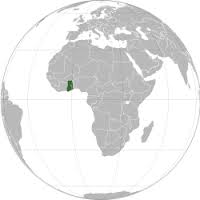
Ghana’s Educational System Lacks Substance – Rawlings said

Africa/Ghana/May 2016/Autor:  Evans Osei Boakye/ Fuente: allafrica.com

Resumen:  El ex presidente Jerry John Rawlings ha descrito el sistema educativo en Ghana como carente de sustancia y esencia. Dijo que en un momento cuando el país se vio inundado con tantas universidades se ha reducido de la calidad de la educación, produciendo graduados superficiales cada año.

Former President Jerry John Rawlings has described the educational system in Ghana as lacking substance and essence.

He said at a time when the country was inundated with so many universities the quality of education has dwindled churning out superficial graduates every year.

Mr Rawlings said although the educational system in the country had transformed over the years the standard had fallen with graduates becoming a liability to the economy.

This he explained was due to the fact that students lack the political will to utilise and implement what they learn in school.

Speaking at a meeting with Cuba trained Ghanaian professionals who paid a courtesy call on him at his office in Accra on Tuesday, Mr Rawlings said Cuba was a shining example when it comes to education especially in their efforts at training medical doctors and other professionals throughout the world.

The wife of the former president, Nana Konadu Agyeman Rawlings contributing to the discussions said the personal relationship that existed between her husband and former Prime Minister of Cuba, Fidel Casto made it possible for the creation of Cuban scholarship scheme which enabled needy but brilliant Ghanaian students to be trained in Cuba.

She explained although the economy was in bad shape without an IMF and World Bank support former president Rawlings initiated and sustained the scholarship programme.

Mr Kofi Asafo Agyei , President of the Association of Cuban trained graduates in Ghana said the need to pay attention to the country’s human resource development cannot be overemphasized that is why he and his colleagues came back to Ghana to contribute their quota to national development.

He said it was only appropriate to pay a courtesy call on the former president for the bold and courageous decisions he took to send hundreds of brilliant needy Ghanaians students to Cuba on scholarship despite the criticisms and misconceptions about the programme by sections of the population.

He pointed out that former president Rawlings had exemplified visionary leadership by taking a bold decision to ensure that foreign scholarship projects could serve as a catalyst for rapid development especially for a developing country like Ghana.

He said «although it was an unpopular decision in 1983 to send some 609 young Ghanaian students to Cuba, he had envisioned the human resource needs of the country, many years down the line and made a strategic move, very few could comprehend back then.»

On behalf of his colleagues Mr Asafo Agyei expressed gratitude to former president Rawlings and the people of Ghana for the scholarship opportunity and encouraged subsequent governments to continue it.

Portions of the citations read «On behalf of all those whose lives you have touched, directly and indirectly, over the past several decades, through the Cuban Scholarship Project, we the members of the Cuban Trained Ghanaian Graduates Association (ESBECANS) would like to say a big thank you to you for making such a monumental difference in our lives.»

Fuente de la noticia: http://allafrica.com/stories/201605261169.html

Fuente de la imagen: https://www.google.co.ve/search?q=universidades+ghana&source=lnms&tbm=isch&sa=X&ved=0ahUKEwib1ZCk8__MAhVEqB4KHTEABT8Q_AUIBygB&biw=1280&bih=937

Comparte este contenido:

Africa: PS Bujong Recursos y Apoyo para la ejecución del Proyecto de Aula


EL 29 DE ABRIL DE 2016.

Resumen: El costo de un proyecto de tres aulas en el Presbyterian School Bujong, un pueblo Bamendakwe ha saturado el PTA, administración de la escuela, la parroquia y los cristianos de esa congregación monocilíndrico han tomado la iniciativa de para  abiertamente por el apoyo de los ex alumnos de las escuelas, el público en general y las personas de buena voluntad. Bajo la guía del párroco, el reverendo Titatang Kingsley, la Asociación de Maestros y Padres, algunas personas de buena voluntad y los cristianos de la congregación, el puerto ze pasar unos 3 millon FRS para la construcción de las tres aulas estándar, dos o welke son JSON convertible de una sala adecuada, asi como  el proceso de techado, sumando el bajo  recursos para ello .expresan que: «Nos hemos llevado nuestros cristianos, los padres y algunos benefactores locales a la medida para alcanzar este nivel, el proyecto aún sigue buscando en nosotros. Esta es una comunidad pobre y hay un límite de distancia y puede salir adelante  «el Rev. Titatang Kingsley dijo a este reportero.  «Por eso estamos ampliando nuestro llamado  a todos, las hijas de este pueblo y ex alumnos de la escuela». El trabajo todavía está presente y fuerte existen pendientes en el sitio de la cubierta incluye, blanqueado, y techos, suelos, puertas y ventanas  las estructuras y, posteriormente, los bancos, mesas y sillas escolares, se estima un 40% de avance y aceptará cualquier ayuda en forma de dinero en efectivo, materiales y mano de obra.


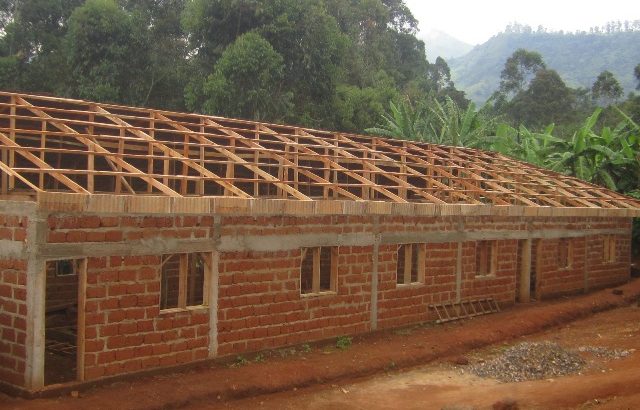
A partial view of the three classrooms under construction

The cost of a three classroom project at Presbyterian School Bujong, Bamendakwe village has overwhelmed the PTA, school administration, parish and Christians of that congregation causing them to openly appeal for support from former pupils of the schools, the general public and people of good will.

Under the guide of the parish pastor, the Rev. Titatang kingsley, the Parents Teacher Association, some people of goodwill and Christians of the congregation, they have spend over 3 millon frs to construct the three standard classrooms, two of which are convertible into a multipurpose hall, from the foundation to the roof level, and have even started the roofing process when they run short of resources.

“We’ve pushed our Christians, parents and some local benefactors to far to reach this level, yet the project is still looking at us. This is a poor community and there is a limit to how far you can push them” the Rev. Titatang Kingsley told this reporter.

“That is why we are extending our appeal to all and in particular, sons and daughters of this village and former pupils of the school” he added.

Work still pending at the site includes the roofing, plastering, fitting of knockings and ceilings, the floors, windows and doors and putting up of black back and subsequently the benches, tables and chairs. They school authorities believe the work is about 40% completed and will accept any assistance in the form of cash, material and labour.

internal view of the classroom

Old classrooms still in use[/caption]

PS Bujong currently has 427 pupils enrolled

According to Mrs Tanue Esther Abe, the head teacher of the school who also doubles as chairperson of PC Ntenefor and the Bujung Congregation, PS Bujong started in 1964 as an annex to PS Bamendakwe, today the school has an enrollment of 427 pupils, the biggest in the managerial area and second only to GS Army Camp Up Station in Bamenda I Council Area. The school has a total of 10 teachers and also operates a nursery section. PS Bujong has passed out thousands of pupils over the years including a majority of the elites of Bamendakwe village.

Beside this, the congregation has its hands full with another project, the construction of a church house at PC Ntenefor. Here, the dwindling mission station is in dire need of a Sheppard to guide them and lead the way forward.

The Rev. Titatang Kingsley said they have already raised the sum of 1.2 million Frs that would be used to construct a church house with a capacity of 1500 places to replace the old church that is already to small. They have already started with the laying of foundation blocks and intend to raise some 40 pillars that would hold the structure and the roof for gradual completion of the work. The church would be constructed on a piece of land recently acquired, close to the old church.

PC Ntenefor in need of a bigger structure


sand, stones and gravel to be used to construct the foundation of the new church at Ntenefor

But the Rev. Titatang says all has not been rosy for them. As soon as they excavated the land, an imposter appeared from abroad, claiming that the land belongs to him and causing the administration to place an injunction on any construction work on the piece of land. This however has been sorted out, with the imposter backing down.


Fuente http://bamendaonline.net/blog/p-s-bujong-appeals-for-support-to-complete-classroom-project/


Comparte este contenido:

South Africa: Youth encouraged to equip themselves with education

África/Sudáfrica/29 Mayo 2016/Fuente y Autor: Sanews

Resumen: El viceministro de la Presidencia, Buti Manamela, dice que la gente joven debe tener las calificaciones necesarias para aumentar sus posibilidades de conseguir un trabajo decente y contribuir de manera significativa al desarrollo del país.

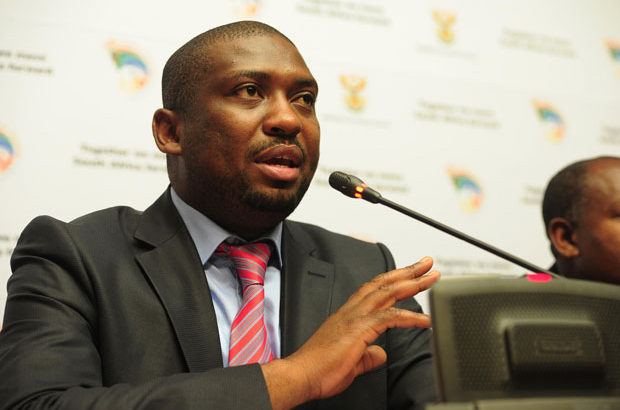
Pretoria — Deputy Minister in the Presidency, Buti Manamela, says young people must get the necessary qualifications to increase their chances of getting decent jobs and contributing meaningfully to the development of the country.

«Our country needs more qualified financial executives, auditors and other specialised professionals with an accounting background,» he said.

Addressing the KwaZulu-Natal Association for the Advancement of Black Accountants of Southern Africa’s Annual Gala Dinner in KwaZulu-Natal, Deputy Minister Manamela said South Africa is facing numerous challenges that require thinking out of the box and finding lasting solutions — particularly in relation to economic growth, inequality and unemployment.

«Your skills are needed to ensure that organisations are well managed and also contribute to better management of the country-level and global-level financial systems.

«We need financial strategists, problem solvers and activists who will turn around situations where they work and make a difference to our society at large. We also need you to unleash your entrepreneurial skills, to start innovating and contributing to job creation and the rebuilding of the economy,» he said.

Deputy Minister Manamela said there is a need to improve education within communities.

«We need to move beyond just basic literacy, which is the ability to read and write, to ensuring that our people get substantive training that will provide them with the right skills needed by the economy.»

He said government’s investment in technical and vocational training colleges is one of initiatives that seek to find alternative routes for people who might not have the requisite capabilities and resources to pursue university academic training.

«I hope and believe that you as professional accountants will share your skills with those people in areas like numeracy, basics of accounting and finance in order for them to manage their own lives and businesses better,» he said.

Fuente de la noticia: http://www.sanews.gov.za/south-africa/youth-encouraged-equip-themselves-education

Fuente de la imagen: http://citizen.co.za/wp-content/uploads/sites/18/2014/09/15286142092_f2235bbdc6_o.jpg?872c1b

Comparte este contenido:

Egipto: El puñal de Tutankamón vino del espacio

África/Egipto/29 Mayo 2016/Fuente: ABC /Autor:ÁNGEL GÓMEZ FUENTES

El hierro de la hoja fue confeccionado con un meteorito. Lo confirma un estudio científico ítalo-egipcio, que ha utilizado la técnica de la fluorescencia a rayos X

Tutankamón sigue sorprendiendo a los amantes de la egiptología. Ahora se desvela el misterio del origen de uno de los dos puñales encontrados junto a la momia del faraón: El hierro de la hoja llegó del espacio, es decir, pertenece a uno de los numerosos meteoritos caídos en el desierto egipcio, que aún hoy es fácil recoger. En cierta forma, ya lo sabían los antiguos egipcios y lo habían escrito: Un antiguo papiro cuenta de «un hierro llovido del cielo». A esta conclusión ha llegado un grupo de científicos de Italia y Egipto, mediante análisis químico no invasivo, utilizando la técnica de la fluorescencia a rayos X, confirmando la composición del hierro en porcentajes distintos de níquel y cobalto.

Desde el descubrimiento de su tumba, en noviembre 1922, por los ingleses Howard Carter y Lord Carnarvon, comenzó el debate sobre la naturaleza de los materiales de uno de los dos puñales situados sobre el cuerpo de Tutankamón, que reinó nueve años, desde el 1336 a 1327 a. C.

El hierro, más preciado que el oro

Había una clara justificación para abrir ese debate: «Los objetos egipcios de hierro eran poquísimos. No habían desarrollado la metalurgia del hierro y no tenían minas. Por ello estaba considerado más preciado que el oro», explica Francesco Porcelli, profesor de Física del Politécnico de Turín, cuyo Museo Egipcio está considerado, por valor y cantidad de restos arqueológicos, el más importante del mundo después del museo del Cairo.

Desde el primer momento sorprendió también la elevada calidad de la manufactura de la hoja del puñal, lo que reflejaba la capacidad en la elaboración del hierro que se había alcanzado en la época de Tutankamón.

Este puñal del faraón siempre despertó la curiosidad de los investigadores, porque incluso los detalles de su descubrimiento demostraban que era un objeto precioso: Mide 35 centímetros y no estaba oxidado cuando fue encontrado escondido entre los vendajes de la momia del faraón, para prepararse al encuentro con el más allá.

«Crater lunar» en el desierto egipcio

La teoría del meteorito, ahora confirmada, no es nueva. Había expertos que sostenían hace tiempo que el hierro procedía de un meteorito, mientras otros pensaban que había sido importado: En Anatolia, llamada también Asia Menor (Turquía) existía el hierro en la época de Tutankamón, en el siglo XIV a. C. Un hecho determinó el desarrollo de la historia que confirma la procedencia espacial del hierro del puñal: En el año 2010 se descubrió en medio del desierto egipcio el Kamil Crater, que consiste en un pequeño «cráter lunar», rarísimo en nuestro planeta, ya que normalmente la erosión cancela las señales de los impactos de meteoritos.

En aquella expedición participaron, entre otros científicos, expertos italianos de Pisa y del observatorio astronómico de Pino Torinese. «Cuando fue descubierto el cráter, hablamos del enigma nunca resuelto del puñal encontrado sobre la momia del joven faraón. Decidimos entonces hacer el análisis, superando las resistencias de las autoridades egipcias, que justamente custodiaban celosamente los hallazgos», explica Francesco Porcelli, en declaraciones recogidas por el periódico La Stampa.

Segura procedencia espacial

Este profesor de Física aclara cómo han llegado a establecer que se trata de un metal procedente del espacio teniendo en cuenta su composición, pues el hierro del puñal contiene níquel al 10 por 100 y cobalto al 0,6 %: «Son las concentraciones típicas de los meteoritos. Pensar que pueda ser fruto de una aleación, en estas concentraciones, es imposible», subraya el físico Porcelli, quien ha sido precisamente el estudioso que ha encabezado el proyecto iniciado en el 2014, en el que han participado, con financiación italiana y egipcia, expertos en meteoritos de la Universidad de Pisa, científicos del Politécnico de Milán y de Turín, el CNR (Consejo Nacional de las Investigaciones) y la empresa XGLab; por parte egipcia, el Museo del Cairo y la Universidad de Fayoum. Detalles del estudio aparecen en un artículo publicado en la revista «Meteoritics and Planetary Science».

En definitiva, ahora se puede poner fin a la controversia que mantenían los expertos sobre el preciado puñal, desde que se abrió el sarcófago de Tutankamón custodiado en el Valle de los Reyes. Pero seguirán abiertos otros misterios y supersticiones ligadas a Tutankamón, entre ellas la maldición que habría caído a quien profanara su tumba. Quizás algún día venga también del espacio la solución a algunos de esos misterios que rodean al faraón muerto a los 18 años.


Fuente de la noticia: http://www.abc.es/cultura/abci-punal-tutankamon-vino-espacio-201605271431_noticia.html

Fuente de la imagen:http://www.abc.es/media/cultura/2016/05/27/punal-tutankamon-2–620×349.jpg

Comparte este contenido:

Malawi: Sanitary facilities for improved education amongst girls

África/Malawi/29 Mayo 2016/Fuente:Nyasatimes/Autora: Diana Kalanda

Resumen: Como una manera de prevenir el número de niñas que abandonan la escuela debido a los ciclos mensuales, el programa de igualdad de género y potenciación de género (Gewe) ha logrado construir más de diez instalaciones sanitarias en Mangochi .

As one way of preventing the number of girls dropping out of school due to monthly circles, the Gender Equality and Women Empowerment programme (GEWE) has managed to build over ten sanitary facilities in Mangochi alone.

Kafumbata stands in front of one of the sanitary facilities built by Gewe project.

With funding from European Union, the sanitary facilities, have improved the enrolment of girls by over 10 percent.

During a field tour to the district, the headmaster for St Ignacio Primary School, Felix Kafumbata said girls enrolment has moved from 400 to 670, making an increase of 270 girls.

«Since the programme started in 2013, that’s how many girls have managed to stay in school in T/A Bwana Nyambi alone. In addition we have also had a significant number of girls who have retained after falling pregnant,» he said.

According to Kafumbata, during the time when a girls is menstruating, that the time most girls absent themselves from school.

He further said in a term, girls are absent from school for at least 28 days excluding normal absenteeism.

«So if one puts all the days together, you will see that its many days. This in the end becomes difficult for the girls to catch up and they end up quitting school. But with the sanitary facilities, these girls are able to help themselves without feeling shy because the way the toilets can carry three people privately,» he said.

GEWE project was being spearheaded by ministry of gender, children, disability and social welfare in conjunction with UNFPA.

The project came to an end on 18th May after three years of running.

Fuente de la noticia: http://www.nyasatimes.com/sanitary-facilities-for-improved-education-amongst-girls/

Fuente de la imagen:http://www.nyasatimes.com/wp-content/uploads/Kafumbata-stands-in-front-of-one-of-the-sanitary-facilities-built-by-Gewe-project.-600×338.jpe

Comparte este contenido:
Page 543 of 622
1 541 542 543 544 545 622