Page 146 of 396
1 144 145 146 147 148 396

Striking Teachers Beat Back Neoliberalism’s War on Public Schools

Dr. Henry Giroux

Thousands of teachers and students are walking out of schools, marching in the streets, and raising their hands and signs in protest against the war on education. Most recently, South Carolina has joined the wave of teachers’ protests and strikes taking place across the nation. In the age of illiberal democracy and the growing fascism of the Trump administration, the unimaginable has once again become imaginable as teachers inspired and energized by a dynamic willingness to fight for their rights and the rights of their students are exercising bold expressions of political power. The power of collective resistance is being mounted in full force against a neoliberal logic that unabashedly insists that the rule of the market is more important than the needs of teachers, students, young people, the poor and those deemed disposable by those with power in our society. Teachers are tired of being relentless victims of a casino capitalism in which they and their students are treated with little respect, dignity and value. They have had enough with corrupt politicians, hedge fund managers and civically illiterate pundits seduced by the power of the corporate and political demagogues who are waging a war on critical teaching, critical pedagogy and the creativity and autonomy of classroom teachers.

Since the 1980s, an extreme form of capitalism — or what in the current moment I want to call neoliberal fascism — has waged a war against public education and all vestiges of the common good and social contract. In addition, this is a war rooted in class and gender discrimination — one that deskills teachers, exploits their labor and bears down particularly hard on women, who make up a dominant segment of the teaching force. In doing so, it not only undermines schooling as a public good, but also weaponizes and weakens the formative cultures, values and social relations that enable schools to create the conditions for students to become critical and engaged citizens.

Schools have been underfunded, increasingly privatized and turned into testing factories that deliver poor students of color to the violence of the school-to-prison pipeline. Moreover, they have also been restructured in order to weaken unions, subject teachers to horrendous working conditions and expose students to overcrowded classrooms. In some cases, the dire working environment and dilapidated conditions of schools and classrooms appear incomprehensible in the richest nation in the world. For instance, as South Carolina teachers go on strike, Hiram Lee reports:

The average salary stands at $10,000 below the national average, while the minimum starting salary is only $30,113 a year…. Working conditions are extremely poor. [In one instance] raw sewage mixed with worms and insects flowed into the hallways of Ridgeland Elementary in Jasper County, where it was tracked into classrooms by students. In other schools, holes in the floors of some classrooms allowed students to see into the classrooms below them. Teachers used old rags and sandbags to prevent a flood of rainwater coming in through cracks in the walls. Libraries were filled with shockingly few books, and those on hand were so outdated that one teacher recalled finding a book that predicted, «One day man will land on the moon.»

What the South Carolina mobilization and the other teacher walkouts across the nation suggest is that these expressions of collective resistance are about both the survival of democracy in Trump’s America and a challenge to the commanding institutions and organizing ideals and principles that make it possible.

The Reclamation of Education as a Public Good

Fortunately, teachers, students, progressive social movements and others are rising up, refusing to be written out of the script of a potentially radical democracy.

Yet, what has often been lost on those who have courageously charted this growing assault on democracy is perhaps its most debilitating legacy: the long-standing and mutually reinforcing attacks on both public education and young people. Such attacks are not new; rather, they have simply intensified under the Trump administration. As a war culture has started organizing all aspects of society, schools have transformed into zones of economic and political abandonment. Increasingly modeled after prisons, schools have become subject to pedagogies of oppression and purged of the experiences, values and creativity necessary for students to expand and deepen their knowledge, values and imagination. Moreover, as state and corporate violence engulfs the entire society, schools have been subject to forms of extreme violence that in the past existed exclusively outside of their doors. Under such circumstances, youth are increasingly viewed as suspects and are targeted both by a gun culture that places profits above student lives and by a neoliberal machinery of cruelty, misery and violence dedicated to widespread educational failure. Instead of imbibing students with a sense of ethical and social responsibility while preparing them for a life of social and economic mobility, public schools have been converted into high-tech security spheres whose defining principles are fear, uncertainty and anxiety. In this view, a corporate vision of the US has reduced the culture of schooling to the culture of business and an armed camp, and in doing so, imposed a real and symbolic threat of violence on schools, teachers and students. As such, thinking has become the enemy of freedom, and profits have become more important than human lives.

Today’s teachers and students are facing not only a crisis of schooling but also a crisis of education.

Public schools are at the center of the manufactured breakdown of the fabric of everyday life. They are under attack not because they are failing, but because they are public — a reminder of the centrality of the role they play in making good on the claim that critically literate citizens are indispensable to a vibrant democracy. Moreover, they symbolize the centrality of education as a right and public good whose mission is to enable young people to exercise those modes of leadership and governance in which «they can become fully free to claim their moral and political agency.»

Rejecting the idea that education is a commodity to be bought and sold, teachers and students across the country are reclaiming education as a public good and a human right, a protective space that should be free of violence, and open to critical teaching and learning. Not only is it a place to think, engage in critical dialogue, encourage human potential and contribute to the vibrancy of a democratic polity, it is also a place in which the social flourishes, in that students and teachers learn to think and act together.

Under the current era of neoliberal fascism, education is especially dangerous when it does the bridging work between schools and the wider society, between the self and others, and allows students to translate private troubles into broader systemic considerations. Schools are dangerous because they exemplify Richard J. Bernstein’s idea in The Abuse of Evil that «democracy is ‘a way of life,’ an ethical ideal that demands active and constant attention. And if we fail to work at creating and re-creating democracy, there is no guarantee that it will survive.»

How the Current Crisis in Education Emerged

Insisting on the right to teach, the right to learn and the right to view schools as a valued public good historically have been radical acts. How did we get to this present moment? Under the regime of neoliberalism, deindustrialization, the tax revolt of the 1970s, and the increasing attack on the social contract and welfare state imposed new burdens on public education at the end of the 20th and the beginning of the 21st centuries.

Schools were increasingly underfunded as inner cities descended into poverty, class sizes increased, poor students dropped out, and schools became more segregated by class and race. Teachers were increasingly deskilled and lost control over the conditions of their labor as lifeless accountability schemes and mind-numbing testing regimes were passed off as reform initiatives under the Bush, Clinton and Obama administrations.

Once the teachers realized that the terrible conditions under which they worked were commonplace they were ready to act regardless of whether they had the support of their unions.

These reforms, while allegedly appealing to educational ideals, especially the assumption that they would help economically underprivileged students, did just the opposite and turned schools largely into imagination-crushing citadels of boredom and conformity. President Bush’s educational policy, the No Child Left Behind Act of 2001, which did a great deal to leave many children behind, was followed by Obama’s policy titled Race to the Top. Unfortunately, Obama simply provided more of the same dead-end approaches to education that had damaged public education for decades.

What is different under the Trump administration is that today’s teachers and students are facing not only a crisis of schooling but also a crisis of education. Trump is upfront in stating without apology that he loves both the uneducated and being uneducated. Not only does he disparage any display of critical intelligence — whether in the critical media, courts or online culture — he has made it clear with his education secretary choice, Betsy DeVos, the billionaire and utterly clueless charter school advocate, that he holds the very notion of public education as a crucial democratic public sphere in low regard.

In a meeting with 2018 teachers of the year, DeVos stuck to her anti-public school, anti-teacher script by stating that she hoped that teachers «would take their disagreements and solve them not at the expense of kids and their opportunity to go to school and learn.» In part, this is code for a broader narrative in which conservatives and liberals for years have been blaming teachers exclusively for students who drop out of school, end up in the criminal legal system, perform poorly academically and distrust authority, among other issues. As if such failures are entirely the fault of teachers, regardless of the defunding of schools, the rise of overcrowded classrooms, the increase in widespread poverty, the starving of the public sector, accelerated attacks on public servants, the transformation of cities into ghost towns, the smashing of teacher unions and the creation of labor conditions for teachers that are nothing short of deplorable. No surprises here. DeVos appears to have a penchant for reaching for the low-hanging rhetorical fruit when it comes to commenting on public schools, teachers and students.

The ideological assault against public schools, teachers and students is now in full force thanks to an alliance among big corporations, billionaires such as the Koch brothers, conservative foundations, business lobbying groups such as the American Legislative Exchange Council (ALEC) and the Trump administration. This alliance seeks to privatize public schools, increase tax breaks for the rich (depriving schools of essential revenue), substitute privately run charter schools for public schools, support voucher programs, cut public services, endorse online instruction and redefine public schools around issues of safety and security, further situating them as armed camps and extensions of the criminal legal system. The question here is why corporations, politicians, hedge fund managers and a horde of billionaires want to destroy public education and inflict irreparable harm on millions of children.

Gordon Lafer, a professor at the University of Oregon, has argued in his book, The One Percent Solution: How Corporations Are Remaking America One State at a Time that the US is a country in decline, characterized by a rise in economic inequality, families unable to support themselves, increased hardships for workers, the decline of social provisions, the evisceration of public goods, restricted voter rights, lowered employment standards, an ongoing attack on social safety nets and a dwindling middle-class. Lafer believes that the war on schools is rooted in a terrifying set of neoliberal policies and that big business is determined to dismantle public education. He argues that

big corporations are … worried … about how to protect themselves from the masses as they engineer rising economic inequality [and] they try to avoid a populist backlash … by lowering everybody’s expectations of what we have a right to demand as citizens…. When you think about what Americans think we have a right to, just by living here, it’s really pretty little. Most people don’t think you have a right to healthcare or a house. You don’t necessarily have a right to food and water. But people think you have a right to have your kids get a decent education.

Teachers Fight Back

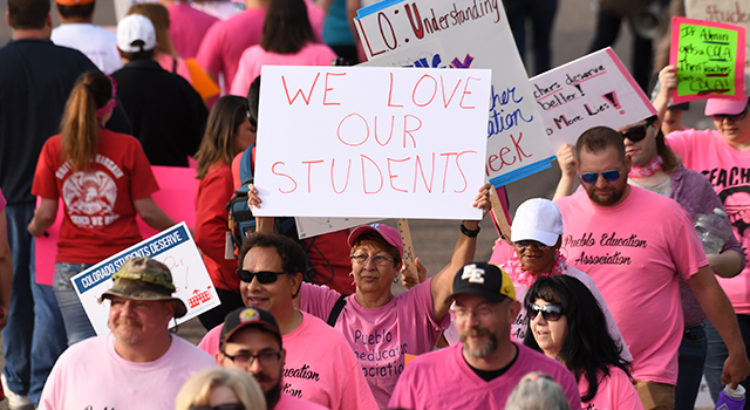
Against the current frontal assault on public education and the rights of teachers and students, a new wave of opposition has developed around the nation’s schools that has provoked the public imagination and mobilized mass numbers of students, educators and the public at large. Teachers have been walking out, striking and demonstrating in states across the country. From the initial strike in West Virginia to demonstrations in Colorado, Kentucky, Arizona and North Carolina, and potentially other states including Louisiana, Nevada and South Carolina, teachers are protesting not only low salaries, but also related issues such as, school defunding (prompted by regressive tax measures designed to benefit the rich and corporations), overcrowded classrooms and rising health premiums.

The successful West Virginia strike was especially notable, Kate Aronoff argues, because it was one of the biggest «work actions in recent U.S. history, rebuffing austerity and, at points, even the wishes of their union leaders.» Teachers in West Virginia were under increasing attack by a GOP-controlled legislature and their Republican governor, billionaire coal baron Jim Justice, who colluded to force teachers to pay increasingly higher premiums for their health care, put up with large classes, and endure what Lynn Parramore has described as «increasingly unlivable conditions — including attempts to force them to record private details of their health daily on a wellness app … [while allowing] them no more than an annual 1% raise — effectively a pay cut considering inflation — in a state where teacher salaries ranked 48th lowest out of 50 states.»  At the end of a nine-day strike, they negotiated a 5 percent pay increase from the state.

Similar strikes followed in Oklahoma, Kentucky, Arizona and beyond. While all of these strikes addressed issues specific to their states, they shared a number of issues that revealed a broader attempt to undermine public education. In all of these states, teachers made paltry wages «nearly $13,077 below the nationwide average of $58,353 and well below the nationwide high of New York at $79,152.» Many teachers had to work two or three extra jobs simply to be able to survive. In a number of cases, their pension plans were being weakened. Growing pay inequities stretch across two decades for most teachers as they «are contributing more and more toward health care and retirement costs as their pay falls further behind. Teacher pay (accounting for inflation) actually fell by $30 per week from 1996 to 2015, while pay for other college graduates increased by $124.»

There is a direct line between spending cuts for schools and a decrease in taxes for the rich and big corporations. In Oklahoma, taxes had not been raised since 1990, and in 2010 the Republican governor passed «huge breaks for the oil and gas companies» and in 2015 reduced the tax rate to 2 percent with the «cost to the state … estimated at $300 to $400 million per year.» Schools were shockingly underfunded and the consequences for both teachers and students have been devastating. Eric Blanc observes that:

Since 2008, per-pupil instructional funding has been cut by 28 percent — by far the worst reduction in the whole country. As a result, a fifth of Oklahoma’s school districts have been forced to reduce the school week to four days. Textbooks are scarce and scandalously out of date. Innumerable arts, languages, and sports courses or programs have been eliminated. Class sizes are enormous…. Many of Oklahoma’s 695,000 students are obliged to sit on the floor in class.

Meanwhile, Mike Elk reports that the Oklahoma Education Association released a statement saying: «Over a decade of neglect by the legislature has given our students broken chairs in classrooms, outdated textbooks that are duct-taped together, four-day school weeks, classes that have exploded in size and teachers who have been forced to donate plasma, work multiple jobs and go to food pantries to provide for their families.»

All of the states engaged in wildcat strikes, demonstrations and protests have been subject to similar toxic austerity measures that have come to characterize a neoliberal economy. Once the teachers realized that the terrible conditions under which they worked were commonplace in other schools and states and that many other teachers had reached a boiling point, they were ready to act regardless of whether they had the support of their unions. This was another important thread running through demonstrations. The strikes were not initiated by the leadership in the unions, and when they did act, they were too slow to be consequential. As working conditions for teachers deteriorated and the assault on public schools reached fever pitch, teachers bypassed their unions while using social media to speak to other teachers, communicate across national boundaries and educate a wider public.

The striking teachers hopefully will make clear that there is no contradiction between the struggle for quality public schools and fighting other injustices.

In spite of a number of attacks by conservative politicians such as Kentucky Gov. Matt Bevin, who stated that teachers were displaying «a thug mentality,» the striking teachers gained broad popular support. It is hard to miss the irony here of the neoliberal apostles of austerity labeling teachers as losers, given that many teachers have extra jobs to support themselves and use their own money to provide books, basic resources and in some cases, even toilet paper for their students. Recent findings by the National Center of Educational Statistics show that 94 percent of teachers pay out of their own pockets for school supplies — such as notebooks, pens and paper — which amounts on average to $480 annually. The real losers are the politicians who defund public schools, deskill teachers, force students to put up with repressive test-taking pedagogies «while whittling away at [teacher] salaries, supplies, tenure arrangements, and other union protections … lengthening teaching hours, [and] reducing vital prep periods.» This is a neoliberal script for the social abandonment of public goods, the termination of the democratic ethos and the precondition for the rise of an American version of fascism. What is particularly promising about these widespread protest movements is that they have the potential to move public consciousness toward a wide-ranging recognition in which the assaults on public schooling will be understood as part of a larger war on schools, on youth, and on the very possibility of teaching and learning, and that these struggles cannot be separated.

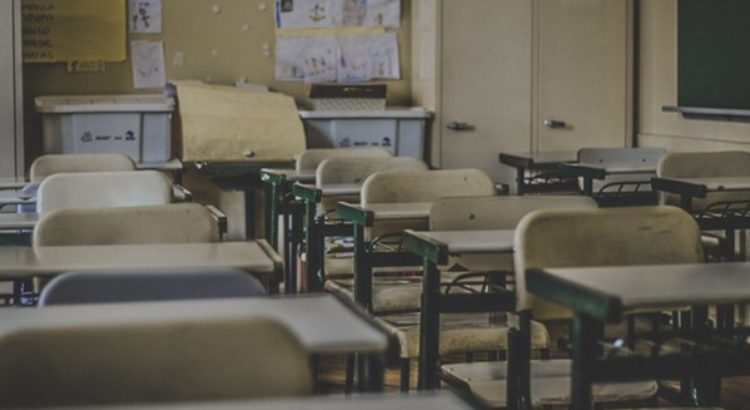
The use of the social media by the teachers was particularly effective in getting their message out. Individual teachers talked publicly about having to donate blood, visit food pantries and teach with textbooks that were 10 years old. Images of broken chairs and desks, along with rodents infesting classrooms, and students complaining about books that were held together with tape offered a compelling visual archive of not only dilapidated schools, impoverished classrooms and overburdened students, but also a political system in which Republican governors and legislators were willing to implement economic policies that slashed the taxes of the rich and big corporations at the expense of public schools, teachers and students.

Arizona is another case in point: Not only does it have abysmal teacher pay, it is also a state that lacks collective bargaining rights. Debbie Weingarten offers a succinct summary of the effects of budget cuts on Arizona schools, teachers and students:

During the Recession, the Arizona state legislature cut $1.5 million from public schools, more than any other state, leaving Arizona schools more than $1 billion short of 2008 funding…. Arizona currently ranks 49th in the country for high school teacher pay and 50th for elementary school teacher pay. When adjusted for inflation, teacher wages have declined more than 10 percent since 2001. Per-student spending in Arizona amounts to $7,205, compared with the national average of $11,392. There are currently 3,400 classrooms in Arizona without trained or certified teachers, and the state has over 2,000 teacher vacancies.

Arizona teachers ended their strike after a six-day walkout, and while they did not get everything they demanded, the state gave them a «20 percent raise by 2020 and investing an additional $138 million in schools.» Most importantly, the Arizona teacher strike — along with other strikes and teacher walkouts — proved not only the power of organized labor prompted by the radical initiatives of teachers willing to fight for their rights even if the unions do not support them, but also the growing support of a public unwilling to allow neoliberal fascism destroy all vestiges of the public good, especially schools. As Jane McAlevey observes:

Remarkably, these strikes have garnered overwhelming support from the public, despite years of well-funded attacks on teachers’ unions. In a recent NPR/Ipsos poll, just one in four respondents said they think teachers are paid enough, and three-quarters said teachers have the right to strike. Remarkably, this support cut across party lines. «Two thirds of Republicans, three-quarters of independents and nearly 9 in 10 Democrats» support the teachers’ right to strike, the poll showed.

Protests against the gutting of teacher salaries, pensions and health care benefits are not simply about school budgets. They are also about a larger politics in which big corporations and the financial elite have waged a war on democracy and instituted polices that produce a massive redistribution of wealth upward into the hands of the ruling elite. Energized young people and teachers are creating a new optics for both change and the future.

A Mass Movement to Resist Neoliberalism

The teacher strikes and walkouts point to a grassroots movement that will no longer allow the apostles of neoliberalism, the Republican and Democratic parties, and the financial elite to ruthlessly take apart public education. Implicit in the current walkouts and strikes is the necessity of such groups to learn from each other, share power and work to create a mass-based social movement. This type of social formation is all the more crucial given that no one movement or group organized around singular issues can defeat the prevailing concentrated economic and political forces of casino capitalism. Given the public support the striking teachers have received, it is crucial that such a struggle connect the struggle over schools to a broader struggle that appeals to parents who still view public schooling as one of the few avenues their children have for economic and social mobility. At the same time, it is crucial for the striking teachers to make the case to a larger public that without a quality and accessible public education system, the protective and crucial public spaces provided by a real democracy are endangered and could be lost.

Teachers, young people and others are creating both a new and potentially radical language for politics and educational reform. Given the authoritarian times in which we live, this language is desperately needed by a society facing an impending crisis of memory, agency and democracy. If American society is to offset the deeply anti-democratic populist revolt that has put a fascist government in power in the United States, progressives and others need a new language that connects the crisis of schooling to the crisis of democracy while at the same time rejecting the equation of capitalism and democracy. The attack on public schooling is symptomatic of a more profound crisis that involves the extension of market principles to every facet of power, culture and everyday life. Public schooling is under siege along with the values and social relations that give viable meaning to the common good, economic justice and democracy itself.

Striking teachers have recognized that any radical call for educational reform demands more than a call for salary increases, adequate pensions and school resources. Demands for radical educational reforms also necessitate what Martin Luther King Jr. once called a «revolution of values.»

This would suggest a radical reworking of the language of freedom, autonomy, equality and justice that refused to be articulated with the neoliberal spheres of privatization, consumer culture, deregulation, and a politics of terminal exclusion, disposability and the acceleration of the unwanted. Schools can no longer be viewed as zones of political, economic and social abandonment. The striking teachers across the nation are making clear that everyone has the right to live in both an educated society and a democracy, and that you cannot have one without the other. Hopefully, they can learn from past historical battles while leading the struggle to merge a number of different movements for a radical democracy. One option in doing so is to build support for what Michael Lerner has called developing a global Marshall Plan in order to redistribute wealth, build infrastructures, expand public goods, create the conditions for environmental responsibility, and eliminate the capitalist structural and economic conditions that prevent such movements, policies and investments from taking place.

The striking teachers hopefully will turn a moment into a movement, and in doing so, make clear that there is no contradiction between the struggle for quality public schools and fighting other injustices such as poverty, mass incarceration, unchecked inequality, massive student debt, systemic violence, escalating militarization of society and the war on the planet. Across the nation, teachers, students and other educators have demonstrated that democratic ideals, even under conditions of neoliberal tyranny and a dystopian mode of education, can be recognized, embraced and struggled over. Education is a symptom of a deeper, dangerous and more fundamental crisis that demands analyses and actions aimed at root causes. The brutal neoliberal fascism of the moment can only be defeated if teachers, young people and grassroots activists develop alliances and develop new topographies for addressing the root causes of the current brutal despotism and loss of faith in democratic institutions — that means a strong anti-capitalist movement.

The struggle over public education has ignited new modes of criticism that contain the potential to build a mass movement from the bottom up and translate single-issue demands into wider expectations for social change and alternative visions for a democratically socialist United States. Hopefully, this movement will continue to be guided by the kind of energy and insight that Ursula K. Le Guin once articulated: «We will not know our own injustice if we cannot imagine justice. We will not be free if we do not imagine freedom. We cannot demand that anyone try to attain justice and freedom who has not had a chance to imagine them as attainable.»

Source:

http://www.truth-out.org/news/item/44564-striking-teachers-beat-back-neoliberalism-s-war-on-public-schools
Comparte este contenido:

EEUU: Miles de maestros de Louisiana apoyan huelga estatal por mejor paga

América del Norte/EEUU/bestofneworleans
Más de 2,000 maestros de Louisiana dijeron que apoyarían una huelga estatal para mejorar su salario en respuesta a una encuesta reciente del sindicato de la Federación de Docentes de Louisiana (LFT).

En la encuesta de casi 4,000 educadores de primaria, secundaria y preparatoria, el 61 por ciento de los encuestados estuvieron a favor de una huelga estatal para protestar contra lo que describen como salarios estancados. Casi el 79 por ciento de los encuestados dijeron que no habían recibido un aumento salarial local (fuera de los aumentos de antigüedad en el «escalón salarial») en los últimos cinco años.Setenta y ocho por ciento dijeron que habían considerado abandonar la profesión debido al bajo salario.

«Lo que hemos aprendido es que los docentes quieren acción, y pronto, en un estado que ha congelado la financiación educativa en nueve de los últimos 10 años, y en el que el salario promedio de los docentes ha disminuido», dijo el presidente de LFT, Larry Carter, en un comunicado de prensa que acompaña a la encuesta.

El pago de los maestros se ha convertido en un punto de inflamación para organizar en los últimos meses, lo que ha resultado en varias demostraciones de alto perfil. En marzo, los maestros de West Virginia ganaron un aumento en respuesta a una huelga que duró casi dos semanas. Los maestros de Oklahoma se retiraron del trabajo para protestar contra el pago, las aulas con fondos insuficientes y una falta general de recursos.

De acuerdo con los materiales de prensa que acompañan la encuesta, los salarios de los maestros de Luisiana se han reducido a otros estados del sur ($ 49,745 durante 2015-2016, en comparación con $ 50,955 en el sur) y detrás del salario nacional docente, que es de $ 58,363.

Los encuestados apoyaron abrumadoramente una serie de medidas para presionar a las juntas escolares y a los legisladores para que aumenten sus salarios. La mayoría de los maestros apoyaron las peticiones a los legisladores de Baton Rouge y una demostración en el Capitolio. El cincuenta y nueve por ciento de los encuestados dijeron que apoyarían un pequeño aumento en el impuesto a la renta estatal para pagar los aumentos para sus colegas, y el 84 por ciento dijo que los fondos para aumentos salariales deberían provenir de fuentes estatales y locales.

Carter también pidió mejoras para pagar para paraprofesionales y otro personal de la escuela. Dijo que los líderes sindicales se reunirán este verano para discutir posibles acciones, que podrían incluir demostraciones dirigidas a juntas escolares y legisladores durante la sesión legislativa de 2019.

«Se puede esperar un nivel de activismo mucho más alto de lo que hemos visto en el pasado», dijo.

Fuente: https://www.bestofneworleans.com/thelatest/archives/2018/05/21/thousands-of-louisiana-teachers-support-statewide-strike-for-better-pay
Comparte este contenido:

EEUU: organizaciones piden a la Academia Nacional de Ciencias (NAS) que revoque las membresías otorgadas a personas sancionadas por acoso sexual

América del Norte/EEUU/the-scientist.com

Una petición en línea que solicita a la Academia Nacional de Ciencias (NAS) que revoque las membresías otorgadas a personas sancionadas por acoso sexual ha cosechado más de 250 firmas desde que se publicó el miércoles (1 de mayo). Publicado después de la reunión nacional de la organización, que finalizó el martes, la petición dice: «Al eliminar a estos individuos de la comunidad NAS, podemos comenzar a reparar [cualquier] daño causado por estos individuos, restaurar la comunidad NAS a un lugar de prestigio y reconocemos que podemos y seguiremos adelante con el compromiso de proporcionar entornos que fomenten el descubrimiento científico «.

En una declaración a The Scientist en respuesta a la petición , el vocero de NAS, William Kearney , escribe: «La Academia Nacional de Ciencias es extremadamente sensible a la gravedad del problema del género y el acoso sexual.. . . Si bien nunca aprobamos el acoso sexual, no existen disposiciones en los estatutos de NAS para rescindir la membresía por ningún motivo; las elecciones son de por vida «. 

El NAS es una organización sin fines de lucro encargada de asesorar al gobierno de los EE. UU. En asuntos científicos;también publica la revista PNAS. La membresía en la organización se considera un gran honor para los investigadores, con no más de 84 nuevos miembros elegidos cada año.

De acuerdo con una publicación de blog de un autor que lleva el nombre de pantalla «Fighty Squirrel» y cuyos detalles biográficos coinciden con los de BethAnn McLaughlin , una neurocientífica de la Universidad de Vanderbilt que inició la petición, «La Academia Nacional de Ciencias celebró su reunión anual esta semana . . . Una cosa fue notablemente ausente: una discusión sobre qué hacer con dos de los miembros más reconocidos de NAS: el neurocientífico Tom Jessel y el genetista del cáncer Inder Verma «.

La petición se produce a medida que otras organizaciones pasan a tener consecuencias profesionales exactas en las personas que han participado en acoso o agresión sexual.

Jessell fue removida de sus puestos en la Universidad de Columbia y el HHMI en marzo. Si bien la razón exacta de su despido no se ha divulgado, un periódico estudiantil informa que tuvo una relación con un miembro de su laboratorio. Verma fue puesto en licencia del Instituto Salk mes pasado como una investigación mira a acusaciones de acoso sexual que se remontan décadas.Su renuncia como editor en jefe de PNAS fue anunciada el miércoles.

La petición se produce a medida que otras organizaciones pasan a tener consecuencias profesionales exactas en las personas que han participado en acoso o agresión sexual. Ayer, por ejemplo, la Academia Nacional de las Artes y las Ciencias Cinematográficas (que otorga los Oscar)anunció que estaba expulsando a Bill Cosby y Roman Polanski. La Fundación Nacional de Ciencias de EE. UU. Y la Wellcome Trust del Reino Unido ahora requieren que las instituciones les informen si los beneficiarios han sido disciplinados por acoso.

Un tweet de una cuenta que parece ser de McLaughlin dice: «La Academia Nacional de Ciencias fue fundada para ser lo mejor de la ciencia de los EE. UU. Albergan a hombres que son culpables de acoso. Esta es una plaga en la ciencia y un mensaje terrible para los alumnos «. McLaughlin no respondió a las solicitudes de comentarios a partir de la publicación de este artículo.

Fuente: https://www.the-scientist.com/?articles.view/articleNo/52493/title/Petition-Asks-National-Academy-of-Sciences-to-Boot-Sexual-Harassers/

Comparte este contenido:

Estados Unidos: Es decisión de las escuelas reportar a indocumentados, dice la secretaria de educación

América del norte/Estados Unidos/24 Mayo 2018/Fuente: Chicago Tribune

La secretaria de Educación, Betsy DeVos, dijo que las comunidades locales decidirán sobre reportar o no a los estudiantes sin documentos legales con las autoridades.

Durante una audiencia en el Congreso, se le preguntó a DeVos si los maestros o directores deben notificar a las autoridades sobre algún estudiante sin documentos legales.

«Creo que es una decisión de la escuela, de la comunidad local», declaró.

«Tenemos leyes y también somos compasivos y le pido a este organismo que haga su trabajo y atienda el tema y clarifique donde hay confusión».

Pero Lorella Praeli, directora de política migratoria y campaña en la Unión Americana de Libertades Civiles, rechazó la afirmación.

A través de un comunicado Praeli dijo que una escuela que tome dichas medidas violaría las garantías que otorga la Constitución de proveer educación a todos los niños.

«Seamos claros. Cualquier escuela que reporte a un menor con ICE violaría la Constitución», dijo Praeli en referencia al Servicio de Control de Inmigración y Aduanas.

«La Corte Suprema ha dejado en claro que todo niño en Estados Unidos tiene derecho a la educación básica, sin importar su estatus migratorio», agregó.

Fuente: http://www.chicagotribune.com/g00/hoy/ct-hoy-es-decision-de-escuelas-reportar-a-indocumentados-dice-la-secretaria-de-educacion-betsy-devos-20180523-story.html?i10c.encReferrer=&i10c.ua=1&i10c.dv=14

Comparte este contenido:

EEUU: Students inspire hope for bright future

By Brandon Butler/ duboiscountyherald.com/ 23-05-2018

My first semester as an adjunct instructor ended last week. I taught a class I created called Communications in Natural Resources. It was an experience I’ll treasure forever. Over the course of 15 weeks, I came to realize if my students are a reflection of their generation, the future of our natural world is good hands.

I spend a lot of time talking and writing about topics relating to the outdoors, specifically fish and wildlife. Most of the time, I am not an expert on the subject. While I may know a little about a lot of things, it’s people who know a lot about one thing who communicators like me use as sources for stories. Unfortunately, too often, the expert sources are poor communicators. They possess incredible knowledge. Yet struggle to deliver what they know to the general public in a way that makes it relevant to the masses.

As a member of a Natural Resources Advisory Council, I have come to know and respect some of the challenges of higher education leadership. During a meeting last year, I was asked if I saw any opportunity to improve the curriculum. I suggested we do a better job of teaching these brilliant young minds how to tell their stories. I was empowered to create a curriculum and teach it.

To begin with, I examined beliefs I feel justified the need for this class. Number one being; no matter what your job is, communication is important. And the more prepared you are to offer input on the efforts of your work the more likely you are to build support for what it is you do and care about. Also, as far as personal advancement, if you become known as someone who can both complete the work and communicate the outcomes, you are much more valuable to the business, agency or organization you’re part of. Who would remember the revolutionary work of Aldo Leopold had he not written a “Sand County Almanac?”

I broke the course down into lessons about different communication platforms and had guest lecturers discuss their expertise. We covered magazine writing, letters to the editor and opinion pieces in newspapers, television and radio interviews, social media, websites, photography, public speaking and more.

Communication is critical in conservation, and not all citizens gather information in the same ways. Agencies have to communicate across the many different platforms from which the public consumes information. Through out the semester, guest speakers emphasized the importance of communications in all natural resource professions, the students listened and learned.

One great guest lecturer was my buddy Nathan McLeod who hosts a morning radio show. McLeod talked about how much he values natural resources and enjoys sharing messages of conservation with his listeners, but finds guests often struggle with the rapid fire pace of a radio interview. He wants guests on his show to talk conservation, but needs them to be fun and personable, and to talk in a way most people can relate to.

“Leave the rocket science at home,” McLeod said. “Give them the elevator speech. Quickly explain to listeners why this important and why they should care. Tell them how it impacts them personally.”

At the end of the class, students were paired into four groups with the assignment of building and implementing a communications plan around a natural resources topic of concern. The four topics they selected and worked on were: Open New State Parks, Reintroductions of Wildlife Species, Wildflowers in Urban Settings and The Effects of Climate Change on Wildlife. You can see the minds of tomorrow have their priorities.

I hope my students gained a better understanding of how important it is to communicate scientific knowledge in a way most citizens can understand. Our natural world faces incredible challenges requiring the support of the public to address and fix. Once these students are in professional roles, if I did my job, they will try a little harder to share their expertise.

See you down the trail…

*Fuente: https://duboiscountyherald.com/b/column-students-inspire-hope-for-bright-future

Comparte este contenido:

EEUU: Michigan’s floundering education system has left its children far behind

EEUU/May 22, 2018/Source: http://www.mlive.com

There’s no way around it: Michigan’s education system is floundering.

From early literacy to middle-school math, Michigan students are not keeping up with their peers in top-performing states.

Big changes are needed if Michigan wants to turn itself around, experts say.

«Michigan, if it thinks the status quo is going to be fine, we’ll have a race to the bottom, and we’re almost there right now,» said Grand Valley State University President Thomas Haas, who chaired Gov. Rick Snyder’s 21st Century Education Commission, a panel that developed recommendations to improve Michigan’s education system.

Perhaps no issue is more important for Michigan’s future: In a global economy, a well-educated workforce is critical – and an area where Michigan lags behind.

It starts with reaching and educating Michigan school children even earlier than kindergarten. That means providing more families with affordable access to high-quality early childhood education and funding K-12 schools based on student need, experts say.

It also means ensuring all children have access to top-notch teachers and boosting the number of residents with college degrees or certificates in areas such as the skilled trades.

The relatively low numbers of college graduates and people with post-secondary training mean good jobs here can go begging. The state’s fast-growing occupations are those that require post-secondary training. In 2016, 2 percent of Michigan adults with a bachelor’s degree were unemployed compared to 7 percent of those with only a high school diploma.

Low rates of educational attainment means stagnating wages and tax bases that stifle economic growth. It means Michigan is less competitive in recruiting new employers.  A major reason Detroit wasn’t a finalist in the new Amazon Headquarters was that the region didn’t have the talent pool needed for the jobs.

It hurts individuals. It hurts entire communities.

«It’s really about our vitality in every aspect for the future in our state,» said Amber Arellano, executive director of The Education Trust-Midwest, a nonpartisan education policy and research group. «It’s whether you want to stay here and raise your kids.»

In a series that began in April, MLive is taking a hard look at Michigan’s biggest challenges – our economy, education system and infrastructure – from the historical importance, to how we got where we are today, to possible solutions.

We’ll use the series to frame our discussion with candidates as we head into the 2018 midterm elections and choose Michigan’s newest leaders.

This month, we’re taking a deep dive into Michigan’s educational pipeline.

K-12 schools

Michigan students are below the national average in federal test scores, in graduating high school in four years and in college enrollment.

* Michigan ranked 36th in fourth-grade reading proficiency in the most round of the National Assessment of Educational Progress tests.

* About 80 percent of Michigan’s Class of 2017 graduated high school in four years compared to a national average of 84 percent.

*Not quite 32 percent of Michigan adults age 25 to 34 have a bachelor’s degree compared to 35 percent in that age group nationwide.

And that’s after Michigan has spent the past two decades rolling out various strategies to improve Michigan’s schools.

Use regions/landmarks to skip ahead to chart and navigate between data series.

Michigan has opened the door to school choice and charter schools. Rigorous high school graduation requirements have been implemented. High-stakes testing has been adopted. Teacher tenure laws have been reformed. And a now-defunct state-reform district was created.

Some of those efforts, such as high academic standards, are important and should stay in place, experts say. But overall, they have not pushed the needle in student achievement.

What’s needed, education leaders say, is transformational change.

That includes an overhaul of the school-funding formula, according to the School Finance Research Collaborative, a coalition of educators, nonprofits and philanthropic groups.

Michigan isn’t providing adequate funding for K-12 education, and policymakers must take into greater account the needs of each child, the collaborative said in a January 2018 report.

About half of Michigan students qualify for the subsidized lunch program, and there’s a huge academic achievement gap between those children and students from middle-class and affluent families.

Closing that gap requires more support services: more tutoring and specialized instruction, more after-school programs, more summer school. Michigan’s funding formula needs to reflect those costs, the collaborative says.

Another big issue: Getting more experienced, high-quality teachers in Michigan’s most troubled school districts.

Right now, Michigan’s best teachers tend to gravitate to more affluent districts where the pay tends to be much better and the public support is much greater.

But that shortchanges students in high-poverty communities most in need of skilled, experienced teachers.

Birth to age 5

Another recommendation of the governor’s commission: give more families access to high-quality, early childhood education.

That means offering all 4-year-olds access to state-funded preschool, and helping more families pay for quality childcare for children ages birth to three, educators and advocacy groups say.  Currently, slightly less than half of Michigan 3- and 4-year-olds attend a pre-K program, according to Census data.

«People can’t afford or don’t have access to quality child care in their communities,» said Matt Gillard, president and CEO of Michigan’s Children, which advocates for services for low-income families. «This is a huge challenge right now.»

Research shows that 90 percent of brain development occurs in the first five years of life, which means birth-to-5 services offer the best bang for the buck for improving academic outcomes.

Higher education

Investments are crucial in higher education, too.

By 2020, about two-thirds of jobs are expected to require training beyond high school, whether that be a college degree or an associate degree or certificate in areas such as advanced manufacturing or information technology.

Yet Michigan lags in the number of college graduates and people with post-secondary training. About 28 percent of Michigan adults age 25 and older have a bachelor’s degree, compared to a national average of 31 percent.

Boosting Michigan’s number is key if the state wants to lure employers to the state and ensure that residents have the skills needed to land good, high-paying jobs, said Lou Glazer, president of Michigan Future Inc., a nonprofit organization focused on improving the state’s economy.

«The choice is increase college attainment or permanently be one of the poorer states in the country,» Glazer said. «That’s the stakes.»

Over the course of the next several months, MLive will explore issues of economy, education and infrastructure, and what Michigan leaders need to do to create a better future. We’d love to hear from you, about your struggles and your wins, as you navigate Michigan’s economic landscape. We want to use your voice and your questions to frame the conversation with candidates as we head into midterm elections. Have a story to share, send us an email to michiganbeyond@mlive.com

Source:

http://www.mlive.com/news/index.ssf/2018/05/michigan_beyond_education.html


Comparte este contenido:

How to Plan and Implement Continuous Improvement In Schools

USA / May 20, 2018 / Author: Katrina Schwartz / Source: KQED News

In the classroom, good teachers constantly test small changes to class activities, routines, and workflow. They observe how students interact with the material, identify where they trip up and adjust as they go. This on-the-fly problem solving is so common in classrooms many teachers don’t realize they’re even doing it, and the expertise they are gathering is rarely taken into account when schools or districts try to solve larger, systematic problems.

In  education research, researchers come up with ideas they think will improve teaching and then set up laboratory experiments or classroom trials to test that idea. If the trial goes well enough that idea gets put on a list of research-approved practices. While research-informed practices are important, this process can often mean that the interventions are unrealistic or disconnected from the hectic reality of many classrooms, and are rarely used. But what if teachers themselves were the research engine — the spark of continued improvement?


The Carnegie Foundation is trying to bridge that gap in identifying techniques that work and «create a much more democratic process in which teachers are involved in identifying and solving problems of practice that matter to them,” said Dr. Manuelito Biag, an associate in network improvement science at the foundation. Biag previously worked on developing research-practitioner partnerships for Stanford’s Graduate School of Education.

For the past several years, under the leadership of Dr. Tony Bryk, Carnegie is trying to apply a structured inquiry process to problems in education, building the capacity of teachers, principals and district administrators to continuously improve. This type of improvement science started in manufacturing and has been used to successfully change human-based systems like healthcare.

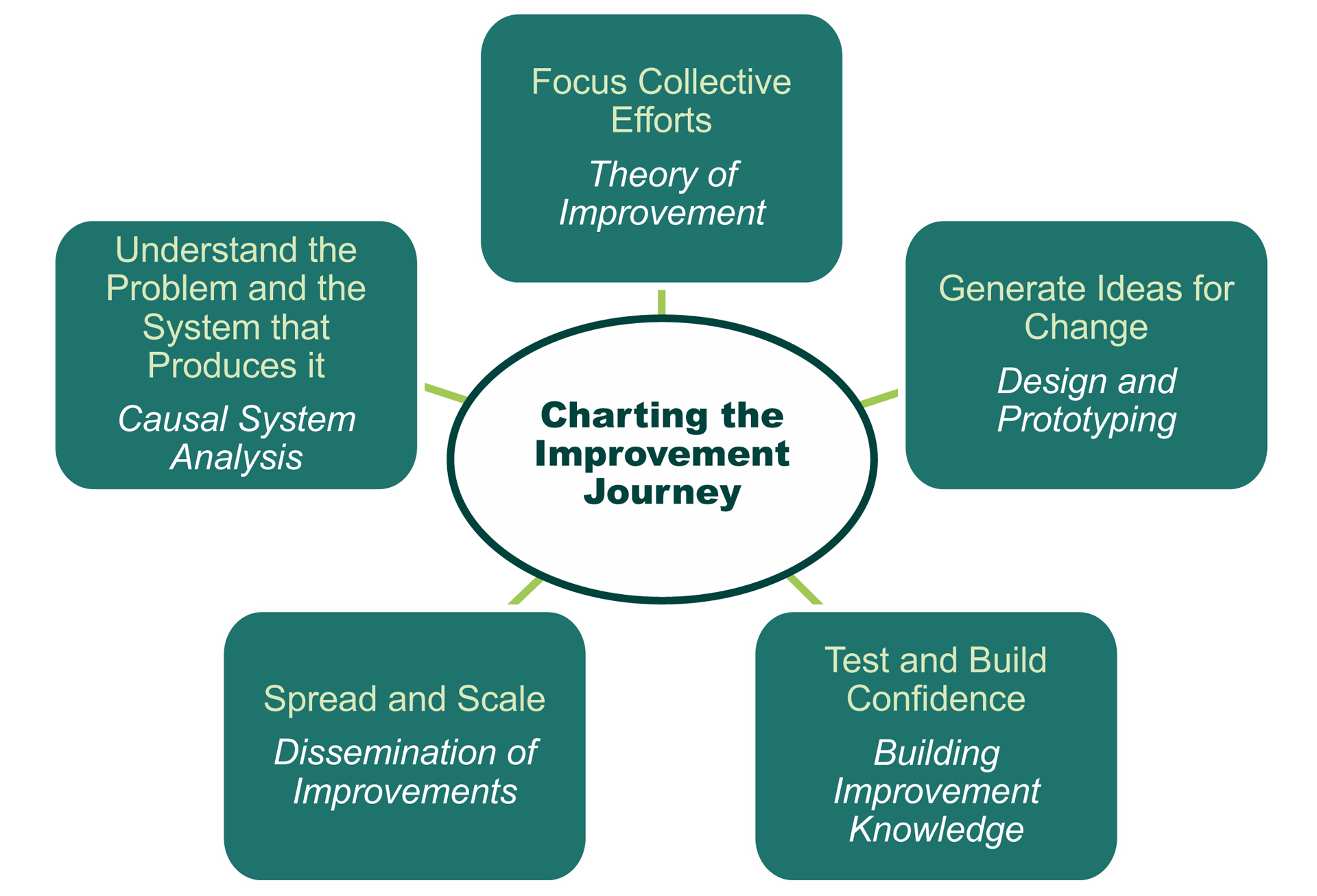
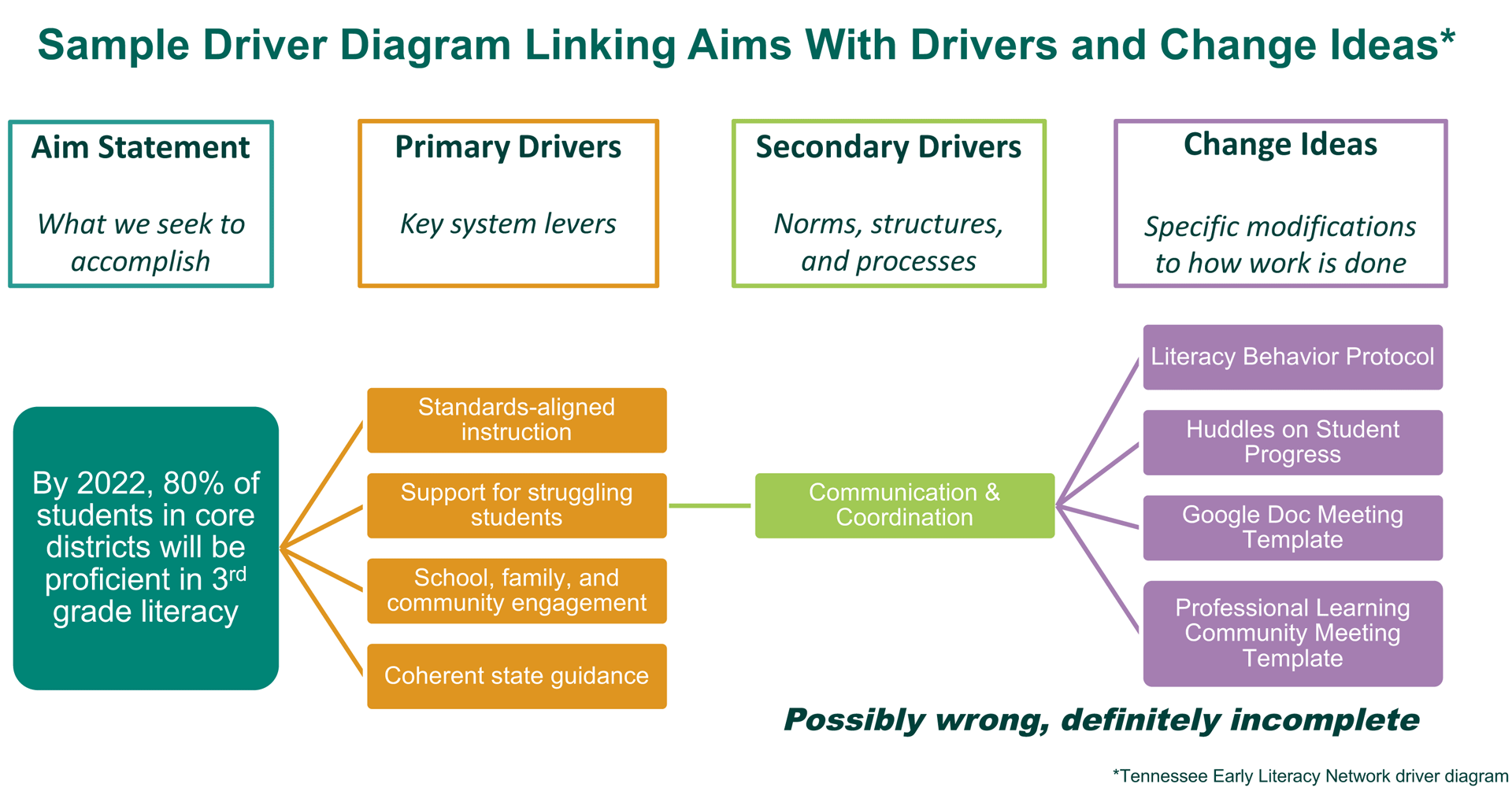
The basic tenets of the process involve understanding the problem, defining a manageable goal, identifying the drivers that could help reach that goal, and then testing small ideas to change those drivers. When done in a network, this cycle of improvement is expedited as various participants test different change ideas and share their findings with the group. Through a constant interplay of these elements a few change ideas will rise to the top and can be scaled across a system.

UNDERSTANDING THE PROBLEM

Many of the biggest problems of practice have been around a long time and aren’t easy to solve. Too often when trying to improve something leaders jump to solutions before properly examining the problem. Understanding the problem requires valuing many types of knowledge. It means doing empathy interviews with participants in the system including teachers, staff, parents, and students. It involves bringing the best research literature to bear on the problem. And sometimes representing the processes involved in the problem can illuminate areas that are breaking down.

Biag said this stage is crucial and shouldn’t be rushed. He’s seen improvement projects that require up to a year of study to fully understand the problem, its root causes and the levers of change available to leaders. Often an improvement network will know it’s time to move on when participants feel saturated — they aren’t turning up any new perspectives or information.

“Sometimes it’s good to stop doing the research and try something,” Biag said. Implementing some change ideas often helps inform the problem and may even necessitate that the team revisit and revise the problem statement.

Courtesy of Carnegie Foundation

DEFINE THE GOALS AND FOCUS COLLECTIVE EFFORT

Once the group has a “good enough” understanding of the problem it’s crucial that they write a clear, succinct aim statement. It should be specific, measurable and focus on a challenging problem, but it should be doable.

The crucial question, Biag said, is “What’s within your span of control and what’s not? So when you act on this problem you aren’t wasting your time on the things that aren’t in your control.”

He often sees people define the problem too broadly. If the problem is an achievement gap between student populations, a group might say the root problem is inequality or poverty. Those things may contribute to the problem, but they aren’t within the control of teachers or principals or even districts to solve. A more manageable aim statement might be: “By June 2020 we’re going to increase from 45% to 90% the number of male students enrolling in credit bearing math courses at community colleges.”

“It has to be motivating enough for people to continue working on it for several months,” Biag said about the reach goal. But it must be specific and concrete enough that the group can see if change ideas are helping progress towards the goal.

“While an aim statement can look deceptively simple, you need to build trust and get on the same page with everyone in your network to even agree on where to focus your efforts,” Biag said. The network itself is important because it accelerates the pace of learning about potential solutions.

Once the aim is clear, the group brainstorms three to five primary drivers of the problem. These are the things the group believes provide the most leverage to meet the goal, and that are within the span of control. It’s crucial to only have a few of these, not twenty, because the network must work on all of them in tandem. Staying focused allows for more progress.

After identifying the most important drivers, network participants brainstorm change ideas that might affect those drivers. “The word change is very specific to improvement science,” Biag said. “It means an actual change in how you do work.” In other words, the focus is on the process and results in action. Change ideas are not things like “more money” or “more staff.” “It’s an actual change of a process or the introduction of a new process,” Biag said.

TEST AND BUILD EVIDENCE

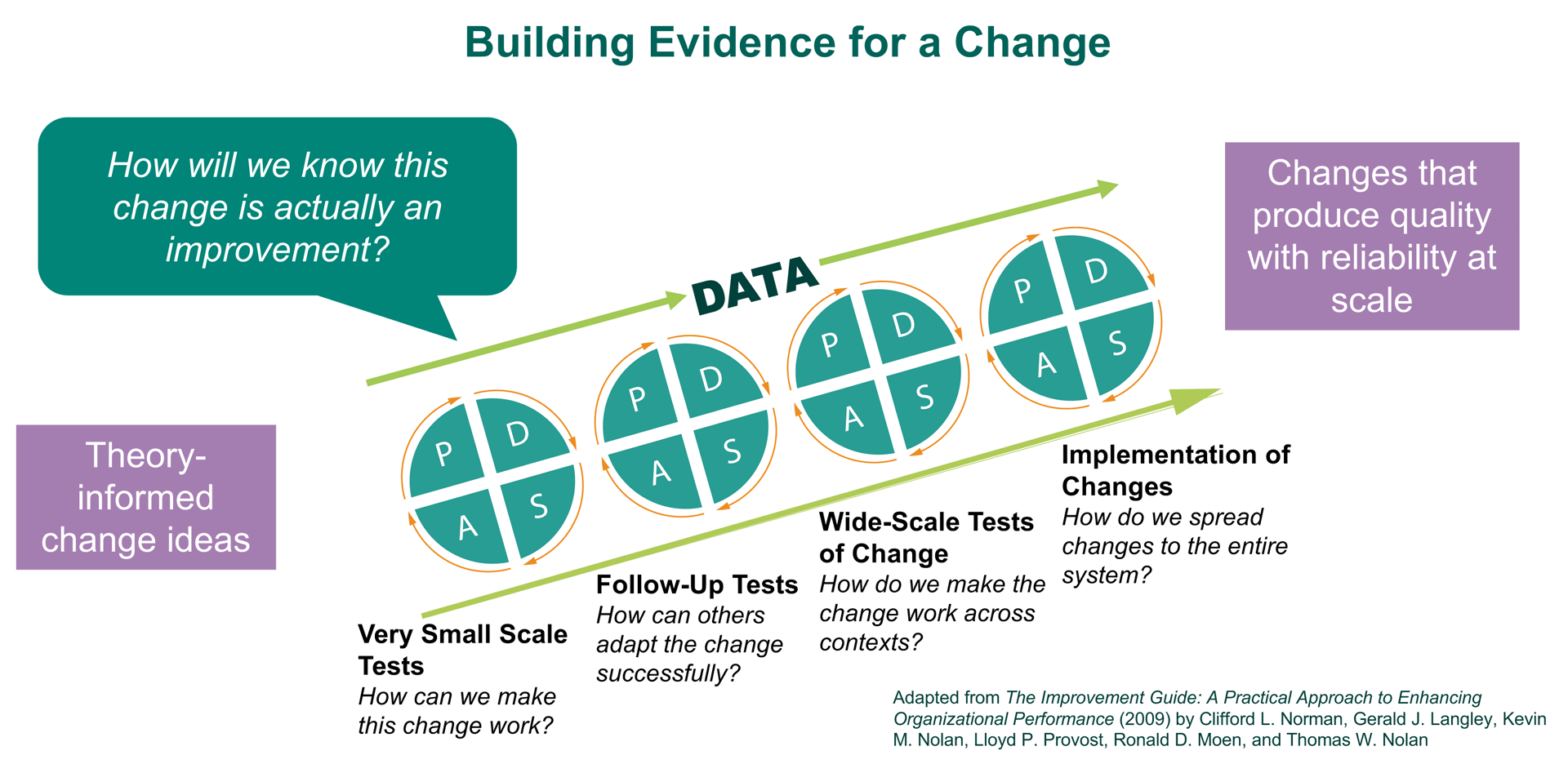
Once the group has a good understanding of the problem, its root causes, what drives it and some ideas that will directly affect those drivers, it’s time to start testing them. Carnegie uses a “Plan, Do, Study, Act” (PDSA) cycle for testing ideas. The changes should be fairly small and the tester collects data along the way. It doesn’t have to be complicated data, just something to help analyze and track whether the change is moving the needle.

Courtesy of Carnegie Foundation

“Most schools and districts plan plan plan, then do, and then they never study,” Biag said. He advocates that planning include a prediction because participants are more likely to compare a new strategy with the expected effect. If the change idea didn’t function as expected there’s a lot to learn there.

Many of the best change ideas come from looking at what Carnegie calls “positive deviants” — the bright spots in a network. For example, if a network sets the aim of improving college readiness for English language learner students, when leaders are assembling their knowledge base they should talk to teachers who seem to be achieving better than average results with that population. Those teachers are “positive deviants” and networks should try to learn from the ways their practices differ from colleagues.

For example, High Tech High Charter Network leaders identified that they wanted to increase the number of African American and Latino males applying to four-year colleges. When they looked at drivers, they realized school attendance was lower for this group and hypothesized that the way teachers communicated with parents might be part of the issue. To try to eliminate variation in parent-teacher communication they tested a change theory that involved using a set of protocols for interacting with families.

They went through several iterations of the protocols, but when they hit on one that seemed to work they spread it throughout their network of schools. Now, when teachers meet with parents around achievement or discipline they all try to make it positive, share data about the student, and co-construct an action plan with the parent, among other things.

The key thing about working in a network is that different people can be trying different change ideas and sharing their data. “The idea is that you’re not all working on all the same things at the same time,” Biag said. “So you leverage the network, and the power of the network, to increase change ideas.”

Some ideas won’t work and will be abandoned. Others might seem promising, but more data is needed, so others in the network might try them too. Over time the change ideas that seem to really impact the drivers rise to the top.

“As you’re testing and building evidence you’re going to find ideas that work and then you can talk about spreading those ideas,” Biag said.

Courtesy of Carnegie Foundation

SPREAD AND SCALE

Even with the best ideas implementation can be hard. Biag said leaders need to weigh several factors when thinking about how to spread an idea that seems to work. How costly will it be to implement? What are the consequences of failure? How reluctant are the people involved? How confident is the leader in the change idea?

For example, if the change is a parent meeting protocol and the leader doesn’t think it’s a great idea and that the cost of failure will be high, perhaps she only tests it on her sister first. But, if teachers are ready for the change and there’s nothing to lose, then maybe the idea can scale up more quickly. This is where knowing one’s own system and culture becomes important.

It’s also worth thinking about who within the system needs to be on board for the plan to go well. Those folks can be powerful advocates if convinced that the change idea is a good one. “The best people are those who were pretty skeptical in the beginning and you were able to change them,” Biag said.

Another strategy is to roll out the idea with those eager to try it and then demonstrate success to those who are more fearful. It’s also necessary to be humble and willing to go back and test new ideas if the ones that seemed to work in the smaller group don’t work when scaled. Perhaps the aim statement needs to change, or maybe the drivers aren’t actually the most impactful.

“Our theory is possibly wrong and definitely incomplete; that’s kind of a Carnegie saying,” Biag said. He doesn’t want anyone to think this process is linear, rather it’s a cycle. And when people get comfortable with the cycle they build it into everything they do naturally. The biggest strength of continuous improvement is that it offers a path for systemic change, a way to build the capacity within the system, rather than building whole new systems.

“What we’re trying to do is implement these tools and ways of thinking to empower people to engage in this work,” Biag said. And that means having a bias towards action.

“You have to start before you feel ready. Your understanding of the problem will change over time and when you act on that problem the problem will change and so your understanding of that problem will change,” Biag said.

People learn how to think about continuous improvement through the process of doing it. They get better at narrowing in on motivating, but achievable aim statements. They learn to include more voices in the information gathering stage. The “Plan, Do, Study, Act” cycles become second nature, and analyzing data gets less scary.

Perhaps one of the best parts of continuous improvement is that it helps empower those within a system to see themselves as the drivers of change. The ideas come from practice as does the data. And while data is often associated with accountability requirements, this improvement process offers practitioners the opportunity to think about and evaluate data that are important to their practice.

In this process, the data is only worthwhile if it shines light on whether the change is working. And when data is used this way, it’s easier for educators to be transparent about what they’re seeing. Improvement is not about judgement, it’s a constant, normal aspect of professional life.

“You have to have a lot of humility to come to the realization that you don’t have the answers, and that you’re going to learn your way into this,” Biag said. “You’ve got to think about this as a learning journey. If you really had the answers to this problem we wouldn’t be talking about it.”

To see measurable progress on some of the most intransigent problems in education requires a systematic focus on improving in every aspect of the system. It’s not enough for one teacher to be amazing, or one school to outshine the others around it. All kids deserve an incredible education; and that can only happen by building on the strengths already found in the system.

Source:

https://www.kqed.org/mindshift/51115/how-to-plan-and-implement-continuous-improvement-in-schools

Comparte este contenido:
Page 146 of 396
1 144 145 146 147 148 396