Page 29 of 396
1 27 28 29 30 31 396

EsEarly education is in an ‘unsustainable cycle.’ Could service districts help?

Early education is in an ‘unsustainable cycle.’ Could service districts help?

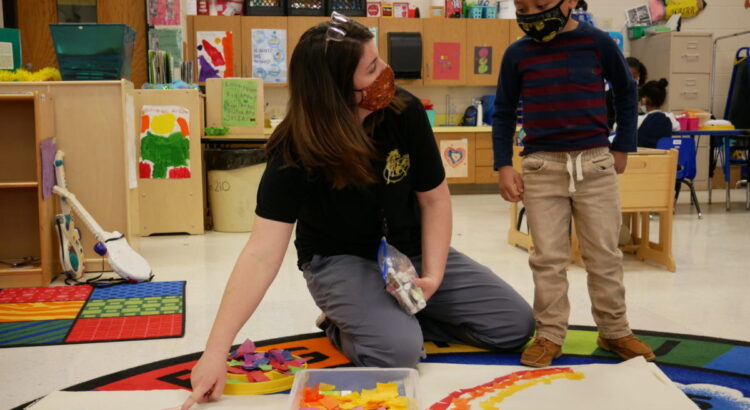
Amy Hairr, NC Pre-K teacher at LC Kerr Elementary in Clinton City Schools, helps student Byron R. with a rainbow arts activity. Liz Bell/EducationNC

County commissioners in North Carolina could create “service districts” to fund early education programs under a bill the House passed this month.

House Bill 664, which has bipartisan sponsorship and now sits in the Senate rules committee, would add “early childhood education programs” to the list of purposes for which counties can levy property tax.

The change could enable a source of public funds for an early care and education system that largely relies on private rates. Those rates, though unaffordably high for many, do not cover the cost of quality early learning, including fair wages for the educators, said Rep. Ashton Clemmons, D-Guilford, one of the bill’s primary sponsors.

“We’re really in an unsustainable cycle of quality early child care costing more than families are able to provide,” Clemmons said. The bill’s other primary sponsors are Rep. Donny Lambeth, R-ForsythRep. Ray Pickett, R-Ashe/Watauga; and Rep. Brandon Lofton, D-Mecklenburg.

Across the state and country, policymakers are grappling with how to lower costs and increase access to early childhood education programs while maintaining quality, Clemmons said.

“How do we get out of that cycle that we’re in right now? I think this is a tool in the toolbox. I think we need many tools in the toolbox,” she said.

“This just gives the option for a county to decide that this is an investment that we want to make in our community.”

Service districts are defined areas within a town or county in which the local government can raise property taxes for a specific service that would benefit those within the district, from sewage collection and disposal to recreation.

A 35-year-old model in Florida

In Florida, counties are able to create service districts to fund services for children and families. A state law, passed in 1986, allows counties to establish Children’s Services Councils (CSCs), which are considered another type of local government, to oversee those funds.

In Palm Beach County, more than 70% of the council’s funds go to early childhood services, from universal screening and early intervention services to child care scholarships, said council CEO Lisa Williams-Taylor.

“Nobody else was really funding in that area,” Williams-Taylor said.

The council also funds community centers called bridges, children’s literacy programs, home visiting services, and supports for maternal health during and after pregnancy.

Within formal early learning environments, the council funds education-based wage supplements and professional development for early educators and child care scholarships — including for children in home visiting programs and for older siblings who need after-school or summer care.

Through the pandemic, Williams-Taylor said, the council has been able to support smaller nonprofits while similar organizations have shut their doors in other counties. She said she hopes to provide PPE and sanitation materials to child care providers soon.

“We’ve been focused on early childhood for, certainly, the 16 years I’ve been here,” she said. “It really was over time, a shift to say the earlier we start, the better off.”

Nine councils across Florida are members of a statewide association called Florida Children’s Council. Michele Watson, CEO of the council, said locally funded initiatives can be measured against desired outcomes. Successful strategies can then be scaled across the state.

“That’s where the association really comes in, is taking all this great innovation … to the state-level decision-makers and working with policymakers to pass those policies to better support all the state’s children,” Watson said.

Watson pointed to the state’s alignment of subsidy and pre-K requirements as a statewide early childhood policy success that resulted from local investments from children’s councils.

Perpetuating inequities

Watson said Florida faces similar early childhood financing challenges that will require state investments that create “a true system that can be supportive and self-sustaining.”

“Without being able to supplement the ability for parents to have access to high-quality child care, we as a community and as a state are always going to create these haves and have-nots.”

Michele Rivest, senior campaign director for the NC Early Education Coalition, pointed to local universal pre-K initiatives in Durham, Wake, and Mecklenburg counties. She said this legislation could help some counties who have similar local initiatives but lack the state or federal resources to move forward.

“This tool is certainly important right from a local community perspective,” Rivest said.

Yet this policy without significant state and federal investments could perpetuate inequities in affordability and access, Rivest said.

“It’s not a statewide solution to the financing crisis in our state,” she said. “Why doesn’t the state set up a special taxing mechanism to fund early childhood services so that it could be equitable across the state? I would rather see that.”

A different strategy is needed to ensure equitable access to high-quality learning, Clemmons said.

“A 2-year-old in a community that does have a greater tax base is no more or less deserving of high-quality early child care than a 2-year-old in a community with a really depleted tax base,” she said. “Any time that we are not making the investments we should at the state level and pushing those down to the local level, it creates an opportunity to have inequities … I see this as a tool, but it is definitely not the best tool to solve the bigger problem. I think we need many many more conversations and work in that area.”

Fuente de la Información: https://www.ednc.org/2021-05-28-early-education-funding-service-districts-property-tax-north-carolina-bill/




Comparte este contenido:

Estados Unidos: Virginia educator placed on leave after speech asserting he won’t ‘affirm that a biological boy can be a girl and vice versa’

Virginia educator placed on leave after speech asserting he won’t ‘affirm that a biological boy can be a girl and vice versa’

Virginia elementary school physical education instructor was put on leave after he gave a speech telling his school board he refused to «affirm that a biological boy can be a girl and vice versa.»

Byron «Tanner» Cross, the teacher, voiced his opinion to the Loudoun County School Board during a Tuesday meeting, speaking against the county’s policies surrounding gender, according to a video of the meeting.

«My name is Tanner Cross, and I am speaking out of love for those who suffer with gender dysphoria,» Cross, who teaches at Leesburg Elementary School, told the board. He went on to discuss a Sunday 60 Minutes segment that aired on CBS about healthcare issues facing the transgender community.

«It’s not my intention to hurt anyone, but there are certain truths that we must face when ready. We condemn school policies … [that] would damage children, defile the holy image of God,» Cross said.

Cross was referring to the school board’s policy 8040, which makes it compulsory for Loudoun County Public Schools staff to use the preferred pronouns of students who do not identify with the gender they were assigned at birth.

«I love all of my students, but I will never lie to them regardless of the consequences. I’m a teacher, but I serve God first, and I will not affirm that a biological boy can be a girl and vice versa because it’s against my religion. It’s lying to a child, it’s abuse to a child, and it’s sinning against our God,» he said.

Cross was placed on administrative leave with pay on Friday, an LCPS spokesperson told the Washington Examiner.

«Building principals cannot put employees on leave,» the spokesperson added, confirming that the elementary school’s principal had nothing to do with the decision.

When asked whether Cross’s removal was about his refusal to comply with policy 8040, the spokesperson said the school could not disclose the reason for the decision due to state and federal confidentiality laws.

Fuente de la Información: https://www.washingtonexaminer.com/news/loudoun-county-educator-on-leave-after-disputing-biological-boy-can-be-girl

Comparte este contenido:

Estados Unidos: Se registra tiroteo en el aniversario del asesinato de George Floyd

Se registra tiroteo en el aniversario del asesinato de George Floyd

Un tiroteo se registró en la Plaza George Floyd en la conmemoración del aniversario de su asesinato; un hombre resultó herido.

mayo 25, 2021 at 1:46 CDT

Un tiroteo se registró en la esquina de la calle 38 y la Avenida Chicago en Mineápolis la tarde del 25 de mayo, donde fue asesinado George Floyd hace un año por un agente de la policía.

El tiroteo se dio mientras se preparaba el festival callejero llamado “Levántate y recuerda a George Floyd”, para conmemorar el primer aniversario de su muerte.

Los hechos quedaron registrados en video, pues un reportero de AP se encontraba en el lugar dando cobertura al evento, asimismo, informó que escuchó 30 disparos a una cuadra al este de la intersección.

https://twitter.com/i/status/1397238847348613121

Tiroteo dejó un herido

De acuerdo con la policía local, a las 10:10 de la mañana, hora local, agentes llegaron tras recibir llamadas de alerta sobre los disparos.

Un hombre resultó herido de bala y fue trasladado a un hospital cercano, de acuerdo con el portavoz de la policía local John Elder, el hombre estaba en estado crítico, pero se espera que sobreviva.

Algunas personas, además, informaron a la policía que vieron un vehículo alejarse del área luego de que los disparos cesaron.

De acuerdo con el reportero de AP que se encontraba en el lugar, la ventana de una tienda se rompió debido a los disparos.

La intersección de la calle 38 y la Avenida Chicago se ha convertido en un monumento a George Floyd además de un lugar desafiante donde oficiales de la policía no suelen ser bienvenidos.

El lugar, que ahora se conoce como la Plaza George Floyd, celebra un festival al aire libree para conmemorar la muerte de Floyd con comida, actividades infantiles y un concierto.

Nueva York conmemora la muerte de George Floyd

George Floyd murió a los 46 años el Día de los Caídos del 2020, luego de que el oficial Derek Chauvin se arrodillara sobre su cuello para inmovilizarlo. El oficial permaneció en esa posición por 9 minutos y medio, provocando su muerte.

El 25 de mayo se celebra por primera vez el festival “Levántate y recuerda a George Floyd” donde el alcalde Bill de Blasio junto con otros funcionarios se arrodilló durante 9 minutos y 29 segundo para conmemorar la muerte de Floyd.

El festival culminará a las 8 de la noche con una vigilia a la luz de las velas.

Familia de George Floyd abrirá un fondo para ayudar a la comunidad negra

La familia de George Floyd anunció que abrirá un fondo para otorgar subvenciones a empresas y organizaciones comunitarias en la zona donde murió.

Además de subvenciones mas amplias para alentar “el éxito y el crecimiento de los ciudadanos negros y la armonía comunitaria”.

El fondo será creado con casi 10 millones de pesos asignados a la familia de George Floyd como parte del acuerdo civil de la ciudad de Nueva York de los más de 53 millones de pesos que se les otorgaron a principios de 2021.

Fuente de la Información: https://www.sdpnoticias.com/internacional/se-registra-tiroteo-en-el-aniversario-de-la-muerte-de-george-floyd/

Comparte este contenido:

Estados Unidos: Una destacada activista de Black Lives Matter, grave tras recibir un disparo en Londres

Una destacada activista de Black Lives Matter, grave tras recibir un disparo en Londres

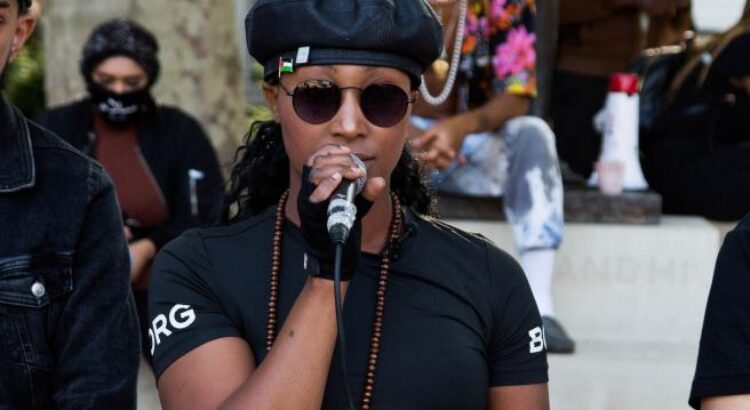
Sasha Johnson. parte de la cúpula de la organización, había recibido “numerosas amenazas de muerte”

Una destacada activista antirracista británica, parte del movimiento internacional Black Lives Matter, se encuentra en estado grave tras recibir el domingo un disparo en la cabeza en Londres, señaló este lunes el partido político en el que milita.

La formación ‘Taking the Initiative’ señaló que Sasha Johnson está hospitalizada en cuidados intensivos tras resultar gravemente herida y pidió a sus seguidores «rezar por su recuperación».

Johnson, madre de dos hijos, es parte de la cúpula de la organización y, según ésta, la activista es «una voz poderosa» que siempre ha luchado contra la injusticia en la comunidad negra.

La formación de Johnson señaló que el ataque, que ocurrió en el barrio de Southwark, en el sur de Londres, se produjo después de que ésta haya recibido «numerosas amenazas de muerte».

No obstante, las fuerzas del orden indicaron que no hay pruebas que indiquen que se tratase de un ataque deliberado contra la activista o que hubiera recibido previamente amenazas.

Los detectives del Comando Especializado en Crimen de Scotland Yard están a cargo de la investigación del ataque, que supuestamente ocurrió cerca de una vivienda donde se celebraba una fiesta.

El grupo BLM en el Reino Unido ha anunciado una vigilia para esta tarde ante el hospital King’s College, de Londres.

El movimiento Black Lives Matter comenzó en 2013 en EE.UU. a raíz de la absolución de George Zimmerman por la muerte del adolescente afroamericano Trayvon Martin a causa de un disparo de bala.

Fuente de la Información: https://www.republica.com/2021/05/24/una-destacada-activista-de-black-lives-matter-grave-tras-recibir-un-disparo-en-londres/


Comparte este contenido:

California: Así será el regreso a clases del Tec de Monterrey

Así será el regreso a clases del Tec de Monterrey

Se aplicará el modelo HyFlex+Tec, los estudiantes cursarán el semestre agosto-diciembre 2021 en alguno de estos formatos: presencial, híbrido o remoto.

Las autoridades del Tecnológico de Monterrey informaron a su comunidad que la institución está lista para un regreso voluntario presencial gradual a sus campus.

Actualmente, en 16 de los 26 campus y en ocho de las 36 PrepaTec, ha habido aperturas parciales, con medidas sanitarias adecuadas y conforme a los lineamientos de las autoridades. Para fin de mes, se espera la apertura del 90 % de los campus.

Por el momento, hasta 5,000 mil (de los más de 60,000 alumnos de Profesional) cada semana participarán ya en ciertas actividades presenciales en algunos de estos campus.

Debido a la pandemia por Covid-19, el Tec de Monterrey anunció la suspensión de sus clases y actividades administrativas presenciales el 12 de marzo del 2020. 

Con el esquema de vacunación en México, para finales de este mes, se espera contar ya con la totalidad de profesores de la institución vacunados.

Recomendamos: El Tec analizará aguas residuales para detectar la Covid-19

El verano y semestre agosto-diciembre en modalidad híbrida

Al continuar el despliegue del modelo HyFlex+Tec, la institución informa que los estudiantes cursarán el semestre agosto-diciembre 2021 en alguno de estos formatos: presencialhíbrido o remoto.

El periodo académico de verano y el próximo semestre iniciarán en modalidad híbrida; habrá un 30 % de presencialidad en verano y 50 % en el siguiente semestre y se espera que estén en aulas híbridas de última generación.

Más de 1,400 profesores de 25 campus ha tomado capacitación, llamada Sesión Cero, para dar clases bajo estos formatos.

Además, se ofrecerán nuevas herramientas para enriquecer la experiencia de aprendizaje. Con todas estas acciones, el Tec se declara listo para regresar a una presencialidad parcial el próximo semestre.

El modelo Hyflex-Tec: híbrido o remoto

El Modelo HyFlex+Tec es una experiencia educativa híbrida y flexible, para llevar el semestre el formato que tu elijas.

Si no sabes qué modalidad elegir, puedes empezar por valorar tus condiciones particulares, sugiere para CONECTA Paulina Campos, líder Covid-19 del Tec.

“Si tú o alguien de tu familia tiene algún factor de riesgo, o bien eres estudiante de un campus distinto a tu lugar de residencia, el formato remoto puede ser una excelente opción”, afirma.

Campos, quien coordina el plan de Reapertura Consciente de la institución ante la pandemia, explicó que el Tec mantendrá su oferta LiFE de actividades culturales, deportivas y de desarrollo para ti con LiFE@Home, con opciones que puedes aprovechar vía remota.

También, en el formato híbrido, algunas de estas actividades podrán trasladarse a un formato presencial, dependiendo del semáforo epidemiológico en cada uno de los campus del Tec.

Fuente de la Información: https://tecreview.tec.mx/2021/05/20/liderazgo-1/regreso-a-clases-del-tec-de-monterrey/


Comparte este contenido:

Estados Unidos – Bernie Sanders: EE.UU. debe unir a la gente y no vender armas «para matar a niños en Gaza»

Bernie Sanders: EE.UU. debe unir a la gente y no vender armas «para matar a niños en Gaza»

El senador Bernie Sanders intenta bloquear venta de armas de Estados Unidos a Israel. | Fuente: AFP

El senador izquierdista Bernie Sanders consideró este domingo que Estados Unidos debería liderar el mundo para unir a la gente en vez de «suministrar armas para matar a niños en Gaza«, en alusión a la reciente escalada de violencia entre Israel y el grupo islamista palestino Hamás.

El veterano legislador por Vermont y excandidato presidencial demócrata exigió un «enfoque imparcial» a la hora de abordar el conflicto palestino-israelí en una entrevista con la cadena de televisión CBS News.

«Hay una situación muy difícil, está Hamás -un grupo terrorista-, está el Gobierno de derechas israelí y la situación está empeorando -describió-. Y lo que digo es que los Estados Unidos de América deben liderar el mundo para unir a la gente, no limitarse a suministrar armas que maten a niños en Gaza».

Recordó que en los últimos ataques 64 menores han fallecido y gran parte de la infraestructura de la franja, bajo control de Hamás, ha resultado destruida, con lo que se ha convertido en «uno de los lugares más inhabitables del mundo».

Preguntado sobre si piensa que el Gobierno del presidente Joe Biden es defensor del Ejecutivo del primer ministro israelí, Benjamín Netanyahu, Sanders apuntó que Estados Unidos debe desarrollar un «enfoque imparcial» para abordar este conflicto. «Debemos ser pro Israel, pero también ser propalestinos», afirmó el senador, quien opinó que Biden lo entiende así.

En ese sentido Sanders se mostró «encantado» de que el mandatario estadounidense esté actuando para reconstruir Gaza, en colaboración con la comunidad internacional.

AYUDA MILITAR A ISRAEL

En respuesta a otra cuestión sobre si las críticas hacia Israel deberían moderarse para evitar el antisemitismo, Sanders indicó que habría que rebajar la retórica.

«Creo que nuestra meta es muy simple: entender que lo que está pasando en Gaza hoy en día es insostenible. Cuando tienes al 70 % de los jóvenes desempleados, cuando la gente no puede abandonar su comunidad, cuando las plantas de tratamiento de aguas residuales están destruidas, eso es insostenible», zanjó.

Sanders instó esta semana a Biden a que reconsidere los 4.000 millones de que Estados Unidos otorga cada año a Israel, al considerar que no debe usarse para «violar los derechos humanos», lo que ha sido rechazado por la Casa Blanca.

Israel y Gaza viven este domingo el tercer día de calma tras la tregua iniciada la madrugada del viernes, mientras que países como Egipto o Estados Unidos  plantean maneras para reforzar el alto el fuego y abordar la reconstrucción de una franja devastada por los ataques.

(EFE)

Fuente de la Información: https://rpp.pe/mundo/medio-oriente/bernie-sanders-eeuu-debe-unir-a-la-gente-y-no-vender-armas-para-matar-a-ninos-en-gaza-noticia-1338404


Comparte este contenido:

Video shows students still get paddled in US schools

Video shows students still get paddled in US schools

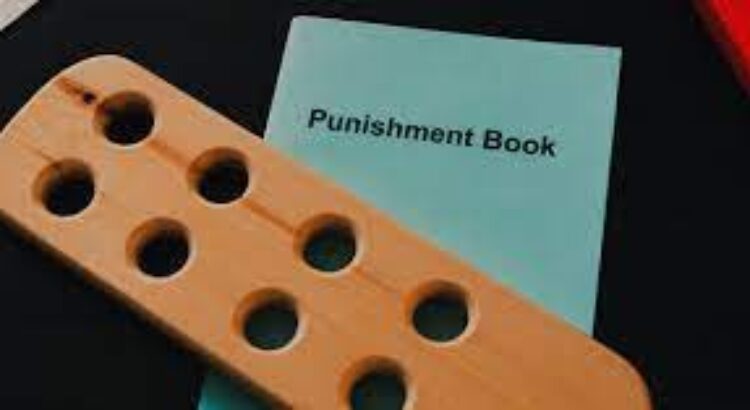
The image of a teacher paddling or spanking a student at school may seem to belong in a history book – as archaic a practice as the dunce cap. However, for thousands of students across America each year, the use of corporal punishment for violating school rules is still a routine part of their education.

Surprising to many, corporal punishment in schools remains legal in 19 states nationwide. In the 2015-2016 school year, more than 92,000 public school students were paddled or spanked at the hands of school personnel, with most of these incidents concentrated in fewer than 10 states, mostly in the South.

Corporal punishment has again captured national attention following the release of a video in May 2021 of a Florida principal paddling a young girl. The video, secretly captured by the student’s mother, shows the principal striking the student with a wooden paddle in response to her damaging a computer. While a violation of district policy, the principal’s actions were deemed legal by both the local sheriff’s office and the state attorney’s office.

Many who have viewed the video have questioned how this practice remains legal and in use in the United States. As an educational researcher who studies school discipline – and as a former teacher who has seen other teachers use this practice – I have found that the answer to this question is complex.

Deference to local decision-making

In 1977, the U.S. Supreme Court ruled in Ingraham v. Wright that corporal punishment in schools is constitutional, establishing a federal standard for its continued legal use.

While corporal punishment remains legal in 19 states, there have been efforts in some of those states to ban the practice. In May of 2021, Louisiana considered such a bill.

However, these efforts have not been able to get much traction. Louisiana’s bill failed to pass in the House, with critics pointing to a preference for local school districts to make the decision. In fact, the last state ban occurred in 2011, when New Mexico outlawed the practice.

Research that I have conducted with others shows this deference to local school districts is common. In our 2018 study on corporal punishment, we found that state bans generally come after local school district bans or reductions in use.

For example, Rhode Island enacted a state ban on corporal punishment in 2002, even though the practice had not been used in the state since 1977 because of local decisions. In North Carolina, the practice has been eliminated by all districts in the state since 2019, but a subsequent bill to formalize this ban at the state level failed to advance to law.

For many local leaders and educators, the continued use of corporal punishment reflects shared community norms and a belief that the practice is beneficial to maintaining order in schools. For many state policymakers, there is a general belief that such decisions should be made at the local level. Unfortunately, research suggests that this deference to local decisions to use corporal punishment is harmful for students.

[Understand new developments in science, health and technology, each week. Subscribe to The Conversation’s science newsletter.]

The harm of corporal punishment

Though studies of the impact of corporal punishment in schools are limited, those that exist suggest the practice harms students’ academic performance and future behavior. Such negative outcomes have also been linked with corporal punishment use in the home by parents.

The burden of these negative impacts is disproportionately experienced by students of color and boys. Black students are two to three times as likely as their white peers to experience corporal punishment, and boys make up about 80% of those subjected to the practice.

Based on such evidence, many national and international organizations recommend against the use of corporal punishment in schools. Former acting Secretary of Education John B. King called explicitly for U.S. schools to cease the practice. Despite this, the U.S. has not joined the over 100 countries worldwide that ban corporal punishment in schools.

Seeking alternatives

For many educators, the appeal of corporal punishment may be its efficiency. It can be quickly administered by a teacher or principal with limited commitment of time or institutional resources. Though unproductive in the long term, it may result in compliance in the short term.

It is important, then, for discussions about bans on corporal punishment to include alternatives. In fact, not doing so may result in schools trading corporal punishment for other negative disciplinary practices like suspension.

In my own research, my colleague and I found that when school districts serving large proportions of Black or Hispanic students decrease or stop using corporal punishment, suspension rates tend to increase. In contrast, suspension rates decreased in districts with more white students.

Given the negative effects of corporal punishment and the risk that bans alone could lead to increased suspensions in schools with more minority students, how should educators and policymakers approach the issue?

There are alternative approaches to corporal punishment and suspension that offer promise for eliminating the practice of paddling students while also ensuring that students remain in school to learn. Restorative practices and positive behavior interventions are such examples. These approaches focus on addressing student trauma, building relationships and rewarding positive behavior.

For example, rather than being paddled, students who damage school property might discuss their behavior with adults and other students involved and then contribute to repairing the property.

A focus on building a strong school climate – characterized by supportive relationships between teachers and students as well as engaging instructional practice – also holds promise for improved student behavior without corporal punishment.

Ultimately, gaining local support for corporal punishment bans may be easier if schools know more effective alternatives are available.

Fuente de la Información: https://theconversation.com/video-shows-students-still-get-paddled-in-us-schools-160592

Comparte este contenido:
Page 29 of 396
1 27 28 29 30 31 396