Page 764 of 1685
1 762 763 764 765 766 1.685

Can Virtual Reality Open STEM Education And Jobs To More People?

By: Sasha Banks-Louie Oracle

Employers need to fill 1.6 million jobs in the US that require backgrounds in science, technology, engineering, and math by 2021, according to a 2016 study by the US Department of Education. That demand is spurring new approaches to STEM education that are designed to appeal to more, and a greater diversity, of students.

“Science educators know we need to stop teaching facts and figures from textbooks and start showing students how to apply the fundamental concepts of scientific methods to real-world problems,” says Dr. Becky Sage, CEO of Interactive Scientific, a UK-based education technology firm.

Interactive Scientific, part of the Oracle Startup Cloud Accelerator program in Bristol, has developed scientific simulation software, called Nano Simbox, which students are using to observe how atoms and molecules interact. Researchers are also using this technology to explore new theories, product designs, and drugs.

Employing tablets, virtual reality headsets and controllers, students can visualize atoms, observe how they behave in different combinations, and manipulate them for testing.

Dominique Skinner, a chemistry student at Queen Mary University of London studying biochemistry, used Nano Simbox technology and research to combine atoms and create digital models of the molecules for a plant-based line of cosmetics.

“I wanted to put science next to veganism, and veganism next to cosmetics,” Skinner says. “Nano Simbox allowed me to see how skin would react to molecules from animal proteins and synthetic chemicals that were harsh on the skin versus plant-based molecules that benefited the skin.”

New Approach to Learning

Interactive Scientific has begun experimenting with artificial intelligence to understand how students learn, and how applying machine-learning algorithms could guide their progress.

“Whilst our machine learning work is in its infancy we have already designed the software to help students understand complex, scientific concepts in a way that’s unique to their individual learning styles and encourages them to challenge their own thinking by exploring alternative ideas,” says Sage.

Traditional teaching approaches using textbooks and standardized testing tend to be less flexible, both in the pace at which students progress and how their understanding is tracked and measured.

Nano Simbox’s simulation software runs on Oracle Infrastructure as a Service, making it possible “to scale this really complex science,” says Interactive Scientific founder Dr. David Glowacki.

“We needed a system to help us monitor, log, and report on scalability in real-time,” says Glowacki, who’s also a Royal Society research fellow at the University of Bristol and visiting scholar with Stanford University’s chemistry and mechanical engineering departments.

Creating Opportunities

Traditional methods of teaching STEM can be a deterrent to some students. Females, minorities, and students from lower-income families are underrepresented in STEM education and related professions. According to the Department of Education study, that makes it harder to narrow education and poverty gaps, meet the demands of a tech-driven economy, and maintain US leadership in scientific research and innovation.

“Our goal is to open up lifelong science learning to everybody, whether you’re in grades K-12, studying at a university, or in a non-traditional learning environment,” says Sage. “And our hope for the future workforce is that inclusivity will be valued so anyone will be able to thrive in their working environment.”

Source:

https://www.forbes.com/sites/oracle/2018/02/20/can-virtual-reality-open-stem-education-and-jobs-to-more-people/#78f87b508874

Comparte este contenido:

EEUU: A group of Texas lawmakers wants to fix higher education funding — but it won’t be easy

EEUU/February 27, 2018/By: Shannon Najmabadi/ Source: http://www.oaoa.com

After lawmakers last year failed to overhaul how the state funds its public colleges and universities, a special committee on Wednesday will begin a new attempt to review the complicated higher education finance system in Texas.

Complaints have crescendoed about eroding government support for higher education. But at stake in the coming months is not how much money Texas pumps into its colleges and universities. It’s whether the state’s method of disbursing nearly $3 billion per year to those schools through formulas and direct appropriations is due for a comprehensive makeover.

«The way we fund higher education in Texas is overdue for a close, detailed look and consideration of substantial changes,» said state Sen. Kelly Hancock, R-North Richland Hills, one of the committee’s co-chairs.

The Joint Committee on Higher Education Formula Funding was convened out of a compromise at the end of the 2017 legislative session, following an unsuccessful bid by Senate leadership to overhaul the higher education finance system entirely. The Senate’s efforts panicked college leaders and were rejected by powerful members of the House, who have generally called for modifications to be made in lieu of wholesale changes.

Stymied, lawmakers agreed to preserve the current system for the next biennium but directed an interim committee to study it and issue recommendations by April 2018.

The committee is made up of five representatives tapped by Republican House Speaker Joe Straus and five senators appointed by Republican Lt. Gov. Dan Patrick – none of whom serve on the upper chamber’s higher education committee. Though the panel has leeway to reshape the system, they’d have to overcome numerous political hurdles — and inertia — to do so. It’s unknown who will take the helm of the House in 2019 — Straus is not running for re-election — and the competing interests of legislators and schools make consensus difficult.

“I’m not sure that overhauling higher education finance is something that can be done with two meetings in February and a report due in April,” said state Rep. Donna Howard, D-Austin, one of the committee members. “However, I am hopeful that a focused discussion of how higher education financing methods have impacted institutional behavior will reveal some insights before next session.”

Special items

There are two main components to the state’s current method of funding higher-education: “special items” earmarked for specific projects and a per-credit allocation disbursed using a formula.

The “special items” are funds allocated outside the normal formulas to give schools cash infusions to start up new programs or pay for initiatives not always within their academic mission. But state Rep. Trent Ashby, R-Lufkin, one of the committee’s co-chairs, said they’d caused “some heartburn for members,” and they’re set to be the focus of a separate hearing later this month.

In the previous biennium, the 362 special items ranged in cost from a $31,500 research initiative at Sul Ross State University to a $61,397,900 allocation for the University of Texas Rio Grande Valley’s School of Medicine. Some schools receive what amounts to a supplement through the “special items” allocation process that they use to hire more professors and staff.

But the “special items” funding stream has drawn ire from lawmakers who say it’s grown too large and is duplicative of the per-student allotment. Critics have also argued that the items are distributed unevenly among universities and that state budget writers usually don’t go back and evaluate whether they should be kept in subsequent budgets.

“Special items were intended to support research, startup costs and other initiatives, not to remain as never-ending line items in the state budget,” Sen. Jane Nelson, R-Flower Mound, the Senate’s lead budget writer, said last year.

Last session, some senators tried to zero out the $1.1 billion in funding meant for “special items” — offering to mitigate the effects of the cut with a $700 million infusion to the per-credit pot. The move agitated university leaders, who protested that “special items” frequently pay for entire programs or medical schools. “The sky really is going to fall if you pass this bill,” Texas A&M University System Chancellor John Sharp said at the time.

Some universities argue that money removed from the «special items» stream could not be easily replaced. Even if the items were eliminated and the money were reallocated, it would be diffused into the per-credit stream, critics say. That might mean some important projects designated to receive specific money — like the McDonald Observatory in the University of Texas at Austin budget — might be harmed financially.

Formula funding

The per-credit funding mechanism has critics, too, but is less frequently in lawmakers’ crosshairs. Much of it is calculated using a formula that largely hinges on how many students an institution has and what discipline those students are studying. Data from the Texas Higher Education Coordinating Board shows engineering students cost more to educate than their liberal arts peers — and so the formula gives a greater weight to engineering when calculating how much money universities should be paid.

(Schools also receive funding for infrastructure costs through this stream, but using a different formula based on square feet and utility rates.)

Detractors argue the formulas aren’t a good proxy for what universities’ costs are and don’t accurately account for part-time or other nontraditional students. Colleges with rapidly swelling student populations also complain of budgetary shortfalls, since the per-student funding is based on past years’ enrollment data.

Ashby said that “in most cases, our formulas are in place for good reason.” But he added he was “hopeful that we can agree on some concepts to promote efficiency and equity at all of our institutions.”

Outcomes-based funding

Though it may prove politically impossible, the committee has license to recommend an overhaul of how higher education in the state is financed. Its charge says lawmakers can consider realigning or eliminating “special items” and improving the per-credit allocation.

Rather than basing it on the number of students in each discipline, lawmakers could tie a school’s funding to how well their students perform. Hancock said the committee should «absolutely see what lessons can be learned from states that successfully implemented outcomes-based funding at four-year institutions,» and the possibility is slated to be discussed during at least one panel Wednesday.

The state’s community and technical colleges already receive their funding through a formula that factors in students’ performance. At Texas State Technical College System — appropriations for which have been tied to graduates’ earnings for the past few years — the switch has “worked in a big way,” said Chancellor Mike Reeser.

What happened, Reeser said, is administrators’ “obsession” with maximizing class-time was «replaced with an obsession with making sure kids got jobs and making sure they got the training they needed to get good salaries.” Graduation rates there increased 42 percent over a six-year period, and graduates’ salaries went up 83 percent.

“Our mission is to create a skilled workforce, so using student employment outcomes was a very natural thing to do,” Reeser said — but he added that institutions with broader goals, like four-year universities, would need to be evaluated using different metrics.

Ashby similarly said the outcomes-oriented model has been “critical to driving completion and promoting skilled degrees” there but that the “mission of a larger flagship university or a four-year regional institution is much different.”

As an alternative to replacing the formula based on headcount with one based on students’ performance, some university officials say lawmakers could add a sort of outcomes-based supplement — a bonus for schools where students perform well.

«Having some type of performance funding tied to each institution’s mission, in addition to a consistent and stable model for funding would benefit Texas students and our economy,» said UT-Arlington President Vistasp Karbhari.

Source:

http://www.oaoa.com/news/education/article_07feb4fb-56c2-5212-b21d-5a8e846b05bc.html

Comparte este contenido:

Schools as Punishing Factories: The Handcuffing of Public Education

By: Dr. Henry Giroux

The Nobel Prize-winning author Ngugi wa Thiong’o has insisted rightfully that «Children are the future of any society,» adding, «If you want to maim the future of any society, you simply maim the children.» (1)

As we move into the second Gilded Age, young people are viewed more as a threat than as a social investment.

If one important measure of a democracy is how a society treats its children – especially children of color, poor and working-class youth, and those with disabilities – there can be little doubt that the United States is failing. Half of all public school children live in near poverty, 16 million children receive food stamps and 90 percent of Black children will be on food stamps at some point during childhood. (2) Moreover, too many children are either incarcerated or homeless.

The National Center on Family Homelessness reports that «One in 45 children experience homelessness in America each year. That’s over 1.6 million children. [Moreover] while homeless, they experience high rates of acute and chronic health problems. The constant barrage of stressful and traumatic experience also has profound effects on their development and ability to learn.» (3) Sadly, these statistics rarely scratch the surface of the dire and deep-seated problems facing many young people in the richest country in the world, a state of affairs that provokes too little public outrage.

Teachable Moment or Criminal Offense?

Every age has its approach to identifying and handling problems. As we move into the second Gilded Age, young people are viewed more as a threat than as a social investment. Instead of being viewed as at-risk in a society that has defaulted on its obligations to young people, youth today are viewed as the risk itself. Instead of recognizing the social problems and troubles they face – ranging from poverty to punishing schools – our society sees youth as spoiled or threatening. (4) One consequence is that their behaviors are increasingly criminalized in the streets, malls, schools and many other places once considered safe spaces for them. As compassion and social responsibility give way to punishment and fear as the most important modalities mediating the relationship of youth to the larger social order, schools resort more and more to zero-tolerance policies and other punitive practices. Such practices often result in the handing over of disciplinary problems to the police rather than to educational personnel.

Children are being punished instead of educated in US schools.

With the growing presence of police, surveillance technologies and security guards in schools, more and more of what kids do, how they act, how they dress and what they say are defined as a criminal offense, regardless of how trivial the offense may be – in some cases just doodling on a desk or violating a dress code. Such behaviors, which teachers and administrators use to regulate through everyday means, are now treated as infractions within the purview of the police. Consequently, suspensions, expulsions, arrests and jail time have become routine for poor youth of color. Even more shocking is the rise of zero-tolerance policies to punish Black students and students with disabilities. (5) Instead of recognizing the need to provide services for students with special needs, there is a dangerous trend on the part of school systems to adopt policies «that end in seclusion, restraint, expulsion, and – too often – law enforcement intervention for the disabled children involved.» (6) Sadly, this is but a small sampling of the ways in which children are being punished instead of educated in US schools, especially inner-city schools. Rather than treating school infractions as part of the professional responsibilities of teachers and administrators, schools are criminalizing such behaviors and calling the police. What might have become a teachable moment becomes a criminal offense. (7)

Since the 1990s, the US public has been swamped by the fear of an alleged rise in teenage crime and what was called a superpredator crisis. This crisis was largely popularized by John J. DiIulio Jr., then a political scientist at Princeton University, who argued without irony «that hordes of depraved teenagers [were about to resort] to unspeakable brutality, not tethered by conscience.» (8) Politicians, intellectuals and news organizations were convinced that young people posed a dire threat to the US public and not only reveled «on these sensational predictions [but also] ran with them like a punt returner finding daylight.» (9) While such chaos proved to be nonsense, the theses spawned a plethora of disciplinary practices in schools, such as zero-tolerance policies, which have turned them into institutions that resemble prisons with students being subjected to harsh disciplinary practices, particularly poor black children and children suffering from mental health problems, such as ADHD.

Policing Students in Classrooms and on Playgrounds

These harsh practices have been inflicted disproportionately on poor Black children and children suffering from mental health problems such as attention deficit hyperactivity disorder (ADHD). This was on full display as social media lit up with a video that disclosed an 8-year-old boy in the third grade in an elementary school classroom in Covington, Kentucky, screaming in pain because he was being handcuffed with his arms placed behind his back. (10) Standing beside the child is police officer, Deputy Sheriff Kevin Sumner, who issues the chilling message, «You either behave the way you are supposed to or you suffer the consequences.» The child, it was later revealed, suffers from a learning disability. According to the Guardian’s Ed Pilkington, «Charles Korzenborn, the sheriff in Covington, Kentucky … defended the officer … claiming that the police officer, Kevin Sumner, had done absolutely nothing wrong. The sheriff said his deputy had done ‘what he is sworn to do and in conformity with all constitutional and law enforcement standards…. I steadfastly stand behind Deputy Sumner who responded to the school’s request for help. Deputy Sumner is a highly respected and skilled law enforcement deputy, and is an asset to the community and those he serves.'» (11) Allegedly, Sumner was responding to the school’s call to diffuse «a threat.» It is hard to imagine what kind of threat a 3.5-foot tall 8-year-old elementary school child posed to either the school or to the police. At work here is not only a kind of bizarre rationality in which one becomes an asset to the community by handcuffing and arresting an 8-year-old boy but also the scourge of a willful ignorance which is the refusal to know or to recognize when an act of violence is being committed against a child.

Schools are considered dangerous because they are public, not because they are failing.

The sheriff’s unhinged defense of Sumner becomes even more apparent in light of the fact that it has been revealed that Sumner had engaged in similar behavior earlier in 2014. At that time, he participated in the handcuffing at John C. Carlisle Elementary School of a 9-year-old girl living with ADHD. At one level, this case reveals why police should not be in public schools in the first place and that the targeting of children by criminalizing their behavior represents the antithesis of how a school should treat its children. It also suggests something about the low regard the public has for public schools and the lives of our nation’s youth, especially poor children of color.

While the image of an 8-year-old boy handcuffed in an elementary school classroom in Covington, Kentucky, has rightfully drawn a great deal of attention on social media and in the mainstream news, it is far from unique. In 2013, a diabetic student in an Alabama high school was arrested and beaten for falling asleep in a classroom. (12) In 2013, Bronx police falsely accused a 7-year-old boy and «put him in handcuffs and held him in custody for ten hours after a playground fight» in which he was falsely accused of stealing $5 from another student. (13) It gets worse. The US Department of Justice filed a lawsuit in November 2012 charging that the Meridian, Mississippi, school district functioned largely as a school-to-prison pipeline, disproportionally focusing on Black youth. According to the Justice Department’s 37-page complaint, the Meridian school district engaged in «years of systemic abuse [which punished] youth ‘so arbitrarily and severely as to shock the conscience.'» (14)

As Julianne Hing reports,

In Meridian, when schools want to discipline children, they do much more than just send them to the principal’s office. They call the police, who show up to arrest children who are as young as 10 years old. Arrests, the Department of Justice says, happen automatically, regardless of whether the police officer knows exactly what kind of offense the child has committed or whether that offense is even worthy of an arrest. The police department’s policy is to arrest all children referred to the agency. Once those children are in the juvenile justice system, they are denied basic constitutional rights. They are handcuffed and incarcerated for days without any hearing and subsequently warehoused without understanding their alleged probation violations. (15)

The Meridian case makes clear what numerous reports have indicated for years: not only that zero-tolerance measures have failed, but also that they have made schools less secure, resulted in criminalizing student behavior and contributed to what has been called the school-to-prison pipeline, especially for poor youth of color. As the American Civil Liberties Union (ACLU) points out, the school-to-prison pipeline is a «disturbing national trend wherein children are funneled out of public schools and into the juvenile and criminal justice systems. Many of these children have learning disabilities or histories of poverty, abuse, or neglect, and would benefit from additional educational and counseling services. Instead, they are isolated, punished, and pushed out.» (16) Putting the police in schools has little to do with improving the learning environment for children and a great deal to do with criminalizing students «for behavior that should be handled inside the school. Students of color are especially vulnerable to push-out trends and the discriminatory application of discipline.» (17)

The war on youth and public schools is part of the larger assault on democracy itself.

The increasing criminalization of students of color, poor students and students with disabilities is taking place in the context of a broader attack on public schools as a whole. Like many institutions that represent the public good, public schools are under attack by market, religious and educational fundamentalists. Schools are considered dangerous because they are public, not because they are failing. State and corporate leaders are seeking to take power out of the hands of public school teachers and administrators because public schools harbor teachers with the potential to engage in pedagogies that are imaginative, empowering, critical and capable of connecting learning with the practice of freedom and the search for justice. The pedagogies of oppression – whether in the form of high-stakes testing, teaching for the test, imposing punitive disciplinary measures or the construction of relations that disempower teachers and empower security guards – are part of a broader attempt to destroy the social state and the institutions that produce the formative culture necessary for a democracy.

Students Are Not Criminals

There are no safe spaces left in the United States. As almost every aspect of society becomes militarized, the imposing apparatuses of the police state become more and more obvious, reckless and dangerous, and include more than the arming of local police forces.

As Chase Mader observes:

Even as simple a matter as getting yourself from point A to point B can quickly become a law enforcement matter as travel and public space are ever more aggressively policed. Waiting for a bus? Such loitering just got three Rochester youths arrested. Driving without a seat belt can easily escalate into an arrest, even if the driver is a state judge. (Notably, all four of these men were black.) If the police think you might be carrying drugs, warrantless body cavity searches at the nearest hospital may be in the offing – you will be sent the bill later. Air travel entails increasingly intimate pat-downs and arbitrary rules that many experts see as nothing more than ‘security theater.’ As for staying at home, it carries its own risks as Harvard professor Henry Louis Gates found out when a Cambridge police officer mistook him for a burglar and hauled him away – a case that is hardly unique. (18)

The rise of the punishing and police state depends on conformity, the squelching of dissent and the closing down of any institution capable of educating the young and old to hold authority accountable. More specifically, pedagogies of oppression are a central tool for dismantling critical learning and dissent and for increasing the power of the punishing state. Under the reign of neoliberalism, all things public are under attack, from schools to health care to public servants. The war on youth and public schools is part of the larger assault on democracy itself. The controlling elite view schools as dangerous to their interests. For the financial elite, right-wing ideologues and billionaires such as the Walton family, the Koch brothers and Bill Gates, public education must be defunded, broken and privatized because it contains the potential to educate young people to question authority and hold it accountable, and produce civically literate and socially engaged students and critically engaged citizens.

Schools are not prisons, teachers are not a security detail and students are not criminals. Schools should model the United States’ investment in children and to do so they need to view young people as a resource rather than as a threat. If public schools are going to improve they have to be appropriately funded. That means, raising corporate taxes, cutting the defense budget, and allocating funds that contribute to the public good. It also means closing down and defunding those financial and military institutions that produce misery and destroy human lives, especially the lives of children. Educators should be given the power, autonomy and resources to be able to work closely with children in order to provide them with the conditions for meaningful learning while providing safe spaces for them to be nourished ethically, intellectually and spiritually. Schools are a public good and should be defined as such. How the United States invests in schools will shape an entire generation of young people. The lesson these youth should not be learning is that they can’t be trusted and should be treated as criminals. That view of schooling is one we associate with totalitarian states, not with a genuine democratic society.

Footnotes:

1. Ngugi wa Thiong’o, Moving the Centre: The Struggle for Cultural Freedom(London: James Currey, 1993), p. 76.

2. Lindsey Tanner, «Half of US Kids Will Get Food Stamps, Study Says,» The Associated Press (November 2, 2009). Online: http://www.huffingtonpost.com/2009/11/02/food-stamps-will-feed-hal_n_342834.html

3. Cited from the website of The National Center on Family Homelessness. Online: http://www.familyhomelessness.org/children.php?p=ts

4. I have taken this issue up in great detail in Henry A. Giroux, Youth in a Suspect Society: Democracy or Disposability (New York: Palgrave, 2009). See also Kenneth Saltman, ed. Kenneth J. Saltman, David A. Gabbard, eds. Education as Enforcement: The Militarization and Corporatization of Schools (New York: Routledge, 2010).

5. Joy Resmovits, «American Schools Are STILL Racist, Government Report Finds,» The Huffington Post (March 21, 2015). Online: http://www.huffingtonpost.com/2014/03/21/schools-discrimination_n_5002954.html

6. s.e. smith, «Police Handcuffing 7-Year-Olds? The Brutality Unleashed on Kids With Disabilities in Our School Systems,» AlterNet (May 22, 2012). Online: http://www.alternet.org/story/155526/police_handcuffing_7-year-olds_the_brutality_unleashed_on_kids_with_disabilities_in_our_school_systems?page=entire

7. Staff, Rethinking Schools, «Stop the School-to-Prison Pipeline» Truthout, (Jan. 15, 2012).

8. Clyde Haberman, «When Youth Violence Spurred ‘Superpredator’ Fear,» The New York Times (April 6, 2014). Online: http://www.nytimes.com/2014/04/07/us/politics/killing-on-bus-recalls-superpredator-threat-of-90s.html?_r=0

9. Ibid., Haberman.

10. The video can be seen here: Ed Pilkington, «Kentucky sheriff ‘steadfastly’ defends officer who handcuffed 8-year-old,» The Guardian (August 4, 2015). Online: http://www.theguardian.com/us-news/2015/aug/04/kentucky-sheriff-defends-officer-handcuffed-child

11. Ibid., Pilkington.

12. Alex Kane, «Diabetic High School Girl Beaten by Police Officer and Arrested – For Falling Asleep in Class,» AlterNet, (May 7, 2013).

13. Natasha Lennard, «NYPD Handcuff, Interrogate 7-Year-Old Over $5,» AlterNet, (January 30, 2013). Online: http://www.alternet.org/news-amp-politics/nypd-handcuff-interrogate-7-year-old-over-5

14. Julianne Hing, «The Shocking Details of a Mississippi School-to-Prison Pipeline,» Truthout, (December 3, 2012). Online: http://truth-out.org/news/item/13121-the-shocking-details-of-a-mississippi-school-to-prison-pipeline

15. Ibid., Hing.

16. American Civil Liberties Union, «School-to-prison-pipeline,» ACLU Issues (August 5, 2015). Online: https://www.aclu.org/issues/racial-justice/race-and-inequality-education/school-prison-pipeline

17. Ibid.

18. Chase Madar, «Everyone Is a Criminal: On the Over-Policing of America», The Huffington Post. (December 13, 2013). Online: http://www.huffingtonpost.com/chase-madar/over-policing-of-america_b_4412187.html


Source:

http://www.truth-out.org/news/item/32238-schools-as-punishing-factories-the-handcuffing-of-public-education
Comparte este contenido:

Canada: Post-secondary education made more affordable for part-time students

Canada/ February 27, 2018/By: Rattan Mall/Source: http://www.voiceonline.com

STARTING this academic year, nearly 10,000 more part-time students from low- and middle-income families will benefit from up to $1,800 in non‑repayable grants per year and up to $10,000 in loans.

This was announced by parliamentary secretary Terry Beech on behalf of Patty Hajdu, Minister of Employment, Workforce Development and Labour, on Tuesday.

Additionally, access to grants for part-time students with children will be expanded allowing them to benefit from up to $1,920 per year in grants.

Expanded access to Canada Student Grants for full-time and part-time students and students with dependants helps more Canadians afford post-secondary education. These measures will benefit Canadian women in particular, who often strive to improve their career prospects while balancing family responsibilities.

Women represent nearly two-thirds of the Canada Student Loans Program’s part-time recipients, while approximately four out of five students receiving the Canada Student Grant for students with dependent children are women.

Hajdu said: “Helping more Canadians afford post-secondary education will help grow our economy and strengthen the middle class. Far too many Canadians face challenges when pursuing post-secondary education—not only because of the cost of education itself but also because of the financial pressures and time constraints of supporting our families. Our government has Canadians covered, no matter their circumstance—whether they are going to college or university for the first time, returning to school or upgrading their skills.”
Kathy Kinloch, President, British Columbia Institute of Technology, said: “The British Columbia Institute of Technology has always supported unique paths to post-secondary education. As we empower our students to embrace the challenges of a complex world, we work alongside the government and our industry partners to enhance education access opportunities for all learners.”

The Government of Canada is investing:
– $107.4 million over four years, starting in 2018–19, and $29.3 million per year thereafter, to expand eligibility for Canada Student Grants for students with dependants.
– $59.8 million over four years, starting in 2018–19, and $17 million per year thereafter to expand eligibility for Canada Student Grants for Part-Time Students and to increase the threshold for eligibility for Canada Student Loans for part-time students.
-Expanded access to Canada Student Grants for students with dependants, starting in the 2018–19 academic year, allows more:
– full-time students with children to receive up to $200 per month per child; and
– part-time students with children to receive up to $1,920 per year in grants.

Source:

http://www.voiceonline.com/secondary-education-affordable/

Comparte este contenido:

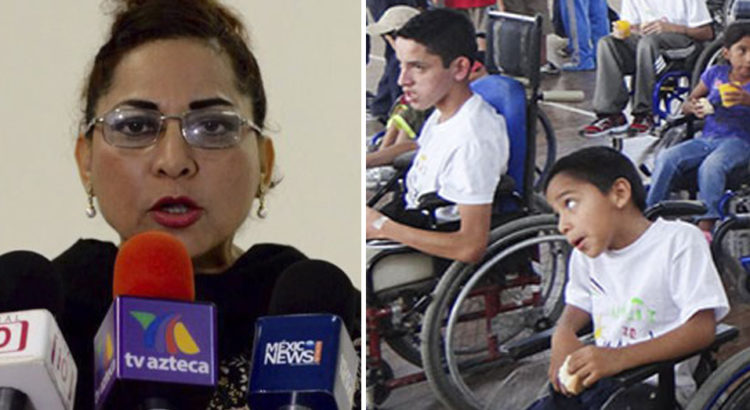
México: Discriminación extrema de titular de la SEP «Los niños con discapacidad no deberian dejarlos nacer, solo son un estorbo para la sociedad y dar apoyo es dinero desperdiciado»

América del Norte / México / 26.02.2018 /Fuente: http://www.primeronoticias.com.mx.

Las escuelas deben de estar libres de niños discapacitados, porque lo ideal es tener un niño bien y en buenas condiciones cognitivas, comento la titular de la SEP, Marisol Alamilla Betancourt, quien es secretaria de Educación y Cultura en Quinta Roo, hizo comentarios discriminatorios en contra de los niños que tienen alguna discapacidad.
No deberíamos dar apoyo a niños con discapacidad, ya que más que un apoyo es un gasto que les quitamos a los niños sanos, Los pequeños con alguna mal formación o discapacidad no deberían ser admitidos a la sociedad, ya que no aportan nada, sino todo lo contrario, generan un gasto al cual no le veo beneficio.
Estoy en contra de que el nacimiento de estos niños sea permitido, en primera no deberían permitir a los padres tener niños con discapacidad si no pueden solventar los gastos para que los pequeños lleven una vida digna.
Esto lo dijo el pasado  2 de febrero durante una reunión de trabajo con alumnos que buscan especializarse en educación especial para dar clases a niños y jóvenes con discapacidad.
Mediante un vídeo que se puede consultar en YouTube, la funcionaria del gobierno de Carlos Joaquín señala que, tenemos un millón y medio de habitantes y tenemos una cantidad mínima de niños con necesidades educativas especiales y que aún se podría reducir más la cifra de dichos menores.
Lo que menos queremos nosotros en el Estado, es tener un niño que no aportara nada en nuestra economía y que en su defecto nos provocara una perdida.
El sector salud es un gran aliado que se encarga de mantener un control en este caso y cada día vamos a tener menos niños con discapacidades lo que nos ayudara a elevarnos como estado.
El propósito de esto fue alentar a los jóvenes a estudiar otra carrera, ya que según menciona que gracias a su labor cada día se requieren menos maestros para estos niños que presentan alguna discapacidad, debido a que su mayor deseo es que no existan niños en malas condiciones ya que  recalcando su discurso, “Lo ideal es tener un niño bien y, en buenas condiciones cognitivas”.
Eso es lo que estamos buscando, y estoy segura de que muy pronto será una realidad, menciono para finalizar sin una gota de sarcasmo.

Fuente: http://www.primeronoticias.com.mx/2018/02/los-ninos-con-discapacidad-no-deberian.htm.

Comparte este contenido:

México: Castigan a estudiantes por usar lengua indígena

México / Autor: Redacción / Fuente: Así Noticias

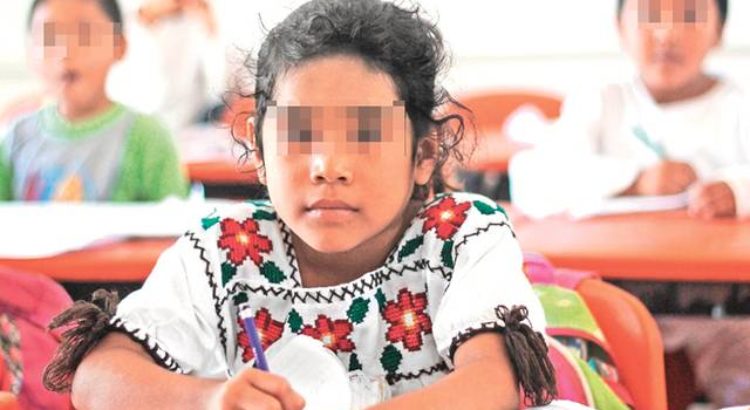
Eduardo Backhoff Escudero, consejero presidente del Instituto Nacional para la Evaluación de la Educación (INEE), informó que, de acuerdo con la Evaluación de las Condiciones Básicas para la Enseñanza y el Aprendizaje, se encontró que entre 13 y 16 por ciento de los estudiantes de primarias indígenas reportaron haber sido regañados o castigados por hablar su lengua indígena en la escuela.

Al celebrar el Día Internacional de la Lengua Materna, Backhoff Escudero afirmó que “el derecho a usarla y a recibir educación a través de ella se ve amenazado con frecuencia. Las limitaciones al uso de la propia lengua no han desaparecido del mundo.

Backhoff Escudero subrayó que aunque las escuelas cuentan con maestros hablantes de lengua indígena, sólo 60 por ciento de ellas dispone de personal docente que habla los idiomas indígenas de todos sus estudiantes.

El presidente del INEE destacó que, de acuerdo con los resultados de la Consulta Previa Libre e Informada a Pueblos y Comunidades Indígenas, “éstas desean que su lengua materna sea enseñada en las escuelas y sea vehículo para el aprendizaje junto con el español.

Al presentar la ponencia La Lengua Materna y la Evaluación, la consejera de este Instituto, Sylvia Schmelkes del Valle, destacó que la educación es elemento indispensable para preservar, fortalecer y desarrollar culturas. “Un país que se considera plurilingüe deberá asegurar que la educación que ofrezca a los pueblos indígenas logre un bilingüismo real, oral y escrito, en la lengua indígena al que se pertenece, y al español”, dijo.

Consideró conveniente que las lenguas indígenas se enseñen, como opción, en todos los niveles educativos.

Anunció que el INEE está analizando los resultados de un estudio exploratorio para adaptar la Evaluación del Desempeño Docente a las condiciones de, entre otros, los maestros indígenas, de escuelas multigrado, Telesecundarias y Telebachilleratos

La directora académica del Centro de Investigaciones y Estudios Superiores en Antropología Social (CIESAS), Regina Martínez Casas,comentó que todavía no sabemos con certeza cuántas lenguas se hablan en México,a pesar de que existen esfuerzos institucionales para conocer la dinámica de las lenguas nacionales.

“Falta mucha labor de documentación para generar las condiciones para cumplir plenamente los derechos lingüísticos de los pueblos indígenas, faltan políticas de comunicación para erradicar la discriminación contra las comunidades lingüísticas y se requierede másacciones,en todos los niveles educativos,para disminuir ir la brecha entre indígenas y no indígenas en México, señaló.

Fuente de la Noticia:

https://asinoticias.mx/2018/02/21/castigan-a-estudiantes-por-usar-lengua-indigena/

Comparte este contenido:

Laura M. Ramírez: América Latina: adelante con la transformación educativa

México / 25 de febrero de 2018 / Autor: Laura M. Ramírez / Fuente: El Heraldo de México

La región todavía no logra que las niñas, los niños y los jóvenes estén, aprendan y participen en la escuela

Este año el panorama en América Latina trae un gran cambio político con elecciones presidenciales o legislativas en 10 países, más dos procesos de 2017: Chile con gobierno entrante en marzo y Honduras con un conflicto que puede desembocar en nuevas elecciones este año.

Para que la región logre superar los problemas de desigualdad, corrupción, pobreza extrema e inseguridad, se requiere apostarle a la educación, con estrategias de mediano y largo plazo.

La mayoría de los países empezaron procesos de transformación educativa desde los 80. Inicialmente el foco estuvo en aumentar la cobertura en educación primaria. Con los años se ha visto que esto no es suficiente y se necesitan cambios normativos y políticas públicas en- caminadas a mejorar la calidad.

Un caso representativo es el de México, que en 2013 realizó un cambio para que el artículo 3o estableciera que la educación que ofrece el Estado debe enfocarse para lograr el máximo logro de aprendizaje.

Muchos gobiernos han optado por impulsar políticas enfocadas a la primera infancia para dar atención integral y de calidad a l@s niñ@s de 0 a 6 años. Destaca el caso colombiano que con su iniciativa De Cero a Siempre logró articular servicios de salud, cuidado y educación inicial. También se ha trabajado en mejorar la formación docente y de líderes escolares mediante formación inicial y continua y evaluación de desempeño. Para mejorar la permanencia de alumnos hay pro- gramas como redes de tutoría, aulas interactivas y ampliación de jornada.

Sin embargo, la región todavía no logra que las niñas, los niños y los jóvenes estén, aprendan y participen. Un factor que dificulta obtener mejores resultados es que con frecuencia las políticas públicas se conciben de acuerdo al gobierno en turno, sin visión de largo plazo.

¿Qué podemos hacer los ciudadanos? Independientemente de la ideología de los gobiernos entrantes, la ciudadanía tiene un papel funda- mental para que la transformación educativa siga su curso. ¿Cómo?

• Exigiendo políticas de Estado y no de gobierno, los cambios llevan tiempo y es difícil avanzar cuando cada periodo presidencial se quitan y ponen programas sin evaluar su impacto y sin reconocer los aciertos.

• Informándonos sobre políticas que han dado resultado y demandar que permanezcan, que se ajusten los presupuestos para que lo bueno siga y cambiar lo que no funciona.

• Reconociendo a los buenos maestros y líderes escolares, apoyándolos en el papel que juegan en la transformación de las escuelas.

• Escuchando lo que niñ@s y jóvenes tienen que decir para fortalecerlos como ciudadanos y asegurar- nos de que la educación responde a lo que quieren y necesitan.

La transformación educativa en Latam no depende de un gobierno, es un proceso que lleva años y que debemos impulsar entre tod@s.

Fuente del Artículo:

https://heraldodemexico.com.mx/opinion/laura-m-ramirez-america-latina-adelante-con-la-transformacion-educativa/

Fuente de la Imagen:

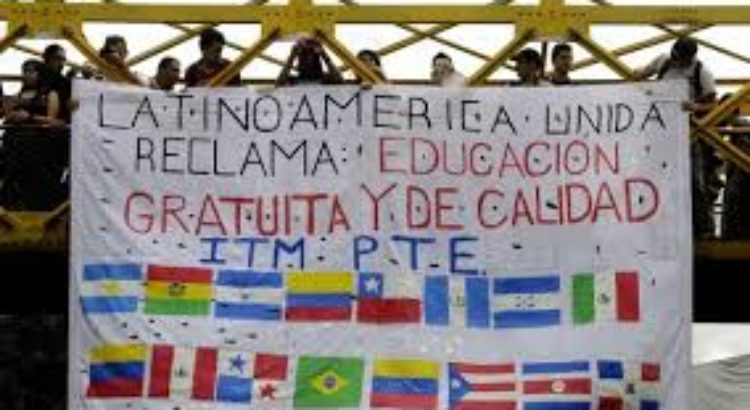
Latinoamérica por la educación

Comparte este contenido:
Page 764 of 1685
1 762 763 764 765 766 1.685