Page 817 of 1685
1 815 816 817 818 819 1.685

Smoking contributes to less increase in life expectancy among women with only primary education

EEUU/December 11, 2017/Source: https://www.news-medical.net

Life expectancy in Sweden has risen steadily during the last few decades for most groups. One exception is women whose highest educational level is compulsory school. This is mostly because of smoking, says a new dissertation in sociology.

«Life expectancy has stayed level in the last 20-30 years for women with only a compulsory schooling in Sweden, but it’s increased for other social groups. A big piece of this puzzle is smoking,» say Olof östergren, sociology researcher at Stockholm University.

The study is based on data from the registries of causes of death and education for all Swedes who were 30-74 years old between 1991 and 2008. The research shows that inequality in longevity between different groups have increased among women during this period.

The statistics show that anticipated life expectancy among women with only a primary education increased a little over a month between 1991 and 2008, while the comparable number for university educated women were five months. Not counting deaths attributable to smoking, the former group’s life expectancy increased to four months and the latter’s to just over five months.

«The differences may seem small, but when it’s about anticipated life expectancy these numbers are dramatic. Deaths from smoking are three times more common among women with a compulsory education versus university educated ones,» says Olof östergren.

«Despite ambitious welfare policies, the social health disparities are not smaller in Sweden than in other countries, and these disparities are increasing more rapidly in Sweden than internationally. Alcohol consumption and smoking have been highlighted as contributing factors to these issues. My research backs up this picture,» says Olof östergren. «Deaths from smoking in Sweden has decreased among men and increased among women, particularly those with compulsory schooling. One possible explanation as to why men are less harmed by tobacco is snus. Snus isn’t as dangerous as smoking, and it’s much more common among men than women.»

«Earlier research has shown that people in stressful life situations have a harder time stopping health endangering habits like smoking. This is partly because fewer of them try to quit and partly because people with fewer economic and social resources have a smaller chance of breaking the habit,» says Olof östergren.

A stressful life situation can also make the body more susceptible to the damaging effects of tobacco and alcohol. This means that differences in mortality depend both on behavioral differences and social and economic differences. On the other side, education provides access to a better work environment, higher status in the job market, more control over the work situation and higher income. The dissertation also shows that education is particularly important for health of those with low incomes.

«The theory behind this is that the fewer economic resources a person has, the more important the way that they spend the resources becomes. Education promotes effectiveness and the proper handling of resources, and that means that highly education groups can use all of their means to improve health. That’s why education is particularly important for those with low incomes. Education is always good for health,» says Olof östergren.

Source:

https://www.news-medical.net/news/20171211/Smoking-contributes-to-less-increase-in-life-expectancy-among-women-with-only-primary-education.aspx

Comparte este contenido:

EEUU: ATI Nursing Education Launches NursingCE.com, a Continuing Education Website

EEUU/December 12, 2017/by Benzinga Full Feed in Press Releases/ Source: http://www.ssuchronicle.com

Leadership is an overused word, and is often misused. We like this definition.

New online resource streamlines the CE process to help nurses meet licensing requirements

New York, New York (PRWEB) December 11, 2017

NursingCE.com has announced the launch of its new mobile-friendly website, http://www.nursingce.com, designed to offer nurses a comprehensive source for continuing education (CE) activities to help meet state and licensing requirements. NursingCE.com is a brand of ATI Nursing Education, a leading provider of assessments and other digital solutions to nursing schools, and will offer continuing education to nurses in all 50 states as well as Washington D.C. and Puerto Rico. Nurses who complete courses on NursingCE.com will earn credits that are ANCC-accredited.

Nurses are required to continually seek continuing education credits to maintain their license to practice. NursingCE.com helps nurses avoid the time-intensive delays and high costs that are usually associated with continuing education. Courses can be completed from any device with an Internet connection. A variety of courses are available, some of which include Domestic and Community Violence, Child Maltreatment, Medical Errors, Pain Management and more.

NursingCE.com has streamlined the traditional continuing education process by providing the ability to take courses, pay for credits, and generate certificates of completion instantly upon successful course completion. Access to courses and assessments are available for free to anyone with a free NursingCE.com account. Nurses only have to pay a fee of $39 to get all of their credits and downloadable certificates once courses are successfully completed. This is a striking departure from the usual practice of charging nurses up front for each course prior to taking and completing the course and pricing that can vary according to the number of credits offered.

NursingCE.com supports its nurses with dedicated customer support via phone and email. The website’s blog offers additional resources and helpful information to nurses that are written by prominent nurse bloggers and educators. Blog content includes articles in a variety of categories including career advice, continuing education news, tips and advice for licensing and certification, and company updates.

At launch, NursingCE.com has courses available to help meet the licensing requirements for nurses in 43 states plus Washington, D.C. Courses will be available to meet the requirements for California, Florida, Iowa, New York, Ohio, Pennsylvania, Washington state and Puerto Rico in early 2018. To learn more about all the available courses and content visit http://www.nursingce.com.

About NursingCE.com

NursingCE.com is a comprehensive online source to help nurses meet continuing education (CE) and licensing requirements for all 50 states as well as Washington, D.C. and Puerto Rico. NursingCE.com is a brand of Assessment Technologies Institute, LLC (ATI Nursing Education), a leading provider of assessments and other digital solutions to nursing schools that is an accredited provider for continuing education by the American Nurses Credentialing Center (ANCC). For more information, visit http://www.nursingce.com.

Source:

http://www.ssuchronicle.com/2017/12/11/ati-nursing-education-launches-nursingce-com-a-continuing-education-website/

Comparte este contenido:

Estados Unidos: Third indication U.S. educational system is deteriorating

Estados Unidos/Diciembre de 2017/Autora: Jill Barshay/Fuente: The Hechinger Report

Resumen: ¿El sistema educativo de EE. UU. Comienza a decaer? No me gusta ser alarmista ni dar demasiado peso al resultado de ninguna prueba, pero la publicación de los resultados de las pruebas de lectura de 2016 en todo el mundo es ahora el tercer punto importante de prueba de que algo anda mal. El último Progreso en Lectoescritura Lectora Internacional (PIRLS) – una prueba de comprensión de lectura dada a estudiantes de cuarto grado en 58 países y regiones de todo el mundo – mostró que el desempeño de los EE. UU. Está disminuyendo tanto en términos absolutos como relativos. Los estudiantes estadounidenses de cuarto grado, en promedio, tenían peores habilidades de lectura que cinco años antes, en 2011, y los puntajes cayeron siete puntos en una escala de 1,000 puntos. Al mismo tiempo, otros países saltaron por encima de nosotros.

Is the U.S. educational system beginning to decay?

I don’t like to be alarmist, or give too much weight to any one test result, but last week’s release of 2016 reading test scores around the world is now the third major proof point that something is awry. The latest Progress in International Reading Literacy Study (PIRLS) — a reading comprehension test given to fourth graders in 58 countries and regions around the world — showed that U.S. performance is sliding in both absolute and relative terms. American fourth-graders, on average, had worse reading skills than they did five years earlier, in 2011, with scores slipping seven points on a 1,000-point scale. At the same time, other countries leapfrogged ahead of us. The combination meant that the United States slipped from 6th to 15th place in this international ranking. (The U.S. Education Department considers the 2016 score to be a statistical tie for 13th place because it was so close to those of the three countries ranked immediately ahead of it. See adjacent table.)

The top-performing nations in fourth-grade reading, ranked by scores on the 2016 Progress in International Reading Literacy Study (PIRLS). Source: Reading Achievement of Fourth-Grade Students in an International Context, Table 1, p. 8

This follows two other disappointing test results that had largely pointed to problems in math skills. Both fourth- and eighth-grade students posted declines on the math section of the 2015 National Assessment of Educational Progress (NAEP). (Eighth-graders had done worse in reading, too.) And another international exam, the 2015 Program for International Student Assessment (PISA) showed back-to-back deterioration in math performance among American 15-year-olds in 2012 and 2015. Reading scores had stayed steady.

Reading ability among younger children hadn’t been a source of concern. Until now.

“It looks dire on the surface because we see that we are losing ground,” said Jocelyn A. Chadwick, president of the National Council of Teachers of English. “We need to drill down and learn exactly where this is happening: which states, which districts and which schools. The picture is not as dire everywhere in the country as the test scores would suggest. Some of our students can blow the top off of that test. And we need to look at places where good [teaching] practices are occurring.”

Chadwick said the increase in poverty and the erosion of the middle class, particularly since the 2008 recession, are making it harder to teach reading. “Middle-class parents who pay attention to homework or who ask how their child’s day was, those parents are now working maybe two jobs, or there’s an issue with healthcare,” said Chadwick. In addition, she pointed to the growing numbers of extremely poor students who must learn to read while coping with hunger, homelessness and other upheavals at home.

So many things could have affected student achievement during the five-year period between 2011 and 2016 that it’s impossible to know what the main causes of deterioration are. In addition to an increase in the number of poor students, the funding for schools declined, Common Core standards were introduced, the use of educational software increased, and, in many schools, time spent on test preparation expanded (which often detracts from learning).

NAEP, the national exam given every two years, shows a different picture for fourth-grade reading. During roughly the same 2011 to 2015 time period, fourth-grade reading scores rose slightly, seeming to contradict the international test released last week. But high-performing students drove those gains, and low-achieving students didn’t improve at all. For example, students at the top (90th percentile) gained 2 points. Students at the 10th percentile didn’t budge, remaining well below “basic,” unable to make simple inferences or interpret the meanings of words. Regardless of which test you put more stock in, there’s a growing gap between high-achieving and low-achieving fourth-graders. Regardless of the test, low performers are falling farther behind.

One way to reconcile the contradiction between PIRLS and NAEP is to take a longer historical perspective. “Over the shorter term, there are fluctuations,” said Jack Buckley, a former commissioner of the National Center for Education Statistics. “But if you look back to 2001, both trends are the same; we’re flat. We’re not moving much in fourth-grade reading.”

Of course, when you look over this longer 15-year time horizon, there isn’t any deterioration to worry about either. Just a distinct lack of progress. “I’m not celebrating stagnation. Don’t get me wrong,” said Buckley, now a senior vice president at the American Institutes for Research, a nonprofit research firm. “You could argue, given all the challenges that schools are facing, it’s remarkable that we’ve been able to stay flat.”

Fuente: http://hechingerreport.org/third-indication-u-s-educational-system-deteriorating/

Comparte este contenido:

México: Sindicatos de educación en el Estado se manifestarán el próximo lunes por impago salarial

México/Diciembre de 2017/Autora: Michell Ramírez/Fuente: CB Televisión

Debido a la fatal de pagos que han exigido por más de 35 días los trabajadores de la educación en el Estado, el próximo lunes 11 de diciembre, el Frente Estatal de Sindicatos de Educación Media Superior y Superior (FESEMSS) continuarán las protestas desde primeras horas del día para exigir el saldo total de los adeudos quincenales y el pago de las prestaciones correspondientes al cierre de año.

La movilización dará inicio a partir de las 7:00 horas con la concentración de los agremiados sindicales en el monumento ecuestre del generalísimo Morelos, mejor conocida como Plaza del caballito; se prevé en punto de las 8:00 horas la toma de la Av. Acueducto esquina Ventura Puente a la altura de las puertas de la Secretaria de Finanzas por parte de SITCBEM y SUTCecytem; a las 10:30 dará inicio una marcha con dirección al Palacio de Gobierno.

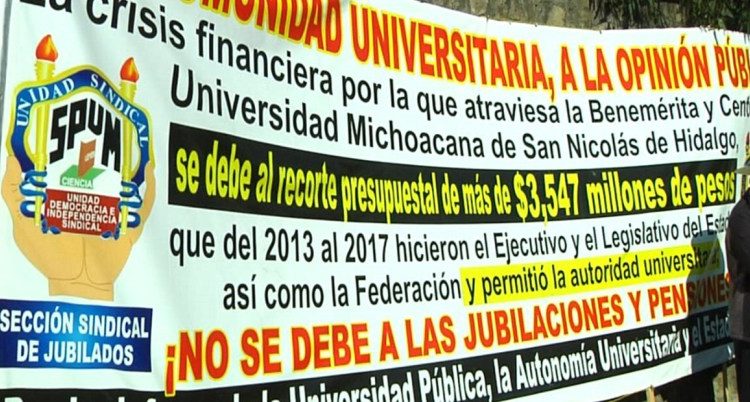
Cabe destacar que a la manifestación también fue convocado el Sindicato de Profesores de la Universidad Michoacana (SPUM) quienes en conjunto con su sindicato hermano de Empleados (SUEM) de la misma institución educativa se aglutinarán en las afueras del Colegio Primitivo y Nacional de San Nicolas de Hidalgo para continuar con la exigencias de los pagos salariales y el resarcimiento de las violaciones al Contrato Colectivo del Trabajo.

Fuente: https://www.cbtelevision.com.mx/sindicatos-educacion-estado-se-manifestaran-proximo-lunes-impago-salarial/

Comparte este contenido:

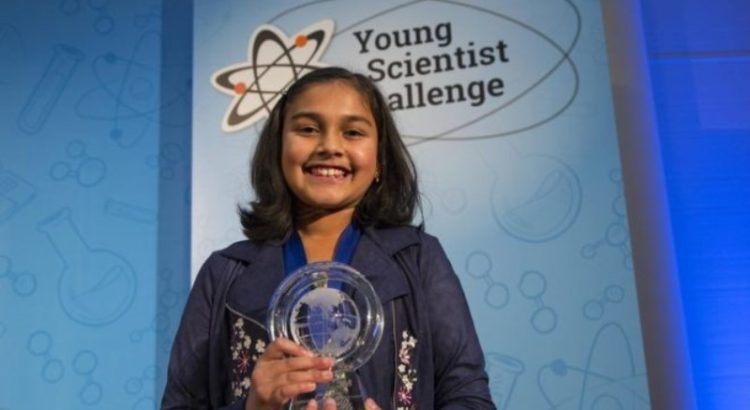
Esta niña de 12 años ganó el premio a la mejor científica joven de Estados Unidos.

América del Norte/Estados Unidos/11.12.2017/Autor y Fuente: https://www.xatakaciencia.com

Un dispositivo barato para detectar los niveles de plomo en el agua corriente es el hito que ha desarrollado esta niña de 12 años para alzarse con la distinción de ser la mejor científica joven de Estados Unidos.

Su nombre es Gitanjali Rao.

 Agua corriente
 98405503 Gitanjali Rao Tethys

El dispositivo está concebido con nanotubos de carbono que envía los resultados de las mediciones del agua al teléfono móvil a través de Bluetooth. Después de ver a sus padres probando con unas rudimentarias tiras si el agua de su casa era segura, Rao decidió inventar un aparato que diese resultados mucho más fiables.

El detector ha sido bautizado como Tethys, por la diosa griega del agua dulce, es portátil. Rao explicó que Tethys funciona en base al «dopaje», que en este caso consiste en introducir elementos o compuestos químicos dentro de los nanotubos.

Usé cloruro para dopar los nanotubos. Cuando el detector se sumerge en agua con plomo, las moléculas de este metal se ven inmediatamente atraídas al cloruro.

Con su proyecto, Rao fue la ganadora del Desafío Científico Joven 2017, un concurso nacional de ciencia organizado por la empresa 3M y la organización educativa Discovery Education. Rao planea invertir el dinero del premio en producir nanotubos de carbono dopados permanentemente con cloruro que puedan instalarse en un grifo.

Fuente: https://www.xatakaciencia.com/nanotecnologia/esta-nina-de-12-anos-gano-el-premio-a-la-mejor-cientifica-joven-de-estados-unidos

Imagen: https://i.blogs.es/b7b78a/_98392268_a54dd9fb-4c9e-4ce4-844ea5aafd77915d/1366_2000.jpg

Comparte este contenido:

Reseña de Película: El Profesor.

America del Norte /Estados Unidos.

Henry Bathes es un hombre completamente desengañado con el mundo que le rodea, con la maldad intrínseca que afecta al género humano. Profesionalmente, en su condición de maestro de escuela, tiene un don: sabe conectar emocionalmente con sus alumnos…pero, el miedo a sentirse traicionado afectivamente le hace estar poco tiempo en el mismo puesto de trabajo. Sin embargo, todo cambia cuando llega a un nuevo instituto y se convierte en el referente de unos alumnos sin rumbo, necesitados de afecto. Si «American History X» era un crudo retrato de advertencia sobre los peligros de los movimientos neonazis en Estados Unidos y sus métodos de captar jóvenes descontentos de clase media blanca en su política de odio racial, en «El profesor (Detachment)», el realizador británico Tony Kaye nos ofrece otro drama humano sobre el mundo de la enseñanza y la complicada relación existente entre maestro y alumno.

La trama de la película gira en torno a la figura de un profesor sustituto, que no encuentra sentido a su vida y que acostumbra a esconderse de sus propios problemas, a salir huyendo ante las primeras dificultades que se le presentan, pero que sabe relacionarse a la perfección con los alumnos y al final, llega a la última parada de sus continuos viajes, estableciéndose en un peculiar instituto en el que dejará huella. «El profesor (detachment)» supone el debut del guionista Carl Lund en el medio cinematográfico, como autor de una línea argumental que ha cautivado a los espectadores y a los jurados de Festivales de prestigio como el de Tokyo o el de Woodstock. El actor neoyorkino Adrien Brody se convirtió en 2003 en el actor más joven en obtener un Oscar gracias a su interpretación de un superviviente judío del gueto de Varsovia, durante la II Guerra Mundial, en la película de Roman Polanski, «El pianista». Después de algunos años irregulares en su carrera cinematográfica, con papeles no demasiado afortunados en cintas como «King Kong» o «El bosque», intenta volver al buen camino con «El profesor (Detachment)», un drama educativo, en el que interpreta a un maestro de escuela que, gracias a sus alumnos, se encuentra a sí mismo. Le acompañan actores de reconocido prestigio como la exuberante Christina Hendricks, nominada al premio Emmy por la serie de éxito «Mad Men», como Marcia Gay Harden, ganadora del Oscar por «Pollock. La vida de un creador» y una actriz de carácter indispensable gracias a cintas como «Muerte entre las flores» o «Mystic River», como James Caan (el Sonny Corleone de «El padrino»), que actualmente vemos en la serie «Las Vegas», como Bryan Cranston (Breaking Bad), como Blythe Danner (Los padres de ella), como Tim Blake Nelson (O brother!), como Lucy Liu (Los Ángeles de Charlie)o como William Petersen, el CSI Grissom en Las Vegas.

Fuente: https://youtu.be/e4ZK8j52R_8

Imagen: http://2.bp.blogspot.com/-YjY3haiiiX8/UKbMYSaF3hI/AAAAAAAACZk/qI9hzQ2Hnog/s1600/detachment130712w.jpg

Comparte este contenido:

Dan a conocer premios nacionales 2017 en México.

América del Norte/México/11.12.2017/Autor y Fuente: http://www.prensa-latina.cu/
Las secretarías de Educación Pública y Cultura dieron a conocer hoy los nombres de los investigadores, académicos, creadores y artistas galardonados con los premios nacionales de Ciencias, Artes y Literatura 2017.
Se trata del máximo reconocimiento a los mexicanos más sobresaliente en las ramas mencionadas, que posteriormente lo recibirán de manos del presidente Enrique Peña Nieto.

El Premio Nacional de las Ciencias lo recibirán María Elena Álvarez-Buylla Roces, en las ciencias físico-matemáticas y naturales; y Emilio Sacristán, en tecnología, innovación y diseño.

En Artes y Literatura ira a manos de Alberto Ruy Sánchez, en lingüística y literatura; Nicolás Echevarría, en bellas artes; María de las Mercedes Guadalupe de la Garza y Camino Campo, en historia, ciencias sociales y filosofía; y Francisco Barnett Astorga en artes y tradiciones populares.

Los laureados con el Premio Nacional también son distinguidos con su ingreso como creadores eméritos del Sistema Nacional de Creadores de Arte.

Fuente: http://www.prensa-latina.cu/index.php?o=rn&id=137782&SEO=dan-a-conocer-premios-nacionales-2017-en-mexico

Imagen: http://www.prensa-latina.cu/images/2017/diciembre/10/ruysanchez-mexico.jpg
Comparte este contenido:
Page 817 of 1685
1 815 816 817 818 819 1.685