Page 965 of 1684
1 963 964 965 966 967 1.684

No Education Crisis Wasted: Billionaires Seek to Make Education in Africa Profitable

Africa/July 18, 2017/By Maria Hengeveld/http://www.alternet.org

Bill Gates and Mark Zuckerberg are betting big on an effort to turn African education into a for-profit venture. But investigations show that children and their teachers are getting a raw deal.

The dream is wonderful: provide a good education to millions of children growing up in poverty. That’s why Bill Gates, Mark Zuckerberg, the World Bank and the Dutch Ministry for Foreign Affairs are pouring millions into a company that aims to turn that dream into reality. Investigations show, however, that both the children and their teachers get a raw deal.

Shannon May is clearly emotional when she walks onto the stage in early February 2017. The founder and strategist behind the world’s largest chain of kindergarten and primary schools is about to speak to a room full of women. She will talk about education, motherhood and the reasons why she founded her company, Bridge International Academies, with her husband Jay Kimmelman in 2008.

May and Kimmelman are in Nairobi, the city they live in and where Bridge has its headquarters. About 70 percent of the more than 100,000 pupils attending Bridge schools live in Kenya and around 6,000 staff work and live there. It was also the company’s base for expanding into Uganda, Liberia, Nigeria and India.

In her speech, May tells the story of the founding of Bridge: “I was speaking with mothers and with fathers, about their struggles… two things came up across hundreds of conversions I had… the first was health… the other thing was education.”

This made May think about her own childhood: if she hadn’t had good teachers, she would never have been admitted to Harvard and she would probably never have worked at Morgan Stanley. She would certainly never have come up with the idea of ​​setting up Bridge, the “edu-business model” that aims to provide affordable, high-quality education to millions of children from families who have to live on less than US$2 a day. When the couple founded Bridge in 2008, their dream was to emancipate these children.

The exact number of children involved is unclear.  Sometimes her husband talks about 700 million children, at other times it’s around 700 million families.  According to the World Bank, 767 million people worldwide currently live below the poverty line of 1.90 dollars a day. Whatever the exact figures are, they are high and education opportunities fall short of what is needed. There are not enough good state schools and private schools are often too expensive. May and her husband have spotted a gap in the market: education needs to be better than what state schools offer, and provided at only 30 percent of what the state currently spends per student.

May, close to tears, continues her speech in Nairobi: “Bridge is different because it exists for only one reason, it’s so that every child, not just the rich kids, not just the kids in the cities, not just the kids who have mothers and fathers who can look after them and teach them at home but every kid no matter what else is going on in their lives can go to a great school.” She is even more positive in an interview: “We fight for social justice, to create opportunities.”

And for profit. According to her husband, the “global education crisis”  is worth about US$51 billion a year. In 2013, Kimmelman explained in a presentation how, for less than US$5 in tuition fees per pupil per month, Bridge could grow “into a billion-dollar company” and “radically change the world.” Earlier he and May promised that they could do this for US$4 per month per pupil.

Big dreams and even bigger promises. However, my research and research done by others shows:

  • that their quality claims have not been supported by any independent research;
  • that the education provided turns out to be more expensive than promised;
  • that underpaid teachers have to recruit additional pupils;
  • that they have dismissed criticism from non-governmental organizations and trade unions;
  • that critics are silenced;
  • that a PR offensive has been launched in order to continue selling the education services provided.

Furthermore, €1.4 million of Dutch taxpayers’ money has been poured into the company. Dutch support was provided because Lilianne Ploumen of the country’s Labor Party, currently caretaker Minister for Foreign Trade and Development Cooperation, believes that Bridge uses an “innovative and cost-effective education model, which is able to keep tuition costs per child down.”

How do you improve education, make it cheaper and also make it profitable? May and Kimmelman have come up with an “innovative pedagogical approach.” The possibility of setting up a few thousand standardized schools within a few years is to be the first innovation. The profit made from each school may be low, but once half a million pupils are recruited — the number of enrollments that Bridge needs to break even — business really takes off. The plan is to reach two million pupils by 2018 and 10 million by 2025.

This rapid growth would be made possible by using Bridge’s second innovative method, namely its very own approach to the role of teachers and their salary scale. May believes that “qualities such as kindness” are more important than diplomas and this allows for significant savings. In Kenya, where the starting salary for qualified teachers is around US$116 dollars a month, Bridge teachers usually earn less than US$100 a month. However, as Kimmelman explains in a presentation, teachers can earn bonuses by recruiting new students themselves. Marketing is a core task for both teachers and school principals.

A third innovative aspect, explains May, is the smart use of technology. It works like this: a team of “master teachers” designs digital “master lessons” that are so detailed that all a teacher needs to do is read them from a special Bridge tablet (know as the Nook).

Leaning how to use the Nook is therefore a key component of the crash course that Bridge teachers must complete. Over three to four weeks, they learn how to download new lesson material, how to present it, and how to record daily scores and progress made with the lessons.

This last skill is crucial, says May. It allows Bridge to see “hundreds of thousands of assessment scores” every day and to find out “what works and what doesn’t.” The “extremely robust data” can then be used to “continuously improve the teaching material.”

Setting up schools from scratch, paying teachers and developing and maintaining technology all cost money.

“One of our challenges when we were first pitching Bridge to investors was getting them to… see people living in poverty not just as beneficiaries but as customers,” May explains in a 2015 World Economic Forum video. It must have been a convincing argument because May and Kimmelman have attracted more than US$100 million in support since Bridge was set up in 2008. Supporters range from venture capitalists, like Bill Gates and Mark Zuckerberg, to development agencies such as the World Bank.

My request for information under the Dutch Freedom of Information Act revealed that the Dutch government, too, invested nearly €1.4 million in Bridge between 2015 and 2016 via contributions to the Novastar East Africa Fund. Minister Ploumen says that this “indirect support complements the weak public education systems in these countries.”

Support is not only provided through funding. In 2015, the World Economic Forum named May “One of Fifteen Women Who Changed the World.” That very same year, the President of the World Bank, Jim Yong Kim lauded the Bridge business model as one for the future. And a few months ago, Bridge won the Global Shared Value Award, a prestigious prize awarded to companies that have a social mission.

It has made May and Kimmelman extremely self-confident. We have “definitively proven that it is possible to provide high-quality education […] and in doing so solve an increasingly urgent crisis for families, communities and countries,” May wrote in February of this year. Kimmelman even believes that international research shows that Bridge “students already perform better than others in six months.”

If that would be true, why have they still not reached those millions of pupils? Anton (a former academy manager with Bridge, who did not want his real name published) is familiar with the darker side of Bridge’s “innovative pedagogical approach.” Anton was fired after a year in the post when a quality assurance manager and a regional manager made an unannounced visit to his school and discovered three pupils attending in contravention of school fees policy.

The children were registered with Bridge, but were no longer allowed to attend classes because their parents had fallen behind with the payment of tuition fees. Anton knew that he was supposed to turn pupils away if their parents had not paid. He had already had his salary docked once and was at risk of losing his job if he continued to allow those pupils to attend.

Apparently, the children had returned because their parents were not at home and they didn’t feel safe outside. So, their class teacher had allowed them back into the classroom without getting Anton’s permission. But the visiting quality assurance and regional managers did not agree that this was a good enough reason and Anton was told to clear his desk.

On reflection, Anton says he is relieved that he is no longer working for Bridge. He was under too much pressure to attract new pupils and the “rigid payment system” put him in uncomfortable waters with parents. Every month, about half of the parents couldn’t pay their fees on time, and would get upset with Anton when their children were, again, sent home from school. These tensions made it even more difficult to attract new customers and to persuade existing customers to bring in new ones.

“We promised them heaven” says another former academy manager. John (name changed) says it was the only option, “otherwise, you lost your job.” He worked at Bridge for two and a half years before he handed in his resignation. The low salary and the heavy work load (60 hours a week, according to John) were contributing factors. His pangs of conscience were the deciding factor: he felt that he was “constantly deceiving parents.”

It wasn’t because Bridge had directly instructed him to “only mention the basic price to new customers and avoid mentioning additional costs, such as exam fees and uniforms.” But since his salary was partly calculated on his success rates, he often told half truths.

If parents weren’t happy with the strict payment arrangements and threatened to transfer their children to a school with more flexible system, John would think up an argument in an attempt to keep them, telling them for example “that there would soon be a sponsor for them who would pay the tuition fees on their behalf.”

How representative are these reports from these two former academy managers? Juul (name changed) can tell us more. Juul, a researcher, was part of a team that in early 2016 completed nearly four hundred interviews with Bridge parents (128), pupils (65), teachers (21) and academy managers. The research was carried out on behalf of Education International, an international trade union for teachers, which is not a competitor of Bridge.

The academy managers and teachers who were interviewed expressed the same frustrations as Anton and John. They described the marketing work as annoying, demoralizing and underpaid. The Nook script was considered to be restrictive and almost half of those interviewed said that they did not use the Nook as intended or sent “meaningless data” to the headquarters.

“You hear such sad stories,” said Juul. “Some parents took out loans to pay the tuition fees and were evicted from their homes because they were unable to make payments on time.”

Bridge, however, doesn’t agree with the research. In a statement, the company called the report nonsense. It claims:

  • Bridge internal data shows that 64 percent of Bridge teachers enjoy teaching in Bridge classes;
  • 100 percent of them would like to grow with the company; and
  • 96 percent of teachers appreciate the community engagements responsibilities assigned to them.

According to May, the study is therefore proof of the witch hunt that Education International started against her company. The organization had already published a similarly critical report on Bridge in Uganda. May continues to believe in her dream: “Changing the status quo is inherently a challenge to entrenched interests and existing models.”

But those “entrenched interests” aren’t finished with Bridge yet. Angelo Gavrielatos led the Education International research project. He shows me a short film in which Kenyans from various national educational institutions and former Bridge staff criticize the company’s infrastructure, facilities and teaching materials. For example, a former staff manager says that “people are being misled” with promises about an “excellent lesson package.”

A package, it should be noted, that has never been approved by the Kenyan authorities. A leaked letter from the Ministry of Education reveals that a Kenyan inspection had deemed Bridge’s teaching material “largely irrelevant to Kenyan teaching objectives” and that the teaching methods don’t allow teachers enough room to tend to pupils with special needs.

Education International is not the only organization to criticize Bridge. At the start of 2015, 116 non-governmental organizations sent a letter to World Bank President Jim Yong Kim. They stated that there was no evidence at all that Bridge had succeeded in delivering better results than competing state schools and criticized Kim for blindly accepting Bridge’s unverifiable “internal data.”

What’s more, Bridge is by no means as affordable as the company claims. In Kenya, the cost per student is between US$9 and US$13 a month once exam fees, uniforms, books and administration costs are included. The situation is similar in Uganda, the organizations write.

According to Bridge, the organizations’ calculations are entirely wrong. However, when asked, the company does not deny that, in practice, tuition fees are higher than the promised fees of US$4-6. May, meanwhile, continues to insist that Bridge’s prices are reasonable. Because, she writes, by sending their children to Bridge, parents have “determined for themselves that Bridge is affordable” and that they feel that the tuition fees charged by Bridge “are an appropriate rate.”

However, voices within the United Nations have also started to speak out against the Bridge model. When it was announced at the start of March 2016 that Liberia was considering outsourcing its entire primary school system to Bridge, the Special Rapporteur on the right to education stated that “public schools, their teachers, and the concept of education as a public good, are under attack.”

Questions are also being raised by the Ugandan government. Following an inspection, the Ministry of Education found that Bridge schools “showed poor hygiene and sanitation which puts the life and safety of the schoolchildren in danger” and decided that the company had to close 63 schools. May puts this setback down to troublemakers who have “sold lies to the Ugandan government.” Lies that “unfortunately the government has taken seriously.”

It’s Kenya where May’s dream really begins to turn into a nightmare. In August 2016, the Ministry of Education sent the company an ultimatum. Bridge was given 90 days to adapt the curriculum to Kenyan guidelines and ensure that at least half of the teachers had a diploma. If they didn’t meet those requirements, Bridge was at risk of having to close down all of its schools.

But Bridge won’t be beaten. It is trying to silence Kenyan critics, as shown in two leaked letters. One was addressed to the head of the national teachers’ union, the other addressed to the director of a national school association. The first was sent by Bridge’s law firm, the second by Bridge’s in-house lawyer. In both letters, the recipients are threatened with a defamation lawsuit if they continue to speak out against Bridge and portray it as a company that “is only interested in profit.”

Steps have also been taken in Liberia to counter negative reports. Anderson Miamen from the Liberian Coalition for Transparency and Accountability in Education described the situation to me in an e-mail. When he wanted to interview Bridge teachers at the start of this year as part of an assessment study, he discovered that they had apparently been “warned against speaking to visitors or researchers. Especially not about their welfare or that of the children.”

Bridge has also launched a PR offensive. The company opened a London communications office earlier this year and has advertised several vacancies for PR professionals who should have good contacts with the media in order to “promote and protect” Bridge’s reputation.

Since then “Bridge’s success” has been widely praised on Twitter. For example, “A survey shows that 87 percent of the Bridge parents believe that Bridge teachers are well trained and that their teaching method is the best.” There is no link to the survey, only photos of smiling pupils in Bridge uniforms. The new PR manager, Ben Rudd, did not want to send me the survey either. He did, however, send promotional material that refers to the same internal data and mysterious studies. He also offered to arrange a “high-level quote.”

And the data that May earlier described as “robust?” They are up for sale. At least, that’s what a leaked Bridge presentation, meant for investors, from 2016 suggests. In this presentation, Bridge outlined new profit-making opportunities, including the sale of customer information to lenders and insurance companies, and increased profit margins on school lunches and student uniforms.

What has happened to May and Kimmelman’s dream? Opposition from governments, non-governmental organizations and trade unions seems to have slowed down Bridge’s growth considerably. It also looks like the company is not going to reach its planned target of two million pupils by 2018. The company wrote me that it currently has just over 100,000 pupils.

Not all of Bridge’s innovations are bad, of course. Absenteeism among teachers appears to be lower at Bridge schools than at state schools. Juul says that other schools could also take Bridge’s electronic payment methods as an example as a way to tackle corruption.

As for the Dutch Ministry of Foreign Affairs and its investment of €1.4 million, spokesperson Herman van Gelderen informed me by e-mail that compliance with quality standards and affordability are part of “our involvement and dialogue with Bridge. The findings in the article serve as a basis for discussing these issues with Bridge.” The same applies to the teachers’ workload and remuneration.

Van Gelderen points out that the quality of the education provided is better than at state schools. To back up his argument he refers to a national test  in 2015 and 2016 on which Bridge students apparently scored slightly higher than the national average. But even if Bridge performs better than state schools, it still doesn’t tell us anything about the quality of the education provided by Bridge. Because — and May also admits this herself in an article — the poorest and, therefore, often weaker students, who bring the average exam scores down, mainly go to state schools. Moreover, Bridge is a private school and can therefore also influence scores by not accepting weaker pupils or by unnecessarily making them repeat a year. In Education International’s report, teachers admit that this kind of selection occurs.

High-quality education cannot simply be provided using a universal script, and meaningful learning outcomes cannot be summed up in self-assessed evaluations. Especially not if they are part of a business model that does not tolerate transparency or independent evaluations, and where profit incentives, branding bluff and promotional spiel are rewarded more than honest, critical reflection.

* This is a translation of an article originally published in the Dutch news magazine De Correspondent.

Maria Hengeveld writes about feminism, inequality, multinational corporations and economic justice, sometimes in Dutch.

Source:

http://www.alternet.org/no-education-crisis-wasted
Comparte este contenido:

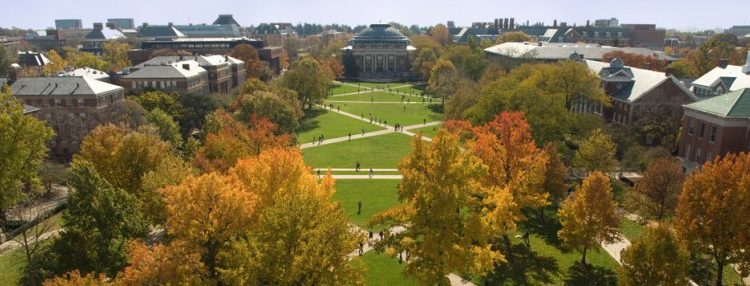
EEUU: Illinois budget gives temporary fix for public universities

EEUU/ July 18, 2017/Source: http://www.heraldonline.com

A new Illinois budget will give public universities funding for the 2017-18 school year.

This is the first time in two years that the state’s 12 public universities will receive funding, the Chicago Tribune (http://trib.in/2v60l95 ) reported.

In 2015, universities received more than $1.2 billion from the state’s spending plan. But the budget impasse prompted campus shutdowns, layoffs and program cuts.

The Illinois Board of Higher Education said the new budget will provide universities with about $1.1 billion for the 2017-18 academic year, a 10 percent decline from 2015.

University leaders caution that while it’s a relief to have one year’s funding, the budget doesn’t fully resolve the schools’ financial issues.

«You don’t get one year’s funding and have people say, ‘Oh, Illinois is totally fixed now,’ » said Rachel Lindsey, interim president of Chicago State University.»I don’t think it would be in our best interest to think of ourselves as out of the woods just yet.»

Universities went almost an entire year without funding from the state for the 2015-16 year.

Since then, schools such as the University of Illinois that’s in debt for $467 million in its operations are now trying to recover.

«We are still advocating for the restoration for the (fiscal year) 2016 budget,» UI President Tim Killeen said. «Obviously the chances of that happening are diminishing over time.»

For Southern Illinois University in Carbondale finances became so dire that school’s administration lent the campus funds from its Edwardsville site to keep it running.

President Randy Dunn said intra-system borrowing is no longer needed but Carbondale needs to continue with its plan to cut $19 million, which officials said includes eliminating dozens of staff and faculty. Despite receiving funds for the 2017-18 school year from the state, Carbondale is still in $37.8 million debt for 2017.

Source:
Read more here: http://www.heraldonline.com/news/business/article161768078.html#storylink=cpy
Comparte este contenido:

México: Una gran inversión para que la educación pública sea bilingüe

México/17 julio 2017/Fuente: El Sol de San Luis

Para que el sistema de educación pública en México sea bilingüe, se requiere hacer un gran esfuerzo en infraestructura e inversión para contratar profesores especializados que lleven la enseñanza del idioma inglés a todo el país, señaló la diputada Guillermina Morquecho Pazzi.

La Secretaría de la Comisión de Educación, Cultura, Ciencia y Tecnología manifestó que todo lo que sea aprendizaje siempre será positivo, por ello, se debe reconocer el esfuerzo del gobierno federal a través de la Secretaría de Educación al poner en marcha la Estrategia Nacional de Fortalecimiento para el Aprendizaje del Inglés.

“La única limitante que observó es la contratación del personal que tenga la preparación, porque además sería externo, no sería el profesor tradicional, pero seguramente ya todo eso está previsto por las autoridades educativas”, expuso la legisladora.

Los estudiantes de educación indígena aprenderán inglés como tercera lengua, mientras que los alumnos con alguna discapacidad tendrán acceso a materiales en sistema Braille y en audio, según la Estrategia Nacional que busca que en 20 años todos los mexicanos que terminen su educación obligatoria hablando inglés con una certificación internacional.

La legisladora Morquecho Pazzi expuso que los profesores continuarán con su plan de estudios normal y deberán agotarlo, mientras que la Estrategia Nacional trae el propio, pero debe ser impartido por personas que sepan.

La enseñanza del inglés será obligatoria y serán contratados mil 200 profesores de ese idioma en las escuelas normales (para maestros), con el objetivo de formar generaciones de docentes bilingües.

Fuente:https://www.elsoldesanluis.com.mx/local/una-gran-inversion-para-que-la-educacion-publica-sea-bilingue

Comparte este contenido:

La polarización política se toma las escuelas en Estados Unidos

Estados Unidos/17 junio 2017/Fuente: Semana

¿Donald Trump es un fascista?”. Esta pregunta, formulada por un profesor a sus estudiantes de décimo grado en la Escuela Superior de Saratoga Springs, en Nueva York, despertó una airada reacción de algunos padres de familia. Un grupo de madres, haciéndose llamar las “Conservative Chicks” (que se traduce como ‘Las chicas conservadoras’), incluso salieron en la televisión nacional denunciando a la institución de fomentar el “sesgo político”. El caso reflejó la división de la sociedad tras la victoria de Donald Trump: ya ni siquiera las escuelas se salvan de la terrible polarización política en Estados Unidos.

De acuerdo con las “Conservative Chicks”, el profesor mostró un par de caricaturas en las que comparó a Donald Trump con Hitler y Mussolini y habló de la “obsesión con la seguridad nacional” y “sexismo rampante”, dos enunciados con los que se tiende a identificar al presidente en los medios de su país.

Voceros de la escuela pública explicaron que el fin de la lección era plantear la discusión a los estudiantes sobre si Trump era o no fascista. Michael Piccirillo, el encargado de las escuelas distritales de Nueva York, dijo al columnista conservador Todd Barnes que “las caricaturas se mostraron como ejemplo para introducir el debate de por qué algunos medios dicen que el gobierno muestra signos tempranos de fascismo”.

La defensa del funcionario solo enfureció más a los padres de familia que vieron en la propuesta del profesor un sesgo liberal. “Tanto estudiantes como padres tienen que lidiar diariamente con el adoctrinamiento político liberal que está sucediendo en nuestro sistema educativo”, alertó Julie Tellstone, representante del grupo de las ‘Chicas conservadoras’ en el canal informativo Fox News.

Este es solo uno de los casos que evidencia cómo la polarización política se ha trasladado a los colegios en este país.

Un caso similar se presentó en junio de 2017 en la Escuela Superior de Wall Township, New Jersey, donde una profesora eliminó con Photoshop los mensajes pro Trump de la foto del anuario de dos alumnos.

También en una escuela de Staten Island, la profesora Adria Zawatsky dejó una tarea en donde había que completar las siguientes oraciones: “El presidente Trump habla en una manera muy ____ y prepotente, insultando a muchas personas”, “Él tiene que ser más ____ para que los estadounidenses lo respeten y admiren”. Las respuestas correctas eran “arrogante” y “humilde”. Naturalmente, la tarea sacó ampollas entre los padres.

“No creo que estuviera expresando mi punto de vista político” dijo la profesora Zawatsky. “Mi referencia al presidente era sobre su personalidad más que sus capacidades de gobernar. Los medios de comunicación hacen lo mismo. Esto se considera libertad de expresión y siento que tengo el mismo derecho que ellos”, agregó.

En general, la polarización en la sociedad estadounidense es bastante acentuada. Según el Southern Poverty Law Center, hubo 1.400 incidentes de sesgo político en los primeros tres meses después de las elecciones presidenciales del año pasado. Las denuncias realizadas de parte y parte han señalado con especial énfasis a medios, gremios, organismos gubernamentales y, prácticamente, cada sector de la vida pública.

Esta situación traslada a las instituciones educativas no son la excepción ha suscitado el debate sobre si este tipo de discusiones son aptas para el aula de clase. ¿Hasta qué punto las lecciones en los colegios son análisis políticos y no proselitismo?.

Salones de clase, el campo de batalla
El año pasado, una asamblea estudiantil en Oregon terminó convirtiéndose en un evento político después de que varios alumnos empezaron a corear: “¡Construyan el muro! ¡construyan el muro!”. En otro salón en California, un estudiante le espetó a un compañero de raza negra: “Ahora que Trump ganó, tendrás que volver a África donde perteneces”. En Dallas, un estudiante de sexto grado le dijo a un compañero judío que “un millón de sus vidas valen menos que 30.000 emails borrados”, refiriéndose a la controversia de los correos electrónicos de Hillary Clinton.

En junio, un reportaje elaborado por BuzzFeed encontró que varios estudiantes están usando el discurso de campaña de Trump para ofender a sus compañeros. Hay al menos 54 casos registrados en los últimos ocho meses. “En mis 21 años en el sector educación nunca había visto algo así”, le confesó Brent Emmons, rector de la Escuela Media Hood River a este medio digital estadounidense. Muchos estudiantes alegan que “si el presidente lo puede decir, ¿por qué no yo?”

Algunos profesores también han declarado ser acosados por sus propios colegas por sus creencias políticas. “Me llamaban nazi”, dijo una profesora partidaria de Donald Trump a la estación radial WNYC.

Encontrar el punto medio
Para Andrew Jones, subdirector del Colegio Reach Free en Reino Unido, es bueno que los estudiantes piensen por sí mismos y expresen sus opiniones. Sin embargo, es importante mantener un diálogo armónico. “Una buena técnica es asegurar un debate balanceado es ejercer de abogado del diablo y explicar puntos de vista alternativos (así no coincidan necesariamente con los tuyos)”, sugiere en una columna en el diario londinense The Guardian.

En cuanto a los debates políticos en las clases, la línea puede ser muy delgada a veces, pero, para Jonathan Zimmerman, profesor de la Universidad de Pensilvania y autor del libro ‘El caso de la contención: enseñar asuntos controversiales en las escuelas’, el punto es que los maestros tienen que propiciar el debate.

“Los profesores son sujetos políticos también, y hay momentos cuando está bien que revelen su opinión. Pero tienen que dejar claro que sus estudiantes no tienen por qué compartir sus opiniones. Si no, ya no son educadores; son propagandistas”, escribió en una columna de opinión publicada por el diario neoyorquino Daily News.

“Los maestros deberían poder preguntarle a sus estudiantes si Trump es un fascista”, argumenta Zimmerman, “pues como análisis académico es una pregunta válida que incentiva la discusión y la reflexión política en los estudiantes”. El problema según el experto es que “muchos padres no creen que los maestros sabrán diferenciar entre instruir y adoctrinar”, y agrega que casos como los de la profesora Zawatsky, donde evidentemente no había una intención analítica, le hacen un flaco favor a los educadores que sí quieren plantear un debate en las aulas.

Para el escritor, el profesor de Saratoga Springs “reflejó los más altos valores de la democracia, que requiere que los ciudadanos que poseen el conocimiento debatan cuestiones difíciles”. Pero, con el nivel de polarización social que está alcanzando la política estadounidense, esto es cada vez más complicado.

Fuente: http://www.semana.com/educacion/articulo/trumpismo-o-sesgo-liberal-el-conflicto-politico-en-los-colegios/532425

Comparte este contenido:

El aborto entre mujeres pobres. Sociología de la experiencia

17 julio 2017/Fuente: Clacso

El libro recoge los testimonios y experiencias de mujeres mexicanas que se atendieron por complicaciones de aborto en un hospital público. Estudia los condicionantes sociales relacionados con esas experiencias y documenta las estrategias de las mujeres para hacer frente al estigma social, así como el papel de las redes sociales femeninas en la interrupción del embarazo.

Para leer, descargue aqui: http://biblioteca.clacso.org.ar/Mexico/crim-unam/20100331013135/Abortomujpobres.pdf

Fuente: http://biblioteca.clacso.edu.ar/colecciones/saladelectura/index.php?novedad=si&c=mx-020&d=398

Comparte este contenido:

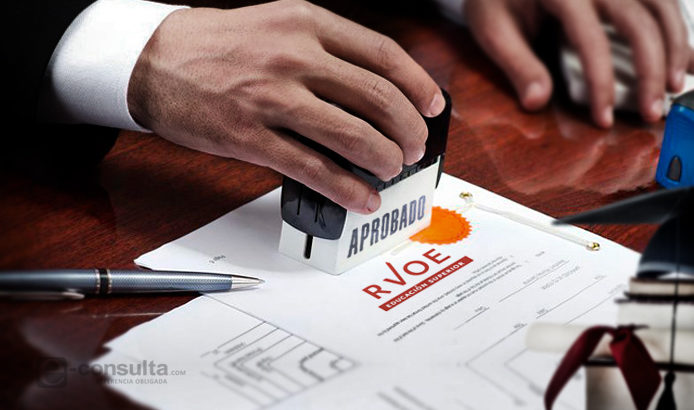
Nuevo RVOE. Segunda parte: educación no escolarizada

Por:

Aún está en proceso de revisión por la Comisión Federal de Mejora Regulatoria la propuesta de la SEP para renovar el Reconocimiento de Validez Oficial de Estudios (RVOE) de tipo superior. Es de esperarse, sin embargo, que pronto sea promulgado el nuevo acuerdo, quizás con algunas modificaciones menores. Salvo que ocurra algo inesperado, el nuevo RVOE está a la puerta.

Decíamos en nuestra colaboración previa que dos de las principales innovaciones del documento están dadas por la reglamentación de la educación a distancia, en sus modalidades no escolarizada y mixta, así como por un renovado planteamiento del proceso de simplificación administrativa para las instituciones que demuestren determinados niveles de calidad académica. De lo primero nos ocuparemos en esta entrega.

La norma vigente del RVOE (Acuerdo SEP-279, 10/07/2000), distingue tres modalidades docentes en programas de nivel superior: escolarizada, no escolarizada y mixta. La no escolarizada es definida en términos negativos, como aquella que corresponde a planes y programas que “se destinarán a estudiantes que adquieren una formación sin necesidad de asistir al campo institucional” (art. 16). Prácticamente eso es todo, salvo una precisión que aparecen en uno de los anexos que deben acompañar a la solicitud del RVOE, donde se indica: “Describir las actividades de aprendizaje que se realizarán bajo la conducción de un docente, así como aquellas actividades de aprendizaje que el estudiante realizará de manera independiente. Dichas actividades deberán ser acordes con la naturaleza de cada asignatura y con la modalidad educativa en que se imparta.” (Anexo 2).

No es de extrañar, si se considera que hacia la fecha en que fue emitido el RVOE del 2000, negociado con la Federación de Instituciones Mexicanas Particulares de Educación Superior (FIMPES), la oferta de programas de educación superior no escolarizada en manos de particulares era prácticamente inexistente. Con excepción del Tecnológico de Monterrey, las IES privadas no habían incursionado en ese terreno. Según un documentado estudio de Martha Diana Bosco Hernández y Héctor S. Barrón Soto (La educación superior a distancia en México: narrativa de una historia silenciosa, UNAM, 2008), hacia 2004 la oferta de educación superior en línea estaba conformada por 312 programas, de los cuales más del noventa por ciento eran especializaciones, diplomados o cursos. Los autores agregan que, de esa oferta, sólo un quince por ciento correspondía a IES privadas.

Al día de hoy las cosas son muy diferentes. Según registro oficial (ciclo 2015-2016), la matrícula de nivel superior en programas no escolarizados supera el medio millón de estudiantes (595,456 en total, de los cuales el 84.7 por ciento en licenciatura). Además, la participación del sector privado es mayoritaria: en licenciatura asciende a 259,077 estudiantes, lo que representa el 51.3 por ciento de la oferta correspondiente, y en posgrado suma 71,628 estudiantes, nada menos que el 78.9 por ciento del posgrado no escolarizado en México (fuente: Anuario Estadístico de la ANUIES).

Así las cosas, se justifica que el nuevo proyecto de RVOE incluya requisitos especiales para la oferta privada en la modalidad no escolarizada, también conocida como educación superior a distancia e incluso “universidad virtual”. La definición de la modalidad en el proyecto dice que “se caracteriza porque el desarrollo del proceso enseñanza-aprendizaje se desarrolla a través de una Plataforma tecnológica educativa administrada por el Particular o mediante procesos autónomos de aprendizaje”, y añade que “las actividades de aprendizaje deberán reflejar el uso de la Plataforma tecnológica educativa o identificar los recursos sugeridos para los procesos autónomos de aprendizaje. En esta modalidad, el número de horas propuestas en el Plan de estudio bajo conducción de un académico equivalen como máximo al 40% de las señaladas (para la modalidad escolarizada)” (art. 13).

Para los programas no escolarizados, el proyecto de norma establece tres condiciones: Primero, la descripción del “modelo teórico-pedagógico” en que se precisen las estrategias de aprendizajes, las características de los materiales y recursos didácticos, y los mecanismos de evaluación escolar. Segundo, la descripción de la plataforma tecnológica propuesta, lo que incluye: infraestructura tecnológica, los elementos característicos de los roles de alumnos, docentes y administrativos, el tipo de enlace disponible, las características de hardware y software, soporte técnico y plan de contingencias, y seguridad de la información. Tercero, los permisos, licencias y otros instrumentos jurídicos que amparen el uso y explotación de la Plataforma tecnológica educativa. Son esos.

El proyecto omite dos aspectos importantes: las características y condiciones de los denominados “procesos autónomos de aprendizaje” incluidos en la definición de la modalidad, así como alguna condición objetiva que garantice que el personal involucrado en la operación de la plataforma cuenta, en efecto, con los conocimientos y capacidades para su manejo y control. Por ejemplo, dos de las plataformas más utilizadas (Moodle y Blackboard) cuentan con servicios de capacitación y adiestramiento con certificación, lo que posibilitaría incluir este requisito entre los formulados en el proyecto.

Hay otro aspecto importante. La norma establece la obligación de contar con licencias y permisos para operar la plataforma tecnológica correspondiente, pero no para integrar los contenidos para la enseñanza (bibliografías y otros materiales) que pueden contar con derechos de autor amparados en ley. Probablemente convendría explorar este ángulo en el diseño normativo.

Fuente: http://www.educacionfutura.org/nuevo-rvoe-segunda-parte-educacion-no-escolarizada/

Comparte este contenido:

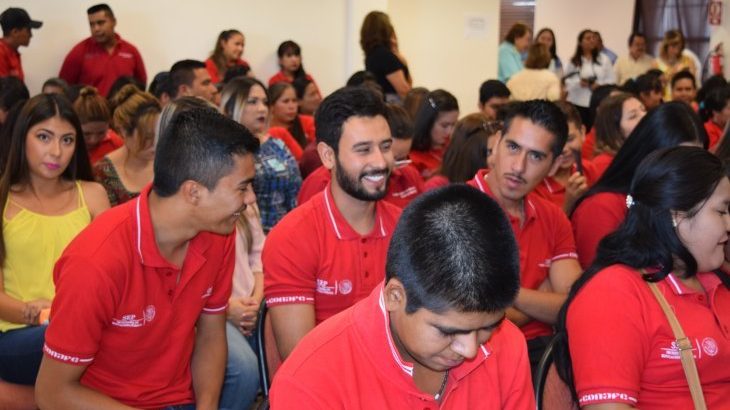
México: CONAFE y UPNEC, unidos por la educación multicultural

México/17 de Julio de 2017/Elagora

Actualmente, en el nivel básico escolar, a través de los líderes comunitarios se atiende a más de 320 mil niños en todo el país.

Considerando a la educación el área fundamental para la transformación y el desarrollo social, económico, político y cultural del país, a partir de un decreto presidencial emitido en septiembre de 1971, se crea el Consejo Nacional de Fomento Educativo (CONAFE) como organismo descentralizado encargado de generar nuevos modelos educativos para abatir el rezago educativo en México. Su eje rector es la educación comunitaria para generar procesos que promuevan la participación y organización de las localidades.

Desde entonces ha trabajado por hacer realidad el derecho a la educación de niños y jóvenes que habitan en localidades marginadas y cada vez más diversas, donde el servicio académico regular que ofrece la Secretaría de Educación Pública (SEP) no es suficiente para atender la demanda.

El reto ha sido ascendente, en un inicio el trabajo estuvo encaminado hacia la atención educativa en los niveles preescolar y primaria, pero más tarde se incursionó en la educación secundaria sin distinción entre la población mestiza e indígena. Por lo que la diversidad cultural y lingüística ha provocado adecuaciones curriculares para satisfacer las necesidades de cada grupo. Además, sus planes incluyentes están adecuados para atender a niños que tienen alguna discapacidad auditiva, visual, motora y/o cognitiva.

El nuevo modelo educativo está basado en la colaboración y el diálogo, lo que promueve la retroalimentación de conocimientos, es decir, que todos aprendan de todos. En este sentido el Consejo busca también que los líderes para la educación comunitaria (LEC) se profesionalicen a la vez que brindan un servicio social educativo, para que la comunidad en general crezca y mejore sus condiciones de vida.

Recientemente unió esfuerzos con la Universidad Pedagógica Nacional del Estado de Chihuahua (UPNECH) y la Secretaría de Desarrollo Social para el diseño y la implementación de la Licenciatura en Desarrollo Comunitario que busca profesionalizar a 35 mil líderes en todo el país. Acciones como está dan sentido al lema “dónde está CONAFE todos aprenden”.

Con esta participación, UPNECH, demuestra una vez más que la atención a la diversidad, la cultura pedagógica, la innovación y la cultura regional son sus valores más característicos, además de ser una institución que mantiene un contante rediseño de su oferta educativa en búsqueda del mejoramiento profesional.

La UPNECH trabaja en programas de calidad y pertinencia que contribuyan a la comprensión y solución del campo educativo en sus ámbitos de intervención. Por lo cual, el sentido humanístico al servicio educativo de la población más vulnerable es el lazo de hermandad que une, como instituciones, a CONAFE y UPNECH.

Fuente: http://www.elagora.com.mx/CONAFE-y-UPNEC-unidos-por-la,45568.html

Comparte este contenido:
Page 965 of 1684
1 963 964 965 966 967 1.684