Medidas para la expansión más de coronavirus: sistema de educación en línea en China
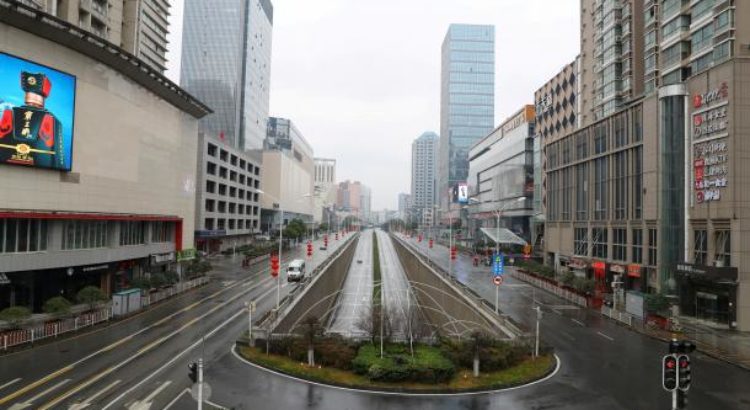
La administración china que se enfoca en prevenir la expansión más del nuevo tipo de coronavirus contagiado a centenares de miles de personas después de aparecer en Wuhan, inicia el sistema de educación en línea para que los estudiantes continúen a la vida escolar en las universidades que permanecen cerradas desde hace semanas.
En este marco el gobierno chino toma pasos contra el virus que se expandió a 28 países y pasa al sistema de ‘clases sobre internet’ en el próximo semestre universitario en todo el país.
En el mensaje enviado a los estudiantes por parte de algunas universidades es informado que es imposible dar clases en grupos poblados debido a coronavirus pero se puede preparar las clases sobre internet hasta el próximo anuncio para que no se alarguen los semestres y para seguir de manera normal la vida universitaria de los estudiantes.
No habrá cambios en la cualificación de las clases.
Entre tanto llega a 637 el número de víctimas mortales debido al virus en China. Mientras que el número de los diagnosticados ha llegado 31 mil 161 entre ellos los 4 mil 821 de gravedad. También es 26 mil 359 el número de los sospechosos pero no diagnosticados con el coronavirus y otros mil 540 se dieron de alta desde los hospitales.
Fuente de la Información: https://www.trt.net.tr/espanol/vida-y-salud/2020/02/07/medidas-para-la-expansion-mas-de-coronavirus-sistema-de-educacion-en-linea-en-china-1354923
Asia/China/09-02-2020/Autor(a) y Fuente: spanish.xinhuanet.com
El Ministerio de Educación de China ha ordenado a los colegios y universidades de todo el país ofrecer recursos para la enseñanza y el aprendizaje en línea, tras el aplazamiento del inicio del semestre escolar.
Según una serie de directrices publicada por la cartera, los colegios y universidades deben utilizar a plenitud plataformas en línea de alta calidad de cursos abiertos y de laboratorios, con el fin de organizar las actividades de educación en línea.
Deben hacerse más esfuerzos para garantizar que el aprendizaje en línea sea tan eficiente como aquel en las aulas, según las directrices.
De acuerdo con datos oficiales, hasta el 2 de febrero, 22 plataformas de cursos en línea habían lanzado más de 24.000 cursos gratuitos que cubren 12 disciplinas universitarias y 18 especialidades de educación técnica y vocacional.
El ministerio anunció a finales de enero que el semestre escolar de la primavera de 2020 quedaba pospuesto debido al brote del nuevo coronavirus. La entidad aún no fija la fecha de apertura de los colegios y universidades.
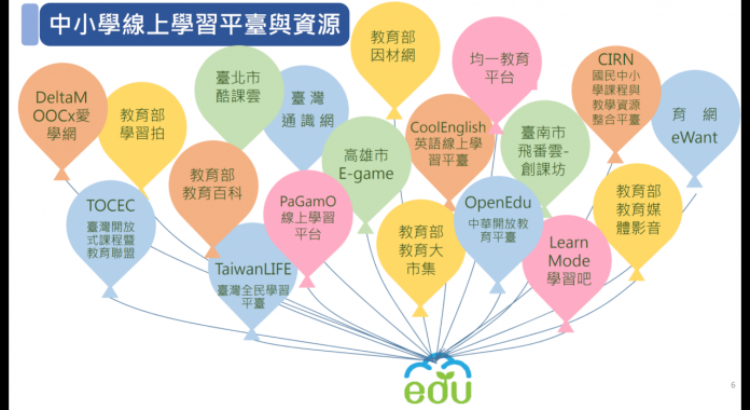
Días atrás, el Ministerio de Educación anunció que se postergaba el día del inicio de clases para todas las escuelas del país. A fin de que el aprendizaje de los niños no se vea afectado durante el período de prevención de la epidemia del nuevo coronavirus de Wuhan, Educación presentó hoy día 5, una lista de plataformas digitales educativas para que los maestros y los alumnos puedan aprovechar los recursos que ofrecen.
Una de ellas, la página “Nube Educativa” incluye materiales educativos del Ministerio de Educación y herramientas desarrolladas por los gobiernos locales y por otros diferentes sectores sociales. Cada persona puede registrarse e iniciar la sesión con su usuario y clave personal para acceder a toda la información y realizar el autoaprendizaje en su casa.
Otra plaforma educativa denominada “Aprendizaje Adaptativo” contiene vídeos educativos, ejercicios prácticos, evaluaciones dinámicas, exámenes y materiales didácticos de diferentes asignaturas, como chino, matemática, ciencias naturales, inglés, fisicoquímica, tanto del nivel primario como secundario.
El ministro de Educación Pan Wen-chung expresó que todos los maestros y alumnos pueden realizar el aprendizaje interactivo a través de estas plataformas educativas a distancia. Pan señaló que los estudiantes de China continental que estudian en Taiwán no podrán regresar a la isla antes del inicio de las clases, y las universidades que tienen estudiantes del continente deberán ofrecer una propuesta antes del día 7 al Ministerio de Educación para garantizar los derechos a la educación de los mismos.
The coronavirus outbreak may be the biggest disruption to international student flows in history.
There are more than 100,000 students stuck in China who had intended to study in Australia this year. As each day passes, it becomes more unlikely they will arrive in time for the start of the academic year.
After the September 11 attacks in 2001, the United States closed its borders temporarily and tightened student visa restrictions, particularly for students from the Middle East. Thousands were forced to choose different study destinations in the following years.
In 2018, Saudi Arabia’s government instructed all its citizens studying in Canada to return home, in protest at the Canadian foreign minister’s call to release women’s rights activists held in Saudi jails.
A significant proportion of the 12,000 or so Saudi students in Canada left to continue their studies elsewhere, before the Saudi government quietly softened its stance.
So we have seen calamities before, but never on this scale. There are a few reasons for this.
Why this is worse than before
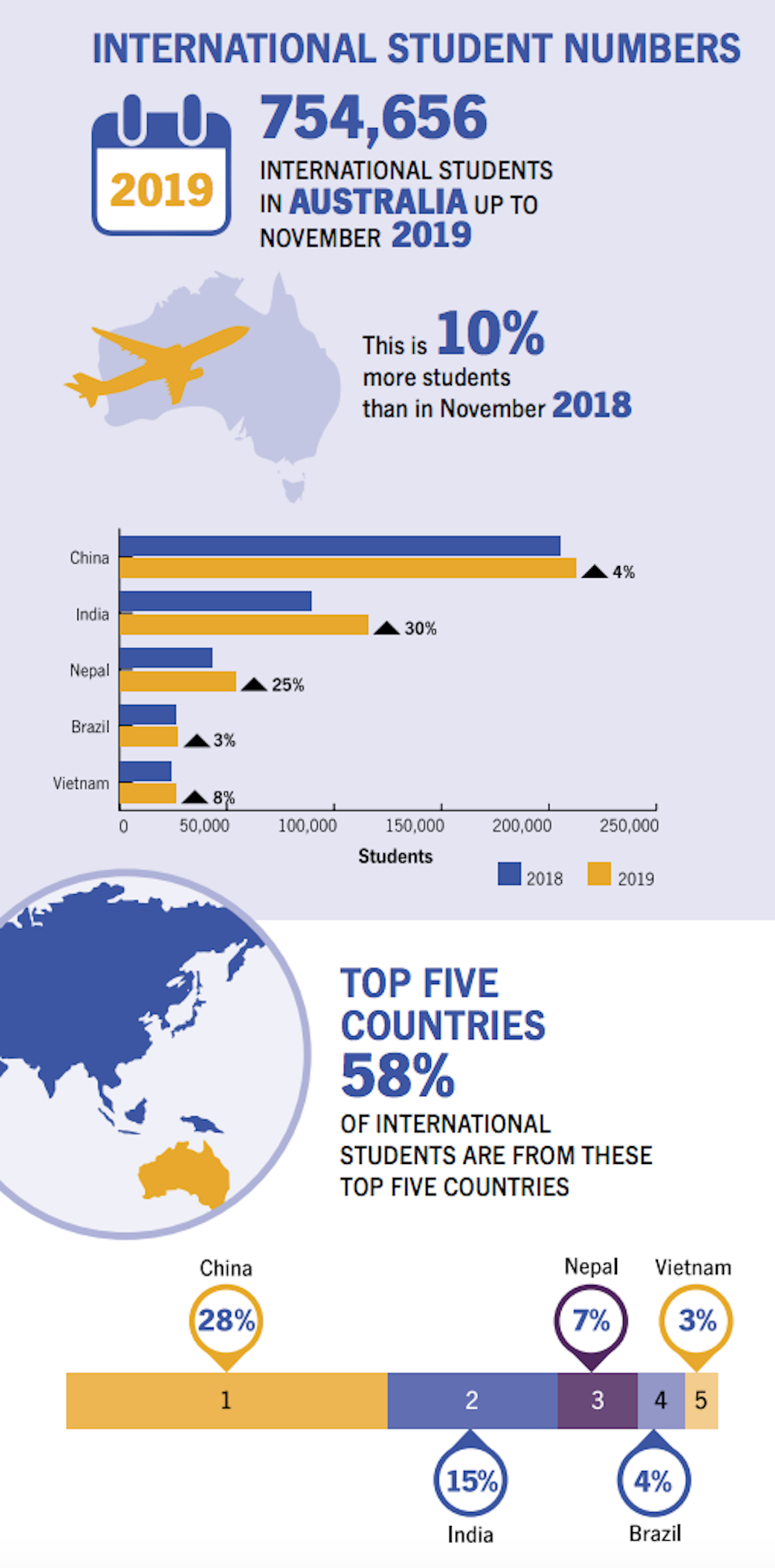
The current temporary migration of students from China to Australia represents one of the largest education flows the world has ever seen. Federal education department data show there were more than 212,000 Chinese international students in Australia by the end of 2019.
It’s also difficult to imagine a worse time for this epidemic to happen for students heading to the southern hemisphere than January to February, at the end of our long summer break.
Many Chinese students had returned home for the summer and others were preparing to start their studies at the end of February.
By comparison, the SARS epidemic in 2003 didn’t significantly dent international student enrolments in Australia because it peaked around April-May 2003, well after students had started the academic year.
Ending in July that year, the SARS outbreak infected fewer than half the number of people than have already contracted coronavirus. Even during the SARS outbreak Australia didn’t implement bans on those travelling from affected countries.
What will the impact be?
This crisis hits hard for many Chinese students, an integral component of our campus communities. It not only causes disruptions to their study, accommodation, part-time employment and life plans, but also their mental well-being.
A humane, supportive and respectful response from the university communities is vital at this stage.
Australia has never experienced such a sudden drop in student numbers.
The reduced enrolments will have profound impacts on class sizes and the teaching workforce, particularly at masters level in universities with the highest proportions of students from China. Around 46% of Chinese students are studying a postgraduate masters by coursework. If classes are too small, universities will have to cancel them.
And the effects don’t end there. Tourism, accommodation providers, restaurants and retailers who cater to international students will be hit hard too.
Chinese students contributed A$12 billion to the Australian economy in 2019, so whatever happens from this point, the financial impact will be significant. The cost of the drop in enrolments in semester one may well amount to several billion dollars.
The newly-formed Global Reputation Taskforce by Australia’s Council for International Education has commissioned some rapid response research to promote more informed discussion about the implications and impacts of the crisis.
If the epidemic is contained quickly, some of the 100,000 students stuck in China will be able to start their studies in semester one, and the rest could delay until mid-year. But there might still be longer-term effects.
Australia has a world-class higher education system and the world is closely watching how we manage this crisis as it unfolds.
Prospective students in China will be particularly focused on Australia’s response as they weigh future study options.
The world is watching
Such a fast-moving crisis presents a range of challenges for those in universities, colleges (such as English language schools) and schools who are trying to communicate with thousands of worried students who can’t enter the country.
Australian universities are scrambling to consider a wide range of responses. These include:
delivering courses online
providing intensive courses and summer or winter courses
arrangements around semester commencement
fee refund and deferral
provision of clear and updated information
support structures for starting and continuing Chinese students, including extended academic and welfare support, counselling, special helplines, and coronavirus-specific information guidelines
support with visa issues, accommodation and employment arrangements.
A coordinated approach involving different stakeholders who are providing different supports for Chinese students is an urgent priority. This includes education providers, government, city councils, international student associations, student groups and professional organisations.
Source of the review: https://theconversation.com/the-coronavirus-outbreak-is-the-biggest-crisis-ever-to-hit-international-education-131138
Asia/China/06 Febrero 2020/http://spanish.china.org.cn/
Las autoridades de educación, las escuelas y las instituciones de capacitación extracurricular de China están ofreciendo cursos en línea a los estudiantes durante las vacaciones de invierno, informó hoy martes el Ministerio de Educación.
Los cursos versan sobre prevención de epidemias, salud mental, actividades y contenidos educativos, y no sobre temas que representen una presión adicional para los estudiantes de primaria y secundaria, señaló la cartera.
La entidad también ha exigido que las escuelas y centros de formación extracurricular no comiencen sus nuevos programas de enseñanza a través de plataformas en línea hasta la fecha originalmente establecida para el inicio del semestre.
El ministerio anunció a finales de enero que el semestre escolar de la primavera de 2020 fue pospuesto hasta nuevo aviso debido al brote del nuevo coronavirus.
Almost two-thirds of Australian universities’ Chinese students are currently abroad, new government data show, in an indication of the scale of the financial hit confronting the sector if the coronavirus crisis persists.
Education minister Dan Tehan released statistics showing that of the almost 190,000 Chinese residents with valid Australian student visas on 1 February – when the government banned foreign nationals entering from China, in a bid to curb the outbreak’s spread – about 157,000 were higher education students.
Of these, 62 per cent were overseas and faced a wait of at least two weeks – and possibly much longer – before being allowed into Australia.
The figures suggest that Australian universities may be about to experience the worst fears of those who have warned against their financial reliance on Chinese students’ fees.
A paper released last year by University of Sydney sociologist Salvatore Babones, who focused his research on seven Australian universities, found that they had derived between 13 per cent and 23 per cent of their income from Chinese students in 2017. Since then, the number of visas granted to Chinese higher education students has increased by about 6 per cent.
UNSW’s main campus is unusually quiet for this time of year, devoid of the groups of orienting Chinese students that normally circulate in February – a scene replicated at universities across the country.
UNSW vice-chancellor Ian Jacobs last year said that his university had set up a contingency fund to “buy…an extra few months” in the event of a sudden loss of Chinese students, but said he would have to rapidly decrease spending on staff and infrastructure if the crisis lasted longer.
In a 4 February press conference, Mr Tehan said the government and universities had committed to “maximum flexibility” to help Chinese students stranded overseas.
He brushed off questions over whether Chinese students would be entitled to refunds if they could not study in Australia, and whether the government would consider helping universities meet the consequent “shortfall”.
“Let’s wait and see what the impact is of the coronavirus over the next fortnight, the next month, the next quarter, before we start looking at things like that,” he said.
“Let’s deal with getting in place the online learning, the remote learning. Let’s make sure we’re dealing with all those students who are already here in Australia and making sure their welfare is being looked after.”
Some Chinese students have scoffed at online learning as a viable solution, citing internet restrictions at home.
Mr Tehan also declined to estimate the dollar cost of the crisis while acknowledging international education as a “key” export for Australia. “We have to wait and see the extent of the virus…before we can examine this data and get a true understanding.
“What we’ve seen from Sars [severe acute respiratory syndrome] was that the bounce back in the international education sector was quick and immediate. Things have changed since Sars, but that is the information that we can go on historically.”
Source of the notice: https://www.timeshighereducation.com/news/two-thirds-australias-chinese-students-stuck-home
Asia/China/02-02-2020/Autor(a) y Fuente: xinhuanet. com
El Ministerio de Educación de China ordenó a las autoridades locales que inicien inspecciones aleatorias en negocios de formación extraescolar durante las vacaciones de invierno.
Se impondrán castigos severos a los proveedores de servicios sin licencia y también serán sancionados aquellos que presenten riesgos de seguridad, ofrezcan programas por encima o por debajo del programa de estudios estándar o agreguen cargas innecesarias de tarea a los estudiantes, de acuerdo con una circular emitida por la cartera.
El documento señala que las autoridades educativas locales están obligadas a trabajar con los reguladores del mercado, las instituciones financieras y los departamentos de seguridad pública para intensificar la supervisión de las tarifas de matrícula pagadas por adelantado a los negocios de formación, con el fin de protegerse contra quienes intenten escapar con el dinero.
También pide al público que supervise e informe sobre los proveedores de capacitación extraescolar que rompen estas reglas.
OtrasVocesenEducacion.org existe gracias al esfuerzo voluntario e independiente de un pequeño grupo de docentes que decidimos soñar con un espacio abierto de intercambio y debate.
¡Ayúdanos a mantener abiertas las puertas de esta aula!



 Users Today : 4
 Total Users : 35459470
 Views Today : 4
 Total views : 3417762