Page 226 of 772
1 224 225 226 227 228 772

Indonesia: How much time Asians spend helping their child with education?

Asia/ Indonesia/ 16.01.2019/ Source: globalnation.inquirer.net.

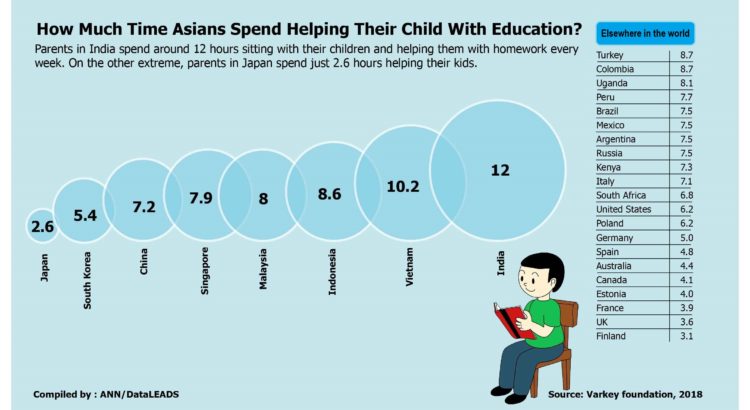
Indian parents spend far more time helping their child with their education compared to other countries of the world.

According to the report published by Varkey Foundation, parents in lower income and emerging economies are more likely to spend significant amounts of time helping their children outside the classroom than those in established economies.

India tops the list of Asian countries and also globally with parents taking education under serious consideration for the growth and development of their children. Parents in India dedicate around 12 hours per week to help children in their studies, according to the survey.

The survey report says better educated parents were more likely to spend some time every week helping their children with their education. Also, Asian households spend about 15% of their income on supplemental education services.

Vietnam follows India closely.

Vietnamese parents spend around 10.2 hours per week by helping children in their studies and homework. Indonesia comes third among Asian countries with parents spending 8.6 hours per week to help their children with education, followed closely by Malaysia ranking fourth in Asia and spending 8 hours per week to support the education of their children.

Singapore is ranked fifth among Asian countries where parents spend around 7.9 hours per week to help their kids in their studies.

China takes the sixth position among Asian countries where parents give 7.2 hours per week to help their children in their studies at home.

Japanese and South Korean parents spend far less time helping kids in their learning process, spending only 2.6 hours and 5.4 hours per week.

Source of the notice: https://globalnation.inquirer.net/172461/how-much-time-asians-spend-helping-their-child-with-education

Comparte este contenido:

Afkar-e-Taza ThinkFest: Pakistan’s education system based on injustice: Shafqat

Asia/ Pakistan/ 15.01.2019/ Source: www.thenews.com.pk.

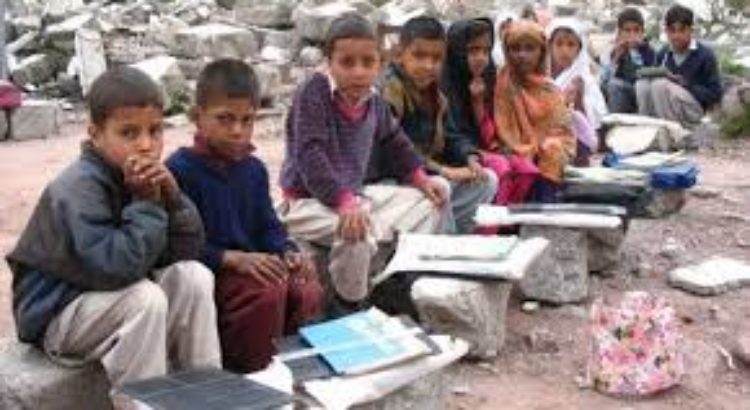
The government is trying to mobilise graduates across the country to improve literacy ratio from 58 per cent to 70 per cent and working to create national curriculum to remove the disparity in education system as the present education system is based on injustice.

Shafqat Mahmood Federal Minister for Education and National Heritage said this while opening the third edition of Information Technology University (ITU) Centre for Governance and Policy’s Afkar-e-Taza ThinkFest two-day conference here on Saturday.

The minister said, “Education provides frame of reference and perception while we practice different streams of educational institutes, including madrasas, government and private schools, which create different minds and classes, which never helped in the making of a nation.” Our society has decided that only English medium would go forward,” he added.

He stated that improving quality of education had been taken as a challenge by the government through broadening the pool and resolving serious economic issues. In his welcome message, read by ITU Registrar Zaheer Sarwar, ITU acting Vice-Chancellor Dr Niaz Ahmad Akhtar underlined the objectives of the conference initiated in 2016 and said that it provided creation of newer spaces and opportunities for flourishing new thoughts and ideas to bridge the gap between the academia and society, providing academic discourse in an accessible yet robust manner and to engage with leading scholars from around the world.

Discussing the topic of “Future of Democracy in Pakistan,” Aqil Shah from Oklahoma University, USA, said that democracy ensured freedom of expression. Hussain Nadim from Sydney discussed the Economists Democracy Index, which revealed that only 19 countries were considered democratic, 57 with flawed democracy, including US, 39 hybrid regimes and 52 authoritarian regimes.

Deliberating on the “Types of Populism Nationalism, Demography and Authoritarianism,” Dr Christophe Jaffrelot from Paris said that parliaments had lost their powers and the role of media was the only space for free media.

Najam Sethi, chairman of the organising committee of the conference, highlighted the areas of interest, including history, olitics and international relations and said that Lahore was fertile with ideas.

Dr Yaqoob Khan Bangash appreciated the idea of organising such literature festivals. On Sunday, the second day of the ThinkFest, will have Federal Minister for Information and Broadcasting Fawad Chaudhary and Punjab Finance Minister Hashim Bakht.

Source of thenotice: https://www.thenews.com.pk/print/418750-afkar-e-taza-thinkfest-pakistan-s-education-system-based-on-injustice-shafqat

Comparte este contenido:

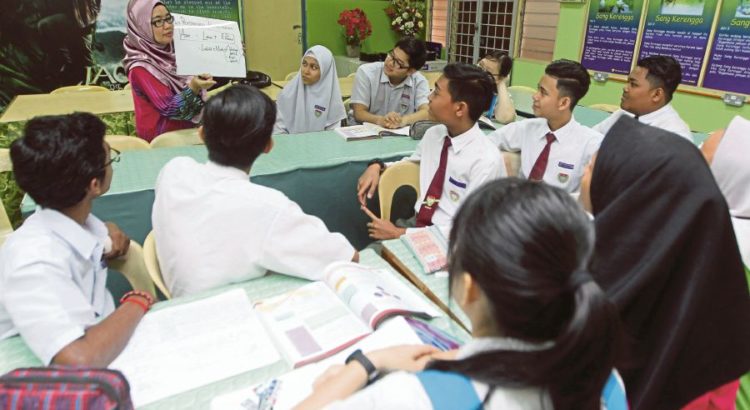
Two challenges confronting education

By Hazlina Aziz.


With the students heading back to school yesterday for the new school year, let me lay out two challenges confronting education today that I think will dominate the year if we do not focus on certain areas.

The first is the lack of acceptance by students and parents of their responsibilities, and the subsequent undermining of discipline.

Nowadays, far too many parents are passive, protesting that they cannot handle their own children. Others actively undermine the disciplinary process, questioning the right of teachers or schools to impose discipline or to insist that all students be governed by the same set of rules.

We don’t talk very much any more about whether, for instance, parents are pushing their children to do their homework and school projects or respect their teachers.

The recent case of Cikgu Azizan brought up many discussions among Netizens on issues leading to the difficulties in educating youths today. The lack of student-parent accountability can be frustrating in regard to student discipline and striving to ensure that students accept responsibility for their behaviour and actions.

Responsibility for exam results, and for student success and behaviour cannot rest on the overloaded backs of teachers alone. Education would function best as a stool strongly supported by three legs — teachers, students and parents. Instead, it far too often stands on only one leg, that of the teachers.

Part of a teacher’s job is finding the way to open a student’s heart and mind. By the same token, though, the job of parents and guardians is to send to school children who are responsible, respectful and ready to learn. While compulsory attendance regulation can make children show up in schools, it is still hard to teach those who do not want to learn.

The days of parents adopting a hands-off approach to their child’s education and that it is the teacher’s job must come to an end soon. Parents, and even more importantly, students themselves, must be held accountable.

The other challenge is a generation addicted to smartphones or other mobile devices which leads to inability to focus and engage in the actual tasks at hand. Along with the Internet and its infinite distractions, there are a lot more products and platforms competing for attention today than there were 30 years ago.

One example is how to get students who are used to a different source of distraction every few seconds to focus, for instance, on reading a chapter from the textbook, analysing a poem, or writing a coherent essay. It is not easy and it will grow more difficult for teachers to get their attention during lessons.

Some students can “switch” attention between the phone as an entertainment device and as a learning tool; for others, the phone’s academic potential is routinely ignored.

Boys in their teens are addicted to video games and can play incessantly if given the chance. Girls of the same age, on the other hand, are addicted to social media wanting every moment for Snapchatting or Instagramming.

The problem as a result of this addiction runs deeper and is far more difficult to solve. We might think that students can handle the multitasking that using phones and devices for studies would require. For others, they are almost always a distraction. Even the visible presence of a phone pulls students — and many adults — away from their task at hand.

Yes, smartphones and other devices can be used in learning activities. They can provide instant access to information from a myriad sources and for a myriad reasons.

Although technology and the wealth of information that they can provide has the potential to shrink achievement gaps, the opposite can also take place within the classroom.

The Education Ministry’s plan to allow students to bring mobile devices to help in the learning process should be considered.

We must be selective on technology use in school not just because it is available, as it should be a means to a meaningful end, not an end in itself as teachers work to enrich the student experience.

In the New Year, the Malaysian Education Blueprint gets into its fifth year of implementation in transforming our education system.

The master plan needs a review along the way to add value and rectify any shortcomings to maximise its target by 2025. These two issues mentioned can have a negative impact on teachers and students if we do not address them properly.

Teaching, which is one of the very best jobs in the world, will remain one of the hardest jobs today. I wish a happy and successful new school year for all those who returned to the classroom yesterday.

Source of the article https://www.nst.com.my/opinion/columnists/2018/01/320906/two-challenges-confronting-education

Comparte este contenido:

Perceived dearth of freedom in Japan’s schools reflects wider woes

By: Michael Hoofman. 

What a strange place a school is — a world within a world, a society within a society. Kids grow up in it asking themselves, “Is the real world like this?”

Yes and no. It is and it isn’t.

In December, the weekly Aera published the results of an online survey asking parents and teachers, “Are schools, from the children’s point of view, not free?” Yes, said 93.3 percent of 6,821 respondents.

How free should schools be, given the special nature of their mission? It’s a free society the children will enter upon maturity. It’s also a disciplined society. Freedom and discipline both make demands on education, but the overwhelming disapproval — almost disgust — that Aera elicits conveys such dissatisfaction and frustration that readers can’t help wondering: If parents and teachers feel this way, how must the kids be squirming under rules that demand obedience — not for any rational end they serve but simply because obedience is deemed a virtue?

The mother of a first-grader describes her shock, on entering her daughter’s classroom on parents’ day at lunchtime, to hear — nothing. Silence. Why? It’s the rule, she was told. Children talking dawdle over their meal. Yes, but enforced silence at mealtime is morbid. Well, anyway, that’s the rule.

A junior high school teacher in his 30s ruefully counts among his extra-curricular responsibilities that of inspecting the outdoor footwear students leave in the shoe cupboard before donning indoor shoes and proceeding to class. What’s the point? It’s part of taking attendance. Isn’t roll call enough? No. Why? Well — it’s not, that’s all. It’s always been done this way. If it’s absurd, it’s absurdity sanctioned by time. Does time sanction absurdity? Who has time to consider such questions?

Japanese teachers are said to be the busiest in the developed world. Fourteen-hour days are not unusual. Teachers not teaching are preparing lessons, or doing office work, or enforcing meaningless rules, or supervising extra-curricular sports or craft clubs, or supervising lunch, or placating ever-more-demanding parents who feel their children are being overlooked, or undermarked, or under-recognized for latent genius, or something. More children in recent years come from broken homes or abusive families. This can involve teachers in social problems that are — says one teacher to Aera — beyond their competence. They are teachers, not social workers. Then of course there’s the hoary old problem of bullying, technologically magnified by the virtual powers at every student’s fingertips. A teacher who consulted police about an online slander campaign against one of his students was given short shrift. Insults are not a crime. Threats, yes; not insults. Insults are a moral issue, not a legal one.

In an age of expanding diversity, Aera finds, schools remain wedded to uniformity — down to the color of students’ underwear, fumes one parent. The mother of an elementary school girl works at a day care center where, she feels, kids are free in ways her child is not. She explains: “When (a pre-schooler) is cold, I say, ‘Put on a sweater.’ If an item of clothing gets dirty I say, ‘Change into something else.’ Then the kids move on to elementary school, and suddenly they’re not allowed to use their own judgment about anything. Everyone has to be the same as everyone else. Maybe it’s easier for teachers and students if nobody has to think, but it seems to me there’s more loss than gain.”

Teachers, if not students — probably students, too — are too busy to think. In terms of working hours, 30 percent of elementary school teachers and 60 percent of junior high school teachers are “past the karōshi line,” according to an education ministry report Aera cites. “Karōshi” means death due to overwork. The “line” beyond which that becomes an officially acknowledged danger is 80 hours a week. Stress builds. It must be vented on somebody. “Power harassment,” a familiar affliction of the adult or “real” world, haunts schools too, driving some students, Aera says, into chronic absenteeism.

Life’s a pressure cooker, a jungle — choose your time-honored metaphor. Power harassment we get from our jungle forebears, the apes, writes neurologist Nobuko Nakano in the bimonthly Sapio (November-December). Male apes have their power displays, we have ours. Ours are more complex, more nuanced. We don’t beat our breasts; instead we “dress for success,” bully our subordinates, drive ourselves to exhaustion chasing quantifiable results to brandish as symbols of having “arrived” — where? That’s another question. But today’s young people are different, Nakano says.

A kind of apathy has set in, she finds, that sets the current young generation apart from those of the high-growth and bubble periods, circa 1960-90. Then the goal was clear — growth; and the path to it sure — hard work. Today — what are we striving for? Doubts outweigh certainties. Will my company still exist 10 or 20 years from now? Will my job, my occupation? Will artificial intelligence elbow me aside? “Young people must seem spiritless to their bosses,” Nakano reflects. Shaped by different times, they nourish different ambitions, pursue different status symbols. Yesterday’s goals were promotion, performance, luxury. Today’s, she says, are more likely to be “likes” and “followers” on social media.

There’s another uncertainty weighing on the young: the old. In a separate Sapio article, novelist and essayist Akira Tachibana compares the swelling ranks of Japan’s elderly to the needy foreign refugees and migrants straining Europe’s liberal tolerance. Will the social welfare costs implicit in Japan’s historically unprecedented demographic — more and more elderly increasingly dependent on fewer and fewer young — shred the latter’s post-retirement safety net? Whether or not they end up doing so, the fear that they will is corrosive to morale. The steadily declining birthrate is both symptom and symbol.

So Japan, as Tachibana would have it, is a “refugee” society in spite of itself, its “refugees,” unlike Europe’s, native born and home grown. “Of course,” he writes, “Japan is not on the verge of collapse, like Zimbabwe or Venezuela. … Still, with more and more people living past age 100, there’s no guaranteeing that people now in their 20s, still less generations unborn, will enjoy a secure and prosperous old age.”

In school or beyond school, one way or another — rules here, economic and demographic pressures there — freedom fights for survival, its ultimate victory by no means certain.

Big in Japan is a weekly col

Source of the article https://www.japantimes.co.jp/news/2019/01/12/national/media-national/perceived-dearth-freedom-japans-schools-reflects-wider-woes/
Comparte este contenido:

Principios de aerodinámica para construir la Siria del futuro

Por: Álvaro Zamarreño.

El exilio sirio busca formar a sus más pequeños para que sean los líderes que puedan levantar su país

Ni siquiera hace falta disimularlo. Para preguntar la dirección a la que vamos, no usamos el turco sino el árabe. En Reyhanli la presencia de refugiados sirios es tan abrumadora que las posibilidades de encontrar a alguien que hable en ese idioma son mayores que en el idioma del país en que nos encontramos, Turquía. La proporción es de 90000 frente a 120000 sirios. Está tan cerca de la frontera que apenas a unos pocos metros de la carretera principal está el muro que Turquía levantó, ya en guerra, para evitar el paso de refugiados a su territorio.

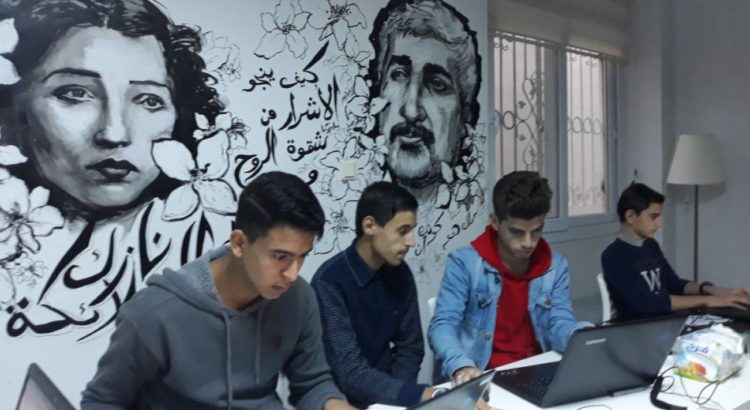
En un barrio de las afueras llegamos a una casona de dos pisos recién arreglada y rodeada por un jardincito. Es Beit Karam’, algo así como la casa de la generosidad. Dentro todo tiene un aspecto nuevo, luminoso y agradable. En diferentes salas distribuidas por todo el edificio grupos de chicos y chicas adolescentes trabajan en diferentes talleres.

Nada, una chica sirio-estadounidense que nos hace de guía, explica que no son talleres de vocación profesional, o de innovación, sino talleres en los que mediante la creatividad los más jóvenes se desarrollen desde un punto de vista humano. “No se trata de enseñarles programación -nos dice- sino de que tomen problemas de la vida real”. Y pone el ejemplo de una actividad reciente en la que pidieron a los médicos sirios que les aportaran casos que necesitan prótesis complejas por amputaciones debidas a la guerra. “Les planteamos el caso a los chavales, que buscan y rebuscan una solución”.

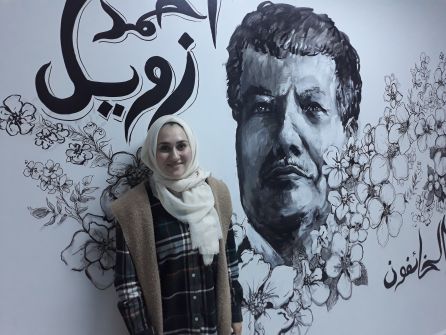
Nada Hashem junto al retrato del premio Nobel Ahmed Zaweil

Nada Hashem junto al retrato del premio Nobel Ahmed Zaweil / Álvaro Zamarreño

“El futuro de Siria está en grave peligro, nos explica uno de los tutores -no quieren usar la palabra profesor-, porque hemos perdido a grandes pensadores y profesionales que están encerrados o bajo tierra”. Hani al Sheij es ingeniero, tiene 30 años y trabaja en Beit Karam desde hace unos meses. Para él es un motivo de orgullo estar preparando a una generación de jóvenes para enseñarles que no son meros elementos pasivos por ser refugiados, sino que pueden construirse su futuro: “Les enseñamos principios de física o de aerodinámica, pero también a tomar sus propias decisiones y a ir por la vida con confianza”.

Les enseñamos principios de física o de aerodinámica, pero también a tomar sus propias decisiones y a ir por la vida con confianza

Toda esta gente -entre los 14 y 18 años- eran niños cuando sus familias salieron corriendo. Primero por la persecución del régimen a los manifestantes, luego ya por una guerra en que tanto el ejército como otras muchas milicias han atormentado a la población civil. “Han sufrido un hueco enorme en su educación -explica Nada- y han tenido que luchar para rellenarlo”. En lo peor de la guerra, la ong Save the Children calculó que tres millones de niños sirios habían quedado fuera del sistema educativo.

Aunque se han hecho notables esfuerzos para que los refugiados puedan enviar a sus niños a la escuela, el problema es mucho mayor. Porque toda sociedad necesita poder proporcionar acceso a secundaria y a estudios universitarios. Y eso, reconocen todos los actores implicados, no es fácil. Turquía, por ejemplo, permite que los jóvenes sirios se matriculen en sus universidades como un estudiante más.

Pero las familias no tienen los fondos necesarios y, sobretodo, no pueden prescindir del sueldo que una persona joven deja de percibir si se dedica a estudiar.En uno de los talleres, este de creatividad, Imán, una chica de 16 años, nos explica en un inglés aprendido de ver videos en youtube que le gustaría ser odontóloga, pero que está buscando becas que le permitan estudiar cuando acabe el bachillerato.

El enfoque de Beit Karam -una fundación creada por la diáspora siria para ayudar a sus propios refugiados- es el de no sólo centrarse en aspectos pragmáticos, sino en que los 300 jóvenes que simultáneamente participan en sus actividades, mantengan su identidad como sirios, sus vínculos con su cultura y con la construcción de una Siria mejor en algún momento.

“No se puede separar la asistencia humanitaria del contexto político en que se produce”, insiste Nada. Beit Karam no es una organización política, pero si de activismo social. Defiende la democracia para su país -uno de sus programas se llama “Diez mil líderes para el futuro”- y la igualdad de género, haciendo que todo el mundo participe sin distinción con la idea de que, de mayores, los chicos asuman con naturalidad el contacto con sus compañeras.

Las paredes de Beit Karam están decoradas con grafitis de escritoras, científicos o pensadoras árabes. Los rostros del premio Nobel de química Ahmed Zewail, el poeta palestino Mahmud Darwish, la intelectual siria Razan Zeitune, sirven de inspiración a quienes se forman entre estas paredes.

Hay más de cinco millones y medio de sirios que han huido de su país. Sólo en Turquía son más de 3.5; las dificultades que tienen por delante son enormes. Y mucha más la incertidumbre. “Los sirios han pasado por el infierno, pero han elegido vivir -dice Nada- y esa es su verdadera revolución”. Mantienen el sueño de volver, pero necesitan compaginarlo con la lucha por su día a día.

Hani, el ingeniero, salió de su ciudad de Homs hace algo más de un año, cuando un acuerdo entre el régimen y las milicias que quedaban en la ciudad supuso la rendición y salida de hombres armados, pero también de los activistas políticos que se habían quedado. Él es uno de ellos. Tiene a su familia desperdigada por medio mundo y sabe que no puede volver (“ya estuve detenido y no quiero volver a pasar por eso; he perdido a demasiados amigos en esta revolución”). Por eso su pequeña contribución en este rincón de una pequeña ciudad fronteriza turca es mucho más que trabajar. Es una manera de ayudar a quienes serán los sirios del futuro.

Fuente de la reseña: https://cadenaser.com/ser/2018/12/17/internacional/1545061094_656578.html

Comparte este contenido:

¿Por qué el modelo educativo japonés es uno de los mejores del mundo?

Japón / 13 de enero de 2018 / Autor: Redacción / Fuente: Noticias Venezuela

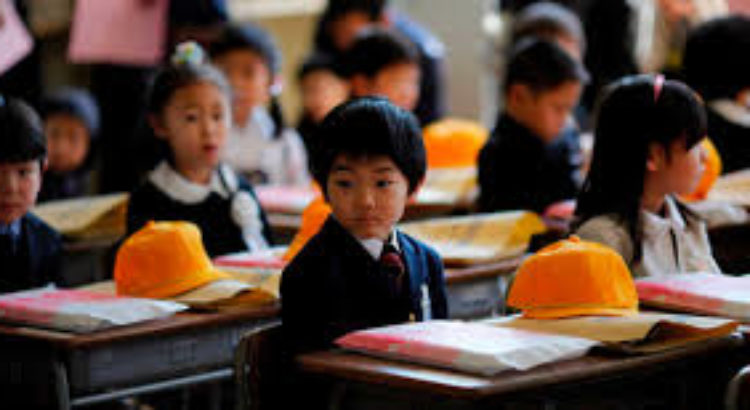
El sistema educativo japonés es reconocido a nivel mundial por su eficiencia y sus estrechas relaciones con las características culturales y sociales del país asiático, que mezcla el trabajo en equipo y la meritocracia.

Además de alcanzar muy buenos resultados en pruebas internacionales, los expertos destacan la disciplina y la formación de alta calidad que logran sus estudiantes. De hecho, recientemente el ministro de Educación de Japón anunció que su sistema se exportará a otros países de Asia, Oriente Medio y África, según Aula Planeta.

El currículo se establece a nivel nacional, la legislación educativa es muy estable y duradera; además de que la educación obligatoria es mayoritariamente pública y gratuita.

Hay asignaturas y también formación en valores, los alumnos cuentan con materias como economía doméstica, en la que aprenden a cocinar o a coser, artes tradicionales japonesas, como la caligrafía (shodo) o la poesía (haiku), y cursos de educación moral.

El esfuerzo es esencial y la competitividad es alta, la sociedad japonesa considera que el éxito no depende de las habilidades o la inteligencia, sino que se consigue con esfuerzo.

La habilidad para resolver problemas es primordial y en el colegio no solo se estudia, aparte de asistir a las clases, los alumnos tienen que colaborar en diversas tareas como limpiar el centro o servir las comidas, que se toman en la propia clase. Para ello los estudiantes se dividen en grupos y trabajan juntos.

Tanto los alumnos de la escuela primaria como los de secundaria inferior y superior tienen que hacer tareas a diario. El número de horas de clase es similar al de otros países, pero se invierten muchas horas en actividades extraescolares, clases de refuerzo y horas de estudio.

Además, las vacaciones son más cortas: del 20 de julio al 31 de agosto en verano, diez días entre diciembre y enero y otros diez entre marzo y abril.

Los maestros son muy respetados y están muy preparados.

Uno de los principios que rige el programa es que “educar es trabajo de todos”. El trabajo en equipo se premia en el aula, pero los padres tienen la responsabilidad y el deber social de apoyar la educación de sus hijos en casa y recurrir a ayuda profesional cuando sea necesario.

Fuente de la Noticia:

https://noticiasvenezuela.co/2019/01/04/por-que-el-modelo-educativo-japones-es-uno-de-los-mejores-del-mundo/

Fuente de la Imagen:

https://eligeeducar.cl/12-datos-curiosos-del-exitoso-sistema-educativo-japones

ove/mahv

Comparte este contenido:

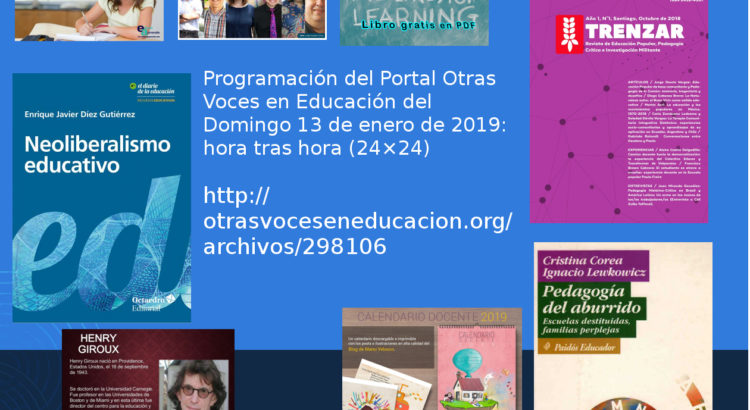
Programación del Portal Otras Voces en Educación del Domingo 13 de enero de 2019: hora tras hora (24×24)

13 de enero de 2019 / Autor: Editores OVE

Recomendamos la lectura del portal Otras Voces en Educación en su edición del día domingo 9 de diciembre de 2018. Esta selección y programación la realizan investigador@s del GT CLACSO «Reformas y Contrarreformas Educativas», la Red Global/Glocal por la Calidad Educativa, organización miembro de la CLADE y el Observatorio Internacional de Reformas Educativas y Políticas Docentes (OIREPOD) registrado en el IESALC UNESCO.

00:00:00 – Argentina: El cierre de las 14 escuelas ya es un hecho

http://otrasvoceseneducacion.org/archivos/297863

01:00:00 – Clara Cordero: “Móviles en el aula, sí “

http://otrasvoceseneducacion.org/archivos/297871

02:00:00 – México: Universidades, con deudas de 19,209 mdp

http://otrasvoceseneducacion.org/archivos/297868

03:00:00 – Conoce a los 7 profesores latinoamericanos que podrían llegar a ganar el “Nobel de la enseñanza”

http://otrasvoceseneducacion.org/archivos/297877

04:00:00 – Educación implementará nuevo método para enseñar Matemáticas, ¿en qué consiste?

http://otrasvoceseneducacion.org/archivos/297985

05:00:00 – Libro: Pedagogía y Formación Docente (PDF)

http://otrasvoceseneducacion.org/archivos/298063

06:00:00 – Colombia: Líderes universitarios dicen que paro estudiantil continúa y llaman a marchar nuevamente

http://otrasvoceseneducacion.org/archivos/297994

07:00:00 – Neurociencia, ¿una aliada para mejorar la educación?

http://otrasvoceseneducacion.org/archivos/297976

08:00:00 – Trenzar. Revista de Educación Popular, Pedagogía Crítica e Investigación Militante N°1 (octubre 2018 -marzo 2019) – PDF

http://otrasvoceseneducacion.org/archivos/298066

09:00:00 – Educación humanizadora y deshumanizadora

http://otrasvoceseneducacion.org/archivos/298069

10:00:00 – Libro: Pedagogía del aburrido (PDF)

http://otrasvoceseneducacion.org/archivos/298079

11:00:00 – El ir y venir de las modas educativas

http://otrasvoceseneducacion.org/archivos/297991

12:00:00 – Calendario docente 2019 (PDF)

http://otrasvoceseneducacion.org/archivos/298083

13:00:00 – Bajo rendimiento escolar: 10 Pautas para evitar el fracaso escolar

http://otrasvoceseneducacion.org/archivos/297874

14:00:00 – Bolsonaro acusa al marxismo de causar bajo nivel educativo en Brasil

http://otrasvoceseneducacion.org/archivos/298088

15:00:00 – De la piel a la pedagogía: las 10 «p» de la educación

http://otrasvoceseneducacion.org/archivos/297982

16:00:00 – 10 grandes diferencias entre el sistema educativo finlandés y la educación convencional

http://otrasvoceseneducacion.org/archivos/298091

17:00:00 – Neoliberalismo educativo: educando al nuevo sujeto neoliberal*

http://otrasvoceseneducacion.org/archivos/298072

18:00:00 – Paraguay: Critican sistema de evaluación PISA-D

http://otrasvoceseneducacion.org/archivos/298097

19:00:00 – La crisis del Reformismo Educativo

http://otrasvoceseneducacion.org/archivos/297988

20:00:00 – Eduy 21 propone «blindar el cambio educativo» con presupuesto adicional de 1% del PBI

http://otrasvoceseneducacion.org/archivos/298094

21:00:00 – Henry Giroux: ¿Por qué es hoy necesaria la Educación Crítica? (Video)

http://otrasvoceseneducacion.org/archivos/298100

22:00:00 – ¿Por qué el modelo educativo japonés es uno de los mejores del mundo?

http://otrasvoceseneducacion.org/archivos/298076

23:00:00 – Aulas violentas: el acoso y la agresión en la escuela (Video)

http://otrasvoceseneducacion.org/archivos/298103

En nuestro portal Otras Voces en Educación (OVE) encontrará noticias, artículos, libros, videos, entrevistas y más sobre el acontecer educativo mundial cada hora.

ove/mahv

Comparte este contenido:
Page 226 of 772
1 224 225 226 227 228 772